

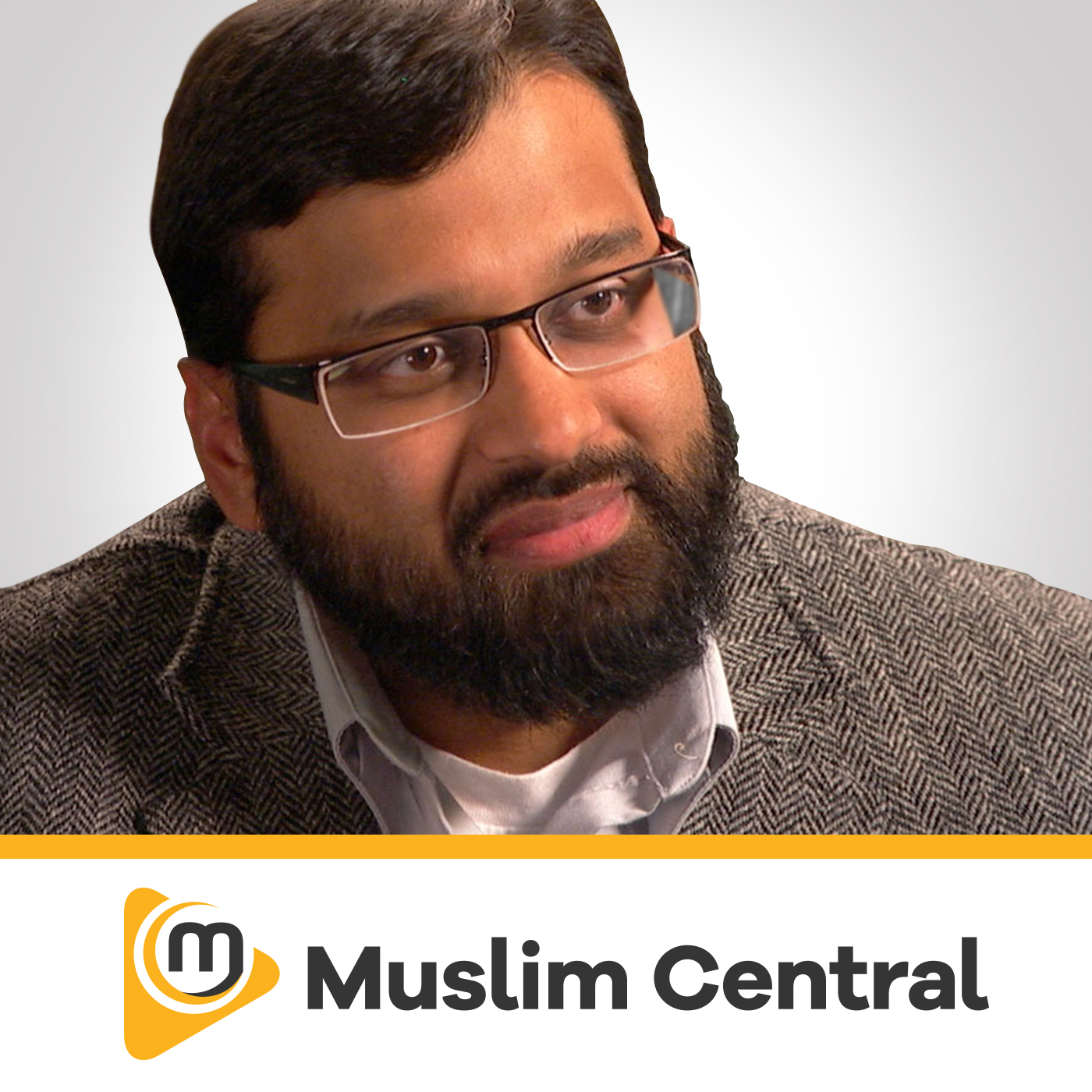
Yasir Qadhi
Muslim Central
Yasir Qadhi was born in Houston, Texas and completed his primary and secondary education in Jeddah, Saudi Arabia. He graduated with a B.Sc. in Chemical Engineering from the University of Houston, after which he was accepted as a student at the Islamic University of Madinah.
After completing a diploma in Arabic, he graduated with a B.A. from the College of Hadith and Islamic Sciences.
Thereafter, he completed a M.A. in Islamic Theology from the College of Dawah, after which he returned to America and completed his doctorate, in Religious Studies, from Yale University. Currently he is teaching at Rhodes College, in Memphis, TN.
After completing a diploma in Arabic, he graduated with a B.A. from the College of Hadith and Islamic Sciences.
Thereafter, he completed a M.A. in Islamic Theology from the College of Dawah, after which he returned to America and completed his doctorate, in Religious Studies, from Yale University. Currently he is teaching at Rhodes College, in Memphis, TN.
Episodes
Mentioned books

Aug 11, 2013 • 1h 20min
Seerah 45 Summary of Meccan Period
Shaykh Yasir Qadhi summarises the events that occurred during the Meccan period in this video.
He commences his talk by elucidating on the days of Jahiliyyah or Pre Islam and we understand the categories of people living in that time - ancient Arabs(extinct) and the remaining Arabs - Adnan and Qahtan.
3 great things happened during the reign of Abdul Muttalib - discovery of Zamzam, sacrifice of Abdullah and the Story of attack of Abraha on the Kaaba.
Prophet Muhammad ﷺ had a lineage that was unparalleled and it was this lineage that protected him in Mecca. Biography of Prophet Muhammad ﷺ is briefly touched base upon and topics pertaining to his birth, his occupation and also there is mention of Zaid ibn Harithah RA who had a son like relation with the Prophet ﷺ.
The next event that is discussed is the rebuilding of the Ka'bah. It took place when the Prophet ﷺ was around 35 years old. What were the events that transpired in the course of this magnanimous and monumental occurrence?
The beginning of the revelations began with that of Iqra - when the Prophet ﷺ was around 40 years. The assistance and guidance he received from his beloved wife Khadijah RA at the time is a topic for all wives to imbibe and emulate.
The first two converts in the household to Islam were - Khadija RA and Waraqah Ibn Nawfal RA. The one who did so outside the household is Abu Bakr As Siddiq RA.
The entire Dawah that was done by Prophet ﷺ can be summarised in 5 ways -
Private dawah - 2 to 3 years
Open dawah to people of Mecca - 7 years
Open dawah to all of Arab peninsula
Dawah along with physical confrontation or war like Badr, Uhud and Ahzaab
Open to dawah to all without any war - which happened due to the Treaty of Hudaybiyyah
Open dawah with defensive and offensive dawah .
The emigration to Abyssinia and how this affected the pride of the Quraysh is next up for discussion. This magnanimous decision results in the conversion of Umar ibn al Khattab RA and Hamza ibn Muttalib RA to Islam.the death of Abu Talib RA during the boycott that took place in Mecca against the Prophet ﷺ and followed by the death of Khadija RA left our beloved Prophet ﷺ in a state of deep grief and agony. Isra wal Miraj was the personal miracle gifted to the Prophet ﷺ to alleviate the sorrow of Taif and the death of his beloved wife Khadija RA.
Aug 11, 2013 • 1h 2min
Seerah 44 Assassination of Ka'b Ibn Al Ashraf
In this lecture, Shaykh Yasir delves into the mini expeditions that took place between the period of Badr and Uhud.
Shaykh Yasir commences his lecture with the expedition of Karkara tul Qudr which transpired seven days after the battle of Badr and the tribes of Banu Saleem and the Gatafan went all out to attack Madinah. This news also made the Prophet ﷺ to counterattack them.
The second expedition was that of the Sareea of Saweeq that occurs around 2 or 3 months after Badr. this is in connection with Abu Sufyan and how he wanted to avenge the battle of Badr. What did he do and what was the result? Shaykh Yasir elucidates.
The Sareea of Qarada is next up for discussion and it took place before Uhud. The expedition was in relation to the Quraysh and their leader Safwan ibn Umayyah was placed in charge.
An important topic for discussion is that of the assassination of Ka'b ibn al-Ashraf who was born to a an Arab father and a Jewish mother. He was a wealthy and handsome poet of high stature. He also undertook an expedition against the Muslims and his position on Islam was very clear from the beginning. He had also made an assassination attempt on our Prophet ﷺ.
After all these misdeeds, Prophet ﷺ made it very clear that Ka'b needs to be assassinated. Muhammad ibn Maslamah , a Sahabi from the Aws, was entrusted with the job.
Aug 11, 2013 • 1h 21min
Seerah 43 Events Between Badr And Uhud
Shaykh Yasir Qadhi moves on to now discuss the events that transpired between the period of Badr and that of Uhud.
The beginning is made with the elucidation of the most interesting assassination attempts made on our beloved Prophet ﷺ. Here two names come to the fore who were involved in this horrific attempt - Umayr ibn Wahab al Jumahe and Safwan ibn Umayyah. After a discussion of the way they will do this deed, Umayr went back home ,sharpened his sword and covered it with poison.what happened next? Was he successful in his misdeed? Shaykh Yasir unravels the truth.
What is the stance of the Shaykh on the saying that our Prophet SAW discriminated against the Jews? What is the truth in this? We are provided with satisfactory answers and our doubts are put to rest.
Why were the Banu Qaynuqa expelled from Madinah? What benefits were derived from such an action?
The Banu Qaynuqa were the largest of the jewish tribes and also the least harsh.
The Prophet SAW was put in such a situation to choose sides and this was unacceptable.
The Munafiqs were coming on to their own by showing their true colours.
A hadith which deals with the issue of Nifaq or hypocrisy is as follows:
When one of the leaders of the hypocrites came to the Prophet ﷺ and a normal conversation took place between them and he had left, the Prophet ﷺ said, "What an evil man he is".to this, Aisha RA said ,"you were just smiling and laughing with him!". The Prophet ﷺ then said "Oh Aisha have you ever known me to be crude and rude? This is the leader of the hypocrites. Verily the worst in the eyes of Allah are those whom we are forced to smile at even if our hearts curse".
Allah says, "If they do treachery to you, you can never do treachery to them".
Aug 11, 2013 • 1h 28min
Seerah 42 The Battle of Badr 7
The incidents that transpired in Mecca post the Battle of Badr make up this video by Shaykh Yasir Qadhi.
The soldiers who had returned back from Badr was Al Haysamaan al Kuzaee who informed the people of Quraysh of the death of their key members such as Ubtah, Shaybah, Abul Hakim, Umayyah ibn Khalaf. How did Allah get rid of the very last of the Quraysh, Abu Lahab?
What blessings have been conferred on the people who participated in the Battle of Badr? Numerous Hadith are known that illustrate this very aspect. Jibreel AS came down himself and asked the Prophet ﷺ, "How do you view those of Badr?" and the Prophet ﷺ said those who participated in Badr were "the best of us".
Next in line for discussion is the the incident of Hatim ibn Abi Balta'a and his betrayal of trust of the Prophet ﷺ. Why did he do so? What is the Prophet ﷺ verdict on this? The Prophet ﷺ used Badr to raise the status of Hatim. How? Shaykh Yasir provides suitable answers.
What was the effect of the Battle of Badr?
The establishment of the Muslims as a separate entity.
Demoralization for the Quraysh.
Internal treachery within Madinah for the first time ever.
The final part of the video is a detailed analysis of the Tafseer of Surah Anfal which was revealed on the land of Badr quite literally.
Aug 11, 2013 • 1h 28min
Seerah 41 The Battle of Badr 6
Shaykh Yasir narrates some more incidents pertaining to the Battle of Badr and post the battle , what were the after effects.
70 prisoners of the Battle of Badr were taken back.why did this happen and what was the wisdom behind this? Two prisoners were executed-Anathr ibn Harith and Uqbah ibn Abi Muayt.
The Prophet ﷺ proceeded from Badr on Monday, 20th Ramadan. The people of Madina could not believe their ears and eyes until they saw Zayd ibn Harithah returning on the camel of the Prophet ﷺ named Al Qaswa.
The Prophet ﷺ took the captive 70 prisoners with them to the masjid and told each person who had captured them to tend to them. And the chieftain of the Quraysh who was among the prisoners was tended to by the Prophet ﷺ himself.
The incidents relating Al Abbas ,Abl As ibn Rabbiyah,Amr ibn Abu Sufyan and Abu Aziz ibn Umair also make for an interesting listen in this video and we benefit from these stories because of the lesson and morals each of these stories translate into.
The prisoners of Badr eventually came around and accepted the religion of Islam such as Nawfal ibn Harith, Abbas, Aqil ibn Abi Talib, Suhayl ibn Amr and many more.
What after effect did the Battle of Badr imply in Mecca and Madinah?
Idolatry in Madinah vanished completely as the pagans who stayed in Madina realised that paganism would have to leave from here.
Nifaq or hypocrisy came into existence.
Aug 11, 2013 • 1h 30min
Seerah 40 The Battle of Badr 5
Shaykh Yasir Qadhi continues the series on the Battle of Badr and we are now acquainted in explicit detail about the Tafseer of the following verse from the Noble Qur'an:
"And when Satan made their deeds seem fair to them and said, 'None from among men shall prevail against you this day, and I am your protector.' But when the two armies came in sight of each other, he turned on his heels, and said, 'Surely, I have nothing to do with you; surely, I see what you see not. surely I fear Allah; and Allah's punishment is severe."
After the army of the Quraysh had fled, the Prophet ﷺ told the Sahaba that would remain there for three days for many purposes - Firstly,to provide burial for the shaheed. Secondly, to ensure the Quraysh don't launch a counter attack and thirdly, to decide the outcome of the war - who had emerged victorious.
Next was the issue of the spoils of war (ganeema). The Quran and sunnah explicitly tells us that the previous ummah were not allowed to withhold the ganeema.
The Quran gives immense detail on the proper method of distribution of Ganeema:
1/5 of it is put aside and is divided into 5 shares.
0.04 of the booty goes to the Prophet ﷺ.
0.04 of the booty goes to the Ahlul Bayt .
0.04 of the booty goes to orphans.
0.04 of the booty goes to the poor .
0.04 of the booty goes to travelers.
This amounts to 20% and the rest of the 80% is handed over to the army.
Next was the issue about the prisoners of war which were 73 or 74 in number.
The Prophet ﷺ surveyed all the prisoners and said, "If Mut'im ibn Adi were alive right now and he spoke to me to free all of these (dirty people), I would have freed them all for him".
Aug 11, 2013 • 1h 25min
Seerah 39 The Battle of Badr 4
The series by Shaykh Yasir Qadhi continues with discussions on the Battle of Badr which took place on a Friday, 17th Ramadan 2H.
Many stories are revealed in this lecture about the different Sahaba and Qurayshis and what transpired with each one of them. He begins with the story of Umaid ibn Al-Human who died in Badr and it goes without saying that the Shaheed of Badr were amongst the elite and praiseworthy. Next is the story of Ukasha and his display of endless tawakkul in Allah is exemplary. The story of Muadh bin `Amr ibn Al-Jamuh and his bravery when fighting Abu Jahl is extraordinary and should be cited with honour.
Amongst the highlights of Badr is the killing of Abu Jahal - the pharaoh of the Muslim Ummah and Amr ibn Hisham and that of Umayyah ibn Khalaf who met an evil end.
After the Battle of Badr ended, the Prophet ﷺ told the sahabah to find the body of Abu Jahal which set the sahaba into action and it was Abdullah ibn Mas'ud RA who found him.
The final story is that of Abu Ubayda Amr ibn Al Jarah whose father was supporting the Quraysh and he sought to attack his son, Abu Ubayda which prompted him to kill his father in self defence. As was the norm even then, people lamented on the fact that he had committed a grave crime of killing his own father. Hence,Allah revealed the following verses in the Qur'an as a token of praise for Abu Ubayda RA:
"You will not find a people who believe in Allah and the Last Day having affection for those who oppose Allah and His Messenger, even if they were their fathers or their sons or their brothers or their kindred. Those - He has decreed within their hearts faith and supported them with spirit from Him. And We will admit them to gardens beneath which rivers flow, wherein they abide eternally. Allah is pleased with them, and they are pleased with Him - those are the party of Allah . Unquestionably, the party of Allah - they are the successful."
What do we learn from the Battle of Badr? Allah will give what is decreed IF we strive and work towards achieving it.
Aug 11, 2013 • 1h 38min
Seerah 38 The Battle of Badr 3
As the lecture on the Battle of Badr continues, Shaykh Yasir now acquaints us in immense detail with the happenings of this battle.
After having gotten consent from all the groups , Prophet ﷺ divided his army into three groups and each of these groups were given flags in Badr - the primary white flag was given to to Mus'ab ibn Umair, on the right hand side, he placed Ali ibn Abi Talib under whom were the muhajiroun and on the left side was Sa'd ibn Mu'adh under whom were the Ansar. The most experienced member of the army of the Quraysh was Umayr ibn Wahb Al Jumahee.
All of the above leaders were young dynamic leaders which shows that the Prophet ﷺ chose leaders who would enjoy immense respect in their group. Ali is the great grandson of Abdul Muttalib who was loved and adored by all and his lineage was of the highest calibre. Sa'd ibn Mu'adh was the future leader of the Ansar.
The Prophet ﷺ arrived at Badr earlier than the Quraysh by a day on the 16th Ramadan in the second year of the Hijrah. The Prophet ﷺ immediately began setting up his camp and tents there.
Taking the advice of his companions and changing decisions based on their thoughts and opinions was something that the Prophet ﷺ always did and sought to do.there are many incidents in the history of Islam that bear testament to this aspect of our beloved Prophet ﷺ. Listen intently to fully fathom the nature via numerous stories told by Shaykh Yasir Qadhi.
The Prophet ﷺ also introduced a new tactic of military battalions marching in rows to fight the opposition which was not known and followed by the Arabs previously. The Arabs had always attacked in circles, they would attack and them come back and so on. Allah taught our Prophet ﷺ this tactic.
Aug 11, 2013 • 1h 29min
Seerah 37 The Battle of Badr 2
In this continuation of the series on the Battle of Badr, shaykh yasir continues from where he left and we know that Abu Sufyan detected the presence of the Prophet ﷺ and took a way closer to the Red Sea, also sending a crier to the people of Quraysh to gather them together. The Quraysh convened and agreed to send an army to protect the caravan.
Abu Lahab decided not to go and instead found someone by the name - Al Asr bin Wa'il to do the needful. Why did Abu Lahab not go himself? What prevented him from doing so?
When the Quraysh marched out of Mecca, they were around 1300 in number which was the largest group at the time.
When the Muslims left Madinah they had no idea of facing an army. They were confident of a clear victory. However, a dream seen by the Prophet ﷺ where he was fighting an army put them in a state of unrest.
The details of the Battle of Badr have to be heard with full devotion to fully comprehend the nature of the battle and what transpired every single minute. You will be left mesmerized by the way Shaykh Yasir dissects every event as it happens.
The Prophet ﷺ gained the consent of the Ansar on their willingness to fight and this was when Sa'd ibn Mu'adh RA, their leader, gave a beautiful speech and said, "We believed in you, trusted in you and testified your truth. And we gave you a promise to 'listen and obey you.are we not muslims? Go forth and we are with you. I swear by the one who sent you, if you take us in the ocean we will go right behind you. We aren't scared of meeting the enemy in battle, and Allah will show you that which will comfort you".
When Sa'd said this, the Prophet ﷺ was elated and his face lit up like the moon and this energised his spirits immensely. He said, "By Allah We have been promised victory".
Aug 11, 2013 • 1h 26min
Seerah 36 The Battle of Badr 1
This video begins the series of discussions by Shaykh Yasir Qadhi on the topic of the Battle of Badr.
A particular incident being elucidated upon is the targeting of caravans and ample information is provided regarding the modus operandi that was decided by the Prophet ﷺ.
There is an incident regarding Sa'd ibn Mu'adh who was the leader of the Ansar and Umayyah ibn Khalaf (the owner of Bilal) in the times of Jahiliya. Listen intently to decipher the happenings then. How did the event of Sa’d RA attacking the caravan of the Quraysh come about in action?
Badr is the name of a man who dug up a well known as the well of Badr. the whole area around the well is called the plane of Badr which is in between Mecca and Madinah, Talha ibn Ubaydullah and Sa'ad ibn Zayd RA played significant roles in the Battle of Badr too. Badr was not meant to be a war but rather a confiscation where the Muslims would outnumber the 40 guards of the Quraysh caravans and the camels would be taken.
The Battle of Badr had 315 participants with some saying 313 or 317 of which around 83 were Muhajiroon, 62 were the Aws and 170 were the Khazraj.
Another topic that is touched base upon is that of the lack of participation of Hudhayfah ibn Yaman, and his father Yaman ibn Hakam. They wanted to participate in Badr keenly but a promise they made to the Quraysh prevented them from doing so. What was that promise? Delve deeper into this lecture to unearth the answers.
The lecture ends with a mention of the dream of Atika bint Abdul Muttalib, the full sister of Abdullah ibn Abu Talib and the full aunt of the Prophet ﷺ.

