

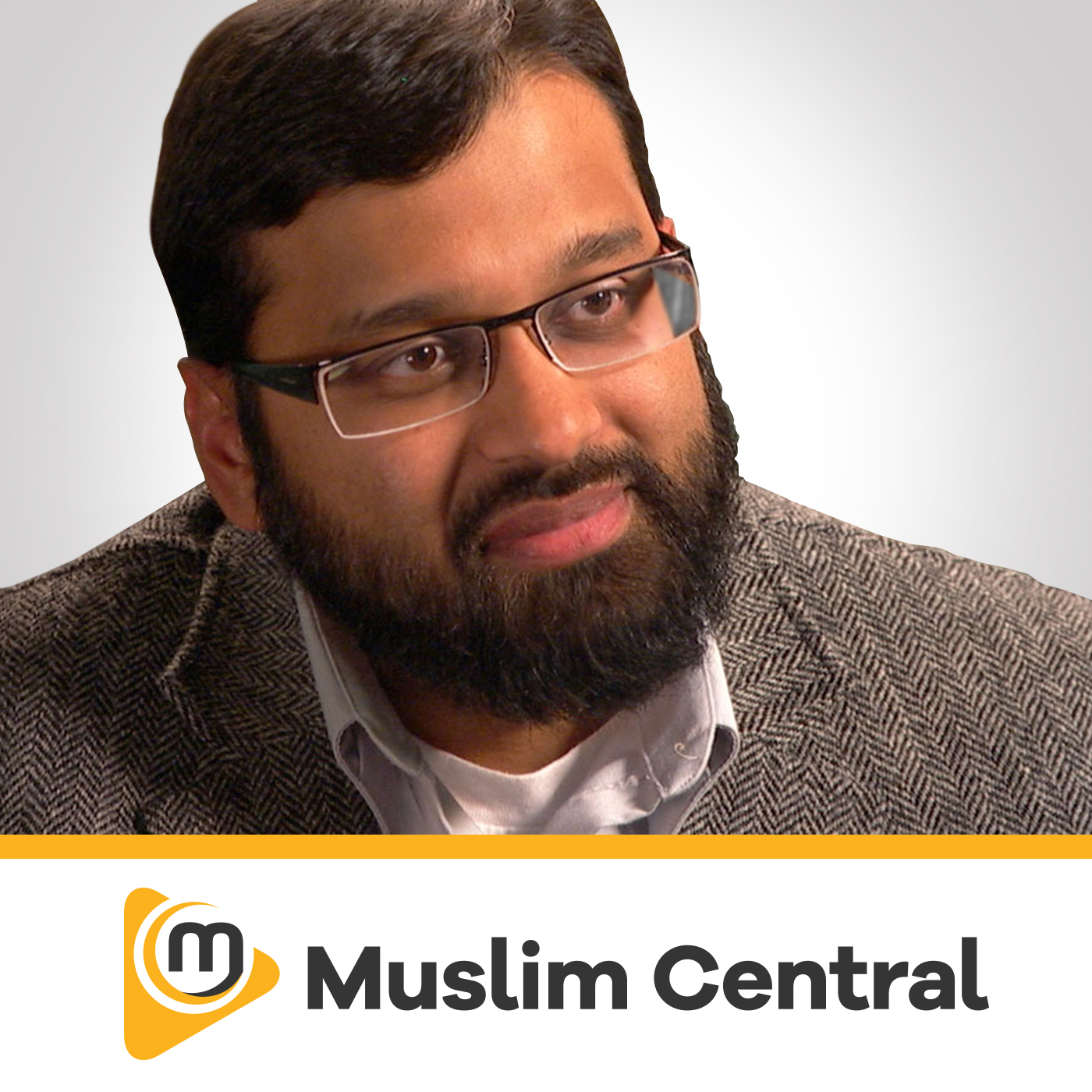
Yasir Qadhi
Muslim Central
Yasir Qadhi was born in Houston, Texas and completed his primary and secondary education in Jeddah, Saudi Arabia. He graduated with a B.Sc. in Chemical Engineering from the University of Houston, after which he was accepted as a student at the Islamic University of Madinah.
After completing a diploma in Arabic, he graduated with a B.A. from the College of Hadith and Islamic Sciences.
Thereafter, he completed a M.A. in Islamic Theology from the College of Dawah, after which he returned to America and completed his doctorate, in Religious Studies, from Yale University. Currently he is teaching at Rhodes College, in Memphis, TN.
After completing a diploma in Arabic, he graduated with a B.A. from the College of Hadith and Islamic Sciences.
Thereafter, he completed a M.A. in Islamic Theology from the College of Dawah, after which he returned to America and completed his doctorate, in Religious Studies, from Yale University. Currently he is teaching at Rhodes College, in Memphis, TN.
Episodes
Mentioned books

Aug 11, 2013 • 1h 14min
Seerah 55 Return From Al Muraysi And Slander of Aisha P1
This lecture by Shaykh Yasir Qadhi sees explanations being given about various topics that shall be cited below.
We start with the testimony of Zaid ibn Arqam and how it was rejected and Surah Munafiqun was revealed and the story behind this revelation.
A thorough explanation is also given about Abdullah ibn Ubayy, the head of Al Muraisi and his son Abdullah ibn Abdullah ibn Ubayy. The son’s conversion to Islam is also a story that has profound importance and is crucial.
The topic of the shameful slander of Aisha RA is next up for discussion and is explicitly cited in a hadith from Al Bukhari that is elaborately long and is referenced in first person by Aisha RA herself. It involves a lost necklace, a sahaba by the name of Safwan bin Muattal RA and the rumour inflicter - Abdullah ibn Ubayy ibn Salul.what transpired in that event? Why did this slander go beyond control? Do listen intently to fully comprehend the actuality of the incident and put all false stories to rest.
A discussion is also done on the concept of Hijab - what it actually means and what is Allah's ruling regarding it in the Qur'an.
Aug 11, 2013 • 1h 14min
Seerah 54 Expedition of Al Muraysi And Banu Al Mustaliq
In this lecture, Shaykh Yasir commences with a brief discussion on Zaid Ibn Thabit and how he was instrumental in many important decisions from an Islamic point of view. Why was he chosen from the Sahabas to learn Hebrew? Listen intently to find out.
A major event that happened in and around the same time was the blessed birth of the grandson of the Prophet ﷺ - Al Hasan ibn Ali ibn Abi Talib RA. And then followed the birth of Husayn Ibn Ali Ibn Abi Talib RA in the very next year. These two grandsons have profound status in Islam and merit huge amounts of respect for what they shall do in the future in the way of Islam.
The rules of Azaan in the ear after birth, the rulings related to Aqeeqah and many such positions were elaborated upon at this time.
"Hasan and Husayn are the leaders of the young men of Jannah and there father is better than them." This was a famous hadith regarding these stalwarts of Deen.
The next major incident that occured is the expedition of al-Muraisi and Banu al-Mustaliq where al-Muraisi was the location and Banu al-Mustaliq was the tribe. They were siding the Quraysh against the Muslims on multiple occasions. Al-Haairs was the chieftain of the Banu al-Mustaliq.
When the Prophet ﷺ heard of the plans of Banu Al Mustaliq and their evil intentions against the Muslims, he made an expedition with 700 sahabas during 6 H and they achieved an easy victory over them. How did this happen and who proved helpful here? Shaykh Yasir answers beautifully.
Two major events took place after the expedition of Al Muraisi:
The capture of the daughter of the chieftain of the Banu Al Mustaliq tribe, Juwayriyya bint al-Harith and her subsequent marriage to the Prophet ﷺ.
The embracing of Islam by the entire tribe of Banu Al Mustaliq.
Aug 11, 2013 • 1h 12min
Seerah 53 Expulsion of Banu Nadheer
In this aforesaid lecture, Shaykh Yasir attempts to provide explicit details on the topic that is marked with controversy - the expulsion of Banu Nadheer which was in actuality, an event that led to the Battle of Ahzab as this tribe was chiefly if not solely responsible for the Battle.
The Banu Nadheer were owners of massive lands filled with date palm trees and their fortresses. Huyayy ibn Akhtab was the chieftain of Banu Nadheer whose daughter is Safiyah who will be the future wife of the Prophet ﷺ. Whenever the tribe saw the Prophet ﷺ and the sahabah, their chiefs would get very happy and welcome the Prophet ﷺ. but the harsh reality was their bad intention, which was to assassinate the Prophet SAW. Of course, their evil intentions never bore success due to the help of various factors as can be heard in the lecture. Surah Ma’idah is complete with details on the treachery of the Banu Nadheer.
Many issues transpired with the Banu Nadheer that weakened them immensely of which was their self destruction of their huge fortresses and acres of date palms when being asked by the Prophet ﷺ to leave Madinah. Only the converts to Islam were asked to remain with their houses and other property.
Next in the discussion is the Tafseer of Surah Hashr and we realise why this Surah is called Hashr with reference to the tribe of Banu Nadheer.
Aug 11, 2013 • 1h 16min
Seerah 52 Background of The Wives of Prophet Muhammad
In this amazing video by Shaykh Yasir Qadhi, we delve into the absolute essential part of the Seerah of the Prophet ﷺ- a background on the wives of the Prophet ﷺ.
A brief summary is seen below on each of the blessed wives :
Sauda RA- The Prophet ﷺ married her in Shawwal and she was old and had a large build with a rather slow gait.
Aisha RA - The most beloved wife of the Prophet ﷺ. A detailed discussion is warranted for this and we shall see it later.
Hafsa RA - The daughter of Umar Ibn Al Khattab RA. The story behind this marriage is an interesting one and deserves a fair listen.
Zainab bint Khuzaimah RA - Zaynab bint Khuzayma was known as ummul masakeen because of her generous, caring,noble and loving nature. She was the most noble mother in law in the history of mankind.
Umme Salama RA - Her real name was Hind bint Abi Umayya and she was the very first lady to migrate to Madinah.
Zainab bint Jahsh RA.
Next in the discussion is the continuation of the Ghazawat that took place as time passed. One among them is Ghazwa Dhat Al Riqat which took place during Sha'ban. This Ghazwa involved a tribe called Gatafaan who was famous for their lack of morals, looting, robbery and on the other side was our beloved Prophet ﷺ leading an army of 700 men. Further details are explained explicitly and should be listened to intently.
The stories pertaining to Jabir Ibn Abdullah RA are marked with intrigue, respect and intelligence. Please do listen intently to fully inculcate similar values in ourselves and our families.
Aug 11, 2013 • 1h 10min
Seerah 51 Massacres of Al Raji & Bir Ma'una
Shaykh Yasir Qadhi now moves on to divulge details on the massacres of Al Raji and Bir Mauna which became the subject of immense grief to our beloved Prophet ﷺ.
The names mentioned above are after the names of the two wells. When the tribe of Hudhayl started planning an attack on Madinah under the leadership of Khalid ibn Sufyan al Hudhani, the Prophet ﷺ decided to attack and execute him. Abdullah ibn Unays al Juhany was assigned for this job and this occurred in Muharram, 4 H.
This tribe got in touch with two other tribes - Udal and Kaara and paid them to make the Muslims believe that they intended to accept Islam and make the Prophet ﷺ provide them with the best teachers.so, under the guidance of Asim ibn Thabit, teachers were sent to the well of Ar Riji where 100 warriors attacked them. Asim bin Thabit died a Shaheed and Allah took care of his burial. How did this happen? Delve into the lecture and find out.
Khubayb, Zaid and Abdullah ibn Tharik were those who eventually surrendered to the tribes and what transpired with them is a soul wrenching and should be listened to intently so as to comprehend fully the sacrifices that the sahabas made to protect our Prophet ﷺ and consequently our Deen.
The second incident that occurred was the massacre of Bir Mauna which was even worse in terms of magnitude and was the worst massacre one had ever seen. Bir was the major tribe of the Najd and Abul Bara Amar ibn Malik, the chieftain of Najd came to Madinah and was very impressed with Islam. He asked from the Prophet ﷺ to provide him with teachers so that he could learn more.
Amar ibn Tufail and Haram ibn Milhan are two names that make up this massacre incident and one should fathom the graveness of this treachery displayed on the part of Amar Ibn Tufail. After similar promises made at the time of Al Raji, the Prophet ﷺ provided 70 teachers and when they reached the well of Bir Mauna, they were surrounded and killed except for three - Ka'b ibn Zaid, Amar ibn Umayah and Munzir ibn Muhammad
There are numerous benefits that one can extract from these incidents and one should listen to this lecture to acquaint themselves well with these.
Aug 11, 2013 • 1h 10min
Seerah 50 The Battle of Uhud Part 5
Shaykh Yasir Qadhi culminates the series on the Battle of Uhud commencing with a mention of Safiyyah RA and her witnessing the death of Hamza RA.
The sight of the mutilated body of Hamza RA was so bad that the Prophet ﷺ cried a lot. It was clearly a matter of personal vengeance meted out to Hamza RA at the hands of the Quraysh. Mutilation was henceforth declared forbidden in Islam.The 70 Shaheeds of the Battle were now to be buried and the order was decided by the Prophet ﷺ. those who knew the Qur'an were given precedence and preference over the rest.
Only one prisoner of war was captured by the Muslims whose name was Abu Uzza and he was executed in the battlefield itself because of what he had done. He had betrayed the Prophet ﷺ on a promise he had made during the Battle of Badr and fought against the Muslims. Treachery was something that was unacceptable in Islam and so he met the end he deserved.
The Prophet ﷺ now returned to Madina and he went to the homes of the Shaheed to break of the news of their beloved achieving martyrdom. One such house was of Hamana bint Jahsh who was married Mus'ab ibn Umair RA.more details are shared on the rules of mourning the death of a beloved and one should listen intently to derive benefits.
Next we analyse whether the Battle of Uhud was a victory or a loss. Some pointers are shared:
In terms of the aim to annihilate the Muslims, the Quraysh failed badly whereas the Muslims were able to defend Madinah successfully.
The Quraysh left the battlefield and not the Muslims.
The Muslims had one prisoner of war whereas the Quraysh had none.
Next the Shaykh compares the Battle of Badr with that of Uhud and numerous wisdoms can be sought from this . please listen intently to unravel some of these.We also learn that nobody has a right to interfere with the Qadr of Allah as is evident in the lecture.Victory is not easily attainable and a lot of testing times, struggle , pain and suffering goes into the process as was depicted when even the Prophet ﷺ became injured.
The main lesson that we can imbibe from this battle is that disobedience to the Prophet ﷺ when they turned to the war booty as a lure of this world is what caused them the humiliation and sort of a defeat . sincerity to Allah and His Messenger ﷺ in the time of Badr gave them the honour and prestige of a victory whereas the love of the Dunya was met with a defeat.
Aug 11, 2013 • 1h 2min
Seerah 49 Muhammad injured Uhud Part 4
Shaykh Yasir Qadhi divulges details on the battle of Uhud as the series continues and numerous interesting facts come to the fore.
The Prophet ﷺ was surrounded by 9 people that included Sa'd ibn Abi Waqqas and Talha ibn Ubaydullah . there were two muhajiroun and seven ansar. Qataada ibn An Nouman Al Awsi was an Ansar and Shaykh yasir narrates his story for us to fully fathom the happenings in the Battle of Uhud simultaneously displaying the undying love , admiration and respect that all had for our beloved Prophet ﷺ.
The next incident that is shared is the incident of the death of Musab ibn Umair who bore a striking resemblance to the Prophet ﷺ in physical attributes. To top it all, he was wearing a cloak gifted to him by the Prophet ﷺ and this further aggravated the confusion when it was announced that our beloved Prophet ﷺ had been killed in the battle. The sahaba were still searching for the Prophet ﷺ when Ka'b ibn Malik RA finally discovered him.
When Prophet Muhammad ﷺ was found, two arrows were seen piercing his helmet. Abu Ubayda and Abu Bakr RA sought to dislodge the arrows themselves and at the end, Abu Ubayda was given the coveted job which left him without a few teeth as he pulled the arrows out.
The story of Ubay ibn Khalaf, the filthy evil mushrik and his vow to kill the Prophet ﷺ is next up for discussion. Nothing of the sort happened and only the opposite took the form of reality. Allah’s wrath unfolded on him by leaps and bounds which clearly makes it evident that Allah becomes even angrier on those who kill the Prophet.
When the Prophet ﷺ returned home, his wounds were washed by Fatima RA and the wounds were severe . so she had to burn the date palm leaves and apply its paste on the wounds in order for the bleeding to cease. The other women of the household such as Aisha RA and Umme Saleem RA attended to the requests for water, food canisters etc in the Battle of Uhud.
Aug 11, 2013 • 1h 13min
Seerah 48 Martyrdom of Hamza Uhud Part 3
Shaykh Yasir Qadhi delves into further discussions on the battle of Uhud and analyses the after effects of the fleeing of Quraysh post the attack by the Muslims on them.
The most prized possessions in any war are good weapons, good armour, animals, tents and much more. When the Muslims saw these left behind by the Quraysh, they instantly began accumulating the ghaneema. But it did not occur in line with the rulings of the Fiqh. Consequently, they didn't even get their share and also made a disaster that we shall learn about in the minutes ahead.They were devoid of the booty or the victory of the battle.
The only person who inflicted a genuine military loss on the Muslims was Khalid ibn Waleed at the time and even as he was leaving the battlefield, he was constantly thinking of ways to achieve a victory. At last, he sensed an opportunity in the wake of the collection of the ghaneema by the Muslims without an armour and hence, he returned with an entourage and counter attacked the Muslims.
One of the most tragic events during the course of these events was the death of Husayn ibn Jabir who was the father of Hudhayfa or 'Yaman'. Hudhayfa embraced Islam before the Prophet ﷺ migrated and was known as 'the keeper of secrets'. Why was he nicknamed so? Listen intently to discover valuable facts and information. Hudhayfa and Yaman were rewarded with the reward of Badr without fighting in Badr.
So when in the battle of Uhud, a group of Muslims on listening to the false whispers of shaytan and also the fact of being unable to recognize Yaman began killing him. Hudhayfa saw this act and yelled profusely to stop doing so but his pleas fell on deaf ears. The Prophet ﷺ paid him the Diya of a 100 camels for his father from the baytul maal. Hudhayfa distributed the acquired money to the poor and remained good henceforth.
Aug 11, 2013 • 1h 15min
Seerah 47 The Battle of Uhud Part 2
This lecture by Shaykh Yasir Qadhi continues with the happenings of the Battle of Uhud and we gather more details on the same.
He arrives on Uhud on the 14th of Shawwal, 3 H. They come via date palms field rather than a highway. Why does he do so?
The Prophet ﷺ started organising his army and anyone under the age of 15 was sent back such as Abdullah ibn Umar, Zaid ibn Thabit, Usama ibn Zayd ibn Harithah, Abu Saeed al Khudri, Zaid ibn Arqam.
Raf'i ibn Khadij was 14 but yet he was asked to remain because he was an excellent archer. Samurah ibn Jundu also begs to stay since he was an excellent wrestler and had defeated Rafi several times.
The Prophet ﷺ encourages his army on the 15th of Shawwal to prepare them for the battle and hence, asks the Sahaba after taking out his own sword "who will take this sword from me and fight?" Zubair ibn Al Awwam was the first to volunteer. Then the Prophet ﷺ asked "who will give the sword the right it is owed". Abu Dujana said, "and what is the Haq of the sword?" The Prophet ﷺ said, "you fight the enemy with it until it breaks".
The first thing the Quraysh tried to do as the battle began was the separation of the Ansar and Muhajiroon. How did they do so? Listen intently.
The story of the mubaraza that took place between Talha ibn Abi Talha and Ali ibn Abi Talib is an interesting one and illustrates the bravery of Ali Ibn Abi Talib RA at the same time valuing the ties of kinship.
Hamza RA, alongside Ali and Abu Dujana RA killed a plethora of Qurayshis and thus, the initial impact of the Battle of Uhud was devastating. The Muslims had the upper hand and forced the Quraysh to take a back foot.
Aug 11, 2013 • 1h 22min
Seerah 46 The Battle of Uhud Part 1
The lecture delves on the next big battle that took place after Badr - the Battle of Uhud. Shaykh Yasir attempts to elucidate vividly on the battle .
The battle of Uhud was a war that was undertaken by the people of Mecca or the Quraysh to avenge Badr. the calamity and loss incurred by them ignited the battle of Uhud as a means of revenge. There were many reasons for this war which included religious, political, economic and social causes.
The Battle of Uhud took place in Shawwal, 3H. The Quraysh set out for Uhud on the 7th of Shawwal, 3 H and reached there in a meagre 7 days.The Quraysh boasted of an army of 3000 men, 200 horses, 700 armours for men (which they managed to gather due to the support of the two major tribes of the time - Kinana and Tihama). Abu Sufyan was the chieftain and was flanked by his strengths -on the right was Khalid bin Waleed and on the left flank was Ikrimah ibn Abu Jahl.
With the timely help of Al Abbas, the Prophet ﷺ is informed of the news of the Battle and he immediately rushed to the leaders of the Ansar particularly Sa'd ibn Rabi'ah. The Prophet ﷺ began his preparations for the war by dividing his army into three main groups - The muhajiroun under Mus'ab ibn Umair, the Aws under Usail ibn Hudhay and the Khazraj under Al Hubab ibn Al Munthir.
The geography of the mountain of Uhud is explained which is that it is not just one mountain but a whole series of mountains stretching over a mile long situated in the north or northwest of Madinah. The Prophet ﷺ has said "Uhud is a mountain of Jannah".
Why did the Prophet ﷺ go to Uhud? What was the military genius behind this decision? Shaykh Yasir unfolds the answers and we will be truly mesmerised by the reasoning.
Eventually 700 muslims reached Uhud and they set up their camps.
The Battle of Uhud is an excellent illustration of the trust and Iman one should have in Allah. Indeed when we have Allah on our side we can accomplish anything. In spite of being under armoured and lack of enough animals and everything against them, the Muslims under the able leadership of Prophet ﷺ displayed impeccable valour, strength, trust and Iman in Allah and they were rewarded generously as we shall see in the upcoming lectures.

