

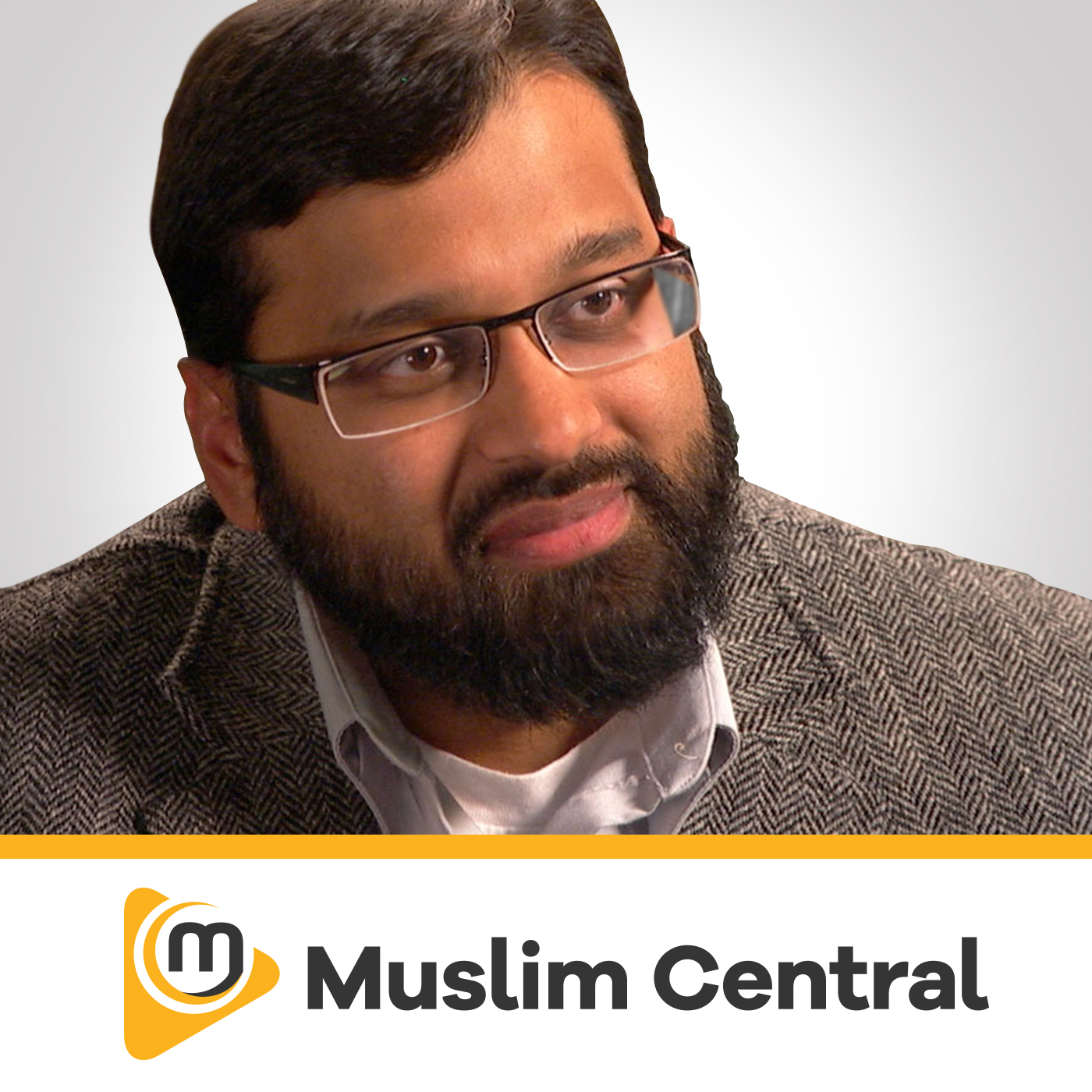
Yasir Qadhi
Muslim Central
Yasir Qadhi was born in Houston, Texas and completed his primary and secondary education in Jeddah, Saudi Arabia. He graduated with a B.Sc. in Chemical Engineering from the University of Houston, after which he was accepted as a student at the Islamic University of Madinah.
After completing a diploma in Arabic, he graduated with a B.A. from the College of Hadith and Islamic Sciences.
Thereafter, he completed a M.A. in Islamic Theology from the College of Dawah, after which he returned to America and completed his doctorate, in Religious Studies, from Yale University. Currently he is teaching at Rhodes College, in Memphis, TN.
After completing a diploma in Arabic, he graduated with a B.A. from the College of Hadith and Islamic Sciences.
Thereafter, he completed a M.A. in Islamic Theology from the College of Dawah, after which he returned to America and completed his doctorate, in Religious Studies, from Yale University. Currently he is teaching at Rhodes College, in Memphis, TN.
Episodes
Mentioned books

Dec 9, 2013 • 1h 10min
Seerah 72 Umrah Al Qadah
Shaykh Yasir Qadhi explores the nuances relating to the Umrah Al Qadah which they did to compensate for their missed Umrah at Hudaybiyyah. The Prophet ﷺ left from Madinah to Mecca in 7H with around 2000 muslims.
Rumours were rife amongst the people of Quraysh that the Muslims of Madinah had been weakened due to being affected by diseases. Thus, in order to prove their good health, certain measures were exercised upon the insistence of Prophet Muhammad ﷺ such as raising their voices loud with Talbiyah, exposing their right shoulder while doing the Umrah and engaging in brisk walking around the Kaaba. And it did make an impression on the Quraysh as the rumours ended immediately.
The Prophet ﷺ married Maymunah bint al Harith RA when he was in Mecca for the Umrah. He released himself from Ihram before marrying her. There is conflict on this incident and Shaykh Yasir elaborates on them and puts our doubts to rest.
After Umrah al Qadah, three people from the Quraysh converted to Islam and this illustrates the magnitude of the impression created by the Muslims on the Quraysh. They were :
Amr ibn Al As - The statesman and politician of the Quraysh.
Khalid ibn Waleed ibn Mughira - genius of a military leader of the Quraysh.
Uthman ibn Talha - The keyholder of the Ka'bah.
Dec 9, 2013 • 1h 7min
Seerah 71 Letters To Various Rulers
Shaykh Yasir Qadhi picks up the topic of the various letters and emissaries the Prophet ﷺ sent to various rulers after the battle of Khaybar.
The first letter was the letter to Najashi which was a message to accept Islam giving the emperor the promise of Allah forgiving his sins and encouraging him to come to the religion of Allah.
The second letter was sent to Caesar, the emperor of Rome whose name was Heraclius. The Prophet ﷺ wrote to him to submit to the will of Allah and if done, he would be safe. Otherwise, he would have to face the wrath of Allah in one way or the other.
The next letter was sent to the emperor of Persia whose name was Khosrau bearing the same message as the above.
Benefits of these letters:
Every single letter that was sent to a foreign land resulted in the conversion of that land to Islam which was the ultimate divine Qadr of Allah.
The response of the rulers are of theological significance for us.
It is not haraam to imitate the norms of culture and western customs as long as we conform to the Shariah of Islam.
Dec 9, 2013 • 59min
Seerah 70 The Battle Of Khaybar Part 2
Shaykh Yasir Qadhi begins this lecture with a discussion on one of the wives of the Prophet ﷺ named Ramlah bint Abi Sufyan, the daughter of Abu Sufyan , leader of the Quraysh, who was also known as Umme Habiba. Shaykh analyses the reasoning behind proposing marriage to the Prophet ﷺ proposed to her, the leader of the Quraysh.
The wives of the Prophet ﷺ:
Khadija RA
Sauda RA
Aisha RA
Hafsah RA
Zainab bint Khuzayma RA
Umme Salama RA
Juwairiyah RA
Zainab bint Jahsh RA
Ramlah bint Abu Sufyan RA
Next is a discussion on the stories relating to Huyayy ibn Aktar, the leader of the jews of Banu Nadheer, the marriage of the Prophet ﷺ with Safiya bint Huyay ibn Akhtar and many more. The Prophet ﷺ had immense love for her which made the other wives considerably jealous and hence, she didn't enjoy their support.
After the battle of Khaybar, came the magnanimous event in the history of Islam that set the precedent for the maximum number of recorded Hadith by a single person and he was Abu Hurairah RA. His actual name was Abdur Rahman ibn Sakar and he came from the tribe of Ad-Daws.
Dec 9, 2013 • 1h 20min
Seerah 69 The Prophet's Marriage To Zaynab
Shaykh Yasir Qadhi goes on to discuss the pointers regarding the marriage of the Prophet ﷺ to Zainab RA and what was the importance of this event.
Zainab or Bara was a Qurayshi from the tribe of Banu Khuzayma whose mother was Umaima bint Abdul Muttalib. The Prophet ﷺ sent a proposal to her for his 'adopted son' Zaid Ibn Harithah RA who was called Zaid ibn Muhammad. But Zainab RA rejected this proposal initially claiming lack of calibre and status of the groom. But after the revelation of the verse in Surah Ahzab, she agreed.
When did the Prophet ﷺ marry Zainab? The marriage was a luxurious affair and it was the best till date. The speciality and the greatness of this marriage is illustrated in various Hadith. In Bukhari, Anas RA said "the verse of hijab were revealed regarding Zainab's marriage. And Zainab would boast to the other wives 'Allah has married me from above the seven heaven'." In another version she would say "as for you, your fathers and brothers married you off to the Prophet ﷺ, as for me Allah married me to the Prophet ﷺ". What is the story behind this? Shaykh Yasir Qadhi elaborates further.
There are 2 main versions to the story of the marriage of the Prophet ﷺ to Zainab RA and both versions have been explicitly explained also citing the pros and cons of each. Do listen intently to fully comprehend this event .
Zainab RA was called the mother of the orphans and poor and rightly so as she never ran behind money and lived a life of piety and simplicity. She considered money to be a Fitnah. In 20 H, she became the first wife of the Prophet ﷺ to expire. Umar RA prayed her janaza.
Dec 9, 2013 • 1h 13min
Seerah 68 The Battle Of Khaybar Part 1
Shaykh Yasir Qadhi now moves on to the next major pre - emptive battle which resulted in the expulsion of the jews from the city of Madinah finally. He begins by giving a quick recap on the way they reached Arabia, their origins, the events that transpired and much more.
The first tribe to be expelled was the Banu Qaynuqa followed by Banu Nadheer and then Banu Quraydha. The final tribe was executed for treason as has been elaborated upon in previous lectures. The first two tribes moved to Khaybar and began making their existence there. Their leaders were Huyayy ibn Akhtab and Salam ibn Abul Huqayq who were clear and hostile enemies of the Muslims in Madinah. They were the sole Jew troublemakers and threat for the Muslims and needed to be dealt with .
So the Prophet ﷺ gathered an army of 1700 men and marched towards Khaybar in the month of Muharram. After a long fight against the people of Khaybar, the Prophet ﷺ hands over the flag to Ali Ibn Abi Talib RA to take charge and do not return until they have testified that Allah is the One and only Lord and Muhammad ﷺ is His Messenger SAW. Otherwise, they will cease to be protected from the Muslims.
Ali RA killed Mirhab and claimed the biggest victory for the Muslims,after claiming the fortress of Na’im and As Sa’ab. With the defeat of the castle of Zubair, the Muslims proclaimed victory on one half of Khaybar. The other half of Khaybar constituted 9 mini battles and was certainly not a walk in the park for the Muslims.
Eventually, victory was achieved and so as a safety net, the people of Khaybar struck a deal which was lucrative to the Muslims. What was the deal? Listen intently and be mesmerised by the unique ways in which Allah’s Qadr works.
As a result of the battle of Khaybar, the Quraysh were now even more vulnerable and felt demoralised. The people of the land of Fadak also agreed to the exact same conditions as the people of Khaybar and hence, without even stepping foot there, Allah gifted the land of Fadak to the Prophet ﷺ from which he managed the expenses of his family.
Khaybar was without an iota of doubt, the greatest conquest seen in the seerah of the Prophet ﷺ as it resulted in a huge amount of Ghanima - land, sheep, goats,food, armour, weapons and much more.
Dec 9, 2013 • 1h 23min
Seerah 67 The Treaty Of Hudaybiyya Part 5
Shaykh Yasir Qadhi discusses the Tafseer of Surah Fath in this final part of the Treaty of Hudaybiyyah and we realise that this Surah was revealed in its entirety - in one go at a single time.
Next up for discussion are the Seerah benefits, the theological benefits, the Fiqh benefits and the modern political benefits of the Treaty of Hudaybiyyah.
Seerah Benefits - this includes making the Quraysh recognize muslims as equals, bringing about a sense of peace and security to permit the Muslims to look into other major pressing issues in the city of Madinah, interaction of the Muslims and pagans without any fighting , mixing of the pagans and the Muslims and promotion of buying, selling, spreading of the message of Islam which led to many more converts to Islam.
Theological Benefits - The issue of Al-Fa'l was clearly elaborated upon,the permissibility of using the remains of the Prophet ﷺ wudu, spit, hair and many more to seek blessings, the issue of ascribing the happenings of any events to anyone other than Allah, the issue of Qadr,the explicitness of the Qur'an and the Sunnah removing all need for anyone else’s opinion on religious issues.
Fiqh Benefits - The permissibility of engaging in peace treaties with a completely evil enemy,the removal of one’s Ihram in the event of discontinuity of Hajj or Umrah for a legitimate reason only and hence, to shave his hair, sacrifice the animal and consequently remove his ihraam.
Modern Political benefits.
Dec 9, 2013 • 1h 19min
Seerah 66 The Treaty Of Hudaybiyya Part 4
Shaykh Yasir Qadhi now begins to elaborate on the incidents that happened after the Treaty of Hudaybiyyah came into effect.
The first incident is related to the son of Suhail ibn Amr - Abu Jandal. On hearing of the return of the Prophet ﷺ to Madina, Abu Jandal who was captured at the hands of the Quraysh made a headway to Hudaybiyyah. But his father demanded that his son be returned to him abiding by the clause. Thus, the Prophet ﷺ had to return Abu Jandal but asked him to never lose hope.
What happened next? Listen intently to inculcate the very same trait of Abu Jandal - uninhibited and unabashed love for Allah and His Messenger ﷺ.
The next important incident is that of Umar RA anger due to the terms of the Treaty and how it was a blatant disregard for the Muslims and how the Prophet ﷺ could have agreed to the terms and conditions.He is calmed down by Abu Bakr RA.
To release themselves from the state of Ihram which they had assumed when they had made the decision to got to Mecca, the Prophet ﷺ followed by the Sahabas shaved their hair, sacrificed their camels and headed back to Madinah.
Umar RA now feels the need to apologize to the Prophet ﷺ for his lapse in respect and regard for the Messenger of Allah ﷺ. So he tries his best to strike a conversation with the Prophet ﷺ but is met with no response. Finally, when the Prophet ﷺ calls him, he is elated and overjoyed beyond measure and this makes way for the Prophet ﷺ to recite the verses of Surah Fath which was Allah’s revelation to honour the Sahabas who had participated in the Treaty of Hudaybiyyah. Allah has praised them with profound and beautiful poetry and hence, Umar RA doubts are finally put to rest.
When and how did Prophet ﷺ miss his prayers? What happened that caused a lapse of this sort? Shaykh Yasir Qadhi divulges details and it is very amazing to know and gives us some assurity on missed Salah for genuine reasons.
Dec 9, 2013 • 1h 20min
Seerah 65 The Treaty Of Hudaybiyya Part 3
Shaykh Yasir delves into the events that transpired after Uthman Ibn Affan RA was sent to negotiate with the Quraysh.
As Uthman RA entered Mecca, he was met with stiff opposition. But with the assistance of his cousin, Abaan ibn Saeed ibn Al Aas, he was able to enter Mecca easily.then, Uthman RA met with Abu Sufyan who is his cousin from the Banu Umayyah. The Prophet ﷺ had asked of Uthman RA to meet all the Muslim converts and comfort them and reassure them of Allah’s presence and help. These meetings and negotiations took a longer time than expected and hence the sahabas began to fear for Uthman RA and assumed the worst - that he had been killed.
The rumours reached the ears of the Prophet ﷺ and he decided to avenge the death of Uthman RA. A crier was sent to all the muslims that Jibreel AS has come down to the Prophet ﷺ asking the Muslims to give allegiance to him to pledge to fight the Quraysh to death. This oath was called 'Bayat Al Ridwan'.1400 sahaba participated in Baiatul Ridwan. As for the pledge of support of Uthman RA, the Prophet SAW himself took the oath on behalf of him. These people are given a status right after the Badriyoon.
When this development reached the Quraysh they sent an official delegation with Mikras ibn Hafs. But it was unsuccessful and hence,the senior most and highest level delegate, Suhail ibn Amr was sent to consolidate a negotiation.
The Prophet ﷺ and Suhail agree to form a treaty and Ali ibn Abi Talib RA was the scribe for this treaty. The following were the terms and conditions of the Treaty of Hudaybiyyah:
There will be no fighting between the two parties for the next 10 years.
Any person was free to choose the party he wanted to pledge his support to.
If any Makkan went to Madinah, then Muslims would return him to Makkah, but if any Muslim from Madinah went to Makkah, he would not be returned.
That year the Muslims would go back without entering Makkah. And Muhammad ﷺ and his followers could enter Makkah the next year, spend three days and perform Umrah.
This agreement was a blatant disregard for the wishes of the Muslims but Allah had planned a better and far more lucrative deal for the Muslims as shall be seen in the realization of a great victory for the Muslims.
Dec 9, 2013 • 1h 27min
Seerah 64 The Treaty Of Hudaybiyya Part 2
Shaykh Yasir Qadhi takes off from where he had left the previous lecture which discusses the strategies undertaken by the Muslims and the Quraysh during Hudaybiyyah.
To counter the Muslims who were camped at Hudaybiyyah,the Quraysh launched a surprise attack from Tan'im at around Fajr. The plan failed miserably as the Muslims were more than prepared to tackle them and so the Quraysh had to surrender.
The next stage was the negotiations and how the constant exchange of emissaries took place to bring forth a mutual consensus. One of the leaders of Khuza'a volunteered to be an emissary and he was not Madani or Qurayshi - Budail. The first person to be sent for negotiation from the Quraysh was Uruwa ibn Masud who belonged to the tribe of Taqif. What transpired between these two parties makes up a chunk of the important lecture and should not be missed.
The Quraysh also send Al Hulays ibn Alkama from the tribe of Kinana to which the Prophet ﷺ sent a Qurayshi. Who was this? It was Umar ibn Al Khattab RA. Why was this choice made? Simply because of his strength and bravery. But in a surprise turn of events and citing valid reasons, Umar RA suggests to the Prophet ﷺ that Uthman Ibn Affan RA is the better choice of candidate. How so? Get your queries answered as we listen further into the lecture.
The suggestion is taken into account and is accepted by the Prophet ﷺ and so he send Uthman ibn Affan RA for a negotiation. What happens next?
Dec 9, 2013 • 1h 15min
Seerah 63 Between The Battle Of Khandaq And Hudaybiyya P1
Shaykh Yasir Qadhi now begins to discuss one of the most fundamental chapters in the history of Islam - the Treaty of Hudaybiyyah. This was a stepping stone of sorts to the conquest of Mecca which is also called ‘a clear victory’.
During the 6th year of the Hijrah, the Prophet ﷺ dreamt that he was doing tawaf, wearing ihram and shaving his head all of which depict the Umrah. So, the Prophet ﷺ took this as a sign from Allah and shares his intention to do umrah. The Sahaba display intense excitement and they leave from Madinah to Mecca on the 1st Dhul Qa'dah, 6H.
The Prophet ﷺ reaches the miqaat of Madinah called Dhul Hulayfah, and he offers two rakat there before heading towards Mecca after which he assumed the state of Ihram. Then he consecrated the animals, and sent a sahabi Busl ibn Safwan al Kazaai to go to Mecca and gather information on the Quraysh. Busl informs the Prophet ﷺ that they have armed themselves and have sent Khalid ibn Waleed to camp near Kumayn - which is a plane right outside Mecca.
After having spent the entire day walking and well into the nightfall do they finally reach Hudaybiyya. This is when the camel of the Prophet ﷺ refuses to budge and everyone comes to a complete standstill. The Sahabas complain of the stubbornness of the camel. But they are rebuked by the Prophet ﷺ on their thought and instead he says that it is a sign from Allah and hence, should be adhered to strictly.
Hence, they camped there and went to the well of Hudaybiyyah where, the water had completely dried out which sent the sahabas into a state of frenzy due to lack of any more water with them.the Prophet ﷺ then showcased a miracle and with that water began to fill the well. The entire camp of sahabas of 1400 people drank from that well.

