

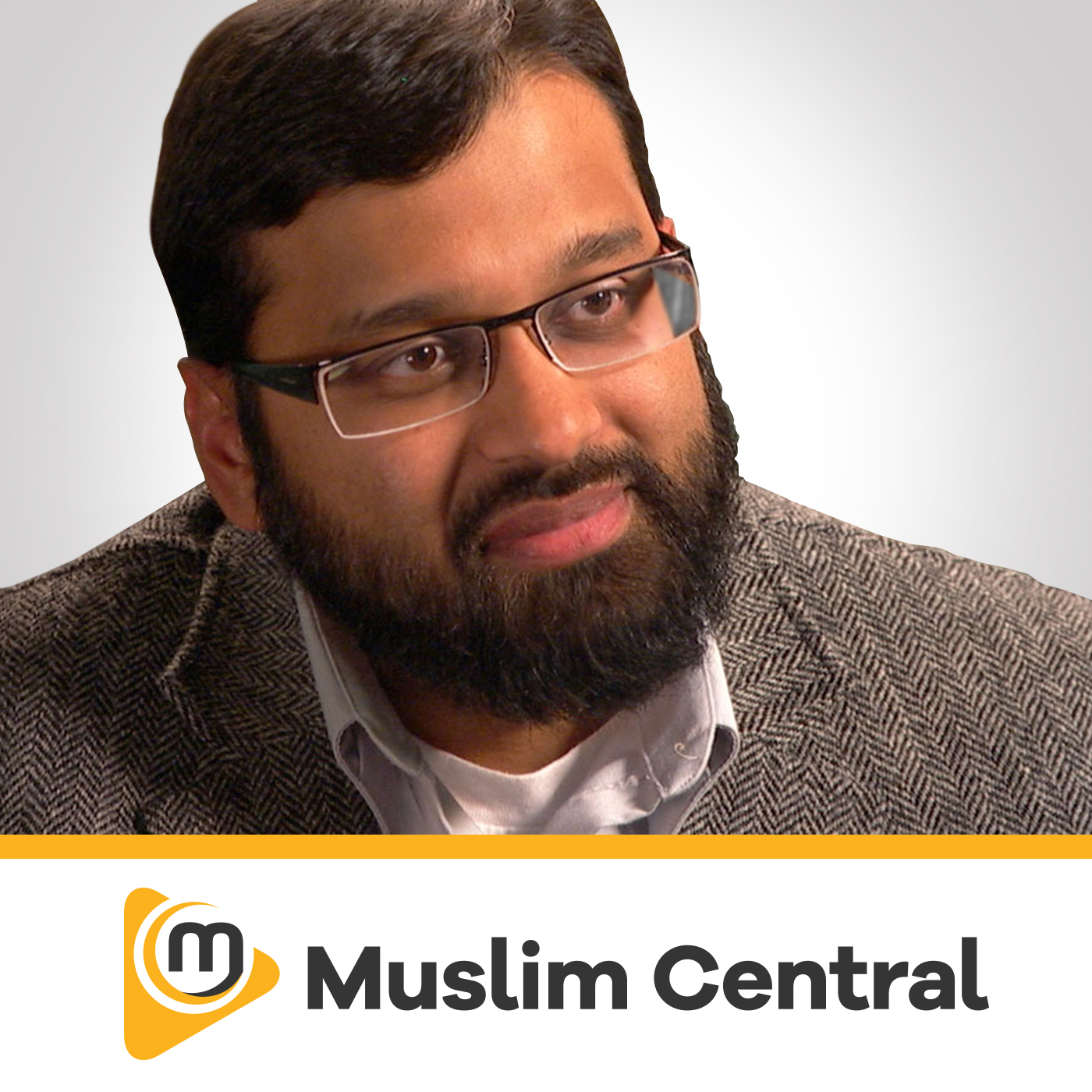
Yasir Qadhi
Muslim Central
Yasir Qadhi was born in Houston, Texas and completed his primary and secondary education in Jeddah, Saudi Arabia. He graduated with a B.Sc. in Chemical Engineering from the University of Houston, after which he was accepted as a student at the Islamic University of Madinah.
After completing a diploma in Arabic, he graduated with a B.A. from the College of Hadith and Islamic Sciences.
Thereafter, he completed a M.A. in Islamic Theology from the College of Dawah, after which he returned to America and completed his doctorate, in Religious Studies, from Yale University. Currently he is teaching at Rhodes College, in Memphis, TN.
After completing a diploma in Arabic, he graduated with a B.A. from the College of Hadith and Islamic Sciences.
Thereafter, he completed a M.A. in Islamic Theology from the College of Dawah, after which he returned to America and completed his doctorate, in Religious Studies, from Yale University. Currently he is teaching at Rhodes College, in Memphis, TN.
Episodes
Mentioned books

Apr 23, 2014 • 1h 4min
Seerah – 82 Battle of Hunayn Part 1
Shaykh Yasir Qadhi now moves on to the Battle of Hunayn and what set this battle into action and all the other relevant details.
The Prophet ﷺ was weary of the news doing the rounds of the possible attack of the tribe of Ta’if - Taqif and the Hawazim in order for them to regain control of the Kaaba, to gain leadership of mecca after the Quraysh who had been defeated and also to re assume idolatry.
The Prophet ﷺ after gaining help from some , headed towards Hunayn and arrived there on the 10th of Shawwal. The chieftain of the tribe of Taif was Malik ibn Awf A-Nasri.
The Taqif knew their area inside out thoroughly which was a given. They used it fully to their advantage. They tricked the Muslims into gathering in a valley by presenting some of their army members while in reality, their archers were mounted atop the mountains and were waiting patiently for all the Muslims to gather collectively. This is when the Taqif started bombarding the Muslims with arrows and this led the Muslims to flee like there was no tomorrow.
The Prophet ﷺ witnessed this and made a plea citing tribal loyalty and love for Islam as the enticing factors to bring back the Muslim to the battlefield. He first called the allegiance bearers of Hudaybiyyah followed by the Ansar and then the rest. When they had all been brought to the valley, the Prophet ﷺ threw dust onto the face of the archers and they were left completely blinded and hence, the arrows proved useless in this scenario.
Apr 16, 2014 • 1h 13min
81 The Conquest of Makkah Part 6
Shaykh Yasir Qadhi sets the tone for the conclusion of the series on the conquest of Mecca by sharing the benefits, morals and Fiqh in this regard. The conversions of two people are discussed in the start and they are Umme Hane and Abdullah ibn Za'bari.
During the 19 day stay of the Prophet ﷺ in Mecca, he taught a few important things:
The sanctity of Mecca was reinstated.
Prohibition of sale of alcohol, idols and carcasses.
Prohibition of zawaaj mut'ah.
In this time,he also sent a number of expeditions around Mecca to spread the message of Islam to the neighboring tribes and destruction of all forms of idols. The temple idols were destroyed on the instruction of the Prophet ﷺ to Khalid Ibn Waleed RA.
Khalid Ibn Waleed once made a serious lapse of judgement and committed a grave error and this involved the tribe of Banu Jadeema. He was entrusted with the job of inviting them to Islam. But a misunderstanding ensues. What was it? What prompted Khalid RA to kill them? Listen intently and discover.
When the sad news reached the Prophet ﷺ, he stood up, faced the Ka'bah and raised his hands. What did he say?
A few Fiqh benefits we derive from this lecture:
Women are permitted to take money from the husband without their knowledge if done for a valid reason.
Sale of a Haraam item is also haram.
Salatul Duha was prayed in 8 rakaat by the Prophet ﷺ.
Apr 2, 2014 • 1h 18min
80 The Conquest of Makkah Part 5
Shaykh Yasir Qadhi continues from the previous video and we get acquainted with many more incidents and happy turn of events post the Khutbah of the Prophet ﷺ standing in front of the door of the Ka’bah.
The first thing he does is assigning Bilal RA the coveted, prestigious and honourable task of standing on top of the Ka'bah and giving the Adhan. Thus, Allah honoured Bilal RA to be the first ever muadhin in Mecca. The Qadr of Allah is highlighted here and should be celebrated. The very same man who used to cry out aloud while being persecuted is now the same voice that has been chosen by Allah SWT at the time of power.
How do the elites of the Quraysh such as Abu Sufyan, Harith ibn Hisham and Itaab ibn Aseer accept Islam despite being disbelievers even at the time of the Adhan by Bilal RA? Shaykh Yasir Qadhi divulges details.
The Prophet ﷺ now stays in Mecca for 19 days and is giving the oath of allegiance to the Quraysh men and women and the Ansar too.The bulk of the people swore allegiance but some delayed it among which were Fudaala ibn Ubaid, Safwan ibn Umayyah, Suhail ibn Amr and Abu Quhafa.
Mar 23, 2014 • 1h 6min
79 The Conquest of Makkah Part 4
Shaykh Yasir Qadhi discusses the events happening in the Conquest of Mecca and many highlights are seen.
The Prophet ﷺ divided the entire Muslim army into three major contingents which were Ansaris, Muhajiroun and a mixture of the two. Sa'd ibn Ubadah was heading the Ansar and
Khalid ibn Waleed was heading the Muhajiroun and the middle army was being led by Abd Ubaidah Amr ibn Jarrah. Totally, there were 700 Muhajiroun, 4000 Ansar in the Muslim army. One incident that happened was the handing over of the banner to Zubair ibn Al Awwam from Sa’d. What happened that led to this incident?
On the 20th Ramadan, 8H, the Prophet ﷺ finally achieved victory over the city of Mecca. What did the Prophet ﷺ do when he emerged victorious? What were the things that he did as he went around Mecca celebrating his victory and the victory of the Muslims after 21 years? Listen intently and be mesmerised by the sheer beauty of the emotions running in his mind.
After cleansing the Kaaba of idols, pictures of various people and making the Kaaba pure, the Prophet ﷺ addressed the gathering via a short Khutbah in front of him comprising of the people of Mecca, Ansar, Muhajir and more than 12,000 people. The Prophet ﷺ gave the keys of the Kaaba to Uthman ibn Talha who was handling this responsibility from before.
The conquest of Mecca was unique in every which way as in :
Zero war gains - no booty
Zero prisoners of war
No land acquired
The Prophet ﷺ did not give amnesty to the following people from Mecca:
Ikrimah ibn Jahal
Abdullah ibn Khatal
Mikyas ibn Subaba
Abdullah ibn Abi Sar'ah
Fartana
Sarah
What had they that they were deprived of mercy even though our beloved Prophet ﷺ was the epitome of mercy? Who were the ones who were executed? Shaykh Yasir Qadhi answers.
Mar 12, 2014 • 1h 5min
78 The Conquest of Makkah Part 3
Shaykh Yasir Qadhi continues his lecture on the conquest of Mecca and he discusses some major conversions to Islam that took place in this time.
We begin with the conversion of the uncle of the Prophet ﷺ, Abbas. When did he convert to Islam? This is a topic of a lot of discussion and controversy. Some opinions have been brought to the fore by the Shaykh and deserve a fair listen.
The next conversions to be discussed are that of Abu Sufyan ibn Al Harith ibn Abdul Muttalib who was the first cousin of the Prophet ﷺ and another cousin of the Prophet ﷺ named Abdullah ibn Umayyah ibn Mughira. The Prophet ﷺ accepts their conversion after a lot of compelling and pleading as they had not supported or shared the ideas and beliefs of the Prophet ﷺ with him many a time in the past despite being cousins.
The next magnanimous story of conversion is that of Abu Sufyan ibn Harb ibn Umayyah, the chieftain of the Quraysh. What a story this is! The sheer circumstances under which this magical and seemingly impossible event transpired is a lesson in itself that needs to be imbibed and inculcated. Please listen intently and be amazed by the Qadr of Allah.
Mar 3, 2014 • 1h 13min
77 The Conquest of Makkah Part 2
Shaykh Yasir Qadhi now continues to shed light on the Conquest of Mecca and we move forward from the Prophet ﷺ arrival at Mecca.
Meanwhile, a sahaba named Hatib ibn Abi Balta'ah warns the Quraysh about the advent of the Prophet ﷺ into Mecca. Who is Hatib? He was a mawla from Yemen and now to one of the Quraysh. He had written a letter to the Quraysh which bore the same message and he asked one of the ladies to deliver this letter across in utmost secrecy.
The Prophet ﷺ was informed of this development when Allah sent Jibreel AS with the information. The Prophet ﷺ in turn appointed Zubair ibn Awwam and Ali ibn Abi Talib to retrieve the letter from the lady. When his plan is exposed, Hatib is brought in the presence of the Prophet ﷺ and we realise the actual reason behind Hatib committing such a shameful act. Be sure to be mesmerised by the response of the Prophet ﷺ to this.
There are numerous points of wisdom that is imparted via the story of Hatib and some of them can be enlisted below:
The supreme knowledge of Allah SWT which overrides everything else that you might possibly know.
The power of Dua.
We have to put effort before we place our trust and belief in Allah. Only then can we be assured of help.
The humanity of the Sahaba.
The trait of forgiveness in the Prophet ﷺ is insurmountable.
The importance of verifying reports before acting upon it.
Feb 26, 2014 • 58min
76 The Conquest of Makkah Part 1
Shaykh Yasir Qadhi now dives straight into the topic of the Conquest of Mecca in immense detail.
After the Treaty of Hudaybiyyah, the tribes of Banu Kuzaa (Muslims) and Banu Bakr (pagans sided by the Quraysh) had a sort of a raid and the Banu Bakr were assisted by Suhail ibn Amr, Safwan ibn Umayyah who gave them permission to venture outside of the Treaty of Hudaybiyyah and commit this breach of trust.
The raid becomes a disastrous failure but the chieftain of Kuza'a, Amr ibn Salam al Kuzaee is angered beyond normal and he approaches the Prophet ﷺ and informs him of the breach of the treaty. The chieftain also asks help by giving three major points of consideration? What are they?
Abu Sufyan, the chieftain of the Quraysh, arrives at Madinah begging the Prophet ﷺ to annul the attack that has been planned by the Muslims for their breach of treaty. He receives no assistance from anyone in Madinah including his own daughter whom he had not met for 13 years, Umme Habiba RA.
The Prophet ﷺ makes an announcement that an expedition of large magnitude is going to be undertaken and that every male should be a part of it. The Sahabas were curious to know the destination but the Prophet ﷺ was adopting an approach of complete secrecy since he didn't want rumours to flare or even vital information to escape. He left Madinah on the 10th Ramadan, 8H to reach Mecca on the 19th of Ramadan.
Feb 10, 2014 • 1h
75 Recap & Battle of Dhat Al Salasil
Shaykh Yasir Qadhi now moves on to to discuss the Battle of Dhat Al Salasil. But before that he also indulges in a quick recap of the entire Seerah completed uptil now.
He touches base on different topics ranging from the early life in Mecca, the atrocities the new Muslims faced in Mecca at the hands of the pagans, the self imposed exile meted out by the Prophet ﷺ and the Muslims on themselves in order to relieve their torture and troubles in Mecca, the various battles fought in the light of Islam such as Badr, Uhud, Ahzab, Mu’tah and many more.
The climax of the Seerah is the Conquest of Mecca and here, the Shaykh divulges details on the smaller expeditions that preluded this conquest. Among them was the Ghazwa of Dhat Al Salasil that took place in Jumada Al Thani, 8H against the tribe of Kuda'a who had helped the Ghassanids during the battle of Mu’tah. This battle was asked by the Prophet ﷺ to be led by Amr ibn Al As alongside 300 men. This ghazwa is called so because of its name which is also the name of a pond that was Dhat Al Salasil.
An incident transpired between Amr and Abu Ubaidah. What was it and why did it happen? How did it get resolved. Get your doubts answered by Shaykh Yasir Qadhi. We also get acquainted with the man named Muhalim ibn Juthaama who was a man of hateful character. How did he die? What do we learn from his death? Listen intently to find out.
Jan 29, 2014 • 1h 7min
74 Battle of Mutah Part 2
Shaykh Yasir Qadhi continues from where he left off in the last video which is the events that transpired after the martyrdom of the three chiefs - Zayd Ibn Harithah RA, Ibn Rawawah RA and Jafar RA.
The next point of discussion is the conclusion of the result of Battle of Mu’tah. Was it a victory or a loss for the Muslims? A variety of opinions are contemplated upon and some are listed as follows:
According to the position of Musa ibn Uqtah, Al Bayhaqi and Ibn Kathir, this battle was definitely a victory since the Muslims returned successfully with the least amount of causality,they got war booty and also because of the word of the Prophet ﷺ himself calling it a victory.
Historians such as Al Waqidi, ibn Sa'ad etc declare the Battle of Mu’tah to be a loss because the Muslims lost three major leaders along with their flag, the Muslims had to retrace their steps backwards but nothing of the sort happened with the Romans.
The position of Ibn Ishaq, Ibn Abdul Baar, Ibn al Qayyim certified this battle to be neither a defeat or victory because neither side attacked the other at the end of the battle , and neither sides took any prisoners of war.
Many positions of the Sunnah come to light through this battle:
In the event of a death or tragedy, the relatives and friends should come to the forefront and offer assistance in any way possible.
Words of encouragement and consolation ought to be given.
Visiting the family of the deceased should be advocated but avoid socializing for extended periods of time.
Jan 29, 2014 • 1h 17min
73 Battle of Mutah Part 1
Shaykh Yasir Qadhi elaborates on the next major battle in the history of Islam which is the Battle of Mu’tah. It was also called 'jaysh al umara' - 'the army of leaders'. This battle was fought on Jamadal al Awwal in 8H which boasted of an army of 3000. Why did this name come to be? The Prophet ﷺ had previously never appointed as many leaders ( three of them) as he did in this battle.
Mu'tah was actually the name of a small village which was a part of the Roman province currently in Jordan. Why did this battle take place?there are many reasons among which are that it was to avenge the death of Al Harith ibn Umayr, the messenger of the Prophet ﷺ and also because this battle was sort of a prelude to the future battles against the Romans. The Prophet ﷺ wanted to ascertain amongst everyone including the Sahaba that Islam is a global message and it ought to spread its wings outside the Arabian Peninsula.
Who is Abdullah ibn Rawahah? He was an Ansari who participated in the treaty of Aqabah and he was the privileged one whom the Prophet SAW sent back from Badr to give the news of the success of Badr. What role does he play in this battle? Listen intently to discover details.
Zayd ibn Harithah RA, Jafar RA and Ibn Rawahah RA died martyrs in this battle and the grief and sadness of the Prophet ﷺ was beyond measure.

