

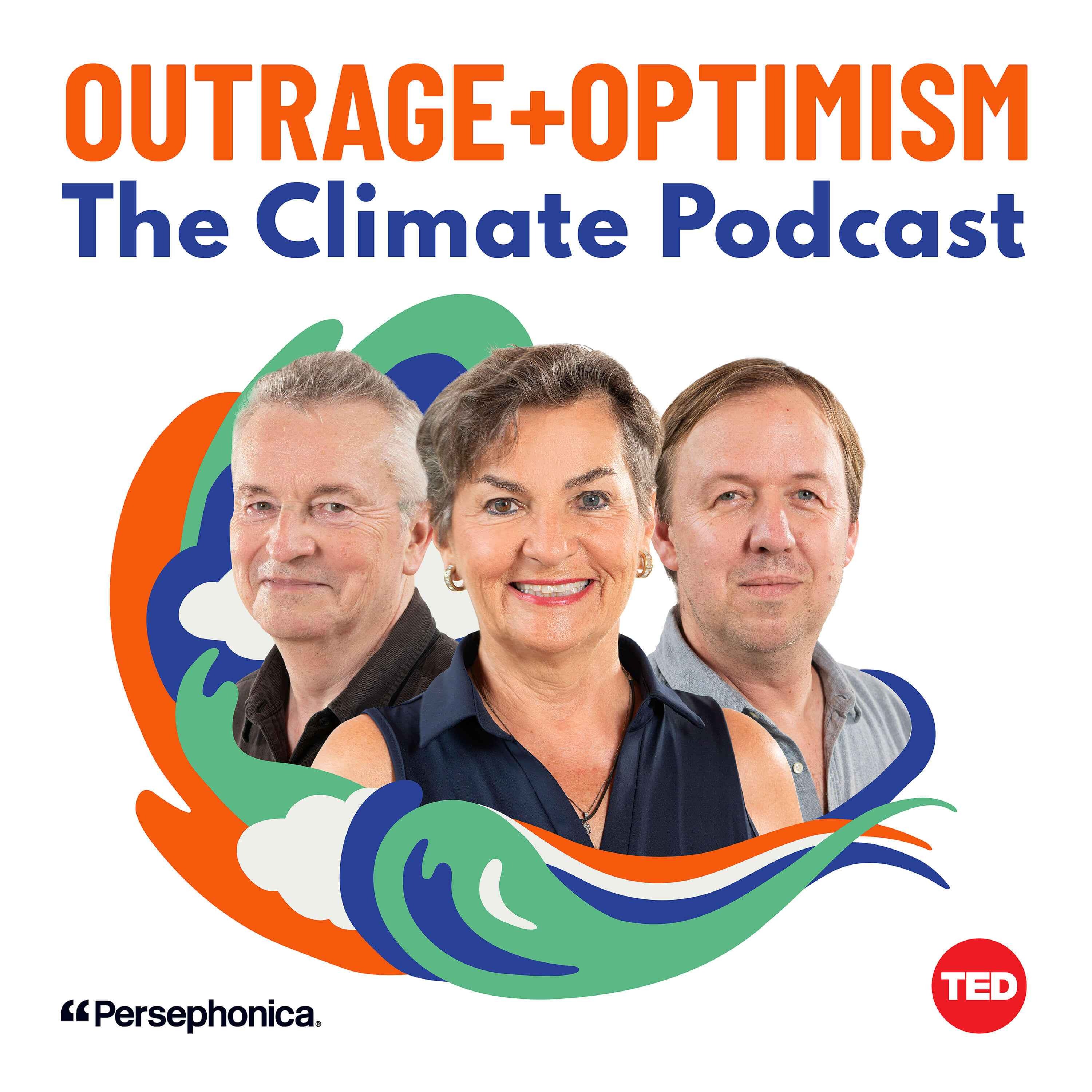
Outrage + Optimism: The Climate Podcast
Persephonica and Global Optimism
Outrage + Optimism: The Climate Podcast is for anyone who is not ready to give up on making the world a better place. For unrivalled conversations with decision makers, visionary thinkers and a community of like-minded climate optimists, join former UN climate chief Christiana Figueres, political strategist Tom Rivett-Carnac and sustainable business consultant Paul Dickinson. Each week they make sense of all the top climate news stories, go behind the scenes at crucial talks and ensure you stay informed and inspired ahead of what is set to be the consequential year for climate action.As we approach the middle of the decisive decade for world emissions, and the 10 year anniversary of the Paris climate agreement, subscribe to Outrage + Optimism: The Climate PodcastAnd join us for our special Inside COP series with co-host Fiona McRaith where we bring you behind the scenes of COP30 in Belém! And to see video content from the show, follow us on LinkedIn, and Instagram. Got a question? Send us a voice message.This is a Persephonica production for Global Optimism and is part of the Acast Creator Network. Hosted on Acast. See acast.com/privacy for more information.
Episodes
Mentioned books

9 snips
May 7, 2026 • 40min
David Attenborough at 100
David Attenborough, veteran broadcaster and naturalist famed for seven decades of nature films, reflects on youth activism, rising urgency in environmental collapse, and the moral duty to preserve life. Short, clear conversations explore understanding as the bridge between outrage and action, global agreements that worked, and reconnecting city-dwellers with nature.
26 snips
Apr 30, 2026 • 46min
“This is civilisation changing stuff”: Is AMOC the hardest climate story to tell?
Dr Willem Huiskamp, oceanographer at the Potsdam Institute, explains the Atlantic Meridional Overturning Circulation and why its weakening matters. He outlines how AMOC shapes Europe’s climate, what a major slowdown could mean for cold extremes, drought and food systems. They also discuss why this counterintuitive story is so hard to communicate and how language and practical resilience shape public response.
10 snips
Apr 23, 2026 • 43min
Beyond the Oil Crisis: What’s actually blocking the transition?
Vanessa Nakate, Ugandan climate activist fighting for justice and fair renewable investment. Mary Robinson, former President of Ireland and global climate advocate for equitable transitions. They discuss how debt traps, vested interests and misdirected subsidies lock countries into fossil fuels. They explore coalitions, production-stage solutions, and whether politics or economic pressure will speed the shift.

9 snips
Apr 16, 2026 • 43min
It’s In Our Blood: Communities vs Forever Chemicals
Sarah Alexander, executive director who led legal and policy fights to protect farms from PFAS contamination. Emily Donovan, community organizer who exposed PFAS in North Carolina and helped win first federal drinking water standards. They trace contaminated soil, water and food, recount local investigations and legal wins, and debate how communities can defend progress as regulators and industry push back.
Apr 9, 2026 • 43min
The Health Emergency Hiding in Rising Seas
Sandro Demaio, medical doctor and WHO director working on health responses to climate threats. Anne Poelina, First Nations leader using Indigenous knowledge to track environmental change. Ofa Kaisamy, Pacific adviser with lived experience of sea-level impacts. They discuss how rising seas already harm health, cultural loss and food security, threats to hospitals and freshwater, and community-led resilience and measurement.
10 snips
Apr 2, 2026 • 37min
Forecasting Disaster: A ‘super’ El Niño? And the case for early action
Andrew Kruczkiewicz, a climate advisor at the Red Cross Red Crescent Climate Centre and Columbia researcher who turns climate science into humanitarian preparedness. He discusses the risks of a possible ‘super’ El Niño and the limits of forecasts. He explores anticipatory finance and early action examples, the ethics of spending before disaster, and how institutions translate uncertain forecasts into lifesaving preparedness.
8 snips
Mar 26, 2026 • 37min
Flooded: Is extreme weather shifting the climate front lines?
Louis Ramez, co-founder of Flooded People UK and community organiser supporting those hit by floods. He describes building local networks, organising storefront-by-store, and turning repeated flood damage into collective political pressure. Short scenes cover mental health, insurance stress, community leadership, and how floods are shifting the climate frontline in the UK and beyond.
19 snips
Mar 19, 2026 • 42min
The Iran Crisis and the Price of Oil Dependence
Bruce Douglas, CEO of the Global Renewables Alliance and wind energy growth leader with 25+ years in renewables, electrification and policy. He discusses how Iran-linked disruptions expose oil’s fragility. The conversation compares centralized fossil fuel risks with distributed renewables, explores Pakistan’s solar boom, and argues that clean energy is cheaper, quicker and more secure than doubling down on drilling.
12 snips
Mar 12, 2026 • 39min
Water, Wildlife, and Climate’s Hidden Trade-Offs
A fast-paced conversation about water as the hidden thread linking climate, biodiversity and migration. They tackle trade-offs between renewable energy and wildlife, and whether geoengineering could create new risks. The discussion also probes how language, acronyms and urgency shape public understanding and political choices.

9 snips
Mar 5, 2026 • 35min
Who Pays? The Unfair Economics of Climate Finance
Sri Mulyani Indrawati, former Indonesian finance minister and World Bank managing director, explains public finance, sovereign debt and the costs of Indonesia’s energy transition. She discusses the true price of retiring coal early. Short takes cover contractual lock‑ins, why borrowing costs punish developing countries, and who must shoulder transition risks and financing.

