

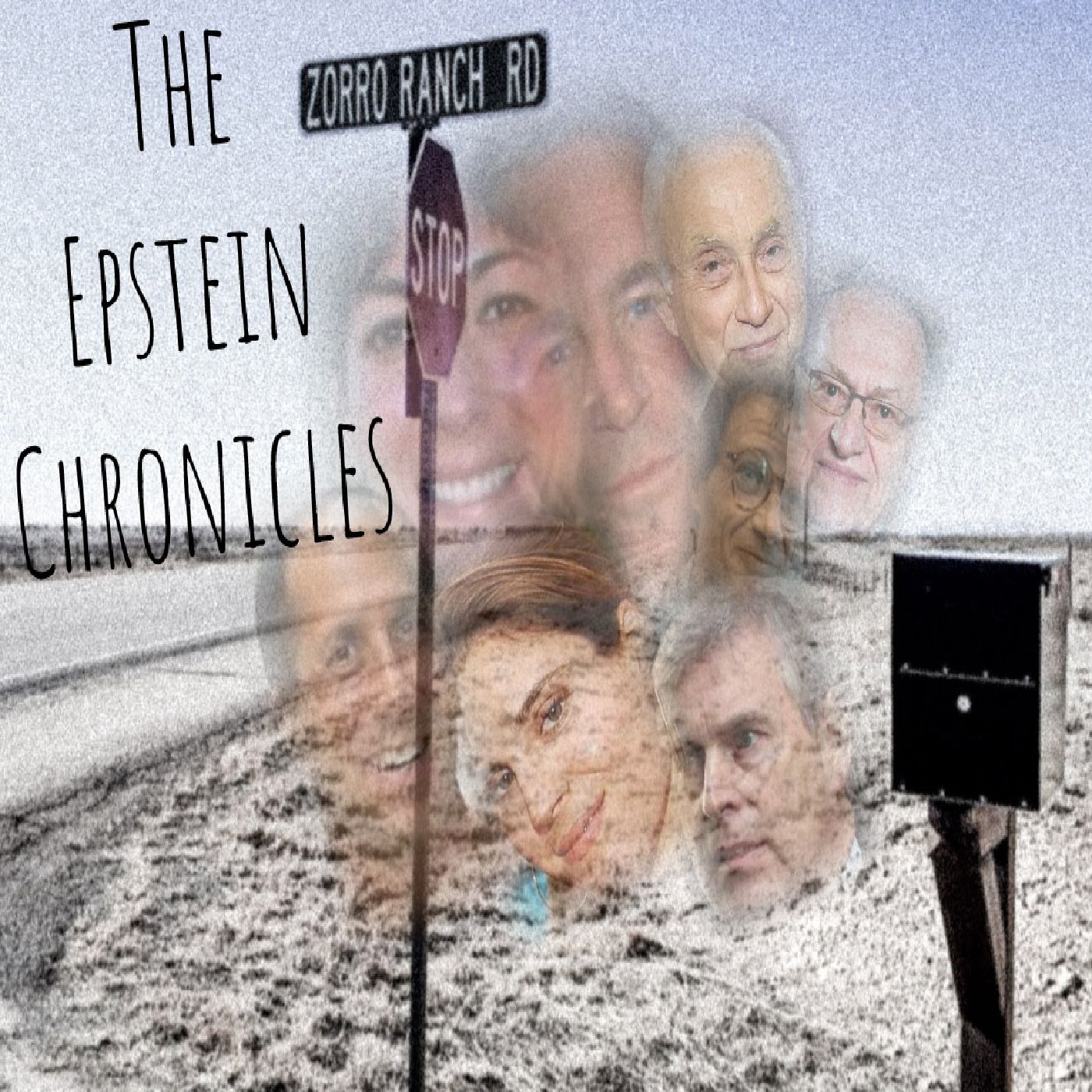
The Epstein Chronicles
Bobby Capucci
Jeffrey Epstein was a multi millionaire who had political and business ties to some of the most rich and powerful people in the world. From businessmen to politicians at the highest levels, Epstein broke bread with them all. Yet for years the Legacy media and the rest of high society looked the other way and ignored his behavior as multiple women came forward with allegations of abuse. Even after he was convicted and subsequently received a sweetheart deal those same so called elites welcomed him back with open arms. Now after his death and the arrest of Maxwell, the real story is starting to come together and the curtain has begun to be drawn back and what it has revealed is truly disturbing. From Princes to Ex Presidents, the cast of scoundrels in this play spans continents and political affiliations leaving us with a transcontinental criminal conspiracy possibly unlike any we have ever seen before. In this podcast we will explore all of the levels of Jeffrey Epstein and his criminal enterprise. From his most trusted assistants to obscure associates, we will leave no stone unturned as we swim through the muck searching for clarity and answers to some of the most pressing questions of the case. From interviews with people directly involved in the case to daily updates, the Epstein Chronicles will have it all. Just like our other project, The Jeffrey Epstein Show, you can expect no punches pulled and consistent content. We have covered the Epstein case daily(everyday since October 1st 2019) and will continue to do so until there are convictions. With a library of well over 1k shows, you can expect a ton of content coming your way including on scene reporting from the Maxwell trial and from places like Zorro Ranch. Thank you for tuning in and I look forward to having you all along for the ride.(Created and Hosted by Bobby Capucci)Become a supporter of this podcast: https://www.spreaker.com/podcast/the-epstein-chronicles--5003294/support.
Episodes
Mentioned books

Apr 5, 2026 • 12min
Inside The OIG Interview: MCC Captain's Statement Detailing The Death Of Jeffrey Epstein (Part 15) (4/4/26)
This deposition comes from an unnamed captain at the Metropolitan Correctional Center and provides a detailed account of how Jeffrey Epstein was managed inside the facility, particularly in the Special Housing Unit. The captain describes Epstein’s status following his prior suicide incident, including the decision-making process around his housing, monitoring level, and classification. The testimony highlights that Epstein had previously been placed under suicide watch but was later removed from those heightened precautions, despite ongoing concerns about his mental state. It also addresses Epstein’s resistance to having a cellmate and the facility’s shifting responses to that issue, revealing a pattern where known risks were acknowledged but not consistently acted upon.The deposition also exposes broader operational failures within MCC, particularly regarding supervision, communication, and adherence to protocol. The captain’s account suggests that while staff were aware of Epstein’s vulnerability, the systems in place failed to ensure continuous and effective monitoring. Decisions around staffing, inmate placement, and observation procedures appear fragmented, with lapses that ultimately left Epstein in a position that contradicted earlier risk assessments. The testimony reinforces the larger picture of institutional breakdown, where responsibility was diffused across personnel and safeguards that should have been firmly in place were instead inconsistently applied.What makes this account difficult to accept at face value is how neatly it shifts the burden onto procedural gray areas rather than confronting the glaring contradictions in custody decisions. The captain’s testimony acknowledges that Epstein was a known suicide risk, had already experienced a prior incident, and required heightened oversight, yet still attempts to frame the subsequent downgrade in monitoring as routine or justified. That explanation strains credibility when measured against the totality of circumstances, particularly the repeated deviations from established suicide prevention protocols and the failure to enforce basic safeguards like consistent observation and appropriate cell assignments. Instead of clarifying responsibility, the deposition reads more like an exercise in institutional self-preservation—where systemic failures are reframed as isolated judgment calls, and accountability is diluted across layers of bureaucracy. In that context, the official narrative begins to look less like a coherent explanation and more like a patchwork defense designed to explain away decisions that, taken together, point to a breakdown that should never have occurred in a high-security federal facility.to contact me:bobbycapucci@protonmail.comsource:EFTA00059973.pdfBecome a supporter of this podcast: https://www.spreaker.com/podcast/the-epstein-chronicles--5003294/support.
Apr 5, 2026 • 11min
Todd Blanche Named Acting Attorney General (4/5/26)
Todd Blanche’s elevation to acting Attorney General was framed as a stabilizing move, a chance to reset leadership amid growing turmoil. Instead, he’s stepping into a position already saturated with controversy, with the Epstein files hanging over the department like a live wire. Before he’s even had time to establish footing, the scrutiny has followed him straight into the role—questions about transparency, disclosure, and institutional credibility attaching themselves to his name by default. It’s less a fresh start and more a direct inheritance of one of the most radioactive issues in modern justice, where every decision is immediately viewed through the lens of what is—or isn’t—being revealed.The Epstein fallout isn’t something you can quietly manage or sidestep; it clings to anyone in proximity, and Blanche is now squarely in the blast radius. Every move he makes will be interpreted as either shielding the powerful or finally forcing accountability, with no neutral ground in between. The danger for him is that even inaction reads as complicity, and measured responses get swallowed by the scale of public distrust. Before he’s even had the chance to define his tenure, the Epstein files have already begun to define it for him—casting a long, harsh light that’s impossible to ignore and even harder to escape.to contact me:bobbycapucci@protonmail.comsource: Acting AG Todd Blanche defends ousted Pam BondiBecome a supporter of this podcast: https://www.spreaker.com/podcast/the-epstein-chronicles--5003294/support.
Apr 5, 2026 • 53min
Mega Edition: Jeffrey Epstein And His Exploitation Of The 2008 Bank Bailout (4/5/26)
Liquid Funding Ltd. didn’t survive the 2008 financial collapse by skill or luck—it survived because the system bent itself into a pretzel to protect elite balance sheets with public money. Chaired by Jeffrey Epstein, Liquid Funding sat on billions in mortgage-linked liabilities just as the global economy imploded. When the government rushed in to stabilize failing institutions, those interventions didn’t just rescue household-name banks—they quietly backstopped the opaque offshore machinery that fed off them. As emergency facilities and taxpayer-backed rescues absorbed toxic assets and restored liquidity, Liquid Funding’s obligations were made whole. The end result was grotesque: a vehicle overseen by a known predator emerging intact from a crisis that annihilated ordinary people.What makes it sickening is the silence around it. While families lost homes and retirement savings evaporated, bailout architecture designed to “save the system” effectively covered the tab for Epstein’s offshore empire—through the rescue of counterparties like Bear Stearns, its fire-sale to JPMorgan Chase, and the emergency actions of the Federal Reserve. No vote asked taxpayers if they were willing to underwrite the continued solvency of a man already accused of unspeakable crimes. No hearing explained why his structure deserved protection while the public absorbed the losses. It was a quiet, revolting transfer of risk upward—proof that when the system panics, it shields the worst actors first and sends the bill to everyone else.to contact me:bobbycapucci@protonmail.comsource:Epstein's Really Big Short: How US Taxpayers (And Big Bankers) Bailed Him Out - National MemoBecome a supporter of this podcast: https://www.spreaker.com/podcast/the-epstein-chronicles--5003294/support.
Apr 5, 2026 • 30min
Mega Edition: Team Trump And Their Attempt To Shift The Epstein Narrative (4/5/26)
In the wake of renewed scrutiny over the Epstein files, several of Donald Trump’s allies have attempted to reframe the narrative in ways that deflect from institutional accountability and redirect attention elsewhere. Rather than maintaining a clear focus on Epstein’s network and the systems that enabled him, some figures have introduced messaging that muddies the waters—blurring the line between perpetrators and victims, and injecting confusion into an already complex case. This shift has had the effect of diluting public understanding, turning what should be a straightforward demand for transparency into a fragmented debate shaped by political loyalty and narrative control.Among the more controversial moments were comments from Anna Paulina Luna, which were widely criticized as careless and damaging for appearing to suggest that some survivors were complicit in trafficking. That framing sparked backlash because it risks reinforcing one of the oldest and most harmful distortions in abuse cases—casting victims as participants rather than recognizing the coercion and exploitation at the core of trafficking. By introducing that kind of rhetoric into the conversation, Trump-aligned voices have not only shifted attention away from Epstein’s enablers but have also complicated efforts to center survivors and pursue a clear, fact-based reckoning with what actually occurred.to contact me:bobbycapucci@protonmail.comBecome a supporter of this podcast: https://www.spreaker.com/podcast/the-epstein-chronicles--5003294/support.
Apr 5, 2026 • 1h 11min
Mega Edition: The OIG Report Detailing The Investigation Into Epstein's NPA (Part 12-15) (4/5/26)
The Department of Justice Office of the Inspector General (OIG) report into Jeffrey Epstein’s 2007 Non-Prosecution Agreement (NPA) presents a disturbing portrait of federal cowardice, systemic failures, and deliberate abdication of prosecutorial duty. Instead of zealously pursuing justice against a serial predator with dozens of underage victims, the U.S. Attorney’s Office in the Southern District of Florida, under Alexander Acosta, caved to Epstein’s high-powered legal team and crafted a sweetheart deal that immunized not just Epstein, but unnamed potential co-conspirators—many of whom are still shielded to this day. The report shows that career prosecutors initially prepared a 53-page indictment, but this was ultimately buried, replaced by state charges that led to minimal jail time, lenient conditions, and near-total impunity. The OIG paints the decision as a series of poor judgments rather than criminal misconduct, but this framing betrays the magnitude of what actually occurred: a calculated retreat in the face of wealth and influence.Critically, the report fails to hold any individuals truly accountable, nor does it demand structural reform that could prevent similar derelictions of justice. It accepts, without sufficient pushback, the justifications offered by federal prosecutors who claimed their hands were tied or that the case was too risky—despite overwhelming evidence and a mountain of victim statements. The OIG sidesteps the glaring reality that this was not just bureaucratic failure, but a protection racket masquerading as legal discretion. It treats corruption as incompetence and power as inevitability. The conclusion, ultimately, feels like a shrug—a bureaucratic absolution of one of the most disgraceful collapses of federal prosecutorial integrity in modern history. It is less a reckoning than a rubber stamp on institutional failure.to contact me:bobbycapucci@protonmail.comsource:dl (justice.gov)Become a supporter of this podcast: https://www.spreaker.com/podcast/the-epstein-chronicles--5003294/support.
Apr 5, 2026 • 1h 10min
Mega Edition: The OIG Report Detailing The Investigation Into Epstein's NPA (Part 6-10) (4/5/26)
The Department of Justice Office of the Inspector General (OIG) report into Jeffrey Epstein’s 2007 Non-Prosecution Agreement (NPA) presents a disturbing portrait of federal cowardice, systemic failures, and deliberate abdication of prosecutorial duty. Instead of zealously pursuing justice against a serial predator with dozens of underage victims, the U.S. Attorney’s Office in the Southern District of Florida, under Alexander Acosta, caved to Epstein’s high-powered legal team and crafted a sweetheart deal that immunized not just Epstein, but unnamed potential co-conspirators—many of whom are still shielded to this day. The report shows that career prosecutors initially prepared a 53-page indictment, but this was ultimately buried, replaced by state charges that led to minimal jail time, lenient conditions, and near-total impunity. The OIG paints the decision as a series of poor judgments rather than criminal misconduct, but this framing betrays the magnitude of what actually occurred: a calculated retreat in the face of wealth and influence.Critically, the report fails to hold any individuals truly accountable, nor does it demand structural reform that could prevent similar derelictions of justice. It accepts, without sufficient pushback, the justifications offered by federal prosecutors who claimed their hands were tied or that the case was too risky—despite overwhelming evidence and a mountain of victim statements. The OIG sidesteps the glaring reality that this was not just bureaucratic failure, but a protection racket masquerading as legal discretion. It treats corruption as incompetence and power as inevitability. The conclusion, ultimately, feels like a shrug—a bureaucratic absolution of one of the most disgraceful collapses of federal prosecutorial integrity in modern history. It is less a reckoning than a rubber stamp on institutional failure.to contact me:bobbycapucci@protonmail.comsource:dl (justice.gov)Become a supporter of this podcast: https://www.spreaker.com/podcast/the-epstein-chronicles--5003294/support.
Apr 5, 2026 • 1h 3min
Mega Edition: The OIG Report Detailing The Investigation Into Epstein's NPA (Part 1-5) (4/4/26)
The Department of Justice Office of the Inspector General (OIG) report into Jeffrey Epstein’s 2007 Non-Prosecution Agreement (NPA) presents a disturbing portrait of federal cowardice, systemic failures, and deliberate abdication of prosecutorial duty. Instead of zealously pursuing justice against a serial predator with dozens of underage victims, the U.S. Attorney’s Office in the Southern District of Florida, under Alexander Acosta, caved to Epstein’s high-powered legal team and crafted a sweetheart deal that immunized not just Epstein, but unnamed potential co-conspirators—many of whom are still shielded to this day. The report shows that career prosecutors initially prepared a 53-page indictment, but this was ultimately buried, replaced by state charges that led to minimal jail time, lenient conditions, and near-total impunity. The OIG paints the decision as a series of poor judgments rather than criminal misconduct, but this framing betrays the magnitude of what actually occurred: a calculated retreat in the face of wealth and influence.Critically, the report fails to hold any individuals truly accountable, nor does it demand structural reform that could prevent similar derelictions of justice. It accepts, without sufficient pushback, the justifications offered by federal prosecutors who claimed their hands were tied or that the case was too risky—despite overwhelming evidence and a mountain of victim statements. The OIG sidesteps the glaring reality that this was not just bureaucratic failure, but a protection racket masquerading as legal discretion. It treats corruption as incompetence and power as inevitability. The conclusion, ultimately, feels like a shrug—a bureaucratic absolution of one of the most disgraceful collapses of federal prosecutorial integrity in modern history. It is less a reckoning than a rubber stamp on institutional failure.to contact me:bobbycapucci@protonmail.comsource:dl (justice.gov)Become a supporter of this podcast: https://www.spreaker.com/podcast/the-epstein-chronicles--5003294/support.
Apr 5, 2026 • 17min
Jeffrey Epstein And All Of Your Favorite Politicians And Still No Accountability
Virginia Roberts Giuffre's allegations against Bill Richardson and George Mitchell are part of her broader claims of being sexually abused and trafficked by Jeffrey Epstein and his associates. Giuffre has stated that she was recruited by Epstein and Ghislaine Maxwell when she was 17 years old and subsequently coerced into a life of sex trafficking.Bill Richardson:Bill Richardson, a former Governor of New Mexico, U.S. Ambassador to the United Nations, and Secretary of Energy, was named by Giuffre in legal documents. She alleged that Richardson was one of the high-profile individuals to whom Epstein trafficked her for sex. Richardson has categorically denied these allegations, stating that he has never met Giuffre and was unaware of Epstein's criminal activities. His spokesperson has emphasized that Richardson's interactions with Epstein were limited to legitimate political and charitable efforts.George Mitchell:George Mitchell, a former U.S. Senator and Senate Majority Leader, was also implicated by Giuffre. She claimed that Mitchell was among the influential men to whom Epstein trafficked her. Like Richardson, Mitchell has denied the allegations, asserting that he never met, spoke with, or had any contact with Giuffre. Mitchell has stated that his limited interactions with Epstein were in the context of fundraising and other public activities.Broader Context:Giuffre's accusations against Richardson and Mitchell are part of a series of allegations she has made against several prominent individuals. These allegations emerged as part of legal proceedings against Epstein and Ghislaine Maxwell. Giuffre's claims have drawn significant media attention, particularly given the high-profile nature of the individuals she named, however Richardson and Mitchell remain sheltered. Despite Virginia Roberts Giuffre's serious allegations against Bill Richardson and George Mitchell, both men have largely avoided the intense scrutiny and accountability that some other figures connected to Jeffrey Epstein's network faced. This disparity in attention and accountability raises questions about the role of the media and political connections in shaping public perception and legal outcomes.Bill Richardson and George Mitchell have consistently denied Giuffre's allegations, and there have been no formal charges or legal actions taken against them based on these claims. While both have faced some media coverage regarding the allegations, it has been relatively limited and quickly overshadowed by other news. Their denials and reputations as seasoned public servants might have contributed to the relatively muted response.The media's handling of the allegations against Richardson and Mitchell contrasts sharply with how Alex Acosta, the former U.S. Attorney and Labor Secretary, was scrutinized. Acosta came under intense media and public pressure due to his role in negotiating a controversial plea deal with Epstein in 2008, which was widely criticized for being overly lenient. The deal allowed Epstein to serve a relatively short jail sentence and granted immunity to potential co-conspirators, effectively shielding many of his associates from prosecution.Acosta's connection to Epstein and the perceived leniency of the plea deal led to widespread outrage, culminating in his resignation as Labor Secretary in 2019. The intense scrutiny of Acosta's actions highlighted the inconsistencies in how different figures connected to Epstein were treated by the media and the public.Richardson and Mitchell's relatively protected status can be partly attributed to their longstanding relationships with influential figures and institutions. Both men have extensive political careers and connections within the legacy media, which may have contributed to the subdued coverage of the allegations against them. Media outlets, influenced by these connections, may have been less inclined to pursue aggressive investigations or critical reporting on Richardson and Mitchell compared to Acosta.The disparity in scrutiny reflects broader issues of power and influence in both the media and the justice system. Prominent individuals with substantial political clout and media connections often navigate allegations differently than those with less influence. This disparity can lead to unequal accountability, where some individuals face significant consequences while others remain relatively unscathed.While Richardson and Mitchell have not faced the same level of accountability, the ongoing legal battles and investigations into Epstein's network continue to reveal the complexity and reach of his operations. Ghislaine Maxwell's conviction and the attention on Epstein's other associates maintain a spotlight on the broader issue of sex trafficking and the complicity of powerful individuals.However, without consistent and thorough scrutiny from both the media and the justice system, the full extent of accountability for all involved remains elusive. This situation underscores the importance of equal and unbiased investigative journalism and legal proceedings in addressing allegations of this nature.(commercial at 11:21)to contact me:bobbycapucci@protonmail.comsource:Bill Richardson and George Mitchell deny allegations by alleged Jeffrey Epstein victim | Daily Mail OnlineBecome a supporter of this podcast: https://www.spreaker.com/podcast/the-epstein-chronicles--5003294/support.
Apr 5, 2026 • 15min
Is The FBI Hiding Key Details Of Their Alleged Relationship With Jeffrey Epstein?
Federal agencies, including the FBI and the Department of Justice, have faced mounting criticism for withholding significant portions of Epstein-related records—fueling allegations of a deliberate cover-up. In July 2025, both agencies issued a memo stating they found no “client list,” no proof of blackmail, and no evidence Epstein was murdered, and confirmed his death was a suicide. They also announced they would not release further documents, despite earlier promises of transparency The limited release of roughly 33,000 pages—largely consisting of materials already public—was blasted by lawmakers and victims’ advocates as inadequate. Critics argued the disclosures fell far short of real accountability, with Rep. Robert Garcia and others calling the process a “stonewall.” Independent reviews, such as Just Security’s detailed timeline, underscored repeated federal failures: ignoring victim reports, dropping early investigations, and negotiating Epstein’s lenient 2008 non-prosecution agreement in secret. Together, these actions suggest a systemic effort to obscure the extent of Epstein’s government ties rather than expose them.to contact me:bobbycapucci@protonmail.comsource:https://www.dailywire.com/news/fbi-hiding-potentially-explosive-records-on-jeffrey-epstein-internet-sleuth-claims-after-foia-denialBecome a supporter of this podcast: https://www.spreaker.com/podcast/the-epstein-chronicles--5003294/support.
Apr 4, 2026 • 16min
A Former DOJ Official Is Caught On Tape Admitting Jeffrey Epstein Was A CIA Asset
James O’Keefe (via his O’Keefe Media / Project Veritas apparatus) recently released a covert recording of Glenn Prager, a former DOJ official, during a flight from Phoenix to Washington. In the video, Prager asserts that Epstein was a CIA asset, alleges that President Trump is not personally implicated in Epstein-related sexual crimes, and claims Trump’s reluctance to release files stems from a desire to “protect a lot of people.” He further argues that his interviews with Epstein victims and review of itineraries found no evidence of Trump being present during assaults, while drawing a sharp contrast to Bill Clinton, whom he said was present during alleged rapes.The Department of Justice swiftly pushed back, stating that Prager’s role was limited to a program analyst position more than fifteen years ago and that he lacks direct knowledge of the Epstein investigations. The DOJ called his statements unreliable and criticized the release as exploitative of sexual abuse victims. Meanwhile, the recording has ignited renewed calls among critics and some Republicans for more transparency in the Epstein case and fresh scrutiny of withheld DOJ files.to contact me:bobbycapucci@protonmail.comsource:Jeffrey Epstein Investigator Taped Admitting Donald Trump ‘Covered Up’ FilesBecome a supporter of this podcast: https://www.spreaker.com/podcast/the-epstein-chronicles--5003294/support.

