

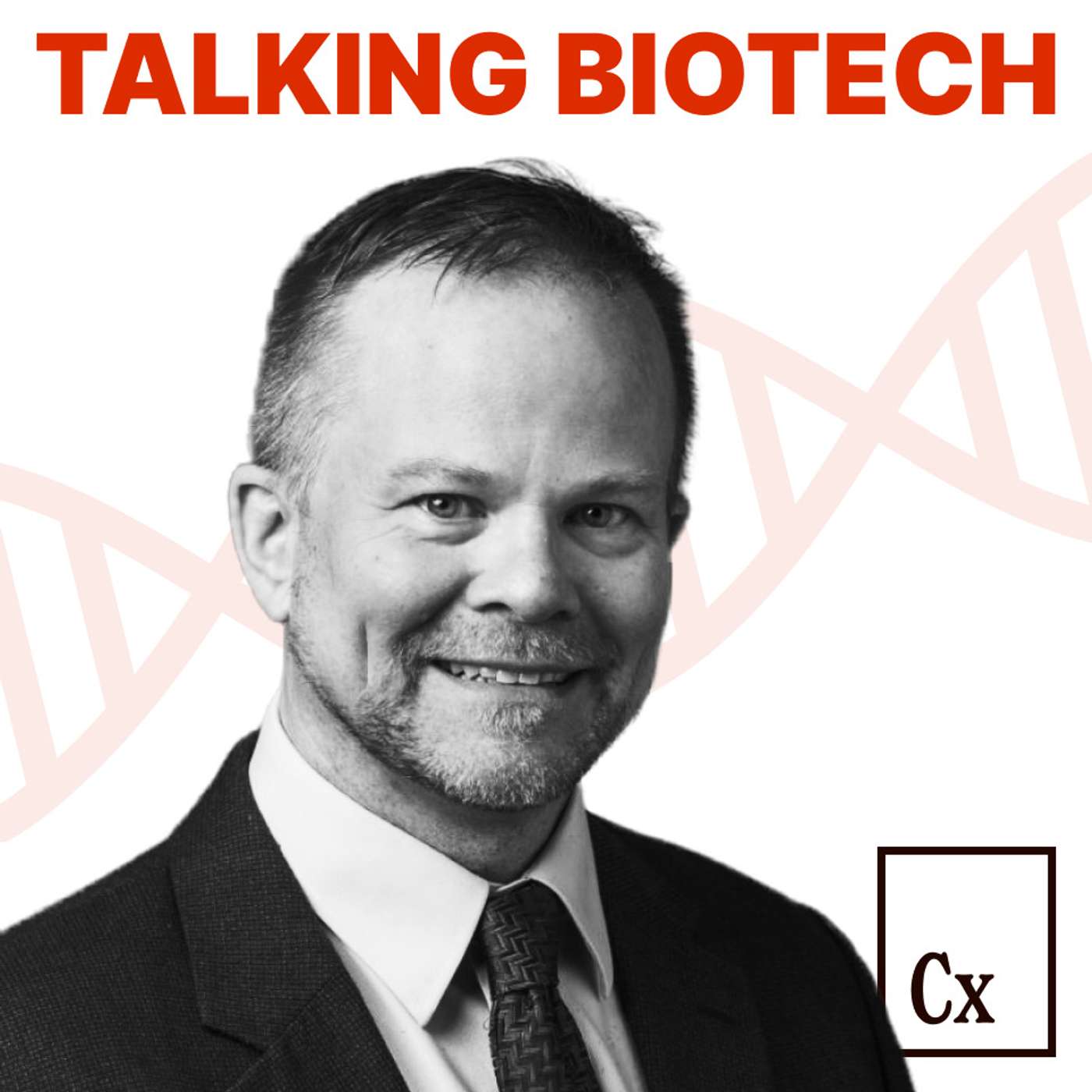
Talking Biotech with Dr. Kevin Folta
Colabra
Talking Biotech is a weekly podcast that uncovers the stories, ideas and research of people at the frontier of biology and engineering.
Each episode explores how science and technology will transform agriculture, protect the environment, and feed 10 billion people by 2050.
Interviews are led by Dr. Kevin Folta, a professor of molecular biology and genomics.
Each episode explores how science and technology will transform agriculture, protect the environment, and feed 10 billion people by 2050.
Interviews are led by Dr. Kevin Folta, a professor of molecular biology and genomics.
Episodes
Mentioned books

Apr 14, 2018 • 46min
Rice Domestication and Diversity
Rice is a world food staple with an incredible story. Dr. Susan McCouch from Cornell University has been studying rice genetics for decades, and directs efforts in rice education in conjunction with the International Rice Research Institute in the Philippines. This episode features interesting stories about rice origins, early selection, variation and domestication. It is a fascinating look at the details behind an important food crop.# COLABRATalking Biotech is brought to you by Colabra – an R&D platform that brings your lab’s world-changing research together in one shared space. Learn more at https://www.colabra.app/# TALKING BIOTECHTwitter: https://twitter.com/talkingbiotechWebsite: https://www.colabra.app/podcasts/talking-biotech/Instagram: https://www.instagram.com/colabrahqThe Talking Biotech podcast is distinct from Dr. Kevin Folta's teaching and research roles at the University of Florida. The views expressed on the show are those of Dr. Folta and his guests, and do not reflect the opinions of the university or Colabra.
Apr 7, 2018 • 53min
Insect Gene Drives (Part 2)
Dr. Jennifer Kuzma received her training in biochemistry, and then later found herself working in social sciences. She is now the Co-Director of the Genetic Engineering and Society program at North Carolina State University. Dr. Kuzma speaks with Dr. Paul Vincelli (@Pvincell) about the social and political considerations of gene drives. She discusses ethics, policy and regulation, as well surprising imperatives where gene drives may be necessary for conservation or human health. This is part 2 of the series. Part 1 discusses the technology and its ecological implications, and may be accessed here.Dr. Jennifer Kuzma’s bio at https://facultyclusters.ncsu.edu/people/jkuzma/ See the papers associated with the following: A Roadmap to Gene Drives: A Deliberative Workshop to Develop Frameworks for Research and Governance online athttps://research.ncsu.edu/ges/research/projects/gene-drives-grant/# COLABRATalking Biotech is brought to you by Colabra – an R&D platform that brings your lab’s world-changing research together in one shared space. Learn more at https://www.colabra.app/# TALKING BIOTECHTwitter: https://twitter.com/talkingbiotechWebsite: https://www.colabra.app/podcasts/talking-biotech/Instagram: https://www.instagram.com/colabrahqThe Talking Biotech podcast is distinct from Dr. Kevin Folta's teaching and research roles at the University of Florida. The views expressed on the show are those of Dr. Folta and his guests, and do not reflect the opinions of the university or Colabra.
Mar 31, 2018 • 47min
Insect Gene Drives (Part 1)
Gene drives are a powerful technology that may be used to control pests. The concepts key off of exploiting genetic vulnerabilities that are rapidly inherited, and cause populations to crash over a short time. Such instances happen naturally, but now scientists are engineering the genetics of pests to induce steep population declines from gene drives. Dr. Fred Gould from North Carolina State University discusses the technology, its risks, regulation and some of the social aspects of application of the science. Interviewed by Dr. Paul Vincelli (@pvincell). This episode is part 1 of two parts, and covers the technology and its ecological implications. The social considerations are discussed by Dr. Jennifer Kuzma in this episode (released 4/7/2018).# COLABRATalking Biotech is brought to you by Colabra – an R&D platform that brings your lab’s world-changing research together in one shared space. Learn more at https://www.colabra.app/# TALKING BIOTECHTwitter: https://twitter.com/talkingbiotechWebsite: https://www.colabra.app/podcasts/talking-biotech/Instagram: https://www.instagram.com/colabrahqThe Talking Biotech podcast is distinct from Dr. Kevin Folta's teaching and research roles at the University of Florida. The views expressed on the show are those of Dr. Folta and his guests, and do not reflect the opinions of the university or Colabra.
Mar 24, 2018 • 59min
Pandora’s Picnic Basket; Talking to the Public
Over the long history of biotech crops and microorganisms Dr. Alan McHughen has been part of the conversation. His 2000 book Pandora’s Picnic Basket examined the promise and risk of biotech crops. Since then he has been an important voice in helping others separate fact from fiction, and has been a leader in describing and shaping public policy in this arena. In this episode from Denver, CO we discuss the modern manifestations of Pandora’s Picnic Basket. We also sit down with a local woman to listen to her thoughts and concerns about food and farming, simply to understand what people are thinking and who are their central influencers.Follow Dr. McHughen @mchughen# COLABRATalking Biotech is brought to you by Colabra – an R&D platform that brings your lab’s world-changing research together in one shared space. Learn more at https://www.colabra.app/# TALKING BIOTECHTwitter: https://twitter.com/talkingbiotechWebsite: https://www.colabra.app/podcasts/talking-biotech/Instagram: https://www.instagram.com/colabrahqThe Talking Biotech podcast is distinct from Dr. Kevin Folta's teaching and research roles at the University of Florida. The views expressed on the show are those of Dr. Folta and his guests, and do not reflect the opinions of the university or Colabra.
Mar 17, 2018 • 17min
USAID, Political Stability and Food Security
Dr. Angela Records joins Chris Barbey to discuss the mission of USAID. USAID is committed to remedies in world food insecurity, with an emphasis on examining current opportunities and meshing new technology and crop biology with the most benficial impacts in global food security.Follow Dr. Recordss @AngelaRecords# COLABRATalking Biotech is brought to you by Colabra – an R&D platform that brings your lab’s world-changing research together in one shared space. Learn more at https://www.colabra.app/# TALKING BIOTECHTwitter: https://twitter.com/talkingbiotechWebsite: https://www.colabra.app/podcasts/talking-biotech/Instagram: https://www.instagram.com/colabrahqThe Talking Biotech podcast is distinct from Dr. Kevin Folta's teaching and research roles at the University of Florida. The views expressed on the show are those of Dr. Folta and his guests, and do not reflect the opinions of the university or Colabra.
Mar 9, 2018 • 44min
Why Sweet Corn is Sweet
When we think about corn, we usually think about sweet corn. It is a departure from its cousins that are grown on the vast majority of the acreage, the corn bred for use as animal feed and fuel. Sweet corn was specifically discovered and selected because of its sweetness. But how does a kernel of corn divert the resources used for starch production into simple sugars? Dr. Curt Hannah has been studying starch production over his 45 year career at the University of Florida. Along the way, he interacted with the University of Florida Sweet Corn Breeding Program down in Belle Glade, FL. The discussion covers the genetic differences between sweet corn and corn-corn that lead to sweetness, but also some of the issues with production, breeding, and genetic engineering.Follow Dr. Hannah at @FloridaCornMan# COLABRATalking Biotech is brought to you by Colabra – an R&D platform that brings your lab’s world-changing research together in one shared space. Learn more at https://www.colabra.app/# TALKING BIOTECHTwitter: https://twitter.com/talkingbiotechWebsite: https://www.colabra.app/podcasts/talking-biotech/Instagram: https://www.instagram.com/colabrahqThe Talking Biotech podcast is distinct from Dr. Kevin Folta's teaching and research roles at the University of Florida. The views expressed on the show are those of Dr. Folta and his guests, and do not reflect the opinions of the university or Colabra.
Feb 24, 2018 • 25min
Farm Babe Michelle Miller
Michelle Miller grew up in Wisconsin and always had an interest in agriculture. When she reached college she traded in rural life for the big city, working in LA at designer stores and living a big city life. But has Farm Babes go, she would find her way from Rodeo Drive to driving to the rodeo. Since, she has been critical of those that marginalize farmers and farming, and has been a powerful voice for agriculture and associated technologies.Follow Michelle at @TheFarmBabeMichelle’s Facebook page# COLABRATalking Biotech is brought to you by Colabra – an R&D platform that brings your lab’s world-changing research together in one shared space. Learn more at https://www.colabra.app/# TALKING BIOTECHTwitter: https://twitter.com/talkingbiotechWebsite: https://www.colabra.app/podcasts/talking-biotech/Instagram: https://www.instagram.com/colabrahqThe Talking Biotech podcast is distinct from Dr. Kevin Folta's teaching and research roles at the University of Florida. The views expressed on the show are those of Dr. Folta and his guests, and do not reflect the opinions of the university or Colabra.
Feb 17, 2018 • 21min
Disease Resistant Bananas
The Cavendish banana is the standard banana of commerce, yet it is under threat by a devastating disease that is spreading quickly around the world. Dr. James Dale and his team have identified a banana resistance gene that confers resistance to the disease, and they have shown that it can fortify otherwise susceptible plants. These exciting findings aid food security issues as well as ensure the future of this important fruit crop. Hosted by Chris Barbey @crbarbey# COLABRATalking Biotech is brought to you by Colabra – an R&D platform that brings your lab’s world-changing research together in one shared space. Learn more at https://www.colabra.app/# TALKING BIOTECHTwitter: https://twitter.com/talkingbiotechWebsite: https://www.colabra.app/podcasts/talking-biotech/Instagram: https://www.instagram.com/colabrahqThe Talking Biotech podcast is distinct from Dr. Kevin Folta's teaching and research roles at the University of Florida. The views expressed on the show are those of Dr. Folta and his guests, and do not reflect the opinions of the university or Colabra.
Feb 10, 2018 • 39min
Fighting the Fall Army Worm
The Fall Army Worm is a moth larvae that is incredibly destructive. It causes widespread crop losses in the Americas and now has been found in Africa. This pest consumes everything in its path, and can travel many miles on the wind. It is believed that this organism could cause widespread famine in Africa. Oxitec has proposed a solution, keying off of its current suite of insect control strategies. Today we speak with Dr. Simon Warner, CSO of Oxitec. He describes the problem and proposed solutions.Follow Oxitec on Twitter: @oxitec Oxitec website# COLABRATalking Biotech is brought to you by Colabra – an R&D platform that brings your lab’s world-changing research together in one shared space. Learn more at https://www.colabra.app/# TALKING BIOTECHTwitter: https://twitter.com/talkingbiotechWebsite: https://www.colabra.app/podcasts/talking-biotech/Instagram: https://www.instagram.com/colabrahqThe Talking Biotech podcast is distinct from Dr. Kevin Folta's teaching and research roles at the University of Florida. The views expressed on the show are those of Dr. Folta and his guests, and do not reflect the opinions of the university or Colabra.
Feb 3, 2018 • 35min
GMOs in Milk, Meat and Eggs? / Edited Animals
Dr. Alison Van Eenennaam is arguably the most effective voice in communication about biotechnology, especially in animals. In today’s podcast she makes her third visit to Talking Biotech. In 2017, she and co-author Amy Young published a review of the literature that examined the presence of transgenic DNA or proteins in milk, meat and eggs. The data show that DNA and proteins from plants are digested to their component parts and pose no unusual risk. Milk meat and eggs from animals consuming GE products are no different from the same products from animals on alternative diets. Follow Dr. Van Eenennaam on Twitter: @biobeef And Dr. Van Eenenaam’s blog# COLABRATalking Biotech is brought to you by Colabra – an R&D platform that brings your lab’s world-changing research together in one shared space. Learn more at https://www.colabra.app/# TALKING BIOTECHTwitter: https://twitter.com/talkingbiotechWebsite: https://www.colabra.app/podcasts/talking-biotech/Instagram: https://www.instagram.com/colabrahqThe Talking Biotech podcast is distinct from Dr. Kevin Folta's teaching and research roles at the University of Florida. The views expressed on the show are those of Dr. Folta and his guests, and do not reflect the opinions of the university or Colabra.

