

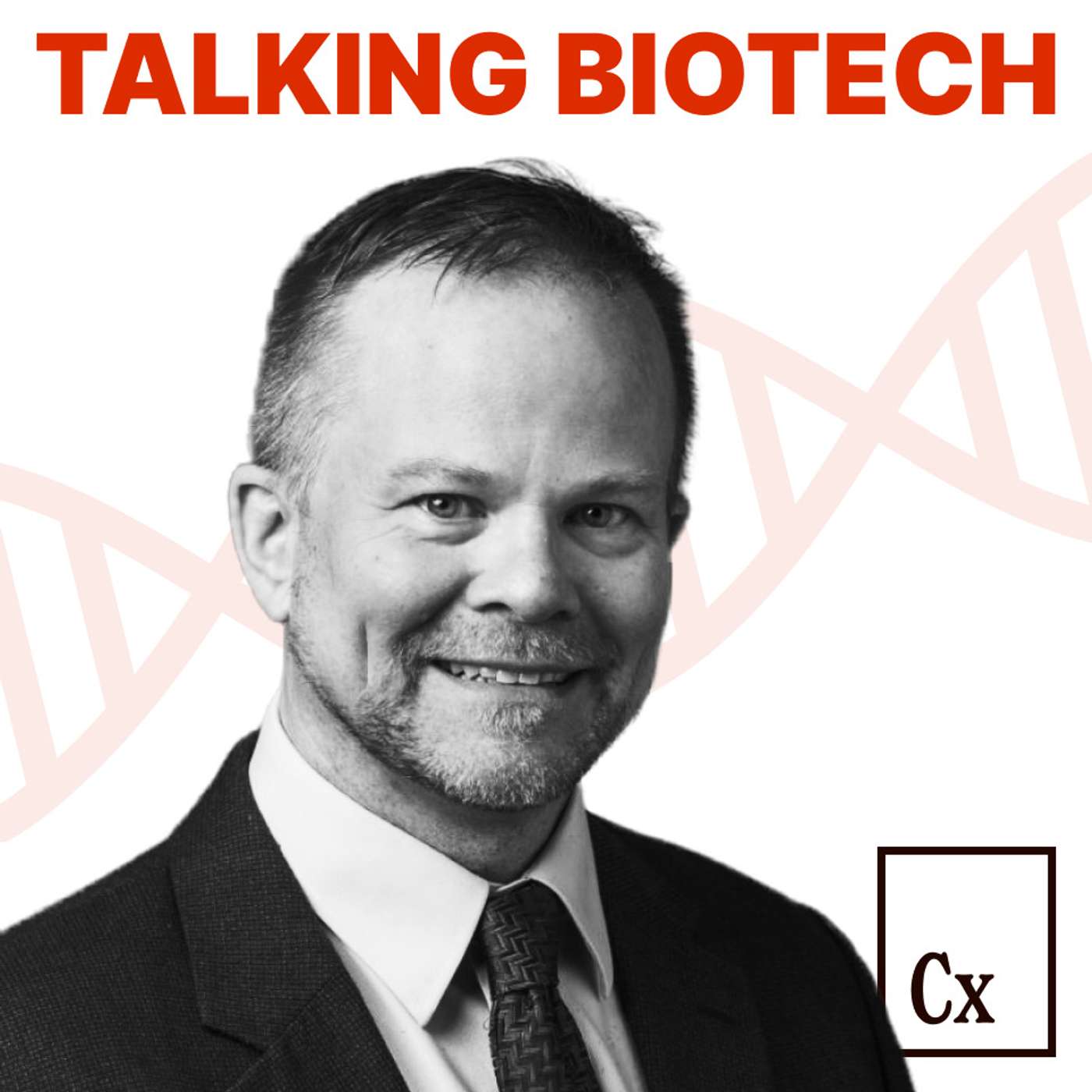
Talking Biotech with Dr. Kevin Folta
Colabra
Talking Biotech is a weekly podcast that uncovers the stories, ideas and research of people at the frontier of biology and engineering.
Each episode explores how science and technology will transform agriculture, protect the environment, and feed 10 billion people by 2050.
Interviews are led by Dr. Kevin Folta, a professor of molecular biology and genomics.
Each episode explores how science and technology will transform agriculture, protect the environment, and feed 10 billion people by 2050.
Interviews are led by Dr. Kevin Folta, a professor of molecular biology and genomics.
Episodes
Mentioned books

Jun 23, 2018 • 40min
Recognizing Dr. Rosalind Franklin
The race to determine the structure of DNA has a dark subtext that is frequently ignored when discussing this seminal discovery in biology. Competing groups at Cambridge and King’s College set their sights on resolving this important question. King’s College recruited a bright young x-ray crystalographer, a scientist that used energy to examine molecular structure. Her name was Dr. Rosalind Franklin. While teams in this old-boy’s network pushed forward, Franklin used her skills to generate data to answer the question. Her data would provide the information needed to determine the structure of DNA. However, she was not credited beyond a tiny footnote, and died at 37 never realizing how her data illuminated the discovery of DNA’s double-helical structure. The story is told by Dr. Mark Lawler of Queens University in Belfast, Northern Ireland.Dr. Lawler’s article in The Conversation Dr. Lawler’s accompanying article in The Irish Times# COLABRATalking Biotech is brought to you by Colabra – an R&D platform that brings your lab’s world-changing research together in one shared space. Learn more at https://www.colabra.app/# TALKING BIOTECHTwitter: https://twitter.com/talkingbiotechWebsite: https://www.colabra.app/podcasts/talking-biotech/Instagram: https://www.instagram.com/colabrahqThe Talking Biotech podcast is distinct from Dr. Kevin Folta's teaching and research roles at the University of Florida. The views expressed on the show are those of Dr. Folta and his guests, and do not reflect the opinions of the university or Colabra.
Jun 16, 2018 • 49min
Maize, Mexico, and Transgene Flow
Mexico is the center of origin for maize, and there is a substantial interest in protecting the genetic integrity of this limited resource. At the same time Mexico’s population is growing, and farmers potentially find utility in growing genetically-engineered corn, as resistance to insects and lower pesticide use are attractive traits. There is an intricate balance between feeding a population and ensuring farmer profit versus preservation of a genetic resource. In this week’s podcast Dr. Paul Vincelli (@pvincell) interviews Dr. Sol Ortiz Garcia, the Commission on Biosafety of Genetically Engineered Organisms. How much GE maize is cultivated in Mexico? Is it a threat? Is there evidence of transgene flow from imported feed? These are important questions, as the topic of genetic integrity of natural populations is a frequent area of discussion and debate.Citations on Transgene Flow:Claudia Colmenarez Ortiz & Sol Ortiz García, 2016. Policies and Regulations in Mexico with Regard to Genetic Technology and Food Security: Country Report: Mexico. Springer International Publishing Switzerland 355. R. Norer (ed.), Genetic Technology and Food Safety, Ius Comparatum – Global Studies in Comparative Law 14, DOI 10.1007/978-3-319-23995-8_11. https://link.springer.com/chapter/10.1007/978-3-319-23995-8_11 Reynaldo Ariel Álvarez Morales & Sol Ortiz García. 2011. Administrative Systems for Handling Biosafety Issues in Mexico: Emerging Experiences and Lessons Learned. Biosafety Protocol News. 9: 14-15. https://www.cbd.int/doc/newsletters/bpn/bpn-09.pdf Sol Ortiz García. Biodiversity and International Law in Mexico´s Implementation of the CBD and the Cartagena Protocol in the GMO era: Challenges in Principles, Policies and Practices. Herrera, Juan A., 2010 (Saarbruken, Alemania, VDM) pags.35-84. ISBN 978-3-639-00224-9. Martha G. Rocha Munive, Adriana Otero Arnaiz, Exequiel Ezcurra, Allison A. Snow & Sol Ortiz García. 2008. A recent survey to detect transgenes in local maize varieties in Sierra de Juarez Oaxaca Mexico. Book of abstracts. 1st Global Conference on GMO Analysis. 107. Sol Ortiz-García, Exequiel Ezcurra, Bernd Shoel, Francisca Acevedo, Jorge Soberón & Allison A. Snow. 2006. Transgenic Maize in Mexico. BioScience 56:709. https://academic.oup.com/bioscience/article/56/9/709/262869 Sol Ortiz-García, Exequiel Ezcurra, Bernd Shoel, Francisca Acevedo, Jorge Soberón & Allison A. Snow. 2005. Reply to Cleveland et al.’s “Detecting (trans)gene flow to landraces in centers of crop origin: lessons from the case of maize in Mexico”. Environmental Biosafety Research 4: 209-215. https://www.ebr-journal.org/articles/ebr/abs/2005/04/ebr0605/ebr0605.html Sol Ortiz-García, Exequiel Ezcurra, Bernd Shoel, Francisca Acevedo, Jorge Soberón & Allison A. Snow. 2005. Absence of detectable transgenes in local landraces of maize in Oaxaca, Mexico (2003-2004). Proceedings of the National Academy of Sciences. 102: 12338-12343. http://www.pnas.org/content/102/35/12338 Exequiel Ezcurra. Sol Ortiz-García & Jorge Soberón M. 2002. Evidence of gene flow from transgenic maize to local varieties in Mexico. In LMOs and the Environment: Proceedings of an International Conference.# COLABRATalking Biotech is brought to you by Colabra – an R&D platform that brings your lab’s world-changing research together in one shared space. Learn more at https://www.colabra.app/# TALKING BIOTECHTwitter: https://twitter.com/talkingbiotechWebsite: https://www.colabra.app/podcasts/talking-biotech/Instagram: https://www.instagram.com/colabrahqThe Talking Biotech podcast is distinct from Dr. Kevin Folta's teaching and research roles at the University of Florida. The views expressed on the show are those of Dr. Folta and his guests, and do not reflect the opinions of the university or Colabra.
Jun 9, 2018 • 30min
Modern Wheat and Celiac Disease
The internet claims that the increases in celiac disease is rooted in modern wheat varieties, as human intervention in plant genetics must be the cause of human disorders. But what does the evidence tell us? In this week’s episode we’re joined by Dr. Senay Simsek from North Dakota State University. Dr. Simsek is a recognized chemist that specializes in wheat composition. Her recent paper in the journal Food Chemistry examines the levels of gluten in modern varieties and compares it to what was present in heritage varieties. The results show that associations between modern breeding and gluten sensitivity are not likely due to genetic improvement of wheat varieties.Here is the link to the paper discussed. This is a link to a related review by Dr. Simsek. And this the review that highlights efforts to reduce allergenicity. # COLABRATalking Biotech is brought to you by Colabra – an R&D platform that brings your lab’s world-changing research together in one shared space. Learn more at https://www.colabra.app/# TALKING BIOTECHTwitter: https://twitter.com/talkingbiotechWebsite: https://www.colabra.app/podcasts/talking-biotech/Instagram: https://www.instagram.com/colabrahqThe Talking Biotech podcast is distinct from Dr. Kevin Folta's teaching and research roles at the University of Florida. The views expressed on the show are those of Dr. Folta and his guests, and do not reflect the opinions of the university or Colabra.
Jun 2, 2018 • 35min
Food Labeling
Are food labels adding clarity or confusion? Focus groups show that consumer sentiment toward food labels is changing. Colleen Parr-Dekker is the Director of Communications at Elanco. They have performed extensive focus group analysis and consumer surveys to understand how consumers feel about labels and food. The excess of abstract information and claims has left most consumers unsure what labels even mean. Consumers are clueless about terms like “antibiotic free” or “free range”, while companies use these tactics as marketing angles to differentiate their products. Surveys show that terms like “natural” or “organic” are losing influence. The results are surprising!Colleen Parr Dekker – @ColleenParr# COLABRATalking Biotech is brought to you by Colabra – an R&D platform that brings your lab’s world-changing research together in one shared space. Learn more at https://www.colabra.app/# TALKING BIOTECHTwitter: https://twitter.com/talkingbiotechWebsite: https://www.colabra.app/podcasts/talking-biotech/Instagram: https://www.instagram.com/colabrahqThe Talking Biotech podcast is distinct from Dr. Kevin Folta's teaching and research roles at the University of Florida. The views expressed on the show are those of Dr. Folta and his guests, and do not reflect the opinions of the university or Colabra.
May 26, 2018 • 51min
Engineering Plant Virus Resistance
Dr. Devang Mehta has been working in virus suppression in cassava, a key food staple in the Developing world. In this week’s podcast he speaks about the RNAi and gene editing approaches that are used to engineer resistant plants. Dr. Mehta describes the. nuts and bolts and successes and failures in applying new technology, and the things that are learned along the way. Hosted by Dr. Paul Vincelli (@pvincell).Dr. Devang Mehta – @drdevangm# COLABRATalking Biotech is brought to you by Colabra – an R&D platform that brings your lab’s world-changing research together in one shared space. Learn more at https://www.colabra.app/# TALKING BIOTECHTwitter: https://twitter.com/talkingbiotechWebsite: https://www.colabra.app/podcasts/talking-biotech/Instagram: https://www.instagram.com/colabrahqThe Talking Biotech podcast is distinct from Dr. Kevin Folta's teaching and research roles at the University of Florida. The views expressed on the show are those of Dr. Folta and his guests, and do not reflect the opinions of the university or Colabra.
May 19, 2018 • 1h 1min
Biotech, Farming and the Developing World
Those that live in the affluent countries of the West have little clue of the challenges of farming in the Developing World. In this special episode, Dr. Alison Van Eenennaam (@biobeef) of the University of California Davis interviews three experts that understand food security in their respective countries. Dr. Emma Naluyima of Entebbe, Uganda is a veterinarian that feeds an extended family from one acre of land. She shares her innovative methods and experiences. Nassib Mugwanya of Kampala, Uganda works with the Uganda Bioscience Information Center as an outreach officer. Dr. Marlene Ortiz Berrocal is a researcher in the Centre for Genomic Sciences, Universidad Nacional Autónoma de México. These three experts share their thoughts on biotech innovation and how it relates to food security in their respective nations and worldwide.Follow Dr. Alison Van Eenennaam – @biobeef Dr. Marlene Ortiz Berrocal – @MOBerrocal Nassib Mugwanya – @nmugwanya Dr. Emma Naluyima – @DrNaluyima# COLABRATalking Biotech is brought to you by Colabra – an R&D platform that brings your lab’s world-changing research together in one shared space. Learn more at https://www.colabra.app/# TALKING BIOTECHTwitter: https://twitter.com/talkingbiotechWebsite: https://www.colabra.app/podcasts/talking-biotech/Instagram: https://www.instagram.com/colabrahqThe Talking Biotech podcast is distinct from Dr. Kevin Folta's teaching and research roles at the University of Florida. The views expressed on the show are those of Dr. Folta and his guests, and do not reflect the opinions of the university or Colabra.
May 12, 2018 • 42min
An Extension Agronomist’s View of GE Crops
The Extension arm of the Land Grant University system provides a link between university research and the farm. Extension specialists are professional liaisons that understand pressing issues, and seek remedies in the brain trust of the university. At the same time they communicate university-derived solutions to statewide clientele, providing a critical link that ensures relevance in research and rapid application of new findings. Dr. Chad Lee is an extension agronomist at the University of Kentucky. His central role is in agronomic crops, principally soybeans and corn. His career has coincided with the development and application of GE crops. In this week’s podcast he discusses the on-farm use of these technologies and associated products, and his objective evaluation of their strengths and limitations. Dr. Lee does an amazing job at debunking common myths from a boots-on-the-ground perspective.Follow Dr. Lee at @kentuckycrops# COLABRATalking Biotech is brought to you by Colabra – an R&D platform that brings your lab’s world-changing research together in one shared space. Learn more at https://www.colabra.app/# TALKING BIOTECHTwitter: https://twitter.com/talkingbiotechWebsite: https://www.colabra.app/podcasts/talking-biotech/Instagram: https://www.instagram.com/colabrahqThe Talking Biotech podcast is distinct from Dr. Kevin Folta's teaching and research roles at the University of Florida. The views expressed on the show are those of Dr. Folta and his guests, and do not reflect the opinions of the university or Colabra.
May 5, 2018 • 26min
Indian Suicides and Farmer Debt
The problem of farmer suicides in India is very real, and has been for some time. Suicides are driven by indebtedness, and there are many reasons that farmers find themselves in financially challenging times. In the context of the biotech debates, some of seized on this tragedy and exploit it for political gain, blaming biotech crops for acrued debt. Vaishnavi Tripuraneni is a Ph.D. candidate at the University of Wisconsin. She is from India, and used the opportunity to study the question of farmer debt for her dissertation. She discusses the central drivers of debt from her research.# COLABRATalking Biotech is brought to you by Colabra – an R&D platform that brings your lab’s world-changing research together in one shared space. Learn more at https://www.colabra.app/# TALKING BIOTECHTwitter: https://twitter.com/talkingbiotechWebsite: https://www.colabra.app/podcasts/talking-biotech/Instagram: https://www.instagram.com/colabrahqThe Talking Biotech podcast is distinct from Dr. Kevin Folta's teaching and research roles at the University of Florida. The views expressed on the show are those of Dr. Folta and his guests, and do not reflect the opinions of the university or Colabra.
Apr 28, 2018 • 31min
Engineering Functional Foods for Human Health
Dr. Monica Schmidt from the University of Arizona has an interest in using technology to make foods that are better for people. Elimination of fungal toxins and enhanced production of key nutrients are two major areas of interest, and she has created lines that clearly are better for human health. She also has an interest in using plants as factories for key proteins and enzymes. Her laboratory’s extensive work is discussed on this week’s podcast. Co-hosted with Cat Cropsey (@CatCropsey). Dr. Monica Schmidt’s website# COLABRATalking Biotech is brought to you by Colabra – an R&D platform that brings your lab’s world-changing research together in one shared space. Learn more at https://www.colabra.app/# TALKING BIOTECHTwitter: https://twitter.com/talkingbiotechWebsite: https://www.colabra.app/podcasts/talking-biotech/Instagram: https://www.instagram.com/colabrahqThe Talking Biotech podcast is distinct from Dr. Kevin Folta's teaching and research roles at the University of Florida. The views expressed on the show are those of Dr. Folta and his guests, and do not reflect the opinions of the university or Colabra.
Apr 21, 2018 • 32min
Transgenic Plants and Industrial Protein Production
Many important enzymes, industrial and therapeutic proteins are manufactured using transgenic plants. Plants offer many benefits to protein production over animal cells and microbes for many applications. In this episode Dr. Beth Hood from Arkansas State University and Infinite Enzymes joins the podcast to talk about the history of making proteins in plants, the rationale, and the exciting future. She also discusses why her company uses the corn kernel as the optimum production machine, and their efforts to manufacture the enzymes required for paper pulp processing and biofuel production.Dr. Beth Hood’s website Infitite Enzymes website# COLABRATalking Biotech is brought to you by Colabra – an R&D platform that brings your lab’s world-changing research together in one shared space. Learn more at https://www.colabra.app/# TALKING BIOTECHTwitter: https://twitter.com/talkingbiotechWebsite: https://www.colabra.app/podcasts/talking-biotech/Instagram: https://www.instagram.com/colabrahqThe Talking Biotech podcast is distinct from Dr. Kevin Folta's teaching and research roles at the University of Florida. The views expressed on the show are those of Dr. Folta and his guests, and do not reflect the opinions of the university or Colabra.

