

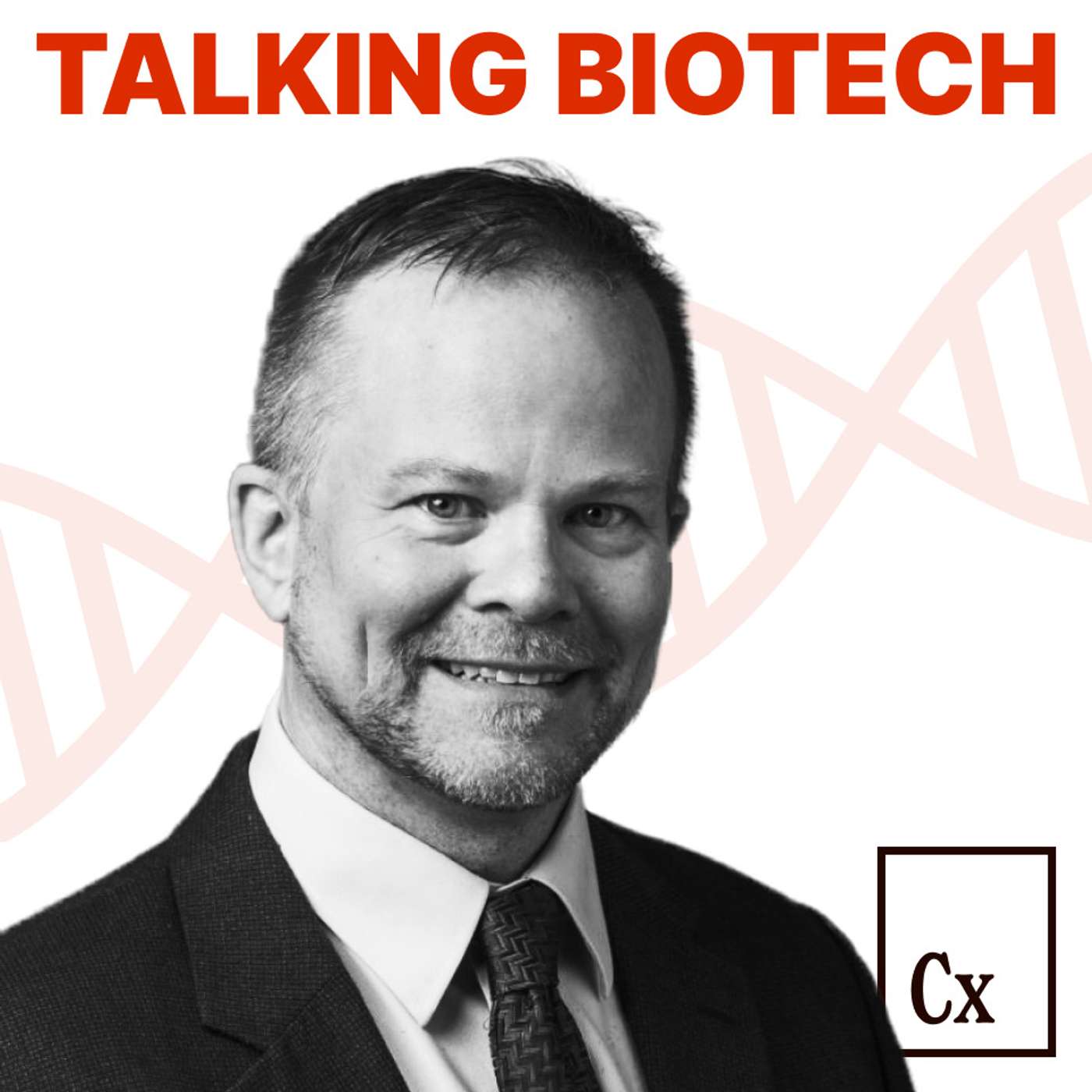
Talking Biotech with Dr. Kevin Folta
Colabra
Talking Biotech is a weekly podcast that uncovers the stories, ideas and research of people at the frontier of biology and engineering.
Each episode explores how science and technology will transform agriculture, protect the environment, and feed 10 billion people by 2050.
Interviews are led by Dr. Kevin Folta, a professor of molecular biology and genomics.
Each episode explores how science and technology will transform agriculture, protect the environment, and feed 10 billion people by 2050.
Interviews are led by Dr. Kevin Folta, a professor of molecular biology and genomics.
Episodes
Mentioned books

Sep 1, 2018 • 31min
Transparency vs. Confidentiality
This last week podcast host Kevin Folta found himself in a difficult predicament. There was palpable outrage by those affiliated with a science website where he participated in some of their activities. Turns out that Folta also did paid work outside of his university job, which is normal. He was retained by a law firm as a special matters expert, someone to analyze some data in a private mediation. He was bound my confidentiality to not discuss the details of the case. The folks from the science website used public records requests to obtain Folta’s confidential internal university documents requesting permission to perform outside work. These are forms where universities approve participation in paid activities beyond the normal job description. Those requesting the documents read details about the confidential work, and then posted a damaging website where confidentiality was broken, and Folta was accused of being non-transparent. The instance triggered the need for an important discussion. Scientists typically have non-disclosure agreements. Such agreements demand confidentiality. At the same time, we expect them to be completely transparent.Can we simultaneously honor confidentiality and transparency? Probably not. So how can we be trusted communicators in a space where collaborators don’t want their information shared? This discussion between Drs. Paul Vincelli and Kevin Folta hopefully will seed a much needed conversation.# COLABRATalking Biotech is brought to you by Colabra – an R&D platform that brings your lab’s world-changing research together in one shared space. Learn more at https://www.colabra.app/# TALKING BIOTECHTwitter: https://twitter.com/talkingbiotechWebsite: https://www.colabra.app/podcasts/talking-biotech/Instagram: https://www.instagram.com/colabrahqThe Talking Biotech podcast is distinct from Dr. Kevin Folta's teaching and research roles at the University of Florida. The views expressed on the show are those of Dr. Folta and his guests, and do not reflect the opinions of the university or Colabra.
Aug 25, 2018 • 41min
Malaria, Artemisia and Artemisinin
Malaria is a tremendous world health problem, affecting the lives of hundreds of millions of people in the developing (and industrialized) world. One of the most effective therapies is derived from a natural compound produced in the plant Artemisia annua. In this week’s podcast Dr. Ian Graham from the University of York describes the problem of malaria, historical treatments, the use of artemesia and the isolation of artemisinin. Breeding and engineering of plants and microbes to enhance production is discussed.Link to Prof. Graham’s website.# COLABRATalking Biotech is brought to you by Colabra – an R&D platform that brings your lab’s world-changing research together in one shared space. Learn more at https://www.colabra.app/# TALKING BIOTECHTwitter: https://twitter.com/talkingbiotechWebsite: https://www.colabra.app/podcasts/talking-biotech/Instagram: https://www.instagram.com/colabrahqThe Talking Biotech podcast is distinct from Dr. Kevin Folta's teaching and research roles at the University of Florida. The views expressed on the show are those of Dr. Folta and his guests, and do not reflect the opinions of the university or Colabra.
Aug 18, 2018 • 39min
Chicken Domestication
The chicken is by far the most abundant animal farmed on earth, grown for meat and eggs. But where did it come from? What kinds of birds were domesticated? When? Where? What were the traits that came from wild jungle fowl that give us today’s familiar bird? These questions and more are answered by Dr. Greger Larson from Oxford University. Dr. Larson combines data from genomics, archaeology, and anthropology to reconstruct the ancient history of various animals, illuminating how they became part of agriculture. This episode of explores the fascinating history of domestic chickens.Follow Prof Larson: @Greger_Larson # COLABRATalking Biotech is brought to you by Colabra – an R&D platform that brings your lab’s world-changing research together in one shared space. Learn more at https://www.colabra.app/# TALKING BIOTECHTwitter: https://twitter.com/talkingbiotechWebsite: https://www.colabra.app/podcasts/talking-biotech/Instagram: https://www.instagram.com/colabrahqThe Talking Biotech podcast is distinct from Dr. Kevin Folta's teaching and research roles at the University of Florida. The views expressed on the show are those of Dr. Folta and his guests, and do not reflect the opinions of the university or Colabra.
Aug 11, 2018 • 36min
Plant Disease Networks
Plant disease resistance is a complicated arms race between the plant and pathogens. Bacteria, viruses and fungi evolve in lock-step with plants, creating new ways to overcome new disease resistance strategies. Resistance to disease has a foundation in the gene-for-gene model, a model that hypothesizes that plants and pathogens have a molecular relationship with each other that mediates pathogenicity. Today’s podcast features Drs. Lida Derevnina and Chih-Hang Wu, postdoctoral researchers with Sophien Kamoun (@KamounLab) at the Sainsbury Laboratory (@TheSainsburyLab) in Norwich, England. They describe the new thinking of disease resistance as a number of complex layers that integrates many gene-for-gene interactions with other mechanisms in mediating plant defense. Hosted by Paul Vincelli (@pvincell).This is a link to the article in Science. # COLABRATalking Biotech is brought to you by Colabra – an R&D platform that brings your lab’s world-changing research together in one shared space. Learn more at https://www.colabra.app/# TALKING BIOTECHTwitter: https://twitter.com/talkingbiotechWebsite: https://www.colabra.app/podcasts/talking-biotech/Instagram: https://www.instagram.com/colabrahqThe Talking Biotech podcast is distinct from Dr. Kevin Folta's teaching and research roles at the University of Florida. The views expressed on the show are those of Dr. Folta and his guests, and do not reflect the opinions of the university or Colabra.
Aug 4, 2018 • 38min
Psychology, Consumers and Decisions
Dr. David Just studies human behavior and how psychology ties in with economic decisions. His work at Cornell examines the interesting overlays that cause consumers to behave how they do. In this podcast we examine consumer decisions in food, including a discussion about soft drinks, ketchup, meat, and ingredients from genetically engineered crops. We also touch on the “GMO labeling” issue.Follow Dr. Just: @DavidJust1 Also follow his podcast discussions at @MadHatEconomics And download here. # COLABRATalking Biotech is brought to you by Colabra – an R&D platform that brings your lab’s world-changing research together in one shared space. Learn more at https://www.colabra.app/# TALKING BIOTECHTwitter: https://twitter.com/talkingbiotechWebsite: https://www.colabra.app/podcasts/talking-biotech/Instagram: https://www.instagram.com/colabrahqThe Talking Biotech podcast is distinct from Dr. Kevin Folta's teaching and research roles at the University of Florida. The views expressed on the show are those of Dr. Folta and his guests, and do not reflect the opinions of the university or Colabra.
Jul 28, 2018 • 1h 2min
Aflatoxin, Problems and Solutions
Alfatoxins are a significant threat to human health and world food security. They are naturally-occurring toxic compounds produced by the fungus Aspergillus flavus and other species. These fungi thrive on corn, peanuts, wheat, rice and other food staples, and grow well in stored food supplies. The compounds are potent carcinogens, and it is estimated that billions of people suffer from chronic exposure. Today’s guest is Dr. Peter Ojiambo from North Carolina State University. He describes the current state of the problem and solutions, ranging from biocontrols, cultural adjustments and even modern biotechnology techniques.Dr. Ojiambo’s website 74 –Safer Foods with RNAi (beating aflatoxin in maize with HIGS) 104 — Postharvest Solutions in Food Security 114 – Aflatoxin and Groundnut# COLABRATalking Biotech is brought to you by Colabra – an R&D platform that brings your lab’s world-changing research together in one shared space. Learn more at https://www.colabra.app/# TALKING BIOTECHTwitter: https://twitter.com/talkingbiotechWebsite: https://www.colabra.app/podcasts/talking-biotech/Instagram: https://www.instagram.com/colabrahqThe Talking Biotech podcast is distinct from Dr. Kevin Folta's teaching and research roles at the University of Florida. The views expressed on the show are those of Dr. Folta and his guests, and do not reflect the opinions of the university or Colabra.
Jul 21, 2018 • 36min
The Orange-Fleshed Sweet Potato in Africa
The 2016 World Food Prize went to a group that coordinated the breeding, promotion and distribution of the orange-fleshed sweet potato in Africa. One of person on the team was economist Dr. Jan Low. The sweet potato grows well in many parts of Africa. It is not the sweet potato known to westerners. It is white and dry, and more like bread than the well known Thanksgiving sweet potato. At the same time there is widespread vitamin A deficiency, especially among children. Could the orange sweet potato help solve a critical micronutrient deficiency? Dr. Low and her team introduced the orange fleshed sweet potato to Africa, breeding them against locally adapted varieties. The new potatoes were introduced with marketing campaigns, helping introduce new populations to this novel product. Soon, the orange fleshed sweet potato was aiding the diet, saving lives, and creating new entrepreneurial opportunities for African farmers and commerce.Follow Mark: @JanLow1 www.sweetpotatoknowledge.org # COLABRATalking Biotech is brought to you by Colabra – an R&D platform that brings your lab’s world-changing research together in one shared space. Learn more at https://www.colabra.app/# TALKING BIOTECHTwitter: https://twitter.com/talkingbiotechWebsite: https://www.colabra.app/podcasts/talking-biotech/Instagram: https://www.instagram.com/colabrahqThe Talking Biotech podcast is distinct from Dr. Kevin Folta's teaching and research roles at the University of Florida. The views expressed on the show are those of Dr. Folta and his guests, and do not reflect the opinions of the university or Colabra.
Jul 14, 2018 • 35min
Barley Domestication and Breeding
Barley is an important grain, with prominent roles as the foundation of bread and beer. Dr. Sheila Adimargono shares the interesting stories around barley’s history, the traits that early domesticators found useful, and information about its modern production. The discussion covers everything from the evidence of barley’s origin to modern genomic analysis.Follow Sheila: @seminisa# COLABRATalking Biotech is brought to you by Colabra – an R&D platform that brings your lab’s world-changing research together in one shared space. Learn more at https://www.colabra.app/# TALKING BIOTECHTwitter: https://twitter.com/talkingbiotechWebsite: https://www.colabra.app/podcasts/talking-biotech/Instagram: https://www.instagram.com/colabrahqThe Talking Biotech podcast is distinct from Dr. Kevin Folta's teaching and research roles at the University of Florida. The views expressed on the show are those of Dr. Folta and his guests, and do not reflect the opinions of the university or Colabra.
Jul 7, 2018 • 48min
Russia’s GMO Disinformation Campaign
When social scientists examined messaging in new media around GE crops, a few trends became apparent. Surprising evidence emerged that showed that the Russian Federation is actively participating in a campaign, here in the USA, to malign GE crops with a goal of influencing public opinion. In this week’s episode Dr. Shawn Dorius from Iowa State University talks about the recent findings. He describes a literal propaganda campaign designed for English-speaking countries. The apparent goal is to erode public trust in American agriculture, and influence opinion away from technology that Russia does not have. Hosted by Paul Vincelli (@pvincell).# COLABRATalking Biotech is brought to you by Colabra – an R&D platform that brings your lab’s world-changing research together in one shared space. Learn more at https://www.colabra.app/# TALKING BIOTECHTwitter: https://twitter.com/talkingbiotechWebsite: https://www.colabra.app/podcasts/talking-biotech/Instagram: https://www.instagram.com/colabrahqThe Talking Biotech podcast is distinct from Dr. Kevin Folta's teaching and research roles at the University of Florida. The views expressed on the show are those of Dr. Folta and his guests, and do not reflect the opinions of the university or Colabra.
Jun 30, 2018 • 34min
Seeds of Science
Mark Lynas believed in his heart that he was doing the right thing. He was joining others in tearing out field trials of GE crops, and effectively arrested research and development around crop biotechnology. He participated in a movement that significantly shaped public opinion that influences policy to this day. But Mark is a scientific author, and when writing about climate change understood the need for rigorous evaluation of scientific evidence. When he applied the same thinking to GE crops, it was apparent that he was not following the evidence – and changed his mind. Mark treats the topic of plant biotech with refreshing nuance, sitting cleanly in the interface of sound science and responsible social application. His book details his journey, and is a refreshing primer for all of us that need to check ourselves for self delusion, and ensure that we are pursuing the truth in our discussions.Follow Mark: @Mark_Lynas Order Seeds of Science at Amazon # COLABRATalking Biotech is brought to you by Colabra – an R&D platform that brings your lab’s world-changing research together in one shared space. Learn more at https://www.colabra.app/# TALKING BIOTECHTwitter: https://twitter.com/talkingbiotechWebsite: https://www.colabra.app/podcasts/talking-biotech/Instagram: https://www.instagram.com/colabrahqThe Talking Biotech podcast is distinct from Dr. Kevin Folta's teaching and research roles at the University of Florida. The views expressed on the show are those of Dr. Folta and his guests, and do not reflect the opinions of the university or Colabra.

