

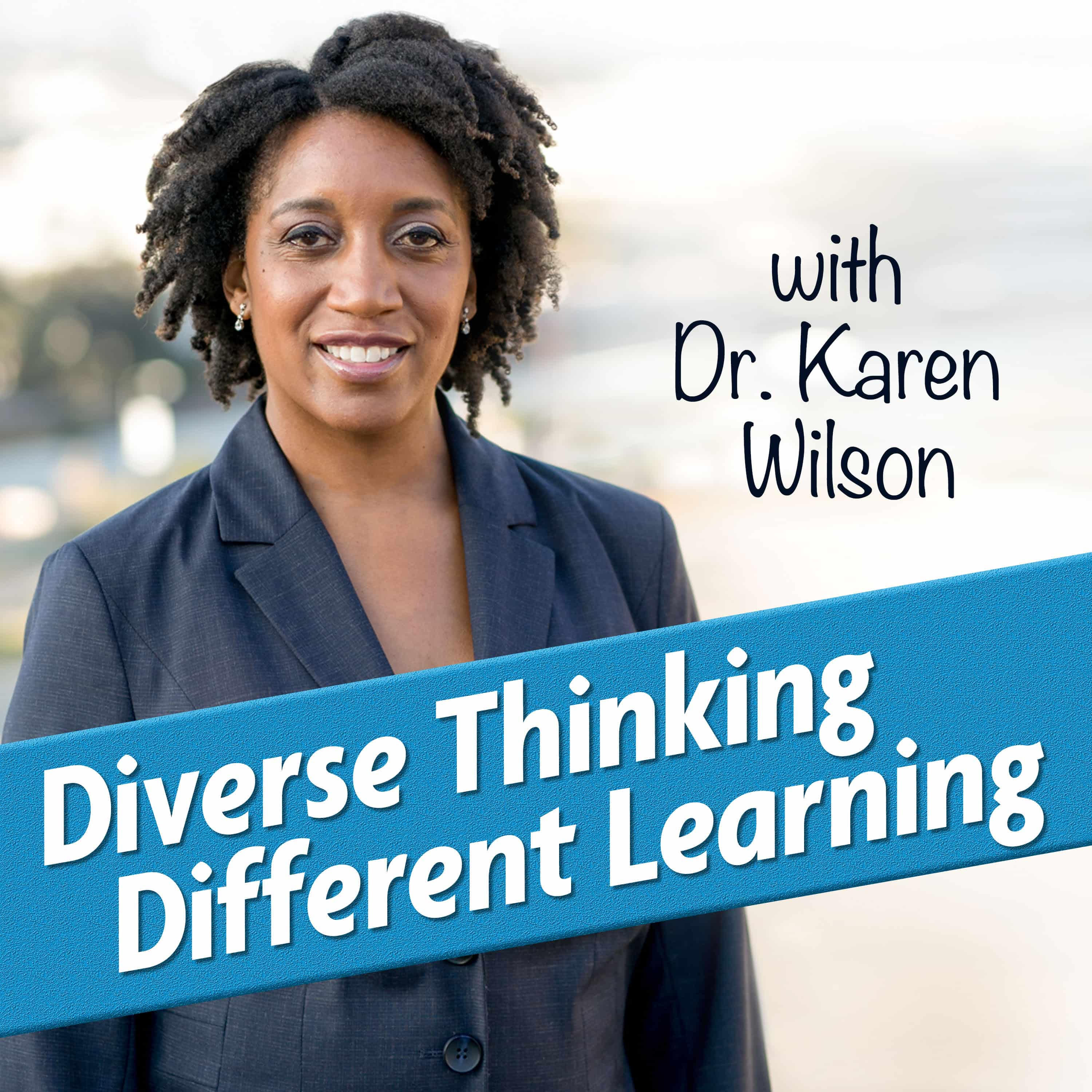
Diverse Thinking Different Learning
Dr. Karen Wilson
Diverse Thinking · Different Learning is hosted by pediatric neuropsychologist and mom of two, Dr. Karen Wilson. Each week, Dr. Wilson shares expert insights, science-based strategies, and conversations with leading specialists to help parents and educators better understand ADHD, dyslexia, autism, executive functioning challenges, learning differences, and youth mental health.
Through engaging interviews and practical guidance, the podcast translates research into real-world tools that empower adults to support neurodivergent children, struggling learners, and students with learning and thinking differences.
Trusted by families and professionals alike, Diverse Thinking · Different Learning is a go-to resource for reliable information and actionable strategies to help children learn, grow, and thrive.
Explore episodes and resources at https://diversethinkingpodcast.com/
Through engaging interviews and practical guidance, the podcast translates research into real-world tools that empower adults to support neurodivergent children, struggling learners, and students with learning and thinking differences.
Trusted by families and professionals alike, Diverse Thinking · Different Learning is a go-to resource for reliable information and actionable strategies to help children learn, grow, and thrive.
Explore episodes and resources at https://diversethinkingpodcast.com/
Episodes
Mentioned books

Apr 19, 2022 • 43min
Ep. 77: Understanding Autism Spectrum Disorder with Lisa L. Hancock, Ph.D., MBA
April is Autism Awareness and Acceptance Month and here at ChildNEXUS, we want to do our part to increase acceptance and understanding as well as help parents and educators connect with the resources they need. So, today we are re-airing an episode with Dr. Lisa Hancock to help us better understand what Autism Spectrum Disorder is. 1 in 54 children in the United States are diagnosed with Autism Spectrum Disorder. With this number growing, it would make sense that this is a very well understood disorder. Unfortunately there is a lot of confusion surrounding ASD, what it looks like, and what to do about it. Because of this confusion, I knew we needed an expert to help us better understand it. Our guest today is Dr. Lisa Hancock. Dr. Hancock is a licensed clinical psychologist who specializes in working with individuals with Autism Spectrum Disorder, those who are twice-exceptional, and those who are highly gifted. She has worked for many years helping families navigate both public and private school systems, and she provides neuropsychological assessments to determine underlying issues in children, teens, and adults. In today's episode, Dr. Hancock paints a clearer picture of what Autism Spectrum Disorder is, why there is confusion surrounding it, and what it could look like in children and adults. She helps us better navigate understanding of this large umbrella term and leaves us wanting to learn more. Show Notes: [3:57] - Prior to 2013, there was a distinctive difference between Autism, Asperger's, and other terms. Dr. Hancock explains why there was a difference. [5:10] - After 2013, Autism and Asperger's were put under one umbrella term. [6:41] - Dr. Hancock understands why Autism and Asperger's are grouped together but explains why those in the field will use both terms when speaking to parents. [9:14] - Dr. Hancock diagnoses Autism in adults who were previously missed. [10:09] - The tests used in diagnosing are different depending on the age of the child. [10:59] - There is a test that is commonly used to diagnose Autism that Dr. Hancock does not use. [13:41] - Diagnosing Autism could be missed for a variety of reasons. [15:14] - Age 4 and 5 is a window for noticeable Autism-related behaviors. [16:26] - What is a child capable of doing but isn't doing consistently? [18:44] - There is no standard for diagnosing Autism in teens and adults in the United States. Some adults realize they may have been misdiagnosed. [20:31] - Dr. Hancock developed a battery for identifying Autism in adults. [23:10] - Those with Autism Spectrum Disorder and a developmental or intellectual delay are often diagnosed by a pediatrician. Dr. Hancock sees children who have less noticeable symptoms. [25:56] - Dr. Hancock explains patterns in birth history, learning disabilities, eating issues, sleeping problems, and auditory processing. [26:59] - Social issues in early years are harder to pinpoint especially when children attend the same school for several years. [28:10] - Dr. Hancock describes some social issues that could vary depending on the child in question. [29:53] - There is confusion around children being able to outgrow symptoms. Some young people with ASD continue to struggle with certain things, but you just don't see it because they learn compensatory skills and strategies. [31:42] - Why is it important to have an Autism diagnosis? [33:51] - A lot of parents don't want to tell the child's school about a diagnosis due to stigma. But Dr. Hancock explains why this is not a good idea. [34:47] - Dr. Hancock discusses safety in those with Autism. [36:44] - There are things that are impacted that aren't generally thought about. [38:09] - We need to believe children when they say that they "don't know" instead of assuming that they don't want to do something. About Our Guest: Dr. Lisa Hancock is a licensed clinical psychologist who provides neuropsychological assessments, counseling, and psychotherapy to children, teens, families, couples, and adults. She has experience with neurodevelopmental, learning, processing, anxiety, and mood disorders; including ADHD, Autism Spectrum Disorders, dyslexia, math and writing disorders, dysgraphia, auditory and visual processing, communication and language disorders, anxiety disorders, conduct disorders, and depressive disorders. Dr. Hancock is experienced in conducting Independent Educational Evaluations (IEE); as well as supporting parents through the Individualized Education Plan (IEP) process. Additionally, she specializes in working with twice-exceptional individuals (those who are gifted and have concurrent learning or developmental challenges) as well as with individuals who are highly gifted. Dr. Hancock also works with school and district administrators to provide teacher in-service training; conducts parent education workshops; and provides presentations at area schools and community events. Connect with Dr. Hancock: Summit Center Office Home Page Phone: (925) 708-6296 Links and Related Resources: Autism Spectrum Disorder Episode 25: Raising Differently Wired Kids with Joy and Confidence with Debbie Reber Episode 45: How Sensory Processing Impacts Communication with Jessie L. Ginsburg Episode 43: Building Social Competence and Enhancing Social Skills with Dr. Elizabeth Laugeson What is an Autism Mama Bear? Beyond Credentials: Three Extras to Look for in Your Child's Therapist Join our email list so that you can receive information about upcoming webinars - ChildNEXUS.com The Diverse Thinking Different Learning podcast is intended for informational purposes only and is not a substitute for medical or legal advice, diagnosis, or treatment. Additionally, the views and opinions expressed by the host and guests are not considered treatment and do not necessarily reflect those of ChildNEXUS, Inc or the host, Dr. Karen Wilson.

Apr 12, 2022 • 11min
Ep. 76: Using Content and Connections to Help Kids Thrive
Diverse Thinking Different Learning Podcast is a small part of ChildNEXUS. Today's episode is a bit different as we are going to dive into all the resources that ChildNEXUS has to offer in addition to guest interviews with the podcast. I want to connect you with the right resources for your child and as ChildNEXUS continues to expand, we can reach more families and educators. So what is ChildNEXUS? It is a digital platform that provides expert curated content to parents and educators about the identification of and the intervention for learning disorders and mental health issues in children and teens. ChildNEXUS goes a step further. We connect parents with professionals who provide psychological and educational support services. Listen to this episode to learn more about what ChildNEXUS can help you with and check out the links below. Show Notes: [1:24] - Dr. Wilson describes her passion for helping children and what she has seen over the years. [2:40] - Many families are told that their children are fine without the support until later in childhood and adolescence. [3:39] - Mental health concerns and academic skill deficits are at an all time high in the United States. [4:30] - Dyslexia is disproportionately underdiagnosed in children of color and those experiencing poverty. [5:10] - Dr. Wilson shares staggering numbers of undiagnosed disorders in children across the world. [6:11] - What is ChildNEXUS? [6:49] - When a child is experiencing difficulties, parents are faced with searching for information and professionals. ChildNEXUS has it all in one place. [7:50] - When kids are connected with the right provider, they can thrive. [8:43] - Many professionals also offer virtual services. [10:03] - Through content and connection, we can change the lives of children and adolescents. Links and Related Resources: Find a Provider or School Search Articles Listen to more podcast episodes here Not sure what type of provider or support your child needs? Join our email list Are you a provider or head of school who serves kids who learn and think differently? We would love to have you in our community. Click here to find out more. Join our email list so that you can receive information about upcoming webinars - ChildNEXUS.com The Diverse Thinking Different Learning podcast is intended for informational purposes only and is not a substitute for medical or legal advice, diagnosis, or treatment. Additionally, the views and opinions expressed by the host and guests are not considered treatment and do not necessarily reflect those of ChildNEXUS, Inc or the host, Dr. Karen Wilson.

Apr 5, 2022 • 32min
Ep. 75: How to Raise Justice-Minded Kids with Dr. Traci Baxley
In this highly anticipated interview, Dr. Traci Baxley and I discuss a critical topic in today's world: raising justice-minded children. Dr. Baxley's book Social Justice Parenting: How to Raise Compassionate, Anti-Racist, Justice-minded Kids in an Unjust World is incredibly powerful and I recommend that everyone read it. I am thrilled to have Dr. Baxley join the Diverse Thinking Different Learning Podcast today to talk about her book and what exactly Social Justice Parenting really is. In addition to being an author, Dr. Baxley is also a professor, consultant, parenting coach, speaker, and mother to five children. Her passion and specialization is in belonging, diversity and inclusion, and social justice education. Her guidance is needed now more than ever as we navigate parenting children through a world that doesn't yet embrace differences. How can we as parents, caretakers, and educators raise children who are compassionate, kind, loving, accepting, and aspire to be change agents? Listen to Dr. Baxley's important message and get your hands on a copy of her book. Show Notes: [1:46] - Welcome to the show, Dr. Baxley! [2:50] - Dr. Baxley's book Social Justice Parenting resonated with Dr. Wilson's personal and professional life. [4:10] - Social Justice Parenting is a way of being intentional and purposeful in how we are raising our children to be more compassionate and be change agents. [6:04] - We tend to let our own biases and experiences become our guiding light in how we parent. [7:19] - What is radical love and how can it change the way we parent? [8:33] - It is not just about race, but all identities. [10:00] - Dr. Baxley shares the neurodiversity of her family. [11:12] - It is important to instill a sense of confidence and acceptance of the labels placed by society as a wonderful part of them, rather than something to feel shame about. [12:04] - When you accept your child for all that they are, it makes it easier for them to accept their life journey too. [13:34] - It is a daily challenge to parent out of radical love and reflection rather than fear. [14:55] - We owe our children the acknowledgement of our own mistakes and acting out of alignment with core values. [16:47] - This modeling is something that your child will remember when they interact with others in the world. [18:55] - There are times when children who learn differently will not feel included. [19:45] - As parents and caregivers, it is our job to create a safe space. [21:30] - Dr. Baxley shares one of the ways she changes her thinking when listening to her children intentionally in different scenarios. [22:50] - Who makes up the team outside the home for your children? [24:37] - We build a compassionate village that extends beyond our home. [25:50] - Show kindness to yourself as well. [26:56] - Through even little things, you can model social justice engagement. [28:52] - Micro acts of kindness can change someone's life. [30:08] - Dr. Baxley's book is available and her work is making an impact. About Our Guest: Dr. Traci Baxley is a professor, consultant, parenting coach, speaker, and mother to five children. She is the creator of Social Justice Parenting™ and the author of Social Justice Parenting: How to Raise Compassionate, Anti-Racist, Justice-minded Kids in an Unjust World. An educator for over 30 years with degrees in child development, elementary education, and curriculum and instruction, she specializes in belonging, diversity and inclusion, anti-bias curriculum, and social justice education. As a diversity, equity, and inclusion consultant, Dr. Baxley supports organizations and corporations in developing inclusive practices and policies that lead to workplace belonging and high productivity. Connect with Dr. Traci Baxley: Email: traci@tracibaxley.com Social Justice Parenting Website Social Justice Parenting: How to Raise Compassionate, Anti-Racist, Justice-minded Kids in an Unjust World by Dr. Traci Baxley Instagram LinkedIn Links and Related Resources: Fostering Social Justice in Our Youth Episode 5: Educational Therapy, Distance Learning, and Social Justice with Dr. Bibi Pirayesh Episode 37: Literacy: A Social Justice Issue with Resha Conroy Episode 4: Helping Your Child with Language Based Learning Disabilities with Dr. Daniel Franklin Join our email list so that you can receive information about upcoming webinars - ChildNEXUS.com The Diverse Thinking Different Learning podcast is intended for informational purposes only and is not a substitute for medical or legal advice, diagnosis, or treatment. Additionally, the views and opinions expressed by the host and guests are not considered treatment and do not necessarily reflect those of ChildNEXUS, Inc or the host, Dr. Karen Wilson.

Mar 29, 2022 • 41min
Ep. 74: Not What I Expected - Help and Hope for Parents of Atypical Children with Dr. Rita Eichenstein
Part of the mission for this podcast is to provide help and hope to parents, caregivers, and educators to children who learn and think differently. Oftentimes the parents' feelings may be overlooked when it comes to raising an atypical child and today's episode is all about validating your emotions during various phases of helping your child. Dr. Rita Eichenstein joins me today to talk about her research and her award winning book, Not What I Expected: Help and Hope for Parents of Atypical Children. She found that in the midst of tons of parenting books, there wasn't anything for parents who are dealing with confusing and sometimes overwhelming emotions. Dr. Eichenstein uses her expertise and passion to provide parents with the validation that it is okay to feel the way you do and that you are certainly not alone. So listen to this episode to learn the science behind the brain of a parent and what to expect emotionally as you help your child navigate their own unique journey in life. Show Notes: [3:12] - There are patterns in how parents feel. There are a lot of stigmas and common reactions. [4:18] - The goal is for children to be happy and people need support. [5:12] - Dr. Eichenstein gives examples of what questions parents commonly come to her with. [6:51] - With raising an atypical child, fear and anxiety are common feelings for parents. [7:46] - What makes us human is our diversity. [9:19] - It is important to know that some kids will need more support than others. [10:31] - There are tons of parenting books available but Dr. Eichenstein realized that there wasn't anything about what it is like inside the mind of a parent. [11:56] - Research shows that the development of the brain changes when a person becomes a parent. [13:12] - Dr. Eichenstein explains the science behind the changes in the brain and hormones when becoming a parent. [14:29] - The brain of a parent with a baby is the equivalent to the brain of someone in love. [15:27] - There is also a time of grieving that Dr. Eichenstein describes. [18:10] - Depending on the age, atypical children will need different types of support. The parent worry brain is normal and you are not alone. [20:01] - The first phase for some parents is denial. [21:20] - Anger is the next phase for some parents. [22:24] - Anger is a natural response and parents need to learn to trust. [24:32] - Seeking solutions is commonly what happens next. Google can be a resource but you will not always find accurate information. [25:54] - There is research to support evidence based intervention provided by experts. [27:21] - Depression is also normal during these times. [28:33] - Self-care is incredibly important and it is okay to ask for help. [30:14] - Acceptance will come and it is okay to feel heartbroken and total love for the child you have at the same time. [32:40] - Although we think a child may not understand, be careful of the messages you send to your child by being self-aware. [34:08] - Make it clear to the child that you are there for them. Convey messages with compassion and empathy. [35:39] - In some cases, parents may feel a sense of relief when they learn what causes certain behaviors. [38:14] - Being wired differently are both superpowers and obstacles. [40:01] - Dr. Eichenstein's book is available on Amazon and highly recommended. About Our Guest: Dr. Rita Eichenstein is a licensed psychologist with post-doctoral training in pediatric neuropsychology and special education. She specializes in pediatric neuropsychological assessments and parent training skills. Dr. Eichenstein maintains a private practice at Cedars-Sinai Medical Towers in Los Angeles, California. Areas of expertise include learning disabilities, attention deficit disorders, autism spectrum, gifted populations, as well as college students and graduate students, as well as counseling parents of all ages. She is also the author of the award winning book, Not What I Expected: Help and Hope for Parents of Atypical Children. Connect with Dr. Rita Eichenstein: Dr. Rita Eichenstein's Website Not What I Expected: Help and Hope for Parents of Atypical Children on Amazon Links and Related Resources: Episode 2: Demystifying the Assessment Process What is a Comprehensive Evaluation and How Can it Help Support My Child's Learning? How to Initiate a Special Education Assessment Episode 32: Advocating for Children with Special Needs with Heather Zakson Episode 3: Neuropsychological Evaluations Through a Cultural Lens with Dr. Vindia Fernandez Join our email list so that you can receive information about upcoming webinars - ChildNEXUS.com The Diverse Thinking Different Learning podcast is intended for informational purposes only and is not a substitute for medical or legal advice, diagnosis, or treatment. Additionally, the views and opinions expressed by the host and guests are not considered treatment and do not necessarily reflect those of ChildNEXUS, Inc or the host, Dr. Karen Wilson.

Mar 22, 2022 • 45min
Ep. 73: Building Language Skills with the Personal Narrative with Carol Karp
Returning to the podcast today is Carol Karp, and this episode is all about the impact a personal narrative has on language development. Many of us love stories and storytelling, but we don't often think of storytelling as a way to develop language skills. The personal narrative helps kids who struggle with language based learning challenges, and Carol is here to explain how. Carol brings her own stories to this episode to truly demonstrate the power the personal narrative can have. The personal narrative is something that can be developed at all different ages, and Carol gives us strategies to start conversing with kids in ways that help promote their language skills, creativity, flexibility, and self-image. Show Notes: [2:03] - Welcome back, Carol! [3:33] - "Meeting kids where they are" means having conversations with them about their interests and figuring out what they can and can't do. [4:41] - Carol shares a story with a child and how meeting her where she was made the biggest difference. [6:50] - You can't work in a traditional sense all of the time or you will miss out. [8:07] - Some kids have these great continuous stories that go on in their head that can be used to help them communicate. [9:47] - Studies show that children who tell stories well are more accepted by peers. [10:31] - A personal story is the story we have about ourselves in our head. [11:50] - Having a more complicated personal narrative can positively affect writing. [12:49] - Young children tend to tell stories about things that have happened and the older they get the more fiction develops. [14:40] - Narration style is developed by asking questions. [15:30] - A real sense of self can't be replicated through technology. [16:40] - Language develops in a social setting. [18:22] - When a child doesn't tell a story in sequence, parents can direct them to think about the order of events. [19:32] - Sometimes, children develop a negative personal narrative. [22:16] - Carol demonstrates the effect of a negative personal narrative and how to help. [24:01] - When children see improvement in their communication, their personal narrative changes. [27:08] - With language difficulties, slow things down and listen. [29:50] - A common assignment in school is how to relate to the text. Kids have to have a personal narrative to be able to connect. [32:37] - Vocabulary lessons help promote personal narrative and language flexibility. [35:14] - Early intervention is very important. [38:10] - Cultural variations were not taken into account when grammar norms were created. [40:01] - Storytelling is rooted in culture. [41:51] - It is harder to connect with other people without a personal narrative. About Our Guest: Carol W. Karp, M.S., M.Ed., CCC-SLP, is a pediatric clinical speech-language pathologist. Carol holds two Master's Degrees, one in Education and one in Communicative Disorders. She has two teaching credentials and was an elementary school teacher and training teacher for LAUSD. Upon completion of training in communicative disorders Carol was awarded a clinical fellowship at the Neuropsychiatric Institute Hospital (Semel Institute) at UCLA, where she received advanced training in diagnosis and intervention for children with speech and language difficulties. She is one of only a small number of Speech and Language Pathologists with this unique dual background. Carol has a Certificate of Clinical Competence in Speech-Language Pathology from the American Speech Language Hearing Association (ASHA Number 01099141); as well as licensure as a Speech-Language Pathologist by the California Speech-Language Pathology and Audiology and Hearing Aid Dispenser Board for over twenty years (License Number Sp8297). She is the founder of Westside Speech and Language Pathology Associates, Inc. and has conducted a thriving private practice since 1991. Connect with Carol Karp: CK Curriculum Coaches Website Phone: (310) 804-7805 ChildNEXUS Profile: Carol W. Karp M.S., M.Ed. Links and Related Resources: Top 5 Signs You Need a Speech and Language Pathologist Speech and Language Disorders in Children More Than Meets the Mouth Episode 20: How Speech and Language Difficulties Affect a Child's Life with Carol Karp Episode 4: Helping Your Child with Language Based Learning Disabilities with Dr. Daniel Franklin Cited Research: Clarke, P. J., Snowling, M. J., Truelove, E., & Hulme, C. (2010). Ameliorating children's reading-comprehension difficulties: a randomized controlled trial. Psychological science, 21(8), 1106–1116. https://doi.org/10.1177/0956797610375449 Join our email list so that you can receive information about upcoming webinars - ChildNEXUS.com The Diverse Thinking Different Learning podcast is intended for informational purposes only and is not a substitute for medical or legal advice, diagnosis, or treatment. Additionally, the views and opinions expressed by the host and guests are not considered treatment and do not necessarily reflect those of ChildNEXUS, Inc or the host, Dr. Karen Wilson.

Mar 15, 2022 • 34min
Ep. 72: Prioritizing Co-Regulation and Self-Regulation in Communication with Danielle G. Kent. M.S., CCC-SLP
As human beings, we are constantly filled with different emotions. As adults, we have learned our own ways of managing these emotions, but for children who learn and think differently managing big emotions is a challenge that's hard to understand. Regulation of big feelings is a skill that takes a long time for many children to develop and that's why co-regulation is important for parents and caregivers to be able to provide. But what is self-regulation and co-regulation? Today's guest helps us understand the terms and how crucial it is to teach and model. Danielle Kent joins the podcast today to share the importance of self-regulation and how we can co-regulate to support children and adolescents. Danielle gives examples and some tips on how to regulate our own emotions to stay calm and to model the skills used to do so. And after hearing this conversation, I think you'll agree that teaching co-regulation and self-regulation should be prioritized. Show Notes: [2:24] - Managing big emotions is a frequently seen challenge. Danielle explains why she is passionate about normalizing big feelings. [4:10] - There's nothing wrong with having frustration, but how it is communicated can be inappropriate for the situation. [5:28] - Self-regulation is the ability to connect the dots between your thoughts and emotions and direct yourself forward. [6:45] - Co-regulating is regulating with someone, a caregiver in particular. [7:55] - Some kids need a longer amount of time to co-regulate before they can self-regulate. [9:09] - Danielle describes proactive and responsive co-regulation. [11:32] - Sometimes it may be difficult to understand behaviors. [12:34] - Executive functioning encompasses several skills and Danielle gives an example to demonstrate how regulation is part of that. [14:29] - The ability for you as the parent to be regulated while your child is struggling is very important. [15:30] - Seek to understand the experience your child is having. [17:49] - The parent's experience also matters and how you model regulation can calm down a child as well. [19:12] - As parents, we are coaching imperfectly. [20:15] - Approaching experiences as learning opportunities is a crucial mindset. [21:17] - Danielle gives an example to show how to look at regulation skills as a long game. [22:50] - We all have different brains and we all need different tools. [24:30] - Sometimes kids need explicit language on how to shift. [26:57] - Kids need to understand that everyone has different brains and that it is not a bad thing. [27:43] - Teaching self-regulation skills must be a priority. [30:02] - Normalizing all types of communication and types of play helps give children a strong sense of self and an understanding of others. [31:43] - As an SLP, Danielle noticed regulation concerns in some students but her passion for self-regulation came from learning about her son. About Our Guest: Danielle graduated with her Masters in Speech-Language Pathology in 2011 and has worked in a variety of settings. She is dedicated towards equipping and empowering parents and professionals to support the development of self-regulation and joyful/autonomous communication via prioritizing co-regulation. She completed the VT- LEND fellowship in 2016 and completed DIR Floortime (R) Certification the fall of 2021. She is the owner/operator of Piece of Mind Therapy and Consulting, LLC. Danielle stepped into the Program Director position for the VTHEC Neurodiversity and Inclusion Program in the Spring of 2021. Danielle runs The Brainy SLP Podcast and The Brainy SLP YouTube station. Links and Related Resources: Episode 9: How Occupational Therapy Helps Kids with Leah Hiller Episode 45: How Sensory Processing Impacts Communication with Jessie L. Ginsburg, M.S., CCC-SLP Self-Regulation and Toxic Stress: A Comprehensive Review of Self-Regulation Interventions from Birth Through Young Adulthood Co-Regulation From Birth Through Young Adulthood Connect with Danielle Kent: The Brainy SLP Podcast The Brainy SLP YouTube Channel Danielle Kent's Website Danielle Kent on Instagram Join our email list so that you can receive information about upcoming webinars - ChildNEXUS.com The Diverse Thinking Different Learning podcast is intended for informational purposes only and is not a substitute for medical or legal advice, diagnosis, or treatment. Additionally, the views and opinions expressed by the host and guests are not considered treatment and do not necessarily reflect those of ChildNEXUS, Inc or the host, Dr. Karen Wilson.

Mar 8, 2022 • 44min
Ep. 71: ADHD and Asperger Syndrome in Smart Kids with Dr. Thomas Brown
Joining the conversation today is Dr. Thomas Brown, Director of the Brown Clinic for Attention and Related Disorders. Dr. Brown is also the author of several articles and books, but today we talk about his most recent book ADHD and Asperger Syndrome in Smart Kids and Adults. Listen to Dr. Brown as he describes common difficulties individuals with ADHD and Asperger Syndrome have and how it impacts them going into adulthood. In many situations that he has seen, children with Asperger Syndrome go unnoticed until middle school, high school, or even beyond as their level of intelligence is generally very high. As they get older, executive functioning and social demands increase and that's where things might get challenging. This episode is about those struggles and helping these individuals better understand the world around them. Show Notes: [2:49] - Dr. Brown shares what inspired him to write his most recent book, ADHD and Asperger Syndrome in Smart Kids and Adults: Twelve Stories of Struggle, Support, and Treatment. [4:01] - A common struggle for children and adults with ADHD and Asperger Syndrome is with socialization. [5:09] - Dr. Brown believes the grouping of Asperger Syndrome with Autism is a disservice and notes the differences. [6:24] - The executive functioning of those with ADHD and those with Asperger Syndrome have a lot of similarities. [8:52] - Autism Spectrum Disorder is a very broad spectrum but Dr. Brown notes some of the differences in Asperger Syndrome. [11:08] - Moving into middle school and high school makes things more difficult with executive functioning and social demands. [13:12] - Many times, Asperger Syndrome is not detected in early elementary grade levels. [15:24] - Another concern that Dr. Brown notes is regulating emotions. [17:32] - Dr. Brown looks closely at executive functioning to understand the profile for each child he sees. [19:30] - Dr. Brown gives an example of the complexity of ADHD. [22:17] - The cognitive ability of individuals with Asperger Syndrome is very high. [24:20] - Many times, they are not able to see someone else's perspective. [25:57] - In those with Asperger Syndrome, there is difficulty understanding how their interaction makes others feel. [27:42] - Dr. Brown shares a story of a man who continued to lose his job to demonstrate how social struggles can manifest in adulthood. [31:07] - Dr. Brown lists some of the noticeable social tendencies in early years. [32:51] - Emotional regulation also impacts motivation in both positive and negative ways. [34:47] - When Asperger Syndrome goes unnoticed until high school or even later, it can be difficult to deal with. Many times, individuals are praised for their intelligence but then struggle with other challenges. [38:01] - Remember that it is not intentional when individuals say something hurtful. [39:18] - While very intelligent, some individuals struggle with reading social cues. [40:11] - Dr. Brown says to remember strengths and talents in treatment. About Our Guest: Thomas E. Brown earned his Ph.D. in Clinical Psychology at Yale University and then served on the clinical faculty of the Dept. of Psychiatry at Yale School of Medicine for 21 years while operating a clinic in CT for children and adults with ADHD and related problems. In May 2017, he relocated to California where he sees patients and directs the Brown Clinic for Attention and Related Disorders in Manhattan Beach, California. Dr. Brown has taught continuing medical education courses on ADHD for the American Psychiatric Association for 20 years and has given lectures and workshops in hospitals, medical schools, universities, and for professional and advocacy groups throughout the U.S. and in more than 40 other countries. He served as Adjunct Clinical Associate Professor of Psychiatry & Behavioral Sciences at the Keck School of Medicine of the University of Southern California and is an elected Fellow of the American Psychological Association and the Society for Child and Adolescent Psychology. Connect with Dr. Thomas Brown: ADHD and Asperger Syndrome in Smart Kids and Adults: Twelve Stories of Struggle, Support, and Treatment by Dr. Thomas Brown Brown Clinic for Attention and Related Disorders Website Links and Related Resources: Episode 33: Attention Deficit Hyperactivity Disorder 101 with Dr. Nicholas Thaler Episode 44: Understanding Autism Spectrum Disorder with Lisa Hancock Ep. 43: Building Social Competence and Enhancing Social Skills with Dr. Elizabeth Laugeson Episode 45: How Sensory Processing Impacts Communication with Jessie Ginsburg Join our email list so that you can receive information about upcoming webinars - ChildNEXUS.com The Diverse Thinking Different Learning podcast is intended for informational purposes only and is not a substitute for medical or legal advice, diagnosis, or treatment. Additionally, the views and opinions expressed by the host and guests are not considered treatment and do not necessarily reflect those of ChildNEXUS, Inc or the host, Dr. Karen Wilson.

Mar 1, 2022 • 36min
Ep. 70: How to Help Students Develop Good Study Skills with Jenny Aguilar, M.Ed., ET/P
Many parents say that their kids struggle with study skills. But what are study skills? Are students taught study skills or are they developed naturally? Today's guest helps demystify study skills and guides us as parents, caregivers, and educators in supporting our children, adolescents, and even young adults in developing the skills necessary to learn. Jenny Aguilar is an educational therapist who specializes in supporting students with ADHD and math and writing challenges. She is passionate about instilling a growth mindset to all students, enhancing their confidence, and making learning fun and accessible. This includes study skills and habits. In this episode, Jenny explains what studying is and how it may vary per student. She also emphasizes the importance of rewarding the process instead of the outcome as well as creating the right environment for studying. This may mean something different for each student and even each subject or study task. So, take some notes while you listen because the tips she offers in this episode might make all the difference for your learner. Show Notes: [2:35] - Often, children are told to study but don't know what that means. Studying means you devote effort and time into learning something. [3:10] - There are many different ways to study including passive and active. [4:18] - Active studying is more challenging but more effective. [5:19] - Passive studying makes one feel like they've learned a lot but doesn't always stick. [6:31] - Jenny teaches kids what happens in their brains when studying and learning. [9:32] - Study plans are great tools that implement spaced practice rather than cramming. [10:47] - Study plans interweave previous lessons and content and make it clearer what needs to be practiced more. [13:12] - Attention issues, slow processing speed, and anxiety can make studying very challenging. [15:51] - It is important to acknowledge effort and provide support needed for students who struggle with studying. [17:24] - Sometimes students with poor study skills will spend their time reviewing material they already know because it feels safe. [19:06] - Preparing students for what would happen if they study and if they don't study gives them a better mindset and the tools to make their own choices. [22:09] - Parents, remember that students want to do well. Rather than focusing on the outcome, focus on the process and highlight their efforts. [24:27] - Notice how your child is behaving instead of emphasizing the amount of time spent working. Take breaks when needed. [26:02] - Jenny notes that sleep and rest are crucial to being sure students are present in their learning. [29:06] - The physical space in which you study makes a huge difference. [31:01] - Scan the environment to help students make decisions about their study space. [33:28] - Phone notifications are extremely distracting. [34:32] - Students need to vocalize and make their own choices in their study environment to make it meaningful. About Our Guest: A certified educational therapist and an active member of the Association of Educational Therapists, Jenny Aguilar specializes in supporting students with ADHD and math and writing challenges. Growing up, Jenny panicked anytime a teacher assigned a writing assignment and every time she entered her math class. After seeing her students grapple with the same challenges and feelings, and their self-confidence dip, Jenny became a certified educational therapist. Jenny has over ten years of teaching students in private and public schools and coaching students 1-1. In addition to having completed the JST- Coaching and Training Teens and College Students with ADHD program, an ICF-accredited course, Jenny has been trained by Peg Dawson to support elementary-aged students and young adults in executive skills. She's passionate about instilling a growth mindset into all students, enhancing their confidence and reframing their narrative, and making learning fun and accessible. She holds a Master's degree in Education and teaching credential from Pepperdine University and an educational therapy certificate from the University of California, Riverside. Her private practice in West Los Angeles supports students in person and virtually! Connect with Jenny Aguilar: WeThrive Learning Website Email Jenny: jenny@wethrivelearning.com ChildNEXUS Provider Profile: Jenny Aguilar M.Ed., ET/P Links and Related Resources: Episode 10: Building Independence Through Educational Therapy with Rachel Kapp The Intersection of Executive Function, ADHD, and Other Learning Disabilities Get in the Driver's Seat of Your Teen's Executive Functioning Be the Executive in Charge Join our email list so that you can receive information about upcoming webinars - ChildNEXUS.com The Diverse Thinking Different Learning podcast is intended for informational purposes only and is not a substitute for medical or legal advice, diagnosis, or treatment. Additionally, the views and opinions expressed by the host and guests are not considered treatment and do not necessarily reflect those of ChildNEXUS, Inc or the host, Dr. Karen Wilson.

Feb 22, 2022 • 31min
Ep. 69: How Games Can Help Kids Learn with Stephanie Pitts
You are in for a treat with this episode, because on Diverse Thinking Different Learning, it is Game Time! Did you know that the board games that might be collecting dust on your shelves could be used to help children? They help all children, but can be very powerful tools for those who learn and think differently. Not only are games fun to play, but they can be used to improve language skills, executive functioning, memory, and numerical skills. Today's guest lists many of the ways that a simple card game can be "up-leveled" to facilitate learning. Stephanie Pitts, owner of My Ed Therapist, is known as "The Game Whisperer" and in this episode she shares her experience with games in her practice. With over 200 games in her collection, Stephanie has creative ideas that give a simple game the twists it needs to become something even better - a learning tool. Be sure to also check out the links below and follow her on Instagram to find ways to facilitate learning during your next family game night. Show Notes: [3:20] - Specifically for kids who learn differently, games are very helpful, but we don't often use them. [4:34] - What better way to reach a child than by having fun? [6:10] - Games can be made to be educational and can target many skills. [7:03] - For many kids who have already experienced so much failure, winning a game that is educational without them realizing is impactful. [8:34] - Stephanie says that games are "low investment, high return." [9:44] - Some games are specifically designed to target a specific skill, but Stephanie demonstrates how other games can be "up-leveled" and used differently. [11:15] - Games can also be used as a simple break between difficult tasks. [13:11] - By using games, you can gather so much information about someone. [14:38] - Stephanie explains that video games have provided an outlet for students during the pandemic but when it affects behavior, it could be a problem. [17:20] - As a result of the pandemic, socializing and problem solving have been affected. [19:02] - Games provide practice for students without the pressure of earning a grade. [20:20] - Stephanie gives some examples on how games can support reading comprehension and following directions. [23:00] - As a parent, don't overthink it. Just simply play the game and have fun. [24:40] - Some games can even help auditory processing. [25:08] - Stephanie lists some of her favorite games to target specific skills. [27:43] - Some games take too long for Stephanie to play with her clients in a session, but she recommends playing them as a family or looking into the junior version. [28:57] - Stephanie is very active on Instagram where she shares different ways to use games. She is also the co-host of the Learn Smarter podcast. About Our Guest: Stephanie Pitts is the owner of My Ed Therapist, an educational therapy group practice in Redondo Beach, Palos Verdes, and virtually, nationwide. She works with students one-on-one to help parents get a full picture of what is going on with their children, reading reports, conducting assessments, and creating and attending individualized learning plans and meetings. Known as "The Game Whisperer," with a collection of over 200 games she uses with her clients, Stephanie expertly weaves fun and play into her work with clients to help them have more fun learning and make better connections between kids, parents, and educators. Stephanie is a Los Angeles native and received her B.A. in Sociology from USC and a Master's Degree in Education from Pepperdine University. She completed her Certificate in Educational Therapy at CSUN and has been trained as an Academic Coach. In her free time, Stephanie enjoys spending time with her two dachshunds, traveling, and spending time with friends. Connect with Stephanie Pitts: Instagram Website Learn Smarter Podcast ChildNEXUS Provider Profile: Stephanie Pitts Links and Related Resources: The Intersection of Executive Function, ADHD, and Other Learning Differences Learn Smarter Podcast featuring Dr. Karen Wilson Links to Game Specific Episodes of Learn Smarter Podcast: Ep 19: Steph's Top Games and Apps (Reading Series) Ep 32: Our Favorite Apps and Games of 2018 Ep 64: Steph's Favorite Math Apps & Games for Elementary (Math Series) Ep 80: Steph's Favorite Middle/High School Math Games (Math Series) Ep 139: Social Emotional Games with Tara Eddy (Professionals Series) Ep 187: Steph's Favorite Games of 2021 Join our email list so that you can receive information about upcoming webinars - ChildNEXUS.com The Diverse Thinking Different Learning podcast is intended for informational purposes only and is not a substitute for medical or legal advice, diagnosis, or treatment. Additionally, the views and opinions expressed by the host and guests are not considered treatment and do not necessarily reflect those of ChildNEXUS, Inc or the host, Dr. Karen Wilson.

Feb 15, 2022 • 33min
Ep. 68: Getting Through the Mid-School Year Slump with Michelle Porjes
The middle part of the school year between January and March is an important chunk of time that is focused on mastering academics of the school year. Learning expectations increase during this time and after the last couple of years of school year disruptions, the pacing of curriculum is increasing. Unfortunately, this is also the time for the mid-school year slump. The mid-year slump impacts both children and adults but can be felt even more strongly by those who learn and think differently. Today's guest, who just recently wrote a blog post on this important topic, joins the conversation today to help parents and educators understand what this is and how to get kids through it. Michelle Porjes is a licensed educational psychologist who specializes in executive functioning coaching and helping experienced educators establish tutoring and support services. In this episode, Michelle gives us so many useful tools and strategies and you can find even more from her in the Pocket Guide of Tools to help support the development of executive functioning skills. Show Notes: [2:51] - The mid-year slump is an interesting time following the excitement of the holidays. Michelle explains how this time affects us as adults and children. [4:36] - Motivation is highly impacted during this time of year. [5:54] - Give this problem a name and normalize it. Share a story with children to normalize and validate their feelings about the mid-year slump. [6:39] - The second thing Michelle recommends is to make a plan and do some different things to change things up a bit. [7:15] - Search for activities that are great for the winter months. [8:30] - The learning expectation and pace during this time increase which makes the mid-year slump even more challenging. [10:20] - Michelle shares how she would plan for the rhythm of the year when she was an administrator. [11:59] - Keeping a calendar is not only great for executive functioning, but it is particularly helpful during the mid-year slump in making things feel more doable [14:01] - Constructing a calendar at home with your child is making them an active participant in experiencing how time passes. [15:50] - Michelle shares her inspiration for creating the Pocket Guide of Tools. [17:15] - The Pocket Guide of Tools is accessible by children, parents, and educators and provides executive functioning tools and strategies for students. [19:51] - Michelle models using the Pocket Guide of Tools with students and reminds them to look back for strategies. [22:36] - You can't do great if you are in a terrible mood. Self regulation is crucial. [25:17] - Collaboration between educators and parents is very important. [27:49] - The pace of curriculum in schools is much faster than it was just a few years ago. [30:00] - Because of the disruptions in school, the mid-year slump can feel even worse. Communicate with your child and educators on providing support. About Our Guest: Michelle Porjes is a native Los Angelino. She grew up in Ladera Heights and was educated in a variety of learning settings including public, private independent and parochial schools. She attended UCLA where she majored in Psychology. After college, Michelle moved to Denver, Colorado where she earned a Master's Degree in Educational Psychology at the University of Denver. Michelle finished her formal education at the University of South Florida in Tampa, Florida where she earned a Master's and Specialist degree in School Psychology. While there, she gained valuable experience in working with students on assessing learning, emotional and behavioral difficulties, as well as facilitating social skills and anger management groups. Michelle is a licensed educational psychologist and a credentialed school psychologist in the state of California. She also is a member of the Association of Educational Therapists. She has worked in the private school world for over 23 years where she specialized in consulting, case management, supervision, leadership, and program development. Currently, Michelle has her own practice where she specializes in executive functioning coaching and helping experienced educators establish tutoring and educational support services that thrive. She routinely works with individuals of all ages and presents workshops and trainings on executive functioning coaching. Connect with Michelle Porjes: Michelle Porjes Website ChildNEXUS Provider Profile: Michelle Porjes Links and Related Resources: Taking on the Mid-School Year Slump Episode 11: Executive Functioning 101 What is Executive Functioning? Executive Functioning: Emotional, Behavioral, and Educational Implications Join our email list so that you can receive information about upcoming webinars - ChildNEXUS.com The Diverse Thinking Different Learning podcast is intended for informational purposes only and is not a substitute for medical or legal advice, diagnosis, or treatment. Additionally, the views and opinions expressed by the host and guests are not considered treatment and do not necessarily reflect those of ChildNEXUS, Inc or the host, Dr. Karen Wilson.

