

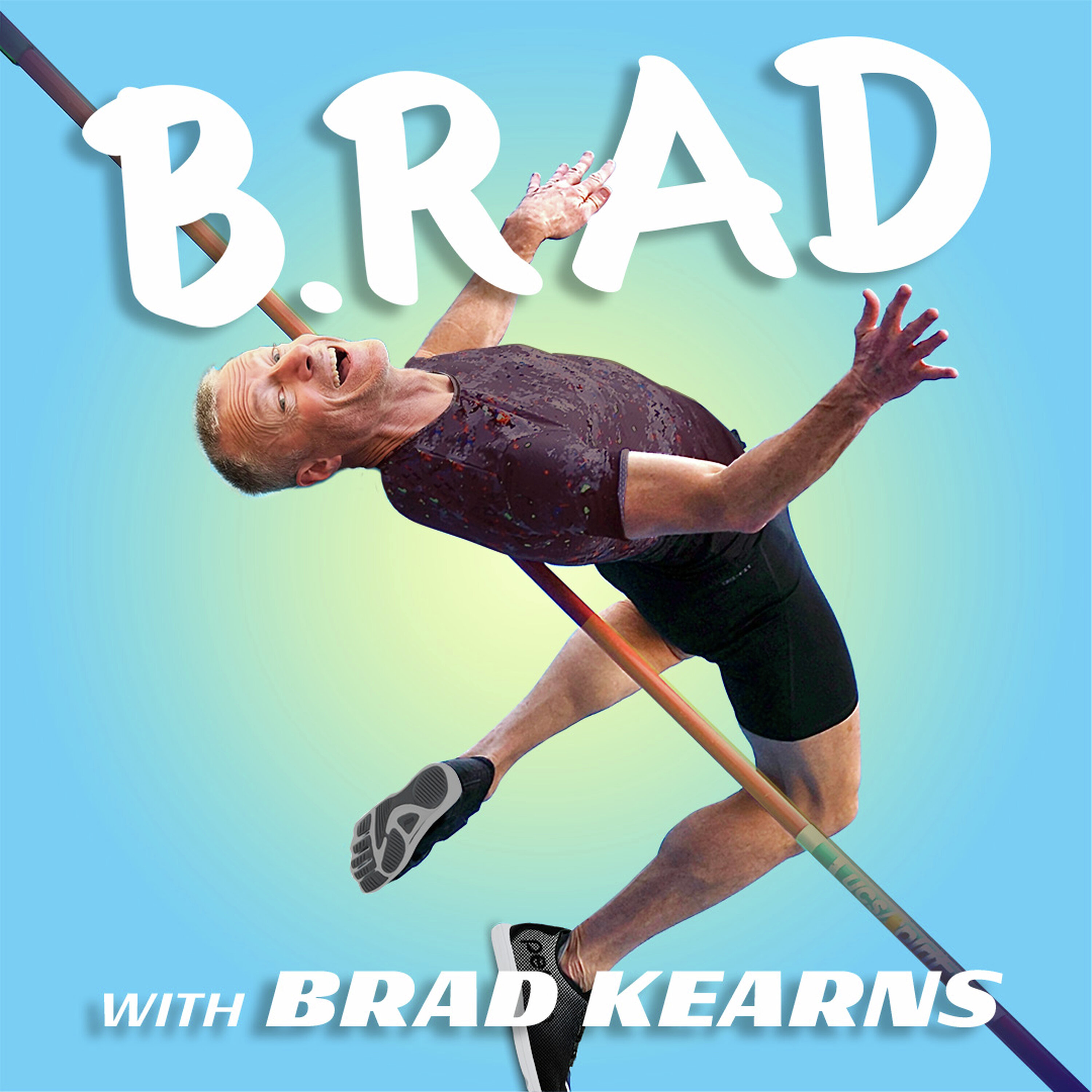
The B.rad Podcast
Brad Kearns
Join Brad Kearns, New York Times bestselling author, world #1 ranked masters 60+ high jumper, Speedgolf world record holder, and former world #3 ranked pro triathlete, in pursuing peak performance with passion throughout life. Brad delivers an engaging mix of step-by-step education on important health topics like staying fit, strong and powerful as you age; transforming diet to lose body fat and increase energy; sort through hype and misinformation to make simple, sustainable lifestyle changes; and broaden your perspective beyond a fit body to experience happy relationships, nonstop personal growth, and ultimately sail to 100 with a happy, healthy, long life. Let’s explore beyond shortcuts, hacks, and crushing competition to laugh, have fun, appreciate the journey, and not take ourselves too seriously. It’s time to B.rad!
Episodes
Mentioned books

Aug 6, 2019 • 1h 27min
Dr. Ron Sinha: On Medicine And Mindset
Fasten your seat belts for an incredibly fast-moving, wide-ranging, and deeply impactful show from Dr. Ron. This guy has fought a valiant battle against dated mainstream medical advice and in favor of a comprehensive ancestral approach emphasizing not just healthy, whole foods, but also choosing out of the flawed mindsets and hectic lifestyle behaviors that are on display in Silicon Valley like no other spot in America. Yes, Dr. Ron works in the most affluent community in America. Tech workers make some bank for sure, but we are talking $1.3 million for a median home price in the Silicon Valley counties. The affluence comes at a cost with a hectic workplace, painful commutes, and consumerism traps. Indeed, Dr. Ron observes numerous associated problems: scarcity mindsets (someone around you always has more); excessive rumination, leading to anxiety and depression; and adults pushing this crappy stuff onto their kids with over pressurized parenting leading to troubled, overstressed teens. Dr. Ron works runs the corporate health division of the Palo Alto Medical Foundation. He develops onsite health/wellness services for major Silicon Valley companies like the tech giants you have heard of. He delivers lectures on assorted health topics and also gets to do initial consults with patients that last for an hour — he can really get deep into lifestyle modification tips that will keep them away from the doctor’s office. For the past decade, Dr. Ron has gained notoriety for fighting the valiant battle against conventional medical wisdom, particularly the widespread use of statins to address heart disease risk. Dr. Ron has succeeded wildly with dietary and lifestyle modification strategies, and communicated his approach to other physicians to inspire change. Dr. Ron is smiling now, and mainstream medicine has progressed over the last 10 years away from the flawed and dated notions about cholesterol, statins, and the proximate cause of heart disease. Years ago, Ron promoted the results of a UCLA metastudy revealing that 80 percent of heart attack victims had LDL cholesterol levels widely considered to be in the “safe” range. As most of us have awakened to by this point, heart disease risk is not as simple as monitoring ones’ total LDL number. If one is concerned about high LDL, it’s important to test for small, dense particles as these are the potentially problematic ones that are small and dense enough to lodge on the walls of your arteries. In contrast, the large, fluffy LDL particles are commonly harmless. Guess what? If you have high triglycerides (over 150), you likely have a small, dense LDL problem. Even if your total LDL is artificially lowered by statin drugs, you can still be at high risk of heart disease. Remember CNN anchor Tim Russert? He passed of a heart attack in his 50s despite a total cholesterol number in the low 100s! This is crazy talk if you compare to decades of conventional wisdom boilerplate: “Don’t eat fat or cholesterol, take statins if your total cholesterol is over 200 and then you will be fine.” Ron has bravely gone toe to toe with the establishment to convince other doctors that diet modification can reduce heart disease risk better than statins, and that statins can often compromise health and not address the biggest risk factors of heart disease. He, like Dr. Cate Shanahan and other evolutionary health leaders, favors tracking your triglycerides-to-HDL as the most relevant disease risk marker. It’s urgent to get 3:1 and optimal to get 1:1. Dr. Ron shared his strategies for affecting lasting dietary transformation and lifestyle change among his patients. First, patients have to get interested in their health. Ron finds that many are too busy trying to make money or push their kids really hard to excel in competitive modern life. Second, to motivate them accordingly, Dr. Ron finds that educating them about the why’s, and offering incentives and competition with clear metrics is an effective strategy. For example, he might challenge a patient to focus on an important blood value like triglycerides and lower it by 100 points by the next blood test date. Third, and this is pure genius, Ron adopts an Additive approach to diet, focusing on efforts to include healthy foods rather than grind on people to eliminate many of their favorites. Some of Ron’s patients have wailed that, “rice is my drug,” so he tells them to add more nuts and meat to their biryani dishes! Fourth, don’t ruminate! This leads to depression when ruminating about the past and anxiety when ruminating about the future. This show can get a little science-y but I urge you to play it slowly, repeat passages, and do whatever you need to do to fully understand the important insights and suggestions from Dr. Ron. The podcast is giving you the opportunity to get an hour-long private consult with one of the leading big picture health guides in the world. I am committed to getting Dr. Ron back on the show in the future, because we hit so many points so quickly that there is plenty of fodder for further focus. We have exchanged long thoughtful emails on the disturbing trend of helicopter parenting and over-pressurized youth experiences, and we get a bit of that going on the show. Hey parents, here is a both-parents-are-doctors family working hard to give their kids a balanced life and a healthy approach to education and sports goals. If they can get over themselves, so can we! TIMESTAMPS: Brad introduces Dr. Ron Sinha. [03:45] Dr. Sinha health of the Silicon Valley employees, as nice a place as it is, a hotbed of stress related illnesses as well as physical. [07:11] The fast pace of life, the sedentary living, the high stress, it's accelerating aging. [11:36] So you have a strong genetic predisposition to how much and where you store fat. [14:17] You can see major transformations in metabolic health just going back two generations. [17:50] Technology has ruined the practice of medicine in so many ways. [20:04] The concept of preventative health has been fading, especially from the younger generation. [23:20] It affects your bottom line if your employees are healthy. [25:35] It’s very important to get REALLY interested in your health. {29:14] Motivation improves when patients can simplify their goals. [32:28] So many people are not aware of having any health problems. [33:45] The metabolic syndrome is really the cornerstone of insulin resistance and heart disease. [36:54] There's a lot of compelling data now around the fact that insulin resistance can get worse if you're on a statin for a long enough period of time. [40:36] Your dietary changes can improve your numbers. [42:35] The ratio of triglycerides to HDL is a prominent indicator of heart health. [47:16] What lifestyle and dietary changes can we make that has the most impact? [49:38] Raising insulin sensitivity is good; insulin resistance is bad. [53:46] Waist circumference is an indication that you are developing visceral fat. [59:56] Kids are showing up in doctor’s offices with anxiety, depression. [01:06:52] Is your family bathing in screen light instead of sunlight? [01:09:02] Rumination is kind of like pre anxiety or pre depression because it is a common thought process. [01:11:25] Parents send very subtle messages of which they aren’t aware. [01:14:41]Support this podcast at — https://redcircle.com/the-get-over-yourself-podcast/donationsAdvertising Inquiries: https://redcircle.com/brandsSee omnystudio.com/listener for privacy information.See omnystudio.com/listener for privacy information.

Aug 2, 2019 • 32min
Diet Tips for Healthy Aging & Longevity (Breather Episode with Brad)
This show goes into more detail about dietary strategies to ditch unhealthy modern foods and dabble in the various popular ancestral style strategies. This show will cover everything, from helping you switch fully into basic primal/paleo style eating, to going into things like keto and carnivore for distinct goals. The most important changes you can make right now in your diet are simple and easy, broken down into four categories: Ditch grains and sugars: Refined grains and sugars are pro-inflammatory, accelerate aging, and promote fat storage. Cutting grains and sugars will minimize insulin production, which is unfortunately the #1 health risk of the Standard American Diet. Ditch industrial seed oils and processed boxed/packaged/frozen foods: Consuming industrial seed oils, along with any kind of “food” that still doesn’t resemble food in its natural form (this goes for anything processed, things that come already made/packaged, and the food you’ll find in the frozen section) has the same effect grains and sugar have on your system: because they’re pro-inflammatory, ingesting them causes free radical reactions in your body, accelerated aging, and cancer. Emphasize primal foods: Primal foods are abundant, fresh, nutritious, and most importantly – delicious! On a primal diet you can enjoy meat, fish, fowl, eggs, vegetables, fruits, nuts, and seeds. The key is keeping it comparatively very low carb (definitely no sugars or grains, but if you’re female, you probably need a little more carbs, like sweet potato, than the average dude will, for health/hormonal purposes) and high in healthy fats (in comparison to Standard American Diet). Stay flexible: When you become fat adapted instead of carb dependent, your meal habits can become more sporadic. A lot of people simply find that their appetite won’t emerge until around noon. Listen to your body. If you don’t want breakfast, don’t break your fast. If you’re hungry for food, then by all means, eat! But if you feel like you should eat just because you’ve been told “breakfast is the most important meal of the day,” then consider yourself off the hook. Intermittent Fasting is hardly a new concept (break-fast, get it?) and it’s a practice that optimizes fat metabolism, enhances cellular repair, and delays aging. The Primal Blueprint lifestyle and ancestral eating philosophy is a powerful game-changer because it truly counters the “diet” concept of prescribed meals and regimented schedule. It is freeing and empowering for people to realize that they don’t need to overthink things and stay metaphorically chained to their old-school ideas of what a healthy diet means. When you switch over to an ancestral diet, your caloric intake and meal choices can vary wildly each day. Meals become predominantly fat-based and stimulate minimal insulin response, which keeps your energy, blood sugar, and appetite stable all day, even when meals are skipped/missed. Eating nutritious, fatty, whole foods that your ancestors ate allows you to enjoy your food and look as good as you feel. Thankfully, it’s quite easy to find primal friendly breakfast options. There are so many ways you can start your day, and if you don’t feel like fasting, then how about a smoothie with coconut milk, protein powder, avocado, fresh produce, frozen fruit – an easy to make, quick process with no cleanup, that also tastes delicious, and is macronutrient balanced and high in antioxidants. For smoothie inspiration, check out this video on my YouTube channel where I show how I make my favorite super nutritious morning smoothie. Then, there’s classic, satisfying and still so healthy options like, eggs and bacon: you can simply fry them up, or make an omelet with cheese and fresh herbs, or onions, mushrooms and bell peppers – get creative! On cold mornings when you find yourself craving something comforting, you’ll see there are so many fun ways to make primal style oatmeal, like Mark Sisson’s that uses coconut flour and assorted soaked nuts and seeds here or this chia-flax-hemp seed concoction from Healthy Sweet Eats. Snacks are also easy on a primal diet. There’s definitely nothing wrong with a little chocolate macadamia nut bark busted out around midday – tasty, healthy, and definitely necessary as a mid-afternoon pick me up! For afternoon or evening meals, go-to’ s can include large salads with vegetables, meat, nuts, and a simple olive oil dressing. Making an effort to find sources of grass-fed or organic animals, wild caught fish, locally grown or organic produce is not only good for the planet and for your community, but the food also just tastes better, and tests as healthier because of the integrity of the environment that it’s been grown in. Animals that aren’t pumped full of hormones and produce that hasn’t been doused in pesticides are shown to have higher nutrient and antioxidant levels than their mass-produced, chemically laden counterparts, so sourcing high-quality food will make a huge difference on the state of your health. Next up is totally eliminating all grains (wheat, rice, pasta, corn, and all derivatives), sugars/sweets and sweetened beverages. Water is an amazing beverage to drink all day, but if you’re feeling something more fun, then try a Kombucha sparkling probiotic drink. PS I should note that currently I’m in the keto-ish, carnivore-ish category right now – which is under 50 grams of carbs per day, or less than 10% of my daily total calories – and enjoying eating mostly veggies and nuts and dark chocolate for my carb sources. If you wonder if you are eating too many carbs, chart what you eat on a notepad for a day or two, trying to measure or estimate quantities as best you can, then visit fitday.com myfitnesspal.com and input your data. It will generate a nice report with macronutrient and caloric breakdowns and allow you to evaluate what you’re doing in your diet now, and how you’d like to change it going forward. The nice thing about a Primal diet is that the foods you eat primarily, like fat and protein, are so delicious and satisfying that it’s easier to not even worry about carbs as much as a lot of dieters do. People can be so obsessed with (and yet scared of) carbs, and a Primal diet really allows this fear and fixation to go away, because you’re getting the bulk of your nutrition from really satiating things like fat and protein, and then having much smaller amounts of healthy sources of carbs, like chocolate or root veggies. Ditching the Standard American Diet for an ancestral diet will blow your mind when you discover how rapidly you start feeling good, and looking good, all while eating delicious things that heal you from the inside out, like bone broth, bacon, avocado...the list goes on. Nothing is off limits (except for junk, but you don’t want that in your body anyways). This is a zero-deprivation diet, with an emphasis on what whole foods work best for you. Try it out, and witness how miraculously and quickly your life changes when you start implementing a sustainable, easy to follow lifestyle that helps you enjoy yourself and feel good in your body as you age as healthily as possible. TIMESTAMPS: Sugar is hidden everywhere, even in the Starbucks mobile app [6:30]. How hyperinsulinemia sets you up for heart disease, weight gain, metabolic syndrome, and obesity [8:30]. Make nutrient dense food the centerpiece of your diet [9:50]. The types of industrial seed oils you need to eliminate are usually used in restaurants and have bad effects on your brain and cellular function [10:50]. The importance of applying an ancestral health perspective to your diet [12:00]. Industrial seed oils are hiding even in Ben & Jerry’s ice cream [14:45]. What happens after you become metabolically flexible [16:20]. Figuring out if fasting works well for you [19:16]. Ketones, blood sugar, and snacking [20:30]. Brad’s unexpected weight gain and subsequent weight loss journey [23:00]. Why snacking interferes with weight loss [24:35]. Be mindful of occasional indulgences becoming habitual [27:20]. Gluten is addictive and stimulates appetite; sugar is addictive and stimulates opioid receptors in the brain [28:10]. Support this podcast at — https://redcircle.com/the-get-over-yourself-podcast/donationsAdvertising Inquiries: https://redcircle.com/brandsSee omnystudio.com/listener for privacy information.See omnystudio.com/listener for privacy information.

Jul 30, 2019 • 59min
Hiking Podcast with Jake Taylor
I’m the subject of Jake’s interview — on how I became a pro triathlete! Jake Taylor hosts a very cool podcast called 5GQ: 5 Good Questions. He has an assortment of authors on the show to talk about their books and life’s works, and answer five or more good questions from Jake. What an honor to be on this show amidst Jake’s luminaries from the world of high finance and corporate leadership. He is close friends with Warren Buffett and a noted financial professional based in Folsom, CA. Okay, he’s not really close friends with Buffett, but he did hang with him in college (as the winner of a contest he was afforded this opportunity) and leveraged that opportunity into a career. Jake’s first book, The Rebel Allocator, is a novel dispensing business advice about the allocation of capital. FYI: Jake’s wife is the one and only Lindsay Taylor, Ph.D., all-around Primal Blueprint queen bee, ketogenic ironman triathlete and recipe whiz. She worked with Mark Sisson for the recipes in The Keto Reset Diet, The Keto Reset Instant Pot Cookbook, and The Keto Reset Diet Cookbook. Jake and I did something super cool: we tested out his novel idea to conduct a podcast during a hike! Yep, we donned portable equipment and hoofed it for a 48-minute conversation. Essentially, Jake started out asking me one good question and I took it and ran with it: “So, how did a kid from Southern California become the number three triathlete in the world?” Answer: I was too small for high school football, cut from high school basketball (albeit an LA City championship program at Los Angeles Taft High School), so I ended up running and running, till I got hurt from too much running and started swimming, biking, and running, until I became King of the Desert. Hopefully, you will appreciate this different flavor of show, which is syndicated on Jake’s 5 Good Questions podcast channel. TIMESTAMPS: What would the world be like if we read books instead of TV? [01:27] Jake asks Brad about his athletic journey. [07:32] Just because you’re a competitive due and go to full speed, it does not equate with success. [15:01] Learning to be a cyclist, led Brad to triathlon after being a runner. [17:20] After graduating College, Brad found himself working in a skyscraper!! [21:30] Pure motivation helped his commitment towards his goal. [24:26] When he achieved success, he started to be consumed by it. [27:31] When you attach yourself to the outcome, you lose all perspective. [31:38] How does one set an official Guinness record? [32:26] Brad’s experience on breaking the record, taught many lessons. [41:37] When high jumping, the significance inside for me to have a competitive drive to want to improve height over the bar from the last time and, by doing so, define the aging process in one small way. (Brad) [44:54] Running a professional athletic career is like a business. [48:34] Support this podcast at — https://redcircle.com/the-get-over-yourself-podcast/donationsAdvertising Inquiries: https://redcircle.com/brandsSee omnystudio.com/listener for privacy information.See omnystudio.com/listener for privacy information.

Jul 26, 2019 • 35min
Brad Gives an Overview of Healthy Living Anti-Aging Tips (Breather Episode with Brad))
Let’s make things simple with a big picture look at the most urgent and beneficial lifestyle practices you can implement right now to have more energy and better physical and cognitive performance. Future breather shows will provide more detail about each category, but this episode should get you focused on the big picture so you can explore these strategies further. This is one of my favorite topics to discuss, and it’s based around a concept called compressed morbidity. This means you remain strong, mentally sharp and physically healthy, living disease-free and illness-free for as long as you possibly can. My father, the late great Dr. Walter Kearns (1922-2019) did a fantastic job of this, living to the age of 97 and having basically 95 years free of any physical ailments and health complaints. He was healthy and strong, and playing golf at a high-level for almost his entire life. By the time he was 95, he started to gracefully decline, but this period was for such a shorter time than most folks his age experience, and without the prolonged suffering so many elderly people endure at the end of their life. As common as it is, it certainly doesn’t mean you have to deal with a long, drawn-out, painful decline into old age. It’s simple: implement the most important changes you can make to your lifestyle now, because it will pay off – not just in the short term, but in the long-term too. The four most important changes you can make can be categorized into four steps: Eat primally: Ditch processed carbs in favor of nutritious primal foods, especially healthy fats. Keep it simple: eat real food, and make sure your diet works for your specific needs. Maybe you need to figure some things out first, like getting a food allergy test. An unhealthy lifestyle can lead to a leaky gut, which leads to a whole host of problems, including food sensitivity. Find out if any of the foods you’re eating are actually irritating your gut, so you can avoid them while you heal your body by consuming nutrient dense things like bone broth and liver. You’d be surprised at how many people are sensitive to foods that seem like they would be good for you (egg yolks, coconut, and blueberries are common), so it’s crucial you pay attention to your digestion and how you feel after meals. It’s also very typical that foods that were once intolerable are easily digested once you’ve worked on healing your gut. I know some people who could not have even the slightest bit of dairy without getting an eruption of acne the next day, who now enjoy grass-fed organic milk and cheese, daily, with absolutely no problems. Eating primally is simple, easy to do, and all about giving your body the best fuel – the kind it deserves – so it runs as well as possible. Move around more: Just freakin’ move! Wherever, whenever – just do it. Walk places, take frequent breaks, and do structured cardio workouts at a comfortable pace of (180 minus your age) heart rate or less. Maybe don’t try to find a parking space right outside the building you need to go into, but a block or two away (if you have the time to walk – or better yet, make the time). Little things like that make a huge difference. If you can bike or walk to the grocery store or farmer’s market, do it. Take the stairs whenever you can. Look for little opportunities everywhere to be less sedentary, and take them. Use it or lose it: While walking is great and essential, don’t forget to sweat: getting your heart going is also key. Don’t overdo it, but be sure to include brief, high-intensity strength workouts twice a week, and all-out sprints once a week, every 7-10 days. This will help your body preserve muscle mass, reduce body fat, and delay aging. Sleep/relax: Sleep is crucial to health, bottom line. Unfortunately, it seems like getting good sleep is becoming more and more difficult for some people – which is hardly surprising, considering the circumstances of our modern world. Because of this, you have to be mindful when creating your ideal sleep environment. It’s super important you align your sleep habits with your circadian rhythm. Start your day off right with a natural wakeup call and energetic morning as the sun streams in naturally and wakes your body. In the evenings, keep it mellow and dark with natural light, and don’t forget that it is critical you minimize your digital screen use after the sun goes down! Once it’s dark, you really shouldn’t be looking at screens – your body will be confused, and you be will miserable and exhausted from lack of sleep. Focus on finding times during the day and the week to relax, instead of being so go-go-go all the time! I’ll expand on these four topics further in-depth for future breather shows, but for now, enjoy this show as an opportunity to learn about which lifestyle practices and changes you can make so you’re feeling as good in your body as possible. TIMESTAMPS: Brad shares how he doubled his testosterone levels entirely through lifestyle modification [5:45]. Brad explains the concept of compressed morbidity [6:54]. Put yourself into a position to succeed through your habits [10:00]. The top 4 lifestyle changes to make [15:20]. Active couch potato syndrome [16:22]. Brad talks about his morning routine and how he like to start his day [18:58]. Why slowing down is so important [23:33]. The kind of high intensity exercise you should be doing [24:10]. The importance of sleep and downtime [28:53]. Support this podcast at — https://redcircle.com/the-get-over-yourself-podcast/donationsAdvertising Inquiries: https://redcircle.com/brandsSee omnystudio.com/listener for privacy information.See omnystudio.com/listener for privacy information.

Jul 23, 2019 • 57min
William Shewfelt Part 1: An Evolved Perspective On Dreaming Big, Staying Focused, And Executing The Plan To Be Healthy And Productive
I sit down with Mr. Red Power Ranger and Carnivore Shredder himself, William Shewfelt. When you visit him on the Internet and see his shredded physique of 3.8% body fat, or striking a pose in his tight red Power Ranger outfit, you might form a superficial first impression that here’s another Hollywood poser but this show quickly proves that notion is wrong. Alas, you are in for a wonderful treat on this show, as I became educated and inspired from an extremely poised, thoughtful, driven, focused, yet fun-loving young guy, and his charming girlfriend Chelsea who accompanied him. Only 23 years old, William offers profound insights about the importance of dreaming big and then executing with a relentless passion for living life to the fullest and breaking past your personal limits of what you believe is possible. This is a guy who can quote Tony Robbins and the other motivators but then actually back up the aphorisms with a distinct plan of action. William believes there should be a balance of risk taken in life and how holding on to past traumas prevent you from achieving your goals. He firmly believes it's not where you've been but where you're going. I talk about the origin of the Get Over Yourself theme and the importance of cultivating a pure motivation for peak performance, and these were lessons I had to learn the hard way over years of struggling and self-reflection as an athlete and with career pursuits. This dude has a lot of stuff figured out already - no kidding! How can he go from disinterested economics student at UC San Diego to dabbling in local theater acting, to a starring role in a major television program in one year? By formulating an entirely evolved and bulletproof mindset that was all about focus, dedication, and “protecting your mindset” against the trials and tribulations and heartbreak that is endemic to the acting game. I was truly inspired and motivated by absorbing his energy and positive attitude. We were supposed to talk about the carnivore diet, his body fat reduction programming, and other such boilerplate stuff, but I was too captivated to leave the thread of how a young person overcame an unhealthy youth to dream big and then execute according to plan every day. Eventually, we transition our focus into diet and exercise, making for a great stand-alone show coming soon. Support this podcast at — https://redcircle.com/the-get-over-yourself-podcast/donationsAdvertising Inquiries: https://redcircle.com/brandsSee omnystudio.com/listener for privacy information.See omnystudio.com/listener for privacy information.

Jul 19, 2019 • 25min
Tania Teschke’s Advice For Protecting Your Health in Today's Polluted World (Breather Episode with Brad)
After a great show with Bordeaux Kitchen author Tania Teschke, we keep recording and I start to get freaked out over the health concerns relating to radiation from “Smart” utility meters and also excess artificial light and digital stimulation from various blue-light emitting sources like digital screens and LED light bulbs. After the recording, I headed over to Home Depot to buy some vintage style light bulbs with the yellow hue incandescent filament style light bulb. This type of bulb is far less offensive to your circadian rhythm and mitochondrial function than the popular LED lights and fluorescent lights. Look at these up close, and you’ll realize they are emitting an intense flickering that is invisible to the naked eye, but highly disruptive to your mitochondrial function and melatonin release at night. How about WiFi? Are you ever freaked out when you login to a wireless connection and notice 27 other networks within range of your device? Scoff if you must, but we have no reference points for long-term exposure to modern tech devices. In addition to the devices, we must also be mindful of the health consequences of hyper connectivity and sensationalist media. This is a good breather show to get you focused on doing the best you can to live healthily in your high-tech modern environment. TIMESTAMPS: Tania talks a lot about the dangers lurking in our surroundings. [05:14] Fluorescent light and LED light bulbs are harming us. [07:25] The utility smart meters are also dangerous. [10:54] Wearing blue light blocking glasses helps. {16:48] It’s important to learn and be aware of these sorts of dangers. [18:44] We trust our sources of authority and now we are learning they often aren’t correct. [21:35] Support this podcast at — https://redcircle.com/the-get-over-yourself-podcast/donationsAdvertising Inquiries: https://redcircle.com/brandsSee omnystudio.com/listener for privacy information.See omnystudio.com/listener for privacy information.

Jul 16, 2019 • 1h 21min
Tania Teschke: Cultural Learnings of Europe For Make Benefit of America
Keen fans of Borat, the legendary movie my Sacha Baron Cohen, will realize I’m knocking off his movie title here. It’s appropriate to capture the theme of our conversation, which covered all manner of healthy eating and living, but hit the theme of healthy European traditions contrasted with hectic, hyper-speed, overly-stressful American life today. Tania was born and raised in America and graduated from Brown University, and has spent many years of her adult life in places like Japan, Russia, and is now based in Bern, Switzerland. She has been on amazing journey of health and immersion into her authoring of one of the most fabulous and comprehensive books ever written on the planet, titled The Bordeaux Kitchen, An Immersion Into French Food and Wine, Inspired By Ancestral Traditions. This book represents her life’s work, filled with insights about improving health through ancestral-style eating, the rich tradition of French cuisine, always honoring the ancestral perspective, and a fabulous education about wine and how to pair it with assorted paleo meals. We talk about Tania’s quest to regain her health after a disastrous ordeal starting with a burst appendix sustained in Kazakhstan (speaking of Borat, that’s his hood!), and a long hospital stay afterward dealing with complications. She has studied the health consequences relating to mass produced food (including the recent alarming commentary about widespread ingestion of glyphosates, the toxic chemical found in RoundUp weed killer product), EMF exposure (SmartMeters from utilities, WiFi signals), excess artificial light and digital stimulation on your circadian rhythm as well as your mitochondrial function, impurities in the water supply, the consequences of gut dysfunction, and much more. Yes, Tania is a real forward thinker about health and natural living. It’s worth listening carefully to her concerns and insights, instead of our usual knee-jerk reaction to accept as normal all the health offenses in modern life. TIMESTAMPS: Tania has written a masterpiece of a cookbook that includes French Cooking recipes along with the wine and descriptions of life there. She focuses on ancestral health. [04:23] Her book is way more than a French Cookbook. Surprisingly the French culture is much aligned with the principals of Primal living. [09:08] The Europeans seem to have a much calmer, socializing, relaxing lifestyle. [13:00] People in the US need to slow down. [19:31] The organic label does not entirely let us know the facts. [25:15] Eggs’ labels are very confusing. [30:05] From farmers’ markets in Europe, there has been a shift in some areas to super market, but most people still take advantage of the farmer’s markets. [33:48] Public transportation functions well in Europe compared to US. [39:03] Kid’s absorption with light from screens is damaging eyes. [40:25] Blue light is the color we see around noon, so the artificial light at night from screens throws off our Circadian rhythm. [46:24] A lot of the new light bulbs we have are a problem [49:17] Sun exposure in the morning sets up your Circadian rhythm. [52:10] They explain the difference between fresh air and stale air. [56:24] Obesity might be a function of not getting the right amount and right type of light. [58:35] Many people don’t really realize the importance of being outside. [59:41] We are creating endless summer according to how our genes are wired to use light. [01:00:40] In Tania’s book she covers ancestral health, her health journey as well as French cooking and wine. [01:03:38] If you use fresh ingredients, you don’t have to read labels. Put the boxes away! [01:07:05] When you make desserts with rich fats, you don’t need as much sugar. [01:09:49] The moral of vegetarian versus meat eaters is another issue. [01:16:40] If you are taking an animal’s life, you’d better lead a purposeful and meaningful life yourself. [01:18:08] Support this podcast at — https://redcircle.com/the-get-over-yourself-podcast/donationsAdvertising Inquiries: https://redcircle.com/brandsSee omnystudio.com/listener for privacy information.See omnystudio.com/listener for privacy information.

Jul 14, 2019 • 9min
Blip Show: John Gottman’s Top Tips For A Successful Relationship
I’m bringing you some of the best quotes from relationship expert John Gottman for today’s blip show. Gottman’s ideas are simple and straightforward, but radically different from anything you’ve heard before, and will change the way you approach relationships and your partner. Gottman advises couples to stop wasting time arguing. Why’s that? Because most arguments cannot be resolved, yet couples still spend time fighting year after year, trying to change each other’s mind. This is a complete waste of time because the arguments stem from fundamental differences in personality, values, and/or lifestyle. Fighting about these differences is just wasting your time harming your partnership. Want to learn more? Tune in to the show to find out how you can enhance the harmony in your relationship and establish methods to help strengthen your connection with your partner. Support this podcast at — https://redcircle.com/the-get-over-yourself-podcast/donationsAdvertising Inquiries: https://redcircle.com/brandsSee omnystudio.com/listener for privacy information.See omnystudio.com/listener for privacy information.

Jul 12, 2019 • 23min
Tracking Heart Disease Risk with Personal Blood Testing (Breather Episode with Brad)
My athletic friend reached out to me recently to tell me he had a body scan revealing arterial blockage issues and the need for a pipe cleaning procedure. Yep, getting old brings some surprises and challenges, and it’s important to implement healthy habits and track your risk factors. Today, it’s easier than ever to self-quantify with online blood testing, but when you embark on the process of tracking your heart disease risk, it is integral that you are looking for (and at) the right information. To ensure you receive the most accurate results, I would follow the advice of Dr. Cate Shanahan and Dr. Ron Sinha, who agree that the most beneficial and reliable method of tracking heart disease risk is by focusing on your triglycerides to HDL ratio. We all know HDL: “the good cholesterol” (or “nature’s garbage truck” as some call it) - the higher the levels, the better. HDL goes through the blood stream, scavenging and eliminating damaged cellular material, like small, dense LDL molecules, which unfortunately have a penchant for lodging on the walls of your heart, prompting the oxidation and inflammation of these molecules that leads to heart disease. Not getting enough sleep, eating a high-carbohydrate, high insulin producing diet, and either not exercising enough or over-exercising can all greatly affect your chances of heart disease. Simply put, you want good things to be happening in your blood in order to lower your risk. Obviously, examining your blood is a great way to deduce what’s going on internally, and for decades, doctors have tracked LDL cholesterol levels with the belief that this was the key to detecting heart disease risk. However, it’s clear now that examining your triglyceride to HDL ratio is vastly superior to the oversimplified obsession with LDL which has led to widespread statin use, despite a recent UCLA meta study revealing that 80% of heart attack victims had LDL values considered to be in the safe range. Instead, take the focus off the LDL numbers and check out your triglycerides. Firstly, if you’re over 150, it is time to get that down (like, yesterday) because that is too freakin’ high! A triglyceride level over 150 indicates that your bloodstream is seriously overwhelmed by the amount of fat circling around in it, so if you are over 150, then try minimizing (or even full-on cutting out) the amount of refined grains and sugars in your diet, and see what happens after three weeks of this change. Chances are, you’ll find your numbers have gone way down. 150+ is high, but you can decrease it in a matter of weeks if you really commit to making the necessary tweaks in your lifestyle. For some, even under 150 is too loose – Dr. Sinha recommends you aim to get your triglycerides under 100. It is critical to get your triglycerides to HDL ratio under 3.5 to 1 (if you’re over, you’ll find yourself in the “ticking time bomb” category). Ideally, Dr. Shanahan and Dr. Sinha want to see a 1:1 ratio. Getting your triglycerides even with your HDL is the goal, so let’s say you get your HDL at 60, 65: then you’ll want to drop you’re your triglycerides to 60 - 65 as well. Many more details are offered in this show about good tests to order and values to strive for. Visit places like DirectLabs.com or UltraLabTests.co m and order some tests. All you have to do is purchase your test, head to a nearby lab for a blood draw, then receive your results by email in a few days. Then you can take action with medical professional if necessary or do some dietary modification to correct red flags. UCLA Study link: https://www.uclahealth.org/most-heart-attack-patients-cholesterol-levels-did-not-indicate-cardiac-risk TIMESTAMPS: Brad reminds you that it is important to get blood tests frequently. [04:52] Stay strong and fit by modifying your lifestyle. [06:00] The hard choices pay off down the line. Get a routine. [09:24] What a disaster to think that 71% of the fuel we're putting in our bodies is merely low octane fuel to burn for energy that's almost entirely deficient in the micronutrients that we need to be healthy. [11:31] Move around more! People with a devoted fitness regimen still show signs of metabolic dysfunction and disease patterns. [15:30] Keep your heart rate in the low range of 180 minus your age when exercising. [21:07] Once in a while push your body; do something challenging. [24:00] Have workouts short in duration and explosive in nature. [25:22] Should you feel sore after working out? [27:14] We should have periods of brain downtime. [28:58] Dim Light Melatonin Onset is when you allow the sleep hormone and restorative hormone flood the bloodstream so you can sleep. [30:54] Support this podcast at — https://redcircle.com/the-get-over-yourself-podcast/donationsAdvertising Inquiries: https://redcircle.com/brandsSee omnystudio.com/listener for privacy information.See omnystudio.com/listener for privacy information.

Jul 9, 2019 • 52min
Rethinking No Pain, No Gain: An Evolved Approach To Fitness With Insights From Four Experts
This show is about rethinking the basic notions of athletic training, particularly the “no pain, no gain” model that’s been widely criticized but is still embedded into DNA of many competitive athletes. This show was syndicated on the Primal Endurance podcast, so if you are an endurance athlete, definitely check out that show and learn how to pursue endurance goals in a healthy, balance banner. I was a pro athlete for nine years and been in the fitness business for 30 years, but in the last couple years I’ve met some people that have absolutely blown my mind with evolved insights and athletic training, performance, and recovery. In particular, we are experiencing an awakening in the fitness world as to the importance of recovery in the big picture of peak performance. For decades, we’ve been stuck in a narrow mentality focused on conducting a thoughtful and effective pattern of workouts as the end-all for fitness success. What a joke. It’s time to wake up and learn some insights that will transform your approach to fitness, and help you preserve your health as you pursue ambitious fitness goals. I compiled some brief insights from an assortment of fitness leaders, patching them together to an interesting and memorable. I know you may like to listen to podcasts on the go, but this show requires some note taking. Do what these folks say you will become a better athlete and healthier person. Here is the dream team for insights and a sound bite for the insights detailed on the show: Dr. Phil Maffetone: The godfather of aerobic training and fat-adapted eating has been preaching the same message for nearly 40 years. Finally, people are paying attention and the MAF training concepts are becoming highly respected and adopted by endurance athletes. MAF heart rate: The maximum aerobic heart rate is the upper limit for an effective aerobic workout. It’s 180-age in beats per minute. Go faster as a pattern (extremely common for endurance athletes of all levels) and you will dig yourself a grave of overtraining and overstress. Stressful workouts—return on investment: You need never exceed 90% of maximum heart rate when conducting high intensity intervals, time trials, tempo sessions, or group classes. Topping out at 90 percent of max is vastly less stressful that taking things up to true max. You get only moderately different training stimulation but vastly more stress and recovery time necessary. Oh mercy, I wish I knew and honored this in my triathlon career. Lots of effort and money was left in workouts that should have been saved carefully for race day! Brian McKenzie: The Power, Speed, Endurance guru and author of Unbreakable Runner is now obsessed with breathing and recovery as the primary focus for fitness enthusiasts. If you learn to breathe correctly, you minimize the stress impact of the workout and spend more time in healthy balance between sympathetic (fight or flight) and parasympathetic (rest and digest) nervous system function. Brian helped endurance athletes embrace the importance of intensity instead of just road slog; now he is poised to help all athletes embrace the importance of recovery—including cutting edge techniques for breathing and hot and cold therapy. Listen to his show on the Get Over Yourself podcast! Joel Jamieson: The guru of Recovery Based Training talks about Rebound workouts, where doing a focused protocol of movements in the gym can actually speed up recovery! I have only recently implemented Joel’s techniques, and with great success. Previously, I thought that sleeping more, napping, and relaxing on the couch were the ultimate recovery tools. Joel’s workout features breathing, stretching, mobility/range of motion exercise, doing positive lifts only (dropping the weight after lifting to avoid eccentric), and doing very short intervals with mindful heart rate lowering during long recovery periods. Craig Marker: Craig and Pavel Tsatsouline of StrongFirst are making some awesome breakthroughs in training theory that you absolutely must try. First, dig the concept of HIRT instead of HIIT. The latter, High Intensity Interval Training, is a term that’s been bantered about for years as the foundation of serious athletic training. High Intensity Repeat Training conveys a different concept where you focus on producing repeat efforts of explosive, intense effort without declining performance and getting tired with successive efforts. This is similar to Jacques Devore’s breakthrough method called Maximum Sustained Power (MSP) that is detailed in the book Primal Endurance. How to transition to HIRT and MSP? Freakin’ rest more between efforts man! And stop the workout when you notice performance declining! I have recently implemented the HIRT concept with fabulous success. I will be doing a whole show about it in the future, so stay tuned. HIIT workouts lead to exhaustion, extended recovery time and ultimately burnout. Why do almost all group exercise workouts, high school and college team workouts, and personal trainers believe that HIIT is the way? Dated and misinterpreted science, such as the “bastardization of the Tabata concept” as Craig says. If you are a serious fitness enthusiast, this show can transform your approach, make recovery better, and change your entire life in the process! TIMESTAMPS: Some exercise programs are disastrously flawed and set you up for an overly stressful life. [03:51] Recovery is very important. [04:55] The most enthusiastic athletes as well as the casual fitness person need to learn how to work-out in a way that doesn’t do damage. [08:24] The Maffetone method is: slow down and emphasize aerobic development. For heart rate, the formula is 180 minus your age. [12:11] You need not ever exceed 90% of your maximum heart rate, even during the most intense and explosive training sessions. [14:09] Brian MacKenzie,’s contribution to this is suggesting to endurance athletes to add Crossfit training into their routines. [18:30] What’s the big deal about breathing? [21:32] Dial things down. [24:24] Rebound workouts are sessions you perform when you are trying to recover from high stress training sessions. [26:13] HIIT is high intensity interval training. [30:55] Sprinting is very important. [32:32] When lifting, pick a weight you could do eight times, make sure to do a succession of sets with a declining number of reps in order to make sure you are rested and explosive for each effort. [37:59] Brad summarizes the messages in this podcast. [41:59] Support this podcast at — https://redcircle.com/the-get-over-yourself-podcast/donationsAdvertising Inquiries: https://redcircle.com/brandsSee omnystudio.com/listener for privacy information.See omnystudio.com/listener for privacy information.

