


80,000 Hours Podcast
The 80,000 Hours team
The most important conversations about artificial intelligence you won’t hear anywhere else.
Subscribe by searching for '80000 Hours' wherever you get podcasts.
Hosted by Rob Wiblin, Luisa Rodriguez, and Zershaaneh Qureshi.
Subscribe by searching for '80000 Hours' wherever you get podcasts.
Hosted by Rob Wiblin, Luisa Rodriguez, and Zershaaneh Qureshi.
Episodes
Mentioned books

55 snips
Feb 13, 2020 • 2h 27min
#70 - Dr Cassidy Nelson on the 12 best ways to stop the next pandemic (and limit nCoV)
Dr. Cassidy Nelson, a medical doctor and researcher at Oxford's Future of Humanity Institute, discusses essential strategies for pandemic prevention. She emphasizes the need for innovative genetic sequencing tests and broad-spectrum antiviral drugs. The conversation highlights the importance of proactive planning and international cooperation in managing future outbreaks. As she shares her research group's twelve actionable recommendations, she underscores the urgency of improving global health systems to effectively combat emerging infectious diseases.

17 snips
Feb 6, 2020 • 1h 37min
#69 – Jeffrey Ding on China, its AI dream, and what we get wrong about both
Jeffrey Ding, a lead China researcher at Oxford's Future of Humanity Institute, delves into the complexities of China's AI landscape. He dispels myths about China’s AI strategy, emphasizing its long historical context and the significant role of private companies. The discussion contrasts the U.S.-China AI rivalry with cultural narratives and misconceptions surrounding surveillance practices. Ding also illuminates the social credit system's realities and the unique work culture that fuels China's tech advancements, encouraging a nuanced understanding of its AI ambitions.

Feb 3, 2020 • 1h 19min
Rob & Howie on what we do and don't know about 2019-nCoV
Howie Lempel, a researcher focused on pandemics and global catastrophic risks, joins Robert Wiblin to delve into the emerging 2019-nCoV virus. They discuss its origins, contagion rates, and the complexities of estimating fatality statistics. The conversation highlights the challenges of public health responses, the implications of asymptomatic cases, and the need for effective communication during health crises. Lempel emphasizes preparedness, navigating uncertainty, and the ethical quandaries surrounding personal protective measures.

Jan 24, 2020 • 3h 26min
#68 - Will MacAskill on the paralysis argument, whether we're at the hinge of history, & his new priorities
Philosophy Professor Will MacAskill, a co-founder of the Effective Altruism community, dives deep into moral responsibility and the impact of our everyday choices. He presents a thought experiment about life's fragility, examining how even small actions can ripple through time, influencing future generations. They discuss the ongoing shifts within higher education, the complexities of navigating altruism in a pivotal historical context, and the urgent need for long-term thinking in addressing existential risks—from AI to climate change.

Jan 15, 2020 • 3h 51min
#44 Classic episode - Paul Christiano on finding real solutions to the AI alignment problem
Paul Christiano, a researcher at OpenAI, discusses the future of artificial intelligence and its alignment with human values. He predicts a gradual AI transformation rather than an explosive one, highlighting methods to ensure AI systems reflect our intentions. The conversation delves into the potential legal rights of AI, machine learning's role in research, and the timeline for human labor obsolescence. Christiano also emphasizes the moral complexities of advanced AI and advocates for responsible development practices to navigate these challenges.

11 snips
Jan 8, 2020 • 1h 25min
#33 Classic episode - Anders Sandberg on cryonics, solar flares, and the annual odds of nuclear war
Anders Sandberg, a Senior research fellow at Oxford’s Future of Humanity Institute, dives into fascinating discussions on cryonics, contemplating its potential to extend life and preserve human wisdom. He explores aging’s societal implications and how longer lifespans could reshape political dynamics. The conversation also navigates the risks of nuclear war and the historical near misses that inform our understanding of global safety. With a blend of ethics and technology, Sandberg tackles the future influence of advancements on human relationships.
Dec 31, 2019 • 1h 53min
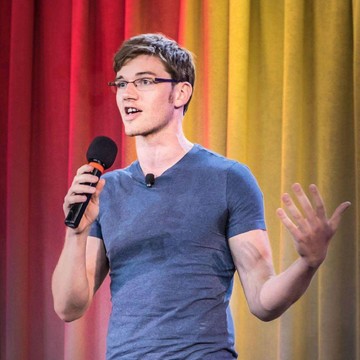
#17 Classic episode - Will MacAskill on moral uncertainty, utilitarianism & how to avoid being a moral monster
Join Will MacAskill, an Oxford Philosophy Professor and co-founder of the effective altruism movement, as he navigates moral uncertainty and the challenges of utilitarianism. He argues that just as past societies upheld shocking norms, we too may be making grave moral errors today. MacAskill discusses the need for a 'long reflection' to overcome these biases and advocates for a moral framework that pushes beyond common sense. The conversation also explores ethical decision-making, the intricacies of personal identity, and rethinking societal norms.
Dec 16, 2019 • 4h 42min
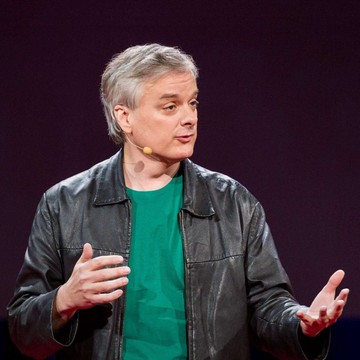
#67 – David Chalmers on the nature and ethics of consciousness
David Chalmers, a leading philosopher on consciousness, and Arden Koehler, an ethics PhD student, explore the nature of conscious experience. Chalmers introduces the mind-bending concept of 'philosophical zombies' to question moral status. They discuss the trolley problem involving conscious humans and non-conscious zombies, sparking a debate over what qualifies beings for moral consideration. The duo also dives into the ethics of AI consciousness and the implications of virtual reality, challenging listeners to rethink reality, ethics, and our responsibilities towards all forms of consciousness.

Dec 5, 2019 • 2h 1min
#66 – Peter Singer on being provocative, effective altruism, & how his moral views have changed
In a thought-provoking discussion, Peter Singer, a renowned professor of bioethics at Princeton University, addresses controversial topics from his early days in moral philosophy to present dilemmas. He reflects on how provoking discussion can amplify awareness of critical issues like global poverty and animal ethics. Singer shares insights on the effective altruism movement, the balance between personal beliefs and large-scale impact, and the complexities of advocating for unpopular opinions. His evolving moral views challenge listeners to think deeply about their ethical decisions.
Nov 19, 2019 • 1h 41min
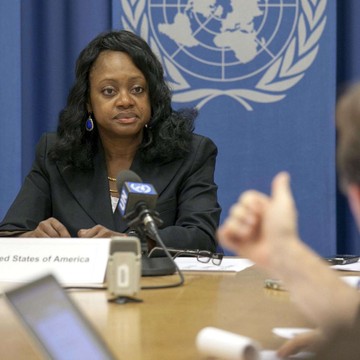
#65 – Ambassador Bonnie Jenkins on 8 years pursuing WMD arms control, & diversity in diplomacy
Ambassador Bonnie Jenkins, a former U.S. State Department official and founder of WCAPS, shares her remarkable journey in diplomacy. She discusses her role in global arms control, emphasizing the critical need for diversity in the field. Jenkins highlights the complex relationship between global health security and nuclear threat reduction, and the unique challenges posed by biological weapons. She advocates for increased collaboration across sectors to tackle pressing global threats, while also reflecting on the moral dilemmas faced by civil servants in their roles.

