

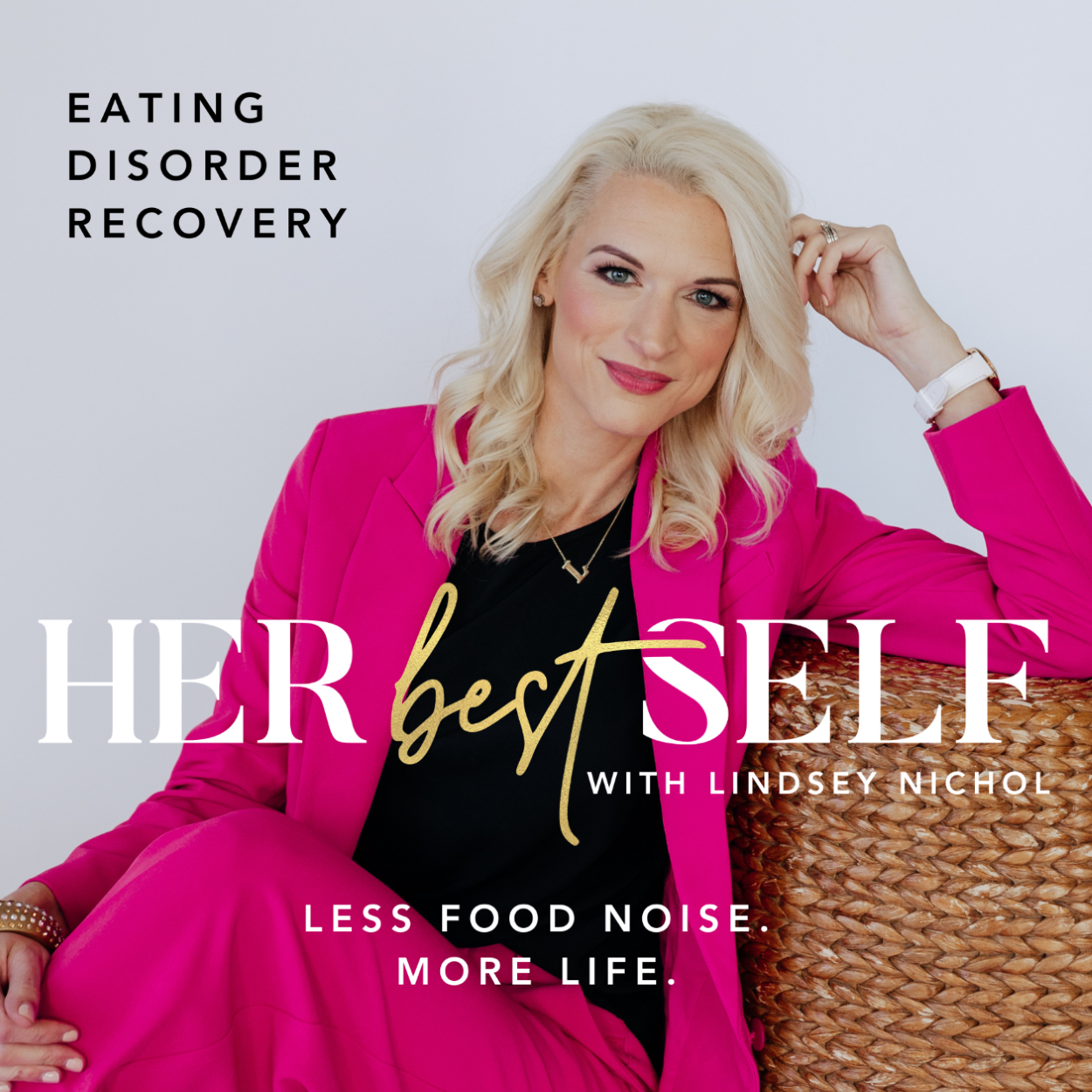
Her Best Self with Lindsey Nichol | Eating Disorder Recovery Podcast — Less Food Noise. More Life.
Lindsey Nichol - Certified Health Coach, ED Recovery Coach, ED Intuitive Therapy Certified
Her Best Self is THE eating disorder recovery podcast for women who are exhausted, stuck, and ready to finally break free.
Hosted by Lindsey Nichol, former figure skater and recovering perfectionist turned eating disorder recovery coach—this show is for women who've tried therapy, treatment programs, and going at it alone, but are still trapped in food obsession, body anxiety, and the mental prison of disordered eating.
If you can't stop thinking about food, if you've been struggling for 10, 20, or 30+ years, if you're tired of wasting your life on this disorder, and if you're ready for someone who's BEEN where you are—this podcast will help you find freedom.
Twice per week, you'll get real talk about: anorexia recovery, bulimia recovery, binge eating recovery, orthorexia, restrictive eating, compulsive exercise, food anxiety, body dysmorphia, perfectionism, people-pleasing, quasi-recovery, eating disorder relapse, and faith-based recovery for women ready to reclaim their lives.
This show is for women in their 30s, 40s, 50s, and beyond who are DONE—done with obsessing, done with restricting, done with the constant mental chatter about food and body. Whether you've been in treatment before, tried therapy that didn't work, or feel like you can't do this alone—Lindsey gets it because she's lived it.
You'll learn how to: stop obsessing over food and your body, break free from restriction-binge cycles, overcome perfectionism and people-pleasing, build body trust and food freedom, find support when you're exhausted from fighting this alone, and finally live the life you're missing while stuck in this disorder.
New episodes every Tuesday and Friday. Apply to work with Lindsey 1:1 or learn more about her services and free resources at www.herbestself.co. Join The Recovery Collective ~ the recovery support group that gets the struggle and wants to see you win at recovery at www.herbestself.co/recoverycollective.`
_____________________________________________________________________**DISCLAIMER** Trigger warning: The episodes on Her Best Self podcast may, at times, cover sensitive topics including but not limited to eating disorders & mental health. You are advised to refrain from listening if you are likely to be triggered or adversely impacted by any of these topics. Neither Lindsey Nichol LLC, associates nor guests, shall at any time be liable for the content covered causing offense, distress or any other reaction. The information contained comes from personal insight & education but should not be viewed as clinical support or professional diagnosis. Anything said should NOT be taken as a replacement for medical intervention & is nothing is intended to establish a therapist-patient relationship, to replace the services of a trained therapist, doctor or other health professional, nor treatment. @ Copyright 2026 Lindsey Nichol LLC
Hosted by Lindsey Nichol, former figure skater and recovering perfectionist turned eating disorder recovery coach—this show is for women who've tried therapy, treatment programs, and going at it alone, but are still trapped in food obsession, body anxiety, and the mental prison of disordered eating.
If you can't stop thinking about food, if you've been struggling for 10, 20, or 30+ years, if you're tired of wasting your life on this disorder, and if you're ready for someone who's BEEN where you are—this podcast will help you find freedom.
Twice per week, you'll get real talk about: anorexia recovery, bulimia recovery, binge eating recovery, orthorexia, restrictive eating, compulsive exercise, food anxiety, body dysmorphia, perfectionism, people-pleasing, quasi-recovery, eating disorder relapse, and faith-based recovery for women ready to reclaim their lives.
This show is for women in their 30s, 40s, 50s, and beyond who are DONE—done with obsessing, done with restricting, done with the constant mental chatter about food and body. Whether you've been in treatment before, tried therapy that didn't work, or feel like you can't do this alone—Lindsey gets it because she's lived it.
You'll learn how to: stop obsessing over food and your body, break free from restriction-binge cycles, overcome perfectionism and people-pleasing, build body trust and food freedom, find support when you're exhausted from fighting this alone, and finally live the life you're missing while stuck in this disorder.
New episodes every Tuesday and Friday. Apply to work with Lindsey 1:1 or learn more about her services and free resources at www.herbestself.co. Join The Recovery Collective ~ the recovery support group that gets the struggle and wants to see you win at recovery at www.herbestself.co/recoverycollective.`
_____________________________________________________________________**DISCLAIMER** Trigger warning: The episodes on Her Best Self podcast may, at times, cover sensitive topics including but not limited to eating disorders & mental health. You are advised to refrain from listening if you are likely to be triggered or adversely impacted by any of these topics. Neither Lindsey Nichol LLC, associates nor guests, shall at any time be liable for the content covered causing offense, distress or any other reaction. The information contained comes from personal insight & education but should not be viewed as clinical support or professional diagnosis. Anything said should NOT be taken as a replacement for medical intervention & is nothing is intended to establish a therapist-patient relationship, to replace the services of a trained therapist, doctor or other health professional, nor treatment. @ Copyright 2026 Lindsey Nichol LLC
Episodes
Mentioned books

Sep 9, 2025 • 21min
EP 238: The Truth About Recovering from an Eating Disorder Alone vs. in Community + Why I Wish I'd Had a Support Group Sooner
Have you ever felt completely alone in your eating disorder recovery? Like you're the only one dealing with food thoughts, body image struggles, and the exhaustion of pretending you're "fine"? In this vulnerable episode, Lindsey shares her personal story of trying to recover mostly in isolation and why she's now passionate about creating healing communities for women.
Discover the research-backed reasons why community isn't just nice to have in recovery—it's essential. Plus, learn about The Recovery Collective, a new support group launching in October 2025 specifically for women in eating disorder recovery.
Today's Truth: You were never meant to heal alone, and community isn't just nice to have in recovery - it's essential.
Key Topics Covered:
🤝 Lindsey's personal story: What it felt like to recover mostly alone with limited community support
🧠 The science behind community healing: Research-backed evidence of why support groups transform recovery
💔 The isolation trap: How eating disorders thrive in secrecy and why healing alone is harder than it needs to be
✨ What community provides: Normalization, accountability, shared wisdom, and hope
🌟 The Recovery Collective: A new support group launching October 2024 for women in all phases of recovery
Research Highlights:
📊 Support groups reduce symptoms: Studies show support groups helped reduce post-meal distress in young people with anorexia and can prevent disordered eating
📊 Connection drives recovery: Research confirms that eating disorder recovery is largely influenced by the individual's sense of connection to self and others
📊 Isolation increases struggle: When socially isolated, you lack the support and connection that can help protect against negative self-perception and low self-esteem
📊 Community decreases stigma: Eating disorder support groups offer safe spaces that decrease isolation and stigma while increasing engagement and motivation
📊 29 million affected: Nearly 30 million Americans will experience an eating disorder at some point during their lifetime
What Community Provides in Recovery:
💬 Language for your experience - Finally having words for what you're going through instead of feeling "crazy"
🔍 Perspective and reality checks - Others who can distinguish between your eating disorder voice and your true self
💕 Accountability that feels like love - Gentle support that comes from care, not judgment
🌈 Proof that recovery is possible - Seeing women further along in recovery living free, vibrant lives
🛡️ Protection against isolation - Regular connection that prevents the dangerous spiral of being alone with ED thoughts
🎯 Practical wisdom - Real-life strategies from women who've faced similar challenges
Key Takeaways:
✨ You don't have to heal alone - Recovery was never meant to be a solo journey
✨ Community isn't replacement for therapy - It's the ongoing support that helps you live your recovery, not just survive it
✨ The right kind of community matters - Led by someone with lived experience who understands both clinical and personal aspects
✨ Consistency is crucial - Regular, ongoing support rather than crisis-only intervention
✨ Isolation fuels eating disorders - Breaking the cycle of secrecy and shame is essential for healing
Introducing The Recovery Collective (Launching October 2025!)
Finally, a recovery community that truly gets it.
The Recovery Collective is where women in all phases of eating disorder recovery come together every other week to lock arms, share real struggles, and heal together in a safe, supportive environment.
What You Get:
Bi-weekly 60-minute group coaching calls via Zoom
Intimate community of 10-15 women maximum
Real, honest conversations that create actual change
Support for navigating triggers, celebrating wins, and handling difficult days
Led by someone who's walked this path and understands the lived experience
Ongoing support to help you live your recovery, not just survive it
What Makes This Different:
Led by someone with personal eating disorder recovery experience
Focus on practical, real-life recovery challenges
Community of women who truly understand the struggle
Consistent, ongoing support (not just crisis intervention)
Safe space free from judgment or competition
Special Founding Member Pricing:
First 10 members: $47/month for 6 months (over 50% off!)
Regular membership: $97/month
Less than what you spend on takeout for bi-weekly coaching and community support
Who This Is For:
Women in all phases of eating disorder recovery
Those tired of feeling alone in their healing journey
Anyone seeking understanding from others who've been there
Women ready for ongoing support, not just weekly therapy appointments
Recovery is possible, and it's so much sweeter when you're not doing it alone.
Ready to learn more? www.herbestself.co/recoverycollective
Connect with Lindsey
Website: www.herbestself.co
Private Facebook Community: Her Best Self Society www.herbestselfsociety.com
Client Applications: HBS Co. Recovery Coaching - Client Application - Google Forms
About the Host
Lindsey Nichol is a former competitive figure skater turned God-led entrepreneur, boy mom, and digital CEO. She understands how core beliefs formed in childhood can create and maintain eating disorder patterns, and she's passionate about helping women identify and transform these beliefs to find lasting freedom.
If this episode helped you identify the core beliefs feeding your eating disorder, please share it with someone who needs to hear this message. Your support helps more women break the chains of limiting beliefs.
*While I am a certified health coach, anorexia survivor & eating disorder recovery coach, I do not intend the use of this message to serve as medical advice. Please refer to the disclaimer here in the show & be sure to contact a licensed clinical provider if you are struggling with an eating disorder.
Love this episode? Here's how you can support:
💕 Share it with a woman who's feeling alone in her recovery journey 💕 Leave a review on Apple Podcasts to help other women find hope and community 💕Reach out if you're interested in The Recovery Collective founding member spots
Feeling Isolated in Your Recovery? Remember:
You were never designed to heal alone. The exhaustion you feel from battling thoughts by yourself, the loneliness of feeling like no one understands - that's not how recovery has to be. Community changes everything, and you deserve to be seen, heard, and valued in your healing journey.
Your worth is not measured by how perfectly you recover alone. Healing is meant to happen in relationship, with support, and with women who can look you in the eye and say "I've been there too, and you're going to be okay."
Her Best Self with Lindsey Nichol is a podcast for women in eating disorder recovery who are ready to break free from perfectionism, people-pleasing, and diet culture to live authentically and wholeheartedly.
Sep 5, 2025 • 18min
EP 237: Do I Still Have Bad Body Image Days? (The Honest Truth) + My 8 Step Bad Body Image Toolkit
What does recovery actually look like years later? Do bad body image days ever completely disappear? In this vulnerable episode, Lindsey pulls back the curtain on her life after eating disorder recovery and shares exactly what she does when difficult body image moments show up - because yes, they still do sometimes.
If you've ever wondered what to expect from recovery or you're struggling with perfectionism around your healing journey, this episode will give you hope and practical tools you can use today.
Today's Truth: Recovery doesn't mean perfection - it means having the tools to navigate difficult moments with love instead of war.
Key Topics Covered:
🌟 The reality check: Do bad body image days ever completely stop?
🌟 Why having difficult moments doesn't mean you're "not recovered enough"
🌟 The difference between struggling in active eating disorder vs. recovery
🌟 8 practical tools for navigating bad body image days
🌟 How thoughts about your body directly impact how you feel in your body
Lindsey's 8-Step Bad Body Image Day Toolkit:
✨ Give Yourself Grace Upon Grace
Permission to feel without judgment
Talk to yourself like your best friend
Remember: recovery isn't about never struggling
✨ Throw on Comfy, Baggy Clothes
Remove physical discomfort that amplifies emotional discomfort
Focus on how you feel, not how clothes fit
This isn't hiding - it's self-care
✨ Get to the Root: What Am I Trying to Control?
Ask: "What's really going on here?"
Often body image struggles are about something else entirely
Address the actual issue, not just the symptom
✨ Resist Mirror-Checking Temptation
Avoid body-checking and analyzing
Body-checking always makes things worse
Redirect energy toward things that serve you
✨ Honor Yourself with Mindful Eating
Eat normally despite difficult feelings
Choose nourishing foods that taste good
Don't punish your body for emotional discomfort
✨ Notice Exercise Compulsions and Pause
Ask: "Am I moving from love or punishment?"
Choose gentle movement over intense workouts
It's okay to rest when you're struggling
✨ No Social Media Scrolling
Stay off platforms that trigger comparison
Protect your mental space fiercely
Choose books, friends, or creative activities instead
✨ Ask "How Do I Want to Feel?"
Shift from "How do I look?" to "How do I want to feel?"
Focus on strength, comfort, connection, gratitude
Research shows this actually changes body image in real-time
Key Takeaways:
💝 Recovery isn't about never struggling - it's about struggling with love instead of war
💝 Bad days don't mean bad weeks or months - you have tools now
💝 Your humanity doesn't disqualify your recovery - difficult moments are normal
💝 Progress over perfection, always - you're exactly where you need to be
💝 You can do hard things - including sitting with uncomfortable feelings
Research Highlight:
Studies show that when we focus on how we want to feel in our bodies rather than how we think we look, it directly impacts our actual body image experience. Our thoughts about our bodies influence how we experience being in our bodies - which means we have more power than we realize!
Ready for Community Support? Join The Recovery Collective!
Finally, a recovery community that gets it.
If this episode resonated with you, you're exactly who The Recovery Collective was created for. This is where women in all phases of eating disorder recovery come together every other week to normalize the messy parts of healing, celebrate victories, and support each other with practical tools and genuine understanding.
What You Get:
Bi-weekly 60-minute group coaching calls via Zoom
Safe, judgment-free space with 10-15 women maximum
Real-time support for your current recovery challenges
Community of women who understand what it's like to navigate recovery in real life
Coaching insights that help you move forward with practical strategies
Special Founding Member Pricing:
First 10 members: $47/month for 6 months (over 50% off!)
Regular membership: $97/month
Less than $1.50/day for bi-weekly coaching and community support
Imagine having a safe space where you could share that you're having a difficult body image day and receive understanding, practical support, and gentle reminders of your worth instead of judgment.
Recovery is possible right now, and it's so much more beautiful when we do it together.
Ready to sign up? www.herbestself.co/recoverycollective
Ready for Support?
📧 Email Lindsey: info@lindseynichol.com
🌐 Apply for Recovery Coaching: www.herbestself.co
💕 Join the Community: www.herbestselfsociety.com
Limited spots available for fall coaching - only 2 slots remaining
Connect with Lindsey:
🌟 Website: www.herbestself.co 🌟 Instagram: @thelindseynichol 🌟 Client Application: HBS Co. Recovery Coaching - Client Application - Google Forms
Love this episode? Here's how you can support the show:
💕 Share it with a woman who might need to hear this message 💕 Leave a review on Apple Podcasts - it helps other women find the show 💕 Screenshot and tag @thelindseynichol if any of these steps help you this week!
Remember, beautiful: Your worth is not measured by how perfectly you do recovery. Healing isn't linear, progress over perfection always, and you are exactly where you need to be right now.
Her Best Self with Lindsey Nichol is a podcast for women in eating disorder recovery who are ready to break free from perfectionism, people-pleasing, and diet culture to live authentically and wholeheartedly.
*While I am a certified health coach, anorexia survivor & eating disorder recovery coach, I do not intend the use of this message to serve as medical advice. Please refer to the disclaimer here in the show & be sure to contact a licensed clinical provider if you are struggling with an eating disorder.
Sep 2, 2025 • 18min
EP 236: 7 Books Every Woman in Recovery Needs on Her Nightstand + Your Personal Invite to The Recovery Collective Support Group💕
Are you tired of self-help books that sound good but don't create real change in your recovery journey? In this episode, Lindsey shares 7 current book recommendations that she's actively using with clients and in her own healing - books that will meet you right where you are and support your next brave step toward freedom.
Whether you're just beginning to question your relationship with food and your body, or you're years into recovery and ready for that next level of freedom, there's something here for you.
Today's Truth: You deserve resources that support your healing, and recovery is possible right now....but sometimes you just need an extra boost of belief!
Books Featured in This Episode:
📚 "Feed Yourself" by Leslie Schilling
Perfect for healing your relationship with food from the inside out
Teaches intuitive eating and food freedom beyond diet culture
📚 "You're Not Enough (And That's Okay)" by Allie Stuckey
Challenges toxic positivity and "be your own everything" mentality
Offers permission to need support in your recovery journey
📚 "Goodbye Perfect" by Homaira Kabir
Essential reading for recovering people-pleasers and perfectionists
Subtitle: "How to Stop Pleasing, Proving, and Pushing for Others and Live for Yourself"
📚 "Already Enough: A Path to Self-Acceptance" by Lisa Olivera
Medicine for anyone struggling with self-worth in recovery
Focuses on genuine self-acceptance, not fake confidence
📚 "Don't Believe Everything You Think" by Joseph Nguyen
Game-changer for dealing with loud eating disorder thoughts
Teaches you that you are not your thoughts and don't have to believe them all
📚 "A Crown That Lasts: You Are Not Your Label" by Demi Tebow
Powerful reminder that you are more than your eating disorder or diagnosis
Perfect for finding identity beyond your struggles
📚 "The Gifts of Imperfection" by Brené Brown
Life-changing research on shame, vulnerability, and wholehearted living
Essential for anyone who's used perfectionism as armor
Key Takeaways:
✨ Recovery is possible right now - You don't have to wait until you're "ready enough"
✨ You are not your eating disorder - Your thoughts and diagnosis don't define your worth
✨ Progress over perfection - Healing isn't linear, and that's completely normal
✨ You can do hard things - And you don't have to do them alone
✨ Your journey is unique - What works for others might look different for you, and that's okay
Exciting News: The Recovery Collective is Launching October 2025!
Finally, a recovery community that gets it.
The Recovery Collective is where women in all phases of eating disorder recovery come together bi-weekly to share wins, navigate challenges, and build lasting freedom in a safe, supportive community.
What You Get:
Bi-weekly 60-minute group coaching calls via Zoom
Safe, judgment-free space with 10-15 women maximum
Real-time support for your current recovery challenges
Optional check-in prompts and VIP offers
Coaching insights that help you move forward, not backward
Special Founding Member Pricing:
First 10 members: $47/month (over 50% off!)
Regular membership: $97/month
Less than $1.50/day for bi-weekly coaching and community support
Recovery isn't a destination - it's a journey best taken together.
www.herbestself.co/recoverycollective
Connect with Lindsey:
🌟 Website: www.herbestself.co 🌟 Instagram: @thelindseynichol 🌟 Client Application: HBS Co. Recovery Coaching - Client Application - Google Forms
Love this episode? Here's how you can support the show:
💕 Share it with a woman who might need to hear this message 💕 Leave a review on Apple Podcasts - it helps other women find the show 💕 Screenshot and tag @thelindseynichol if you're reading any of these books!
Remember, beautiful: Your worth is not measured by how perfectly you do recovery. Healing isn't linear, progress over perfection always, and you are exactly where you need to be right now.
Her Best Self with Lindsey Nichol is a podcast for women in eating disorder recovery who are ready to break free from perfectionism, people-pleasing, and diet culture to live authentically and wholeheartedly.
*While I am a certified health coach, anorexia survivor & eating disorder recovery coach, I do not intend the use of this message to serve as medical advice. Please refer to the disclaimer here in the show & be sure to contact a licensed clinical provider if you are struggling with an eating disorder.
Aug 29, 2025 • 17min
EP 235.5: The 3 Core Beliefs That Are Secretly Fueling Your Eating Disorder + What to Do Next to Change the Way You Think
Core beliefs are the fundamental, deeply held beliefs we develop in early childhood that shape how we see ourselves, others, and the world around us. In this eye-opening episode, Lindsey breaks down how eating disorders stem from and reinforce negative core beliefs that can take years to heal from. Learn about the three types of core beliefs that are secretly feeding your disordered eating patterns and discover how to identify and transform these beliefs to break free from the cycle keeping you stuck.
Key Takeaways
Core beliefs are fundamental truths you've made into idols that need to be challenged
Eating disorders stem from and reinforce negative core beliefs developed in childhood
There are 3 types of core beliefs: how you see yourself, others, and the world
You are becoming someone you've never been before - be patient with that process
"You either quit or keep going - they both hurt. Choose your hurt wisely."
The 3 Types of Core Beliefs
Type 1: How You See Yourself
What It Includes:
Self-worth and personal value
Self-competence, skills, and abilities
Self-identity - who you are at your core
Beliefs shaped by caretakers, feedback, and criticisms over your lifetime
How It Feeds EDs:
"I'm not good enough" leads to perfectionism, restriction, and rigidity
False identity created by the eating disorder becomes your truth
Tying worth and value to performance instead of inherent value
How to Change It:
Build self-compassion through recovery inspiration
Embrace your identity as "daughter of the most high, warrior, queen"
Recognize the voice in your head is a false narrative
Understand you don't have to earn, restrict, or compensate for nourishment
Type 2: How You View Other People
What It Includes:
Trustworthiness and reliability of others
Beliefs about goodwill and kindness in people
Prejudices and stereotypes
Safety mechanisms developed from rejection or inconsistent caregiving
How It Feeds EDs:
"If I can just be perfect, I'll have less rejection"
Using food and exercise to control how others perceive you
"If I gain weight, will my husband/boyfriend still want me?"
How to Change It:
Stop comparing yourself to other people
Understand most people don't actually care about your recovery journey
Set boundaries with people who aren't in your corner
Accept support from those who truly want what's best for you
Type 3: Your Perception of the World
What It Includes:
Beliefs about safety vs. danger in your environment
Abundance vs. scarcity mindset
Beliefs about available resources and opportunities
Level of control you have over your life and world events
How It Feeds EDs:
"The world is unsafe, so I must perform to prove my value"
Searching for control and stability through food/body management
Fear-based restriction during uncertain times
How to Change It:
Challenge wellness culture and societal body image messages
Create personal meaning and purpose beyond the disorder
"Stay away from processed bodies rather than processed foods"
How Core Beliefs Create ED Cycles
The Connection:
Core beliefs affect your motivations, goals, life choices, and desires for freedom
Negative self-perception breeds perfectionism and restriction
Fear of others' judgment results in using food and exercise for control
Worldview of unsafety heightens need to prove value through performance
Powerful Quotes from This Episode
"You are becoming someone you've never met before - and that's what I want you to take with you today."
"What other people think of you is not your business."
"No one truly cares what you are doing in your recovery outside of those closest to you."
"You either quit or you get to keep going, and they both hurt. Choose your hurt wisely."
"We have to stop living and breeding a culture where our daughters feel wrong for being in their own body."
The Core Belief Transformation Process
Step 1: Identification
Recognize which of the 3 types of core beliefs are impacting your ED
Identify the "fundamental truths" you've made into idols
Understand these beliefs reinforce unhealthy coping mechanisms
Step 2: Challenge
Question beliefs about yourself, others, and the world
Recognize many beliefs aren't even yours - they were inherited
Challenge wellness culture and societal messages
Step 3: Rebuild
Build self-compassion and embrace your true identity
Set boundaries and stop caring about bystanders' opinions
Create meaning and purpose beyond the disorder
Warning Signs Your Core Beliefs Are Feeding Your ED
Tying your worth to your performance or appearance
Believing you must be perfect to avoid rejection
Using food/exercise to control how others see you
Feeling unsafe in the world and needing control through restriction
Believing you're "not good enough" or "unlovable"
The Recovery Mindset Shifts
From: "I'm not good enough" To: "I am a warrior becoming someone I've never been before"
From: "I must be perfect to be loved" To: "I am worthy of love exactly as I am"
From: "The world is unsafe" To: "I can create meaning and purpose beyond my fears"
Journal Prompts for Core Belief Work
"What beliefs about myself are keeping me stuck in ED patterns?"
"How much influence am I allowing others to have in my recovery?"
"What worldview am I holding that makes me feel unsafe?"
"Which core beliefs are reinforcing my unhealthy coping mechanisms?"
The Call to Action
Be the Change:
Challenge societal messages about body image and success
Stand up for your truth
"Stay away from processed bodies rather than processed foods"
Stop creating negative cycles for future generations
Signs You're Ready to Transform Core Beliefs
You recognize these beliefs are "idols" you've created
You're tired of caring what everyone else thinks
You want to break generational cycles
You're ready to become someone you've never been before
You understand recovery requires belief transformation, not just behavior change
Ready to Break the Chains of Limiting Core Beliefs?
If you're ready for personalized support in transforming the core beliefs keeping you stuck, Lindsey has one slot available for personal coaching, plus amazing support coaches on her team.
Fill out a client application at herbestself.co and get the help you need to see yourself, others, and the world differently.
Connect with Lindsey
Website: www.herbestself.co
Private Facebook Community: Her Best Self Society www.herbestselfsociety.com
Client Applications: HBS Co. Recovery Coaching - Client Application - Google Forms
About the Host
Lindsey Nichol is a former competitive figure skater turned God-led entrepreneur, boy mom, and digital CEO. She understands how core beliefs formed in childhood can create and maintain eating disorder patterns, and she's passionate about helping women identify and transform these beliefs to find lasting freedom.
If this episode helped you identify the core beliefs feeding your eating disorder, please share it with someone who needs to hear this message. Your support helps more women break the chains of limiting beliefs.
*While I am a certified health coach, anorexia survivor & eating disorder recovery coach, I do not intend the use of this message to serve as medical advice. Please refer to the disclaimer here in the show & be sure to contact a licensed clinical provider if you are struggling with an eating disorder.
Aug 26, 2025 • 21min
EP 235: Feel the Fear & DO IT Anyway, Get Support Anyway! ~ Why Recovery Anxiety Is Your Green Light to Freedom
What if the fear you feel about getting help for your eating disorder isn't a warning to stay away - but actually your internal compass pointing toward freedom? In this powerful episode, Lindsey shares wisdom from her 7-year-old son who said, "When I feel those flutters in my tummy, I just know I'm about to do something really brave." If you're feeling afraid to ask for help, scared to gain weight, or terrified of actually getting better, this tough-love episode will show you why those butterflies are your invitation to do the bravest thing you've ever done.
Key Takeaways
Fear isn't a stop sign - it's a compass pointing toward your breakthrough
If you could recover on your own, you already would have
Those flutters aren't warning you away from help - they're pointing you toward it
You don't feel brave first and then act brave - you act brave while feeling scared
Ready is a feeling that comes AFTER you take action, not before
Main Topics Covered
The 7-Year-Old's Wisdom
Lindsey's son facing his first day of second grade without his big brother
"When I feel those flutters in my tummy, I just know I'm about to do something really brave"
How children understand fear differently than adults
Kids feel scared and do the thing anyway - adults build cases for why they should wait
The Real Fears Keeping You Prisoner
Fear of asking for help (admitting you can't do this alone)
Fear of gaining weight (worth tied to a number on the scale)
Fear of actually getting better (losing your eating disorder identity)
Fear of investing in yourself (what if you spend money and don't change?)
The Lie You've Been Believing About Fear
If something feels scary, it must be wrong for you
Heart racing when thinking about help = "not the right time"
Anxiety about meal plans = "body not ready"
Terror about recovery = "maybe not meant for me"
Truth: Fear means it matters, it's important, you're about to grow
Why Recovery Feels More Terrifying Than Staying Sick
The "Safety" Illusion:
Staying sick feels familiar = brain labels as "safe"
Recovery feels unknown = brain labels as "dangerous"
Reality Check - How "Safe" Is:
Spending every moment thinking about food
Missing life because you're afraid of restaurants
Measuring worth by what you ate yesterday
Living in constant body anxiety
Isolating because eating around others feels impossible
What Bravery Looks Like in Recovery
Admitting you need help when you want to prove independence
Following someone's guidance who has been there and recovered when ED voice screams it's too much
Gaining weight when diet culture says smaller is better
Investing money in recovery when you've never felt worth it
Showing up to therapy and being honest instead of pretending you're fine
The Wisdom Gap: Children vs. Adults
Children: Feel scared → Do the thing anyway Adults: Feel scared → Analyze, overthink, research, wait
Adult Excuses:
"I'm not ready yet"
"I need to think about this more"
"I should try on my own one more time"
"What if it doesn't work?"
"I can't afford it right now"
Fear as Your GPS System
Sick feeling about calling a coach = "This way to freedom"
Anxiety about meals = "This way to healing"
Terror about recovering = compass pointing toward the life you've been dreaming about
Powerful Quotes from This Episode
"Fear isn't a stop sign. Fear is a compass pointing you toward your breakthrough."
"If you could recover on your own, you already would have."
"Fear doesn't mean it's wrong. Fear means it matters."
"Those flutters aren't telling you to run from recovery - they're telling you you're about to do something incredibly brave."
"You don't feel brave first and then do brave things. You do brave things while feeling scared."
The Cost of Playing It Safe
Questions to Consider:
How's playing it safe working out for you?
How's trying to manage this ED on your own been going?
How's waiting until you feel "ready" been serving your recovery?
The Reality:
Everything you're afraid of losing by being brave, you'll replace with something infinitely better
Playing it safe = staying in a familiar prison
Taking action despite fear = walking toward freedom
What Going All In Actually Means
Not perfection, but:
Being willing to be imperfect in the direction of healing
Reaching out for professional help despite vulnerability
Following meal plans despite ED resistance
Gaining weight despite diet culture programming
Investing in yourself despite never feeling worth it
Showing up to therapy even when you want to cancel
The Decision Point
Two Choices:
Let fear drive your bus (stay stuck in eating disorder)
Feel the fear and drive anyway (choose recovery despite butterflies)
The Truth:
Butterflies aren't telling you to turn around
They're telling you you're at the edge of your comfort zone
All growth happens outside your comfort zone
Signs This Episode Is For You
You feel afraid to ask for help with your eating disorder
You're waiting to feel "ready" before taking action
You've been trying to recover on your own without success
The thought of gaining weight terrifies you
You're tired of living with constant food and body thoughts
You keep making excuses for why "now isn't the right time"
The Son's Success Story Parallel
Felt nervous about first day without big brother
Could have played it safe (stayed home)
Chose to feel the butterflies and walk into brave
Result: Made three new friends, came home with huge smile
Everything he feared losing, he actually gained
This Week's Challenge
Stop waiting to feel ready. Ready comes AFTER action, not before.
Notice when you feel butterflies about recovery
Recognize this as your compass pointing toward growth
Take one brave action despite the fear
Apply for help at herbestself.co while feeling scared
Ready to Feel the Fear and Apply Anyway?
Those butterflies you feel about getting help aren't your intuition telling you to wait - they're your soul telling you you're about to change your entire life.
Stop analyzing your fear and start acting despite it. Go to www.herbestself.co right now and apply to work with Lindsey.
Feel the fear. Apply anyway. Your freedom is waiting.
Connect with Lindsey
Website: www.herbestself.co
Private Facebook Community: Her Best Self Society www.herbestselfsociety.com
Client Applications: HBS Co. Recovery Coaching - Client Application - Google Forms
About the Host
Lindsey Nichol is a former competitive figure skater turned God-led entrepreneur, boy mom, and digital CEO. She believes the butterflies you feel about recovery aren't warning you away from help - they're pointing you directly toward your freedom.
If this episode gave you the push to finally take action, share it with someone who needs to hear that fear is their compass, not their enemy. Your support helps more women discover their brave.
Aug 22, 2025 • 18min
EP 234.5: How Are You Really? The Question That Breaks Through Eating Disorder Denial + Why Your Brain Believes the Lies⛓️💥
"I'm fine." "I don't have a problem." "Everyone else is overreacting." Sound familiar? If people around you are expressing concern about your relationship with food but you genuinely feel okay, this episode is essential listening.
Recovery coach Lindsey Nichol gets raw about the difference between denial and anosognosia—and why your malnourished brain might literally be unable to recognize the problem. She shares her own story of feeling "on top of the world" while struggling with anorexia, and introduces one powerful question that can break through the fog of eating disorder denial.
This episode is for you if:
Others say you have a problem but you feel fine
You're questioning whether you're "sick enough"
You feel like you just have more willpower than others
You're confused about whether your eating patterns are normal
You've been told you need help but don't understand why
What You'll Discover
✨ The difference between denial and anosognosia (and why it matters for your recovery)
✨ Why malnourishment literally impairs your ability to recognize disordered eating patterns
✨ Lindsey's personal story: How she felt superior and in control while her body was failing
✨ The science behind eating disorder awareness and brain function
✨ One crucial question that can shatter the illusion and start your healing journey
✨ How to tell if your eating patterns are actually normal or adopted behaviors
Understanding Eating Disorder Denial
Anosognosia vs. Denial
Anosognosia: "Without knowledge" - physiological brain damage that creates complete unawareness of the problem. You literally cannot perceive your disordered behaviors.
Denial: Knowing you have a problem but refusing to address it. Using defense mechanisms to avoid facing the truth.
Signs Your Brain Might Be Lying to You
Feeling "on top of the world" while restricting food
Superiority complex about your "willpower"
Believing everyone else is jealous or crazy
Wearing restrictive eating like a "badge of honor"
Feeling energized despite severe calorie restriction
Complete confusion when others express concern
Lindsey's Personal Story
"When I was struggling with anorexia, I felt like I was on top of the world. I had this superiority complex, like everyone else was just jealous that they didn't have the willpower that I had. The more I restricted, the more satisfaction I achieved and the more in control I felt."
The One Question That Changes Everything
"How are you? No, but how are you REALLY?"
Why This Question Works
Challenges automatic "I'm fine" responses
Forces honest self-assessment
Breaks through subconscious denial
Reveals underlying unsureness and hesitancy
How to Use This Question
Sit with yourself honestly - don't give the surface-level answer
Challenge your patterns - are these behaviors you've always had or recently adopted?
Listen to trusted voices - if people you love are concerned, investigate why
Assess your daily reality - survival mode isn't the same as thriving
Red Flags to Consider
🚩 Constantly telling yourself you don't need to eat
🚩 Never feeling hungry (when you used to)
🚩 Bargaining and finding ways to restrict
🚩 Terror of weight gain controlling decisions
🚩 Rigid food rules that feel like "identity"
🚩 Behaviors that started as dieting but intensified
Powerful Moments from This Episode
"That voice is not you. With a healthy brain, you can assume positive intent from your internal voice. When you have a malnourished brain, it's important to challenge your mind with every tiny little thing."
"You can't change something you can't name. You can't change patterns and behaviors that you can't accept are patterns and behaviors."
"You are not a failure for getting help and support. The only way you fail is if you quit."
Your Next Steps
If You Recognize Yourself in This Episode:
Answer the question honestly: How are you really?
Look at your patterns: Are these normal behaviors or adopted restrictions?
Listen to loved ones: If trusted people are concerned, investigate their perspective
Seek professional support: You don't have to figure this out alone
Ready for Support?
📧 Email Lindsey: info@lindseynichol.com
🌐 Apply for Recovery Coaching: www.herbestself.co
💕 Join the Community: www.herbestselfsociety.com
Limited spots available for fall coaching - only 2 slots remaining
Key Takeaways
💡 Malnourishment literally impairs your ability to recognize eating disorder symptoms
💡 "I'm fine" often masks underlying confusion and unsureness
💡 Eating disorders progress gradually - you didn't wake up sick overnight
💡 Trusted voices matter - if loved ones are concerned, listen
💡 Awareness is the first step - you can't change what you won't acknowledge
If this episode helped you recognize patterns you hadn't seen before, please leave a 5-star rating and review. Your support helps more women break through denial and find the help they deserve.
Aug 19, 2025 • 13min
EP 234: Recovering from Disordered Eating Can Feel Impossible ~ 3 Steps to Start Living While Healing Your Relationship with Food
Feeling stuck in the "waiting room" of recovery? You're not alone. If you've been telling yourself you'll start living your life "when you're better," this episode is for you.
Recovery coach Lindsey Nichol gets real about why your eating disorder wants you to wait—and why you don't have to. In this intimate 10-minute conversation, she shares three concrete steps you can take today to start pursuing your dreams, even in the messy middle of healing your relationship with food.
This episode is for you if:
You've put dreams on hold until you're "recovered enough"
Recovery feels like two steps forward, four steps back
You're tired of life passing you by while you struggle in secret
You need hope that recovery is possible, even when it feels impossible
What You'll Discover
✨ Why waiting for "perfect recovery" is just another way your eating disorder controls your life
✨ The mindset shift from "waiting to recover" to "living your recovery"
✨ Real client story: How one woman realized she was using recovery as an excuse to stay small
✨ 3 immediate steps you can take today to start making life happen instead of waiting for it
✨ Permission to pursue your purpose even when healing isn't linear
The 3 Steps to Start Living While Healing
Step 1: Name One Dream You've Put on Hold
Get honest about one thing you've been telling yourself you'll do "when you're better." Don't judge it—just name it.
Step 2: Take the Smallest Possible Step
Not the perfect step, not the biggest step—the smallest step. The eating disorder wants all-or-nothing; recovery is built on tiny, consistent actions.
Step 3: Remind Yourself: "I Am Living My Recovery"
Shift from waiting to live until recovery is complete to understanding that living IS part of your recovery.
Powerful Moments from This Episode
"Your eating disorder wants you to wait. It wants you to believe that you need to be 'fixed' before you're worthy of pursuing your dreams."
"Life doesn't pause while you figure out your relationship with food. Your dreams don't go on hold. Your purpose doesn't wait."
"You don't have to wait until those hard days are gone to start living. You don't have to have it all figured out to take up space in this world."
"Your eating disorder is not your whole story. It's not even the most interesting part of your story."
Client Spotlight
Hear from one of Lindsey's current clients who had a breakthrough realization: "I keep thinking I need to wait until I'm 'recovered enough' to apply for that role, to book that trip with my friends. But I'm realizing that waiting for perfect recovery is just another way the eating disorder is controlling my life."
Key Takeaways
💫 Recovery isn't linear—and that's okay. Four steps forward, two steps back is still progress.
💫 Living your life IS part of recovery, not something you do after recovery.
💫 You're allowed to want things, dream, and take up space even in the middle of healing.
💫 Struggling doesn't mean you're doing recovery wrong—it means you're human and doing something brave.
💫 Your life is happening right now, not when you're thinner or "better."
Your Reflection Prompt
"What is one dream I've put on hold, and what's the smallest step I can take toward it today—not when I'm 'recovered enough,' but right now?"
Take Action Today
Ready to stop waiting and start living? Here's how to connect:
📧 Email Lindsey: info@lindseynichol.com
🌐 Apply for Recovery Coaching: HBS Co. Recovery Coaching - Client Application - Google Forms
💕 Get Support: www.herbestself.co & FB: www.herbestselfsociety.com
If this episode gave you hope or helped you take that first small step, please leave a 5-star rating and review. Your support helps more women discover that they don't have to wait for permission to start living.
*While I am a certified health coach, anorexia survivor & eating disorder recovery coach, I do not intend the use of this message to serve as medical advice. Please refer to the disclaimer here in the show & be sure to contact a licensed clinical provider if you are struggling with an eating disorder.
Aug 15, 2025 • 16min
EP 233.5: From Exercise Addiction & Gym Obsession to Healthy Movement ~ The 5 Step Recovery Framework That Works **Must Listen Fav!**
Struggling with exercise addiction? You're not alone. If you're working out every single day, feeling intense guilt when you miss a session, or using exercise to compensate for food intake, this episode is your roadmap to freedom.
Recovery coach Lindsey Nichol, who overcame her own compulsive exercise patterns (working out twice daily at her worst), shares the exact 5-step framework that helped her and countless clients break free from exercise addiction and develop a healthy relationship with movement.
This episode is essential if you:
Exercise daily without rest days
Feel anxiety or panic when you can't work out
Alter vacations or skip social events for workouts
Restrict food on days you exercise less
Use fitness to "earn" your meals
Experience guilt when missing planned workouts
What You'll Learn About Exercise Addiction Recovery
✅ The Hidden Connection between eating disorders and compulsive exercise patterns
✅ Lindsey's Recovery Story: From cardio queen doing 2-hour daily sessions to finding movement freedom
✅ Real Client Success: How one woman reduced her routine from 7 days/week (1 hour 45 minutes daily) to just 3 days (30 minutes each)
✅ The Science Behind Exercise Addiction and why it's so common in eating disorder recovery
✅ 5 Proven Steps to Overcome Exercise Addiction (detailed action plan included)
The 5-Step Framework to Healthy Movement
Step 1: Assess Your Current Exercise Routine
Document frequency, duration, and intensity
Track emotional responses to missed workouts
Identify compulsive exercise patterns
Recognize anxiety triggers around rest days
Step 2: Master the Power of Permission
Grant yourself permission to rest
Challenge exercise-related guilt
Reframe rest as essential for recovery
Practice self-compassion during routine changes
Step 3: Visualize Your Future Recovered Self
Imagine life beyond daily workouts
Consider enjoyable movement alternatives
Identify non-exercise activities you're missing
Question whether current exercise brings joy or obligation
Step 4: Set Small, Tangible Goals
Start with 5-minute workout reductions
Replace one workout with restful activities
Schedule rest days in advance
Plan alternative self-care activities
Step 5: Embrace Progress Over Perfection
Expect setbacks as part of recovery
Practice self-forgiveness for "slip-ups"
Recognize growth in small changes
Challenge diet culture messaging about exercise
Powerful Recovery Insights
"Rest is required in recovery—it's non-negotiable."
"We don't even realize we're doing this to our body because we get so trapped in the cycle."
"I didn't start working out two times a day overnight. It was the disorder that came on over time."
"If you're listening to me and you're on the treadmill, get off of it."
Client Transformation Spotlight
Hear from Sabina, Lindsey's client who worked together for over a year to overcome people-pleasing, perfectionism, and exercise compulsion. Her powerful testimony demonstrates that recovery from exercise addiction is possible with proper support and guidance.
Sabina's words: "Lindsey gave me feedback on how to reframe with positive intent rather than staying stuck in negativity... Since working with Lindsey, a new concept of myself is emerging, one free from deprivation and restraint."
Exercise Addiction Warning Signs
Physical Signs:
Working out despite injury or illness
Exercising multiple times daily
Inability to take rest days
Fatigue from overtraining
Emotional Signs:
Anxiety when missing workouts
Guilt after rest days
Exercise-based self-worth
Social isolation for workout time
Behavioral Signs:
Rigid exercise schedules
Compensatory exercise after eating
Vacation planning around gym access
Prioritizing workouts over relationships
Recovery Resources & Next Steps
Ready to Break Free from Exercise Addiction?
📧 Email Lindsey: info@lindseynichol.com
🌐 Apply for Recovery Coaching: www.herbestself.co
👥 Join the Community: www.herbestselfsociety.com
Your Permission Slip for Today: Choose one workout to skip this week. Use that time for:
Coffee with a friend
Journaling or meditation
Reading a book
Simply resting without guilt
Key Takeaways for Exercise Addiction Recovery
Exercise addiction is common in eating disorder recovery due to learned restriction patterns
Cold turkey approach may be necessary for some individuals
Gradual reduction works for others - find your approach
Rest days are essential for physical and mental recovery
Professional support accelerates the healing process
If this episode expanded your vision of what's possible, please share it with someone who needs to make peace with exercise. Your support helps more women discover the abundant life waiting beyond their eating disorder.
*While I am a certified health coach, anorexia survivor & eating disorder recovery coach, I do not intend the use of this message to serve as medical advice. Please refer to the disclaimer here in the show & be sure to contact a licensed clinical provider if you are struggling with an eating disorder.
Aug 12, 2025 • 18min
EP 233: Be The Boss of Your Thoughts! The Triple Threat Tool ~ A 3-Step Framework to Stop Disordered Thoughts from Controlling Your Day
Tired of being held hostage by thoughts like "When can I eat next?" or "I need to work this off"? In this game-changing episode, Lindsey introduces her signature Triple Threat Tool that stops ED thoughts from spiraling and puts YOU back in control of your mind. Learn the exact 3-step framework to go from being controlled by eating disorder thoughts to being completely in control of your recovery.
Key Takeaways
You can't fight what you don't acknowledge, and you can't change what you don't challenge
Your ED thoughts aren't actually YOUR thoughts - they're learned responses
The Triple Threat Tool threatens the lies, the spiral, and the ED's power over your choices
You're allowed to have the thought - but you don't have to believe it or act on it
Deciding your comeback in advance stops spirals before they start
The Triple Threat Tool Breakdown
Step 1: NAME IT - Who's Really Talking Here?
Purpose: Identify whether this is your ED voice or your authentic voice
How to Do It:
Give your ED voice an actual name (Restriction Rachel, Control Freak Carla, Body Critic Betty)
Separate the ED voice from who you really are
Recognize these aren't YOUR thoughts - they're learned responses from diet culture
Example:
ED Thought: "I shouldn't eat this cookie"
Name It: "That's Restriction Rachel trying to control my food choices"
Step 2: TAME IT - Take Your Power Back
Purpose: Acknowledge the thought without giving it power
How to Do It:
Refuse to let the ED voice drive the bus
Thank the voice but decline to take orders
Set boundaries with your ED thoughts like you would with a demanding person
Example:
Tame It: "Thanks for sharing, Restriction Rachel, but I'm not taking orders from you today"
Lindsey's Example: "Rachel, you've been fired. I'm in charge of my nourishment now"
Step 3: FRAME IT - Create Your New Truth
Purpose: Replace ED lies with recovery-aligned thoughts
How to Do It:
Create thoughts that feel true and move you toward recovery
Not fake positive affirmations - authentic recovery truths
Choose thoughts that serve your healing journey
Example:
Frame It: "My body needs consistent fuel throughout the day, and this cookie is part of my recovery"
Real-Life Triple Threat Examples
Food Thought Scenario:
ED Thought: "I need to work out extra today because I ate something different last night"
Name It: "That's Control Freak Carla"
Tame It: "Carla, exercise isn't punishment for eating"
Frame It: "I move my body because it feels good, not to earn or burn off food"
Body Image Scenario:
ED Thought: "I look disgusting in this dress"
Name It: "That's Body Critic Betty"
Tame It: "Betty, your harsh comments aren't welcome here"
Frame It: "My body deserves to be treated with respect, and I choose clothes that make me feel comfortable"
ED Voice vs. Authentic Voice Guide
Your ED Voice:
Is harsh, critical, and demanding
Uses words like "should," "can't," "need to," "have to"
Makes you feel anxious, guilty, or ashamed
Wants you to be smaller, eat less, control more
Your Authentic Voice:
Is kind, curious, and flexible
Uses words like "I choose," "I want," "I deserve"
Makes you feel peaceful, empowered, or hopeful
Wants you to be nourished, rested, and free
Common ED Thoughts to Practice With
Food Thoughts:
"When can I eat next?"
"What am I allowed to eat?"
"How can I avoid eating?"
"I need to work this off"
"I shouldn't eat this"
Body Image Thoughts:
"I look huge in this outfit"
"If I eat that, I'll gain weight"
"I'm bigger than everyone else"
"People are judging my body"
"I'm disgusting"
Powerful Quotes from This Episode
"You can't fight what you don't acknowledge, and you can't change what you don't challenge."
"Your eating disorder thoughts aren't actually YOUR thoughts."
"You're allowed to have the thought. There's no judgment in having an ED thought pop up."
"You are not your thoughts. You are the thinker of your thoughts."
"Your ED voice is loud, but your authentic voice is stronger."
When to Use the Triple Threat Tool
In front of the mirror when body image thoughts attack
At meal times when food anxiety kicks in
The moment any ED thought enters your mind - don't wait for it to spiral
During social eating situations
When getting dressed or shopping for clothes
Before, during, and after exercise
This Week's Homework
Give your ED voice a name (make it specific to your struggles)
Identify your 3 most common ED thoughts
Write out your Triple Threat response for each one
Practice your comebacks - decide in advance what you'll say
Use the tool immediately when any ED thought pops up
Lindsey's Personal Example
Situation: Standing in front of closet, choosing what to wear
ED Thought: "You can't wear that dress, you look huge, everyone will notice how much weight you've gained"
Name It: "That's Gina trying to make me hide my body"
Tame It: "Gina, you don't get to dictate my wardrobe choices anymore"
Frame It: "I'm choosing clothes that make me feel comfortable and confident in my recovery"
Result: Wore the dress, had an amazing day, realized Gina's opinion had nothing to do with reality
Signs You Need This Tool
Food thoughts consume your mental energy throughout the day
You spiral from one negative thought into restriction or shame
You feel controlled by thoughts about your body or food
You believe every critical thought about yourself
You can't distinguish between ED voice and authentic voice
What Mastering This Tool Looks Like
You catch ED thoughts before they spiral
You feel empowered instead of controlled by your mind
You can enjoy meals and social situations without mental chatter
You respond to body image thoughts with compassion instead of criticism
You're present in your life instead of trapped in your head
Ready to Master Your Mental Game?
If you want to learn how to use the Triple Threat Tool in every situation and build an entire toolkit of weapons against ED thoughts, go to www.herbestself.co and fill out an application to work with Lindsey.
Stop trying to figure this out alone. Your ED voice has had you for years - but it doesn't get to have your future.
Connect with Lindsey
Website: www.herbestself.co
Private Facebook Community: www.herbestselfsociety.com
Client Applications: www.herbestself.co/services
About the Host
Lindsey Nichol is a former competitive figure skater turned God-led entrepreneur, boy mom, and digital CEO. She created the Triple Threat Tool during her own recovery journey and now teaches women how to boss around their ED thoughts instead of being bossed by them.
If this tool empowered you, please share it with someone who needs to learn how to control their ED thoughts. Your support helps more women discover they don't have to be held hostage by every thought that pops into their head.
*While I am a certified health coach, anorexia survivor & eating disorder recovery coach, I do not intend the use of this message to serve as medical advice. Please refer to the disclaimer here in the show & be sure to contact a licensed clinical provider if you are struggling with an eating disorder.
Aug 8, 2025 • 22min
EP 232: The Small Life Your ED Wants vs. The Abundant Life You Deserve ~ Here's How You Settle for More
Are you tired of living small? Of missing out on life because your mind is consumed with food thoughts, calorie calculations, and body obsession? In this expansion-focused episode, Lindsey paints a vivid picture of what your life looks like when you stop settling for the crumbs of existence and start feasting on the fullness of freedom. If you've been thinking this eating disorder life is just "how things are" for you, prepare to have your world expanded as Lindsey shows you what abundant recovery actually looks like.
Key Takeaways
You've been settling for surviving when you were made for thriving
When you focus on less, you get more of less; when you focus on more, you get more
Sometimes you have to make peace with what is to grab onto what's waiting
The abundant life is waiting for you on the other side of food thoughts
"So what?" is the question that changes everything about weight gain fears
Main Topics Covered
💔 What You've Been Settling For (The Small Life)
Saying no to dinner with friends because you can't control the menu
Missing conversations because you're calculating calories in your head
Choosing the gym over your daughter's soccer game because you "have to" work out
Canceling date nights because restaurants feel too scary
Living in sweatpants because nothing else feels "safe"
Spending vacations obsessing over food instead of making memories
✨ What MORE Looks Like (Lindsey's Personal Examples)
More Presence:
Actually being THERE at dinner instead of calculating what everyone's eating
Laughing at husband's jokes and listening to boys' stories
Present in your own life instead of held hostage by food thoughts
More Energy:
Not exhausted from mental gymnastics of restriction and over-exercise
Energy to play with kids and show up fully in business
Living FOR something instead of managing against something
More Purpose:
When your brain isn't consumed 24/7, you discover what you're passionate about
Remembering what brings you joy beyond food and body control
More Authentic Relationships:
Ordering what you actually want at dinner
Traveling without packing your entire kitchen
Being fully present because you're not monitoring every bite
🧠 The Mindset Shift That Changes Everything
From Scarcity to Abundance Thinking:
ED Focus: Less food, less calories, less space, less needs
Recovery Focus: More nourishment, more rest, more joy, more presence
Maya Angelou Quote: "If you don't like something, change it. If you can't change it, change your attitude."
😰 The Fear That Keeps You Small
The Weight Gain Terror + The "So What?" Breakthrough:
What are you really afraid of if you gain weight?
"So what if you gain weight? So what if people have opinions?"
"I'd rather be 20 pounds heavier and present at my son's birthday party than be the 'perfect' weight and miss the joy"
"I'd rather wear a size 8 and go on adventures than fit in tiny clothes and live a tiny life"
🚀 Expansion Thoughts for Daily Life
1. Expand Your Food Choices
Instead of: "I can only eat these 5 safe foods"
Expansion: "I'm exploring what my body actually craves and enjoys"
2. Expand Your Social Life
Instead of: "I can't go out to eat because I won't know the calories"
Expansion: "I'm choosing connection over control"
3. Expand Your Self-Talk
Instead of: "I need to exercise to earn this food"
Expansion: "I'm nourishing my body because I deserve to feel good"
4. Expand Your Identity
Instead of: "I'm the girl who always orders salad"
Expansion: "I'm the woman who chooses what sounds good to her"
Powerful Quotes from This Episode
"That's not living. That's surviving."
"Sometimes we have to make peace with what is so that we can grab onto what's waiting for us."
"When we focus on less, we get more of less. When we focus on more, we get more."
"So what if you gain weight? I'd rather be 20 pounds heavier and actually present."
"Your life - your REAL life - is waiting for you on the other side of these food and body thoughts."
Scripture Reference
John 10:10: "I have come that they may have life, and have it abundantly." - Not restricted, controlled, or conditional life, but ABUNDANT life.
The Two Ways Happiness Comes
Change your circumstances (choose recovery, expand your life)
Change the way you think about your circumstances (reframe fears, focus on abundance)
The Three Steps to Start Settling for More
Step 1: Notice Where You're Playing Small
Catch yourself choosing the eating disorder option over the life option
Are you skipping work happy hours? Avoiding family barbecues?
Step 2: Ask "What Would More Look Like?"
Before automatically choosing restriction, ask:
"If I were living in abundance instead of scarcity, what would I choose?"
Step 3: Take One Expansion Action Daily
Order the sandwich instead of the salad
Say yes to the invitation
Take the rest day your body is asking for
The Vision of Your Future Self
One year from now:
Your first thought isn't about food or your body
You're planning weekend trips excited about adventure, not anxious about restaurants
You're fully present for every moment because your mind isn't consumed
You're living in abundance instead of scarcity
Signs You're Ready for More
You're tired of living in the corner of your own life
You're exhausted from the mental chatter consuming your days
You want to show up fully present for your family and friends
You're ready to discover who you are beyond food and body thoughts
You want energy for purpose beyond managing your eating disorder
What Lindsey's Clients Experience
They don't just recover - they fall in love with their lives
They discover energy they forgot they had
They show up as the women they were always meant to be
They expand from small, controlled lives into abundant, joyful presence
Action Steps This Week
Notice every time you choose the ED option over the life option
Ask "What would more look like?" before making food/social decisions
Take one expansion action daily (order what sounds good, say yes to plans, rest when needed)
Apply to work with Lindsey at herbestself.co to make the shift from settling to expanding
Ready to Stop Settling for Less?
If everything in your heart is saying "YES, I want more energy, more presence, more LIFE" - go to www.herbestself.co right now and fill out an application to work with Lindsey.
You can keep trying to figure this out alone, or you can let Lindsey show you exactly how to expand into the abundant life waiting for you.
Your eating disorder wants you to settle for less. But you were made for more.
Connect with Lindsey
Website: www.herbestself.co
Private Facebook Community: www.herbestselfsociety.com
Client Applications: www.herbestself.co/services
About the Host
Lindsey Nichol is a former competitive figure skater turned God-led entrepreneur, boy mom, and digital CEO. She's lived on both sides of the choice between settling for less and claiming more - and now helps women expand from small, controlled lives into abundant, joyful freedom.
If this episode expanded your vision of what's possible, please share it with someone who needs to stop settling for less. Your support helps more women discover the abundant life waiting beyond their eating disorder.
*While I am a certified health coach, anorexia survivor & eating disorder recovery coach, I do not intend the use of this message to serve as medical advice. Please refer to the disclaimer here in the show & be sure to contact a licensed clinical provider if you are struggling with an eating disorder.

