

The Brink
The Brink
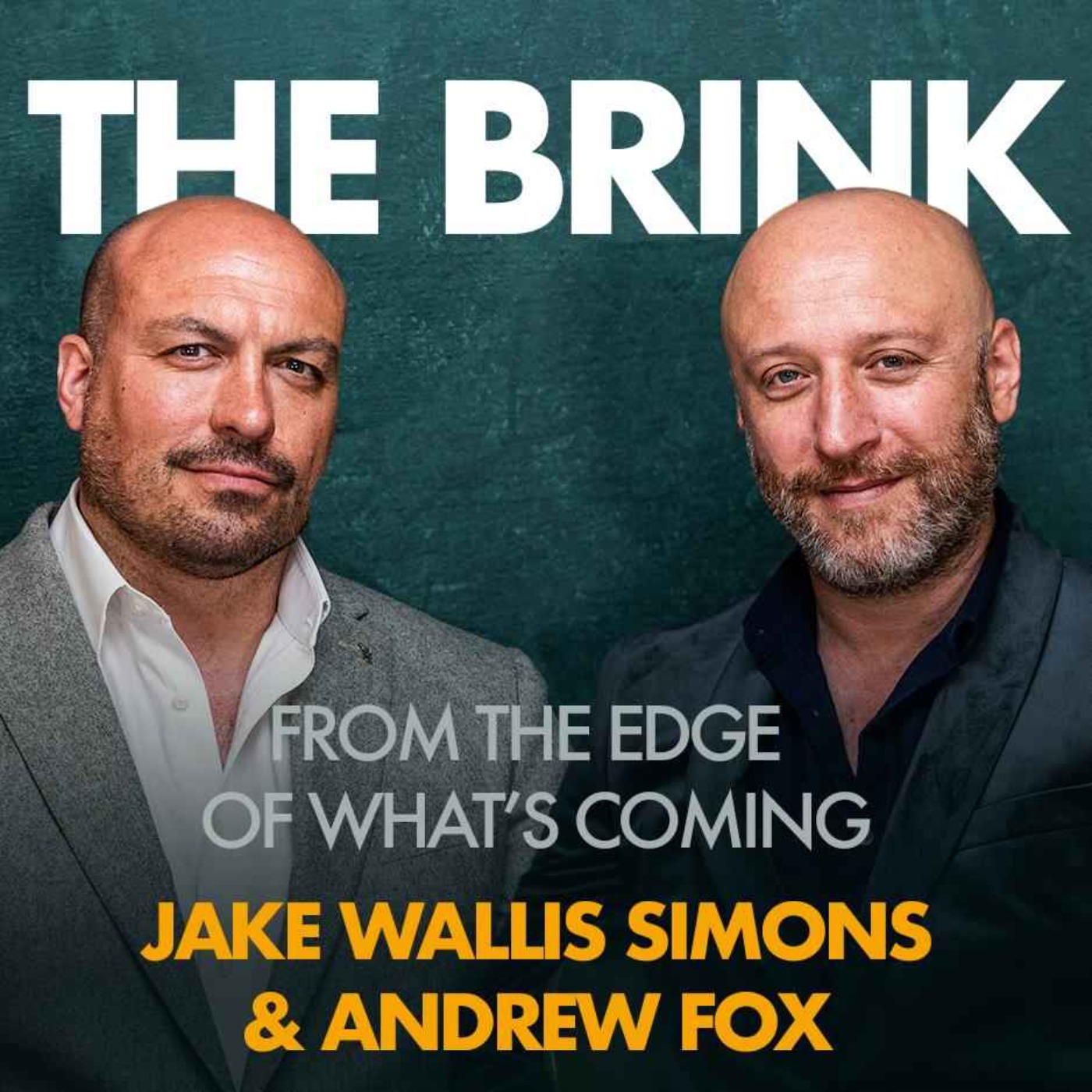
Welcome to your much-needed antidote to centrist dad podcasts. Presented by Daily Telegraph columnist and foreign correspondent Jake Wallis Simons and former parachute regiment officer and geopolitical analyst Andrew Fox, The Brink brings their wealth of real-life experience to bear upon the most important topics of the day, from Israel to immigration, Ukraine to Islamism, asylum hotels to the rise of Reform UK. With a host of stellar guests and an emphasis on common sense, Jake and Andrew explore what it will take to bring the West back from the brink. A podcast from the edge of what’s coming. Hosted on Acast. See acast.com/privacy for more information.
Episodes
Mentioned books

Mar 30, 2026 • 49min
‘What would Thatcher do?’ Iran, Islam, Trump and Reform with Charles Moore
Watch the full uncut interview HERE: https://open.substack.com/pub/thebrinkpodcast/p/what-would-thatcher-do-iran-islam?r=63dafp&utm_campaign=post&utm_medium=web&showWelcomeOnShare=trueIn this episode of The Brink, we sit down with Charles Moore, former editor of The Daily Telegraph and The Spectator, and the definitive biographer of Margaret Thatcher, to examine a West in crisis.With geopolitical tensions rising, the transatlantic alliance under strain, and Britain facing deep internal divisions, Moore offers a sweeping diagnosis of where things have gone wrong and what might come next.The conversation begins with one of the most difficult and urgent questions facing Europe today: how Islam fits within Western societies. Moore reflects on decades of thought on the subject, arguing that the challenge is not simply demographic, but philosophical, rooted in unresolved tensions between religion, state, and pluralism. From integration and extremism to the failures of government policy, he lays out why current approaches may be empowering the wrong voices.We then turn to British politics, where the collapse of trust in the main parties has given rise to insurgent movements on both left and right. Moore explains why this fragmentation is both understandable and dangerous, and why populist parties often diagnose problems better than they solve them.The discussion also explores the weakening of the transatlantic relationship in the age of Trump, the rise of ideological extremes in American politics, and the growing confusion in the information age, where truth, propaganda, and narrative increasingly blur together.This is a wide-ranging and deeply thought-provoking conversation about identity, leadership, and the future of the West.Don't forget to check out our merch store: https://www.thebrinkmerch.com/Chapters 00:00 Introduction 01:42 Why the Public No Longer Believes the Establishment03:58 The Rise of Ideology Over Evidence06:12 How Elite Institutions Became Politicised08:47 The Media’s Role in Shaping Public Narrative11:05 Truth vs Narrative: What Changed?13:26 Social Media, Censorship and Information Control15:52 The Expert Class and the Illusion of Authority18:34 Covid, Groupthink and Institutional Failure21:06 The Incentives That Drive Bad Decisions23:41 Why Dissent Is Shut Down26:12 Identity Politics and Institutional Capture29:05 How Bureaucracies Protect Themselves32:18 Political Leadership and Failure of Accountability35:44 The Consequences for Democracy39:12 Immigration, Culture and Social Fragmentation42:36 Economic Stagnation and Policy Failure46:18 Britain vs the United States: A Growing Divide Hosted on Acast. See acast.com/privacy for more information.

Mar 26, 2026 • 46min
“You Can’t Even Debate This” UK’s Islamism Problem, with former ambassador to Saudi Sir John Jenkins
Watch the full uncut interview HERE: https://open.substack.com/pub/thebrinkpodcast/p/you-cant-even-debate-this-uks-islamism?r=63dafp&utm_campaign=post&utm_medium=web&showWelcomeOnShare=trueIn this episode of The Brink, Andrew and Jake are joined by former British diplomat and intelligence expert John Jenkins for a deep dive into the influence of Islamism, the Muslim Brotherhood, and the growing challenges facing Britain and the West.The conversation begins with the controversy surrounding public religious displays in Britain, and whether questions around cultural dominance and the use of public space can still be debated openly. Jenkins argues that these are legitimate issues, but increasingly difficult to discuss without accusations shutting down the conversation.Drawing on his 2015 government review, he explains how Islamism differs from Islam, and why movements like the Muslim Brotherhood present a long-term ideological challenge to Western liberal democracies. The discussion explores how these ideas operate not just politically, but through social networks, charities, universities, and community structures.The episode also examines the concept of “creeping influence” within public life, from changing social norms to the role of identity and integration in Britain. Jenkins stresses that the problem is not simple or singular, but part of a broader ideological ecosystem that interacts with wider cultural and economic factors.Turning to foreign policy, the conversation shifts to Iran, with Jenkins arguing that Western governments have consistently misunderstood the nature of the regime. He critiques decades of policy shaped by wishful thinking, warning that Iran operates as a revolutionary state with global ambitions and deep links to militant networks.Finally, the discussion focuses on what Britain should do next. Jenkins outlines a clear approach: restore open debate, follow the money behind extremist networks, rebuild institutional expertise, and confront subversive activity before it escalates into violence.A wide-ranging and provocative conversation about ideology, security, and the future of the West.Don't forget to check out our merch store: https://www.thebrinkmerch.com/Chapters 00:00 Introduction02:49 Who Is Sir John Jenkins? Background and Experience03:26 Is Public Religious Display a Political Signal?05:21 Why Islamism Challenges Western Liberal Democracy07:48 Islam as Religion vs Islamism as Political System08:59 Can Islam Be Compatible With Western Democracy?12:01 Islamism as a Totalising Ideology14:41 The Muslim Brotherhood’s Long-Term Strategy17:33 Why Debate on Islamism Is Being Shut Down18:50 Social Media, Intimidation and Closed Debate19:34 Universities, DEI and Ideological Monoculture21:33 The Muslim Brotherhood as a Global Network24:20 Follow the Money: Financing Islamist Movements27:52 Integration, Identity and Segregation in Britain30:17 Economic Growth vs Cultural Fragmentation31:04 Mosques, Preaching and Inflammatory Rhetoric33:03 The Rise of a Global Muslim Identity34:40 Iran Strategy: Where the West Got It Wrong36:45 The Nuclear Deal, Wishful Thinking and Reality40:41 Foreign Office Failures and Loss of Expertise42:29 Is Iran a Revolutionary State and Active Threat? Hosted on Acast. See acast.com/privacy for more information.

Mar 19, 2026 • 1h 2min
Lionel Shriver: Sectarian Muslim voting is changing our country
In this episode of The Brink, we are joined by Lionel Shriver for a wide-ranging conversation anchored in the results of the Gorton and Denton by-election and what they reveal about the changing political landscape in Britain.Using the by-election as a starting point, we explore how immigration, identity politics, and cultural division are reshaping British politics. Lionel reflects on the growing disconnect between political elites and the public, and why questions around national identity, integration, and social cohesion are increasingly dominating the political conversation.The discussion also turns to the wider cultural climate in the West. We examine the pressures shaping public debate, the influence of identity politics in media and institutions, and why many writers and public figures now feel constrained in what they can say openly. Lionel explains why she believes a culture of self-censorship has taken hold and how this affects journalism, literature, and democratic discourse.Finally, we ask what the future holds for Western societies as these tensions deepen. Are we witnessing a political realignment driven by cultural issues, and what does that mean for the stability of democratic institutions?This is a candid and thought-provoking conversation about politics, culture, and the forces now reshaping Britain and the wider West.Watch the full uncut interview HERE: https://open.substack.com/pub/thebrinkpodcast/p/sectarian-muslim-voting-is-changing?r=63dafp&utm_campaign=post&utm_medium=web&showWelcomeOnShare=trueDon't forget to check out our merch store: https://www.thebrinkmerch.com/Chapters00:00 Introduction03:22 Reaction to the Gorton & Denton By-Election05:37 Immigration, Demographics and Political Power07:08 Tribal Voting and the Breakdown of Assimilation08:16 Identity Politics and the Green Party Alliance10:18 Israel, Palestine and Progressive Politics10:58 Who Is Manipulating Whom? Greens vs Muslim Voters12:32 The Muslim Brotherhood and Political Strategy15:22 Is Islam Compatible With Liberal Democracy?18:38 Historical Parallels: Lessons from the Iranian Revolution20:15 Lionel Shriver’s Novel A Better Life and Immigration24:20 Borders, Nationhood and the Ideological Divide26:32 Immigration as “Home Invasion” — The Novel’s Metaphor27:26 Old Immigration vs Modern Immigration31:14 Choosing the Right Immigration Policy36:23 Disorder, Gang Culture and Failed Integration37:12 Meet the Characters: Gloria and Progressive Compassion39:16 Nico and the Collapse of the Work Ethic43:41 Domingo, Masculinity and Cultural Conflict48:29 The Decline of Western Work Ethic51:03 Is There a Sensible Middle Ground on Immigration?54:40 The Crisis of Western Identity56:13 Civilisations in Decline and Cultural Self-Hatred59:19 Complacency, Fragility and the Future of the West Hosted on Acast. See acast.com/privacy for more information.

Mar 17, 2026 • 18min
“The West must suffer to wake up”: Ukraine war snapper on the horror he saw first hand
In this bonus episode of The Brink, recorded in Kyiv, Andrew and Jake speak with American photojournalist Christopher Occhicone, who has spent years documenting the war in Ukraine from the front line.Chris explains what it is like to report from the battlefield with nothing but a camera, capturing the brutal realities of trench warfare, drone attacks, and the human cost of the conflict. Having worked closely with Ukrainian soldiers, medics, and civilians since 2014, he reflects on the desperation faced by those fighting and living through the war, and the difficulty of communicating that reality to audiences in the West.The conversation explores what many Europeans and Americans still fail to grasp about the conflict, from the psychological toll on Ukrainian society to the stark difference between watching war on a screen and experiencing it firsthand. Chris also shares how his work has evolved beyond journalism, helping wounded soldiers access treatment and prosthetics while continuing to document the stories of those caught in the conflict.Finally, he reflects on the personal motivations that brought him to Ukraine in the first place, including a desire to understand the wartime experiences of his grandfather and the powerful bonds formed among people facing danger together.This is a raw and deeply personal conversation from the heart of a country still fighting for its survival. Hosted on Acast. See acast.com/privacy for more information.

Mar 13, 2026 • 47min
MI6 Spymaster Reveals The Shadow War in Iran
In this episode of The Brink, we are joined by Richard Dearlove, former Chief of the Secret Intelligence Service, for a wide-ranging conversation about intelligence, geopolitics, and the mounting confrontation between the West and the Iranian regime.Sir Richard draws on decades of experience at the heart of Britain’s intelligence community to explain how the current crisis with Iran should be understood. We discuss the strategic calculations behind Western and Israeli actions, how intelligence agencies assess regime stability, and why the Islamic Republic remains such a persistent threat to regional and global security.The conversation also explores the role of intelligence in modern conflict, from covert operations and alliance cooperation to the limits of diplomacy when dealing with ideological regimes. Sir Richard reflects on how Western intelligence services interpret signals from Tehran, the risks of escalation in the Middle East, and what the conflict could mean for the wider balance of power.Finally, we look at the long-term future of the Iranian regime and whether internal pressure, economic strain, and external confrontation could ultimately lead to its collapse.This is a rare and revealing conversation with one of Britain’s most experienced intelligence figures about espionage, statecraft, and the high-stakes struggle now unfolding in the Middle East.Watch the full uncut interview HERE: https://open.substack.com/pub/thebrinkpodcast/p/mi6-spymaster-reveals-the-shadow?r=63dafp&utm_campaign=post&utm_medium=web&showWelcomeOnShare=trueDon't forget to check out our merch store: https://www.thebrinkmerch.com/ Hosted on Acast. See acast.com/privacy for more information.

Mar 10, 2026 • 52min
What the Royal Navy’s shame says about Britain - Tom Sharpe OBE
A candid look at Britain’s naval posture and why deployments around the Strait of Hormuz matter. Discussion of specific ship roles, submarine and carrier options, and gaps in mine-countermeasure and air-defence capability. Critique of procurement culture, wasted defence spending, and how thin fleets strain responses. Consideration of strategic choices between European focus and global commitments.

Mar 6, 2026 • 44min
Iran War: How the UN has been hijacked with Hillel Neuer
Hillel Neuer, an international lawyer and human rights advocate in Geneva who runs UN Watch, critiques how the UN handled Iran’s protests. He discusses silence on mass killings, quick condemnations of the US and Israel, how authoritarian states captured UN bodies, and whether the institution can be reformed or replaced to defend liberal values.

Mar 4, 2026 • 52min
CIA Iran expert: This war will change global power
Norman Roule, former CIA officer and longtime Iran analyst, explains Tehran’s predictable drone and missile responses and why the Strait of Hormuz likely stays open. He outlines Iranian strategic incoherence, risks of fragmenting the country, and how intelligence cooperation with Israel shapes targeting. Short, sharp takes on Gulf security, limits of air power, and what a post-conflict Iran might look like.

Feb 26, 2026 • 44min
The War the Mainstream Media Doesn’t Show You: The Brink in Ukraine
Watch the full uncut interview HERE: https://open.substack.com/pub/thebrinkpodcast/p/the-war-the-mainstream-media-doesnt?r=63dafp&utm_campaign=post&utm_medium=web&showWelcomeOnShare=trueIn this special episode of The Brink, recorded in Kyiv to mark the fourth anniversary of Vladimir Putin’s full-scale invasion, Andrew and Jake bring you a powerful double interview from the front line of Europe’s most consequential war.In the first half, we are joined by Colonel Ruslan Miroshnichenko, known by Santa, founder and commander of Ukraine’s Second International Legion. He tells the extraordinary story of building a multinational fighting force from scratch in the first chaotic weeks of the invasion, drawing volunteers from more than 30 countries. From British and American veterans to Colombian, Georgian, and Australian fighters, Santa explains what motivated them to leave their lives behind and fight for Ukraine.He describes the brutal reality of trench warfare in the Serebriansky Forest, the evolution of drone and electronic warfare, and the moral weight of commanding both seasoned soldiers and inexperienced young volunteers. We also hear gripping stories from the front line, including the capture of Russian prisoners, the human cost of the war, and the responsibility he feels towards the families of fallen international fighters.In the second half, we are joined by Heorhii Tykhyi, former war correspondent and now a senior diplomat at Ukraine’s Ministry of Foreign Affairs. Georgi reflects on the staggering casualty figures on both sides and argues that despite Russia’s vast losses, Vladimir Putin has failed strategically. We discuss the state of the peace process, the role of the United States under President Trump, and whether Washington remains a reliable partner for Kyiv.The conversation broadens to the emerging axis of Russia, Iran, North Korea, and China, and why Ukraine sees itself not as a recipient of Western charity but as a battle-hardened asset to European security. Georgi makes the case that Ukraine’s experience, technology, and resilience are essential to the future defence of the West.This is a sobering and urgent episode from the Ukrainian capital, combining battlefield reality with geopolitical strategy, and asking what it will truly take to secure peace in Europe.Don't forget to check out our merch store: https://www.thebrinkmerch.com/Chapters 00:00 Introduction03:05 Zelensky’s Call and the Birth of the International Legion04:55 Who Joined? 30–40 Nations on the Front Line09:34 Motivation: Idealism, Not Money13:31 What Modern War in Ukraine Actually Looks Like16:01 “Now You’re the Taliban” – Firepower Reality Check17:49 Amateurs at War: Can You Train Civilians Fast Enough?21:26 Holding the Sebriansky Forest: 13 Months Under Fire23:18 Russia’s “Meat Grinder” Tactics Explained24:29 Capturing Russian POWs: Drunk, Lost, and Mobilised29:06 Respecting the Enemy and Adapting to Russian Tactics31:42 Electronic Warfare and Intelligence Games33:47 The Burden of Command: Speaking to Bereaved Families35:56 Kyiv’s War Memorial and the Cost of Sacrifice37:10 Casualty Figures: A Million Russian Losses?39:30 Is This a Strategic Failure for Putin?40:44 World War II Comparisons and Russian Myth-Making42:26 The Peace Process: Pressure, Ultimatums and Reality43:29 America’s Role: Partner, Powerbroker or Problem? Hosted on Acast. See acast.com/privacy for more information.

Feb 19, 2026 • 1h 8min
The Real Reason Israel Is Targeted - Haviv Rettig Gur
In this episode of The Brink, we are joined by Haviv Rettig Gur for a wide-ranging and deeply probing conversation about why Israel is so disproportionately hated, and what that hostility reveals about the state of the West.We begin with the disruption of Haviv’s lecture at Haverford College, where keffiyeh-clad activists attempted to shut down a talk on Jewish history and the charge of settler colonialism. Haviv reflects on the ignorance driving campus activism, the collapse of serious historical scholarship, and the failure of elite universities to equip students with intellectual depth or empathy.Haviv argues that Israel’s strength lies in its synthesis of Western democracy and Middle Eastern solidarity, combining liberal institutions with a deep sense of tribal cohesion and shared destiny. We discuss why that social trust has produced military resilience, demographic growth, technological innovation, and high levels of national happiness, even during wartime.The conversation also examines the broader crisis facing Western societies, from cultural self-erasure and collapsing social trust to the information warfare being waged by hostile states and ideological movements. We ask whether the West can rediscover the solidarity that once sustained it, and whether Israel’s model offers lessons rather than condemnation.In the second part of the episode, Andrew joins to discuss his new Henry Jackson Society report, Tactical Lessons from Gaza, and what Western militaries must learn from the war. We examine how Hamas weaponised civilian casualties, how the information battlefield reshaped global opinion, and how Israel adapted its military doctrine in real time to meet the challenge of urban and tunnel warfare.This is a searching and urgent conversation about identity, democracy, and whether the West still has the confidence to defend the civilisation it built.Watch the full uncut interview HERE: https://open.substack.com/pub/thebrinkpodcast/p/the-real-reason-israel-is-targeted?r=63dafp&utm_campaign=post&utm_medium=web&showWelcomeOnShare=trueDon't forget to check out our merch store: https://www.thebrinkmerch.com/ Hosted on Acast. See acast.com/privacy for more information.

