


The FlightBridgeED Podcast
Long Pause Media | FlightBridgeED
The FlightBridgeED Podcast provides convenient, easy-to-understand critical care medical education and current topics related to the air medical industry. Each topic builds on another and weaves together a solid foundation of emergency, critical care, and prehospital medicine.
Episodes
Mentioned books

Mar 26, 2026 • 22min
FASTReplay: Not What We've Always Done - featuring Eddy Lang
We’re continuing our FAST Replay series, bringing you full sessions recorded live from past FAST conferences as we build toward FAST26: Austin! This episode takes on a topic everyone talks about… but few fully understand: evidence-based medicine. What does it actually mean in EMS?This session breaks it down in a way that’s practical, honest, and directly applicable to how decisions get made in the field. From the limits of single studies to the importance of real-world context to the evolution of guidelines and what drives them. This is a deeper look at how evidence should (and shouldn’t) shape practice. It also challenges some long-standing habits in medicine, where tradition, opinion, or “how we’ve always done it” have influenced care just as much as actual evidence. If you’ve ever heard “the evidence says…”, this episode might change how you think about that.This is what FAST sounds like. Real conversations. Real ideas. Live from the room. FAST26 is coming to Austin, Texas this year on May 27-29, 2026. We are co-locating with EMS World Live, giving you 2 HUGE events under 1 roof at the same time! Choose to join one, or the other, or come to both!👉 Learn more or grab your spot: https://fbefast.comEnjoy this talk from Eddy Lang! See you in Austin!

Mar 20, 2026 • 23min
FASTReplay: Anaphylaxis: Faster, Smarter, Sharper - featuring Bruce Hoffman
Over the next several episodes leading up to FAST26: Austin, we’re bringing you full sessions recorded live from past FAST conferences straight from the session recordings!This episode features Bruce Hoffman, RN, paramedic, educator, and FlightBridgeED Senior Educator. Bruce is known for pushing beyond the “what” and getting into the why... challenging how we think, how we lead, and how we show up in critical care transport.If you’ve never experienced FAST, this is a glimpse into what makes it different. It’s not just the content; it’s the people, the conversations, and the environment that stay with you long after the session ends.FAST26 is coming to Austin this year, co-located with EMS World Live! We're bringing together the FAST experience with a larger EMS community, without losing what makes FAST what it is.👉 Learn more or grab your spot:https://fbefast.com

Jan 8, 2026 • 35min
MDCast: DKA in Disguise | What Pregnancy Symptoms Hide
Dr. Liz Gartner, a maternal-fetal medicine specialist, dives into the critical issue of diabetic ketoacidosis (DKA) during pregnancy, a condition often masked by typical pregnancy symptoms. She explains how pregnancy's unique physiology predisposes women to DKA at lower glucose levels. The discussion covers common triggers, like infection and insulin nonadherence, and highlights the importance of recognizing the condition early. Gartner shares vital management strategies, emphasizing aggressive maternal resuscitation and that delivery alone isn’t treatment—it's all about saving both mother and baby.
Dec 20, 2025 • 50min
MDCast: A Tale of Two Patients - Trauma in Pregnancy
In this engaging discussion, Dr. Alex Pfeiffer, a maternal-fetal medicine specialist, dives into the complexities of trauma in pregnancy. He highlights how expectant mothers and their fetuses share a circulation, complicating shock management. Dr. Pfeiffer explains the importance of recognizing subtle signs of shock, positioning techniques to alleviate aortocaval compression, and the nuances of fetal monitoring during transport. He emphasizes the urgency of prioritizing maternal and fetal care, making this a vital listen for EMS and critical care professionals.
Aug 5, 2025 • 44min
Minute Ventilation Mastery & The Obstructive Lung Mindset – with Scott Weingart
Scott Weingart, a critical care and emergency medicine expert, joins the conversation to share his insights on mechanical ventilation and managing obstructive lung diseases. He challenges traditional tidal volume formulas, advocating for 8–10 mL/kg in acidosis cases. Scott breaks down the importance of context when determining minute ventilation and the role of inspiratory flow and sedation in obstructive patients. He also highlights when to avoid intubating DKA patients and clarifies misconceptions about PEEP, stressing that not all strategies are universally applicable.
Jul 30, 2025 • 42min
MDCAST: Beyond the Blade - Redefining Airway Success in Transport
In this discussion, Nick George, a retrievalist from Australia and former medical student at the University of Maryland, dives into the evolving world of airway management in critical care transport. He challenges long-held beliefs about whether a paramedic or nurse background truly impacts intubation success. Featuring insights from a massive study of over 7,800 intubations, Nick emphasizes the importance of training and repetition over credentials. He also reflects on historical influences in EMS and explores the dynamics of pre-hospital airway management for today's providers.
Jul 21, 2025 • 47min
MDCAST: Aortic Emergencies - What You Need to Know, But Were Never Taught
In this episode of the FlightBridgeED Podcast, Dr. Mike Lauria is joined by Dr. Nick George, a retrieval and EMS physician currently practicing full-time in Darwin, Australia. Together, they break down the often-overwhelming topic of aortic emergencies in a way that’s brilliantly simple, practical, and immediately applicable for all providers—whether you’re in the ICU, on the flight line, or working your way up in emergency medicine.Dr. George introduces a clean mental model—1 tube, 2 major problems, 3 causes—to guide listeners through the classification, diagnosis, and critical transport considerations for aortic dissections and aneurysms. From understanding penetrating ulcers to navigating hypertensive vs hypotensive presentations, this episode dives deep without drowning you in jargon.We also explore the science behind anti-impulse therapy, challenge long-held dogmas about esmolol vs nicardipine, and reveal eye-opening findings from a two-decade analysis of over 1,000 aortic emergency transports. Whether you’re flying patients to tertiary care, working in rural EDs, or prepping for boards, this episode will sharpen your edge.Available anywhere you listen to podcasts or at FlightBridgeED.com. While you’re there, explore our highly successful, award-winning courses trusted by critical care providers around the world.Key TakeawaysThe aorta can be simplified into “1 tube, 2 problems (tearing or weakening), caused by 3 forces: pressure, pulsatility, and geometry.”Distinguishing between dissection and aneurysm—and whether it’s hypertensive or hypotensive—can guide safe transport decisions, even if you're not making the diagnosis.Dissections may present without pain in up to 30% of cases, underscoring the importance of clinical vigilance and recognizing subtle signs.Classic signs (pulse deficits, BP differentials) are often unreliable. Don’t dismiss vague or mismatched symptoms.Ultrasound, although not definitive, can provide useful data en route—especially in cases of hypotension or ambiguity.Anti-impulse therapy isn't as evidence-backed as we've been taught. Recent studies show nicardipine may be just as effective—and possibly safer—than esmolol.Transport crews must be empowered to advocate for patients when findings don’t line up with the presumed diagnosis.
Jul 15, 2025 • 47min
Bleeding Out: The Trauma We Can Actually Fix
In this enlightening discussion, Dr. Mark Piehl, a pediatric ICU physician and trauma resuscitation expert, dives deep into the critical realm of trauma care. He shares compelling insights on early blood product administration, asserting that it significantly boosts survival rates in trauma cases. Mark emphasizes the effectiveness of both whole blood and component therapy, explaining that transport times are crucial, even in urban settings. With real-world examples and bold recommendations, he challenges conventional practices and advocates for innovative approaches to prehospital blood management.
Jul 8, 2025 • 1h
Summer, Bloody Summer
Dr. Peter Antevy, an emergency physician and EMS training leader who helped implement pre-hospital whole blood programs, discusses life-saving hemorrhage control and rapid transfusion in the field. He covers criteria for activating transfusions, the critical 35-minute window, pediatric inclusion, product choices like plasma vs whole blood, and logistics of launching EMS blood programs.
May 30, 2025 • 54min
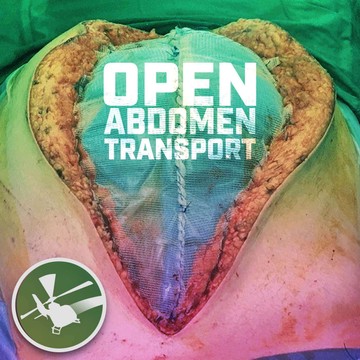
MDCAST: Open Abdomen Transport
Dr. Bryce Taylor, flight physician and surgical critical care expert, walks through managing and transporting patients with open abdomens. He explains why abdomens are left open and how dressings and vacuum systems factor into care. Topics include damage control laparotomy, abdominal compartment syndrome and its monitoring, fluid and pressor strategies, and practical priorities for safe transport.

