

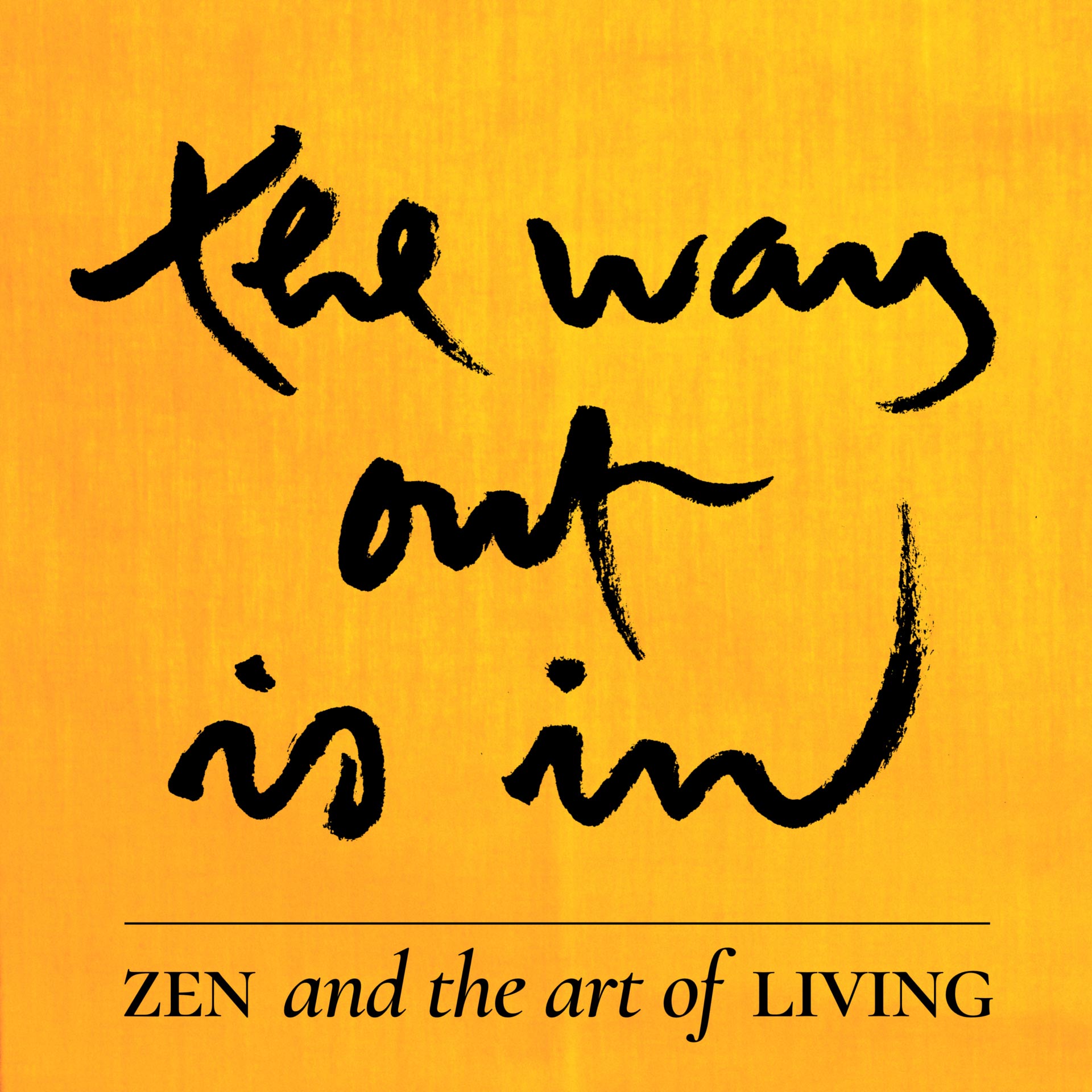
The Way Out Is In
Plum Village
This podcast series is aimed at helping us to transcend our fear and anger so that we can be more engaged in the world in a way that develops love and compassion.
Thich Nhat Hanh’s calligraphy ‘The Way Out Is In” highlights that the way out of any difficulty is to look deeply within, gain insights and then put them into practice.
"The Way Out is In" is co-hosted by Brother Phap Huu, Thich Nhat Hanh's personal attendant for 17 years and the abbot of Plum Village's Upper Hamlet, and Jo Confino, who works at the intersection of personal transformation and systems change.
The podcast is co-produced by the Plum Village App and Global Optimism, with support from the Thich Nhat Hanh Foundation.
Thich Nhat Hanh’s calligraphy ‘The Way Out Is In” highlights that the way out of any difficulty is to look deeply within, gain insights and then put them into practice.
"The Way Out is In" is co-hosted by Brother Phap Huu, Thich Nhat Hanh's personal attendant for 17 years and the abbot of Plum Village's Upper Hamlet, and Jo Confino, who works at the intersection of personal transformation and systems change.
The podcast is co-produced by the Plum Village App and Global Optimism, with support from the Thich Nhat Hanh Foundation.
Episodes
Mentioned books

Apr 15, 2022 • 1h 29min
Kaira Jewel Lingo on White Supremacy and Racial Healing (Episode #27)
Please refer to the note below this description about the choice of the title for this episode.
Welcome to episode 27 of The Way Out Is In: The Zen Art of Living, a podcast series mirroring Zen Master Thich Nhat Hanh’s deep teachings of Buddhist philosophy: a simple yet profound methodology for dealing with our suffering, and for creating more happiness and joy in our lives.
In this episode, journalist Jo Confino is joined by much-loved international mindfulness teacher and author Kaira Jewel Lingo, to talk about her practice and community work, both as a monastic and subsequently as a lay practitioner and spiritual mentor.Together, they further discuss the intersection of racial, climate, and social injustice; privilege; denial; white awareness; hate and embedded white supremacy; deep listening; and spiritual practices for a world in crisis. Kaira Jewel Lingo is a dharma teacher who has been practicing mindfulness since 1997. She lived as an ordained nun for 15 years, during which she trained closely with Zen Master Thich Nhat Hanh. Speaking five languages, she shares Buddhist meditation, secular mindfulness, and compassion practice internationally, providing spiritual mentoring to individuals and communities working at the intersection of racial, climate, and social justice. Her teaching focuses on activists, educators, artists, youth and families, BIPOC communities, and includes the interweaving of art, play, nature, ecology, and embodied mindfulness practice. She teaches in the Plum Village Zen tradition and in the Vipassana tradition.
In this episode, Kaira Jewel expands on the journey of her name – Jewel – and her route to the Plum Village practice; being the first ordained monastic of African heritage in Plum Village; Thich Nhat Hanh’s guidance and support; embodying Thay’s teachings; learning to take care of suffering; deciding to disrobe; her mission as a lay dharma teacher; practice as a way of life; deep relationships; and her plans to open a Buddhist-Christian practice center with her partner.She also dives more deeply into spiritual bypassing; healing racialized trauma; the importance of BIPOC (Black, Indigenous, and People of Color) retreats and teachers; the story of the first Plum Village retreat for people of color; collective consciousness; adapting the Five Mindfulness Training to different ethnic groups; and her first book: We Were Made for These Times: Ten Lessons for Moving through Change, Loss, and Disruption.
The episode ends with a short meditation guided by Kaira Jewel.
[This episode was recorded on February 18, 2022, via Zoom.]
Note: Race is a social construct designed to divide and dehumanize, but it still has a significant impact on inequality and discrimination today. White supremacy, as used in the context of this episode, refers to the societal and structural biases that deeply influence communities and individuals of color across the world, affecting their lives in tangible wide-ranging ways – from access to everyday necessities being harder or impossible to all types of abuse (which takes an ongoing physiological and psychological toll).
This episode explores the impact of racism, emphasizing that it’s not being white-skinned that is inherently problematic, but rather how the social constructs of race are enacted in harmful ways. Given the historical contexts of colonization, slavery, and intergenerational trauma, understanding the dynamics of power and privilege in a racialized world requires a great deal of compassion, learning, unlearning, and healing, regardless of how we are categorized.
This episode was recorded with the intention to live our ideals of non-discrimination and addressing social injustice as encouraged in the 14 Mindfulness Trainings.
Co-produced by the Plum Village App:https://plumvillage.app/
And Global Optimism:https://globaloptimism.com/
With support from the Thich Nhat Hanh Foundation:https://thichnhathanhfoundation.org/
List of resources Kaira Jewel Lingohttps://www.kairajewel.com/
Plum Villagehttps://plumvillage.org/
Old Path White Clouds: Walking in the Footsteps of the Buddhahttps://www.parallax.org/product/old-path-white-clouds-walking-in-the-footsteps-of-the-buddha/
Ram Dasshttps://en.wikipedia.org/wiki/Ram_Dass
Brahmavihārāhttps://en.wikipedia.org/wiki/Brahmavihara
James Baldwinhttps://en.wikipedia.org/wiki/James_Baldwin
Melina Bondyhttps://www.melinabondy.com/
Joanna Macyhttps://www.joannamacy.net/
Resmaa Menakemhttps://www.resmaa.com/
The Quaking of America: An Embodied Guide to Navigating Our Nation’s Upheaval and Racial Reckoninghttps://www.harvard.com/book/the_quaking_of_america/
My Grandmother’s Hands: Racialized Trauma and the Pathway to Mending Our Hearts and Bodieshttps://shop.harvard.com/book/9781942094470
The Civil Rights Movementhttps://en.wikipedia.org/wiki/Civil_rights_movement
We Were Made for These Times: Ten Lessons for Moving through Change, Loss, and Disruptionhttps://www.parallax.org/product/we-were-made-for-these-times/
The Five Mindfulness Trainingshttps://plumvillage.org/mindfulness-practice/the-5-mindfulness-trainings/
Deep Adaptationhttps://en.wikipedia.org/wiki/Deep_Adaptation
Schumacher Collegehttps://campus.dartington.org/schumacher-college/
Buddhist-Christian Community of Meditation and Actionhttps://www.kairajewel.com/teaching/buddhist-christian-community-of-practice-and-action
Quotes
“What’s so powerful about Thay’s teaching in the community is this huge heart of inclusiveness. Thay and sangha are always reaching wider; the reach is like the brahmavihārās – the loving-kindness, compassion, joy, equanimity. They are immeasurable minds of love.”
“Part of freeing ourself on the spiritual path is to undo and unravel these delusions and lies that our society has created, that history has wound around us, about who has value and who doesn’t – including patriarchy, or sexual orientation, or gender identity, or age; all these different ways that we are privileged or not.”
“If you find yourself uncomfortable, or embarrassed, or triggered, or not sure what to say or do, really stay in your body and let yourself dwell in that experience of what it’s like to be uncomfortable. I think so many of our problems come from not being willing to be uncomfortable.”
“Black is beautiful.”
“James Baldwin has this quote, something like, ‘The reason why white people are so afraid to not hate, to stop hating, is that if they feel what’s beneath their hatred, it will be so uncomfortable.’ They don’t want to feel it. So the hate is a kind of protection.”
“If we can be with what is happening in the present moment, and we can, if we can not resist it, not push it away, not judge it, but embrace it with mindfulness, with kindness, with friendliness, with curiosity, with a clear mind, with presence which can be cultivated in every moment – then we have at our disposal so much more to meet the difficulties than we would if we were resisting and pushing away and fighting what is.”
“What this time calls for – with so much change, with so much disruption, with so much at risk – is more and more of us holding down the fort, who are really doing the deep spirit work of seeing interbeing. And you need to slow down to do that. You need to have less. There needs to be space for that kind of consciousness to emerge.”
“Anyone of any privilege needs to be in a space where that history is acknowledged and integrated into our practice.”
“And if you think there’s something wrong in society, you are right. So it’s an inner and an outer affirmation of, ‘Yes, white supremacy exists and it is deadly.’ And here are dharma practices that can help us as individuals in our relationships and our families, but also in our world, in our institutions, systemically, to see that everyone is being deceived by this story.”
“We’re all learning. White folks have a different journey than many folks of color, but we’re all learning to wake up from this and we can help each other, we can support each other, and that looks different. It doesn’t necessarily mean doing the work together, but sometimes it can. And then maybe having affinity spaces where we have a chance to speak with our own groups.”
“I feel what Thay taught is love, and he loved his disciples, every one of us, everyone who came to us; I felt he was radiating love and that’s healing. And so if you’re in a community where you are recognized for who you are, you’re not asked to be something else. And then the people there are practicing to love; it’s going to be a healing space. Love in the spiritual sense of each of us working to purify our minds and hearts, to see ourselves more clearly, to love ourselves, and then to really see each other clearly.”
“These are times no other human generation has had to face: profound structural dissolution, and, really, the last days of what Joanna Macy calls late capitalism. This isn’t going to stand for very much longer as it is. And so these are times of apocalypse, right? Where the veil gets pierced – that’s the meaning, in Greek: being able to see through an illusion into what’s more true. So these are times of a lot of potential collective awakening. And these are also times of great suffering, separation, and illusion.”
“All we have to do is be in the present. All we have to do is meet what’s happening now. We get so immobilized and drained of our energy by trying to meet what’s coming – but that’s not here yet. All we are required to do is meet what is here. And we can do that; we are all in the present moment.”
9 snips
Apr 10, 2022 • 1h 20min
Meditating on Death (Episode #26)
Explore the deep Buddhist insights on death and impermanence. The hosts discuss embracing life by accepting the reality of mortality, which alleviates fear. They emphasize the interconnectedness of life, karma, and our actions' lasting impacts. The conversation touches on overcoming individualism through mindfulness and meditation, urging listeners to live fully in the present. Personal anecdotes, including reflections on a revered teacher's last days, enhance the narrative, along with a focus on cultivating compassion and a legacy of kindness.
Mar 25, 2022 • 1h 31min
Active Hope: The Wisdom of Joanna Macy (Episode #25)
Welcome to episode 25 of The Way Out Is In: The Zen Art of Living, a podcast series mirroring Zen Master Thich Nhat Hanh’s deep teachings of Buddhist philosophy: a simple yet profound methodology for dealing with our suffering, and for creating more happiness and joy in our lives.
In this episode, the presenters, Zen Buddhist monk Brother Phap Huu and lay Buddhist practitioner and journalist Jo Confino, are joined for a second time by special guest, eco-philosopher Joanna Macy.A scholar of Buddhism, systems theory, and deep ecology, Joanna Macy, PhD, is one of the most respected voices in the movements for peace, justice, and ecology. She interweaves her scholarship with learnings drawn from six decades of activism, has written twelve books, and teaches an empowerment approach known as the Work That Reconnects.
Together, they talk about the passing and legacy of Thich Nhat Hanh, with a focus on interbeing and continuation. Additional topics include their own practices during uncertain times, and the application of Thay’s teachings in daily life.
Joanna reflects on the early days of peace activism, becoming aware of Thay in the 1960s, and meeting him for the first time in the early 1980s, during a special United Nations session on disarmament.She further delves into Thay’s courage, imagination, and devotion to life and peace; religion and revolution; why framing the tackling of climate change as a ‘fight’ may not be helpful; transcending individualism and achieving a wider sense of self; seeing our interconnection and inter-existence with all life on Earth; humility; the ‘legacy’ of nuclear weapons; affection and love; honouring the pain we experience for the world; seeing with new eyes; having that ‘sense of wonder’ at the end of the world; and gratitude.Additionally, she talks about some of the main concepts in the new edition of her classic book, Active Hope: How to Face the Mess We’re In with Unexpected Resilience and Creative Power, such as the importance of having “power with, not power over”.
And: how would she like to see her continuation in this world?
Brother Phap Huu discusses ways that Thay’s teachings can help us in these times of crises; Thay’s legacy as a peace activist; taking care of the past, present, and future; what it means to be a Bodhisattva; the interbeing effect; moderation; change; and the need for a spiritual dimension.
Jo muses over the importance of bringing the future into the present moment; humility; how Thay became his teachings; and honours Joanna as a teacher and Bodhisattva.
The episode ends with a meditation on interbeing, guided by Joanna Macy.
[This episode was recorded on February 16, 2022, via Zoom.]
Co-produced by the Plum Village App:https://plumvillage.app/
And Global Optimism:https://globaloptimism.com/
With support from the Thich Nhat Hanh Foundation:https://thichnhathanhfoundation.org/
Quotes
“One reason that Thay was so important to me was that he loved this world – and I’m so fed up with spiritual people who think they can rise above mere phenomenality and the physical world; it’s all one.”
“You don’t try to be a spiritually perfect person; just be open to love. That love wipes out fear, takes you into this world, and gives you strength and courage.”
“‘This is’ because ‘that is’, and ‘that is’ because everything is intertwined.”
“An oyster, in response to trauma, grows a pearl.”
“This world is too fragile and too beautiful for us to hesitate for a moment in service to peace.”
“We are part of the world, and the suffering that is outside is also a part of us. And if the outside suffers, we will suffer also. And if we can bring peace to little villages, little communities, little families, the impact will multiply and have the interbeing effect; the idea that everything can connect and effects can ripple through.”
“One part of what’s killed us is competition. That’s the ‘gift’ of five centuries of individualism and capitalism.”
“This planet doesn’t know whether it’ll be around to carry life. So that makes every moment precious. This moment is once in a lifetime.”
“It’s at the moment when we’re most tender that our heart opens the widest; when we have nothing left, nothing more to lose, everything becomes crystal clear. Everything becomes precious.”
“Don’t try to cheer yourself up all the time. Feel the sorrow, feel the grief. Feel the loneliness. Feel that it’s good that you’re alive. And the fact that you care for the world, that’s a form of love. Do not let that get pathologized. It isn’t, because it’s not abnormal. It’s a face of love. Pain for the world and love for the world are just two sides of one coin. So honour your pain for the world.”
“Don’t complain all the time. You’re not going to be useful to the world in any way if you’re not glad to be here. And then sorrow together.”
“Thay had that quality of such fullness of presence that he didn’t have time to think about, ‘Well, how are they seeing me?’”
List of resources
Joanna Macyhttps://www.joannamacy.net/
Plum Villagehttps://plumvillage.org/
Fragrant Palm Leaves: Journals 1962–1966 https://www.parallax.org/product/fragrant-palm-leaves/
Pratītyasamutpādahttps://en.wikipedia.org/wiki/Prat%C4%ABtyasamutp%C4%81da
Dr. Dan Siegelhttps://drdansiegel.com/
Songs: ‘No Coming, No Going’https://plumvillage.org/library/songs/no-coming-no-going-song/
Bodhisattva https://en.wikipedia.org/wiki/Bodhisattva
Tassajara Zen Mountain Centerttps://www.sfzc.org/practice-centers/tassajara
Call Me by My True Names: The Collected Poems of Thich Nhat Hanhhttps://plumvillage.org/books/call-me-by-my-true-names/
St. Francis of Assisihttps://en.wikipedia.org/wiki/Francis_of_Assisi
Active Hopehttps://www.activehope.info/
The Way Out Is In: ‘Grief and Joy on a Planet in Crisis: Joanna Macy on the Best Time to Be Alive (Episode #12)’https://plumvillage.org/podcast/grief-and-joy-on-a-planet-in-crisis-joanna-macy-on-the-best-time-to-be-alive-episode-12/
Mar 17, 2022 • 1h 16min
War and Peace (Episode #24)
Welcome to episode 24 of The Way Out Is In: The Zen Art of Living, a podcast series mirroring Zen Master Thich Nhat Hanh’s deep teachings of Buddhist philosophy: a simple yet profound methodology for dealing with our suffering, and for creating more happiness and joy in our lives.
In this episode, the presenters, Zen Buddhist monk Brother Phap Huu and journalist Jo Confino, talk about how to find peace in ourselves and to encourage peace in the world during times of war. They remember Zen Master Thich Nhat Hanh, who himself lived through a conflict – the Vietnam War – yet found a way to peace, and to become an activist for transformation.
They also discuss inherited war traumas; the importance of maintaining compassion and balance during these times; the limits of compassion; going beyond our ‘roles’ and ‘labels’; chanelling anger; practicing when we feel ‘on the edge’; racism and discrimination; coming back to our humanity; cultivating love, peace, and nonviolence, every day. And: can we bear arms without hatred?
Brother Phap Huu shares his own family’s experience of the war in Vietnam and, subsequently, as refugees; Thay’s creation of a nonviolent movement in wartime; and surprising insights from a retreat for Palestinians and Israelis in Plum Village.He also delves into recognizing the thoughts that manifest during wartime; taking refuge in the energy and wisdom of the practice; coming back to our human nature during hard times; nonviolence as a way, not a tool; grounding and moderation; becoming a refuge for those who are suffering; teaching the awareness of interbeing; and how to not drown in our own despair.
Jo considers the difficulty of transforming our feelings about the war through practice (such as not becoming consumed by the news, not taking sides, being equanimous); inherited war trauma; the transformational power of vulnerability; and the perils of hierarchies.
The episode ends with a chant on peace recited by Brother Phap Huu.
Co-produced by the Plum Village App:https://plumvillage.app/
And Global Optimism:https://globaloptimism.com/
With support from the Thich Nhat Hanh Foundation:https://thichnhathanhfoundation.org/
List of resources
‘The Five Earth Touchings’https://plumvillage.org/key-practice-texts/the-five-earth-touchings/Thich Nhat Hanh On…: ‘Peace between Palestinians and Israelis’https://plumvillage.org/articles/peace-between-palestinians-and-israelis/Sister Chan Khonghttps://plumvillage.org/about/sister-chan-khong/
Avalokiteśvarahttps://en.wikipedia.org/wiki/Avalokite%C5%9Bvara
Martin Luther King Jr.https://en.wikipedia.org/wiki/Martin_Luther_King_Jr.
Countdown Summithttps://countdown.ted.com/events
Sutras: ‘Discourse on the 5 Ways of Putting an End to Anger’https://plumvillage.org/library/sutras/discourse-on-the-five-ways-of-putting-an-end-to-anger/
Quotes
“When there’s war, we have to face the beast of war, and that is violence, that is hatred, discrimination, greed, and death.”
“Wherever there is darkness, light is also there. And this is the deep teaching in Buddhism: nonduality. It’s very easy to get caught in the right and the left, the above and the below, the good and the bad, the dark and the light. It doesn’t mean that we ignore it, but we know that if there is the right, there is also the left. If there is war, there is peace somewhere.”
“Man is not our enemy. It is ignorance, it is fear, it is destruction.”
“Nonviolence is not a tool. Nonviolence is a way.”
“We believe in using deep listening and compassionate speech for reconciliation, as a way forward instead of using the army; the army, the guns, the bombs, it doesn’t bring peace.”
“You have to have the peace inside of you in order for the peace outside to manifest.”
“Grounding is very important at this time. You can be a refuge for the ones who are suffering. The people who are suffering are also seeking stability. So, if we as humans, if we as practitioners have that stability, that is also an offering to the chaos that is happening right now.”
“Compassion needs to be nourished. We can be depleted of this understanding and this energy, this source of acceptance, and this source of embracing. One of the teachings that was given to us is to still find the simple joy in daily life. And I think this was Thay’s antidote in the war: to still see the wonders of life, still have time to sing a song. And Thay wrote a lot of peace poems during that time, to channel in the miracle of life.”
“Thay’s community would establish days of mindfulness, and this is why we have a tradition of Thursdays and Sundays as days of mindfulness, because social workers during the Vietnam War needed a day where they didn’t talk about the war. They talked about their deepest aspiration, they talked about their dreams; it’s a way to balance the destruction and the suffering that is there.”
“When you have real love and compassion, it is limitless. And that can be a source of teaching, a source of refuge, a source of inspiration, a source of hope for many people.”
“May I be peaceful, light, and happy, in body and in mind. May I be free and safe from accidents. May I be free from anger, unwholesome states of mind, and worries. May I know how to look at myself with the eyes of understanding and love. May I be able to recognize and touch the seeds of joy and happiness in myself. May I not be caught in a state of indifference or be caught in the extremes of attachment or aversion. May you be peaceful, light, and happy, in body and in mind. May you be free and safe from accidents. May you be free from anger, unwholesome states of mind, and worries. May you know how to look at yourself with the eyes of understanding and love. May you not be caught in a state of indifference or be caught in the extremes.”
“Compassion gives you a source of energy that gives you no fear, and sometimes that compassion can become your barrier, your protector.”
“War does not lead to peace; peace is the way.”
“Buddhism is really teaching us to be human again, to see each other without a label, without a hierarchy of, ‘Yyou are the boss, I am the servant, you are a soldier.’ Because if we remove all of that and we ask everyone to remove all of that we can ask each other, ‘What is it that we deeply want?’”
“The thing about humanity is that we always repeat the same mistakes, even from the Buddha’s time. The Buddha left his responsibility and his inheritance to be a king because his deepest desire was, ‘That doesn’t bring me true happiness, ruling a nation. What brings me true happiness is the cessation of suffering, is the nourishment of understanding, is the insight of love and compassion, that all blood is red, all of our tears are salty.’ And the Buddha came from the caste system in his country, which discriminated a lot, and he wanted to break free from that. So we may say we live in a free country, but I think there are many barriers.”
“All of us are responsible for either creating a sense of suffering, or pain, or abuse. In every one of our thoughts and actions, we can either be sowing the seeds of hope, love, compassion, and deep listening, or we can be judging, belittling, and taking advantage of people. We are all individually responsible for the collective consciousness that leads to wars.”
“Be the peace you want to see.”
11 snips
Mar 3, 2022 • 1h 15min
Deep Reflection: The Calligraphy of Zen Master Thich Nhat Hanh (Episode #23)
Dive into the art of Zen calligraphy, where mindfulness meets creativity! Discover how Thich Nhat Hanh's calligraphies serve as valuable life lessons. Hear about the emotional vulnerability necessary for connection and the power of presence in nurturing relationships. Explore the deep storytelling behind a farmer and his son, revealing how adversity can spark positive change. Enjoy a guided session on mindful breathing, fostering gratitude for life and loved ones. This journey beautifully intertwines art, meditation, and the essence of living fully.
Feb 24, 2022 • 1h 24min
The Meditator, the Artist, and the Warrior (Episode #22)
Welcome to episode 22 of The Way Out Is In: The Zen Art of Living, a podcast series mirroring Zen Master Thich Nhat Hanh’s deep teachings of Buddhist philosophy: a simple yet profound methodology for dealing with our suffering, and for creating more happiness and joy in our lives.
In this episode, the presenters, Zen Buddhist monk Brother Phap Huu and lay Buddhist practitioner and journalist Jo Confino, discuss ‘the Meditator, the Artist, and the Warrior’ – the three key ways to engage with the world, which is what Thich Nhat Hanh was all about.
The episode is inspired by a chapter in Thich Nhat Hanh’s book, Zen and the Art of Saving the Planet, and focuses on how these three elements are present in everyone, explaining what they mean, and ways to nourish and activate them, interspersed with examples from Thay’s own experience, as recalled by Brother Phap Huu.
They further delve into the first time they experienced meditation; enlightenment; removing perceptions; and the Beginner’s Mind.
Brother Phap Huu addresses keeping the Meditator in us alive and retaining our freshness in the practice; creating space for reflection in daily life; a special linden tree in Upper Hamlet; and why he dreads formal lunches.
Jo shares his thoughts about interrogating life and being true to ourselves; the importance of ‘taking space’ and the embodiment of presence; offering empathy; and the test of a formal lunch in the monastery.
The episode ends with a short meditation guided by Brother Phap Huu, to help us touch the Meditator, the Artist, and the Warrior within.
Co-produced by the Plum Village App:https://plumvillage.app/
And Global Optimism:https://globaloptimism.com/
With support from the Thich Nhat Hanh Foundation:https://thichnhathanhfoundation.org/
List of resources
Zen and the Art of Saving the Planethttps://plumvillage.org/books/zen-and-the-art-of-saving-the-planet/
Koanhttps://en.wikipedia.org/wiki/Koan
COP 26https://ukcop26.org/
The Beginner’s Mind (shoshin)https://en.wikipedia.org/wiki/Shoshin
Bodhicittahttps://en.wikipedia.org/wiki/Bodhicitta
Futerrahttps://www.wearefuterra.com/
‘New Contemplations before Eating’https://plumvillage.org/articles/news/new-contemplations-before-eating/
Thai Plum Village International Practice Centerhttps://www.thaiplumvillage.org/
Quotes
“The image we have of an enlightened person is someone with freedom and spiritual strength, who is not a victim of their environment. An enlightened person sees themself clearly, knows who they are, and has a clear understanding of reality, both their own nature and the nature of society. This understanding is the most precious gift that Zen can offer.”
“We cannot be present for anything outside of ourselves if we’re not present for ourselves; we need the stability and the strength, the fortitude and the understanding of ourselves before we can reach out in the world.”
“When we practice mindfulness, we practice meditation. We practice zen. It invites us to touch a spiritual dimension in each and every one of us. We may think that a spiritual dimension is going to the monastery or a retreat or a temple. And yes, that is one of the conditions that can help us touch that spiritual dimension inside of us. But, when we practice meditation, coming home to our breaths, becoming aware of our breath, allowing our mind to come home to the body, to touch peace, to touch stability: that is our spiritual dimension that we speak about in our tradition.”
”Enlightenment is enlightenment of something. So if today we can wake up and see 24 brand new hours as a gift, that is enlightenment of seeing the day has begun; having fresh eyes, knowing how to live this day meaningfully. That’s enlightenment of the day.”
“If we don’t find time to pause, don’t find time to take a moment to be aware of the present moment, we will lose ourselves.”
“The most important thing in life is to be true to yourself. Because if we’re not true to ourselves, then how can we be true to life?”
“Sometime Thay says, ‘To meditate is to have time.’”
“We need to create space for ourselves; life is very hectic and we are so conditioned to be busy that when we’re not, we feel guilty about it, and feel restless and feel we need to fill our time.”
“If someone comes to you with a problem that you haven’t addressed yourself, or you haven’t looked at that area of your life, you can offer sympathy, but you can’t offer empathy. But when you have worked with that issue, looked into it and found that place of deep pain in yourself, and started to transform it, then when someone comes to you with that problem, you’re present for them.”
“Thay taught me about the embodiment of presence, so I can understand this territory. I don’t feel fearful anymore of going to this dark place, because I have made friends with it. And, therefore, I can sit with you and offer that to you. And that doesn’t involve any words. It just involves a sense of deep connection that creates safety in the world.”
“The Buddha once said that the mind is an artist; whatever the mind creates, that is the world. So the way we create and the way we take care of our mind has a very important connection to how we relate to the world.”
“You can’t bathe in the same river twice.”
“We’re constantly creating the world in ourselves. And then we project it out into the world. I struggled for years with ideas; ‘With our thoughts, we create the world.’ How can that be true? But when we see life differently, the world does change, because actually the world isn’t one thing. The world is just what we choose to make it.”
“The true warrior is about being able to stand firm and in my truth.”
Feb 17, 2022 • 1h 46min
Being the Change We Want to See in the World: A Conversation with Christiana Figueres (Episode #21)
In this captivating discussion, Christiana Figueres, a key architect of the Paris Climate Agreement and devoted student of Thich Nhat Hanh, explores her personal journey through grief and the importance of community connection. She highlights the transformative power of deep listening and compassion in addressing climate issues. Figueres emphasizes the interconnectedness of happiness and suffering, and the need for collective action fueled by spiritual awakening. The conversation beautifully intertwines environmental responsibility with personal growth, inspiring audiences to nurture intergenerational relationships.
Feb 9, 2022 • 1h 48min
A Cloud Never Dies: The Passing of Zen Master Thich Nhat Hanh (Episode #20)
The discussion centers around the profound impact of Zen Master Thich Nhat Hanh's passing. The hosts share personal experiences and reflections on grief within the Zen community. They delve into emotional memorial services and the significance of shared rituals. Insights into Thich Nhat Hanh's enduring teachings highlight themes of impermanence, mindfulness, and compassion. Listeners are encouraged to embody his wisdom while finding solace through meditation. This heartfelt tribute emphasizes community solidarity and the legacy of a beloved spiritual leader.
Jan 28, 2022 • 47min
The Miracle of Mindfulness: Thich Nhat Hanh in Conversation with Krista Tippett (Episode #19)
Welcome to episode 19 of The Way Out Is In: The Zen Art of Living, a podcast series mirroring Zen Master Thich Nhat Hanh’s deep teachings of Buddhist philosophy: a simple yet profound methodology for dealing with our suffering, and for creating more happiness and joy in our lives.
Zen Master Thich Nhat Hanh passed away on January 22nd, 2022. As we grieve our dear teacher, we also want to celebrate his enduring legacy with the podcast’s first special edition.Therefore, we are sharing an edited recording of Thich Nhat Hanh interviewed by Krista Tippett during a USA tour in 2003, at a lakeside Christian conference center in rural Wisconsin.
The interview is reproduced with kind permission of Krista Tippett and her podcast and radio show On Being.Peabody Award-winning broadcaster Krista Tippett is a National Humanities Medalist and a New York Times bestselling author. She attended Brown University, then worked as a journalist and diplomat in Cold War Berlin. Subsequently, she lived in Spain and England before receiving a Master of Divinity at Yale University in the mid 1990s.
The episode starts with an introduction by Brother Phap Huu – Thich Nhat Hanh’s former attendant, and the current Abbott of Upper Hamlet, Plum Village. The brother recites one of Thay’s best known poems and pays tribute to his beloved teacher.In the interview, Thich Nhat Hanh offers gentle wisdom for living in a world of anger and violence, through concepts such as engaged Buddhism, ‘being peace’, and mindfulness.
He shares the story behind his classic book The Miracle of Mindfulness, and discusses the Vietnamese connotations of the word ‘mindfulness’; transforming suffering; and building a community of practice and teaching mindfulness to different groups – from members of the US Congress to Hollywood filmmakers and law enforcement officers.One segment of the interview focuses on dealing with war and ‘enemies’; the repetitive patterns of war, with a focus on the Vietnam and Iraq wars and the ‘war on terror’ taking place at the time. He further delves into: the root causes of war, anger, forgiveness, and peacekeeping; collective awakening; and viewing the world through the eyes of compassion. What is compassion in the wake of a terrorist attack? Does the practice of mindfulness cause forgiveness to become instinctual? And what were Thay’s pressing questions in 2003?
Thay also recites poems in both English and Vietnamese and comments on their meanings and shifting contexts, such as the relevance of his 40-year-old poem ‘Illusion Transformed’ to the realities of 2003.
Co-produced by the Plum Village App:https://plumvillage.app/
And Global Optimism:https://globaloptimism.com/
With support from the Thich Nhat Hanh Foundation:https://thichnhathanhfoundation.org/
List of resources
‘Recommendation’https://plumvillage.org/articles/recommendation/
‘Alone Again’ https://plumvillage.org/library/songs/alone-again-promise-me/
The Miracle of Mindfulness https://plumvillage.org/books/the-miracle-of-mindfulness/
‘Illusion Transformed’https://www.youtube.com/watch?v=Fq5HHRJ9pIk
Drops of Emptinesshttps://www.goodreads.com/book/show/424577.Drops_of_Emptiness
‘For Warmth’https://plumvillage.org/articles/for-warmth-thays-poem-in-my-two-hands-betsy-roses-song/
Fragrant Palm Leaves https://plumvillage.org/books/fragrant-palm-leaves/
Thich Nhat Hanh address to the US Congress, September 10, 2003https://plumvillage.org/it/about/thich-nhat-hanh/letters/thich-nhat-hanh-address-to-us-congress-september-10-2003/0/
‘Mindfulness, Suffering and Engaged Buddhism’ (interviews with Thich Nhat Hanh, Cheri Maples, and Larry Ward)https://plumvillage.org/about/thich-nhat-hanh/interviews-with-thich-nhat-hanh/thich-nhat-hanh-on-mindfulness-suffering-and-engaged-buddhism/
The United Nationshttps://www.un.org/en/
The Vietnam Warhttps://en.wikipedia.org/wiki/Vietnam_War
Bến Trehttps://en.wikipedia.org/wiki/B%E1%BA%BFn_Tre
Quotes“Mindfulness is a part of living. When you are mindful, you are fully alive, you are fully present, you can get in touch with the wonders of life, which can nourish and heal you. And you are stronger, you are more solid, more able to handle the suffering inside and around you. When you are mindful, you can recognize, embrace, and handle the pain, the sorrow in and around you, to bring relief. And if you continue with concentration and insight, you’ll be able to transform the suffering inside and help transform the suffering around you.”
“Suffering and happiness are both organic, like flowers and garbage. The flower is on her way to become a piece of garbage, and the garbage can be on its way to become a flower. That is why you are not afraid of the garbage, and you know how to handle it so that flowers can be created. And that is all. There’s no attempt to run away from suffering. And you handle suffering in such a way in order to create wellbeing and happiness.”
“Awakening, understanding, compassion, and reconciliation can take place after a few days of practice. People need an opportunity so that the seed of compassion, understanding in them can be watered. And that is why we are not discouraged. If more people join in the work of offering that opportunity, there will be a collective awakening and we shall have enough collective understanding and compassion to help us out of this difficult situation.”
“When you have compassion in your heart, you suffer much less. And you are in the situation to be and to do something to help others to suffer less.”
“Understanding brings compassion; understanding is compassion itself. When you understand the difficulties, the suffering, the despair of another, you don’t hate him or her anymore. And you are motivated by the desire to do something in order to help them transform the suffering inside.”
“You have to remain human in order to be able to understand and to be compassionate. And you have the right to be angry, but you don’t have the right not to practice in order to transform your anger. You have the right to make mistakes, but you don’t have the right to continue making a mistake: you have to learn from your mistakes.”
“Zen is not merely a system of thought. Zen infuses our whole being with the most pressing question we have.”
“I hold my face in my two hands.No, I am not crying.I hold my face in my two handsto keep the loneliness warm—two hands protecting,two hands nourishing,two hands preventingmy soul from leaving mein anger.” – ‘For Warmth’ by Thich Nhat Hanh
11 snips
Dec 30, 2021 • 1h 19min
The Three Doors of Liberation (Episode #18)
Explore the Three Doors of Liberation: emptiness, signlessness, and aimlessness. The presenters share personal experiences and insights into letting go of ego and cultivating interconnectedness. Discover how mindfulness leads to true happiness and personal growth, contrasting societal pressures with a simpler life. Reflect on the importance of being present and appreciating the moment without external validation. The discussion concludes with a calming meditation that encourages embracing the now.

