


Eurodollar University
Jeff Snider
Jeff Snider will guide you through the realm of monetary science. Multiple episodes uploaded each week, discussing big news and key current events, the state of markets and what they are telling you, as well as historical summaries and deep background material so that you can understand what’s really going on in this eurodollar’s world.
Episodes
Mentioned books

May 12, 2020 • 45min
Mailbag
Will unlimited dollar swaps by the Federal Reserve solve the dollar shortage? How does collateral shortage in the repo market affect, for example, equities? Why does the gold price plunges when there are collateral fails in the repo market? Does re-pledging and/or re-hypothecation take place in the repo market? If there's liquidity crisis, why do corporations get such cheap loans still? Interest rate swaps go negative; what does it mean? Why aren't bank reserves useful to the monetary system? Why does a financial entity sell cash to buy a Treasury to put it up as collateral to get cash; wut? What is an individual to do in this chaos? Does stress in the interbank markets reach the real economy and if so, how? What is your definition of inflation and does asset inflation factor in?Sadly, we did not get to each inquiry. Also, some did not really pose questions but took the opportunity to send death threats and ransom notes; we love the passion! (But yes, we didn't get to those either.) However, please continue asking questions on Twitter and YouTube, and if we - or someone from the community - don't answer there, we hope to do so on a future show. WHATAlhambra InvestmentsRealClear Markets Metals & Markets BlogWHO@JeffSnider_AIP, Head of Global Research at Alhambra Investments with @EmilKalinowski, professional gentleman of leisure. Artwork by David Parkins, paintbrush performance artist.
May 8, 2020 • 40min
No Modern Weimar Republic Here
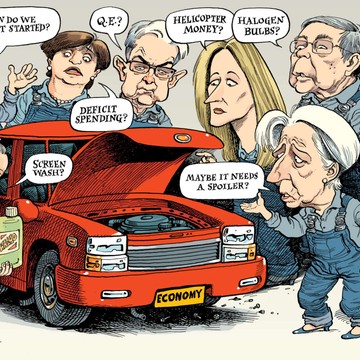
Quantitative easing, like foie gras, is controversial. The gavage-based production of duck and goose livers is considered cruel to the animal, gorged helplessly as it is in a pen. Central banks likewise perform a force-feeding, a monetary gavage of reserves forced onto the private bank balance sheet. What makes it a peculiar practice is that the monetary farmer expects this gorged banking goose to then dance around carefree - honking out credit at every passing leaf or tussled blade of grass. Since 2001 this 'monetary husbandry' has failed. In Japan, the United States, Britain and Europe. (Worse still, the result isn't a rich, buttery and delicate specialty that could be enjoyed with some mustard seeds and green beans in duck jus.) In this episode we review three articles that delve even farther back in history, to the Great Depression, to show that similar sounding solutions didn't work then either. The fear of unchecked inflation - "Weimar", for short - now that fiscal authorities and central banks are both encouraging the leaden economy to flap its wings is therefore misplaced. At least, not until wholesale reform of process and procedures within the modern central bank. Not until credibility and competence is prioritized over its credentials.WHERE@JeffSnider_AIP@EmilKalinowskiWHATWeimar Ben Didn’t Happen, So Now Weimar Jay?Weimar Thirties Didn’t Happen Because It’s What You Don’t See Everyone Knows The Gov’t Wants A ‘Controlled’ WeimarChicago Fed's Monetary Policy in a Lower Interest Rate EnvironmentWHOJeff Snider, Head of Global Research at Alhambra Investments with Emil Kalinowski, one of several people - along with Archibald Leach, Bernard Schwartz and Lucille LeSueur - who've never been in your kitchen. Artwork by the Brunelleschi of our day, David Parkins.
May 1, 2020 • 39min
Fragile, Complex Systems
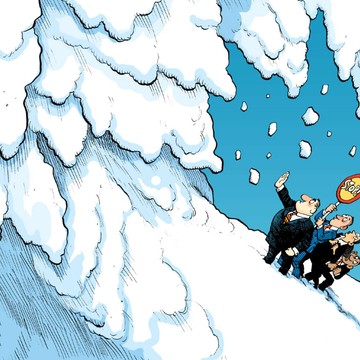
In 1929 a plague struck Florida resulting in an overwhelming government response. The consequences were not only agricultural but financial as banks, heavily exposed to the Sunshine State's horticulture sector, approached insolvency. Bank stability, Federal Reserve responses and a suitcase stuffed with six million dollars are all part of the thrilling story. But so is the notion of bureaucratic delay, wild swings from hope to despair (and back), contemporary titans of industry offering reassuring words, and the impotence of human effort against the monstrous chaos of a complex system reverting back towards simplicity.In today's day, the US Treasury bond market was warning for the better part of two years that the monetary, financial and economic - to say nothing of the political and social - facets of our system were fragile. Weak. Already enervated by six years of political upheaval and a dozen years of monetary disorder. The virus was the banana peel upon the wall that Humpty Dumpty was dancing on.The United States and European Union GDP estimates for the first quarter corroborate the bond market's opinion. Though the virus, and the government response to it, only took hold in the final month of the quarter (with exceptions of course, Italy for example) the result was catastrophic nonetheless. In other words, the US and EU economies were already stumbling about the street, late at night after a 12-year bender when Corona stepped out from the shadowy alleyway with a billy club and an appetite for mayhem.1929 Florida Plague as ParableBond Markets Dismiss FedQ1 US GDPQ1 EU GDPJeff Snider, Head of Global Research at Alhambra Investments and Officer of the Offshore with Emil Kalinowski, Getting His Pump On. Artwork by the Caravaggio of caricature, David Parkins.
Apr 24, 2020 • 46min
Modern Myths
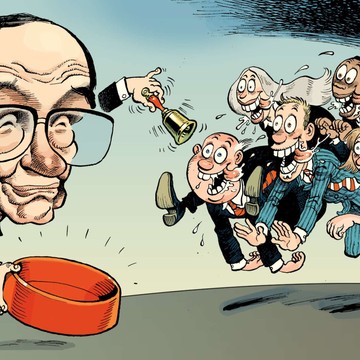
The Earl of the Eurodollar Jeff Snider (@JeffSnider_AIP), Chief Investment Officer at Alhambra Investments and Emil Kalinowski (@EmilKalinowski) discuss the four topics.First, what happened this past week when the price of oil to be delivered in May was priced at a negative $50(ish) dollars per barrel? And much more importantly than the bizarre price, what does the back-half of the oil futures curve say about the medium-term condition of the global economy? Nothing good unfortunately.Second, why do well respected names in the financial industry continue to believe that US Treasury yields will rise? They are called Bond Kings and one of them recently had to take off his crown (temporarily). But was it the Fed's changing policy that caused the change of heart? Or was it the bond market all along who was signaling the bond kings wore crowns but nothing else?Third, the important German ZEW survey shows very sharp pick-up in optimism. No surprise, ZEW survey respondents traditionally respond very positively to central bank 'liquidity' programs, even if the real economy does not follow through. It is the legendary Greenspan Put gone international.Fourth, the multi-decade Japanese experience regarding 'overwhelming' purchases of stocks and bonds is instructive for investors counting other advanced economy central banks buying financial instruments. It seems bullish, on the surface at least. But recently the Bank of Japan opened the taps and increased their equity purchases to record amounts. The result? A 31 percent decline. You're welcome.Alhambra Investment articles discussed:Let Japan Show You Again Just How Laughable The Idea That Central Banks Can Support MarketsThe Greenspan BellThe Fallen Kings & The Bond Throne of CollateralWhat Was Monday’s Negative Oil, And Why It Was Overshadowed On Tuesday
Apr 17, 2020 • 35min
Oil Bears, Equity Bulls
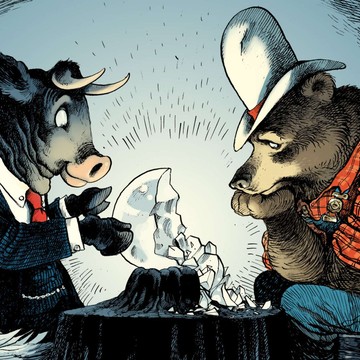
Jeff Snider, Chief Investment Officer of Alhambra Investments and Baron of the Balance Sheet @JeffSnider_AIP and Emil Kalinowski, Not Hard on the Eyes @EmilKalinowski.The World Trade Organization offered two outlooks for 2020-21, one that is not terrible and the other distinctly so. Jeff and Emil discuss how getting back to previous levels would be an impressive achievement in itself and how it suggests that central bank actions are limited in their impact on the broader economy.The US labor force shrank a horrifying 1.6 million people in March which is almost as much as the entire 2007-09 contraction. Jeff explains what the difference is between unemployment and exiting the labor force entirely.The oil market has experienced a conniption fit over the last month but in the last couple of weeks only the front half of the futures curve is still having a full body dry heave. The back half, the half that represents market expectations of future economic activity levels, has settled down. Where it has gotten cozy offers no inspiration about the economic outlook.
Apr 3, 2020 • 32min
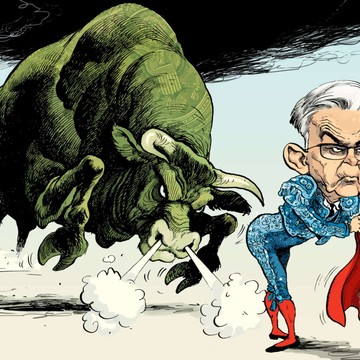
Confronting the Dollar Bull
We draw on five articles posted at Alhambra Investments to draw out the difference between a central bank - central to money supply - and a bank authority - central to a smooth functioning banking system. Jeff notes that we are not facing a local banking crisis that requires a banking authority but an international 'money' supply problem (there's not enough of it). Not only is the Fed not central to that money supply but nobody is. Interestingly Jeff is not concerned about another banking crisis per se as the banks have been barricading themselves behind "fortress balance sheets" for a dozen years now. Also, Jeff explains why he's not - for now - concerned about a sovereign debt default cycle nor a corporate credit default cycle. Instead he fears a 2008-style (or worse) liquidity crisis. This entirely plausible - and perhaps straight up probable - crisis would then starve perfectly healthy businesses of the required funding to keep operating.Articles covered include: "What Is The Fed’s New FIMA? The Potential For A SHADOW Shadow Run Is Very Real", "Banks Or (euro)Dollars? That Is The (only) Question", "(No) Dollars And (No) Sense: Eighty Argentinas", "Dollar, Not Bank" and "The Empty Bank".
Mar 27, 2020 • 37min
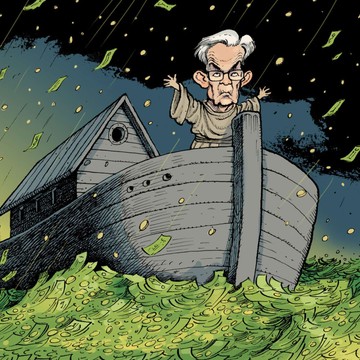
Greatest Liquidity Event Since Noah?
Jeff Snider, Alhambra Investments Chief Investment Officer (@JeffSnider_AIP) and Emil Kalinowski (@EmilKalinowski) review three topics. We review three articles Jeff wrote this week, trying to explain them a bit more than perhaps may be apparent at first glance. Firstly, why repurchase agreement stresses materialize prior to quarter-end. Secondly, why low-low-low-limbo-proof interest rates (e.g. effective Federal Funds, overnight repo market rates) are not signalling success but further interbank stress. Thirdly, why LIBOR and near-month Eurodollar futures are rising despite the "greatest liquidity event since Noah".
Mar 23, 2020 • 37min
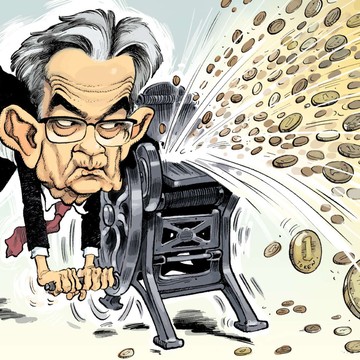
QE-Infinity is a Laundromat Token
This inaugural episode discusses the goal of building a collaborative, educational community to discuss the creation, destruction and redistribution of modern monetary formats throughout the global economy. A strange kind of money, so unlike what we're used to seeing in our pockets, but a money that is needed to finance activity, trade and progress. We briefly touched upon the nature of money, the un-centralness of central banks and identified the financial collateral markets - not cash or bank reserves - as the source of the monetary disorder that has spilled out into the broader economy in conjunction with the developing international health emergency. The disorder is in the repurchase agreement market and it lies with collateral, specifically there's not enough of it. Hence, these intermittent liquidity squeezes that have over the past 12 years spread like contagion into the wider economy. "You can't take out your spine and hope to stand up; that's really what the [repurchase agreement] market is. The way the repo market functions is more collateral-based than it is bank reserves or cash. The lack of collateral is a massive, massive problem."

