

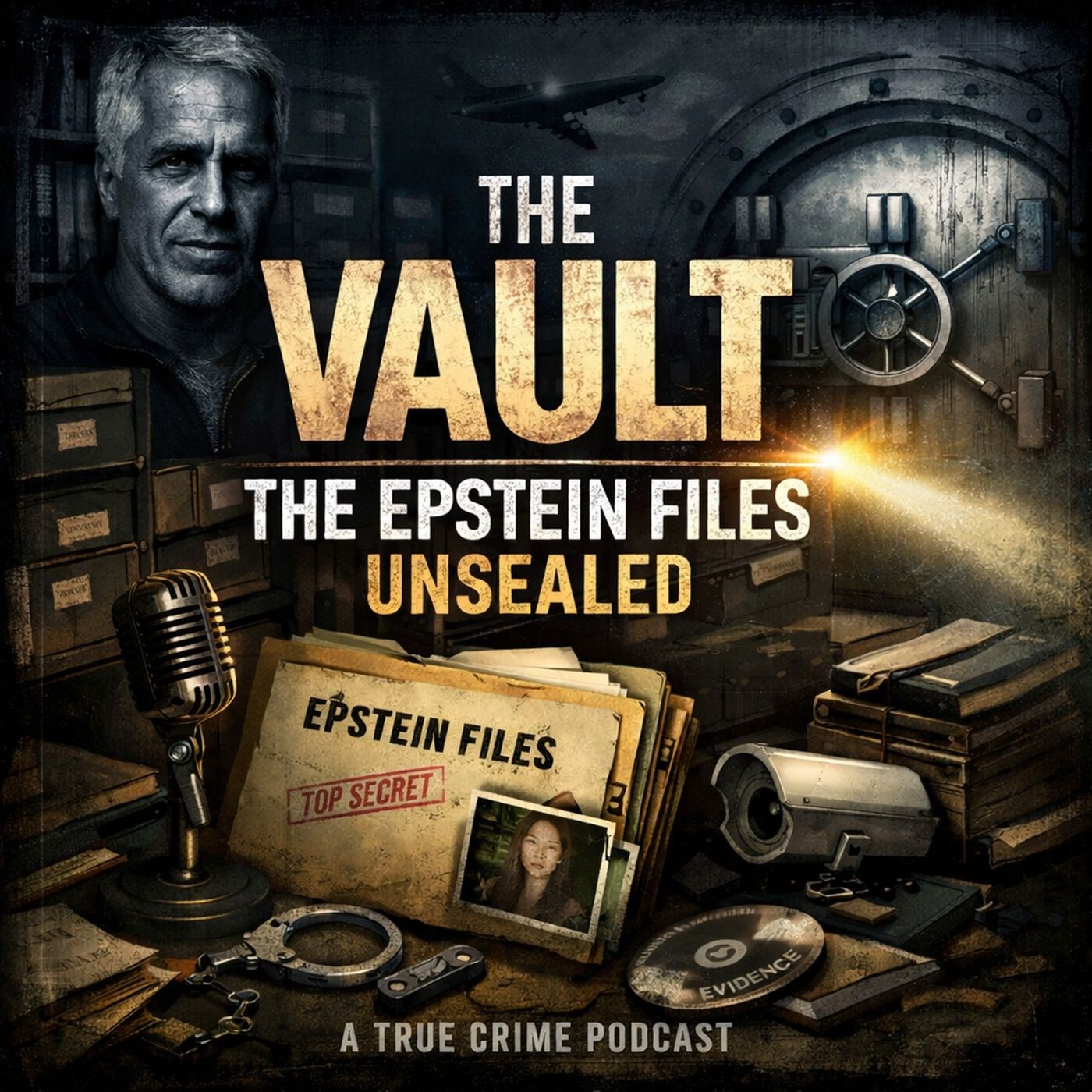
The Vault: The Epstein Files
Bobby Capucci
The Vault: The Epstein Files Unsealed is a deep-dive investigative podcast that pulls back the curtain on one of the most protected criminal networks in modern history. This series is built from the ground up on the actual paper trail—unsealed court records, depositions, exhibits, emails, and filings that were never meant to be read by the public. No pundit panels. No spin. Just the documents themselves, examined line by line, name by name, connection by connection—paired with precise, document-driven analysis that explains what the record truly shows.Each episode opens the vault on newly unsealed or long-buried Epstein files and walks listeners through what they actually reveal about power, money, influence, and the systems that failed survivors at every turn. Alongside the filings themselves, informed commentary breaks down the legal strategy, the institutional behavior, the contradictions, and the implications hiding between the lines. From judges’ orders and sealed exhibits to sworn testimony and back-channel communications, the show connects the dots the media often won’t—or can’t. Patterns emerge. Timelines collapse. Excuses fall apart.The Vault is a working archive in audio form, a living record of the Epstein case as told by the courts themselves—supplemented by rigorous analysis that provides context, challenges official narratives, and exposes where the record has been distorted, sanitized, or deliberately ignored. Every claim is grounded in filings. Every episode is anchored to the record. Listeners aren’t told what to think—they are shown what exists, what was said under oath, and what the commentary reveals about how those facts were buried, softened, or misrepresented.If you want to understand how Jeffrey Epstein was protected, who circled him, how institutions closed ranks, and why accountability keeps slipping through the cracks, The Vault: The Epstein Files Unsealed is where the record finally speaks for itself—and where the commentary ensures the documents do what no press release ever will.
Episodes
Mentioned books

Feb 17, 2026 • 12min
Virginia Roberts Giuffre’s Deposition in Edwards and Cassell v. Alan Dershowitz (Part 2) (2/16/26)
The videotaped deposition of Virginia Roberts Giuffre taken on January 16, 2016, in Fort Lauderdale sits at the center of the bitter legal war between Epstein survivors’ attorneys Bradley Edwards and Paul Cassell and Alan Dershowitz, who was accused by Giuffre of sexually abusing her when she was a minor trafficked by Jeffrey Epstein. In the deposition, Giuffre gives a detailed, sworn narrative of how she was recruited by Ghislaine Maxwell, groomed, trafficked to powerful men, and moved across multiple jurisdictions while still underage. She identifies Epstein’s residences, flight patterns, intermediaries, and specific encounters, placing her allegations firmly inside the broader trafficking structure rather than as isolated claims. The testimony was preserved on video precisely because her lawyers anticipated that credibility, consistency, and demeanor would become central issues in the defamation battle that followed. It also captured Giuffre under oath before years of public pressure, media narratives, and evolving legal strategies could reshape the record.What made this deposition legally explosive was its direct role in the defamation and civil litigation between Dershowitz and the Edwards–Cassell team, after Giuffre publicly accused Dershowitz and he responded with an aggressive campaign claiming she had fabricated the allegations and falsely implicated him. The video became a critical piece of evidence in determining whether Giuffre’s statements were knowingly false or grounded in a consistent trafficking account supported by contemporaneous detail. Dershowitz’s lawyers later argued that contradictions, memory gaps, and timeline disputes undermined her credibility, while Giuffre’s side pointed to the overall coherence of her narrative and the corroborating travel and contact records emerging in parallel cases. Long before the unsealing battles and public reckonings, this deposition quietly locked in one of the earliest comprehensive sworn accounts of Epstein’s trafficking network—and the legal fault line that would later fracture the reputations of some of the most powerful lawyers and institutions tied to the case.to contact me:bobbycapucci@protonmail.comsource:1257-12.pdf
Feb 17, 2026 • 15min
Virginia Roberts Giuffre’s Deposition in Edwards and Cassell v. Alan Dershowitz (Part 1) (2/16/26)
The videotaped deposition of Virginia Roberts Giuffre taken on January 16, 2016, in Fort Lauderdale sits at the center of the bitter legal war between Epstein survivors’ attorneys Bradley Edwards and Paul Cassell and Alan Dershowitz, who was accused by Giuffre of sexually abusing her when she was a minor trafficked by Jeffrey Epstein. In the deposition, Giuffre gives a detailed, sworn narrative of how she was recruited by Ghislaine Maxwell, groomed, trafficked to powerful men, and moved across multiple jurisdictions while still underage. She identifies Epstein’s residences, flight patterns, intermediaries, and specific encounters, placing her allegations firmly inside the broader trafficking structure rather than as isolated claims. The testimony was preserved on video precisely because her lawyers anticipated that credibility, consistency, and demeanor would become central issues in the defamation battle that followed. It also captured Giuffre under oath before years of public pressure, media narratives, and evolving legal strategies could reshape the record.What made this deposition legally explosive was its direct role in the defamation and civil litigation between Dershowitz and the Edwards–Cassell team, after Giuffre publicly accused Dershowitz and he responded with an aggressive campaign claiming she had fabricated the allegations and falsely implicated him. The video became a critical piece of evidence in determining whether Giuffre’s statements were knowingly false or grounded in a consistent trafficking account supported by contemporaneous detail. Dershowitz’s lawyers later argued that contradictions, memory gaps, and timeline disputes undermined her credibility, while Giuffre’s side pointed to the overall coherence of her narrative and the corroborating travel and contact records emerging in parallel cases. Long before the unsealing battles and public reckonings, this deposition quietly locked in one of the earliest comprehensive sworn accounts of Epstein’s trafficking network—and the legal fault line that would later fracture the reputations of some of the most powerful lawyers and institutions tied to the case.to contact me:bobbycapucci@protonmail.comsource:1257-12.pdf
Feb 17, 2026 • 18min
The Gatekeepers of Epstein: Inside the Roles of Darren Indyke and Richard Kahn (Part 2) (2/16/26)
Darren Indyke and Richard Kahn were not peripheral figures in Jeffrey Epstein’s world but central operators who helped build, maintain, and financially sustain his criminal enterprise. As Epstein’s longtime lawyer and accountant, they created and managed the complex web of trusts, shell companies, bank accounts, and legal entities that allowed money to move discreetly while obscuring its purpose. Lawsuits filed by survivors and the U.S. Virgin Islands government describe them as “indispensable captains” of the enterprise, alleging they facilitated payments to victims and recruiters, structured entities to shield assets, and continued working for Epstein even after his 2008 sex-crime conviction. Though they deny any knowledge of abuse, judges have allowed civil claims against them to proceed, ruling that allegations of aiding and abetting trafficking are legally plausible and worthy of full discovery.After Epstein’s death in 2019, Indyke and Kahn were named co-executors of his estate, giving them control over key documents, assets, and settlement negotiations, including a $105 million settlement with the U.S. Virgin Islands. Their continued gatekeeping role, combined with their status as beneficiaries of Epstein-linked trusts, has fueled criticism that the system has protected the very professionals accused of enabling his crimes. Despite being repeatedly named in court filings and investigative reports, they have largely avoided public scrutiny and congressional testimony. Critics argue that the failure to subpoena or question them under oath reflects a broader pattern of performative oversight, where political theater replaces substantive investigation into the financial and legal infrastructure that made Epstein’s long-running operation possible.to contact me:bobbycapucci@protonmail.com
Feb 16, 2026 • 13min
The Gatekeepers of Epstein: Inside the Roles of Darren Indyke and Richard Kahn (Part 1) (2/16/26)
Darren Indyke and Richard Kahn were not peripheral figures in Jeffrey Epstein’s world but central operators who helped build, maintain, and financially sustain his criminal enterprise. As Epstein’s longtime lawyer and accountant, they created and managed the complex web of trusts, shell companies, bank accounts, and legal entities that allowed money to move discreetly while obscuring its purpose. Lawsuits filed by survivors and the U.S. Virgin Islands government describe them as “indispensable captains” of the enterprise, alleging they facilitated payments to victims and recruiters, structured entities to shield assets, and continued working for Epstein even after his 2008 sex-crime conviction. Though they deny any knowledge of abuse, judges have allowed civil claims against them to proceed, ruling that allegations of aiding and abetting trafficking are legally plausible and worthy of full discovery.After Epstein’s death in 2019, Indyke and Kahn were named co-executors of his estate, giving them control over key documents, assets, and settlement negotiations, including a $105 million settlement with the U.S. Virgin Islands. Their continued gatekeeping role, combined with their status as beneficiaries of Epstein-linked trusts, has fueled criticism that the system has protected the very professionals accused of enabling his crimes. Despite being repeatedly named in court filings and investigative reports, they have largely avoided public scrutiny and congressional testimony. Critics argue that the failure to subpoena or question them under oath reflects a broader pattern of performative oversight, where political theater replaces substantive investigation into the financial and legal infrastructure that made Epstein’s long-running operation possible.to contact me:bobbycapucci@protonmail.com
Feb 16, 2026 • 17min
“I’ve Got the UK Sewn Up”: How Jeffrey Epstein’s Alleged Boast Reignites Scrutiny of Prince Andrew (2/16/26)
The latest tranche of documents from the Jeffrey Epstein case includes emails and correspondence suggesting that former Prince Andrew may have shared sensitive UK government information with Epstein while serving as Britain’s trade envoy. According to claims circulating online, some correspondence implied that Andrew leaked confidential details from official trade missions and was involved in social engagements arranged by Epstein, including a secret dinner with a Chinese model—events framed by an Epstein boast about having “the UK sewn up.” These revelations have intensified criticism and calls for a formal probe into whether Andrew’s actions constituted misconduct, misuse of position, or even breaches of the Official Secrets Act.The latest tranche of documents from the Jeffrey Epstein case includes emails and correspondence suggesting that former Prince Andrew may have shared sensitive UK government information with Epstein while serving as Britain’s trade envoy. According to claims circulating online, some correspondence implied that Andrew leaked confidential details from official trade missions and was involved in social engagements arranged by Epstein, including a secret dinner with a Chinese model—events framed by an Epstein boast about having “the UK sewn up.” These revelations have intensified criticism and calls for a formal probe into whether Andrew’s actions constituted misconduct, misuse of position, or even breaches of the Official Secrets Act.to contact me:bobbycapucci@protonmail.comsource:Andrew leaked secrets and met Chinese model at secret dinner as Epstein boasted 'I've got the UK sewn up': Damning dossier means there MUST be a probe | Daily Mail Online
Feb 16, 2026 • 15min
The Operational Spine: How the DOJ’s Final Epstein “List” Avoids the Infrastructure (2/16/26)
The DOJ’s so-called “list” is being framed as transparency, but it reads like controlled optics rather than a serious accounting of Jeffrey Epstein’s network. A genuine disclosure would distinguish between casual mentions and operational roles, provide context, explain methodology, and prioritize the people who facilitated recruitment, logistics, finances, and legal shielding. Instead, the document appears to emphasize ambiguity and volume over clarity, which fuels politicization and confusion. When key operational figures are absent and no structured explanation is offered, it raises legitimate questions about whether the release was designed to inform the public or to exhaust and divide it. Transparency without context isn’t transparency—it’s misdirection.At its core, the issue is institutional credibility. A trafficking enterprise of this scale required coordination, staffing, money flows, and protection, and any meaningful disclosure should illuminate that infrastructure rather than obscure it. If leadership presents a curated list without methodology, document categories, or clear definitions, the public is left to speculate while officials claim compliance. That dynamic erodes trust and shifts attention away from survivors and toward political infighting. The demand is straightforward: show the work, clarify omissions, and provide structured, auditable disclosure. Anything less invites suspicion that the priority is reputational protection, not accountability.to contact me:bobbycapucci@protonmail.com
Feb 16, 2026 • 15min
The Legal Basis for Redactions: DOJ Explains Its Epstein File Edits In A Letter To Congress (2/16/26)
The letter outlines the Department of Justice’s obligations under Section 3 of the Epstein Files Transparency Act, which mandates that within 15 days of completing its required document release, the DOJ must submit a detailed report to the House and Senate Judiciary Committees. That report must identify all categories of records that were released and all categories that were withheld, provide a summary of any redactions made to the released materials along with the legal justification for those redactions, and compile a list of all government officials and politically exposed persons named or referenced in the disclosed documents.In the correspondence, the Department states that it is acting “consistent with Section 3 of the Act” and is now providing the required information to Congress. The letter frames the submission as statutory compliance with the transparency requirements set forth in the law, formally accounting for how records were handled, what information was withheld or redacted, and which public officials appear in the materials tied to the Epstein case.to contact me:bobbycapucci@protonmail.comsource:efta-final-letter.pdf
Feb 16, 2026 • 19min
Jeffrey Epstein’s Catwalk to Hell: How Jean-Luc Brunel Used MC2 to Feed the Monster (Part 5) (2/16/26)
Maritza Vazquez, who worked as a bookkeeper for MC2 Model Management, provided critical testimony placing Jean‑Luc Brunel and Jeffrey Epstein at the center of a carefully managed system of underage recruitment and abuse. In her deposition, she identified Brunel as a regular passenger on Epstein’s private jet and noted that Epstein often traveled with girls recruited through MC2—some as young as 14. Vazquez testified that flight logs deliberately omitted the names of some female passengers, suggesting efforts to conceal underage trafficking. She recounted Brunel’s active role in sourcing vulnerable girls from abroad and introducing them into Epstein’s orbit, effectively operating as a global trafficking coordinator.Vazquez further corroborated that Epstein frequently displayed controlling behavior: he referred to Brunel’s recruits as inventory rather than people, casually discussing having “slept with over a thousand of Brunel’s girls,” according to court documents. Her detailed bookkeeping records and firsthand accounts of scheduling, money flow, and logistics provided prosecutors with evidence of a pipeline feeding Epstein’s sex ring. The deposition exposed how MC2 transactions and Brunel’s agency served as the administrative and logistical backbone for Epstein’s exploitation operation.to contact me:bobbycapucci@protonmail.comsource:Maritza Vasquez Deposition - Discussing Jeffrey Epstein, Jean-Luc Brunel, Donald Trump | DocumentCloud
Feb 16, 2026 • 15min
Jeffrey Epstein’s Catwalk to Hell: How Jean-Luc Brunel Used MC2 to Feed the Monster (Part 4) (2/16/26)
Maritza Vazquez, who worked as a bookkeeper for MC2 Model Management, provided critical testimony placing Jean‑Luc Brunel and Jeffrey Epstein at the center of a carefully managed system of underage recruitment and abuse. In her deposition, she identified Brunel as a regular passenger on Epstein’s private jet and noted that Epstein often traveled with girls recruited through MC2—some as young as 14. Vazquez testified that flight logs deliberately omitted the names of some female passengers, suggesting efforts to conceal underage trafficking. She recounted Brunel’s active role in sourcing vulnerable girls from abroad and introducing them into Epstein’s orbit, effectively operating as a global trafficking coordinator.Vazquez further corroborated that Epstein frequently displayed controlling behavior: he referred to Brunel’s recruits as inventory rather than people, casually discussing having “slept with over a thousand of Brunel’s girls,” according to court documents. Her detailed bookkeeping records and firsthand accounts of scheduling, money flow, and logistics provided prosecutors with evidence of a pipeline feeding Epstein’s sex ring. The deposition exposed how MC2 transactions and Brunel’s agency served as the administrative and logistical backbone for Epstein’s exploitation operation.to contact me:bobbycapucci@protonmail.comsource:Maritza Vasquez Deposition - Discussing Jeffrey Epstein, Jean-Luc Brunel, Donald Trump | DocumentCloud
Feb 16, 2026 • 13min
Jeffrey Epstein’s Catwalk to Hell: How Jean-Luc Brunel Used MC2 to Feed the Monster (Part 3) (2/16/26)
Maritza Vazquez, who worked as a bookkeeper for MC2 Model Management, provided critical testimony placing Jean‑Luc Brunel and Jeffrey Epstein at the center of a carefully managed system of underage recruitment and abuse. In her deposition, she identified Brunel as a regular passenger on Epstein’s private jet and noted that Epstein often traveled with girls recruited through MC2—some as young as 14. Vazquez testified that flight logs deliberately omitted the names of some female passengers, suggesting efforts to conceal underage trafficking. She recounted Brunel’s active role in sourcing vulnerable girls from abroad and introducing them into Epstein’s orbit, effectively operating as a global trafficking coordinator.Vazquez further corroborated that Epstein frequently displayed controlling behavior: he referred to Brunel’s recruits as inventory rather than people, casually discussing having “slept with over a thousand of Brunel’s girls,” according to court documents. Her detailed bookkeeping records and firsthand accounts of scheduling, money flow, and logistics provided prosecutors with evidence of a pipeline feeding Epstein’s sex ring. The deposition exposed how MC2 transactions and Brunel’s agency served as the administrative and logistical backbone for Epstein’s exploitation operation.to contact me:bobbycapucci@protonmail.comsource:Maritza Vasquez Deposition - Discussing Jeffrey Epstein, Jean-Luc Brunel, Donald Trump | DocumentCloud

