

Queer Theology
Queer Theology / Brian G. Murphy & Shannon T.L. Kearns
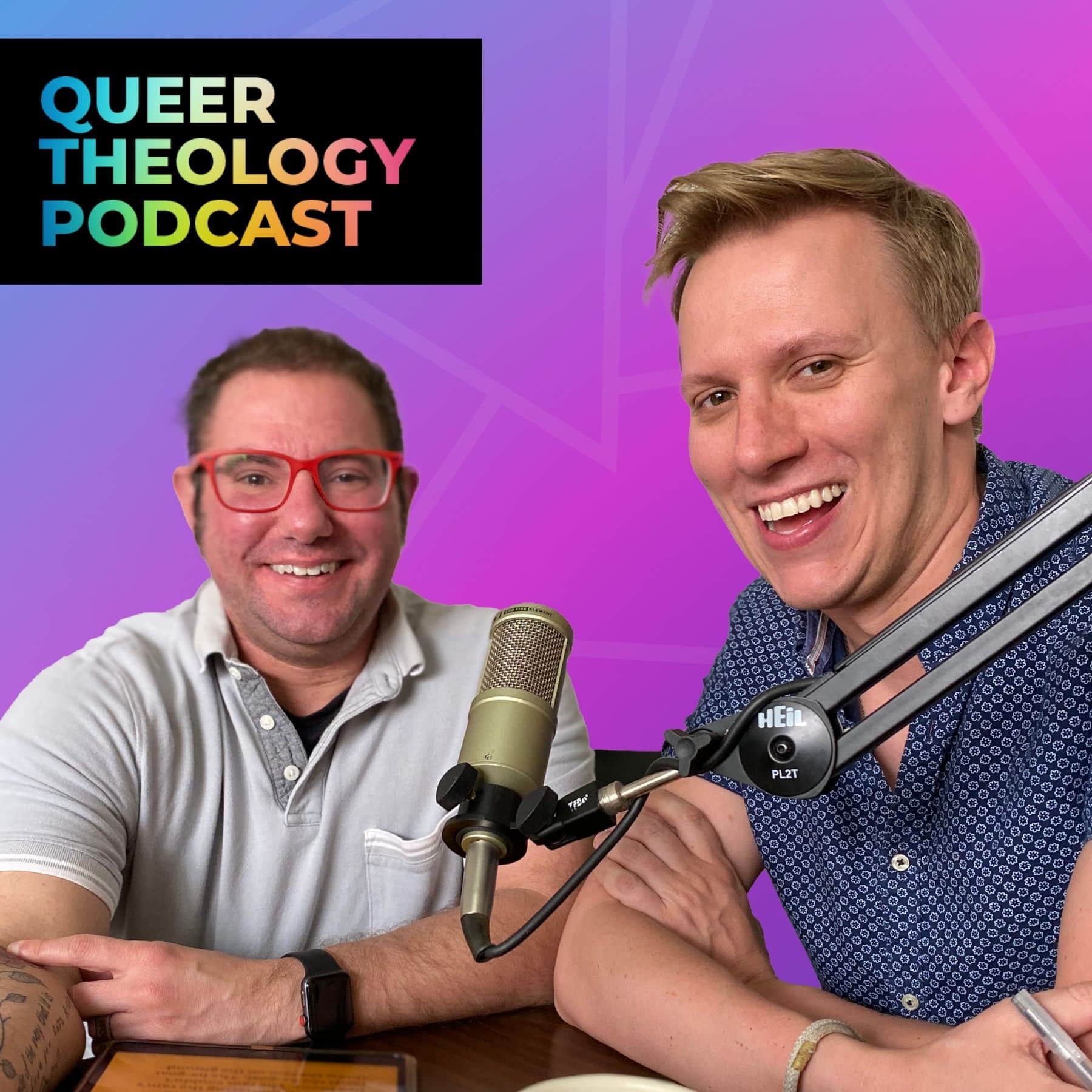
The longest running podcast for and by LGBTQ Christians and other queer people of faith and spiritual seeker. Hosted by Fr. Shannon TL Kearns, a transgender Christian priest and Brian G. Murphy, a bisexual polyamorous Jew. and now in its 10th year, the Queer Theology Podcast shares deep insights and practical tools for building a thriving spiritual life on your own terms. Explore the archives for a queer perspective on hundreds of Bible passages as well as dozens of interviews with respected LGBTQ leaders (and a few cis, straight folks too). Join tens of thousands of listeners from around the world for the Bible, every week, queered.
Episodes
Mentioned books

Mar 29, 2026 • 16min
Searching for Divine Approval Through Sex with Jonah Wheeler (@ShowOffJonah)
Brian shares part of his interview with Jonah Wheeler on the podcast this week. Together they explore the complex intersections of sex, spirituality, and personal history, unpacking how formative experiences, particularly around desire, power, and validation, shape the ways we show up in intimate encounters. Jonah shares an experience from his early 20s that becomes a lens for examining “daddy issues,” internalized religious frameworks, and the search for divine approval through sex. He muses how these revealing moments of vulnerability and surrender can mirror spiritual longing while also exposing the ways we project meaning onto our partners. The conversation traces the shift from compulsive, unconscious patterns toward a more intentional and self-aware approach to intimacy- highlighting how naming our desires can create space for agency, consent, and emotional sustainability. Reframing sex not just as physical connection, but as a site of self-discovery, transcendence, and the ongoing work of offering ourselves the validation we once sought from others (or from God!) can be a spiritual experience.
Resources:
Hear more of this conversation at Permission to Desire podcast
Learn more and join the Community at https://www.queertheology.com/community
The post Searching for Divine Approval Through Sex with Jonah Wheeler (@ShowOffJonah) appeared first on Queer Theology.

Mar 22, 2026 • 52min
When Safety is at Stake: Organizing in a Time of Crisis with Samantha Boucher
This week, Fr. Shannon sits down with Samantha Boucher, (@sceboucher) a trans activist and political organizer with deep roots in Appalachia, to explore how growing up in a rural, conservative community shaped her approach to justice, belonging, and advocacy. Samantha shares her journey from disaster response and intelligence work into national politics, becoming the first openly trans federal campaign manager, and now leading efforts to advance trans rights through heartland-focused organizing. They dive into the cultural divide between urban and rural America, the importance of messaging that resonates across moral frameworks, and why building relationships in faith communities and small towns is critical to lasting change. Samantha also discusses urgent work supporting trans individuals facing displacement as well as practical ways allies can take action. Despite escalating challenges and political vitriol, Samantha encourages that there is still reason for hope grounded in community, courage, and connection.
Resources:
Operation Lifeboat https://www.translifeboat.org/
Learn more and join the Community at https://www.queertheology.com/community
The post When Safety is at Stake: Organizing in a Time of Crisis with Samantha Boucher appeared first on Queer Theology.

Mar 15, 2026 • 17min
Pleasure is Political
A provocative take that reclaiming erotic pleasure can be a form of political resistance. Discussion of how sexual shame has been used as a tool of control. Exploration of separating sex from love and why that split harms aliveness. Personal stories about queerness, nonmonogamy, kink, and how tending to desire replenishes activism and everyday vitality.

Mar 8, 2026 • 59min
The Story of Bob: an Interview with Steven C. Law
For this episode, Fr. Shannon talks with author Steven C. Law to explore the life and legacy of Rev. Robert W. Wood, a WWII veteran, United Church of Christ pastor, and author of the groundbreaking 1960 book, “Christ and the Homosexual.” Steven is a writer whose work bridges faith and cultural engagement. His commitment to compassionate storytelling enriches “The Story of Bob” with insight and empathy. Drawing from intimate interviews and extensive research, Law brings to life Bob’s journey and activism that helped lay the foundation for greater acceptance. Steven shares how he met Bob at a moment of profound grief, how that pastoral visit became a six-year writing journey, and why Bob’s story of faith, secrecy, love, and moral courage still speaks powerfully today. He reflects on queer theology before it had a name, the cost of living in a heteronormative church culture, and the sacred risk of finally telling the truth about the love of your life.
Chapters
00:00 Introduction to Steven Law’s Journey
05:37 Transition from Preaching to Literature
11:00 The Impact of GLBTQ Experiences on Theology
16:30 Bob’s Story: A Journey of Faith and Identity
27:14 The Search for Meaning in the Aftermath of War
27:51 Faith and Judgment: A Personal Struggle
33:13 The Journey to Acceptance and Ministry
44:53 Moral Development and Personal Conviction
50:40 Love, Loss, and Legacy
Resources:
The Story of Bob by Steven C. Law
Learn more and join the Community at https://www.queertheology.com/community
The post The Story of Bob: an Interview with Steven C. Law appeared first on Queer Theology.

Mar 1, 2026 • 19min
When Jesus Came Out – Queering the Transfiguration
In this episode, we answer a listener question and then queer Matthew 17:1–9 for the second Sunday in Lent. The Transfiguration as a powerful coming out story and when we reflect on Jesus taking his closest friends up the mountain, revealing something radiant and vulnerable about his identity, and asking them to hold that truth tenderly for a time, it’s an experience that resonates deeply with queer and trans journeys of self-disclosure. This is the moment of courage for Jesus and encourages us to also claim who we are even when the road ahead is uncertain or costly. The Transfiguration becomes not just a spectacle, but an intimate revelation, a holy transformation, and good news for anyone navigating identity, fear, and faith.
Resources:
Learn more and join the Community at https://www.queertheology.com/community
The post When Jesus Came Out – Queering the Transfiguration appeared first on Queer Theology.

Feb 22, 2026 • 15min
Bible Nerd Starter Pack
In this solo episode, Fr. Shannon is sharing his curated list of favorite books about theology, prayer, memoir, the Bible, and in-depth study- which is perfect for anyone looking to deepen their faith with a queer and justice-centered lens. He reflects on the texts that have shaped his theology and imagination and highlights transformative prayer resources. He also offers his go-to Bible study tools for serious Biblical-themed nerding out, resources that have stretched, grounded, and inspired his faith. Whether you’re brand new to Queer Theology, ready to go deeper, or need some reading inspo, this episode is packed with thoughtful recommendations to add to your reading list!
Fr. Shay’s Must-Read List:
Black Liturgies by Cole Arthur Riley
Liturgies from Below by Claudio Carvalhaes
The Divine Hours by Phyllis Tickle
What Is the Bible? by Rob Bell
A Black Theology of Liberation by James Cone
Trans-Gendered: Theology, Ministry, and Communities of Faith by Justin Tanis
Radical Love: Introduction to Queer Theology by Patrick S. Cheng
Radical Reinvention by Kaya Oakes
Take This Bread by Sara Miles
Binding the Strong Man by Ched Myers
The New Interpreter’s Bible Commentary
The Jewish Annotated New Testament
Resources:
Learn more and join the Community at https://www.queertheology.com/community
The post Bible Nerd Starter Pack appeared first on Queer Theology.

Feb 16, 2026 • 2min
Queering Lent
A guided audio experience for this time of reflection and renewal as we work toward collective liberation.
Signup at queertheology.com/lent
The post Queering Lent appeared first on Queer Theology.

Feb 15, 2026 • 53min
Torah as Liberation with Rabbi Danya Ruttenberg
In an inspiring episode, Rabbi Danya Ruttenberg (@rabbidanyaruttenberg) returns to the podcast to explore what it means to treat our lives, and our world, as sacred texts in a time of rising fascism, burnout, and moral confusion. Shaped by decades of organizing, she challenges the false divide between “religious” and “moral” behavior, reminding us that any authentic spiritual life must be rooted in dignity, accountability, and collective liberation. Drawing on Torah, the prophets, and centuries of Jewish wisdom, Danya invites us to reframe sacred text- not as unquestionable doctrine, but as a call to wrestle with, resist empire, and build just systems that protect the most vulnerable. She shares how spiritual practice expanded her activist imagination beyond the limits of our hyper-individualistic culture and why solidarity is the only way home. This is your invitation to fight with those texts, fight for one another, and remember that liberation isn’t symbolic, it’s collective, embodied, and urgently needed now!
Takeaways
We have a moral and religious obligation to care for one another.
Moral and ethical obligations should align with religious beliefs.
The prophets were angry about the disconnect between ritual and ethical behavior.
Every human being deserves dignity and respect.
Engagement with ancient texts can lead to personal transformation.
The Torah serves as a guide for creating a just society.
Collective liberation is essential for progress.
Finding one’s identity involves exploration and community engagement.
Life itself is a sacred text worthy of investigation.
Solidarity across differences is crucial in today’s world.
Chapters
00:00 Introduction to Life as a Sacred Text
04:19 Moral and Religious Obligations
08:12 Engaging with Ancient Texts
15:14 The Journey Through Torah
20:39 Torah as Liberation
23:54 Activism and Ancient Wisdom
33:56 Collective Liberation and Solidarity
35:50 Finding One’s Identity
39:15 Life as a Sacred Text
Resources:
https://www.lifeisasacredtext.com/
Learn more about Rabbi Ruttenberg at https://danyaruttenberg.net/
Learn more and join the Community at https://www.queertheology.com/community
This transcript was generated by AI and may contain errors or omissions.
The post Torah as Liberation with Rabbi Danya Ruttenberg appeared first on Queer Theology.

Feb 8, 2026 • 29min
In The Beginning We Were Good
We’re going back to the beginning for this episode as we dive into Genesis 1–3 to unpack how dominant Christian narratives of “the fall” and “original sin” have shaped theology, politics, and our sense of human worth. Reflecting on our evangelical upbringings, we explore how starting the story with human failure robs us of agency and fuels passivity which can be religious or political! But what if we contrast that with an alternative framework rooted in original goodness or original blessing? The narrative changes and so does how we approach conversations about scripture, ritual, social justice, and the stories we tell about ourselves and about the world. How we interpret these ancient texts deeply affects how we treat ourselves, one another, and our collective responsibility to create a more just and compassionate future.
Takeaways
The concept of original sin has shaped many religious teachings.
Traditional narratives often emphasize humanity’s flaws over its potential for goodness.
Agency is crucial; waiting for salvation can lead to passivity.
Shifting perspectives can empower individuals and communities.
Stories we tell ourselves influence our understanding of the world.
Recognizing inherent goodness can change how we view ourselves and others.
Accountability is important, but so is recognizing humanity in all people.
Political narratives can mirror religious ones in their impact on agency.
Interrogating historical narratives is essential for progress.
A new story can lead to a better future for all.
Chapters
00:00 Exploring Genesis: The Foundation of Faith
08:27 Agency and Salvation: A Shift in Perspective
11:44 From Original Sin to Original Blessing
18:11 The Power of Ritual and Community
25:15 Reimagining Stories: The Path to a Better Future
Resources:
Learn more and join the Community at https://www.queertheology.com/community
This transcript was generated by AI and may contain errors or omissions.
1 (10s):
Welcome to the Queer Theology Podcast. I’m Brian G Murphy.
2 (13s):
And I’m father Shannon, T l Kearns. We’re the co-founders of Queer Theology dot com and your hosts from
1 (17s):
Genesis, revelation. The Bible declares good news to LGBTQ plus people, and we want to show you how
2 (23s):
Tuning each week on Sunday for conversations about Christianity, queerness and transness, and how they can enrich one another. We’re glad you’re here.
3 (32s):
Hello. Hello. Welcome back to the Queer Theology Podcast. Today we’re gonna kind of talk about Genesis one through three, but obviously that is a, that is a large swath of scripture, so we are not gonna read all of it, but I’ve been thinking a lot about how I grew up being taught kind of the purpose of, of Christianity, right? And, and how so much of it was rooted in the beginning of Genesis, and specifically in the idea of like the fall and original sin, right? This, this idea that everything was good and then humans screwed it up because, you know, we did bad things.
3 (1m 15s):
And like that is why everything else happened after that. Like, that’s why we need Jesus. And, and there’s this sense that basically all of human history begins with the fall. And, and that really shapes then how, how faith plays out, how religion plays out and how church plays out. And, and so this idea, I feel like we spent a lot of time in my church growing up talking about Adam and Eve and the apple in the garden, right? The quote unquote fall and, and the entrance of sin into the world. I’m, I’m curious for you, Brian, like what, did you have a similar experience with these first couple Chapters of Genesis?
3 (2m 2s):
Or like how, what was the, the vibe in your growing up?
1 (2m 5s):
Oh, yeah. I definitely grew up believing that Adam and Eve were like real people and that like everything was perfect. There was no death. They lived in harmony with God. And like had they not fucked up, had they not sinned, like all humanity would’ve been able to live in the garden of Beeden in paradise for forever, and also like a guest be immortal and that they disobeyed God. And in doing so, they sort of like cursed all of humanity for the rest of time. And so like, not only were we separated from God, like, was I Brian separated from God because I had sinned in my life, but also it was like literally an impossible for anyone ever to not be separated from God.
1 (2m 54s):
Because like from the moment we were born, we had where there was like some original Sid already in our nature that like a would sort of like force us to mess up and to go against God over the course of our lives repeatedly, that we would like never be able to be perfect. But even like if we somehow like, but it didn’t even matter because even from like the very first moment that we were alive, we were, there was already some sort of like separation, just like at our first crying breath, which is like kind of weird and morbid and, and ungenerous And I don’t love. But at the time I was just like, oh, yeah, that’s how it’s, and it wasn’t until college that I started to, like, when I started, started studying religion, and this, this passage is actually like one of, was we, we looked at this at the Croatian story in both Genesis and as told in different peop Christian books in the New Testament and in the Quran.
1 (3m 48s):
And that was when I started to realize like, oh, maybe there’s a different way of understanding these, these stories.
3 (3m 54s):
Yeah. It’s so interesting. As you were just talking about, you know, original sin being a part of us from the first breath that we take, it reminded me of all of the like really, really terrible parenting things that come out of evangelical Christianity, like focus on the family and all of that, which is like, you need to punish your infant because your infant is trying to manipulate you by crying. Oh,
1 (4m 21s):
Yeah.
3 (4m 22s):
Right. Like from the very beginning. And if you’re, you know, you need to, there was this thing called blanket training of like, you need to put your baby on a blanket and when they crawl off of it, like spank them for getting off of the blanket because like that is them trying to exert their will. Not like a toddler being curious. Curious. Right. Or like, yeah. Rolling. And so I think that like this idea that we are fundamentally flawed and particularly that it goes back not just to Adam and Eve, but like, let’s be real, the evangelicals are blaming all that shit on Eve Sure. That it goes back to like women, right.
3 (5m 3s):
Getting out of their quote unquote place. It absolutely shapes then how the rest of theology plays out and, and how like our ideas about humanity and the world play out. Because I, I, I think that what, what I was struck by as you were talking, it’s like we do have this sense of everything was perfect and everything was, was paradise in the Garden. And yet, like we never start there. We always start with the the, we messed it up part, right? There’s this sense of like, oh, sure, like paradise.
3 (5m 44s):
Yeah, yeah, whatever. But like, it was, it was like we were destined to mess up even when we weren’t destined to mess up. And I think that that’s such an interesting take. And I, And I think that that shows how prevalent the evangelical reading of scripture has become, even within progressive spaces, right? Like that, that we, we haven’t often done the work to really unpack all of it right. To, to figure out where it’s coming from and how it, how it influences everything else.
1 (6m 21s):
Yeah. I’m, I mean, so like one of the things that was fascinating for me was that the way, like that how, how it metaphor and description like shapes our understanding of things. And so like into Genesis, right? Like the phrase original sin is like not there right into Genesis. There’s like into Genesis, kind of like the serpent was first of all into Genesis, the serpent is not necessarily the devil it into Genesis, the ser was kind of right. Like they ate and they like didn’t die.
1 (7m 1s):
And so it’s like that like gets like added in later on a little bit in Judaism, certainly a lot more in Christianity, like these like additional layers get like get of meaning get added onto it. And that, I would say that like doesn’t necessarily mean that like one interpretation is like that you can sort of like get back to sort of like, oh, we just got back to like the original version of Genesis that we would find like this like pure egalitarian, non-toxic version of God. Like I think like Christianity is like, keeps some extra shit onto this. I mean, we don’t need, like, and also like all sacred stories are always like, the meaning is made through wrestling with the text and how the community understands it.
1 (7m 45s):
And, and so like, it says something about like us when we put this like extra meaning back onto it that like, we’re inherently flawed and sinful. And it also, I think like as we to think about this, like this particular political moment, like it robs us of our agency, like, you can never do anything, right? You’re hopeless. You’re like, you need us some external salvation, just like sit around and wait. Like there are some like really sort of like pernicious messages that it takes that that sort of take can take hold if we play those out to their logical end results. And so I think that’s part of the reasons why we’re so invested in a, looking at these stories and telling them in new ways and also like storytelling, the, the power of story in general to sort of like shape our beliefs about like what’s possible for the world and what’s possible for ourselves.
1 (8m 35s):
And we write new stories that like sometimes like these stories like get into our bodies and spirits without us even realizing. And, and so to your point, like what then shifts if there’s like another idea, like, And I know in Sanctuary Collective we talk about this all the time And I know you got some, some great, some great insights on it. So like what shifts, if we go from a place of we’re fucked up and beyond repair and you know, like total totally depraved to some other way of understanding humanity and God relationship to God.
3 (9m 10s):
Yeah. I I wanna go back just for a second before I tackle that is like, I, it’s so interesting that you talk about the lack of agency because I’ve been seeing that all over Facebook right now as folks post about like Minneapolis and whatever. There are evangelicals in the comments that are like, yeah, well your problem is that like you’re looking for the government to save us. Like no one can save us, but God. Or like, we’re in the end times, we just have to wait for the rapture. Or like a savior is gonna come and save. Right? There is, there is this real sense of, well there’s nothing to be done, someone else supernatural.
3 (9m 52s):
Right? Like something else supernatural is gonna come and like intervene. And I think that there is like, that is one very specific worldview which is shared by like, I think a lot more people than many of us would like it to be.
Mochi Health (10m 6s):
Look at him eating whatever he wants. Never gaining a pound while I’m stuck with the boring special and can’t lose an ounce. How’s your lunch, man? Amazing. Yours so good. Oh, I’m so happy for you. Cool buddy. Weight loss isn’t fair, but Mochi Health is the affordable GLP one source that can fix your frustration with food. So Same time next Week. No, definitely. And your friends learn more@joinmochi.com. Mochi members have access to licensed physicians and nutritionists, results may vary,
3 (10m 37s):
But I do think that there is also this sense on the left sometimes
1 (10m 40s):
Yes.
3 (10m 41s):
Of the same thing of like, some democratic president is going to save us, like if we just vote in the blue wave, like we will be saved if we just wait and follow the laws, like we will be saved. Right? And I, And I think to like what we were talking about when we talked about Matthew, the, the gospel of Matthew a couple weeks ago, the sense of like legality and the system writ large to, to quote unquote save us is like also a way of robbing us of our agency. It’s also a way of like keeping us passive. It’s also a way of keeping us in line and, and not quote unquote acting out.
3 (11m 27s):
Right? And I think that that, like, that is really dangerous. It’s really dangerous on both sides to like be believing that something or someone is going to come save us, as opposed to like, we gotta save ourselves.
1 (11m 41s):
Yeah. And I I think also, even if you’re not looking, I think this hospital happens on the left liberals, Democrats, leftists, like, who aren’t looking for the government to save us, right? But like they’re, we’re waiting for like the next, next MLK or the next Malcolm X or the, or like who’s our cat? This everdeen gonna be to like sweep in and save the day. Or like, we also see like end times theology in, in leftists. Like, well if we just, like, instead of waiting for the apocalypse, we’re waiting for like accelerationism for like to all get so bad that it all collapses and we’re not waiting for Jesus to come back. We’re waiting for like the glorious revolution. And it’s like we just like keep waiting for like, things to get so bad that like Jesus comes back or the revolution hap quote unquote, like the revolution happens, right?
1 (12m 29s):
Like I read some quote recently that was like, what do you mean? Like, I’m like, you’re like learning how to, like, we need to like joke, people joke like, oh, I need to like learn how to like hunt. So like when the apocalypse comes and the quote was like, the apocalypse is here. Like we’re in it. Yeah. Like, like you gotta, like, it’s not, it’s not someone from on a high is not gonna come in neither like communism nor Joe Biden is gonna like save us from this. We like, we save us.
3 (12m 57s):
Yeah. Yeah. And so when, you know, when you ask the question of like, what happens if we think differently? I, I’m just so struck by if, if we shift from a space of humans are all bad and there’s nothing we can do about it, and so therefore we need as a savior this sense of like the, the fall and original sin. If, if that’s our starting point, we, we can’t see where we get to, but what happens if we shift to that sense of original goodness and original blessing? You know, there, there, there are some folks that talk about instead of original sin, original blessing and this sense of Community and communion with God and with divinity of a place of paradise, of a place where we lived in harmony with the land with each other, that that as a guiding principle starting there suddenly gives us a very different perspective and a future to dwell out of and to then say, okay, well if that’s where we started, well what happened, right?
3 (14m 7s):
What happened to us that we got away from that? Right? And also, how might we get back there as is such a different conversation than, well, we can’t get back there, there’s nothing we can do because we were destined to, to be ups from the start. Right? I think that that is a, that is a drastically different perspective on life and on the universe. And, and it is one that we see in scripture, right? Like there is a sense of in the, into Genesis one, right, that creation story where everything is good and everything is in harmony and humans are in, in communion with the divine and with each other and with the land.
3 (14m 52s):
And like that is the vision that we start from. And I think that for me, looking at the arc of scripture for all of the bad rap that and bad readings of revelation that exist, there is a sense, if you read that text correctly, of getting back to a place where we’re at in harmony with each other. We’re living in communion with the divine. There we are back in the garden, right? And, and that, that is the arc of human narrative and like, that’s what we’re aiming for.
3 (15m 33s):
Not the sense of we’re gonna get like raptured and taken to a new planet and like let this one burn and most of the people on it, right? That is a very different conversation than saying like, oh no, we’re trying to get back to the sense of original goodness. And like, what does it do? I think in myself, I I I am a bit of a perfectionist. I can be really hard on myself. It is very easy for me to be like, I can catalog my faults, right? Like, I can give you a list today itemized and ready to go. And, and that even though like I don’t believe in hell and impede substitutionary tonin anymore, like that sense of there is something inherently wrong with me that I need to fix is like still in my psyche.
3 (16m 22s):
So what does it do for me as a human to say, oh no, like you were born with a sense of original blessing and, and how do you then tap into that in order to be in communion with the divine and with other people? I, that like totally changes the game and totally changes the way that I think and conceive of myself and how I move through the world.
1 (16m 49s):
Yeah. Also, just like a quick spoiler alert, our book, our, our new book, which comes out later this year is called Reading the Bible through Queer Eyes, good News for L-G-B-T-Q, people from Genesis to Revelation. And the last chapter in the book is about queering revelation. And so keep an eye out for that later this year if you want some more querying of revelation and, and, and the good news that is found there with this idea of like original blessing. And I, like a, a few years ago I read a book by Desmond Tutu and his and his daughter Mofo Tutu called Made for Goodness. And I think about like, it is, it is easy to forget that or to stop a believing that or to let other ideas about yourself and your inadequacies and your insecurities like sort of creep in.
1 (17m 37s):
And I also, I don’t know, like perfectionists that like have high standards also. Like I wanna make the world a better place And I feel like I, like social justice is really important to me. And so I can see all the ways in which I’m like could be doing more, more, more, more, more. Right? And I think that like one of you And I Shea both really appreciate the power of ritual and spiritual practice. And one of I think the key, well a few, a few, there’s a few like reasons for that. We go into all of it in our resistance and resilience workshop, which is inside of Queer Theology. But like quickly, a a few of the main things are, there’s like something about imagining the way that the world like could and should be through the power of ritual and also like reminding our ourselves of our deepest values and our, our place in all of the sort of like the cosmic drama and, and who we are.
1 (18m 26s):
And as like folks listening like may or not know, I converted to Judaism a few years ago and one of the practices there is is like daily prayer. And I go through periods where I do it every day And I go through periods where I do it like a few times a week And I do go through periods where I spend a few weeks, but for the past, like, like month or two, I’ve been really like diligent about doing it every, at least every morning. And there’s like a few like prayers and blessings in it that like I have been finding like really speak to me and like there’s one about it goes, my God, this whole you’ve given me is pure, you created, you shaped it, you breathed it into me and you protect it within me. It goes on, right? Like this was like remembering that like I’ve been given a pure soul. There’s like a blessing that says like, like plus you Ed And I are God created over the universe who like has made me the image of God.
1 (19m 12s):
There’s things about like working for peace and being humble and working for justice and taking care of the sick. And so like sometimes I like need those reminders of like, oh yeah, like we’re, I’m starting from a good place, which does not mean like there’s no work to do that I like neither, I like, like neither that I like can’t like quote unquote like improve myself nor that I can just sort of be like, oh, okay. Like I’m good, you’re good. We’re all good. There’s like nothing to do. Like, no, like we’re all good. And also there are still hungry people, there are still homeless people, there are still sick people. You still gotta like show up for your community to like celebrate with them and warn with them. Like people are still gonna be born and they’re gonna die and they’re gonna get married.
1 (19m 53s):
And so like there’s still like work, always work to be done. And also I think we can be more effective when we come from a place of like, oh yeah, humanity is good and worth saving And I am good and have agency than a sort of like fatalism of like, everything is always has been fucked and always will be fucked.
3 (20m 14s):
And I think that, you know, this is, this is maybe the more difficult piece is like once we can get that for ourselves, this idea of starting from goodness, then we also have to extend that out to other people, right? And I think that in the, in the moment that we’re living in, that can sometimes be hard to be like, yeah, oh, they too are good. And also like something has gotten warped. Right? Or like their, the behavior is not, yeah. But I do think that that allows us to enter into a space of saying we can still see the humanity of the people that are acting in really inhumane ways, right?
3 (21m 4s):
It it keeps us from othering them in such a way that it excuses and allows violence to happen. And, And I think when we look at the history of, of how genocides happen, right? So often it starts with a with being able to completely dehumanize
1 (21m 24s):
Mm.
3 (21m 25s):
Whoever it is that is our target at the that particular time. And so I think that this sense of, of internal goodness of starting from a place of goodness is also a preventative measure that it it keeps us from going to those places where people’s humanity is, is up for grabs. Which is not to say that like we can’t hold people accountable or call them on their bullshit or say like that their behavior and beliefs and actions are actively hurting people. Like that’s not what it’s about. But it is saying like, we see the humanity underneath all of that.
3 (22m 8s):
And, and that’s hard, right? There are people who I don’t really want to see their humanity right now who I would rather,
ClickUp (22m 19s):
If your team isn’t using clickup, you’re wasting time and data proves it. 61% of knowledge workers manage work more than doing it switching apps a thousand times a day, that’s work sprawl and costs millions Clickup replaces 20 apps with convergence, uniting projects, docs and chats while AI super agents handle the busy work, join 4 million teams using Clickup to finish work 30% faster, try it free and get 15% off AI upgrades at clickup.com/podcast. That’s cli ku p.com/podcast.
3 (22m 49s):
They’d be relegated into the realm of like evil or fallen or unsalvageable, right? Because that is easier than thinking about their redemption too. And it’s complicated, right? I I think of, you texted me the other day like, there’s room in heaven for Fred Phelps and sometimes you gotta punch a Nazi and, And I think there’s right, like we hold the tension and, And I like, but, but it is a tension, right? But I think it’s an, it’s an important tension to be holding and to be sitting with and to be grappling with. And I don’t have easy or comfortable answers there, but I I just think it’s important to me.
1 (23m 33s):
Yeah. I’ve forgotten that I said that. I, I think I stand by that. I, I think one, one of my hot takes is that I don’t really believe in like good people and bad people. And I think for many of the reasons that you laid out here, like there’s something about which is not that people don’t do bad or harmful things and don’t do like noble or helpful or virtuous or useful things, right? Like, but that there’s something about like when we talk about good people or bad people, it gets into this sort of like intrinsic inherent like part of them, which is just like protestant predestination, like played out in sort of like pop morality that like, I, I don’t find it useful for truisms.
1 (24m 16s):
One is, I think to your point, it’s important that like, even as people do fucked up things that we like acknowledge everyone’s humanity. Like, and also if there’s good people and bad people, we just like spend so much time it’s a distraction like arguing over whether so and so like was a good person or a bad person as opposed, which is like, I don’t know, even if it was true that some people are good and some people are bad people, it’s like ultimately like this, the moral state of their like internal, I don’t know, like soul, like, is fundamentally unknowable and it distracts us from being like, well, who cares if they’re good or bad? Like, did this thing that they do harm people, hurt people, fracture society, bring us closer together, make our lives better, et cetera.
1 (24m 58s):
And it can sometimes keep us from acknowledging all the ways in which like we mess up because like, well if I’m a good person then either I couldn’t possibly have done the thing that you’ve said I’ve done or I did do the thing that you said I’ve done, but it doesn’t matter because I’m a good person. And so you should just like ignore it, forget it, like not be upset about it, excuse it. And so like, I think, not not that I wanna get like by any means necessary about it all like the answers to by the means, but like there is something about like, it, like the impact matters. And so like I, I think that it’s much more useful to say like, what if we all, we either we all start from place of goodness or it’s just all sort of neutral.
1 (25m 41s):
I mean, I personally like starting from place of goodness, but like if nothing else, a place of neutrality and saying like, okay, well then like from there we can look to see like, does this bring us closer together? And I like enriching my own humanity and the humanity of these people around me. And I think that like we can, we can see, like, I just think about, this is a, maybe a tangent, but like I think about all those Christians who are like, well, there has to be God and there has to be Jesus. Because if there wasn’t, like, we would just all go around murdering each other, right? I would just, I would just be an alcoholic rapist murderer philander if it wasn’t for Jesus. And like the threat of hell looming over me. And I just think like in, in all the midst of all of the terribleness of all of the bad shit that has gone wrong in our country over the past 200 years, and then the course of human molest civilization over the past like 6,000 years, like when bad stuff happens, we, there’s like some sort of like inherent part of us that place that is like, that is original blessing that starts from a place like that is like made for goodness.
1 (26m 44s):
It says like, this is not right. And like the outpouring of people into the streets all across the country, like after, after the murder of George Floyd, like in Minneapolis, I see like as far as I can see protests, like we, there’s a sense of like knowing Christians, Muslims, Jews, atheists, Hindus, Buddhists. Like there’s a sort of like, we a sort of sense of like, this is not right, things are not as the way they are supposed to be. And I think that’s gets at the heart of the stories of Genesis one, two, and three that like these ancient people are looking around and they have this sense of like, the world is not as it should be. Like we have this sort of internal intrinsic sense of like, it should not be this way.
1 (27m 26s):
So then like what the fuck happened and the creation story and, and what genesis well, two and one went into are kind of like two takes on the same story that are, that are different, but like two into Genesis two and three really are sort of like this imagining of like, how did things get so fucked up? And I think that rather than being prescriptive or deterministic and saying like, well we, like we are always flawed, it’s sort of a sense of like that humans could look at the state of affairs and be like, this isn’t right. Something, something must have gone cosmically horribly wrong because like, this is not how it should be. I think points towards our like inherent goodness that like we just sort of know that this is not right and we know not only that, but that, that we like can and should work towards a better tomorrow.
3 (28m 11s):
Yeah. And I think it also points to the fact of like, it’s so, so, so important that we pay attention to the stories that we’re telling ourselves about how we got to, to where we are, right? And that’s both a religious story, but it’s also a political story. The political stories that we tell, it’s the stories, it’s our country, it’s the stories, right? Like all of these stories matter and they shape how we understand ourselves and our place in the world and our place in relation to each other. And so this is also a moment where I think many of us need to interrogate the stories that we’ve been handed, both religious stories and political stories, especially as white folks in the United States, but I think also as people who got American history in schools in the United States, right?
3 (29m 4s):
Like we need to be interrogating those stories because they shape, they shape our viewpoints and, and they were told for a specific reason in, in specific ways. And I think that like doing that work to understand that and to understand how those stories have been used and how they continue to be used is, is really important and is one of the things that can help us to imagine a new and better future. Like when we understand the story that we’re in and we understand where it came from, then we can start to say like, does the story serve what might be a story that will serve better?
3 (29m 45s):
Let’s go chase after that.
7 (29m 47s):
Amen. The Queer Theology podcast is just one of many things that we do at Queer Theology dot com, which provides resources, community, and inspiration for L-G-B-T-Q Christians and straight cisgender supporters.
2 (29m 57s):
To dive into more of the action, visit us at Queer Theology dot com. You can also connect with us online on Facebook, Twitter, Tumblr, and Instagram.
7 (30m 5s):
We’ll see you next week.
The post In The Beginning We Were Good appeared first on Queer Theology.

Feb 1, 2026 • 21min
After the Arrest: Faith Under Occupation
In this episode, we return to our roots and queer the passage, Matthew 4:12–23 by exploring Jesus’s turn toward public ministry in the wake of John the Baptist’s arrest and what that moment of political repression reveals about courage, solidarity, and collective action. In light of the state violence and community resistance and ongoing organizing and protests in Minneapolis, we reflect on Jesus stepping into an already-existing movement, calling others to follow, and proclaiming a kingdom that disrupts unjust systems. We look at what is deemed “criminal” and the power of showing up, building local networks, and plugging into work that’s already happening in your community. We invite y’all to consider how faith, justice, and everyday acts of community care are deeply intertwined and how the light that dawns in dark places is something we choose to carry together.
Takeaways
The passage in Matthew 4 highlights the call to action in the face of injustice.
Resistance is often catalyzed by witnessing the arrest or harm of others.
Community organizing is essential for effective resistance against systemic issues.
Criminality is often framed by those in power to suppress movements for justice.
Building community infrastructure is crucial for sustained activism.
Engaging with local movements can amplify existing efforts and support.
Small actions collectively contribute to larger movements for change.
Finding common ground with neighbors can foster community resilience.
The importance of showing up and being present in community efforts.
Action is the antidote to fear and overwhelm in the face of injustice.
Chapters
00:00 Exploring Matthew 4: The Call to Action
02:47 Reflections on Resistance and Community Organizing
05:42 The Role of Criminality in Social Justice
08:23 Building Community and Infrastructure
11:11 Engaging with Local Movements
13:55 The Power of Small Actions
16:39 Finding Common Ground in Community
Resources:
Learn more and join the Community at https://www.queertheology.com/community
This transcript was generated by AI and may contain errors or omissions.
1 (10s):
Welcome to the Queer Theology Podcast. I’m Brian G
2 (12s):
Murphy. And I’m father Shannon, T l Kearns. We’re the co-founders of Queer Theology dot com and your hosts from
1 (17s):
Genesis, revelation. The Bible declares good news to LGBTQ plus people, and we want to show you how
2 (23s):
Tuning each week on Sunday for conversations about Christianity, queerness and transness, and how they can enrich one another. We’re glad you’re here.
1 (32s):
Hello. Hello. Hello. Welcome back. We are going to be digging into another Bible passage as we going back to our roots and querying a text. Today we’re gonna be looking at Matthew four 12 through 23. We’ve got some good words to say about it. So at first, I’ll read it from the common English Bible. Now, when Jesus heard that John was arrested, he went to Galilee, he left Nazarus and settled in Capernaum, which lies alongside the sea in the area of Zein and nep. This fulfilled what Isaiah, the prophet said, land of Zebulon and land Nepali alongside the sea, across the Jordan Galilee of the Gentiles. The people who lived in the dark have seen a great light, and a light has come upon those who lived in the region and in the shadow of death.
1 (1m 16s):
From that time, Jesus began to announce, change your hearts and lives. Here comes the kingdom of heaven. As Jesus walked alongside the Galilee sea, he saw two brothers, Simon, who was called Peter and Andrew throwing fishing nets into the sea because they’re fishermen, come follow me. He said, and I’ll show you how to fish for people. Right away, they left their nets and followed him. Continuing on, he saw another set of brothers James, the son of Zebedee, and his brother John. They were in a boat with Zebedee. Their father repairing their nets. Jesus called them and immediately they left their boat and their father and followed him. Jesus traveled throughout Galilee teaching and their synagogues. He announced the good news of the kingdom and healed every disease and sickness among people.
1 (1m 59s):
Alright, Shay, we did a deep dive on the gospel of Matthew a few years ago. We’ll link to that series in the show notes of this episode, But we wanted to like revisit this passage today. And so there’s a lot in here in just a few short verses. There’s a few stories here. And so what, what jumps out for you today?
3 (2m 18s):
Yeah, I mean, you know, as we’re recording this, we’ve been watching the events unfold in Minneapolis over the last weeks now, but especially heightened over the last weekend with yet another murder by ice agents in the streets. And just thinking about like, you know, I lived in Minneapolis for 12 years, so it’s, it’s really wild and heartbreaking and terrifying to be watching everything that’s happening, especially now that I’m not there anymore. I was texting you the other day, Brian, right? Like, there’s all of this footage of in, of people in front of restaurants that we used to go to all the time or in front of our apartment building, and it’s just, it’s so surreal.
3 (3m 2s):
And also the folks in Minneapolis are doing such an incredible job organizing and resisting and fighting back against this terrible occupation. And it’s so easy for me to like see the parallels as we read this passage, right? I, I’m so struck by, I’m so struck by the fact that this passage starts out with, after John was arrested, Jesus did X, Y, Z, right? There’s this sense of Jesus maybe being on the periphery of the movement, maybe watching the movement and seeing his friend, his cousin get arrested.
3 (3m 46s):
And that being the thing that kind of like mobilizes him, catalyzes him to get involved. Our friend, the Reverend l Dowd had this thing as she was preparing to preach on this passage she posted on Facebook. She said, repent for the kingdom of heaven has come near, which is Jesus quoting John in Galilee as he begins his public ministry in res in response to John’s arrest. This is still l saying, I cannot stop thinking about what an absolute power move it is to go to the turf of the tyrant who just arrested your comrade for speaking out and to start out your ministry by quoting that same arrested comrade. And I think that’s such a beautiful, beautiful reflection on this passage.
3 (4m 28s):
And I think that that’s also right what we’re seeing in Minneapolis, that every time someone gets arrested or taken away or murdered, like more people show up in that very same spot with the same, same kind of energy and commitment. And I, I’m just really struck by that and, and by the parallels to this passage. So that’s kind of the first thing that comes up for me.
1 (4m 52s):
Yeah, I, I, I was watching an Instagram real earlier today and someone was talking about like, you might have noticed, like usually apolitical like fitness influencers and organic food, like girlies and like those folks like starting to post like about what’s happening in Minneapolis. And her like reflection on that was like, I don’t know man, like where have you been? And also like, okay, like if this, the moment that like wakes you up, this is the moment that wakes you up. And so like it’s, I don’t know, it’s easy for me. Like I got radicalized in like 2006, 2007 to be like, yeah, I’ve been here.
1 (5m 36s):
But it’s like different things for different people at different times. And so even Jesus that like, I think there could have been a moment where the, the movement that could have been like, where have you been? Like we’ve been living under Roman occupation your whole life. Like it took, it took John getting arrested for you to wake up, but like for whatever, like he came of age, he became publicly aware. It affects on like whatever it was like that was a moment for him. And so I think like whatever the moment is for you to like, the best time was a long time ago that the second best time is right now today to just sort of get involved. And like, I think when you were talking about people getting arrested or people getting shot and then like people to descend upon that with the same energy.
1 (6m 15s):
And I like, that’s true. And also like none of that happens on its own or by accident. Like that happens because like people choose to put their bodies out there. And so like, it, like it won’t happen unless people get ballsy and go. And so like, and maybe it’s protest for you, like maybe it’s not protest for you, but like, you know, like MLK Jr quoted, I think it was Theodore Parker, the moral arc of the universe is long, but it bends toward justice. And like, this is one of those moments where I think I like disagree with MLK that like, it doesn’t bend itself on, on its own. Like I believe that love wins And I believe that we will defeat white Christian nationalism and, and the encroaching fascism in the US.
1 (6m 56s):
Like, and also it’s like not gonna happen because like a god in the sky saves. It’s because it’s going to be like the God in our midst. The God that appears when we join together each other is what stops it. So like in all the ways that we can resist in the streets by talking to our family, by meeting our neighbors, by calling our politicians, by showing up at food banks, like in all of the ways, like we actually have to like make the choice to take the action is one thing that that shows up. And I, And I’m also struck by the arrest part, and as we’re seeing people getting arrested, the narrative being framed of like they were resisting arrests, they were impeding arrests, trying to say like, the immigrants that they’re going after are criminals and have they broken the law that this like narrative of like law and order and criminality is like leveraged against us to try and like normalize all of the violence that’s happening.
1 (7m 56s):
And like, I think we need to not buy into that because the people in power could just change what is legal who was a criminal, right? Like, like that’s how it works, right? Like everything that happened in Nazi Germany was legal, right? Like they, they changed the laws to make it such, and so like we have to get comfortable saying like, it’s not just that they like don’t deserve to be shot, arrested, deported, et cetera, because like they’re innocent. It’s because like no one deserves that because like the laws will change such that queer people and trans people become sex offenders just for existing in public. That if you like help your friend in a state where like gender affirming medication and hormones have been restricted.
1 (8m 38s):
If you help ’em get that medication now you’re like a drug dealer. If you help a friend travel to a state where they can get an abortion, like now you’re a human trafficker, right? And so we have to be like really wary of even these like categories of criminals that, like criminals, quotes that seem really horrific, drug dealers, sex trafficker, et cetera, like sex offender. Like those are not necessarily these like horrific monsters that we make them out to be. Sometimes it’s like the mom helping her daughter like get her, get her hormones. And so like, and, and we see this like throughout the Hebrew Bible and the Christian scripture is like John was arrested and executed. Jesus was arrested and executed most of the early, like most of the disciples were like arrested and executed.
1 (9m 22s):
Paul was put in jail. Like criminality is like waged against people who follow trying to sort of bring about the kingdom of God on earth as in heaven. And, and so like, it’s not a new or radical thing to say, like sometimes you’re gonna go up against the powers that be. So we have to get comfortable like doing illegal things or, or providing age people who are doing things that an unjust system calls illegal, right?
3 (9m 49s):
Yeah. Yeah. And, And I think, I think you’re exactly right. You know, I’ve been working more with it with people in, in the prison system and so many of the times when I hear their stories it’s like, oh, you have this label or this charge or this crime, like that is not at all what you did, right? Like, or that is not at all like what we conceive of when we hear of that crime. And there are so many things that play into that, like poverty and race and gender and homophobia and transphobia. And so I think, I think that you’re exactly right and, And I think that even as someone who is pretty aware, like that has been really eye-opening to, to sit with people and hear their stories and then to like have their cry and be like, wait, wait, why?
3 (10m 42s):
What are you, what are you talking about? Like, this is what is nuts. And I think too that there is something too to be said, like in in addition to like, this work won’t happen unless we show up and make it happen. It’s also that this in Minneapolis has been building and this is a community that is like filled with organists and organizers and activists and people who like do community organizing in a way that I’ve not seen in a lot of other places, right? Like it’s just so baked into the DNA of, of that city and it’s, they’ve been building this infrastructure for at least a decade, right?
3 (11m 28s):
And so I think that that is also important to remember, you know, we talk about like, it would’ve been good for everyone to be building this infrastructure a decade ago, but now we have to build it right now. And so like, you know, figuring out, like, you might not be able to get a response like Minneapolis in your community, but that doesn’t mean that you can’t do anything, right? That there is an infrastructure to be built. And it’s important that we learn from the people that are doing it. Like I’m, I’m really struck often by the fact that like Jesus, the way that we often talk about it, right, is that Jesus like started a new movement, but the reality is that Jesus stepped into a movement that already existed and like amplified what was happening and picked up a mantle from John who was probably a mentor to him.
3 (12m 18s):
And so like as you think about how you might get involved, like one of the things that I’m thinking a lot about is like, who am I learning from? Who’s mantle am I picking up? How am I entering into community that’s already there? Like, one of my things in the past has been like, well, I’m just gonna like start a new organization. And I’ve had really had to learn to be like, no, you should tap into what already exists. I mean, sometimes it is true that there is nothing and you have to start it, right. And also often there is something and like you can enter into it and figure out how to support it and how to plug in where you are.
3 (12m 58s):
And, and like you said, like that doesn’t necessarily mean protesting, right? There are so many things that are happening on the ground in Minneapolis of like people delivering food, people sorting food that’s been donated, people standing on their street corners, people driving kids to school, right? Like people providing childcare. Like there are so many different ways, but it does involve like knowing your neighbors and figuring out how to get more involved. And I think that that’s, that’s really important and something that like we should all be thinking about right now.
1 (13m 33s):
Yeah, I think for me, when I think about the ways in which that I sort of get involved in the work offline is it’s like a two-pronged approach that there’s like you were saying, like plugging into formal organizations that are already doing the work, have been doing the work, have been doing the work for a long time, and there’s like so many issues. Like there’s something for everyone, right? And so you can’t actually, here’s like the good news. It’s both, it’s both scary news and good news. Like you, you dear listener, like can’t actually solve every single one of the world’s problems. You actually can’t even solve one of them all on your own, right? And so you can like, just like, you can just like let go of the notion that you have to fix it all.
1 (14m 13s):
And so like what you can do is like find a thing or a few things that are meaningful to you, that are accessible to you that like you have, but that you can be useful to and like go do those things. So like follow your curiosity when it comes to like, whether it’s homelessness or like women’s rights or domestic violence or abortion access or healthcare or like environmental justice, community gardens, like whatever it might be. There’s so many different things. And like go go find an organization to, to volunteer at, to learn from, to like attend a session at whatever it might be.
1 (14m 56s):
Informal networks, like folks, groups happening out of churches or synagogues, food banks. Like there’s just so many different ways to get involved. And then also to your point, like there’s also like an an informalness to it. Like, like meet your neighbors, like exchange phone numbers with your neighbors, talk to your neighbors, have your neighbors over for dinner. Like yes, it’s good to have community potluck. So like with your poly Q or with your queer chosen family and to sort of like get on the subway or like drive to the other side of town to like meet up with folks. Like yes, do that also, like strengthen your friendships and your extended like community. Like, and also like your literal next door neighbor. Like do you know their name? Because like those bonds of like knowing the people nearby contribute to a sort of sense of like rootedness and to togetherness.
1 (15m 47s):
I was just reading this book about like convenience and how we get so many of us are like optimizing our lives for convenience. We like order our products, our like close online. We like order our groceries for pickup. We like order our takeout off of an app. Or even if we’re going in for like our delivery on an app, even if we’re going in for takeout, we’re like order online. And that there actually is something about like buying your screws from like the hardware store going to the same pizza place and the guy knowing your name, like going to the tailor and having the tailor know you as opposed to just like buying a new clothes from Amazon or Zara or Costco every time you need something new. Which is like, not to say that you’re like friends with your tailor or the cashier or whatever, but there is a sense of like, oh yeah, I brought your package.
1 (16m 31s):
Like I live in an apartment building, so like I, like if I see someone has a package on a floor, I’m not going upstairs, but like on my floor below, I’ll like bring the package up so that they don’t have to come down to get it right. Like saying just like there’s a sense of like knowing and being accessible to the people around you that like changes your relationship with place and your like sense of safety and community and danger and belonging. And so like I think that there is also yes, like sign the petitions, right? Your lawmakers show up to the protests, volunteer at the food banks, give the money, whatever it is. Like, and also there’s something to be said about like throwing a block party for your six neighbors on your street.
3 (17m 15s):
Yeah. And I think that what’s so important about that to me is that I don’t necessarily have to be BFFs with any of those people, right? I I don’t even have to share ideological ideas or, or agree or vote the same. Right? And also we can still show up for each other When it comes to community things. Right? And, And I think that that too is how we break down some of the silos and some of the echo chambers on both sides to, to be able to be in community with people. And again, like this doesn’t mean that we agree, it doesn’t mean that those differences in beliefs don’t matter, but it does mean that like there are things that we can work together on even when we don’t agree.
3 (18m 5s):
Yeah. And there are ways that we can look out for each other even when we don’t agree, which can be really scary, I think to think about and can be really scary to like put yourself in a position where you’re like, I, I don’t, it feels safer to not know my neighbors or to be anonymous, but that’s like, it’s not actually safer, right? And so that’s something that I’ve had to wrestle with a lot. Like I I live in a rural community in a red state and like that’s complicated. And also it does matter that I know my neighbors and that I am able to figure out how to be in community with people.
1 (18m 41s):
Yeah. And you know, you see this also in, to bring it back to the Bible for a second, like the early church that like it as recorded in scripture, right? They’re wrestling with like different points of view within the movement and not that like the tent needs to be so big that we like lose sense of our like moral center. Like, and also like there are sometimes that we’re going to like either disagree about tactics or we’re going to have slightly different values. And so like figuring out like how do we stay connected to community and working towards a common goal while also like, just like recognizing that like we’re all, we’re all individual humans on our various journeys and we all bring like unique perspectives to things. And so yeah, I mean I think like it is a, it is a bizarro time and like, I don’t know, this is probably like the 17th time on the podcast in the past 15 years that we’ve said like, this is a bizarro time, right?
1 (19m 35s):
Like one of the things is that like, like there’s, there’s always some injustice and this is not new, right? Like maybe it’s affecting, maybe it’s getting new coverage, more coverage, different coverage. It’s affecting more people, whiter people. But like there’s always been injustice and especially for immigrants, for people of color, for queer people, this sort of like state violence is like not new. And also like we have to do something about it. And I think there’s, it can feel overwhelming And I think like, you know, like the antidotes to that, the antidote to fear aren’t overwhelm is action. And so whatever the small simple action that you can do it all, it all matters.
1 (20m 18s):
’cause like collectively, we have a lot of power.
4 (20m 22s):
The Queer Theology podcast is just one of many things that we do at Queer Theology dot com, which provides resources, community, and inspiration for BTQ Christians and straight cisgender supporters.
2 (20m 31s):
To dive into more of the action, visit us at Queer Theology dot com. You can also connect with us online on Facebook, Twitter, Tumblr, and Instagram.
4 (20m 39s):
We’ll see you next week.
The post After the Arrest: Faith Under Occupation appeared first on Queer Theology.

