

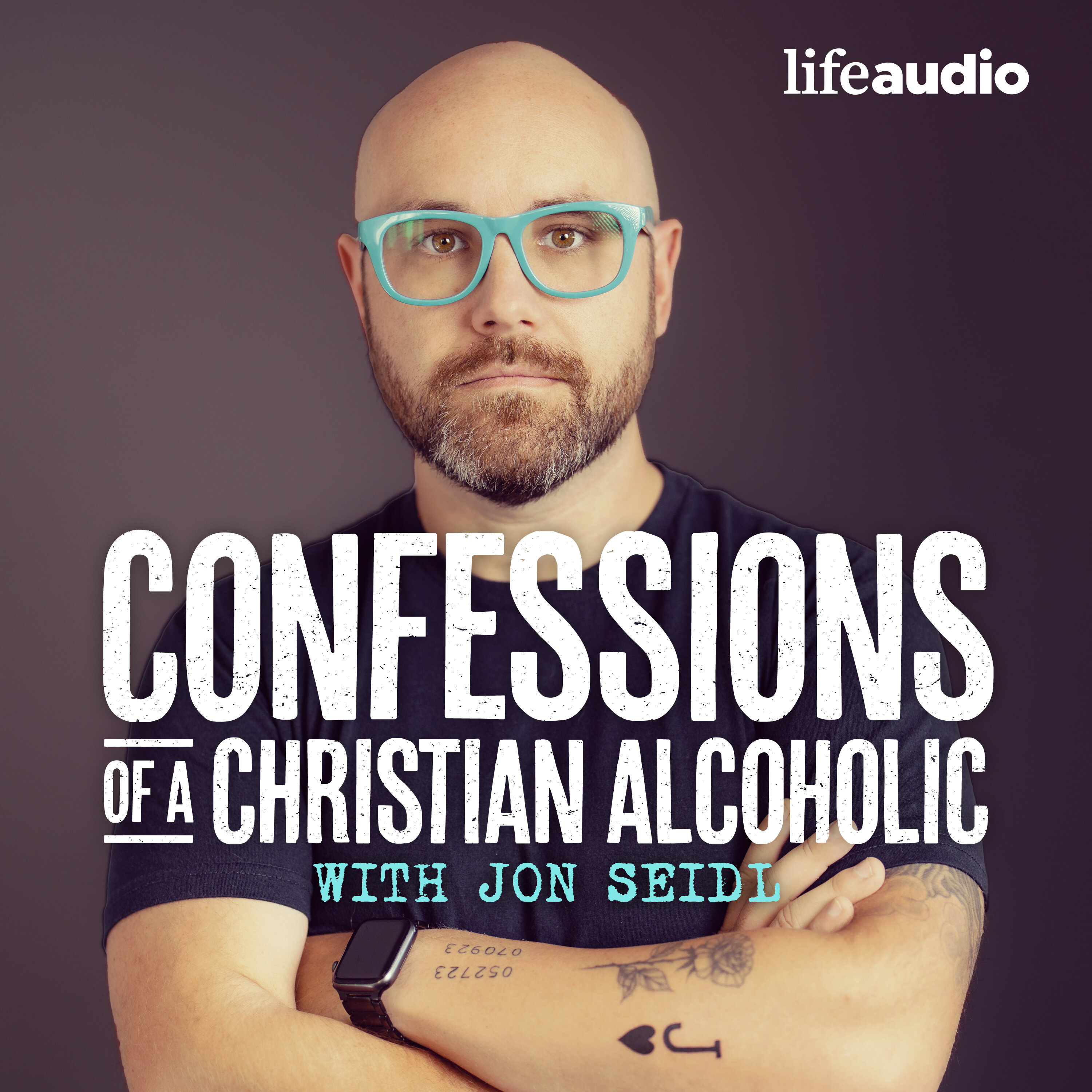
Confessions of a Christian Alcoholic with Jon Seidl
Jon Seidl
Jon Seidl is the bestselling Christian author who became an alcoholic, not the other way around. It's usually the other way around. Or is it? "Confessions of a Christian alcoholic" (based on the book by the same title) is all about real stories, radical vulnerability, and remarkable comebacks of people who have struggled with alcoholism and addictions of all sorts. The show features interviews with fellow addicts and alcoholics as well as professionals in the fields of trauma, faith, and addiction recovery. Because let's be honest, we're all addicted to something. "Confessions" is a place for the desperate, the downtrodden, the destitute, and especially, the drunk. But it's also a place of hope and healing. Jon found sobriety after decades of struggling, but more importantly than finding sobriety, he found Jesus. In every episode, he gets radically vulnerable as he explores what it looks like to be on this journey of messy sanctification. Visit christianalcoholic.com for more resources.
Episodes
Mentioned books

Jan 21, 2026 • 1h 25min
The 'Good Christian' Missionary Who Still Struggled with Alcohol: Ali Kennedy's Story of Obedience and Letting Go
“It wasn’t about how much I drank—it was about how much mental and heart space it occupied. I loved it more than I wanted to admit.” That realization for Ali Kennedy didn’t come during a dramatic rock bottom. Instead, it came after years of managing, moderating, and justifying a relationship with alcohol that looked fine on the outside but was slowly crowding out joy, clarity, and intimacy with God. In this episode, I sit down with Ali—a pastor’s wife, missionary, former Ivy League athlete, and writer—who shares her honest story of giving up alcohol not once, but twice. Ali’s journey challenges the idea that addiction has to look a certain way and invites us to ask deeper questions about disordered loves, shame, and the subtle ways we settle for breadcrumbs when God is offering a feast. Ali opens up about growing up around alcohol, finding early freedom after a radical encounter with Christ, and then slowly welcoming alcohol back into her life in socially acceptable, highly-regulated ways. Over time, what never crossed obvious lines began to quietly take up more space than she wanted to admit—especially during seasons of grief, motherhood, and ministry pressure. And I think a lot of us can relate to that. This conversation isn’t about labels. It’s about obedience, discernment, and the courage to listen when the Holy Spirit keeps tapping your shoulder. If you’ve ever felt foggy, restless, or spiritually distracted—even while doing “nothing wrong”—Ali’s story may give you permission to take that prompting seriously and ask what God might be inviting you to lay down. We explore: — Why addiction isn’t defined only by quantity or frequency— How shame keeps Christians silent and stuck— The difference between moderation and freedom— Alcohol as a “disordered love” rather than a visible vice— Grief, motherhood, and the quiet return of coping behaviors— Why obedience sometimes matters more than labels— The role of confession and community in lasting change— What it means to stop settling for breadcrumbs and pursue the feast Work with Ali: https://www.alikennedy.comAli's writing: Homes of GloryAli's Instagram: @alikennedyliveFollow me: @jonseidlOrder my new book, Confessions of a Christian AlcoholicSupport the Show: https://www.jonseidl.com/ Discover more Christian podcasts at lifeaudio.com and inquire about advertising opportunities at lifeaudio.com/contact-us.
Jan 14, 2026 • 1h 41min
He Relapsed After 5 Years of Sobriety: Jeramy Houghton on Obedience, Pride, and Honest Surrender
“I got prideful. I was like, ‘I’m never going to drink again.’ And then all of a sudden… it looked really good.” This conversation with Jeramy Houghton is a reminder that recovery is rarely clean or linear. Jeramy shares how growing up in an unsafe home shaped his sense of stability long before alcohol ever entered the picture. When drinking did become part of his life, it wasn’t chaos at first—it was relief. Alcohol became a way to cope with pressure, stress, and the weight of adulthood, even as his faith was growing. Over time, that coping turned into dependence. Jeramy talks honestly about knowing God was calling him to stop and still choosing alcohol because it felt easier. What started as occasional drinking escalated into daily use, morning vodka, and a slow unraveling that included job loss, health warnings, and deep strain on his marriage. Eventually, everything came to a head when Jeramy admitted what he could no longer deny: he couldn’t stop on his own. What followed was a dramatic turning point. Jeramy describes a moment where his desire for alcohol disappeared entirely—something he’s careful not to present as a formula or a promise. For years, sobriety came without craving. But freedom didn’t mean the work was finished. Slowly, pride crept in. After five years sober, Jeramy found himself believing he was beyond the danger zone—until the old pull returned and drinking “looked really good again.” This time, the turning point wasn’t dramatic—it was honest. Jeramy shares how naming his desire out loud before acting on it changed everything, exposing unresolved family pain and leading to difficult but necessary boundaries. His story isn’t about perfection or permanence. It’s about humility, obedience, and the kind of freedom in Christ that keeps inviting deeper truth long after sobriety begins. We Explore: — Growing up in an emotionally unsafe home shaped by alcoholism— How alcohol slowly became a coping mechanism rather than a pleasure— Living as a Christian while choosing alcohol despite conviction— The escalation into daily drinking and morning vodka— Job loss, medical warnings, and the moment of surrender— Experiencing radical freedom from desire—and why that wasn’t the end— Why some recovery structures felt like a different form of bondage— How pride quietly reopened the door after years sober— The power of naming desire out loud before acting on it— Setting painful family boundaries for the sake of safety— What freedom in Christ looks like amid ongoing sanctification Follow me: @jonseidlOrder my new book, Confessions of a Christian Alcoholic.Support the Show: https://www.jonseidl.com/ Discover more Christian podcasts at lifeaudio.com and inquire about advertising opportunities at lifeaudio.com/contact-us.
Jan 7, 2026 • 52min
A Poison Disguised as a Remedy: Ericka Andersen on Christian Drinking Culture and How It Harms Women
“Alcohol is a poison disguised as a remedy.” That’s the wisdom Ericka Andersen brings to this conversation—wisdom that developed after years of a quiet struggle that slowly took ahold of her and wouldn't let go. Like many evangelicals nowadays, she assumed drinking was neutral, normal, and largely harmless. But over time, she began to notice a widening gap between what alcohol promised and what it actually delivered. In this episode, Ericka shares how drinking slowly moved from social habit to something she felt unable to control—even though she knew early on that something was off but kept overriding that inner voice. She opens up about hiding alcohol, waking up in the middle of the night consumed by compulsion, and living with the tension of appearing fine on the outside while unraveling internally. Ericka also names the loneliness of not seeing stories like hers reflected in church spaces, where alcohol is increasingly treated as a non-issue or even a virtue and especially harms women. Rather than calling for rules or ultimatums, though, she makes a compelling case for curiosity—asking better questions about why we drink, what it costs us, and who it quietly harms. This conversation is for anyone who doesn’t look out of control but knows something is wrong; for those who don’t resonate with “rock bottom” narratives but still feel unsettled; and for Christians who are ready to examine cultural assumptions and get curious. We Explore: — How alcohol functions as a socially acceptable coping mechanism— Why early internal warnings are so easy to ignore— The gap between outward control and inner compulsion— How secrecy quietly reshapes drinking habits— Why many Christians don’t see their stories reflected in church culture— The myth that a problem has to look extreme to be real— How alcohol promises relief but delivers diminishing returns— Why asking better questions matters more than forcing behavior change— The difference between legal and harmless— What freedom begins to look like when denial ends Ericka's new book: Freely Sober Follow Ericka: @ericka_andersen Ericka's writing: https://erickaandersen.substack.com Follow me: @jonseidl Order my new book, Confessions of a Christian Alcoholic.Support the Show: https://www.jonseidl.com/ Discover more Christian podcasts at lifeaudio.com and inquire about advertising opportunities at lifeaudio.com/contact-us.
Dec 31, 2025 • 1h 10min
High-Functioning Anxiety and the Hidden Cost of Numbing Pain: Ericka Graham on OCD, Scrupulosity, and What Addictions Really Cost Us
“When I numbed anxiety and uncertainty, I also numbed beauty and joy.” That moment of clarity from Ericka Graham came after years of abusing prescription drugs, when God met her in a beautiful way involving a bumble bee and a flower. The point? Substances numb the bad, sure, but they also numb the good. But addiction isn't the whole of Ericka's story. From a young age, she also struggled with obsessive-compulsive disorder—compulsions, intrusive thoughts, and scrupulosity, the form of OCD that focuses on faith and religious rituals. In this episode, Ericka shares how OCD and scrupulosity quietly trained her nervous system to look for relief through control. She explains how religious fear, perfectionism, and an all-or-nothing mindset made it difficult to tell the difference between faith and compulsion—and how those same patterns eventually showed up in disordered eating and prescription medication abuse. None of it looked alarming from the outside. She was high-functioning, responsible, and sincere. But internally, anxiety was running the show. Ericka also reflects on the night in an emergency room that her denial cracked, why recovery didn’t begin with willpower, and how learning to sit with uncertainty became a crucial part of healing from both addiction and OCD-driven control. This conversation is for anyone who lives with intrusive thoughts, spiritual anxiety, or the exhausting need to get it “right,” and for those who’ve learned to cope quietly rather than ask for help. Ericka’s story is a reminder that numbness is never selective—and that real healing often begins when we stop managing ourselves and allow God to meet us in our fear instead of our certainty. We explore: – How anxiety quietly fueled Ericka’s need for control– The early signs of compulsive behavior that were easy to overlook– Why high-functioning coping often delays honesty– How numbing anxiety also numbs joy, beauty, and connection– The progression from disordered eating to prescription drug abuse– Why denial can coexist with sincerity and faith– The moment that finally cracked her self-deception– The difference between willpower and surrender in recovery– How recovery reshaped her experience of God– Why feeling again was both terrifying and necessary Ericka's podcast: Curiously Follow Ericka: @mrserickagraham Follow me: @jonseidl Order my new book, Confessions of a Christian Alcoholic.Support the Show: https://www.jonseidl.com/ Discover more Christian podcasts at lifeaudio.com and inquire about advertising opportunities at lifeaudio.com/contact-us.
Dec 24, 2025 • 55min
Special Needs Parenting and the Hidden Alcohol Struggle of a Christian Mom: Carol McCracken's Honest Story
“If you think you have an issue, you probably do.” That sentence from Carol McCracken gets to the heart of this week's episode. Carol didn’t fit the picture she had in her mind of what an alcoholic looked like. She was a Christian. A Bible study teacher. A ministry leader. A good mom. And for years, she told herself the same thing many of us do: I don’t have a problem—because I don’t look like that. But slowly (like it does for many) alcohol became her primary way of coping with chronic stress from raising a special needs son, fear, control, and the pressure to perform. She shares how drinking escalated over years, how secrecy and isolation took hold, and how her understanding of addiction was shaped by cultural myths, church misunderstanding, and even well-meaning pastoral advice. But all that came crashing down one afternoon, when a trip to get more wine ended in being arrested on the side of the road for a DUI. That moment became a surprising turning point, eventually leading to clarity, surrender, and an unexpected reconciliation after her divorce she never saw coming. (And neither did we!) This is a conversation for anyone who has ever wondered if their drinking “counts” as a problem, for those who can stop for a while but can’t stop thinking about starting again, and for anyone who is exhausted from carrying fear, control, and unprocessed pain. Carol’s story is a reminder that freedom doesn’t begin when life falls apart—it begins when we get honest. We explore: – How stress, fear, and control quietly fueled Carol’s drinking– Why performance and image management thrive in church culture– How alcohol slowly moved from enjoyment to emotional anesthesia– The myth that addiction has to look a certain way to be real– Why quantity and frequency aren’t the best measures of a problem– What happens when shame finally gives way to honesty– The role of surrender versus willpower in recovery– Why curiosity is often the first step toward freedom– How alcohol promised relief but delivered deeper captivity– What lasting healing looked like over time, not overnight– The surprising twist after getting arrested for a DUI– The reconciliation after her divorce she never saw coming Carol’s podcasts: “Faith Over Fear” and “Your Daily Bible Verse” Follow Carol: @carologlemccracken Follow me: @jonseidl Order my new book, Confessions of a Christian Alcoholic.Support the Show: https://www.jonseidl.com/ Discover more Christian podcasts at lifeaudio.com and inquire about advertising opportunities at lifeaudio.com/contact-us.
Dec 17, 2025 • 59min
The One Question You're Not Asking Yourself: Nicole Zasowski on Learning to Hope Again
“We can think and act our way to a new feeling. We cannot feel our way to a new way of thinking and acting.” That line from therapist and author Nicole Zasowski cuts to the heart of anxiety, addiction, and the stories we tell ourselves when life feels uncertain. Nicole is the author of What If It’s Wonderful?—a book built around a disarming and deeply important question: What if, instead of bracing for the worst, we allowed ourselves to hope? In this conversation, Nicole shares how a season marked by loss, miscarriage, and prolonged uncertainty exposed her own coping mechanisms—performance, control, and pessimism disguised as realism. She explains why catastrophizing isn’t just negative thinking but a form of control, and why preparing for the worst often robs us of joy without actually protecting us from pain. We also explore the connection between shame and escape, how feelings can be real without being true, and why naming what’s happening inside us is essential for healing. Nicole offers practical ways to interrupt shame cycles, retrain the brain toward hope, and steward pain without glorifying it. This episode is an invitation to tell ourselves a truer story—about who God is, who we are, and what might still be possible. We explore: — Why catastrophizing feels responsible but quietly fuels anxiety— How the brain learns fear faster than hope— The difference between feelings that are real and thoughts that are true— Why shame often drives both anxiety and addictive behaviors— How performance and control masquerade as faith— What miscarriage and unresolved grief revealed about Nicole’s inner life— Why hope is not denial, but courage— Practical ways to retrain anxious thought patterns— How naming internal experiences leads to healing— What it looks like to tell a truer story about God and ourselves Website: https://www.nicolezasowski.com Books: What It's Wonderful? and Daring Joy Follow Nicole on Instagram: @nicolezasowski Follow Jon: @jonseidl Order Jon's new book, Confessions of a Christian Alcoholic. Get daily motivation: www.theveritasdaily.comSupport the Show: https://www.jonseidl.com/ Discover more Christian podcasts at lifeaudio.com and inquire about advertising opportunities at lifeaudio.com/contact-us.
Dec 10, 2025 • 1h 7min
The Christian Leader with Secret Struggles: How Brandon Ricks Went from Burnout to Healing by Naming His Pain (Episode 31)
“I don’t want to be 60 years old having the same issues I had when I was 25.” What an honest and important statement from this week's guest, Brandon Ricks. Because the truth is, too many of us have just resigned ourselves to always being the way we are now. The fight for something different is hard, and so we give up. Brandon, though, finally had enough, and he started the painful but hopeful process of healing. Brandon is a successful entrepreneur with his own company. He projects strength and competency. But for a long time, behind that exterior was someone who had shut down for so long that he couldn’t feel anything—and didn’t know how to. Porn became one of the ways he coped. So did marijuana, which he used to numb himself when life felt too overwhelming or too painful to face. He even shares the detailed story of the period in his life where he considered ending it all (and what kept him from doing it). In this conversation, Brandon explains how his numbing behaviors weren’t just random vices but survival strategies—ways to avoid the internal world he’d never been taught to navigate. He talks about the moment the Holy Spirit confronted his hiding, how the collapse of a relationship exposed the fragility of his emotional world, and why counseling became the turning point he didn’t know he needed. Brandon also unpacks what long-term emotional shutdown does to the mind and body, why addiction thrives in silence and isolation, and why maturity requires discomfort, not avoidance. This episode reminds us that healing begins when we stop numbing and start telling the truth—the truth that Jesus says about us and our situations. We explore: —Why Brandon learned to shut down his emotions to survive—How porn and weed became coping mechanisms rather than “just habits”—The difference between self-protection and sanctification—Why the Holy Spirit confronted his hiding—How a painful breakup forced him to reckon with his inner world—Why healing requires community, honesty, and discomfort—The neurological impact of long-term emotional shutdown—The choice every man faces: hide and numb, or grow and tell the truth—Why he refuses to be “60 years old with the same issues I had at 25” Work with Brandon: https://productionmasterminds.com Follow Jon: @jonseidl Order Jon's new book, Confessions of a Christian Alcoholic. Get daily motivation: www.theveritasdaily.comSupport the Show: https://www.jonseidl.com/ Discover more Christian podcasts at lifeaudio.com and inquire about advertising opportunities at lifeaudio.com/contact-us.
Dec 3, 2025 • 59min
What Trauma Really Is and Why Your Origin Story Matters with Therapist Adam Young (Episode 30)
“Trauma does not reside in the bad event. Trauma is what becomes embedded in your body in the wake of a bad event when there’s no one there to comfort you.” What if you've been viewing trauma all wrong? And what if you don't think you've experienced trauma but you actually have? My guest this week is renowned trauma therapist Adam Young, and we're having a powerful conversation on not only trauma but our origin stories—specifically our family-of-origin stories. Adam explains why the wounds we minimize—the moments we brush off as “not that bad”—often carry the deepest impact. Because, as he explains, the real harm isn’t the event itself but what happened after: the absence of comfort, attunement, engagement, and care. That’s what embeds in our bodies and shapes the ways we cope. And often, that coping becomes unhealthy when we don't name what has happened and talk about it. Adam unpacks how trauma lives in the body, why triggers are often physiological rather than emotional, and how our relational histories shape the addictions we later develop. He also explains why dysregulation isn’t a character flaw but a survival response, and why compassion toward your younger self may be the most mature step you can take. This episode is an invitation to look beneath the behaviors you want to change and explore the stories that shaped them. Healing begins by honoring your wounds and telling the truth about where you come from. We Explore: — Why trauma is not the event but the absence of an empathetic witness afterward— The connection between chronic dysregulation and addiction— How the body keeps responding to stories long after the mind forgets— The role of triggers and why they’re physiological— Why kindness changes the heart more effectively than shame— What children need to develop securely—and what happens when those needs aren’t met— How unresolved family-of-origin stories form our adult coping strategies— Why honoring your wounds is an act of courage, not self-pity— Practical next steps for engaging your story with curiosity instead of contempt Website: https://adamyoungcounseling.com Podcast: The Place We Find Ourselves Book: Make Sense of Your Story Follow Jon: @jonseidl Order Jon's new book, Confessions of a Christian Alcoholic. Get daily motivation: www.theveritasdaily.comSupport the Show: https://www.jonseidl.com/ Discover more Christian podcasts at lifeaudio.com and inquire about advertising opportunities at lifeaudio.com/contact-us.
Nov 26, 2025 • 1h 13min
The People-Pleasing Pastor Who Had an Affair: Tim Sexton's Story of Redemption (Episode 29)
“We all just have different medicines that we reach for.” That’s how Tim Sexton describes the real story behind the affair that blew up his life. Even though at one point that affair led to his downfall as a pastor, today it's not something he hides from. Instead, he's leaning into it in hopes to help others, and one of the ways he's doing that is by calling out the roots that run much deeper. Those roots for him? A lifelong addiction to people-pleasing and affirmation rooted in childhood trauma, fear, and spiritual confusion. In this conversation, Tim opens up about growing up with two alcoholic parents, feeling responsible for their chaos, and carrying a distorted picture of God into adulthood—one built on fear, performance, and the desperate need to be enough. He shares how that inner ache followed him into marriage and ministry, how it quietly shaped his identity, and how flattery, secrecy, and emotional validation became the “medicine” that eventually led to infidelity. But this is not only a story about destruction. It’s also a story about the long road back—through exposure, humility, counseling, discipleship, and the honest surrender that brings real freedom. Tim talks about the years he spent dismantling false identities, the painful undoing that came even after public confession, and the miracle of restoration he never expected. If you’ve ever thought you've done something beyond forgiveness, this episode reminds you that there is always hope. We explore: —Why infidelity was a symptom, not the root—How childhood trauma and alcoholic parents shaped Tim’s identity—People-pleasing as an addiction—Why fear of God (not awe of God) destroyed his early faith—The moment everything collapsed on a high-school football field—What public shame exposed in him—Why approval addiction is every bit as powerful as substance addiction—How Jesus rebuilt him from the inside out—Why the church must rethink restoration—What it really means when Tim says “The best definition of sin I’ve ever heard is you and me trying to get our needs met apart from Christ.” Website: M46Dads.com Book: Fight for Their Hearts: Hope and Help for Every Dad Follow Jon: @jonseidl Order Jon's new book, Confessions of a Christian Alcoholic. Get daily motivation: www.theveritasdaily.comSupport the Show: https://www.jonseidl.com/ Discover more Christian podcasts at lifeaudio.com and inquire about advertising opportunities at lifeaudio.com/contact-us.
Nov 19, 2025 • 1h 8min
Can Christians Keep on Sinning? 'Bible Nerd' Faith Womack Reveals Why Hypocrisy Is Your Greatest Testimony (Episode 28)
“Our hypocrisy is our testimony. That’s God’s glory on display.” That truth from Faith Womack is exactly what those of us with messy sanctification stories not only need to hear, but embrace and embody. We all fall short. We all stumble. And yet, God uses our weakness—not our polished moments—to reveal His power and his grace. Faith Womack is one of the most popular Bible teachers on the internet with over 200,000 Instagram followers, and today she's joining the podcast to talk about how our struggles are exactly what God uses to not only refine us but to put himself on display. In this conversation, Faith and I also talk about how to actually read the Bible faithfully, why so many Christians misuse Scripture, and what it means to walk out holiness without falling into perfectionism. We explore the tension between grace and obedience, why context matters, why so many believers doubt their salvation, and how to build a life that’s rooted in the Word of God. She even helps us unpack some of the Scriptures used against those of us with messy sanctification stories and introduces us to her new book, No More Boring Bible Study. If you’ve ever felt like your failures or weaknesses disqualify you, this episode is a reminder that they are the very place God shines the brightest. We explore: — Why “hermeneutics” isn’t scary but essential— What legalism gets wrong about holiness— Lordship Salvation and the fear of “going on sinning”— How to hold grace and obedience together without shame— Why the thief on the cross destroys our performance mindset— What 1 John and Romans 7 really teach about believers and sin— How to stop weaponizing Scripture and start being formed by it— Why Bible study must be relational, not just informational— How abiding in Christ transforms us over time— The lifelong journey from hypocrisy to testimony Website: BibleNerdMinistries.com Instagram: @biblenerdministries Book: No More Boring Bible Study Follow Jon: @jonseidl Order Jon's new book, Confessions of a Christian Alcoholic. Get daily motivation: www.theveritasdaily.comSupport the Show: https://www.jonseidl.com/ Discover more Christian podcasts at lifeaudio.com and inquire about advertising opportunities at lifeaudio.com/contact-us.

