

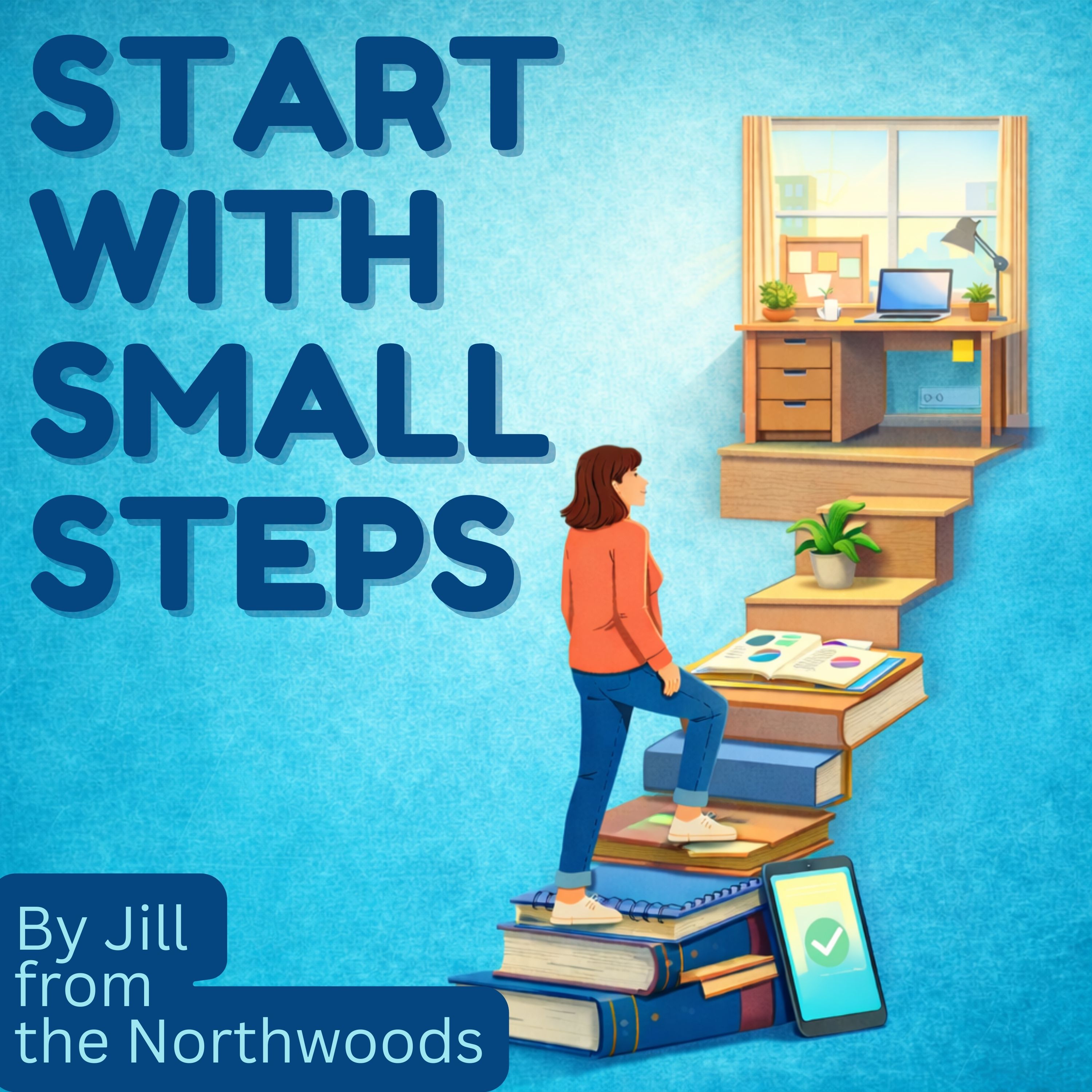
Start with Small Steps
Jill from The Northwoods
Start With Small Steps is a practical, thoughtful podcast about making meaningful progress in everyday life—without overwhelm. Each episode breaks big ideas into small, manageable steps you can actually use, whether you’re working on habits, health, productivity, faith, or personal growth.
Instead of chasing quick fixes or perfect systems, this podcast focuses on steady change, reflection, and realistic action. You’ll hear clear explanations, relatable examples, and simple frameworks designed to help you think better, choose wisely, and keep moving forward—even when life feels complicated or slow.
Start With Small Steps is for anyone who wants growth that fits real life: small actions, honest reflection, and progress that lasts.
Instead of chasing quick fixes or perfect systems, this podcast focuses on steady change, reflection, and realistic action. You’ll hear clear explanations, relatable examples, and simple frameworks designed to help you think better, choose wisely, and keep moving forward—even when life feels complicated or slow.
Start With Small Steps is for anyone who wants growth that fits real life: small actions, honest reflection, and progress that lasts.
Episodes
Mentioned books

Aug 26, 2025 • 18min
244 - Gain Confidence By Doing
Dive into the debate between 'fake it till you make it' and 'do it till you true it.' Discover why pretending can undermine trust and create stress. Instead, learn how taking small, authentic actions builds real confidence. Explore psychological theories that show how behavior influences belief, and understand the balance between honesty and ambition. This enlightening discussion reveals that confidence is not a momentary switch but a journey built on steady, honest progress.
Aug 19, 2025 • 23min
243 - Guardrails and Bandwidth: Building a Life That Protects You
In this episode, I share the life-changing power of personal guardrails and why understanding our bandwidth is essential for building a balanced life. I explore how growing up with minimal rules, dealing with ADHD, and navigating family addiction history led me to build boundaries that have saved me from burnout, addiction, and overwork. I walk through practical ways to design a lifestyle where structure supports — rather than stifles — freedom.What Are Guardrails and Why We Need Them?I use personal stories to explain the concept of guardrails — voluntary boundaries we create to protect our time, energy, health, and relationships. From childhood freedom to self-imposed limits, I show how these rails have guided me back from the brink more than once.Understanding BandwidthBandwidth is our capacity: physical, emotional, mental. I talk about how to recognize your own limits and the importance of honoring them to avoid stress, anxiety, or collapse.Real-Life Guardrail ExamplesFrom no-snack-after-6PM rules to time-blocking calendars, I give practical examples of how to set guardrails in areas like health, work, finances, digital use, and family dynamics.Creating Healthy Digital HabitsI talk about curating your social media, staying out of algorithmic rabbit holes, and replacing tech-driven anxiety with intentional engagement.Spiritual Guardrails and Sacred TimeGuardrails aren't just practical — they can also be spiritual. I explain how sabbaticals, quiet time with God, and sleep routines contribute to a deeper, more centered life.📘 Takeaways:Setting personal boundaries isn’t about restriction. It’s about protecting your peace and living your best life within your true capacity. Whether you’re prone to overwork, addictive habits, or simply feel overwhelmed by daily demands, guardrails offer a way out. By knowing your limits and building boundaries around them, you gain clarity, consistency, and a healthier relationship with yourself and others.Jill’s Linkshttp://jillfromthenorthwoods.comhttps://startwithsmallsteps.comhttps://www.youtube.com/@startwithsmallstepshttps://www.buymeacoffee.com/startwithsmallstepshttps://twitter.com/schmernEmail the podcast at jill@startwithsmallsteps.comBy choosing to watch this video or listen to this podcast, you acknowledge that you are doing so of your own free will. The content shared here reflects personal experiences and opinions and is intended for informational and inspirational purposes only. I am not a licensed healthcare provider, psychiatrist, or counselor. Any advice or suggestions offered should not be considered a substitute for professional medical or mental health advice. You are solely responsible for any decisions or actions you take based on this content.
Aug 13, 2025 • 10min
242 - How a Single Skill Can Transform Everything
In this episode, I share how learning one core skill—discipline—through weight loss ended up transforming far more than just my health. It changed how I handled money, how I managed time, and how I dealt with emotional impulses. The surprising truth is that success in one area can spill over into every part of life—if we recognize the pattern and reuse it.Top Topics Covered:Transferring Skills from One Area to AnotherI talk about how the process of losing weight—tracking food, resisting emotional eating, staying focused—taught me the same principles I needed for budgeting and other goals. Once I saw that the structure I used for health could be used for money, time, and attention, everything began to shift.How Emotional Impulses Drive Daily DecisionsA lot of the choices I made—like eating or spending—weren’t based on logic. They were reactions to stress or boredom. I reflect on how I used to live in “drone mode,” responding to emotions instead of real needs. Learning to pause and ask, “Do I really need this?” became one of the most powerful tools I picked up.You’re Already More Disciplined Than You ThinkPeople often believe they’re just not naturally disciplined. But I’ve found that nearly everyone has at least one area in life where they were focused and committed. Maybe it was music, sports, or school. I explain how identifying those moments can help you rebuild discipline where you need it most right now.Working With ADHD and Building Mental AnchorsAs someone with ADHD, I’ve had to build structures to help me stay on track. Forgetting goals was a big problem—until I started using tools like tracking, setting reminders, and celebrating small wins. These small shifts helped me stay connected to what really mattered.Takeaways:This episode is a reminder that your past successes aren’t isolated wins—they’re blueprints. If you’ve ever followed through on anything, you already know how to build habits, stay focused, and achieve goals. The challenge is taking what worked and applying it somewhere new. You don’t need to reinvent yourself—you just need to reuse the systems that already helped you succeed. The same discipline, tracking, and mindset can apply to health, money, time, or any area you want to improve.Thanks for listening—and if there’s something in your life you’ve already mastered, think about how you can let it guide the rest.Jill’s Linkshttp://jillfromthenorthwoods.comhttps://startwithsmallsteps.comhttps://www.youtube.com/@startwithsmallstepshttps://www.buymeacoffee.com/startwithsmallstepshttps://twitter.com/schmernEmail the podcast at jill@startwithsmallsteps.comBy choosing to watch this video or listen to this podcast, you acknowledge that you are doing so of your own free will. The content shared here reflects personal experiences and opinions and is intended for informational and inspirational purposes only. I am not a licensed healthcare provider, psychiatrist, or counselor. Any advice or suggestions offered should not be considered a substitute for professional medical or mental health advice. You are solely responsible for any decisions or actions you take based on this content.
Aug 6, 2025 • 18min
241 -Stop Fighting Ghosts and Dragons: How Imaginary Fears Drain Our Lives
In this episode, I reflect on a powerful idea that has reshaped how I approach anxiety and overthinking: we spend too much time fighting ghosts and dragons—imaginary fears and situations that never actually happen. By sharing personal stories and experiences, I explore how these invisible battles drain our energy, damage our mental health, and distract us from solving real problems in life.1. Understanding What Ghosts and Dragons Really AreThese are the thoughts and fears that don’t have a basis in reality. They’re the assumptions, the “what ifs,” and worst-case scenarios we invent in our minds. Whether it’s an old trauma or a new worry, these ghosts keep us on edge and steal our peace.2. The Cost of Fighting the Wrong BattlesFighting imaginary dangers leads to emotional burnout, missed opportunities, and even strained relationships. When you prepare for problems that don’t exist, you waste the energy you need for what actually matters.3. Strategies for Letting GoI share several practical tools: labeling fears with silly names, journaling to find patterns, asking grounding questions, and taking small steps to focus on the real world. These methods help interrupt the pattern of overthinking.4. Faith, Stoicism, and ReframingWhether it’s a verse from Matthew or a quote from Epictetus, I talk about how different philosophies help us accept what’s real and reject what isn’t. Our brains are wired to detect threats, but that doesn’t mean every alert is valid.Takeaways:If you’re feeling anxious about a situation, ask yourself: is it really happening, or is it just a ghost? Stop wasting energy on things that will never happen. You don’t need to fight every scary thought. Label it, laugh at it if you can, and walk away. Focus on what’s true, take small actions that make you feel safer, and trust that today’s real worries are enough without borrowing tomorrow’s. The path to peace starts with acknowledging how much power you give to the imaginary.Jill’s Linkshttp://jillfromthenorthwoods.comhttps://startwithsmallsteps.comhttps://www.youtube.com/@startwithsmallstepshttps://www.buymeacoffee.com/startwithsmallstepshttps://twitter.com/schmernEmail the podcast at jill@startwithsmallsteps.comBy choosing to watch this video or listen to this podcast, you acknowledge that you are doing so of your own free will. The content shared here reflects personal experiences and opinions and is intended for informational and inspirational purposes only. I am not a licensed healthcare provider, psychiatrist, or counselor. Any advice or suggestions offered should not be considered a substitute for professional medical or mental health advice. You are solely responsible for any decisions or actions you take based on this content.
Jul 29, 2025 • 18min
240 - The Circle of Help
This episode explores the critical question: When is the right time to seek help? For many, asking for support feels like surrendering control—but in reality, it's one of the most powerful steps toward progress. This conversation walks through the emotional challenges of seeking help and the practical strategies for building a support network. From everyday advice to professional resources, it reveals how support systems—big and small—can change lives, one step at a time.Understanding the Misconceptions About HelpFor years, the belief that self-reliance was the only path forward kept many people from reaching out. But beneath the surface of most success stories lies a foundation of support—whether from friends, family, mentors, or strangers. This episode explores how that mindset can shift and how recognizing past help can open the door to future growth.Finding Help in Unexpected PlacesSupport doesn't always come from therapists or close family. It can come from a coworker, a fitness trainer, a teacher, or a local church leader. The key is identifying the right person for the right problem, even if there isn't a deep relationship. Sometimes, an outside perspective can make all the difference.Professional and Community Resources Available TodayTherapists, nutritionists, life coaches, financial counselors, and even librarians can be lifelines. This episode outlines where to look, how to approach them, and what kinds of issues each resource can help solve. Community-based options like nonprofits, support groups, and crisis lines are also highlighted.Digital Tools for Modern SupportFrom Reddit and Facebook groups to apps like BetterHelp, Calm, and Woebot, there's a world of support online for everything from mental health to productivity. While these can’t replace in-person support for serious issues, they can be powerful tools to get unstuck, especially when used alongside other resources.Recognizing the Right Time to AskWhether facing financial stress, emotional burnout, or life transitions, waiting for a crisis isn't the best strategy. Early support can prevent deeper struggles. This episode encourages listeners to act before things break down—and offers suggestions for how to start that journey with small, intentional steps.Takeaways:Getting help isn't about weakness—it's about wisdom. Everyone gets stuck at times, and there's no shame in reaching out for advice, clarity, or encouragement. Whether through a trusted friend, a trained professional, or a community program, there's always a path forward. Being willing to ask can not only resolve a problem—it can also build connection, confidence, and resilience. The challenge is simple but powerful: identify where you feel stuck, and ask the right person to help you take the next step.Jill’s Linkshttp://jillfromthenorthwoods.comhttps://startwithsmallsteps.comhttps://www.youtube.com/@startwithsmallstepshttps://www.buymeacoffee.com/startwithsmallstepshttps://twitter.com/schmernEmail the podcast at jill@startwithsmallsteps.comBy choosing to watch this video or listen to this podcast, you acknowledge that you are doing so of your own free will. The content shared here reflects personal experiences and opinions and is intended for informational and inspirational purposes only. I am not a licensed healthcare provider, psychiatrist, or counselor. Any advice or suggestions offered should not be considered a substitute for professional medical or mental health advice. You are solely responsible for any decisions or actions you take based on this content.
Jul 22, 2025 • 27min
239 - Productivity for Real People
What Time Management Style Works for You?This episode explores the concept that there’s no one-size-fits-all approach to productivity. Time management is deeply personal, and understanding which system aligns with individual energy levels and task preferences is key to long-term success.The episode outlines two core time management styles: deep work and task variety. Rather than prescribing a strict method, it offers a balanced perspective that helps listeners evaluate which strategy best suits their natural rhythm, workload, and environment.🎯 Deep Work vs. Task VarietyDeep work, as described by Cal Newport, focuses on uninterrupted time blocks for high-concentration tasks. This is contrasted with a more dynamic task variety method, which involves switching between multiple tasks to maintain energy and engagement. Each method is explained in detail, with pros and cons for different working styles.⚡ Energy-Based SchedulingInstead of planning by the clock, energy-based scheduling encourages aligning tasks with the body’s natural peaks and dips in energy. Physical tasks are best scheduled during lower-focus times, while creative or mentally intense work can be reserved for peak alertness.🛠️ Tools and Techniques for ProductivitySeveral practical tools are highlighted, including time blocking calendars, Pomodoro timers, Kanban boards, and themed hours. These techniques help manage attention and keep projects moving, especially when motivation or focus fluctuates throughout the day.✅ TakeawaysTime management is not about rigid schedules but about matching personal working styles with the right tools and approaches. Deep focus works well for some, while others benefit from the energy and stimulation of switching tasks. Recognizing natural rhythms and using flexible systems like Kanban or Pomodoro can lead to better output and less burnout.Adopting a customized approach allows for sustainable productivity—whether that's batching similar tasks, managing tasks based on energy, or setting thematic work periods. Trying both time management styles can reveal surprising insights and help create a more fulfilling, productive routine.Jill’s Linkshttp://jillfromthenorthwoods.comhttps://startwithsmallsteps.comhttps://www.youtube.com/@startwithsmallstepshttps://www.buymeacoffee.com/startwithsmallstepshttps://twitter.com/schmernEmail the podcast at jill@startwithsmallsteps.comBy choosing to watch this video or listen to this podcast, you acknowledge that you are doing so of your own free will. The content shared here reflects personal experiences and opinions and is intended for informational and inspirational purposes only. I am not a licensed healthcare provider, psychiatrist, or counselor. Any advice or suggestions offered should not be considered a substitute for professional medical or mental health advice. You are solely responsible for any decisions or actions you take based on this content.
Jul 15, 2025 • 16min
238 - The Power of Pause: Gaining Clarity in Emotional Moments
238 - The Power of Pause: Gaining Clarity in Emotional Moments
In this episode, we explore why it’s so difficult to see clearly when we’re in the midst of life’s challenges. Whether it’s a career issue, relationship conflict, or emotional setback, the pressure of the moment often clouds our judgment. I break down how our brains fill in gaps with fear-based stories and share strategies to pause, reflect, and gain better perspective before making big decisions.
Why We Can’t See Clearly in the MomentWhen life is overwhelming, our brains tend to create distorted narratives to fill in missing information. I share why these stories can mislead us and how they often come from a place of fear.
Cognitive Distortions and Mental ShortcutsLearn about the mental traps we fall into—like catastrophizing or mind-reading—and how they can lead us to the wrong conclusions about people or events.
The Viktor Frankl PauseBetween a triggering event and our reaction, there’s a pause. And that’s where our power lies. I explore how using this space wisely can shift everything.
Making Micro-Decisions in a VUCA WorldLife is uncertain, and acting too quickly can backfire. I talk about making the smallest decision possible in moments of stress so you can gather more information first.
Takeaways:In the middle of tough times, it’s okay not to know what to do. The key is to slow down, ask better questions, and create space for clarity. Whether it’s journaling, talking to someone you trust, or writing a future-self letter, these practices help you reframe and reset. You’re not failing because you don’t have the answers—you’re just in the fog. And with patience, the path will become clear again.
https://startwithsmallsteps.com/238-the-power-of-pause-gaining-clarity-in-emotional-moments/
Jill’s Linkshttps://abetterlifeinsmallsteps.com
https://affiliate.notion.so/NorthwoodsJilldayhttps://affiliate.notion.so/NorthwoodsAIhttps://www.youtube.com/@startwithsmallstepshttps://www.buymeacoffee.com/startwithsmallstepshttps://twitter.com/schmernEmail the podcast at jill@startwithsmallsteps.com
By choosing to watch this video or listen to this podcast, you acknowledge that you are doing so of your own free will. The content shared here reflects personal experiences and opinions and is intended for informational and inspirational purposes only. I am not a licensed healthcare provider, psychiatrist, or counselor. Any advice or suggestions offered should not be considered a substitute for professional medical or mental health advice. You are solely responsible for any decisions or actions you take based on this content.
Jul 8, 2025 • 12min
237 - Not Everyone Will Like You—And That’s Okay
237 - Not Everyone Will Like You—And That’s Ok
This episode tackles a challenge everyone faces at some point—being disliked. It explores the emotional weight of rejection, the societal pressure to be universally liked, and the deeper roots of approval-seeking behavior. With a thoughtful and honest tone, the episode encourages listeners to shift their focus from people-pleasing to authentic self-worth.
The Illusion of Being Universally Liked:The episode opens with the acknowledgment that not everyone will approve of who we are or what we do. Even highly admired figures in history faced rejection. This segment reframes disapproval as a normal, even expected, part of life rather than a personal failure.
Why Rejection Hurts So Much:Delving into childhood conditioning and the human need for safety through belonging, the podcast highlights how deeply rooted the desire for approval can be. Listeners are encouraged to examine how this shows up in their adult lives and consider how it affects their emotional well-being.
The Hidden Gift in Being Disliked:Rather than viewing rejection as purely negative, the episode presents it as a potential catalyst for growth. Whether it prompts reflection or redirects a path, disapproval can help clarify values, strengthen personal boundaries, and lead to greater self-awareness.
Navigating Feedback with Discernment:Not all criticism is created equal. The host shares how to sift through feedback—accepting what is constructive and discarding what is based on misunderstanding or projection. This topic includes stories and examples that highlight the difference between helpful insight and harmful opinion.
Living Authentically Instead of Performing:One of the core messages is the importance of letting go of the need to be liked by everyone. The episode offers practical encouragement for building emotional resilience, developing strong internal identity, and focusing on approval that truly matters—one’s own and, for those with faith, divine approval.
Takeaways:
Being disliked is not a crisis but an opportunity for reflection and freedom. The pursuit of universal approval often leads to emotional exhaustion and identity loss. Instead, standing in one’s truth—even when it invites criticism—creates space for authenticity, meaningful relationships, and personal peace. The episode encourages setting boundaries, evaluating feedback with wisdom, and embracing the truth that not being for everyone is a sign of individuality, not failure.
https://startwithsmallsteps.com/237-not-everyone-will-like-you-and-thats-ok/
Jill’s Linkshttps://abetterlifeinsmallsteps.com
https://affiliate.notion.so/NorthwoodsJilldayhttps://affiliate.notion.so/NorthwoodsAIhttps://www.youtube.com/@startwithsmallstepshttps://www.buymeacoffee.com/startwithsmallstepshttps://twitter.com/schmernEmail the podcast at jill@startwithsmallsteps.com
By choosing to watch this video or listen to this podcast, you acknowledge that you are doing so of your own free will. The content shared here reflects personal experiences and opinions and is intended for informational and inspirational purposes only. I am not a licensed healthcare provider, psychiatrist, or counselor. Any advice or suggestions offered should not be considered a substitute for professional medical or mental health advice. You are solely responsible for any decisions or actions you take based on this content.
Jul 1, 2025 • 20min
236 - Be Brave and Find True Belonging
236 - Be Brave and Find True Belonging
In this episode, I unpack Brene Brown’s compelling book Braving the Wilderness, using my personal experiences to explore the deep emotional terrain of authenticity, courage, and true belonging.
Top Topics:
The Real Meaning of Bravery: I reflect on my childhood concept of bravery—being physically courageous but emotionally cautious—and how that evolved through reading Brene Brown's work.
The Freedom of Not Fitting In: Inspired by Maya Angelou’s quote, I explore how the need to belong often holds us back from being our true selves and how letting go of that need can be liberating.
Practical Steps to Braving the Wilderness: I break down Brene’s four practices—seeing others up close, speaking truth civilly, connecting through shared humanity, and cultivating a strong but open heart.
Personal Reflections on Approval-Seeking: From choosing conference outfits to forming relationships, I share how striving for acceptance has shaped my actions—and what it means to let go of that.
Takeaways:
The wilderness Brene Brown speaks of isn’t about isolation—it’s the powerful space where we stop molding ourselves for acceptance and start living in truth. This episode encourages you to look at the places in your life where you’re trying to impress others and ask: what would it look like to just be you?
When we bravely step into discomfort and stand firm in our values, we stop needing to fit in—because we finally belong to ourselves. Being vulnerable and honest isn’t weakness; it’s the ultimate strength. Whether in a boardroom, a relationship, or a quiet moment alone, showing up as your true self is the real victory.
https://startwithsmallsteps.com/236-be-brave-and-find-true-belonging/
Jill’s Links
https://abetterlifeinsmallsteps.com
https://affiliate.notion.so/NorthwoodsJillday
https://affiliate.notion.so/NorthwoodsAI
https://www.youtube.com/@startwithsmallsteps
https://www.buymeacoffee.com/startwithsmallsteps
https://twitter.com/schmern
Email the podcast at jill@startwithsmallsteps.com
Jun 17, 2025 • 15min
234 - The Secret to Lasting Change: It’s Not Willpower!
234 - The Secret to Lasting Change: It’s Not Willpower!
In this episode, I talk about the real reasons we struggle with making progress on our goals — and how to fix it. Inspired by the powerful metaphors from “The Happiness Hypothesis” and “Switch,” I explore how the mind is like a rational Rider trying to steer an emotional Elephant along a winding Path. When we learn how to motivate our Elephant, direct our Rider, and clear the Path, meaningful change becomes not only possible but enjoyable.
Understanding the Rider and ElephantWe often think our failure to follow through is due to laziness, but it’s more about a conflict between emotion and logic. I explain how the Elephant (our emotions) tends to resist change while the Rider (our planner) gets stuck in overthinking.
Motivating the Emotional SideFear doesn't move the Elephant — hope and small wins do. I share how reframing goals and celebrating tiny milestones can energize you to keep going. It's about making the process exciting and worthwhile.
Giving the Rider DirectionToo many options lead to paralysis. I talk about choice architecture — creating pre-decisions that make action simpler, like scheduled workouts or limited food choices. When the Rider has a clear map, it stops stalling.
Making the Path EasyWe need an environment that supports our goals. That means setting out gym clothes, automating finances, or prepping for quick getaways. These routines eliminate friction and help us act automatically.
Visualizing the FutureOne of my favorite tools: the “postcard from the future.” I use AI to generate vivid images of my goals realized, which I keep visible in my space. They remind me why I’m doing the hard things.
Rallying the HerdSupport is crucial. If friends and family aren’t on board, online groups can be life-changing. When we surround ourselves with others chasing similar goals, their momentum lifts us up too.
Takeaways:You don’t need more discipline. You need a better system — one that motivates your emotions, guides your plans, and clears your path. Every step forward starts with understanding how your mind works and building an environment that makes change easier. It’s not about giant leaps. It’s about small, consistent wins that make you feel capable and confident. Keep your eye on the vision, celebrate each win, and know that you've got this.
https://startwithsmallsteps.com/234-the-secret-to-lasting-change-its-not-willpower/
Jill’s Links
https://abetterlifeinsmallsteps.com
https://affiliate.notion.so/NorthwoodsJillday
https://affiliate.notion.so/NorthwoodsAI
https://www.youtube.com/@startwithsmallsteps
https://www.buymeacoffee.com/startwithsmallsteps
https://twitter.com/schmern
Email the podcast at jill@startwithsmallsteps.com

