

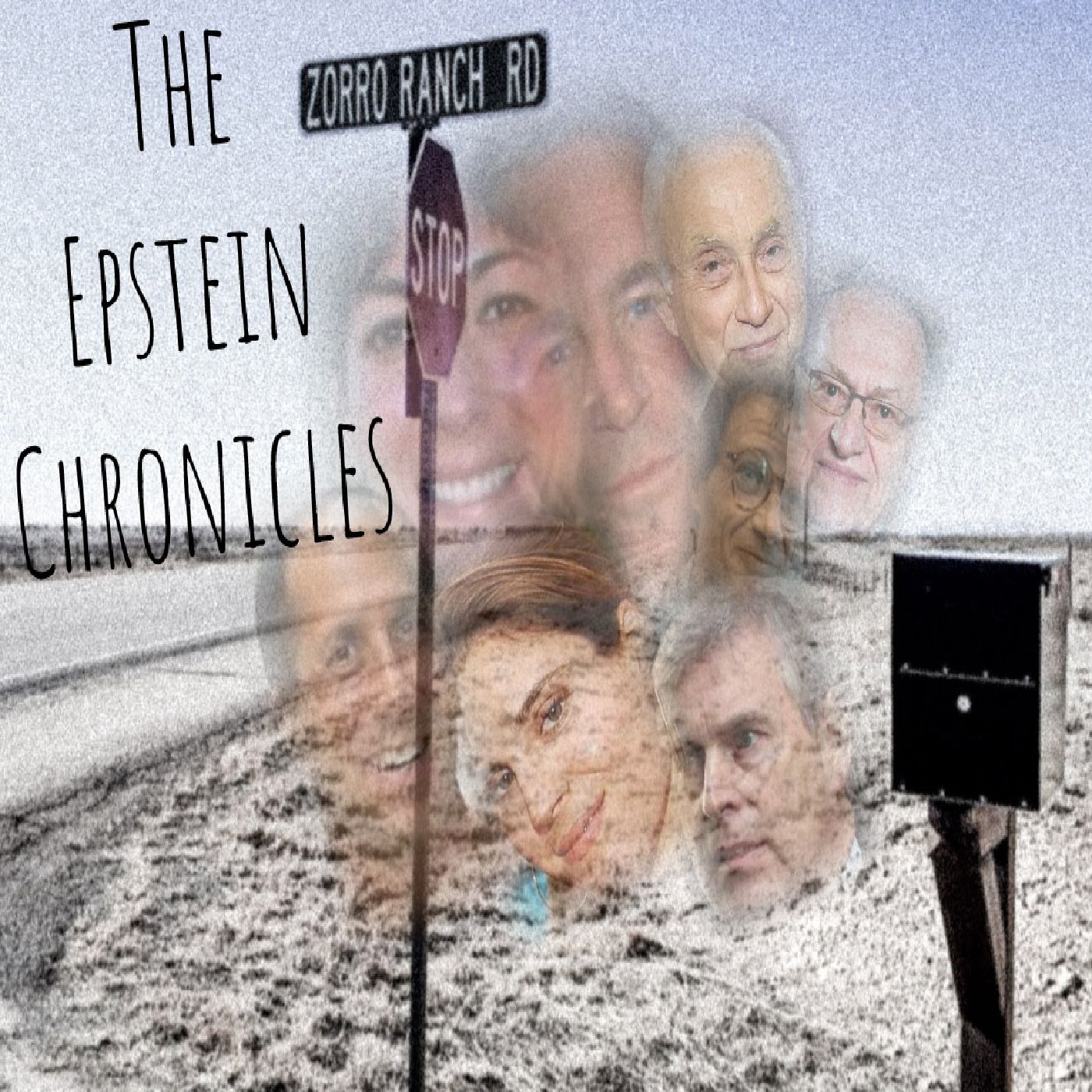
The Epstein Chronicles
Bobby Capucci
Jeffrey Epstein was a multi millionaire who had political and business ties to some of the most rich and powerful people in the world. From businessmen to politicians at the highest levels, Epstein broke bread with them all. Yet for years the Legacy media and the rest of high society looked the other way and ignored his behavior as multiple women came forward with allegations of abuse. Even after he was convicted and subsequently received a sweetheart deal those same so called elites welcomed him back with open arms. Now after his death and the arrest of Maxwell, the real story is starting to come together and the curtain has begun to be drawn back and what it has revealed is truly disturbing. From Princes to Ex Presidents, the cast of scoundrels in this play spans continents and political affiliations leaving us with a transcontinental criminal conspiracy possibly unlike any we have ever seen before. In this podcast we will explore all of the levels of Jeffrey Epstein and his criminal enterprise. From his most trusted assistants to obscure associates, we will leave no stone unturned as we swim through the muck searching for clarity and answers to some of the most pressing questions of the case. From interviews with people directly involved in the case to daily updates, the Epstein Chronicles will have it all. Just like our other project, The Jeffrey Epstein Show, you can expect no punches pulled and consistent content. We have covered the Epstein case daily(everyday since October 1st 2019) and will continue to do so until there are convictions. With a library of well over 1k shows, you can expect a ton of content coming your way including on scene reporting from the Maxwell trial and from places like Zorro Ranch. Thank you for tuning in and I look forward to having you all along for the ride.(Created and Hosted by Bobby Capucci)Become a supporter of this podcast: https://www.spreaker.com/podcast/the-epstein-chronicles--5003294/support.
Episodes
Mentioned books

Apr 18, 2026 • 48min
Mega Edition: Paul Cassell's Deposition In Cassell/Edwards V. Dershowitz (Part 10-13) (4/17/26)
In the Broward County defamation litigation CACE 15-000072, the deposition at issue is sworn testimony from Paul Cassell, one of the attorneys representing Epstein survivors and a former federal judge. Cassell’s deposition focuses on his role in challenging the 2008 federal Non-Prosecution Agreement granted to Jeffrey Epstein, and on statements he made publicly about Alan Dershowitz that later became the basis for Dershowitz’s defamation claims. Cassell explains the factual foundation for his remarks, emphasizing that they were rooted in court filings, sworn victim testimony, investigative reporting, and contemporaneous evidence. He details how survivors’ allegations against Dershowitz emerged, how they were evaluated by legal teams, and why he believed it was appropriate and accurate to reference them in public advocacy surrounding Epstein’s secret plea deal. Cassell consistently frames his conduct as part of his duty to represent victims and expose prosecutorial misconduct, not as a personal attack.The deposition also addresses Dershowitz’s accusation that Cassell acted recklessly or with malice, which Cassell firmly rejects. He testifies that he never fabricated claims, never coached witnesses to lie, and never acted outside ethical or professional boundaries. Cassell underscores that his statements reflected allegations already made under oath by victims and contained in legal records, and that suppressing discussion of those allegations would further harm survivors. Throughout the testimony, Cassell situates the dispute within the larger Epstein cover-up, arguing that the real issue is not reputational discomfort among the powerful but the systemic failure to protect exploited minors. The deposition ultimately functions as a defense of victim-centered advocacy and transparency, directly countering Dershowitz’s narrative that survivor allegations were invented, coerced, or irresponsibly amplified.to contact me:EFTA00594390.pdfBecome a supporter of this podcast: https://www.spreaker.com/podcast/the-epstein-chronicles--5003294/support.
Apr 18, 2026 • 44min
Mega Edition: Paul Cassell's Deposition In Cassell/Edwards V. Dershowitz (Part 7-9) (4/17/26)
In the Broward County defamation litigation CACE 15-000072, the deposition at issue is sworn testimony from Paul Cassell, one of the attorneys representing Epstein survivors and a former federal judge. Cassell’s deposition focuses on his role in challenging the 2008 federal Non-Prosecution Agreement granted to Jeffrey Epstein, and on statements he made publicly about Alan Dershowitz that later became the basis for Dershowitz’s defamation claims. Cassell explains the factual foundation for his remarks, emphasizing that they were rooted in court filings, sworn victim testimony, investigative reporting, and contemporaneous evidence. He details how survivors’ allegations against Dershowitz emerged, how they were evaluated by legal teams, and why he believed it was appropriate and accurate to reference them in public advocacy surrounding Epstein’s secret plea deal. Cassell consistently frames his conduct as part of his duty to represent victims and expose prosecutorial misconduct, not as a personal attack.The deposition also addresses Dershowitz’s accusation that Cassell acted recklessly or with malice, which Cassell firmly rejects. He testifies that he never fabricated claims, never coached witnesses to lie, and never acted outside ethical or professional boundaries. Cassell underscores that his statements reflected allegations already made under oath by victims and contained in legal records, and that suppressing discussion of those allegations would further harm survivors. Throughout the testimony, Cassell situates the dispute within the larger Epstein cover-up, arguing that the real issue is not reputational discomfort among the powerful but the systemic failure to protect exploited minors. The deposition ultimately functions as a defense of victim-centered advocacy and transparency, directly countering Dershowitz’s narrative that survivor allegations were invented, coerced, or irresponsibly amplified.to contact me:EFTA00594390.pdfBecome a supporter of this podcast: https://www.spreaker.com/podcast/the-epstein-chronicles--5003294/support.
Apr 18, 2026 • 41min
Mega Edition: Paul Cassell's Deposition In Cassell/Edwards V. Dershowitz (Part 4-6) (4/17/26)
In the Broward County defamation litigation CACE 15-000072, the deposition at issue is sworn testimony from Paul Cassell, one of the attorneys representing Epstein survivors and a former federal judge. Cassell’s deposition focuses on his role in challenging the 2008 federal Non-Prosecution Agreement granted to Jeffrey Epstein, and on statements he made publicly about Alan Dershowitz that later became the basis for Dershowitz’s defamation claims. Cassell explains the factual foundation for his remarks, emphasizing that they were rooted in court filings, sworn victim testimony, investigative reporting, and contemporaneous evidence. He details how survivors’ allegations against Dershowitz emerged, how they were evaluated by legal teams, and why he believed it was appropriate and accurate to reference them in public advocacy surrounding Epstein’s secret plea deal. Cassell consistently frames his conduct as part of his duty to represent victims and expose prosecutorial misconduct, not as a personal attack.The deposition also addresses Dershowitz’s accusation that Cassell acted recklessly or with malice, which Cassell firmly rejects. He testifies that he never fabricated claims, never coached witnesses to lie, and never acted outside ethical or professional boundaries. Cassell underscores that his statements reflected allegations already made under oath by victims and contained in legal records, and that suppressing discussion of those allegations would further harm survivors. Throughout the testimony, Cassell situates the dispute within the larger Epstein cover-up, arguing that the real issue is not reputational discomfort among the powerful but the systemic failure to protect exploited minors. The deposition ultimately functions as a defense of victim-centered advocacy and transparency, directly countering Dershowitz’s narrative that survivor allegations were invented, coerced, or irresponsibly amplified.to contact me:EFTA00594390.pdfBecome a supporter of this podcast: https://www.spreaker.com/podcast/the-epstein-chronicles--5003294/support.
Apr 18, 2026 • 43min
Mega Edition: Paul Cassell's Deposition In Cassell/Edwards V. Dershowitz (Part 1-3) (4/17/26)
In the Broward County defamation litigation CACE 15-000072, the deposition at issue is sworn testimony from Paul Cassell, one of the attorneys representing Epstein survivors and a former federal judge. Cassell’s deposition focuses on his role in challenging the 2008 federal Non-Prosecution Agreement granted to Jeffrey Epstein, and on statements he made publicly about Alan Dershowitz that later became the basis for Dershowitz’s defamation claims. Cassell explains the factual foundation for his remarks, emphasizing that they were rooted in court filings, sworn victim testimony, investigative reporting, and contemporaneous evidence. He details how survivors’ allegations against Dershowitz emerged, how they were evaluated by legal teams, and why he believed it was appropriate and accurate to reference them in public advocacy surrounding Epstein’s secret plea deal. Cassell consistently frames his conduct as part of his duty to represent victims and expose prosecutorial misconduct, not as a personal attack.The deposition also addresses Dershowitz’s accusation that Cassell acted recklessly or with malice, which Cassell firmly rejects. He testifies that he never fabricated claims, never coached witnesses to lie, and never acted outside ethical or professional boundaries. Cassell underscores that his statements reflected allegations already made under oath by victims and contained in legal records, and that suppressing discussion of those allegations would further harm survivors. Throughout the testimony, Cassell situates the dispute within the larger Epstein cover-up, arguing that the real issue is not reputational discomfort among the powerful but the systemic failure to protect exploited minors. The deposition ultimately functions as a defense of victim-centered advocacy and transparency, directly countering Dershowitz’s narrative that survivor allegations were invented, coerced, or irresponsibly amplified.to contact me:EFTA00594390.pdfBecome a supporter of this podcast: https://www.spreaker.com/podcast/the-epstein-chronicles--5003294/support.
Apr 18, 2026 • 19min
JD Vance Attempts To Shift The Epstein Narrative And Prince Andrew's Woes Grow
In a Fox News appearance, Vice President J.D. Vance sought to shift focus away from the Trump administration’s handling of the Jeffrey Epstein case by accusing Democrats of inaction. He claimed that President Biden “did absolutely nothing” while in office and suggested Epstein had strong connections with left-wing political and financial figures—asserting that "Democrat billionaires and Democrat political leaders went to Epstein island all the time" and hinting at potential involvement by Bill and Hillary Clinton. His remarks swiftly sparked social media outrage and renewed demands to “release the files,” with critics pointing out that President Trump himself had past ties to Epstein.Also...Prince Andrew is reportedly “too terrified” to set foot in the U.S. again due to fears of arrest, civil lawsuits, or being subpoenaed in connection with his ties to Jeffrey Epstein. According to recent reports, the Duke of York hasn’t traveled to North America in nearly a decade and is said to believe that if he returns, he could face intense political, legal, and media scrutiny—prompting him to remain in Britain as the safest option.to contact me:bobbycapucci@protonmail.comsource:Vance calls out Democrats over Epstein, reignites push for transparency | CNN PoliticsPrince Andrew 'too terrified' to set foot back in America amid Epstein investigation, source claims - The Mirror USBecome a supporter of this podcast: https://www.spreaker.com/podcast/the-epstein-chronicles--5003294/support.
Apr 18, 2026 • 28min
Juliette Bryant Describes Her Abuse In An Interview For The House Of Maxwell Documentary
Juliette Bryant, a South African model, asserts that Epstein began targeting her in 2002 when she was just 20 years old, under the guise of launching her modeling career after being introduced to him by an industry contact. She claims that Epstein trafficked her across multiple locations—New York, the U.S. Virgin Islands (including Little Saint James), Paris, and his New Mexico properties—where she was subjected to repeated sexual abuse, at times reportedly up to three times per day. Bryant describes being trapped in confined, fear-inducing environments, isolated on the island, coerced into nude photo sessions, and psychologically manipulated through emotional control and explicit threats—all with the assistance of Ghislaine MaxwellAdditionally, Bryant has publicly stated that her name was omitted from Jeffrey Epstein’s flight logs, despite her presence on his private planes. She contends that this intentional exclusion served to erase her presence from official records and obscure her trafficking, effectively leaving her disappearance unnoticed if she had gone missing.to contact me:bobbycapucci@protonmail.comsource:https://www.dailymail.co.uk/femail/article-10672663/Epstein-victim-reveals-island-like-factory-raped-three-times-day.htmlBecome a supporter of this podcast: https://www.spreaker.com/podcast/the-epstein-chronicles--5003294/support.
Apr 17, 2026 • 18min
A Few Takeaways From The Ghislaine Maxwell DOJ Meetings
Ghislaine Maxwell’s two‑day interview with Deputy Attorney General Todd Blanche, spanning over 300 pages, offers a key insight: she never saw Donald Trump behave inappropriately. Maxwell described their relationship as strictly cordial, noting she had not witnessed him in any compromising situations—particularly massages or other intimate settings—and referred to him as “a gentleman in all respects.” She also asserted that there was no “client list” implicating powerful figures in Epstein’s network—debunking widespread speculation of a Black Book or secret registry—while expressing uncertainty over whether she attended any gatherings that could corroborate such claimsMaxwell similarly defended Bill Clinton, saying he was her friend—not Epstein’s—and that she never observed any misbehavior between them. She rejected claims involving Prince Andrew, going so far as to label allegations connecting him to Virginia Giuffre as “bullshit,” and suggested the infamous photograph depicting him with Giuffre may have been doctored. Regarding Epstein’s death, Maxwell dismissed theories of foul play as “ludicrous,” suggesting instead that a prison incident—such as a violent confrontation over commissary—was a more plausible explanation.to contact me:bobbycapucci@protonmail.comsource:5 takeaways from Ghislaine Maxwell transcripts and audio filesBecome a supporter of this podcast: https://www.spreaker.com/podcast/the-epstein-chronicles--5003294/support.
Apr 17, 2026 • 16min
The Epstein Survivors And Their Trip To Capitol Hill
Congress is holding a private meeting with survivors of Jeffrey Epstein as part of an expanding bipartisan probe into how the Department of Justice handled Epstein’s prosecution. The House Oversight Committee, which has already subpoenaed former officials including Alex Acosta and demanded Epstein-related Suspicious Activity Reports from the Treasury Department, is positioning these survivor meetings as critical to uncovering the full scope of failures and possible cover-ups. Lawmakers want to hear directly from those most affected, not only about Epstein’s crimes but also about how institutions may have ignored or mishandled their pleas for justice.Alongside the closed-door session, several survivors are also expected to appear publicly at a Capitol press conference organized by Representatives Ro Khanna and Thomas Massie. This event will push for greater transparency, including the release of sealed files tied to Epstein’s network. Survivors and their advocates argue that without disclosure, accountability remains out of reach, and they warn that any attempt to bury these records would deepen public distrust. The coordinated private testimony and public advocacy signal a renewed, aggressive phase of congressional scrutiny into Epstein’s ties, finances, and protection.to contact me:bobbycapucci@protonmail.comsource:House lawmakers to meet with Jeffrey Epstein's victims amid probe of 'suspicious' financial transactionsBecome a supporter of this podcast: https://www.spreaker.com/podcast/the-epstein-chronicles--5003294/support.
Apr 17, 2026 • 13min
Inside The OIG Interview: The Warden's Statement Detailing The Death Of Jeffrey Epstein (Part 16) (4/17/26)
Lamine N'Diaye, in his interview with the Office of the Inspector General, essentially tried to turn the Metropolitan Correctional Center into a scapegoat while positioning himself as a bystander to its failures. He leaned heavily on the narrative that the facility was already broken—staff shortages, overtime abuse, infrastructure decay—as if that somehow absolved him of responsibility rather than underscoring the urgency of his role. What stands out is not just what he admitted, but what he avoided: there is little evidence in his account of decisive leadership, no clear record of aggressive intervention, and no meaningful acknowledgment that the buck was supposed to stop with him. Instead, he described a system failing in slow motion while he remained at the helm, fully aware of the cracks but unwilling—or unable—to reinforce them before they gave way.Even more troubling is how his interview reflects a pattern of deflection that mirrors broader institutional behavior in the wake of Jeffrey Epstein’s death. N’Diaye pointed to correctional officers missing rounds, falsifying logs, and working under extreme fatigue, but failed to explain why those conditions were tolerated under his command, especially after Epstein had already been flagged as a high-risk inmate following a prior incident. The responsibility didn’t disappear into the system—it sat squarely in his office, and his testimony reads less like accountability and more like damage control. The overall picture is not of a warden overwhelmed by circumstances, but of a leader who allowed a known crisis environment to persist unchecked, then attempted to retroactively frame it as inevitable once the worst-case scenario unfolded.to contact me:bobbycapucci@protonmail.comsource:EFTA00119019.pdfBecome a supporter of this podcast: https://www.spreaker.com/podcast/the-epstein-chronicles--5003294/support.
Apr 17, 2026 • 13min
Strategic Chaos? The DOJ’s Epstein Messaging Under the Microscope (4/17/26)
The Department of Justice is facing a deep credibility crisis driven by wildly inconsistent messaging surrounding Jeffrey Epstein. Public statements from political figures like Donald Trump have urged people to move on or dismiss the issue, while conflicting signals from within the same orbit—such as Melania Trump publicly addressing Epstein-related concerns—have kept the story alive. At the same time, the DOJ has attempted to assert finality by claiming all relevant materials have been released, a position that becomes increasingly difficult to defend as new attention and questions continue to surface. This constant back-and-forth creates a fractured narrative that undermines institutional authority and leaves the public struggling to determine what is actually settled and what remains unresolved.Whether intentional or the result of internal dysfunction, the effect of this contradictory messaging is the same: confusion, fatigue, and a steady erosion of trust. The lack of a unified, coherent stance suggests either competing agendas within the system or a broader strategy designed to overwhelm and disengage the public. In a case as expansive and sensitive as Epstein’s, where the scope and implications are visibly complex, claims of closure without clear alignment only deepen suspicion. As contradictions continue to mount, the DOJ risks being seen not as a transparent arbiter of justice, but as an institution caught between narrative control and the reality it can no longer fully contain.to contact me:bobbycapucci@protonmail.comBecome a supporter of this podcast: https://www.spreaker.com/podcast/the-epstein-chronicles--5003294/support.

