

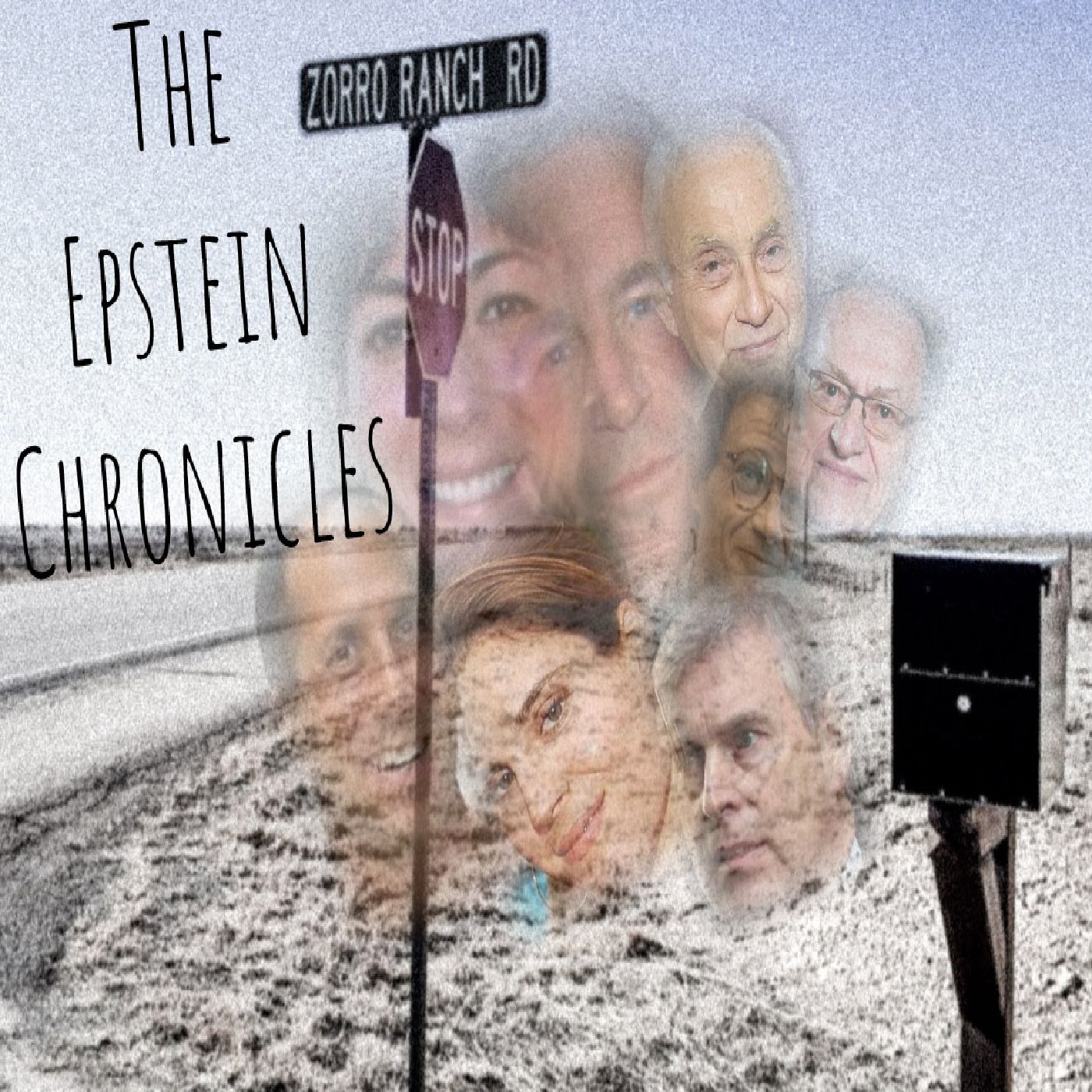
The Epstein Chronicles
Bobby Capucci
Jeffrey Epstein was a multi millionaire who had political and business ties to some of the most rich and powerful people in the world. From businessmen to politicians at the highest levels, Epstein broke bread with them all. Yet for years the Legacy media and the rest of high society looked the other way and ignored his behavior as multiple women came forward with allegations of abuse. Even after he was convicted and subsequently received a sweetheart deal those same so called elites welcomed him back with open arms. Now after his death and the arrest of Maxwell, the real story is starting to come together and the curtain has begun to be drawn back and what it has revealed is truly disturbing. From Princes to Ex Presidents, the cast of scoundrels in this play spans continents and political affiliations leaving us with a transcontinental criminal conspiracy possibly unlike any we have ever seen before. In this podcast we will explore all of the levels of Jeffrey Epstein and his criminal enterprise. From his most trusted assistants to obscure associates, we will leave no stone unturned as we swim through the muck searching for clarity and answers to some of the most pressing questions of the case. From interviews with people directly involved in the case to daily updates, the Epstein Chronicles will have it all. Just like our other project, The Jeffrey Epstein Show, you can expect no punches pulled and consistent content. We have covered the Epstein case daily(everyday since October 1st 2019) and will continue to do so until there are convictions. With a library of well over 1k shows, you can expect a ton of content coming your way including on scene reporting from the Maxwell trial and from places like Zorro Ranch. Thank you for tuning in and I look forward to having you all along for the ride.(Created and Hosted by Bobby Capucci)Become a supporter of this podcast: https://www.spreaker.com/podcast/the-epstein-chronicles--5003294/support.
Episodes
Mentioned books

Apr 17, 2026 • 51min
Mega Edition: The Irreparable Harm Done By Andrew To The Monarchy As An Institution (4/17/26)
The damage associated with Prince Andrew stems not just from the allegations tied to his relationship with Jeffrey Epstein, but from the catastrophic way those associations were handled in public. His widely criticized Newsnight interview did more than fail to contain the fallout—it amplified it, projecting a tone widely seen as detached and lacking accountability. That moment alone shattered decades of carefully curated royal image management, exposing the monarchy to sustained global scrutiny and ridicule. For an institution built on symbolism, restraint, and moral authority, the spectacle of a senior royal struggling to explain his ties to a convicted sex offender was reputationally devastating. It undermined public confidence not just in him as an individual, but in the monarchy’s judgment, internal accountability, and ability to police its own ranks.The long-term consequences have proven even more corrosive. The civil case brought by Virginia Giuffre, which ended in a high-profile settlement, cemented the perception that the monarchy was forced into damage control rather than principled leadership. Even after stepping back from official duties, the lingering association continues to cast a shadow over the royal family, raising uncomfortable questions about privilege, protection, and the limits of accountability for those at the highest levels of power. In a modern era where public trust is already fragile, the situation has become a permanent stain—one that critics argue cannot be fully undone, because it struck at the core contradiction of the monarchy itself: the expectation of moral example versus the reality of human failure behind palace walls.to contact me:bobbycapucci@protonmail.comBecome a supporter of this podcast: https://www.spreaker.com/podcast/the-epstein-chronicles--5003294/support.
Apr 17, 2026 • 1h 11min
Mega Edition: Jeffrey Epstein And Compensation Fund Used As A Shield (4/17/26)
The controversy surrounding the Epstein Victims’ Compensation Program (VCP), established after Jeffrey Epstein’s death, centers on the balance between providing swift financial relief to survivors and the legal trade-offs required to access it. The fund, backed by Epstein’s estate and administered by attorney Kenneth Feinberg, was designed to avoid prolonged litigation by offering payouts without requiring survivors to go through the courts. However, in exchange for compensation, claimants were required to waive their right to pursue future civil lawsuits against the estate. Critics argued that this structure pressured survivors into accepting settlements without fully understanding the potential long-term value of their claims, especially given the scale of Epstein’s network and the possibility of uncovering additional liable parties through litigation.Further controversy stemmed from concerns about transparency, fairness, and the scope of accountability. While the program ultimately paid out hundreds of millions of dollars to claimants, some survivors and advocates questioned how award amounts were determined and whether the process adequately reflected the severity and duration of abuse. Others argued that the fund allowed Epstein’s estate to resolve claims quietly, potentially shielding broader networks of enablers, associates, or institutions from deeper scrutiny in open court. Supporters of the program countered that it provided faster, less traumatic access to compensation than traditional lawsuits, but detractors maintain that it came at the cost of fuller public accountability and left significant questions about Epstein’s wider operation unresolved.to contact me:bobbycapucci@protonmail.comBecome a supporter of this podcast: https://www.spreaker.com/podcast/the-epstein-chronicles--5003294/support.
Apr 17, 2026 • 33min
Mega Edition: Jeffrey Epstein And The Never Ending Surveillance Operation (4/16/26)
Testimony from victims, staff, and individuals who spent time inside Jeffrey Epstein’s residences paints a picture of a deliberately constructed surveillance network embedded throughout his properties. Cameras were widely reported to be placed in hallways, entry points, staircases, and other high-traffic areas, giving Epstein near-total visibility over who entered, where they went, and who they interacted with once inside. Multiple accounts describe the setup as far beyond normal home security, with some witnesses stating that the positioning and density of cameras suggested an intent to monitor behavior in real time and retain records of activity. The consistency of these descriptions across Epstein’s homes—from Palm Beach to Manhattan to the Virgin Islands—points to a coordinated system rather than isolated installations.More pointedly, numerous accounts and allegations indicate that this surveillance was used as a tool of power, not just observation. The belief among investigators and those familiar with the case is that Epstein was compiling compromising material on guests, creating potential leverage over high-profile individuals who visited his properties. While the full extent of what was recorded has not been publicly released, the pattern described in depositions and legal filings suggests that the surveillance network functioned as part of a broader strategy of control, influence, and protection. In that context, the cameras were not just watching—they were collecting, documenting, and potentially weaponizing the private moments of anyone who stepped inside his homes.to contact me:bobbycapucci@protonmail.comBecome a supporter of this podcast: https://www.spreaker.com/podcast/the-epstein-chronicles--5003294/support.
Apr 17, 2026 • 15min
Alex Acosta And The Epstein Birthday Book Have Entered The Chat
The House Oversight Committee, led by Chairman James Comer, has subpoenaed Jeffrey Epstein’s estate for a broad collection of records, including financial documents, correspondence, Epstein’s will, agreements with prosecutors, and what has been described as the “birthday book.” That book, presented to Epstein on his 50th birthday, contained notes and letters from acquaintances and has been cited as a potential source of information on his personal and professional connections. The committee stated the request is part of its wider probe into how Epstein’s crimes were handled and what federal authorities may have overlooked or failed to disclose.In addition, the committee has scheduled former U.S. Attorney Alexander Acosta for a transcribed interview on September 19. Acosta, who approved the 2008 non-prosecution agreement that shielded Epstein from federal charges, is expected to be questioned about the decision-making process behind that deal and the extent of Justice Department involvement. His testimony, combined with the subpoena for the estate’s records, represents a new stage of congressional scrutiny into the broader handling of Epstein’s case and the officials tied to it.to contact me:bobbycapucci@protonmail.comsource:House committee to question Alex Acosta in Jeffrey Epstein probeBecome a supporter of this podcast: https://www.spreaker.com/podcast/the-epstein-chronicles--5003294/support.
Apr 17, 2026 • 18min
Congress Is Set To Begin Receiving Epstein Files From The DOJ
Congress is selling the public a performance when it comes to the Epstein files. On the surface, it looks like accountability—hearings, subpoenas, stacks of documents—but in reality, whatever gets released will be heavily redacted and sanitized long before it ever reaches daylight. The most critical names and connections, especially those tied to intelligence agencies, politicians, bankers, and global elites, will be buried under black ink. The hearings themselves, often held behind closed doors, aren’t about exposing truth but about managing narrative. The spectacle is meant to create the illusion of progress while ensuring nothing truly explosive slips through.This is the same playbook the government has used for decades: generate fanfare around “transparency,” trickle out neutered files, and then declare victory once public outrage fades. Epstein’s story isn’t just about one man—it’s about a system of blackmail, compromise, and protection that stretches across institutions of power. That’s why the truth can’t be allowed out. In the end, the Epstein files won’t deliver justice; they’ll serve as another diversion, another false closure, another managed scandal designed to protect the very machine that allowed Epstein to operate in the first place.to contact me:bobbycapucci@protonmail.comBecome a supporter of this podcast: https://www.spreaker.com/podcast/the-epstein-chronicles--5003294/support.
Apr 16, 2026 • 16min
Ghislaine Maxwell Gushes About Her New Home At Camp Bryan In Leaked Emails
The newly released correspondence reveals Maxwell gushing that life at Bryan is “much, much happier,” describing the kitchen as “clean,” the staff as “polite,” and boasting she “haven’t seen a single fight, drug deal, passed-out person or naked inmate running around”—in her words, “I feel like I have dropped through Alice in Wonderland’s looking-glass.” In stark contrast, she painted her old facility, Federal Correctional Institution Tallahassee, as so unsanitary that “possums falling from ceilings… frying on ovens” mingled with the food served. The tone is one of relief mingled with smugness, and it raises profound questions about how a person convicted of aiding a vast sex-trafficking scheme is enjoying conditions so clearly characterized as unusually comfortable.But the emails don’t just stop at praise—they touch off a firestorm of claims from fellow inmates and corrections experts that Maxwell is receiving “VIP treatment.” Leaks argue that she gets meals delivered to her dorm, late-night showers when others are asleep, access to the warden for legal help, and in one alarming twist, some inmates say they were threatened or transferred for speaking out about her. Experts say such privileges are unheard-of for someone with Maxwell’s conviction and sentence, suggesting she’s been moved to a “country club” style prison camp despite federal rules that restrict sex-offender convicts from such facilities. The implications are explosive: favor or influence, justice subverted, and a system that seems to bow for big names while normal inmates rot under far harsher rules.to contact me:bobbycapucci@protonmail.comsource:Ghislaine Maxwell praises cushy prison for cleanliness, lack of possums falling from ceilingBecome a supporter of this podcast: https://www.spreaker.com/podcast/the-epstein-chronicles--5003294/support.
Apr 16, 2026 • 15min
DOJ Deputy Chief Joseph Schnitt And The Art Of The Epstein Coverup
Joseph Schnitt, a Department of Justice official, was recently caught in a sting operation by a James O’Keefe operative posing as a date on a dating app. During the secretly recorded meeting, Schnitt claimed the DOJ planned to redact Republican names from the Jeffrey Epstein files while leaving liberal names visible, fueling suspicions of political bias in the release of the documents. He also alleged that Ghislaine Maxwell’s transfer to a minimum-security prison was essentially a favor to keep her quiet, and described internal conflict between Attorney General Pam Bondi and FBI Deputy Director Dan Bongino over whether to release the files.After the footage surfaced, the DOJ quickly distanced itself from Schnitt’s comments, calling them “personal views based on media reports” with “absolutely zero bearing on reality.” Schnitt himself insisted he didn’t know he was being recorded and that he was speaking offhand, not offering insider information. Still, the incident embarrassed the DOJ, provided fresh fuel for critics of the Epstein cover-up, and underscored just how easily an official could spill sensitive claims in an unguarded moment.to contact me:bobbycapucci@protonmail.comsource:Top DOJ Official Spills Jeffrey Epstein Cover-Up Plans to HoneytrapBecome a supporter of this podcast: https://www.spreaker.com/podcast/the-epstein-chronicles--5003294/support.
Apr 16, 2026 • 18min
Inside The OIG Interview: The Warden's Statement Detailing The Death Of Jeffrey Epstein (Part 15) (4/16/26)
Lamine N'Diaye, in his interview with the Office of the Inspector General, essentially tried to turn the Metropolitan Correctional Center into a scapegoat while positioning himself as a bystander to its failures. He leaned heavily on the narrative that the facility was already broken—staff shortages, overtime abuse, infrastructure decay—as if that somehow absolved him of responsibility rather than underscoring the urgency of his role. What stands out is not just what he admitted, but what he avoided: there is little evidence in his account of decisive leadership, no clear record of aggressive intervention, and no meaningful acknowledgment that the buck was supposed to stop with him. Instead, he described a system failing in slow motion while he remained at the helm, fully aware of the cracks but unwilling—or unable—to reinforce them before they gave way.Even more troubling is how his interview reflects a pattern of deflection that mirrors broader institutional behavior in the wake of Jeffrey Epstein’s death. N’Diaye pointed to correctional officers missing rounds, falsifying logs, and working under extreme fatigue, but failed to explain why those conditions were tolerated under his command, especially after Epstein had already been flagged as a high-risk inmate following a prior incident. The responsibility didn’t disappear into the system—it sat squarely in his office, and his testimony reads less like accountability and more like damage control. The overall picture is not of a warden overwhelmed by circumstances, but of a leader who allowed a known crisis environment to persist unchecked, then attempted to retroactively frame it as inevitable once the worst-case scenario unfolded.to contact me:bobbycapucci@protonmail.comsource:EFTA00119019.pdfBecome a supporter of this podcast: https://www.spreaker.com/podcast/the-epstein-chronicles--5003294/support.
Apr 16, 2026 • 18min
Eric Swalwell Didn’t Just Advocate for Epstein Survivors—He Used Them As Political Props (Part 2) (4/16/26)
The controversy surrounding Eric Swalwell centers on a stark clash between the moral image he built and the allegations that later emerged against him. For years, he positioned himself as a vocal advocate against abuse of power, especially in the wake of the Jeffrey Epstein scandal, aligning himself publicly with survivors and presenting himself as a champion of accountability. That image was reinforced through high-profile gestures, including bringing survivor Theresa Helm to the State of the Union as a symbol of solidarity. However, the emergence of serious allegations—while unproven—created a direct tension with that carefully cultivated persona. His subsequent resignation intensified public scrutiny, not as proof of wrongdoing, but as a signal that the situation had escalated beyond simple political optics. The result has been a sharp backlash rooted in perceived hypocrisy, as the gap between his public messaging and the allegations against him became impossible for many to ignore.Beyond the individual controversy, the situation highlights a broader frustration with how political figures engage with survivor advocacy. When survivors are elevated in high-visibility moments, it creates an expectation of sincerity and integrity from the politicians involved. If that integrity is later called into question, those gestures can be reinterpreted as performative or strategic rather than genuine. This dynamic risks eroding trust—not just in one individual, but in the broader system of political accountability—especially in a post-Epstein environment already shaped by skepticism toward elite power structures. For survivors like Theresa Helm, the implications are deeply personal, as moments intended to represent support can feel compromised when the surrounding narrative shifts. Ultimately, the controversy underscores how quickly moral authority can collapse when allegations emerge, and how damaging that collapse can be to both public trust and the credibility of advocacy tied to real human trauma.to contact me:bobbycapucci@protonmail.comBecome a supporter of this podcast: https://www.spreaker.com/podcast/the-epstein-chronicles--5003294/support.
Apr 16, 2026 • 18min
Eric Swalwell Didn’t Just Advocate for Epstein Survivors—He Used Them As Political Props (Part 1) (4/16/26)
The controversy surrounding Eric Swalwell centers on a stark clash between the moral image he built and the allegations that later emerged against him. For years, he positioned himself as a vocal advocate against abuse of power, especially in the wake of the Jeffrey Epstein scandal, aligning himself publicly with survivors and presenting himself as a champion of accountability. That image was reinforced through high-profile gestures, including bringing survivor Theresa Helm to the State of the Union as a symbol of solidarity. However, the emergence of serious allegations—while unproven—created a direct tension with that carefully cultivated persona. His subsequent resignation intensified public scrutiny, not as proof of wrongdoing, but as a signal that the situation had escalated beyond simple political optics. The result has been a sharp backlash rooted in perceived hypocrisy, as the gap between his public messaging and the allegations against him became impossible for many to ignore.Beyond the individual controversy, the situation highlights a broader frustration with how political figures engage with survivor advocacy. When survivors are elevated in high-visibility moments, it creates an expectation of sincerity and integrity from the politicians involved. If that integrity is later called into question, those gestures can be reinterpreted as performative or strategic rather than genuine. This dynamic risks eroding trust—not just in one individual, but in the broader system of political accountability—especially in a post-Epstein environment already shaped by skepticism toward elite power structures. For survivors like Theresa Helm, the implications are deeply personal, as moments intended to represent support can feel compromised when the surrounding narrative shifts. Ultimately, the controversy underscores how quickly moral authority can collapse when allegations emerge, and how damaging that collapse can be to both public trust and the credibility of advocacy tied to real human trauma.to contact me:bobbycapucci@protonmail.comBecome a supporter of this podcast: https://www.spreaker.com/podcast/the-epstein-chronicles--5003294/support.

