

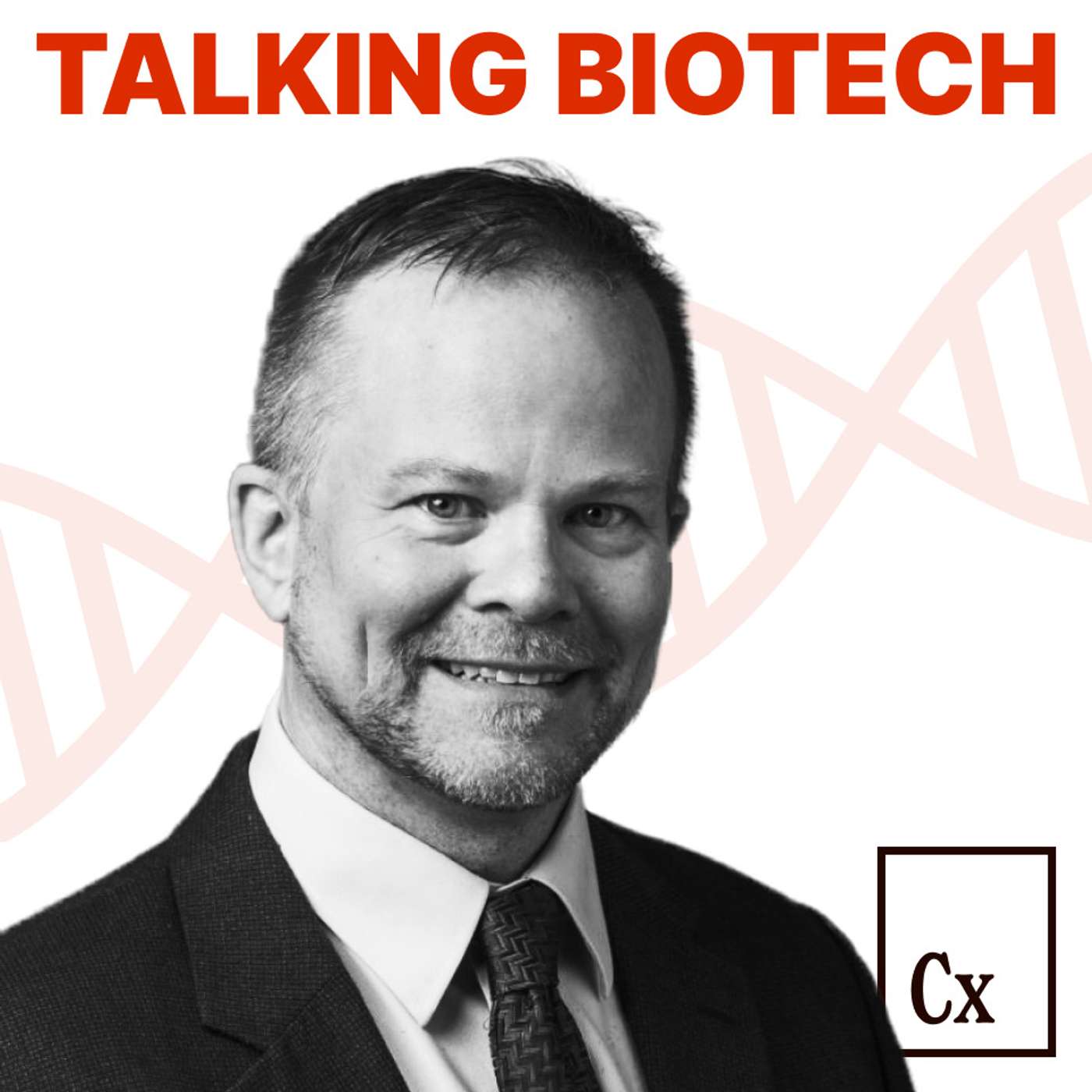
Talking Biotech with Dr. Kevin Folta
Colabra
Talking Biotech is a weekly podcast that uncovers the stories, ideas and research of people at the frontier of biology and engineering.
Each episode explores how science and technology will transform agriculture, protect the environment, and feed 10 billion people by 2050.
Interviews are led by Dr. Kevin Folta, a professor of molecular biology and genomics.
Each episode explores how science and technology will transform agriculture, protect the environment, and feed 10 billion people by 2050.
Interviews are led by Dr. Kevin Folta, a professor of molecular biology and genomics.
Episodes
Mentioned books

Apr 8, 2016 • 57min
Coffee Origins, Breeding and Challenges
When we think of the plants that are important to us, we might think right past the magical shrub that gives us coffee berries. Coffee underpins major economies in the world, has an interesting history, and its sustainable production is threatened.We’re joined by Hanna Neuschwander from World Coffee Research. Hanna describes what coffee is, its natural history, species in the wild, and breeding efforts to improve coffee. We also discuss the major challenges that stand to harm coffee production in the future.Hanna Neuschwander World Coffee Researchworldcoffeeresearch.org – websiteworldcoffeeresearch – facebook@WCoffeeResearch – Twitter@wcoffeeresearch – Instagram Hannah Neuenschwander (Co-Host) @hannahaggie2014 – Twitter@texanmeetsmidwest – Instagramwww.texanmeetsmidwest.com – Personal blog https://www.facebook.com/texanmeetsmidwest/ – Facebook page for blog# COLABRATalking Biotech is brought to you by Colabra – an R&D platform that brings your lab’s world-changing research together in one shared space. Learn more at https://www.colabra.app/# TALKING BIOTECHTwitter: https://twitter.com/talkingbiotechWebsite: https://www.colabra.app/podcasts/talking-biotech/Instagram: https://www.instagram.com/colabrahqThe Talking Biotech podcast is distinct from Dr. Kevin Folta's teaching and research roles at the University of Florida. The views expressed on the show are those of Dr. Folta and his guests, and do not reflect the opinions of the university or Colabra.
Apr 3, 2016 • 1h 10min
Glyphosate in Breast Milk and Wine?
Recent unpublished reports are popping up on the internet that suggest that the herbicide glyphosate is showing up at dangerous levels in a variety of places. These range from breast milk, to beer, to wine, to potato chips. There are a number of laboratories and kit manufacturers that are excited to provide a means for such analysis. In the hands of the untrained, such kits and data are nothing more than in invitation for misinterpretation or misuse.In this week’s podcast we talk to two experts that routinely measure rare compounds. Dr. Shelley McGuire discusses her findings as a lactation specialist, describing the results in her recent paper on glyphosate in breast milk. Dr. Thomas Colquhoun speaks about the methods and kits, along with what the alleged findings in wine really mean.Twitter @mcguiresmiguireThomas Colquhoun’s website# COLABRATalking Biotech is brought to you by Colabra – an R&D platform that brings your lab’s world-changing research together in one shared space. Learn more at https://www.colabra.app/# TALKING BIOTECHTwitter: https://twitter.com/talkingbiotechWebsite: https://www.colabra.app/podcasts/talking-biotech/Instagram: https://www.instagram.com/colabrahqThe Talking Biotech podcast is distinct from Dr. Kevin Folta's teaching and research roles at the University of Florida. The views expressed on the show are those of Dr. Folta and his guests, and do not reflect the opinions of the university or Colabra.
Mar 26, 2016 • 42min
Banana Disease and GE Solutions
Dr. Leena Tripathi is a leader in banana biotechnology, working at IITA in Nairobi, Kenya. She has been publishing prolifically on a number of solutions for banana disease resistance using genetic engineering. In this episode of Talking Biotech she discusses the disease threats to banana production in Africa, and the solutions she has identified. She also touches on the social climate, farm structure, and attitudes toward the technology. You’ll hear many thoughts that will surprise you!Twitter @@IITA_CGIAR # COLABRATalking Biotech is brought to you by Colabra – an R&D platform that brings your lab’s world-changing research together in one shared space. Learn more at https://www.colabra.app/# TALKING BIOTECHTwitter: https://twitter.com/talkingbiotechWebsite: https://www.colabra.app/podcasts/talking-biotech/Instagram: https://www.instagram.com/colabrahqThe Talking Biotech podcast is distinct from Dr. Kevin Folta's teaching and research roles at the University of Florida. The views expressed on the show are those of Dr. Folta and his guests, and do not reflect the opinions of the university or Colabra.
Mar 19, 2016 • 54min
All About Bt!
If you tell a stranger that something called “delta endotoxin” is as close as it gets to a miracle, they’d likely respond in one of two ways. They’d either want you to seek counseling, or find out if they can get it injected into their faces. Humans have love-hate relationships with toxic compounds, and delta endotoxin, or “Bt toxin” is no exception.This natural protein is toxic to a specific suite of pests, namely caterpillars that consume ag crops. It has been understood for decades and is widely used in organic farming.It also is the protein used to protect corn and cotton from insect damage, and now is being used in eggplant in Bangladesh. The use of this natural insecticide has massively cut the use of broad-spectrum insecticides.Today on the podcast it is a pleasure to talk to Dr. Fred Perlak. Dr. Perlak worked with Bt from the beginning. From understanding its role in insect physiology to identifying the gene, to helping introduce it to plants, he knows this topic as well as anyone. We discuss history and applications.In the second half your questions are answered. Twitter @FredPerlak# COLABRATalking Biotech is brought to you by Colabra – an R&D platform that brings your lab’s world-changing research together in one shared space. Learn more at https://www.colabra.app/# TALKING BIOTECHTwitter: https://twitter.com/talkingbiotechWebsite: https://www.colabra.app/podcasts/talking-biotech/Instagram: https://www.instagram.com/colabrahqThe Talking Biotech podcast is distinct from Dr. Kevin Folta's teaching and research roles at the University of Florida. The views expressed on the show are those of Dr. Folta and his guests, and do not reflect the opinions of the university or Colabra.
Mar 12, 2016 • 42min
Cherry Domestication and Breeding, Herbicide Beer?
Cherries are a perennial favorite fruit. However, they are a tree, so their genetic improvement is slow. Episode 27 features Dr. Amy Iezzoni, as she discusses cherry genetic origins and efforts to improve cherry through traditional breeding.In part two, your questions are answered, namely questions about reports of glyphosate in urine, breastmilk and Germans.# COLABRATalking Biotech is brought to you by Colabra – an R&D platform that brings your lab’s world-changing research together in one shared space. Learn more at https://www.colabra.app/# TALKING BIOTECHTwitter: https://twitter.com/talkingbiotechWebsite: https://www.colabra.app/podcasts/talking-biotech/Instagram: https://www.instagram.com/colabrahqThe Talking Biotech podcast is distinct from Dr. Kevin Folta's teaching and research roles at the University of Florida. The views expressed on the show are those of Dr. Folta and his guests, and do not reflect the opinions of the university or Colabra.
Mar 5, 2016 • 1h 22min
The Story of GE Papaya, Helping People Save an Industry
The story of how genetic engineering saved the Hawaiian papaya industry gets lost in the discussion of agronomic crop uses of the technology. This story is important because this is not just a story of technology. It is the story of people.Joni Kamiya tells the story of growing up on her family’s farm and the changes that came with the virus and how the genetically engineered saved production of this traditional crop for their family.Follow Joni on Twitter at @HIFarmersDtr, and her blog at hawaiifarmersdaughter.com The second part of the podcast visits with Cornell plant virologist Dr. Dennis Gonsalves. He studied papaya ringspot virus in the 1970’s and 1980’s, designing clever solutions to treat the disease that plagued the industry in his home state. Into the 1990’s he teamed with others working in genetic engineering to develop a solution for papaya. While the first half of his interview is about the disease and the techniques used to solve it, the second half is about the satisfaction of being a kid growing up, going to university, studying under brilliant and kind supervisors that taught him to think about science, but to also think about people. This is a wonderful interview with a warm and charming wayward Hawaiian boy that returned home to rescue an small-farmers growing a traditional crop in the place he loves. He also touches on how activists derail technology deployment, and how public-sector scientists need to step up in efforts to create products and engage the public.# COLABRATalking Biotech is brought to you by Colabra – an R&D platform that brings your lab’s world-changing research together in one shared space. Learn more at https://www.colabra.app/# TALKING BIOTECHTwitter: https://twitter.com/talkingbiotechWebsite: https://www.colabra.app/podcasts/talking-biotech/Instagram: https://www.instagram.com/colabrahqThe Talking Biotech podcast is distinct from Dr. Kevin Folta's teaching and research roles at the University of Florida. The views expressed on the show are those of Dr. Folta and his guests, and do not reflect the opinions of the university or Colabra.
Feb 26, 2016 • 48min
Beautiful GMOs and the Not-So-Dirty Dozen
In today’s Talking Biotech Podcast the first guest is Keira Havens. She’s the CEO of Revolution Bio, a company turned non-profit that is interested in using the power of plants to introduce the public to the power of genetic engineering. They have found good public support for genetically engineered flowers, and hope that this technology is a gateway to a broader understanding of the technology. In part two, Dr. Natalia Peres talks about the EWG’s Dirty Dozen, especially as the concept applies to strawberries. Strawberries are EWG’s #3 “dirty” fruit on their agenda, and Dr. Peres tells the facts about the pesticides used and their relative risks. Spoiler alert– your strawberries are safe, right out of the field!Revolution Bioengineering = @revolutionbio Natalia Peres, strawberry pathologist # COLABRATalking Biotech is brought to you by Colabra – an R&D platform that brings your lab’s world-changing research together in one shared space. Learn more at https://www.colabra.app/# TALKING BIOTECHTwitter: https://twitter.com/talkingbiotechWebsite: https://www.colabra.app/podcasts/talking-biotech/Instagram: https://www.instagram.com/colabrahqThe Talking Biotech podcast is distinct from Dr. Kevin Folta's teaching and research roles at the University of Florida. The views expressed on the show are those of Dr. Folta and his guests, and do not reflect the opinions of the university or Colabra.
Feb 20, 2016 • 41min
Biotech & Tomato Breeding – Social Media on the Farm
Improving plants with biotechnology is not just genetic engineering, it is using tools of molecular biology and genomics to guide traditional breeding strategies. In this episode Dr. Harry Klee from the University of Florida discusses how the Plant Innovation Center utilizes such strategies to breed tomatoes with superior flavors. In part two, University of Manitoba student Chelsea Boonstra discusses how a classroom assignment turned into a social media sensation, and became the public face of her family’s dairy operation. We discuss the role of the farmer as a trusted source of ag information, and the importance of telling their stories using online media.Dr. Klee’s website – Here’s where you can get tomato seeds for a small donation to the breeding program! The Garden Gem Facebook Page On Twitter: @kleelab More Chelsea Boonstra: Chelsea’s Boonstra Farms Video on YouTube On Twitter: @cboon6 or @forevrfarmgirl# COLABRATalking Biotech is brought to you by Colabra – an R&D platform that brings your lab’s world-changing research together in one shared space. Learn more at https://www.colabra.app/# TALKING BIOTECHTwitter: https://twitter.com/talkingbiotechWebsite: https://www.colabra.app/podcasts/talking-biotech/Instagram: https://www.instagram.com/colabrahqThe Talking Biotech podcast is distinct from Dr. Kevin Folta's teaching and research roles at the University of Florida. The views expressed on the show are those of Dr. Folta and his guests, and do not reflect the opinions of the university or Colabra.
Oct 31, 2015 • 37min
Innovative Approaches of the Future Farm Project 2050
Several weeks ago there was a request for Talking Biotech Podcast to interview Prof Graeme Martin. Prof Martin has a long career in animal reproductive biology, and in recent times has had more focus on how to test new strategies in supporting livestock, crops and the nation’s resident biodiversity. His “Clean, Green and Ethical” approach to animal production dovetails with novel strategies to sustainably raise crops in no-till systems as part of the Future Farm 2050 Project. The discussion describes some simple, logical, low-cost techniques to increase crop production with less impact on the environment and in the context of minimal water resources. This was a wonderful interview that jogs out-of-the-traditional thinking to address key issues in farm sustainability going forward. Please visit (and Like!) the Future Farm 2050 Facebook Page# COLABRATalking Biotech is brought to you by Colabra – an R&D platform that brings your lab’s world-changing research together in one shared space. Learn more at https://www.colabra.app/# TALKING BIOTECHTwitter: https://twitter.com/talkingbiotechWebsite: https://www.colabra.app/podcasts/talking-biotech/Instagram: https://www.instagram.com/colabrahqThe Talking Biotech podcast is distinct from Dr. Kevin Folta's teaching and research roles at the University of Florida. The views expressed on the show are those of Dr. Folta and his guests, and do not reflect the opinions of the university or Colabra.
Oct 24, 2015 • 40min
Cassava 2, History, Domestication; Biotech Virus Resistance
Biotech innovation in cassava is necessary to speeding genetic improvement of this food staple. Together with breeding efforts, the new resources derived define new crops that primarily serve the developing world. Yet the Western world knows so little about cassava. This episode of Talking Biotech is part two of the series on cassava genetic improvement. Dr. Barbara Schaal speaks about its genetic origins, migration and domestication. Dr. Nigel Taylor describes the extensive work ongoing at the Danforth Center on cassava, and focuses on installation of virus resistance.# COLABRATalking Biotech is brought to you by Colabra – an R&D platform that brings your lab’s world-changing research together in one shared space. Learn more at https://www.colabra.app/# TALKING BIOTECHTwitter: https://twitter.com/talkingbiotechWebsite: https://www.colabra.app/podcasts/talking-biotech/Instagram: https://www.instagram.com/colabrahqThe Talking Biotech podcast is distinct from Dr. Kevin Folta's teaching and research roles at the University of Florida. The views expressed on the show are those of Dr. Folta and his guests, and do not reflect the opinions of the university or Colabra.

