

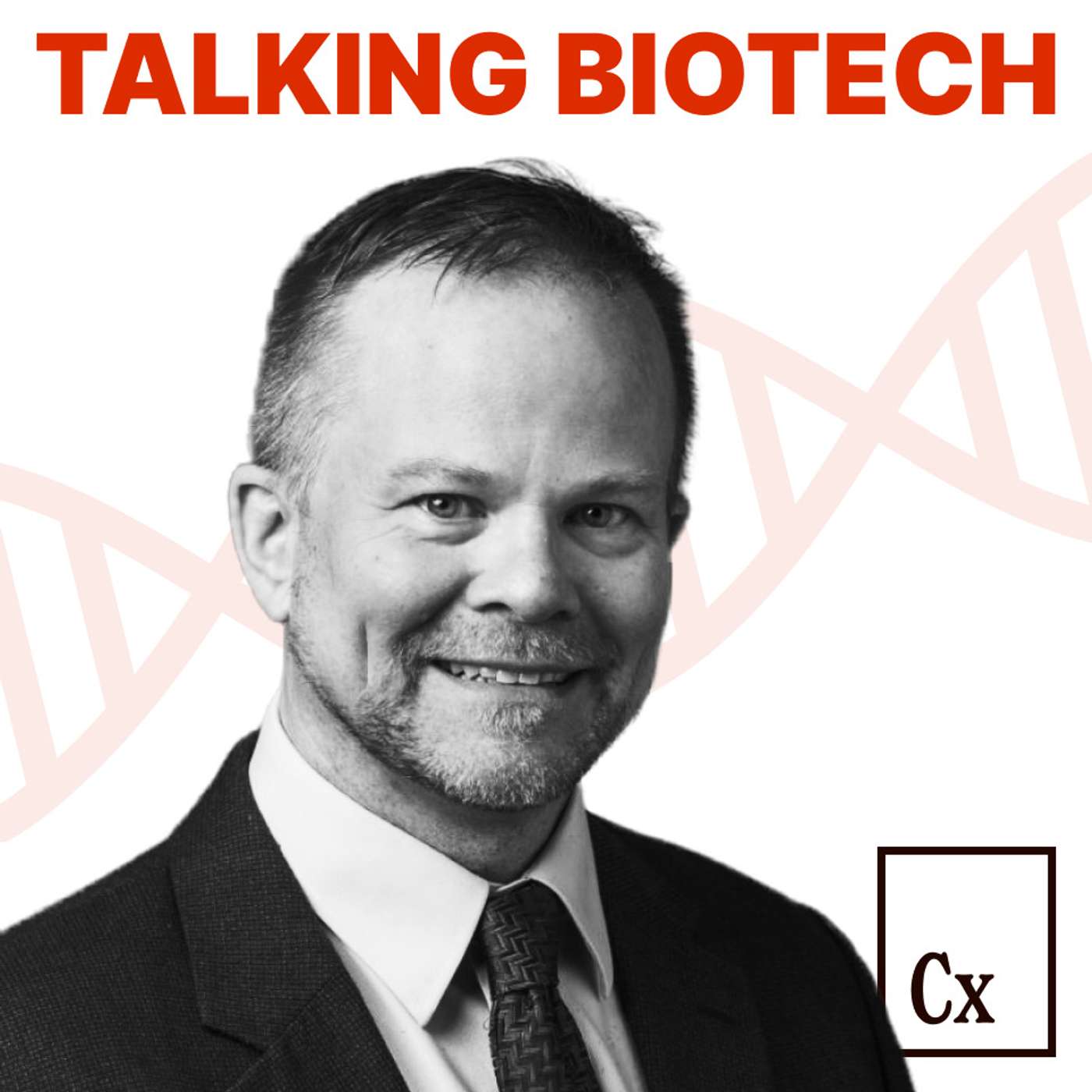
Talking Biotech with Dr. Kevin Folta
Colabra
Talking Biotech is a weekly podcast that uncovers the stories, ideas and research of people at the frontier of biology and engineering.
Each episode explores how science and technology will transform agriculture, protect the environment, and feed 10 billion people by 2050.
Interviews are led by Dr. Kevin Folta, a professor of molecular biology and genomics.
Each episode explores how science and technology will transform agriculture, protect the environment, and feed 10 billion people by 2050.
Interviews are led by Dr. Kevin Folta, a professor of molecular biology and genomics.
Episodes
Mentioned books

Jun 18, 2016 • 51min
Innovations to Fight Citrus Disease
If there was anyone that could be dubbed a science wizard, it might be Dr. Jude Grosser. Dr. Grosser has made a career of edgy innovation, creating new solutions that define the forefront of genetic improvements in citrus. He has mastered unconventional techniques that produce new variants of trees (both their scions and rootstocks) that bring improved production quality to Florida’s fresh fruit and orange juice industries. Currently he is a key strategist in the fight to save Florida citrus, where some of his solutions are being trialed, and don’t face the regulatory impediments of “GMO” citrus trees.Dr. Grosser’s Website# COLABRATalking Biotech is brought to you by Colabra – an R&D platform that brings your lab’s world-changing research together in one shared space. Learn more at https://www.colabra.app/# TALKING BIOTECHTwitter: https://twitter.com/talkingbiotechWebsite: https://www.colabra.app/podcasts/talking-biotech/Instagram: https://www.instagram.com/colabrahqThe Talking Biotech podcast is distinct from Dr. Kevin Folta's teaching and research roles at the University of Florida. The views expressed on the show are those of Dr. Folta and his guests, and do not reflect the opinions of the university or Colabra.
Jun 11, 2016 • 40min
Genetic Engineering Forests
Dr. Steve Strauss is a Distinguished Professor of Forestry at Oregon State University. He has been at the forefront of forest biology and genetic engineering of trees, contributing greatly to the understanding of fundamental tree biology, as well as the development of techniques and tools to perform genetic engineering in tree species. We discuss the many opportunities in tree breeding, as well as the limitations and other challenges. Please follow Dr. Strauss on Twitter: @shstrauss# COLABRATalking Biotech is brought to you by Colabra – an R&D platform that brings your lab’s world-changing research together in one shared space. Learn more at https://www.colabra.app/# TALKING BIOTECHTwitter: https://twitter.com/talkingbiotechWebsite: https://www.colabra.app/podcasts/talking-biotech/Instagram: https://www.instagram.com/colabrahqThe Talking Biotech podcast is distinct from Dr. Kevin Folta's teaching and research roles at the University of Florida. The views expressed on the show are those of Dr. Folta and his guests, and do not reflect the opinions of the university or Colabra.
Jun 4, 2016 • 50min
What a Plant Knows
It is so wonderful to share the time with Prof. Danny Chamovitz. He’s an accomplished researcher, a successful Dean, and leader in Israel’s agricultural research enterprise. He discusses his book, What a Plant Knows and describes plants as beings in tune with their environments, planning to adapt to change on demand. He’ll change your perspective on plants for ever. He also talks about his lab’s research and the climate toward biotech in Israel.We’ll also take a look at Miles Greb’s comic, After the Gold Rush, a science-based comic that emphasizes its scientific precision in telling a compelling sci-fi story. It is more sci than fi. Check out @GoldRushComic.# COLABRATalking Biotech is brought to you by Colabra – an R&D platform that brings your lab’s world-changing research together in one shared space. Learn more at https://www.colabra.app/# TALKING BIOTECHTwitter: https://twitter.com/talkingbiotechWebsite: https://www.colabra.app/podcasts/talking-biotech/Instagram: https://www.instagram.com/colabrahqThe Talking Biotech podcast is distinct from Dr. Kevin Folta's teaching and research roles at the University of Florida. The views expressed on the show are those of Dr. Folta and his guests, and do not reflect the opinions of the university or Colabra.
May 28, 2016 • 49min
GMO Cheese; Nat’l Academies Review
Chipotle proudly serves it. The Vermont GMO labeling rules exempt it. Still 95% of cheese is manufactured from enzymes created through recombinant DNA technology. These GMO-derived enzymes are tremendously beneficial to the process. Young cow stomachs are not needed and the prices are lower because the enzymes are abundant. Levi Gadye is a graduate student in neuroscience and science writer. He recently wrote an article on cheese enzymes in Gizmodo, and joined us in talking about cheese. Kavin Senapathy co-hosts.In the second part of the podcast I cover the continued FOIA requests for my emails and do a quick review of the National Academies of Science scholarly review of genetic engineering released last week.QUICK NOTE: The recording now is different than the original one posted. It turns out that there was a factual error. Our guest stated that dairy cows gave birth to offspring that are “probably immediately euthanized”. After consulting with an expert in animal cooperative extension it was resolved that male and female offspring of dairy cows are raised 12-14 months before being moved into beef production. I wanted to follow up on that before posting and forgot. The podcast stands corrected. # COLABRATalking Biotech is brought to you by Colabra – an R&D platform that brings your lab’s world-changing research together in one shared space. Learn more at https://www.colabra.app/# TALKING BIOTECHTwitter: https://twitter.com/talkingbiotechWebsite: https://www.colabra.app/podcasts/talking-biotech/Instagram: https://www.instagram.com/colabrahqThe Talking Biotech podcast is distinct from Dr. Kevin Folta's teaching and research roles at the University of Florida. The views expressed on the show are those of Dr. Folta and his guests, and do not reflect the opinions of the university or Colabra.
May 21, 2016 • 42min
Gene Editing Virus Resistant Pigs
The African Swine Fever Virus is a devastating pathogen that leads to fatal disease in domesticated swine. Scientists at the Roslin Institute led by Prof. Bruce Whitelaw have made an important advance for domestic pig health and welfare. Wild African pigs like warthogs do not get the disease. Researchers at Roslin have studied the genes associated with viral infection, and found what is likely a critical difference between the wild and domestic pigs. Using new gene editing technology, the change in wild pigs has been created in domestic pigs, and they will be tested for resistance to the virus this year. This example is one of may that is coming in animal, plant, and fungal genetic improvement through gene editing.# COLABRATalking Biotech is brought to you by Colabra – an R&D platform that brings your lab’s world-changing research together in one shared space. Learn more at https://www.colabra.app/# TALKING BIOTECHTwitter: https://twitter.com/talkingbiotechWebsite: https://www.colabra.app/podcasts/talking-biotech/Instagram: https://www.instagram.com/colabrahqThe Talking Biotech podcast is distinct from Dr. Kevin Folta's teaching and research roles at the University of Florida. The views expressed on the show are those of Dr. Folta and his guests, and do not reflect the opinions of the university or Colabra.
May 14, 2016 • 48min
Citrus Domestication, Breeding & Challenges
“Citrus” is a term applied to a variety of popular and nutritious fruits, including oranges, grapefruit, lemons and limes. Citrus breeders are tasked with improving the varieties, which takes decades. Still, great progress has been made in fruit improvement. However, over the last twenty years a disease called Huanglongbing, or “HLB” (also known as “citrus greening”) has emerged in the USA and threatens the citrus industry. Today the focus is how to grow improved citrus varieties that can survive this insidious disease. Dr. Fred Gmitter is a seasoned citrus breeder that has produced improved fruit varieties, but also is working to identify new varieties to combat HLB. # COLABRATalking Biotech is brought to you by Colabra – an R&D platform that brings your lab’s world-changing research together in one shared space. Learn more at https://www.colabra.app/# TALKING BIOTECHTwitter: https://twitter.com/talkingbiotechWebsite: https://www.colabra.app/podcasts/talking-biotech/Instagram: https://www.instagram.com/colabrahqThe Talking Biotech podcast is distinct from Dr. Kevin Folta's teaching and research roles at the University of Florida. The views expressed on the show are those of Dr. Folta and his guests, and do not reflect the opinions of the university or Colabra.
May 7, 2016 • 59min
Exploring the Unnaturally Delicious
This week the Talking Biotech Podcast shares an intriguing discussion with Dr. Jayson Lusk. Dr. Lusk is an agricultural and food economist at Oklahoma State University. He has analyzed many facets of consumer choices, consumer behaviors, and the potential costs of policy change in agriculture. More importantly, he is a sought after speaker and author, sharing his expertise and experiences in many industry and public forums. He is a prolific author, and his books The Food Police and Unaturally Delicious are written for a familiar audience and contain interesting and colorful stories about the past, present and future of food technology.# COLABRATalking Biotech is brought to you by Colabra – an R&D platform that brings your lab’s world-changing research together in one shared space. Learn more at https://www.colabra.app/# TALKING BIOTECHTwitter: https://twitter.com/talkingbiotechWebsite: https://www.colabra.app/podcasts/talking-biotech/Instagram: https://www.instagram.com/colabrahqThe Talking Biotech podcast is distinct from Dr. Kevin Folta's teaching and research roles at the University of Florida. The views expressed on the show are those of Dr. Folta and his guests, and do not reflect the opinions of the university or Colabra.
Apr 29, 2016 • 1h 3min
Strawberry History and Improvement; Favorite Sites
Strawberry is a popular fruit with tremendous commercial value, and while everyone loves a good strawberry, are they actually getting better? This week’s podcast talks to Dr. Jim Hancock, strawberry breeder from Michigan State University. Dr. Hancock explains strawberry’s wild history, from cultivation by indigenous people in Chile, to colonists moving them around the world, to spies taking them home to the king. Modern challenges and solutions to sustainable production are discussed. In the second part of the podcast professional speaker and agvocate Michele Payn-Knoper (Cause Matters Corp.) talks about effective ag communication and her favorite places to find good information on science and agriculture. Foodinsight.org — geneticliteracyproject.com — thefarmerslife.com — Foodie Farmer “My Favorites Things” cover by Gyu-Ho Lee. Amazing guitar work on YouTube under gyu5730.# COLABRATalking Biotech is brought to you by Colabra – an R&D platform that brings your lab’s world-changing research together in one shared space. Learn more at https://www.colabra.app/# TALKING BIOTECHTwitter: https://twitter.com/talkingbiotechWebsite: https://www.colabra.app/podcasts/talking-biotech/Instagram: https://www.instagram.com/colabrahqThe Talking Biotech podcast is distinct from Dr. Kevin Folta's teaching and research roles at the University of Florida. The views expressed on the show are those of Dr. Folta and his guests, and do not reflect the opinions of the university or Colabra.
Apr 23, 2016 • 44min
A Weed Solves a Crisis
Could the lowly dandelion solve a crisis? If Key Gene CEO Dr. Arjen van Tunen and associates are correct, this yard pest may be the basis of sustainable and highly profitable rubber production. A growing middle class worldwide has produced a need for high-quality rubber, mostly for tires. Rubber tree (the genus Havea) plantations in Southeast Asia are threatened by climate change, disease, and sustainable harvesting is costly and labor intensive. However, the dandelion produces latex, just not in huge amounts. Scientists at KeyGene have identified a high production version in Kazakhstan and combined its genetics with those of the larger, common dandelion. The result is a plant that could revolutionize the rubber industry and provide a new high-value, easy-to-grow crop for farmers. Environmental impacts are also discussed. In the process, the scientists at KeyGene also identified genes related to apomixis, the ability to produce seeds without fertilization, essentially clones of the parent. Understanding these genes could dramatically change agriculture, as any plant could potentially be made to produce clonal seeds from the mother plant. In the second part of the podcast, correspondent Vern Blazek talks to Dr. Curt Hannah who answers a listener question about corn varieties and just how much genetic variation there is in modern modern hybrids. Plus some thoughts on the Borlaug CAST Agriculture Communications Award The audio at the end can be found here, along with a corresponding video.# COLABRATalking Biotech is brought to you by Colabra – an R&D platform that brings your lab’s world-changing research together in one shared space. Learn more at https://www.colabra.app/# TALKING BIOTECHTwitter: https://twitter.com/talkingbiotechWebsite: https://www.colabra.app/podcasts/talking-biotech/Instagram: https://www.instagram.com/colabrahqThe Talking Biotech podcast is distinct from Dr. Kevin Folta's teaching and research roles at the University of Florida. The views expressed on the show are those of Dr. Folta and his guests, and do not reflect the opinions of the university or Colabra.
Apr 16, 2016 • 48min
In Search of Celiac-Safe Wheat
Dietary reactions to wheat are on the rise, and science is grasping for answers. One approach to work around the genetic basis of the reaction, and that is well understood. With that information, scientists like Dr. Chris Miller at the Kansas Wheat Innovation Center are searching for innovative solutions. Current concepts seek to breed modern wheat with other historical varieties featuring low reactivity. Future methods suggest that genetic engineering and gene editing might be especially effective solutions to the problem. Co-Hosted by Kevin Klatt, Graduate Student in Molecular Nutrition, Cornell University Twitter: @Nutrevolve# COLABRATalking Biotech is brought to you by Colabra – an R&D platform that brings your lab’s world-changing research together in one shared space. Learn more at https://www.colabra.app/# TALKING BIOTECHTwitter: https://twitter.com/talkingbiotechWebsite: https://www.colabra.app/podcasts/talking-biotech/Instagram: https://www.instagram.com/colabrahqThe Talking Biotech podcast is distinct from Dr. Kevin Folta's teaching and research roles at the University of Florida. The views expressed on the show are those of Dr. Folta and his guests, and do not reflect the opinions of the university or Colabra.

