

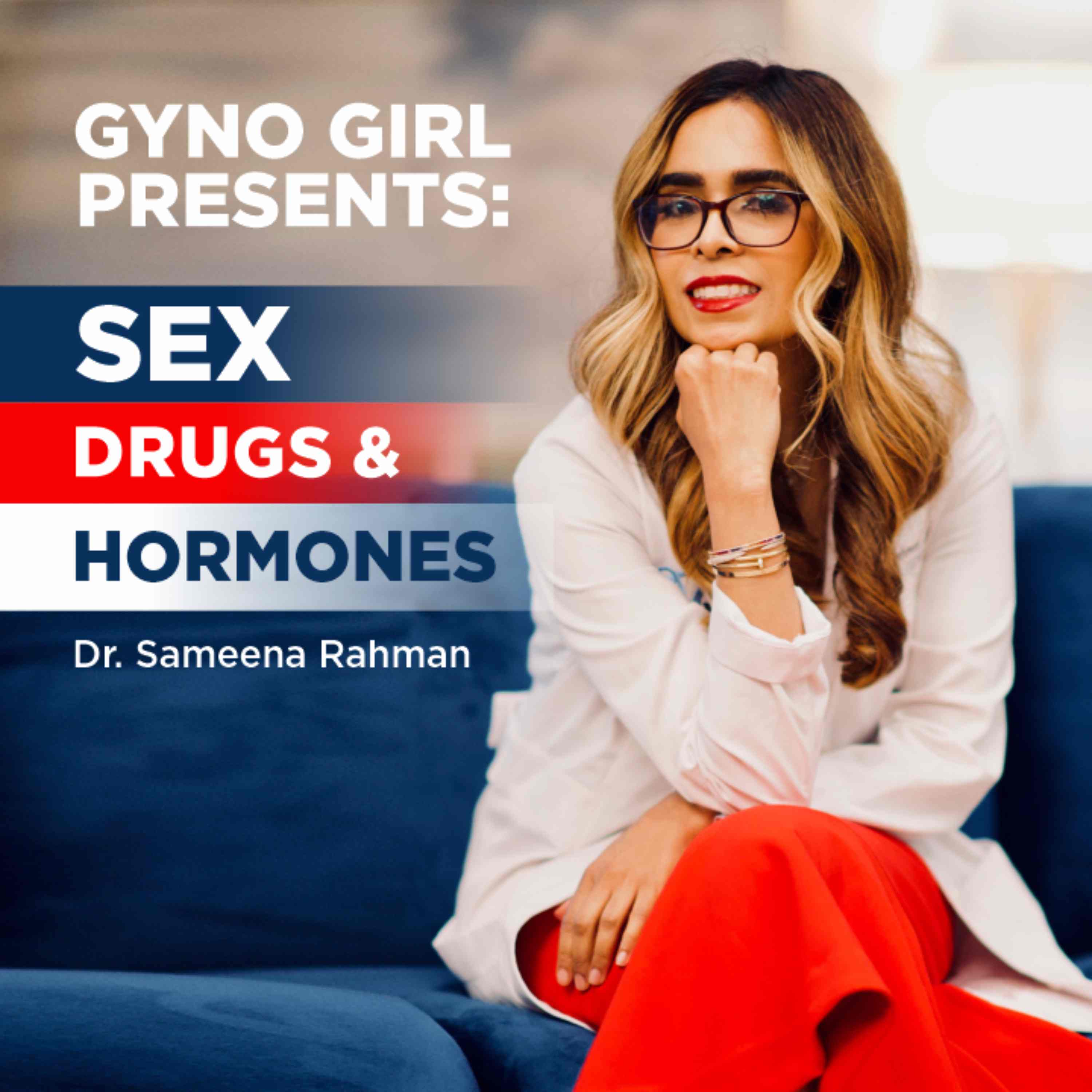
Gyno Girl Presents: Sex, Drugs & Hormones
Dr. Sameena Rahman
As a fierce champion for women empowering women (and the people that love them), GynoGirl provides the knowledge and education to help you advocate for yourself so that you can live your best life!
Dr. Sameena Rahman curates a space for exploring hormonal changes, sexual health, and pelvic wellness, while also emphasizing self-love and life improvement. Through collaborations with leading experts and the personal stories of patients, she provides a platform for knowledge-sharing while also addressing healthcare issues that have impaired women’s quality of life.
A board-certified, South-Asian Muslim-American gynecologist who specializes in sex medicine and menopause, Dr. Rahman highlights the influence of religion, culture, racial bias, and societal factors on sexual health experiences.
Dr. Sameena Rahman curates a space for exploring hormonal changes, sexual health, and pelvic wellness, while also emphasizing self-love and life improvement. Through collaborations with leading experts and the personal stories of patients, she provides a platform for knowledge-sharing while also addressing healthcare issues that have impaired women’s quality of life.
A board-certified, South-Asian Muslim-American gynecologist who specializes in sex medicine and menopause, Dr. Rahman highlights the influence of religion, culture, racial bias, and societal factors on sexual health experiences.
Episodes
Mentioned books

Apr 10, 2026 • 52min
Labiaplasty, Anatomy, Overdoing It, Traveling for Surgery & Prevention with Dr. Dahlia Rice
In this episode, Dr. Sameena Rahman sits down with Dr. Dahlia Rice to discuss everything you need to know about labiaplasty from anatomy and what's normal, to prevention, the risks of overdoing it, and what you need to consider before traveling for surgery.
Apr 3, 2026 • 1h 2min
Fertility Myths, Egg Freezing, and The Lucky Egg with Dr. Lucky Sekhon
Is age 35 really a fertility cliff? Should everyone freeze their eggs? And why does your doctor speak in such vague terms when you ask about your chances?In this episode, I sit down with Dr. Lucky Sekhon, a double board-certified reproductive endocrinologist in New York City and author of the bestselling book The Lucky Egg. Dr. Sekhon has spent years watching patients walk into her clinic overwhelmed by information that is not always true or grounded in science. This is what inspired her to write a book that could close the massive knowledge gap around fertility.Dr. Sekhon gives the actual numbers most fertility doctors won't commit to and explains why doctors who speak in absolutes are a red flag. How men have a biological clock too. Advanced paternal age can also bring on mutation risks and can affect pregnancy outcomes like preeclampsia.We talk about how many women end up with unwanted pregnancies due to thinking they are not able to get pregnant anymore because their cycles are no longer consistent.We also touch on vaginismus and how common it is in the South Asian community, where women often delay seeking help because of cultural stigma and family pressure. This is physical, not just psychological Dr. Sekhon will share something that confirms this is not in patients' heads.And the shocking fact that one in four female physicians will struggle with infertility, and it's an independent risk factor beyond just delayed childbearing.This is an episode you don't want to miss, especially if you're in the thick of making decisions around your fertility or you're a clinician in the field looking to better support your patients.HighlightsEgg freezing gives you a head start if you ever need IVF, not just an insurance policy.LGBTQ family building have more options than most people realize.Ovulation predictor can be helpful but aren't 100% accurate.Your fertility is individual you're not a statistic or an algorithm.How doctors can practice cultural humility. If you're making decisions about egg freezing or navigating fertility challenges, make sure to pick Dr. Sekhon's book The Lucky Egg for the evidence-based information you need. Visit theluckyegg.com to use the egg freezing calculator and access more resources.Make sure to subscribe to the podcast so you don't miss upcoming episodes.Get in Touch with Dr. Sekhon:Website BookInstagramTikTok YoutubeGet in Touch with Me: WebsiteInstagramYoutubeSubstack
Mar 27, 2026 • 31min
How We Treat Pelvic Pain, Painful Sex, and Sexual Dysfunction
Comprehensive sexual health care requires time and a team approach. I'm joined by two of my team members Karen Badley, my nurse practitioner, and Grace Prete, our pelvic floor physical therapist.We talk about why complex conditions like pelvic pain, painful sex, and hormonal changes don't fit into 10-minute appointments. You can't address someone's full picture when insurance only reimburses for quick visits. We discuss why multidisciplinary care matters, why pelvic floor therapy sessions need real time, and why treating hormonal health alongside aesthetics makes a difference.This conversation is about what patients deserve and why the traditional insurance model makes that impossible. We talk about treating the whole person, not just symptoms. Last year, I transitioned to a concierge model after over a decade of taking insurance because this is how medicine should be practiced.HighlightsGenitourinary syndrome of lactation is similar to GSM in menopause.Upper cross syndrome from breastfeeding and tech neck causes cervical spine issues.Visible light from phones and screens worsens hyperpigmentation (tinted mineral sunscreen helps).Tight pelvic floor muscles are actually the weakest, not the strongest.Insurance bundles entire pregnancy into one fee with no separate postpartum reimbursement.Patients can see multiple providers on the same day for coordinated care.f you're struggling with sexual health issues, pelvic pain, or hormonal changes and feel like your appointments are too rushed, consider seeking comprehensive care. Check out our practice at https://www.thegsmcollective.com/ to learn more about our concierge model. Subscribe to the podcast so you don't miss upcoming episodes.Connect with Dr. Rahman:Website - https://www.thegsmcollective.com/about-usInstagram - https://www.instagram.com/gynogirl/Youtube - https://www.youtube.com/@UCmFnlujKDsDE3uIUMrbcByQSubstack - https://gynogirl.substack.com/p/welcome-to-vagilante-nation?just_subscribed=true
Mar 20, 2026 • 39min
Functional Strength Training, Nutrition, and Midlife Reset with Katalin Rodriguez-Ogren
Katalin Rodriguez Ogren is a certified badass. She's owned POW Gym in Chicago's West Loop for 25 years, she's a lifelong martial artist who played the female ninjas in Mortal Kombat 2, and she just wrote a book on nutrition for menopause after her GP handed her marriage counseling referrals instead of addressing her hormones.When Katalin started experiencing severe skin issues during menopause, her GP dismissed her concerns about hormones and instead gave her marriage counseling referrals. That experience led her to write a book about nutrition strategies for menopause.We discuss functional strength training and why it's different from typical gym workouts, how estrogen decline affects protein synthesis, and why most women aren't getting enough protein. Katalin explains why midlife is a reset rather than a decline, how to support strength training with proper nutrition, and why small wins compound into big wins.HighlightsEstrogen decline causes anabolic resistance, making it harder to synthesize protein as you age.Pairing protein with every carb helps stabilize blood sugar throughout the day."One plus one equals three" strategic meal combinations compound nutrition benefits.Digestion should be invisible; if you can hear it, your meal timing or choices need adjustment.Movement is longevity insurance for independence in later life.Midlife is a reset, not a decline. If you're feeling dismissed by doctors or struggling with where to start, consider prioritizing protein at your meals and finding movement that builds functional strength. Small changes compound over time.Katalin's book Nutrition for Women Navigating Menopause: The Power of Addition: An Anti-Diet Strategy is available on Amazon if you want practical strategies for reorganizing your nutrition.Subscribe to the podcast so you don't miss upcoming episodes.Get in Touch with Katalin:WebsiteInstagramBuy Katalin's BookGet in Touch with Me: WebsiteInstagramYoutubeSubstack
Mar 13, 2026 • 42min
Postpartum to Perimenopause: Bounce-Back Culture, Body Shame, and Normal Anatomy with Dr. Shieva Ghofrany
Welcome to Between Two Labia, a new series filmed in my office in front of my 8-foot vulva. When colleagues come to town, I sit down with them to talk about the things you want to ask but think you shouldn't. These are the conversations I have with friends and colleagues that you wouldn't normally get to listen to. Dr. Shieva Ghofrany is my first guest, and you'll see these episodes pop up from time to time between regular podcast episodes.We discuss the weird limbo between having a baby and hitting perimenopause, why bounce-back culture is toxic, why every vulva and labia looks different (and that's completely normal), and much more. Shieva talks about how going through her own health challenges made her a more empathetic doctor. And of course, we cover the basics: you NEVER and we mean never have to apologize for your body. We don't care how you come for your appointments. Get in Touch with Dr. Shieva GhofranyWebsiteInstagramGet in Touch with Me: WebsiteInstagramYoutubeSubstack
Mar 6, 2026 • 50min
The New Rules of Women's Health: Research Bias, Systemic Failures, and Becoming the CEO of Your Healthcare with Meghan Rabbitt
Women were were excluded from federally funded medical research until 1993. Health journalist Meghan Rabbitt interviewed over 100 female experts to create a manifesto for women's healthcare everything from why we're still learning anatomy named after dead men to why your gynecologic history affects your heart disease risk decades later.Meghan is a health journalist who's been translating complex medical topics into accessible language for 25 years. She's spent her career asking doctors the questions patients want answered and helping women understand their bodies better. When Maria Shriver asked her to write a manifesto about women's healthcare, even with all that experience, she was shocked by what she learned. Women weren't included in federally funded medical research until 1993. Autoimmune diseases disproportionately affect women, but we still don't know why. Heart disease kills more women than all cancers combined, yet awareness is declining.We talk about what it means to become the CEO of your own healthcare and why that mindset matters. Meghan shares practical strategies for making the most of short doctor visits and navigating the flood of health information online. We discuss why shame keeps women from getting care, why we need to stop normalizing pain, and how perimenopause can be a window of opportunity instead of something to fear. The conversation covers everything from why your pregnancy complications matter for heart health decades later to why medical devices are still designed without women's bodies in mind.HighlightsMost doctors don't proactively discuss lifetime breast cancer risk with patients.70% of autoimmune disease patients are female, but research is severely underfunded.Anatomical eponyms like "fallopian tubes" actually increase cognitive load for medical students.Making a prioritized symptom list before appointments helps maximize limited doctor visit time.80% of the 10 million Americans with osteoporosis are women.Gynecologic history like preeclampsia impacts heart disease risk decades later.Start thinking of yourself as the CEO of your own healthcare. That means educating yourself, showing up to appointments with a prioritized list of what matters most to you, and stopping the apologizing. Your body isn't something to be ashamed of. Your symptoms aren't an inconvenience. If you're a woman of color facing additional barriers in the healthcare system, bring someone with you to appointments who can advocate alongside you.Make sure to subscribe to the podcast and share this episode with any woman who needs permission to stop normalizing pain and start demanding better care.Get in Touch with Meghan:WebsiteInstagramSubstackLinkedInGet in Touch with Me: WebsiteInstagramYoutubeSubstack
Feb 27, 2026 • 49min
ISSWSH 2026 Recap: Testosterone, Research Funding, and Women's Sexual Pleasure with Dr. Tami Rowen
Sexual medicine is underfunded, misunderstood, and often dismissed. But it's also one of the most collaborative fields in healthcare. Dr. Tami Rowen recaps this year's ISSWSH conference and what it revealed about where the field is heading.Dr. Rowen is the current president elect of ISSWSH and has been instrumental in shaping sexual medicine education and research. We recorded this right after the 2026 ISSWSH conference in Long Beach, which had almost 600 attendeesone of our biggest conferences yet.We discuss the standout research from the meeting, including award winning work on sexual function after gender-affirming hysterectomy and why most top abstracts focused on sexual pleasure rather than prevention. We talk about the reality of research funding in sexual medicine, why industry support creates conflicts of interest that look bigger than they are, and how lack of NIH funding means we have almost no treatment options for conditions like vulvodynia.We also dive into testosterone therapy why it's controversial, what the data actually shows versus what social media claims, and why Dr. Rowen doesn't treat hormone levels but rather treats individuals with specific goals. We discuss body image after breast cancer surgery, lymphedema's impact on sexual function, and why technoference is contributing to the lowest rates of sex we've ever seen.HighlightsISSWSH focuses on sexual pleasure and quality of life, not just prevention of pregnancy and STIs.Research funding for vulvodynia is $4 million annually versus $800 million for breast cancerthat's one grant versus hundreds.Testosterone therapy should treat symptoms and goals, not hormone levels or deficiencies.Body image and sexual function outcomes are significantly worse after mastectomy versus lumpectomy, even though cancer outcomes are equal.Technoference (technology interference) is contributing to historically low rates of sexual activity.If you're a clinician interested in sexual medicine, consider attending the ISSWSH Fall Course for foundational education and the annual meeting for cutting-edge research. If you're a patient navigating any issues and not currently getting help, know that there are practitioners out there who want to help you.Subscribe to the podcast and share this episode with anyone who wants to learn more about sexual medicine, menopause, or women's health education.Get in Touch with Dr. RowenWebsiteInstagramGet in Touch with Me: WebsiteInstagramYoutubeSubstackMentioned in this episode:GSM CollectiveThe GSM Collective - Chicago
Boutique concierge gynecology practice
Led by Dr. Sameena Rahman, specialist in sexual medicine & menopause
Unrushed appointments in a beautiful, private setting
Personalized care for women's health, hormones, and pelvic floor issues
Multiple membership options available
Ready for personalized women's healthcare? Visit our Chicago office today.
GSM Collective
Feb 20, 2026 • 46min
What Is Sex Therapy? Pleasure, Shame, and Sexual Wellness with Dr. Shannon Chavez
Most people think sex therapy means Masters and Johnson-style homework or uncomfortable demonstrations. Dr. Shannon Chavez explains what it actually is—and why sexual concerns are rarely about sex at all. They're about intimacy, attachment, and learning to feel safe in your own body.Dr. Chavez has spent her career helping individuals and couples navigate sexual shame, intimacy disorders, and compulsive behaviors through a trauma informed, non-pathologizing framework. We discuss how shame is learned, not inherent, and why the opposite of shame is acceptance. We talk about how she approaches vaginismus and pelvic pain patients in therapy, why pain can live in the body even after the physical issue is resolved, and how mental rehearsal and visualization help people reclaim pleasure.We also discuss compulsive sexual behaviors not as addiction in the traditional sense, but as intimacy disorders rooted in early trauma and attachment. Dr. Chavez explains why the sex negative addiction model has done more harm than good, how porn is designed to overconsume just like doom scrolling, and why education around healthy sexuality is more effective than abstinence only approaches. We cover pleasure literacy, the difference between healthy desire and compulsive use, and why sex should feel like play, not another item on your to-do list.HighlightsThe body keeps score even after physical pain is resolved, which is why sex therapy is essential for sexual dysfunction issues.Compulsive sexual behaviors are often rooted in early trauma, attachment issues, and lack of self-soothing skills rather than traditional addiction.The sex-negative addiction model has created more stigma and hasn't been effective healing intimacy disorders is more successful.Pleasure literacy means understanding what pleasure means to you personally, not fitting into a prescribed definition.AI companions and technology are creating more isolation, which amplifies sexual and intimacy issues.If you've been struggling with sexual shame, pain, or compulsive behaviors, know that you're not broken. These are things many people navigate at different points in our lives, and reaching out for help doesn't mean years of therapy sometimes it's just getting permission or validation from someone who understands.Get in Touch with Dr. Chavez:WebsiteInstagramTikTokYoutubeGet in Touch with Me: WebsiteInstagramYoutubeSubstack
Feb 13, 2026 • 31min
Global Women's Health: Maternal Mortality, Menopause, and Cultural Barriers with Dr. Sadia Malick
Dr. Sadia Malick has practiced medicine across four countries. She's delivered babies in the UK's best hospitals and in the mountains of Pakistan where women have nothing. She's founded a charity that's saved 8,000 mothers' lives. And she's spent her career caring for women who are told their suffering is just "the age of despair."Dr. Malick has spent her life caring for women across the UK, Pakistan, UAE, and Saudi Arabia. She founded a charity that trains midwives on clean, sanitary practices and provides lifesaving interventions to pregnant women in rural Pakistan. We discuss why 50% of global maternal deaths happen in just four countries, and how evidence based measures can save lives.We also talk about how menopause presents differently across cultures and populations, the cultural barriers women face when seeking care, and why conversations about hormones and aging remain deeply stigmatized in many regions. While symptoms may vary, what's universal is how much work we still have to do whether it's PCOS and insulin resistance, young cancer survivors entering menopause without follow up care, or ensuring every woman understands why vaginal estrogen matters.This conversation is about cultural humility, global health disparities, and why education about perimenopause needs to start in schools, not at age 40.Highlights:Maternal mortality is concentrated in just four countries, but simple interventions like clean supplies and IV iron can save lives.Menopause symptoms present differently across populations South Asian women experience more joint pain and mood issues than hot flashes.Cultural expectations around fertility and aging create additional barriers for women seeking menopause care.Young cancer survivors are sent home at 23 in menopause with no follow-up care or education about long-term health risks.Vaginal estrogen reduces death risk by 70% and should be part of routine care for women over 40.The average age of suicide for women in the UK is 51, and 70% of divorces happen after menopause.Get in Touch with Dr. Malick:SubstackInstagramLinkedInGet in Touch with Me: WebsiteInstagramYoutubeSubstackMentioned in this episode:GSM CollectiveThe GSM Collective - Chicago
Boutique concierge gynecology practice
Led by Dr. Sameena Rahman, specialist in sexual medicine & menopause
Unrushed appointments in a beautiful, private setting
Personalized care for women's health, hormones, and pelvic floor issues
Multiple membership options available
Ready for personalized women's healthcare? Visit our Chicago office today.
GSM Collective
Feb 6, 2026 • 1h 5min
POTS, MCAS, and the Overlooked Venous System with Dr. Alexis Cutchins
Your dizziness when you stand up is real. Your pelvic pain is real. Your fatigue is real. And there's actually a connection between all of it that most doctors were never taught to look for.If you've ever been told your dizziness, palpitations, or pelvic pain is "just anxiety," this episode is for you. Dr.Dr. Alexis Cutchins is a cardiologist treating POTS and MCAS—she's willing to say 'I don't know, let's figure it out' instead of dismissing patients.We discuss what POTS actually is, how to diagnose it why 80% of her POTS patients have venous insufficiency, and how treating the veins can sometimes cure the POTS. We also talk about the connection between POTS, mast cell activation syndrome, hypermobility, and pelvic venous disease conditions that often travel together and are frequently dismissed.Dr. Alexis Cutchins explains why the venous system is a "lost organ system" that no one really learns about in med school,how left iliac vein compression (May-Thurner syndrome) can cause everything from pelvic pain to back pain and headachesPlus, we discuss women's cardiovascular health, microvascular disease, coronary vasospasm, and why women's heart attack symptoms can look completely different including neck tightness from allergies that's actually cardiac ischemia.Highlights:You don't need a tilt table test to diagnose POTS simple office based or at home tests can help identify it.First-line POTS treatment: volume expansion (drink water, eat salt), compression stockings, treating comorbid MCAS.About 80% of POTS patients have venous insufficiency treating it can dramatically improve or even cure symptoms.Pelvic venous disease is diagnosed with MRV (not CT) and treated with stenting by interventional radiologists.Women's heart attacks can present as abdominal pain, neck tightness, or jaw pain—not just chest pain.These conditions run in families mothers and daughters often share the same constellation of symptoms.If you've been dismissed for POTS, MCAS, pelvic pain, or any constellation of symptoms that don't fit into a neat diagnostic box, this episode validates what you've been experiencing. These conditions are real. They're treatable. And more doctors are finally starting to listen.Make sure to subscribe to the podcast so you don't miss upcoming episodes on related topics, and share this with anyone who needs to hear that their symptoms matter.Get in Touch with Dr. Cutchins:WebsiteInstagramYoutubeGet in Touch with Me: WebsiteInstagramYoutubeSubstack

