

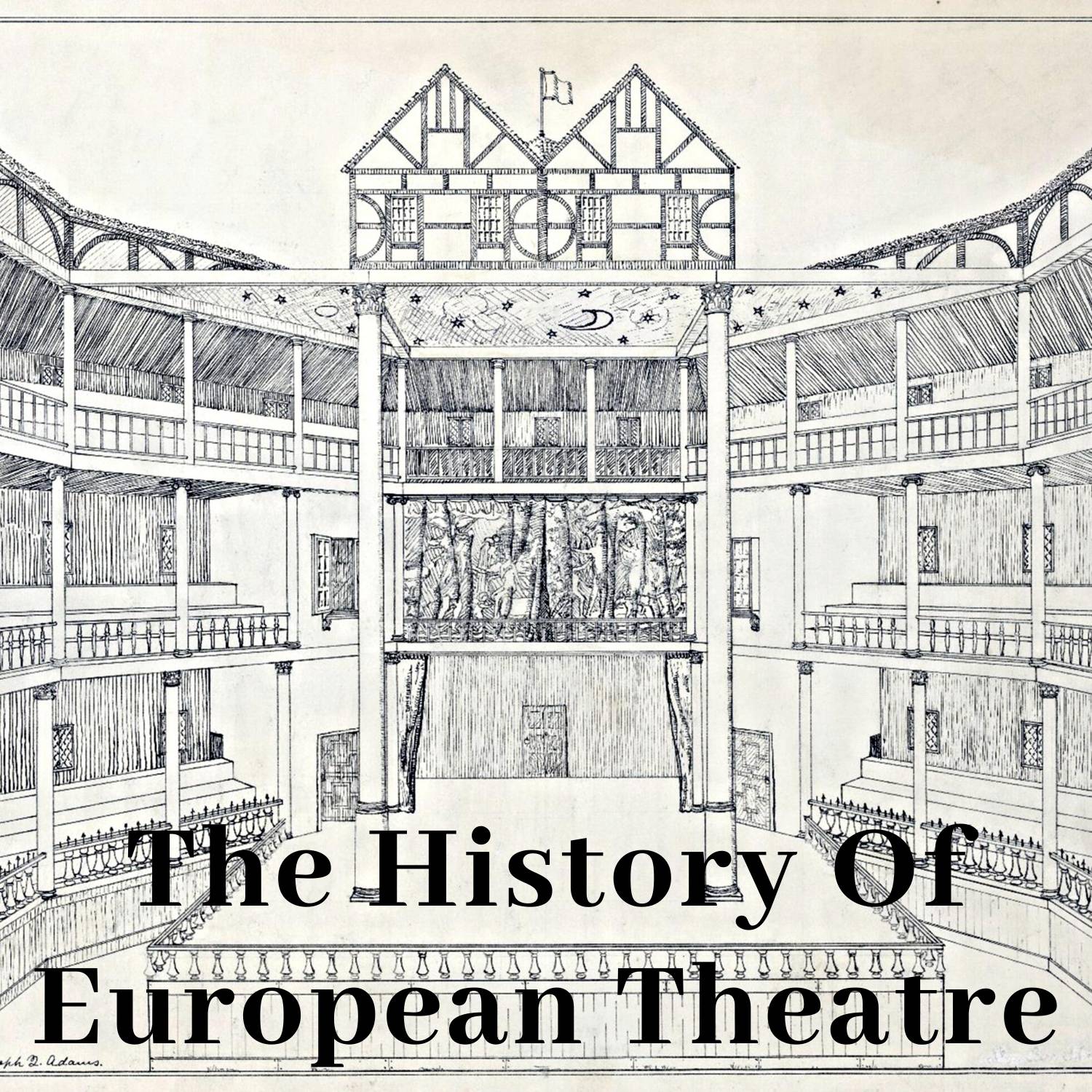
The History Of European Theatre
Philip Rowe
A podcast tracing the development of theatre from ancient Greece to the present day through the places and people who made theatre happen. More than just dates and lists of plays we'll learn about the social. political and historical context that fostered the creation of dramatic art.This podcast uses the following third-party services for analysis: Chartable - https://chartable.com/privacy Hosted on Acast. See acast.com/privacy for more information.
Episodes
Mentioned books

Nov 11, 2024 • 33min
The Life of Ben Jonson Part Two: He That is Taught Only by Himself Has a Fool for a Master
Episode 143:The second part of the life of Ben Jonson takes him from his birth, through his years at school and onto working as a bricklayer. He then briefly joined the army before returning to become a player, a poet and a playwright.Jonson’s Scottish ancestry.His father’s loss of position under queen Mary.His Stepfather Robert Brett, bricklayer.Life for the Brett/Jonson family on Christopher LaneJonson’s education at Westminster school.Theatre at the Westminster School.The influence of school master William Camden.Jonson the bricklayer’s apprentice.Jonson briefly attends Cambridge university – maybe.Jonson the soldier and his service in the war in the Netherlands.The Lord Mayor’s procession and the involvement of the Guild companiesJonson’s contribution to the Lord Mayor’s procession.Jonson the player for Pembroke’s men.Support the podcast at:www.thehistoryofeuropeantheatre.comwww.patreon.com/thoetpwww.ko-fi.com/thoetp Hosted on Acast. See acast.com/privacy for more information.
Nov 4, 2024 • 35min
The Culture of The Shrew in Early Modern Europe: A Conversation with Dr Natalia Pikli
Episode 142Dr Natália Pikli discusses the changing view of the 'The Shrew' in Medieval and Early Modern European culture and how women are represented in Shakespeare's early comedies,She then goes on to outline how Shakespeare became part of national Hungarian culture and how the plays have been treated in translation.Dr Natália Pikli is Associate Professor at the Department of English Studies, Eötvös Loránd University, Budapest. She teaches medieval and early modern culture and literature and is Head of the relevant PhD Program. She also teaches contemporary popular culture, as well as theatre history and theatre reviewing for students majoring in Theatre Studies. She has published extensively on Shakespeare, early modern popular culture, theatre, iconography, and on the reception of Shakespeare in our days, with a focus on contemporary theatre. Her book chapters and articles appeared in, for instance, Shakespearean Criticism (Thomson-Gale, 2004), Shakespeare's Others in 21st-century European Performance (Bloomsbury, 2021), and in academic journals: European Journal of English Studies, Journal of Early Modern Studies (Florence) Shakespeare Survey (Cambridge), Theatralia (Brno). She (co-)edited five books and is the author of two monographs, The Prism of Laughter: Shakespeare’s ’very tragical mirth’ (VDM Verlag, 2009) and Shakespeare’s Hobby-Horse and Early Modern Popular Culture (Routledge, 2022). In her free time, she directs amateur student performances and writes theatre reviews.Support the podcast at:www.thehistoryofeuropeantheatre.comwww.patreon.com/thoetpwww.ko-fi.com/thoetp Hosted on Acast. See acast.com/privacy for more information.
Oct 28, 2024 • 31min
The Life of Ben Jonson Part One: It’s Complicated
Episode 141:In this episode I set us up for a look at the life of Ben Johnson discussing some of the sources for information about his life and how far we can trust them – it’s complicated.Jonson’s 1618 visit to Scotland and why he might have undertaken the journey on foot. His conversations with Drummond of Hawthornden.Jonson’s opinions on other writers as reported by Drummond and thoughts on their validity.Descriptions of Jonson by Aubery and Dekker.The Johnson portrait.How Johnson might have revealed himself in his work.How his poems appear to be self-referencing but may not be as straightforward as they seem.How his plays possibly include some self-revealing aspects.Admiration of Johnson as equal to, or greater than, Shakespeare.The modern reader and the problems with Jonson. Support the podcast at:www.thehistoryofeuropeantheatre.comwww.patreon.com/thoetpwww.ko-fi.com/thoetp Hosted on Acast. See acast.com/privacy for more information.
Oct 21, 2024 • 32min
The Kings Lynn Medieval Stage: A Conversation With Tim Fitzhigham
In October 2023 the story of the discovery of a stage floor that dated from before the Elizabethan period in St George’s Guildhall in Kings Lynn hit the news. The attrition to the headline writers was the fact that that very stage had probably supported Shakespeare as he acted as part of a playing troupe on stage. Of course, that is a great hook for the story as the interest in Shakespeare goes well beyond those of us immersed in the history of theatre and the idea that we can still share a space like that across four hundred years is a beguiling one. I remember standing on the original floor of Anne Hathaway’s cottage in Stratford Upon Avon and feeling a very similar thrill, but there is much more to the story of St George’s Guild Hall at King’s Lynn, a venue for theatre for not just four hundred years, but at least six hundred, making it the UK’s oldest working theatre. So, I was very pleased when Tim Fitzhigham, Creative Director of the Guildhall Theatre agreed to come onto the podcast and talk about St George’s Guildhall and that stage.Tim Fitzhigham is the Borough Council of Kings Lynn and West Norfolk Creative Director appointed to oversee the revival of St George’s Guildhall. As well as leading this extensive project he is currently completing his PhD on Robert Armin, an actor in The King’s Men who originated many of the clown and fool roles in all but the earliest Shakespeare plays and was a well-known playwright and author in his own right.Links to the St George's Guildhall Websitehttps://stgeorgesguildhall.comand Instagram Accounthttps://www.instagram.com/stg.guildhall/ Support the podcast at:www.thehistoryofeuropeantheatre.comwww.patreon.com/thoetpwww.ko-fi.com/thoetp Hosted on Acast. See acast.com/privacy for more information.
Oct 14, 2024 • 33min
The Comedy of Errors: ‘Hand in Hand, Not One Before the Other.’
Episode 139:Last time ‘Two Gentlemen of Verona’ gave us a look at second comedy from Shakespeare’s early phase as a playwright. As you heard certain elements in the plotting of the play and execution of its denouement make it problematic, but nevertheless it showed early promise. The lyrical nature of much of the language used in that play is quite typical of the earliest comedies and it is probably not coincidental that this was around the time that Shakespeare was writing his long lyrical poem ‘Venus and Adonis’, so we might assume that his mindset at the time was that of a lyrical poet, and maybe we see that influence still in his probable next work, the much more accomplished play ‘The Comedy of Errors’, which has remained one of the more popular Shakespeare comedies since its first performance. The Source for the play and changes Shakespeare made to itThe original text of the playThe dating and earliest performances of the playFoul PapersThe setting as a Roman street with three housesA Synopsis of the playThe serious and long opening exposition.The importance of a dramatic opening sceneSocial commentary in the playAdriana as a well-developed character for a light-hearted farceAntipholus of Ephesus as an unpleasant character, but toned down from the source materialAntipholus of Syracuse as a more sympathetic characterThe punishment of the Dromio twinsThe view of authority in the playThe problems with the plot (if we take it too seriously)The soliloquies of Antipholus of SyracuseLuciana and the expression of the value of traditionWhat should we read into the very ending of the play?Support the podcast at:www.thehistoryofeuropeantheatre.comwww.patreon.com/thoetpwww.ko-fi.com/thoetp Hosted on Acast. See acast.com/privacy for more information.
Oct 7, 2024 • 25min
A Knack to Know a Knave: ‘Laugh at the Faults and Weigh it as it is.’
Episode 138:Over the course of speaking about English Renaissance Plays and Shakespeare I have had cause to mention the play ‘A Knack to Know a Knave’ several times. Most latterly because it is thought to include references to ‘The Taming of the Shrew’ and ‘Titus Andronicus’ and prior to that, in the season on the Early Renaissance Theatre it had a mention as one of the plays performed at the Rose Playhouse as recorded in Henslowe’s Diary. Having been reminded of it while writing about the early Shakespeare plays I thought that it deserved a little time in the spotlight on it’s own as it gives us a little snapshot of the plays, and particularly comedies other than Shakespeare and Jonson, that was circulating at the time of the earliest of Shakespeare’s plays. So, here is a little interlude of an episode all about ‘A Knack to Know a Knave’.A quick word on ‘Shakespeare’s Borrowed Feathers’ by Darren Feebury-Jones, which is published in October 2024 and on Henry Porter and his possible involvement with ‘Dr Faustus’.The performances of ‘A Knack to Know a Knave’ as reported in Henslowe’s DiaryThe mystery of the low takings for repeated performances in a second run of the playThe printed quarto edition of the playA summary of the plotThe (possibly) missing parts of the play, including Kempe’s extemporisingHow the fools of Gotham folk tale is worked into the playThe allusions to other plays in the textThe final lines of the playIf you would like to read the text of A Knack to Know a Knave, you can find it on google books here Support the podcast at:www.thehistoryofeuropeantheatre.comwww.patreon.com/thoetpwww.ko-fi.com/thoetp Hosted on Acast. See acast.com/privacy for more information.
Sep 30, 2024 • 34min
Two Gentlemen of Verona: ‘O Heaven, Were Men but Constant.’
Episode 137:The dating of the playPrinting in the First FolioThe sources for the play and the nature of the textA brief synopsis of the playThe major themes of the playHow the status and youth of Valentine and Proteus helps to understand their actions in the playThe role of Speed and how the play features the embryo of Shakespearean wordplayThe role and values of Lance, and Crab the dog, as a comparison to ProteusSome well-regarded verse from the playDifferent readings of the theme of loveThe problematic rape and forgiveness sceneThe play as a courtly romanceThe play as a parody of past cultural normsIs the text more corrupt than is generally thought?How our understanding of male relationships at the time might affect our view of the playThe performance history of the playSupport the podcast at:www.thehistoryofeuropeantheatre.comwww.patreon.com/thoetpwww.ko-fi.com/thoetp Hosted on Acast. See acast.com/privacy for more information.
Sep 23, 2024 • 42min
Words, Language and Actions in ‘Titus Andronicus’: A Conversation with Eleanor Conlon.
Eleanor Conlon, an actor and award-winning writer, dives deep into 'Titus Andronicus', exploring its layered themes. She passionately defends the play's appeal, highlighting its blend of spectacle and classical references. Eleanor dissects Lavinia’s symbolic role and the complexities of Aaron the Moor, showcasing the nuanced portrayals in the narrative. With insights on staged violence and dark humor, she emphasizes the importance of performance in conveying meaning, arguing that the play's language creates a visceral experience for audiences.
Sep 16, 2024 • 35min
Titus Andronicus: 'Vengeance Is In My Heart, Death In My Hand'
Episode 135:Is Shakespeare’s early tragedy more than just a gore-fest?The first performance of the play, maybeThe three playing troupes involved with the playIs the play a collaboration with George Peele?The popularity of violence in playsThe sources for the playA brief summary of the playThe establishing of characters in the first actThe justifications for Titus’ desire for revengeThe role of young LuciusThe flaw in Titus’ character that leads to tragedyFamily life as represented in the playThe contrasts drawn between Lavinia and TamoraThe portrayal of fatherhood in the playThe use of Ovid’s ‘Metamorphosis’Shakespeare’s use of personification, borrowed from medieval morality playsThe extreme violence in the playThe Peacham DrawingSupport the podcast at:www.thehistoryofeuropeantheatre.comwww.patreon.com/thoetpwww.ko-fi.com/thoetp Hosted on Acast. See acast.com/privacy for more information.
Sep 14, 2024 • 11min
Adventures In Theatre History - Philadelphia: The Book
A short word from my good podcasting friend Peter Schmitz, he of the ‘Adventures In Theatre History Philadelphia’ podcast, who has written a book on that very subject and I’m sure that it will be as informative, as amusing and generally as fascinating as his podcast episodes always are. What is even better is that Peter has produced a short audio that gives you all the information you need about the book and how you can get hold of it. These links might be useful:https://www.brooklinebooks.com/9781955041379/adventures-in-theater-history-philadelphia/https://www.amazon.co.uk/Adventures-Theater-History-Peter-Schmitz/dp/1955041377/ref=sr_1_1?crid=1FQHNN2ZJG5SE&dib=eyJ2IjoiMSJ9.8oSl8huLrCxYxe1gR-WgMTKb62F56xPJLXJ49C4eLW52Njy6h53qTfk_QyAlISrCS1nBtjE5fP18rp_sk3gIYoPR7RAWKCe1UItqgZQpd-9PXkMqKB8ftKvQb9JhK0iqaMPdFPSCfo8AyM-8tvFcwNkejTFM0ThPPZlfC0KousFlD-3ZYd4wH6TjhApBJSBVy125ksgHOGMFVNkzSDVWzIz0g_2hLt5zWxDV81pmrfs.pPMmYdPY47WYuKoK1DNaM-yz5JQz_DXXrrqyiIMM2Zg&dib_tag=se&keywords=adventures+in+theatre+history&qid=1726229400&sprefix=adventures+in+theatre+history%2Caps%2C83&sr=8-1https://www.amazon.com/Adventures-Theater-History-Peter-Schmitz/dp/1955041377/ref=sr_1_1?crid=3CNUES6XNBNLW&dib=eyJ2IjoiMSJ9.IxlWUqR1nThHNR-GNJvuEjIo6f36mo82bS9_8A4Sx2PBGFys45ykLfXSgWrSIMpHJ0mn7qGooCMBFwWMv2nZqMK8rKgLgx9kTpDPQhHmqxigZbGPTyZ83Q5H5P2GQscDk4bNo7HYgM_9jXyO9EXcBSn0HZEqFpQmV_RWMmCXUSL4ld_Z22rnfxbih_CgyVUrMPqutRrwuii1_Hxe1fxx4hszZpQbw9dLxGUkrYUu2-Q.lr0Eg8P1HNDd9nfK-0DQttltOiAQaSpi0unC8HFtmZg&dib_tag=se&keywords=adventures+in+theater+history+philadelphia&qid=1726229447&sprefix=adventures+in+theatre+history+%2Caps%2C140&sr=8-1 Hosted on Acast. See acast.com/privacy for more information.

