

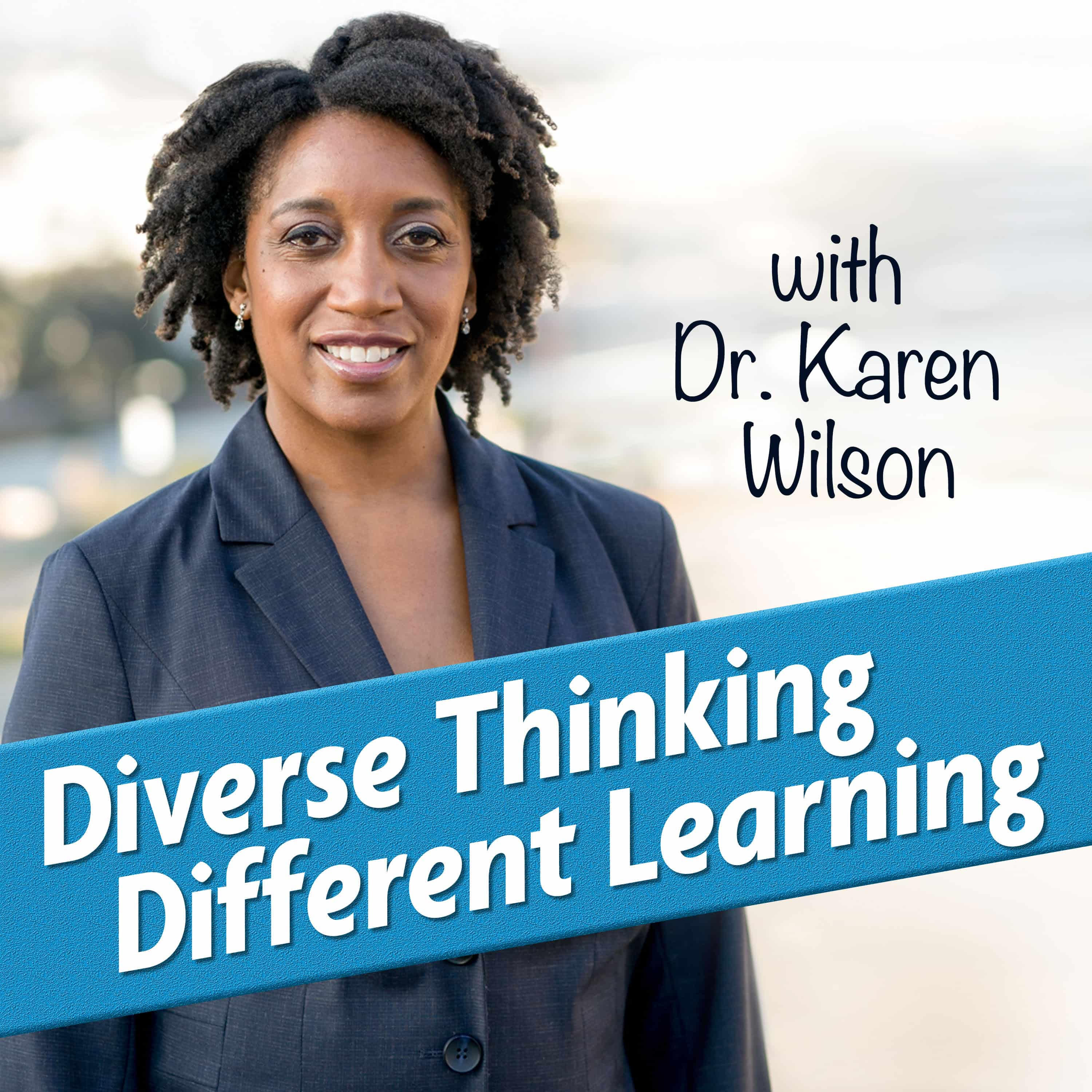
Diverse Thinking Different Learning
Dr. Karen Wilson
Diverse Thinking · Different Learning is hosted by pediatric neuropsychologist and mom of two, Dr. Karen Wilson. Each week, Dr. Wilson shares expert insights, science-based strategies, and conversations with leading specialists to help parents and educators better understand ADHD, dyslexia, autism, executive functioning challenges, learning differences, and youth mental health.
Through engaging interviews and practical guidance, the podcast translates research into real-world tools that empower adults to support neurodivergent children, struggling learners, and students with learning and thinking differences.
Trusted by families and professionals alike, Diverse Thinking · Different Learning is a go-to resource for reliable information and actionable strategies to help children learn, grow, and thrive.
Explore episodes and resources at https://diversethinkingpodcast.com/
Through engaging interviews and practical guidance, the podcast translates research into real-world tools that empower adults to support neurodivergent children, struggling learners, and students with learning and thinking differences.
Trusted by families and professionals alike, Diverse Thinking · Different Learning is a go-to resource for reliable information and actionable strategies to help children learn, grow, and thrive.
Explore episodes and resources at https://diversethinkingpodcast.com/
Episodes
Mentioned books

Jun 13, 2023 • 39min
Ep. 137: Helping Kids Understand Their Amazing Brains with Dr. Liz Angoff
A common struggle for parents and families is how to help their children understand their developmental and learning differences. For some parents, they don't want to have the conversation at all. But today's guest not only explains why it is important for a child to understand their brain, but the language we can use to start shifting a negative narrative. Dr. Liz Angoff is an Educational Psychologist who provides assessment and consultation services to children and their families. She is also the author of the Brain Building Books, tools for engaging children in understanding their learning and developmental differences as part of the assessment process. In our conversation today, Dr. Angoff shares the language and strategies she uses with the children and adolescents she works with to help them understand their strengths and struggles with the perfect balance to normalize and validate it all. Show Notes: [2:22] - Kids know that they are different in some way and it shouldn't be kept a secret from them. [3:38] - When kids don't have the understanding of the way their brains work, they create their own narrative, which is often negative. [4:52] - When we can be realistic and transparent with kids, they can shift this narrative. [6:17] - The vast majority of the kids that Dr. Angoff works with express relief when they learn about their differences. [7:10] - Striking the balance means acknowledging both strengths and areas of struggle. [8:19] - Dr. Angoff shares a metaphor that helps kids understand how their brains work. [10:43] - This language normalizes always having something to work on and the process of learning new things. [12:53] - Kids need to understand that all adults also have ongoing construction projects as we are all always learning. [14:16] - Assessment should be approached from a place of curiosity. [16:06] - Many parents choose not to share a diagnosis with their child. The concerns are understandable. [17:29] - When we name what's going on, we are giving kids a container for all these feelings and experiences. It also gives you community. [19:31] - Dr. Angoff shares some language and verbiage to use that becomes empowering and validating. [21:21] - When we understand how kids think about their experience, we can work on shifting their narrative. [24:23] - Dr. Angoff shares an example of how to address a struggle and area of frustration with a child. [27:28] - When kids understand why they are receiving an intervention, they are more invested. [29:58] - Dr. Angoff shares the experience of a child who became curious about her own disability. [32:27] - These are ongoing conversations and not a one time thing. [34:12] - Every child is different, but Dr. Angoff offers resources on how to talk to your children about their differences. About Our Guest: Liz Angoff, Ph.D., is a Licensed Educational Psychologist with a Diplomate in School Neuropsychology, providing assessment and consultation services to children and their families in the Bay Area, CA. She is the author of the Brain Building Books, tools for engaging children in understanding their learning and developmental differences as part of the assessment process. Connect with Dr. Liz Angoff: Website for Parents Website for Practitioners Brain Building Books Instagram Links and Related Resources: What is a Comprehensive Evaluation and How Can It Help Support My Child's Learning? Episode 2: Demystifying the Assessment Process Episode 28: Why We Need to Celebrate and Continue to Build Our Kids' Resilience Trying to figure out next steps in supporting your child? Book a 1:1 consultation with Dr. Karen Wilson - https://www.childnexus.com/consultation Join our email list so that you can receive information about upcoming webinars - ChildNEXUS.com The Diverse Thinking Different Learning podcast is intended for informational purposes only and is not a substitute for medical or legal advice, diagnosis, or treatment. Additionally, the views and opinions expressed by the host and guests are not considered treatment and do not necessarily reflect those of ChildNEXUS, Inc or the host, Dr. Karen Wilson.

Jun 6, 2023 • 39min
Ep. 136: Understanding and Treating Tics with Dr. Kim Edwards
We have talked about many different topics on the Diverse Thinking Different Learning Podcast, but today's topic of conversation is a new one. Although a new topic, it is a concern for many parents. Today we are talking about tics and our guest is an expert in this area. I'm thrilled to invite Dr. Kim Edwards to the show to talk about tics and Tourette Syndrome. I've had the pleasure of working with Dr. Edwards, and her expertise in this area provides so many families with the education and empowerment they need to manage their tics in a healthy way. Tics are more common than you think. Dr. Edwards explains just how common they are in children, and she discusses ways we can help them manage the behavior. It's an interesting and uplifting conversation that you won't want to miss. Show Notes: [2:32] - Tics are rapid and repetitive movements or sounds. Dr. Kim Edwards shares some of the common motor and vocal tics. [3:35] - Some tics are part of normal development in childhood. [4:55] - Dr. Edwards compares the relief of a tic to scratching a mosquito bite. People with tics who try to suppress it compare it to holding their breath. [6:34] - Tics are not something that kids and adults want to do. It is not a choice and they struggle suppressing the urge. [7:48] - Tics love attention but sometimes responding to a tic establishes a connection and can make it worse. [9:55] - A common question from parents is "Will my child have this tic forever?" Some will pass, but some may experience more chronic tics. [11:30] - We cannot underestimate the power of education and understanding for families and the child themselves. [13:06] - There are environmental factors that play a role in the waxing and waning of tics. [14:06] - The swearing tic is actually very rare contrary to popular belief. [15:05] - It is possible for tics to be a part of ADHD or OCD. [16:23] - Tics don't hurt the brain and because they aren't impairing, there is no need to intervene unless it is harmful or bothersome to the individual. [17:37] - Dr. Edwards describes Comprehensive Behavioral Intervention for Tics (CBIT). [19:34] - CBIT is a management strategy, not a cure. There is no real way to make a tic go away completely and some new tics might pop up. [21:25] - There are medications that are possibly needed for intervention, but they are less impactful on targeting tics and have some side effects. [23:07] - What are sudden onset explosive tics? [24:32] - Functional tics are a little different. It is thought that increased stress and screen time during COVID led to an increase. [25:56] - Dr. Edwards has found that CBIT does not help individuals with functional tics. [28:53] - People, especially kids, need to understand how their brain works. [30:54] - When kids understand their brains, they can advocate for themselves and be a part of the conversation. Don't underestimate the power of involving your child. [32:27] - Going through hard things builds resilience and challenges cannot be avoided. [35:31] - Dr. Edwards shares an analogy that helps parents realize that the journey they are on with their child is wonderful. About Our Guest: Dr. Kim Edwards is a registered clinical and health psychologist in the Province of Ontario and the State of New York. Dr. Edwards specializes in the assessment and treatment of repetitive behavior disorders. She is one of only three Canadian Psychologists who can certify other health care professionals in Comprehensive Behavioural Intervention for Tics (CBIT) – the behavioral treatment for tic disorders. After receiving her PhD from the University of Western Ontario, Dr. Edwards completed a 1-year clinical residency and a 2-year fellowship specializing in pediatric neuropsychiatric disorders at The Hospital for Sick Children in Toronto. While at SickKids, she co-developed and ran the hospital's first groups for youth with tics and Body Focused Repetitive Behavior disorders. After her fellowship, Dr. Edwards worked at McMaster Children's Hospital where she was a founding member of the pediatric chronic pain program and an assistant clinical professor in the department of Psychiatry and Behavioural Neurosciences. Connect with Dr. Kim Edwards: Email: kim.edwards@mindfithealth.ca Phone: 647-646-3348 Links and Related Resources: Specialized MindFit Programs Tics and Tourette Syndrome Trying to figure out next steps in supporting your child? Book a 1:1 consultation with Dr. Karen Wilson - https://www.childnexus.com/consultation Join our email list so that you can receive information about upcoming webinars - ChildNEXUS.com The Diverse Thinking Different Learning podcast is intended for informational purposes only and is not a substitute for medical or legal advice, diagnosis, or treatment. Additionally, the views and opinions expressed by the host and guests are not considered treatment and do not necessarily reflect those of ChildNEXUS, Inc or the host, Dr. Karen Wilson.

May 30, 2023 • 35min
Ep. 135: Your Child's Anxiety: When to Worry with Dr. John Piacentini
We know that anxiety is common and many of us have experienced some level of anxiety. But there are many myths and misunderstandings about anxiety that could be preventing a child from getting the care and treatment they need. One of the myths you might have heard is that "kids will grow out of it." While stress and fear are normal components of childhood development, 80% of children who are experiencing problematic anxiety are not getting treatment. Dr. John Piacentini joins me today to help us understand what anxiety is, how it differs from stress, and how to help your child if they are struggling with anxiety. For children and adults alike, stress levels continue to be high as we are still dealing with the uncertainty of the pandemic. But there are things we can do to validate a child's feelings and help them through mild anxiety. And for those who are experiencing severe anxiety, Dr. Piacentini explains different types of treatment and support that can positively impact the trajectory of a child's development. Show Notes: [2:25] - There have been and continue to be concerns about the impact of anxiety on childhood development. [3:26] - Stress is a physical reaction in response to something difficult or even exciting. [4:29] - When stress becomes chronic, it is cause for concern. [5:04] - Alternatively, anxiety is related to fear. Fear is a response to something that is threatening. [6:31] - Dr. Piacentini gives an example to show the difference and similarities between stress, anxiety, and fear. [7:58] - There are times in development when anxiety and fear are normal. [10:30] - The intensity of the anxiety and anxious behaviors is something that is looked at and is cause for concern. [12:04] - Avoiding the thing the child is fearful of can intensify the anxiety. [13:34] - Dr. Piacentini explains the difference between positive and negative reinforcement and how each kind impacts behavior. [15:43] - A parent's nature is to want to protect their child from stress, but Dr. Piacentini reminds us that their independence needs to develop. [17:05] - Missing out on social situations has a negative impact on anxiety. [18:51] - There are higher levels of mental health issues associated with the pandemic. Children with anxiety are even more sensitive. [20:10] - When schools closed, many children with anxiety and OCD felt validated, but the return to school has caused more stress, fear, and anxiety. [21:30] - Avoid having young children watch the news and catastrophizing the pandemic and provide as much structure as you can. [23:26] - Don't accommodate the anxiety. [25:15] - Dr. Piacentini describes Cognitive Behavior Therapy and discusses how effective it can be. [28:50] - About 10% of kids meet criteria for problematic anxiety. Only 2 out of 10 are getting the treatment they need. [30:01] - A common physical symptom of anxiety are frequent headaches and stomachaches. [31:48] - The mission of UCLA CARES is to increase awareness and to help identify early signs of anxiety. About Our Guest: Dr. John Piacentini is a board-certified clinical child and adolescent psychologist and Professor of Psychiatry and Biobehavioral Sciences in the David Geffen School of Medicine and Semel Institute for Neuroscience at UCLA. He is also the Director of the UCLA Child OCD, Anxiety and Tic Disorders Program and the Center for Child Anxiety, Resilience, Education and Support. Dr. Piacentini's research focuses on the development of science-based treatments for child anxiety, OCD, tic, and related disorders. Through UCLA CARES, he and his team have implemented a number of school and community-based education and prevention programs to reduce the burden of child anxiety. Dr. Piacentini has authored over 300 scientific publications, including seven books, and his research has been funded by the National Institute of Mental Health and other leading foundations and philanthropic organizations. Dr. Piacentini is a frequent lecturer, and with his team has trained hundreds of mental health clinicians around the world in cognitive-behavior therapy and other evidence-based treatments and provided care to over 1000 children, adolescents, and their families. Connect with Dr. John Piacentini: UCLA CARES Center Website Dr. Piacentini on Twitter Links and Related Resources: Anxiety and the Family Anxiety and Depression in Adolescents How Social Anxiety Differs From Shyness and How to Help Your Child Episode 8: Mindfulness with Dr. Kathleen Carroll Wray Episode 6: Managing Family Stress and Anxiety with Dr. Stephanie Mihalas Join our email list so that you can receive information about upcoming webinars - ChildNEXUS.com The Diverse Thinking Different Learning podcast is intended for informational purposes only and is not a substitute for medical or legal advice, diagnosis, or treatment. Additionally, the views and opinions expressed by the host and guests are not considered treatment and do not necessarily reflect those of ChildNEXUS, Inc or the host, Dr. Karen Wilson.

May 23, 2023 • 34min
Ep. 134: Understanding Depression in Children and Teens with Dr. Dorie Weiss
Dr. Dorie Weiss, expert in children's depression, discusses the rise in depression among kids and teens, distinguishing between typical sadness and clinical depression. She highlights the impact of COVID-19 on children's mental health, the challenges of identifying depression, and effective strategies for monitoring mood and challenging negative thoughts.

May 16, 2023 • 30min
Ep. 133: How Occupational Therapy Can Help Address Picky Eating with Dr. Ellie Bendetson and Leah Hiller
We've talked about occupational therapy on the podcast before, but we've never dug into a struggle for some children and families that occupational therapy can help. The topic of picky eating comes up for many families, for both neurodiverse and neurotypical children. And parents of picky eaters know that it impacts so many aspects of their lives, not just mealtime. While picky eating is a common behavior in early childhood, it's not always something a child will simply "grow out of". And today's guests explain how unique everyone's experience is with food. Dr. Ellie Bendetson is an expert in picky eating and in supporting families of picky eaters. She joins the conversation today with Leah Hiller, who returns as a guest from Episode 9, where we introduced what occupational therapy is. Many conversations about occupational therapy tend to be broad, so let's dig into one area of impact it can have on picky eaters and their families. Show Notes: [2:12] - Many conversations about occupational therapy are very broad and generalized. But picky eating is Dr. Bendetson's area of expertise. [3:21] - Picky eating is very common and there is no universal definition of what it means. [4:36] - Food and mealtime are complicated. There are so many things that could cause picky eating and can shift day to day. [6:07] - There are a lot of cultural aspects to this as well. [7:30] - For some children there are really only a few foods they will eat. Ellie works with many families like this and starts where they are. Picky eating is isolating. [9:11] - Early experiences play a key role. What are some factors that impact picky eating? [10:27] - Body awareness plays a role as well and for children with sensory processing issues, this is even more of a challenge. [12:30] - During an assessment, feeding is broken down into every little step. [14:30] - It's shown that supporting the parents and families around picky eaters is so crucial. [16:41] - There's an emotional connection and cultural importance put on food. [17:38] - Dr. Ellie describes her program Making Mealtimes Matter. [19:20] - Parents being able to help each other is so empowering. [20:52] - The goal isn't to be able to eat everything. It is to be healthy and have a healthy relationship with food. [22:20] - Starting out by playing with food is a great place to start. This allows a child to understand the food. [24:03] - What can parents model? [26:17] - Getting a child involved in cooking and preparing foods is a great way to get kids excited about food. [28:49] - Parent groups with Hiller Therapy are virtual. Other programs are in-person. About Our Guests: Dr. Ellie Bendetson Dr. Ellie Bendetson, OTD, OTR/L is a pediatric occupational therapist in Los Angeles. Ellie attended the University of Southern California, graduating with her bachelors in OT in 2019, her masters in 2020, and her doctorate in 2021. She completed her doctoral residency at Hiller Therapy | Outdoor OT, specializing in parent education and picky eating. She also holds certifications in sensory integration and the sequential-oral-sensory (SOS) approach to feeding. She is passionate about working with families to better their mealtime experience and working with children of all ages and abilities in supporting their growth at home, at school, and at play. When she's not working, Ellie enjoys hiking, baking, and playing with her dogs. Leah Hiller Leah Hiller is a pediatric occupational therapist, an educational consultant, and a former Jewish day school teacher. Leah provides teachers and parents with the strategies, support, and evidence-based resources to help children thrive at home, school, and play. In addition to providing individualized OT services in her private practice, Leah offers workshops for parents and educators, and she teaches graduate courses in special education. Leah lives here in Los Angeles with her family, and her OT therapy studio is located in a natural setting - her backyard. Connect with Our Guests: Hiller Therapy Website Email Dr. Ellie Bendetson: ellie@hillertherapy.com Email Leah Hiller: leah@hillertherapy.com Links and Related Resources: Episode 9: How Occupational Therapy Helps Kids with Leah Hiller Helping the Picky Eater Handle Back to School ALPS Children: A Steep Climb But Well Worth It Trying to figure out next steps in supporting your child? Book a 1:1 consultation with Dr. Karen Wilson - https://www.childnexus.com/consultation Join our email list so that you can receive information about upcoming webinars - ChildNEXUS.com The Diverse Thinking Different Learning podcast is intended for informational purposes only and is not a substitute for medical or legal advice, diagnosis, or treatment. Additionally, the views and opinions expressed by the host and guests are not considered treatment and do not necessarily reflect those of ChildNEXUS, Inc or the host, Dr. Karen Wilson.

May 9, 2023 • 34min
Ep. 132: Social Justice: A Framework for Equity in Education with Charles A. Barrett, PhD, NCSP
Social justice is a topic of discussion on several episodes of this podcast and today's guest joins the conversation on this important part of education. Because, social justice is truly a framework for equity in education. Today's guest is Dr. Charles Barrett, an experienced school psychologist, speaker, and author of Social Justice in Schools. Dr. Barrett knows that significant contextual factors, events happening around students, can affect their social, emotional, and behavioral functioning. He joins me today to discuss actionable steps that parents, educators, and practitioners can take to promote positive outcomes for all students and communities. Show Notes: [1:58] - Dr. Barrett has an extensive background, and he shares how he got into this particular area. [3:46] - There are a lot of variables that can impact how well a child does in school. We need to be mindful of these realities. [4:42] - Not everyone has the access to the things they need to reach their potential. [6:12] - Where do we even begin in understanding social justice? When can we move from knowledge to action? [7:40] - There are systems in place that cause inequitable outcomes. One major one is education funding. [8:57] - It is a reality that children do not receive the same level of education based on their demographic. [9:37] - Racism is another factor in inequitable outcomes. [11:03] - Distance learning during COVID-19 placed a spotlight on the disparity in education. [12:40] - Are we misinterpreting student performance as a disability? [14:24] - When returning to school after the COVID-19 pandemic, students experienced difficulty in socializing. [16:10] - Be present. Be proactive. Be persistent. [18:58] - Dr. Barrett and Dr. Wilson discuss what it looks like to be persistent. [20:26] - Access to information is key to advocating. An informed parent is the best partner. [21:44] - The partnership between the parent, the school, and the teacher is so important. [23:11] - There are more things that can be provided that parents don't always know about that are outside of the IEP. [24:12] - Dr. Barrett explains the benefits of Cognitive Behavioral Therapy. [26:59] - Understanding and access to information is not just important for parents. Students need to understand how they learn as well. [29:33] - If you are an educator, Dr. Barrett recommends first being critical of your own work. [31:08] - For parents, a great place to start is asking questions. About Our Guest: Charles A. Barrett, PhD, NCSP, a district-level administrator in Virginia, practiced as a school psychologist for 13 years at the elementary and secondary levels. He serves as an adjunct lecturer at several universities, where he is actively involved in the training and development of future school psychologists. Dr. Barrett was named School Psychologist of the Year by the Virginia Academy of School Psychologists and received the Rookie of the Year Award from the National Association of School Psychologists (NASP). His past leadership positions within NASP include co-chair of the Social Justice Task Force and African American Subcommittee, chair of the Multicultural Affairs and Social Justice Committees, and Virginia Delegate to the NASP Leadership Assembly. Dr. Barrett serves on the editorial boards of School Psychology Review and School Psychology. He is a frequent speaker and workshop presenter for educators, families, and community organizations. Connect with Charles Barrett: Charles Barrett's Website Twitter Instagram Email charles@charlesbarrett.org Links and Related Resources: Social Justice in Schools by Charles Barrett Episode 75: How to Raise Justice-Minded Kids with Dr. Traci Baxley Episode 97: Building Communities of Support and Resistance with Dr. Bibi Pirayesh Episode 37: Literacy: A Social Justice Issue with Resha Conroy Episode 5: Educational Therapy, Distance Learning, and Social Justice with Dr. Bibi Pirayesh Fostering Social Justice in our Youth Trying to figure out next steps in supporting your child? Book a 1:1 consultation with Dr. Karen Wilson - https://www.childnexus.com/consultation Join our email list so that you can receive information about upcoming webinars - ChildNEXUS.com The Diverse Thinking Different Learning podcast is intended for informational purposes only and is not a substitute for medical or legal advice, diagnosis, or treatment. Additionally, the views and opinions expressed by the host and guests are not considered treatment and do not necessarily reflect those of ChildNEXUS, Inc or the host, Dr. Karen Wilson.

May 2, 2023 • 27min
Ep. 131: Cognitive Behavior Therapy for Kids and Teens with Dr. Shadab Jannati
Dr. Shadab Jannati discusses Cognitive Behavior Therapy for kids and teens, highlighting how CBT is goal-oriented, helps with anxiety and negative thinking, and empowers young individuals through psychoeducation. The podcast delves into the evolution of CBT, techniques for managing anxiety, and the importance of family involvement in treatment plans.

Apr 25, 2023 • 25min
Ep. 130: How Parent Child Interaction Therapy Strengthens the Family Relationship with Dr. Karrie Lager
Do you experience struggles around morning routines, getting to school, transitions, homework, mealtime, getting off screens, and bedtime? You're not alone. And if so, you don't want to miss this conversation with Dr. Karrie Lager. With Dr. Karrie, we're taking another look at a treatment modality that could be right for you and your family. It's called Parent Child Interaction Therapy (PCIT) and it focuses on play-based coaching for parents to better interact with their child to strengthen relationships and improve behavior. Many parents have said that this was a life changing experience for them and Dr. Karrie can help us understand what PCIT is, what it entails, who it's right for, and how it can impact the entire family. Show Notes: [2:23] - Let's continue the conversation about different treatment modalities with parent child interaction therapy. [3:21] - PCIT is evidence-based and is designed to strengthen the parent child relationship. [4:35] - Common moments of parent stress can become a problem. [5:20] - PCIT is unique in that therapists coach parents in real time. [6:05] - In the past, therapists would coach through a one way mirror. Now with technology and telehealth platforms, therapists can coach in the home. [8:28] - What are the benefits of coaching in the moment? [9:46] - Dr. Karrie shares some of the things PCIT helps guide parents through, specifically tantrums and aggression. [11:04] - How to notice the good in others and how to positively interact with others is one key feature of PCIT. [13:32] - PCIT can be adapted to work with children with ADHD, Autism, and learning differences. [14:40] - Screen time is a sticky situation for a lot of families. Dr. Karrie shares some good points about the age of the child and how they interact with screens. [16:30] - PCIT is very play-based. [19:12] - Typically PCIT lasts anywhere between 14 and 20 sessions and is based on the parents feeling confident in the skills. [20:48] - Many parents have given the feedback that PCIT is life changing. [22:13] - Parents need to also have patience and compassion for themselves as they learn how to best support their child. About Our Guest: Karrie Lager, Psy.D. is a California licensed clinical psychologist with over 20 years experience providing therapy to children and adults. She is the founder of the group practice and training center, Healthy Focus Psychological Center. Dr. Karrie's specialties include parenting, mindfulness, and cognitive behavioral therapy (CBT). Dr. Karrie is a UC- DAVIS certified PCIT and PC-CARE therapist and provides in-the-moment parent-child coaching to increase more calm, cooperative, and joyful family interactions. In addition to providing direct coaching to families, Dr. Karrie is a training partner with UC Davis, and she provides online therapist training in PCIT and PC-CARE certificate programs. Also, Dr. Karrie is trained as a SPACE Treatment provider through the Yale Child Study Center. In this treatment, Dr. Karrie coaches parents on tools designed to help reduce their child's anxiety, OCD, or other related challenges. As a strong advocate for life-long learning, Dr. Karrie also oversees Healthy Focus's education programs, offering creative and innovative continuing education for psychologists and other helping professionals. For fun, Dr. Karrie enjoys long walks with her family and puppy, mindfulness, yoga, arts and crafts, and writing. Connect with Dr. Karrie: ChildNEXUS Provider Profile A Healthy Focus Website Dr. Karrie's Website Links and Related Resources: The Exhausted Parent and the Endlessly Energetic Child Executive Functioning and Self-Regulation in ADHD Why Does My Child Act Up For No Reason Anxiety and Depression in Adolescents Episode 72: Prioritizing Co-Regulation and Self-Regulation in Communication with Danielle G. Kent Trying to figure out next steps in supporting your child? Book a 1:1 consultation with Dr. Karen Wilson - https://www.childnexus.com/consultation Join our email list so that you can receive information about upcoming webinars - ChildNEXUS.com The Diverse Thinking Different Learning podcast is intended for informational purposes only and is not a substitute for medical or legal advice, diagnosis, or treatment. Additionally, the views and opinions expressed by the host and guests are not considered treatment and do not necessarily reflect those of ChildNEXUS, Inc or the host, Dr. Karen Wilson.

Apr 18, 2023 • 30min
Ep. 129: Strategies for Traveling with Anxious, Inflexible, and Neurodivergent Children with Dawn Barclay
As we ease into the summer months, this time of year we begin to think about summer travel plans. And with the recent emphasis on neurodivergence, traveling is more accessible than ever before. But it can still seem daunting to travel with a child who is anxious or inflexible. In fact, a recent study shows that 87% of parents surveyed said they wouldn't even consider traveling with their neurodivergent child. But today's guest shares helpful tips and travel strategies that can not only make this possible, but an amazing experience for everyone. Dawn Barclay is an author and has spent her career in the travel industry. She's seen it all. The ups and downs, the pros and cons. But what she has also seen are the ways that make traveling with neurodivergent children easy and joyful. In this episode, Dawn shares things you can do now to start preparing for summer travel and how you can make these experiences a reality for your family. Show Notes: [1:44] - Traveling with children is challenging and is intimidating and daunting for some parents of neurodivergent children. [2:34] - 87% of parents in a study said that they would not travel at all. [3:56] - There are a lot of benefits to traveling with your family. [5:35] - When planning a trip, start with getting your child on board by introducing the concept of traveling. [7:18] - Start small by traveling to places that are a little closer to home. [9:15] - Preparation is key. [10:31] - Build trips around special interests and contact airports beforehand to help make sure your child is accommodated. [12:33] - Working with a travel planner, you can plan for where to sit on an airplane or things to consider that you've not thought of before. [14:07] - We all become anxious when faced with the unknown and children don't always know how to express their anxiety. [15:49] - Think about the things that will make the experience easier when looking for hotel rooms or other lodging. [18:17] - There are also specific destinations that are specifically designed to accommodate people with special needs, including neurodivergence and even dietary restrictions. [21:40] - Parents may feel uncomfortable with onlookers and other people around them when traveling with their children. [23:50] - Sometimes parents even provide information to the people who are traveling around them to explain the situation. [25:22] - It's a great idea to travel with someone who can also spend time with your child while you take time to yourself. About Our Guest: Dawn M. Barclay is an award-winning author who has spent a career working in different aspects of the travel industry. After spending ten years working in sales and marketing for her parents' two firms, Barclay Travel Ltd and Barclay International Group Short-Term Apartment Rentals, she branched out into travel trade reporting with senior or contributing editor positions at Travel Agent Magazine, Travel Life, Travel Market Report, and most recently, Insider Travel Report. She is a mother of two and resides in New York's scenic Hudson Valley. A member of the Society of American Travel Writers (SATW) and the Family Travel Association (FTA), she also writes fiction as D.M. Barr and holds leadership roles in several writer organizations. Connect with Dawn: Traveling Different Website Facebook Twitter Instagram LinkedIn Traveling Different by Dawn Barclay Links and Related Resources: Episode 63: Supporting Youth with Autism and ADHD with Holly Blanc Moses Episode 72: Prioritizing Co-Regulation and Self-Regulation in Communication with Danielle G. Kent Episode 40: Lifestyle Activities That Can Improve ADHD Symptoms with Dr. Joel Nigg Trying to figure out next steps in supporting your child? Book a 1:1 consultation with Dr. Karen Wilson - https://www.childnexus.com/consultation Join our email list so that you can receive information about upcoming webinars - ChildNEXUS.com The Diverse Thinking Different Learning podcast is intended for informational purposes only and is not a substitute for medical or legal advice, diagnosis, or treatment. Additionally, the views and opinions expressed by the host and guests are not considered treatment and do not necessarily reflect those of ChildNEXUS, Inc or the host, Dr. Karen Wilson.

Apr 11, 2023 • 40min
Ep. 128: How Deep Learning Can Help Develop Critical Thinking Skills with Jim Hahn and Dr. Jon Cassie
Navigating a complex world is daunting and it becomes even more challenging for people who think and learn differently. These students may struggle in the traditional school environment, particularly with engagement. They might even ask, "What's the point?" But the traditional school environment isn't the only option and today's guests from Qualia: The School for Deeper Learning join this conversation about how their model of education not only engages students but prepares them to navigate adulthood with strong critical thinking skills. Qualia can be compared to an all-day intellectual dinner party – a place where brainy word play, clever argumentation, and surprising ideas come together in a milieu that provokes, entertains and inspires. Jim Hahn and Dr. Jon Cassie explain the importance of creating the space and time for reflection, reasoning, existential questioning, and the sharing and communicating of ideas and how this became the core of deeper learning at Qualia. Show Notes: [2:15] - The focus is often on remediation for students who struggle, but critical thinking is overlooked. [3:37] - At Qualia, students take Philosophy courses every year to help develop critical thinking skills. [6:20] - Why Philosophy? What is it about this subject area that Qualia focuses on? [8:06] - Adding in this model of education is impactful as early as Kindergarten. [9:26] - With small class sizes, teachers can give students the appropriate amount of attention and hold real conversations. [11:51] - Through sharing and communicating ideas, students show their identity rather than letting their diagnoses be their identity. [13:20] - Jim describes the outcomes of this type of educational model. [15:45] - Having an influence on critical thinking early on pays off in adulthood. [18:53] - There are five questions that are crucial to someone's ability to think critically about anything they encounter. [20:51] - These conversations are so memorable for students. This "less is more" approach makes things simple but impactful. [23:05] - Content is important, but linking the content to the big questions is what creates deep learning. [24:56] - How do introverts do in this type of environment? Jim and Jon share what the culture is like at Qualia. [26:20] - Character development is another key component in these types of discussions. [28:03] - Dr. Wilson shares the online description of Qualia which is a depiction of meaningful, deep learning that can happen there. [29:57] - Kids are eager to make connections and adults can serve as facilitators. [31:31] - Teachers trust students to carry a conversation, collaborate and solve messy problems. [32:35] - The challenges through this model of learning are realistic. [33:42] - The focus on helping students develop connections and discover themselves prepares them to navigate a complex world. [35:30] - Listen to an example of a student's work on environmental justice. About Our Guests: Jim Hahn An inveterate explorer of knowledge, ideas, contraptions, and cultures, Jim has taught everything from philosophy to chemistry to Rube Goldberg Machines during his 30+ year career in education. As the founder of Qualia: The School For Deeper Learning, Jim is bringing his renowned cutting-edge educational model to a new level with his democratic educational philosophy, unique teaching and mentoring approach, and innovative deep learning curriculum. Jim began his teaching career at Crossroads School, then joined New Roads as Academic Dean and Dean of Faculty, and later founded Areté Preparatory Academy to create a next-generation school for brilliant and independent young minds for over a decade. Jim has inspired many students to think deeply, care deeply, and forge extraordinary paths. Jim is the proud parent of an Areté alumna, currently attending Pitzer College, and a current Qualia student; both children are living embodiments of the impactful results of Jim's transformative and revolutionary educational methods. Dr. Jon Cassie Dr. Cassie has been in independent school education for 25 years serving in virtually every teaching and leadership capacity schools have to offer. His book on game-based learning, Level Up Your Classroom was published in 2016 and won a gold medal for best technical book from Association Media and Publishing in 2017. His chapter on social-emotional learning and roleplaying games, "Don't Split the Party," was published in "Teaching in the Game-Based Classroom," in 2021. He has also written for the tabletop roleplaying sector for about 20 years. Two of his books, Loot and Folkways are about cultural aspects of roleplaying design and are available on DriveThruRPG. Dr. Cassis also hosts two podcasts about education - "Many Windows" and "Game Level Learn." He has also appeared on a number of podcasts speaking about the future of education, given the commencement address at Northland Pioneer College, and has presented at conferences and forums on learning and games in the US and abroad. He earned his doctorate from UCLA in 2010. Connect with Our Guests: ChildNEXUS Provider Profile Qualia: The School For Deeper Learning Links and Related Resources: Creative and Crushed Children Who Think Differently Episode 25: Raising Differently Wired Kids with Joy and Confidence with Debbie Reber Episode 38: Understanding the Gifted and Twice Exceptional Child with Dr. Nicole Tetreault Trying to figure out next steps in supporting your child? Book a 1:1 consultation with Dr. Karen Wilson - https://www.childnexus.com/consultation Join our email list so that you can receive information about upcoming webinars - ChildNEXUS.com The Diverse Thinking Different Learning podcast is intended for informational purposes only and is not a substitute for medical or legal advice, diagnosis, or treatment. Additionally, the views and opinions expressed by the host and guests are not considered treatment and do not necessarily reflect those of ChildNEXUS, Inc or the host, Dr. Karen Wilson.

