

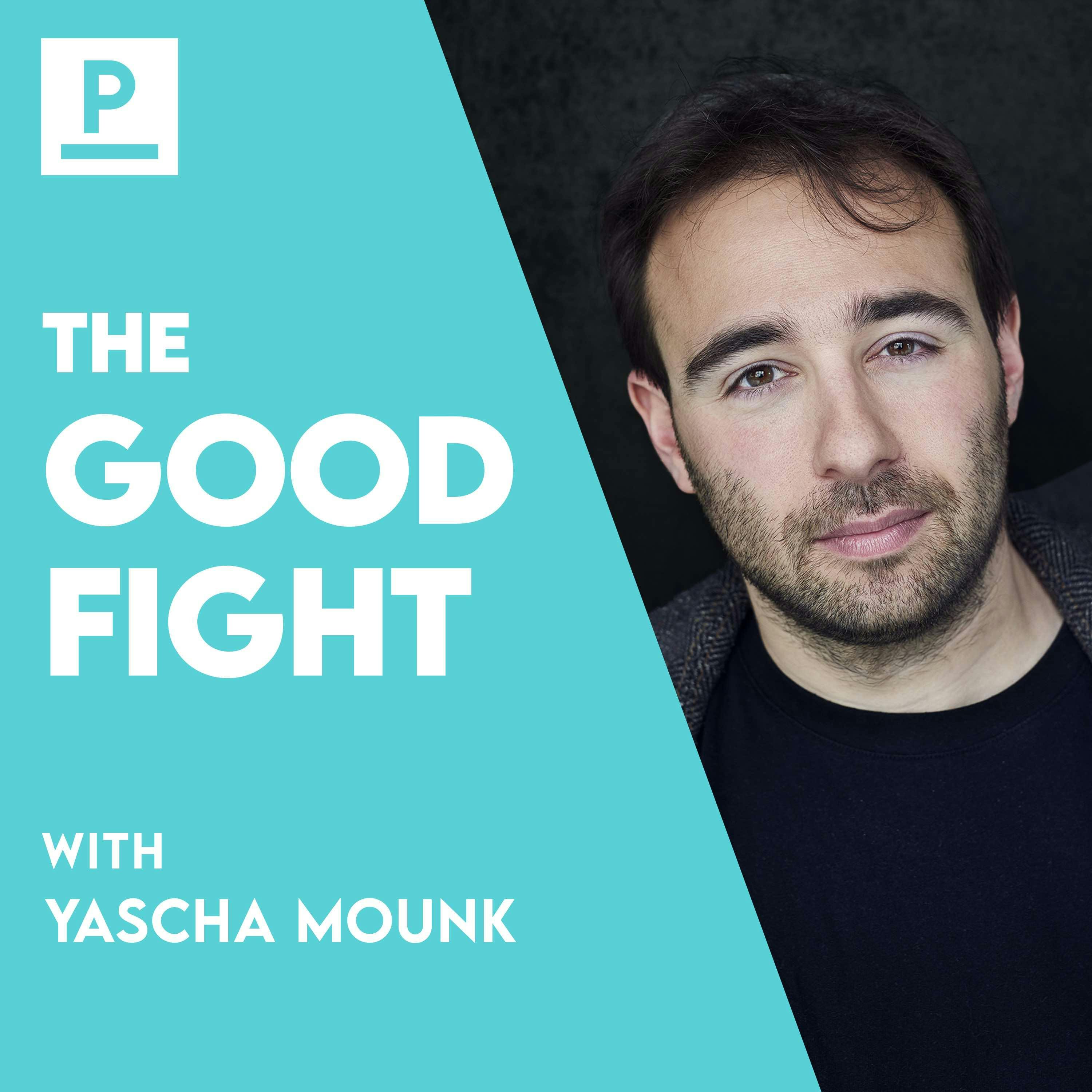
The Good Fight
Yascha Mounk
"The Good Fight," the podcast that searches for the ideas, policies and strategies that can beat authoritarian populism.Please do listen and spread the word about The Good Fight.If you have not yet signed up for our podcast, please do so now by following this link on your phone.Email: goodfightpod@gmail.comTwitter: @Yascha_MounkWebsite: http://www.persuasion.community
Episodes
Mentioned books

11 snips
Feb 24, 2026 • 1h 6min
Janice Stein on When Being Rational Is Irrational
Janice Gross Stein, a conflict management scholar and founding director at the Munk School, discusses the limits of rational-choice thinking in politics. She explores why cooperation and norms often beat pure calculation. Short, vivid conversations cover nuclear strategy, trust in leaders, communication failures during COVID, and practical ways to build resilient coalitions.

Feb 21, 2026 • 1h 14min
The Good Fight Club: Why Japan’s “Weirdo” Victory Matters, the Rise of Chinese Soft Power, and the End of Asian Stability
Chang Che, a China and Japan reporter; Pratap Bhanu Mehta, an Indian political theorist; and Bethany Allen, a China investigations journalist. They explore Japan’s surprising election and youth appeal. They debate China’s coercion tactics, tech and soft power rise. They probe India’s technological limits and the shifting dynamics of Asian stability.
18 snips
Feb 17, 2026 • 46min
Jacob Savage on the Costs of the Great Awokening
Jacob Savage, a writer and former aspiring screenwriter, discusses how diversity initiatives reshaped hiring in academia and Hollywood. He traces the roots of the shift, explains why younger white men were most affected, and examines the political and generational fallout. They also explore prospects for institutional course-correction and restoring disciplinary pluralism.

Feb 14, 2026 • 1h
Daniel Diermeier on Why Universities Are Their Own Worst Enemies
Daniel Diermeier, chancellor of Vanderbilt and former University of Chicago provost, reflects on leadership, university governance, and public trust. He discusses how elite schools became targets, the rise of a professional-managerial class, the shift from regional to national campuses, and practical steps to rebuild civic connection and free-speech norms.
4 snips
Feb 10, 2026 • 1h 22min
C. Thi Nguyen on Why Measuring Everything Ruins Everything
C. Thi Nguyen, philosophy professor and author studying games and metrics. He explores how metrics travel and strip nuance, when numbers help or harm institutions, the trade-offs between legibility and richness, how scoring shapes desire (including in rock climbing), and why we should rethink which games and measures we choose to play.

9 snips
Feb 7, 2026 • 60min
Jung Chang on A Personal History of China
Jung Chang, bestselling author and historian known for Wild Swans, reflects on China through personal and family stories. She discusses how intimate narratives reveal broader history. Conversations cover enduring mistrust in family life, traditions like foot binding, the rise of communism and its betrayals, and why many young Chinese now reject marriage and romantic ties.
Feb 3, 2026 • 1h 18min
Ruud Koopmans on Immigration and Integration in Europe
Ruud Koopmans, Research Director at WZB and professor of migration research, studies migration, integration, and public policy. He discusses cultural distance and value gaps, contrasts selective versus non-discretionary migration systems, examines how welfare states shape incentives and labor participation, and compares language learning on the job versus formal courses.

32 snips
Jan 31, 2026 • 1h 8min
Martin Wolf on Why Trump’s Economic Revolution Never Happened
Martin Wolf, FT Associate Editor and chief economics commentator, provides sharp, authoritative perspective. He discusses Kevin Warsh and what a politicized Fed could mean. He weighs whether Trump’s economic ambitions are revolutionary. He explores why markets remain strong, how tariffs and populism reshape institutions, and the broad economic implications of AI.
18 snips
Jan 27, 2026 • 1h 13min
Atul Gawande on Medicine and Mortality
Atul Gawande, American surgeon, public health researcher, and writer, reflects on systems that improve care. He talks about how simple checklists transform operating rooms, the power of team communication and coaching to raise performance, and the challenges of public health, aid, and institutional trust in confronting mortality.

26 snips
Jan 24, 2026 • 1h 3min
Gašper Beguš on Why Language Doesn’t Make Humans Special
Gašper Beguš, an Associate Professor of Linguistics at UC Berkeley who studies interpretable AI and interdisciplinary language science. He explores whether whale songs and trained animals show language-like features. He discusses cultural transmission, recursion, and what AI reveals about language learning. Short, provocative takes on how humans and machines acquire communicative systems.

