

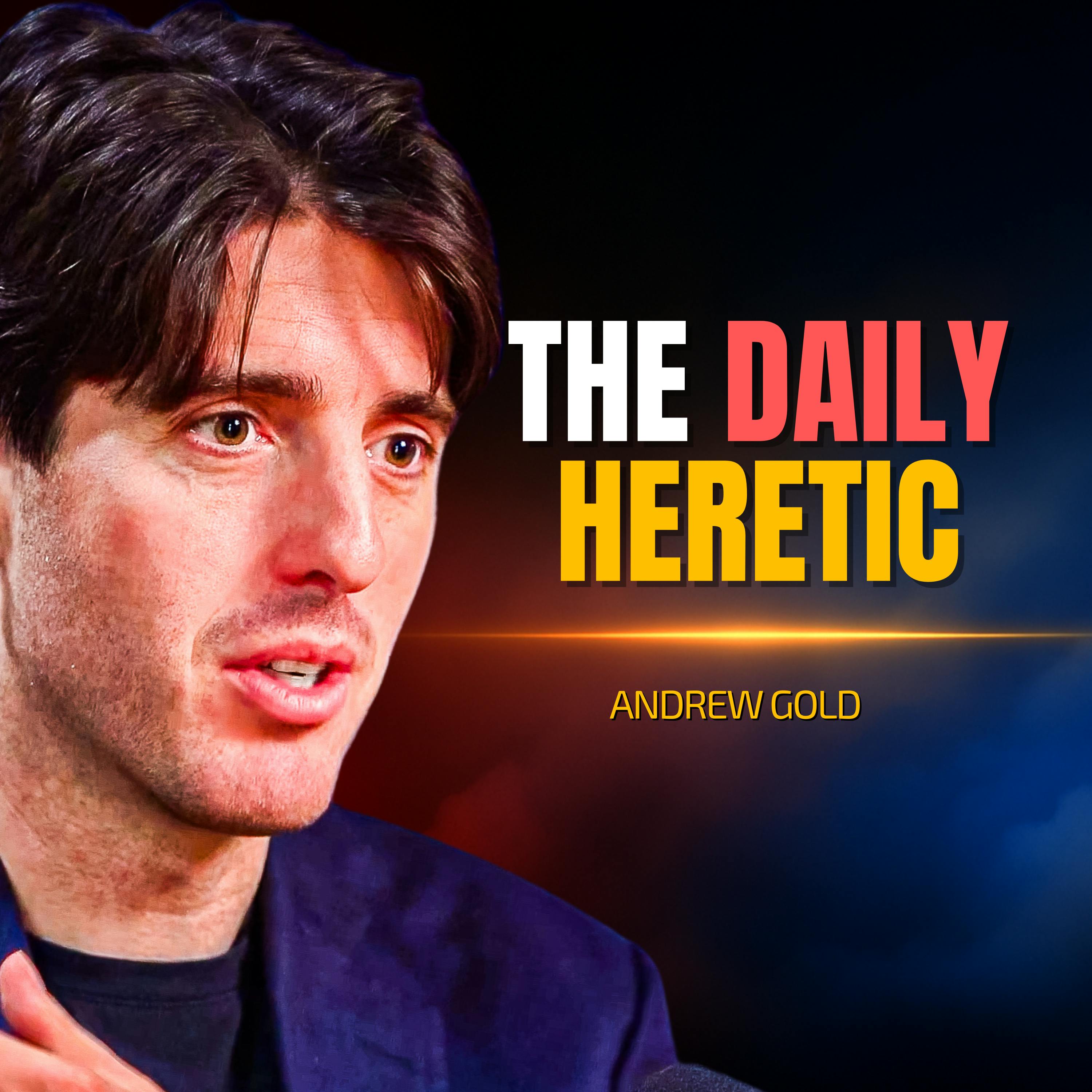
The Daily Heretic
Andrew Gold
All the best clips to remind you of some of you favourite episodes.
Catch the full episodes here: https://open.spotify.com/show/2NiFf7pGB4pqkvbrnS1b9X?si=a682a36c0f6841bd
Catch the full episodes here: https://open.spotify.com/show/2NiFf7pGB4pqkvbrnS1b9X?si=a682a36c0f6841bd
Episodes
Mentioned books

Feb 25, 2026 • 12min
Colin Brazier - Why We NEED Tabloid Journalists Like Andrew Neil
Subscribe to The Daily Heretic for fearless interviews, long-form conversations, and honest media insight from people who’ve worked at the very heart of British journalism. If you want context without spin and debate without filters, start here: https://www.youtube.com/@hereticsclips/videos
In this episode, veteran broadcaster Colin Brazier joins Andrew Gold to make a case many in modern media are reluctant to hear: that journalism needs figures like Andrew Neil — and that so-called “tabloid instincts” are often closer to the public interest than elite newsroom consensus.
Drawing on more than 25 years in television news, Colin reflects on how journalism has changed from robust, questioning reporting to something far more cautious and self-protective. From standing behind police tape at major terror incidents across Europe to returning to editorial meetings in London, he describes a profession that slowly lost its appetite for confrontation — especially with power, institutions, and fashionable ideas.
Colin explains why Andrew Neil’s approach matters. Not because it is provocative for its own sake, but because it prioritises clarity, scepticism, and accessibility. He argues that tabloid journalism, at its best, asks the questions ordinary people are already thinking — without euphemism, jargon, or moral pre-editing. In contrast, much of today’s mainstream media, he suggests, now speaks about the public rather than to them.
The conversation touches on a crucial turning point around the 2015 migration crisis, when newsroom framing and language began to shift decisively. Colin explains how ideological pressure can shape everything from guest selection to what counts as a legitimate question. Over time, scepticism — once journalism’s defining trait — was replaced by reassurance and consensus.
Rather than dismissing tabloid journalism as crude or irresponsible, Colin reframes it as a necessary counterweight to institutional groupthink. He explains why figures like Andrew Neil succeed not because they flatter audiences, but because they respect them enough to be direct — even when that makes colleagues uncomfortable.
This isn’t nostalgia or media infighting. It’s a serious discussion about incentives, trust, and why large sections of the public have stopped believing what they’re told. Colin argues that journalism regains credibility not by policing tone, but by restoring its willingness to challenge assumptions — wherever they come from.
If you’ve ever wondered why blunt interviewers resonate while polished coverage falls flat, this conversation offers rare, experience-driven insight into what journalism has lost — and what it needs to recover.
Watch the full podcast here:
https://www.youtube.com/watch?v=vpnaLXEyOyg
#ColinBrazier #AndrewNeil #Journalism #UKMedia #TabloidJournalism #FreeSpeech #MediaTrust #AndrewGold #TheDailyHeretic #BroadcastJournalism Learn more about your ad choices. Visit megaphone.fm/adchoices
Feb 24, 2026 • 7min
Andy Woodward - Neil Warnock Was a ROCK During the HORRIFYING Barry Bennell Case
👉 Subscribe to The Daily Heretic for long-form conversations that cut through noise, centre survivors, and expose how power really works:
https://www.youtube.com/@hereticsclips/videos
When almost everyone stayed silent, who actually stood up?
In this episode, Andrew Gold speaks with Andy Woodward, the former professional footballer whose courage helped bring to light one of the most devastating safeguarding failures in British sport. Andy reflects on the long, painful journey of speaking out — and on the rare figures who offered genuine support when it mattered most.
Andy explains how, amid fear, intimidation, and institutional resistance, Neil Warnock emerged as a steady presence during the fallout from the Barry Bennell case. In an environment where many closed ranks or looked away, Andy describes why Warnock’s consistency, clarity, and willingness to listen made a profound difference.
This conversation revisits the manipulation and coercive control Andy endured as a child, and the psychological barriers that kept victims silent for years. Andy explains how authority was misused, how trust was exploited, and how systems that claimed to protect young players instead enabled harm through inaction and denial.
But this episode also asks a harder question: what does real leadership look like when a scandal breaks? Andy contrasts institutional defensiveness with individual responsibility, explaining why meaningful support isn’t about statements or processes, but about people who are willing to show up, listen, and stand firm when it’s uncomfortable.
Andy recounts the moment he decided to tell the truth publicly, the backlash that followed, and the emotional toll of challenging powerful organisations. He explains why whistleblowers are often isolated — and why the presence of even one steady, principled figure can change everything.
Rather than focusing on outrage, this episode examines character. It looks at who acts with integrity under pressure, who prioritises welfare over reputation, and why those choices matter long after headlines fade.
If you’ve ever wondered why safeguarding failures persist, how silence is maintained, or what genuine support looks like when institutions falter, this conversation offers a rare and deeply human insight.
This is a difficult story — but also one that highlights resilience, responsibility, and the importance of standing by victims when it counts.
🎧 Watch the full podcast here:
https://www.youtube.com/watch?v=07IHHdUTI9o
#AndyWoodward #NeilWarnock #FootballScandal #ChildSafeguarding #Whistleblower #InstitutionalFailure #TheDailyHeretic Learn more about your ad choices. Visit megaphone.fm/adchoices
Feb 24, 2026 • 10min
Shaun Attwood - Epstein Ties: Bill Clinton is a DEVIANT
👉 Subscribe to Heretics Clips for more unfiltered investigations into power, scandal, and the stories mainstream media won’t touch.
In this episode of Heretics, Shaun Attwood examines the public record, allegations, and unanswered questions surrounding Bill Clinton’s documented association with Jeffrey Epstein — and why he believes that relationship still hasn’t been seriously confronted. Rather than offering sensational claims, Shaun walks through timelines, flight logs, testimony, and media blind spots to show how proximity to power changes scrutiny itself. The discussion isn’t about legal verdicts — it’s about influence, reputation management, and why certain names remain permanently “out of reach” no matter how often they appear in scandal-adjacent reporting. https://www.youtube.com/@hereticsclips/videos
Shaun outlines how Clinton’s connection to Epstein has been acknowledged but rarely examined in depth. Mentions appear briefly, then vanish. Questions surface, then dissolve. The episode explores how elite figures aren’t protected by secrecy alone, but by complexity — layers of institutions, lawyers, public relations, and political tribalism that make serious examination socially risky.
Rather than framing Clinton as uniquely guilty, Shaun places him inside a broader pattern: when someone holds enough symbolic, political, or cultural power, even proximity to wrongdoing becomes untouchable. Media narratives fragment. Focus shifts elsewhere. Accountability becomes abstract.
This clip explores how the Epstein case itself became strangely selective. Some names became headlines. Others became footnotes. And some never became anything at all. Shaun argues that this selective attention isn’t accidental — it’s structural. The system doesn’t suppress information; it buries it under noise, outrage cycles, and partisan distraction.
The conversation also touches on how tribal politics protects individuals. If a name belongs to “your side,” scrutiny feels like betrayal. If it belongs to “the other side,” scrutiny becomes entertainment. Truth becomes secondary to alignment.
Shaun suggests that this is why Epstein remains such a powerful story: not because of what we know, but because of what we don’t know — and why we’re discouraged from asking.
This episode isn’t about convicting anyone in public opinion. It’s about understanding why public opinion itself is shaped, guided, and constrained. It’s about how scandal doesn’t threaten power — unless it’s allowed to.
Whether you agree with Shaun or not, this conversation raises an uncomfortable question:
If proximity to abuse carries no cost for the powerful… what does accountability even mean?
Watch the full podcast here: https://www.youtube.com/watch?v=mnZuZgp3KKg
#ShaunAttwood #EpsteinFiles #BillClinton #Heretics #PowerAndInfluence #TrueCrimePodcast #EliteNetworks #AndrewGold Learn more about your ad choices. Visit megaphone.fm/adchoices
Feb 24, 2026 • 8min
Mike Rinder - Ex-Scientologist REVEALS Tom Cruise is EVIL!
Subscribe to The Daily Heretic for fearless interviews, long-form conversations, and first-hand testimony from people who’ve lived inside closed worlds. If you want insight over spin and context over soundbites, start here: https://www.youtube.com/@hereticsclips/videos
In this episode, Mike Rinder—former senior executive and enforcer inside Scientology—shares his personal account of how celebrity influence operates within the organisation, including his perspective on Tom Cruise’s role. Speaking candidly before his passing, Rinder explains how power, access, and status can be used to shape behaviour—and why those dynamics matter to understanding high-control groups.
After more than 30 years at the very top of Scientology, Rinder had a front-row seat to the inner workings of celebrity culture inside the movement. He describes how famous members are elevated, protected, and surrounded by systems designed to maintain loyalty. What does that look like day to day? How are messages delivered? And how does admiration turn into pressure? Rinder answers from lived experience, carefully distinguishing observation from allegation.
The conversation explores why leaving isn’t resignation but escape. Rinder explains why Sea Org members are conditioned to fear departure, how internal emergency responses are triggered when someone tries to leave, and what happens to families left behind. He connects these mechanisms to the influence of high-profile figures—explaining how visibility and authority can amplify control without overt force.
Rinder also reflects on the personal cost of enforcing these systems. He speaks openly about the guilt he carries for harm caused while upholding policy, the relationships he lost—including with his own children—and the moment he finally stepped into freedom with nothing but the clothes he was wearing. These reflections add weight and restraint to his testimony: this is accountability from someone who once defended the structure from the inside.
This isn’t gossip or a hit piece. It’s a measured, insider account of how influence works in closed environments—and why charisma and success can be powerful tools when paired with hierarchy and secrecy. Rinder explains how intelligent people can remain trapped by loyalty, fear, and hope, and why questioning authority often comes at a steep personal price.
If you’re curious about how celebrity power intersects with belief systems—and what it takes to break free—this conversation offers rare clarity and nuance. Stay to the end for Rinder’s reflections on responsibility, recovery, and rebuilding a life after control.
Watch the full podcast here:
https://open.spotify.com/episode/0HCTCNSg4MgEbwhamSPZqx?si=435fda6a56f84446
#MikeRinder #Scientology #CelebrityInfluence #HighControlGroups #SeaOrg #CultRecovery #TheDailyHeretic #AndrewGold #InsiderTestimony #PodcastClips Learn more about your ad choices. Visit megaphone.fm/adchoices
Feb 24, 2026 • 8min
Carl Benjamin - 'They Won't Live in POVERTY in Birmingham Forever!'
👉 Subscribe to The Daily Heretic for long-form conversations that tackle difficult policy questions with clarity rather than slogans:
https://www.youtube.com/@hereticsclips/videos
What happens when welfare policy, migration, and long-term outcomes are discussed honestly — without collapsing into accusation or taboo?
In this episode, Andrew Gold speaks with Carl Benjamin about the realities of immigration, welfare dependence, and social mobility in parts of the UK, using Birmingham as a case study. Rather than focusing on individuals, the conversation examines systems: incentives, expectations, and the unintended consequences of policies that are rarely evaluated after they’re implemented.
Carl argues that short-term welfare support can become a long-term trap when pathways into work, integration, and upward mobility are weak or inconsistently enforced. He explores why some communities experience prolonged deprivation, and why policymakers often struggle to address the problem without being accused of bad faith. The discussion centres on outcomes — employment, housing conditions, public services, and social cohesion — rather than identity.
A key theme is temporality. Carl suggests that some migration patterns are shaped by economic calculation: people move to maximise opportunity, support families, or secure stability — and may later return elsewhere when circumstances change. He argues that governments should be honest about this reality, designing policy around contribution, integration, and clear expectations, rather than moral narratives that obscure practical results.
The episode also touches on the “right’s civil war,” examining why disagreements over welfare and migration fracture political movements. Carl explains how loyalty tests and labels often replace data, pushing serious policy debate to the margins. When questions are treated as accusations, solutions become impossible.
Andrew presses Carl on compassion and responsibility: how to balance support for vulnerable people with accountability, and how to discuss community outcomes without dehumanising anyone involved. The exchange stays focused on policy design — what works, what doesn’t, and why avoiding measurement ultimately harms the very people policies claim to help.
If you’re frustrated by immigration debates that swing between silence and outrage, this episode offers a framework for thinking about welfare, integration, and long-term outcomes without resorting to caricature.
This isn’t about blaming communities. It’s about asking whether current policies genuinely create opportunity — or quietly entrench deprivation.
🎧 Watch the full podcast here:
https://www.youtube.com/watch?v=gJPUZYNxsSM&t=1717s
#CarlBenjamin #UKWelfare #ImmigrationPolicy #SocialMobility #BritishPolitics #CultureWar #TheDailyHeretic Learn more about your ad choices. Visit megaphone.fm/adchoices
Feb 23, 2026 • 12min
World Econmic Forum Insider Desiree Fixler - The DAVOS ELITE: Is Klaus Schwab EVIL?
Subscribe to The Daily Heretic for fearless interviews, insider testimony, and long-form conversations that question powerful institutions. If you want to hear from people who were actually on the inside, start here: https://www.youtube.com/@hereticsclips/videos
Who are the Davos elite—and what really happens behind the polished panels and lofty slogans? In this episode, World Economic Forum insider Desiree Fixler joins Andrew Gold to unpack her experiences working at the intersection of global finance, ESG, and the WEF ecosystem, and to explain why she believes the culture surrounding Davos deserves far more scrutiny.
Fixler was a senior executive at Deutsche Bank’s $1 trillion asset-management arm. She believed in sustainability, ESG, and the idea of “profit with purpose.” That belief began to change when she saw how decisions were made behind closed doors, how alignment with elite frameworks was prioritised, and how questioning the process quickly became unwelcome.
In this conversation, Desiree explains what the World Economic Forum actually is, how stakeholder capitalism replaced traditional shareholder accountability, and why net zero, ESG, and DEI became effectively mandatory across finance and government-linked institutions. She describes how reputational pressure and elite consensus can override open debate—creating a system where compliance matters more than outcomes.
The discussion also addresses Klaus Schwab’s role as founder and figurehead of the WEF—not through slogans or accusations, but through Fixler’s first-hand perspective of how leadership, influence, and power function within the Davos network. Is it about coordination? Control? Or something more structural? Desiree doesn’t speculate—she explains what she says she observed.
The turning point came when Fixler says she refused to sign off on public disclosures she believed were misleading. According to her account, raising concerns led to swift consequences: she was locked out of internal systems, publicly criticised, and ultimately forced out of Germany. What followed, she says, were investigations by US and German authorities, bringing wider attention to practices she claims were previously ignored.
This episode isn’t about demonising individuals or denying environmental responsibility. It’s about systems, incentives, and accountability—and what happens when global elites operate without meaningful challenge. Fixler carefully distinguishes between stated goals and the mechanisms used to enforce them, arguing that transparency and debate have been replaced by conformity.
If you’ve ever wondered what Davos really represents—or why questioning it can carry serious professional risk—this conversation offers rare, insider clarity.
Watch the full podcast here:
https://www.youtube.com/watch?v=fPVMmfh8ARc
#DesireeFixler #Davos #WorldEconomicForum #KlausSchwab #Whistleblower #ESG #NetZero #GlobalElites #TheDailyHeretic #AndrewGold Learn more about your ad choices. Visit megaphone.fm/adchoices
Feb 23, 2026 • 9min
Posh Pete - Confessions of a Psycho DR*G Lord: 'I Cut People's Fingers Off'
👉 Subscribe to The Daily Heretic for unfiltered, long-form conversations that confront crime, consequence, and the realities people rarely admit to out loud:
https://www.youtube.com/@hereticsclips/videos
What does it take for an ordinary person to cross lines they once thought unthinkable — and how do they live with it afterward?
In this episode, Andrew Gold speaks with Pieter Tritton, better known as Posh Pete, in one of his most candid conversations to date. This is not a story told for shock value or bravado. It’s a sober, reflective account of how power, fear, and survival can warp judgement — and how quickly moral boundaries collapse when consequences feel distant.
Tritton traces the path from a middle-class upbringing and university life into a world governed by threat and leverage rather than law. He explains how operating inside organised criminal networks isn’t driven by chaos, but by rigid hierarchies, expectations, and brutal enforcement. Decisions are made under pressure, often with incomplete information, and once authority is challenged, responses escalate fast.
Andrew presses Tritton on moments he now views as irreversible turning points — not in graphic detail, but in psychological terms. How does fear reshape decision-making? What happens when reputation becomes currency? And how do people rationalise actions they would once have condemned, simply to avoid becoming targets themselves?
A central theme of the conversation is dehumanisation. Tritton reflects on how environments built on intimidation erode empathy, replacing it with calculation. In such settings, moral reasoning gives way to survival logic — a shift he describes as gradual, not sudden. By the time lines are crossed, they no longer feel like lines at all.
Crucially, this episode does not glamorise violence or crime. Tritton speaks with visible discomfort about the long-term consequences: psychological scars, guilt, and the realisation that power gained through fear is both fragile and corrosive. The costs, he says, extend far beyond prison sentences — they linger in memory and identity.
Since his release, Tritton has chosen to speak openly about his past, not to excuse it, but to dismantle myths around criminal life. He challenges the idea that dominance equals control, arguing instead that it often signals vulnerability masked as strength.
If you’re interested in the psychology of power, how ordinary people become capable of extreme actions, or what accountability really looks like after the fact, this episode offers a rare, unvarnished perspective — told without theatrics, and without shortcuts.
🎧 Watch the full podcast here:
https://open.spotify.com/episode/1xGIXuvgQA1FftHCeBRe0r?si=b902fa92d6694186
#PoshPete #PieterTritton #TrueCrimePodcast #PrisonSurvival #CrimeAndConsequences #PsychologyOfPower #TheDailyHeretic Learn more about your ad choices. Visit megaphone.fm/adchoices
Feb 23, 2026 • 8min
Charles Asher Small - The Muslim Brotherhood: Qatar is BRAINWASHING the Radical WOKE Left
In one of the most urgent and eye-opening interviews on Heretics Clips, Andrew Gold speaks with Dr. Charles Asher Small — a leading global expert on extremism — to reveal how Qatar’s unprecedented $1 trillion influence strategy is reshaping Western institutions, destabilising democracies, and empowering ideological movements that openly oppose liberal values. If you want more hard-hitting conversations like this, make sure you subscribe to Heretics Clips: https://www.youtube.com/@hereticsclips/videos
Dr. Small lays out a sweeping 50-year warning: that the ideological project rooted in the Muslim Brotherhood’s early strategy has now reached a critical midpoint. According to him, the West is facing a long-term soft-power campaign driven by a mixture of political influence, financial investments, cultural outreach, and elite partnerships — all of which have gone largely unchallenged. Qatar, he argues, has become the single most powerful force funding and shaping these networks, from major universities to media platforms to political institutions.
This episode exposes how influence operations work in practice: not through dramatic takeovers, but through incremental cultural and institutional shifts that policymakers often fail to recognise. Dr. Small explains how what he calls the “Red-Green Alliance” — a convergence of radical left movements and Islamist ideological groups — has gained ground by infiltrating academic spaces, activist networks, and public discourse, often with the help of Western leaders who underestimate the long-term consequences.
Andrew pushes Dr. Small on tough questions, including whether the West is “sleepwalking” into a generational ideological battle, why countries like Jordan and the UAE have taken a harder line against the Muslim Brotherhood, and what it means when the UK reportedly has 40,000 individuals on its terrorism watchlist. They also explore the human consequences: the threats to women’s rights, LGBTQ+ freedoms, religious minorities, and democratic institutions if extremist ideologies gain further legitimacy.
Throughout the conversation, Dr. Small stresses that the vast majority of Muslims are peaceful, ordinary citizens — and that the issue is ideological extremism, not communities. His argument is not about division, but about recognising political movements that exploit Western openness to undermine Western freedoms.
This is a gripping and essential discussion for anyone concerned about security, geopolitics, or the future of democratic societies.
🔥 Watch the full podcast here:
https://www.youtube.com/watch?v=SWpJKSqA-FE
#Qatar #CharlesAsherSmall #Heretics #AndrewGold #MuslimBrotherhood #Extremism #Geopolitics #RedGreenAlliance #WesternDemocracy #InfluenceOperations Learn more about your ad choices. Visit megaphone.fm/adchoices
Feb 23, 2026 • 6min
Simon Brodkin - How a PRANK Got Me Onstage with Kanye West at Glastonbury
👉 Subscribe to The Daily Heretic for honest, behind-the-scenes conversations with people who take creative risks:
https://www.youtube.com/@hereticsclips/videos
How does a comedian end up standing onstage next to one of the biggest artists in the world — without an invite, a pass, or a plan anyone would normally approve?
In this episode, Simon Brodkin tells the full story of how he managed to walk onstage with Kanye West at Glastonbury, how the idea formed, how it was executed, and what happened immediately after.
He explains how moments like this are never spontaneous accidents, but carefully designed experiments in timing, psychology, and confidence. Simon walks through how he thought about security, visibility, social cues, and authority — and how subtle behaviour can be more powerful than credentials.
You’ll hear what almost stopped it from happening, what nearly went wrong, and what surprised him most once he was actually on the stage. Simon reflects on how close the moment came to failing, how much of it relied on instinct rather than planning, and why those few seconds changed the trajectory of his career.
This is not just a story about a stunt — it’s about understanding systems. Who looks like they belong. Who gets questioned. Who gets waved through. Simon explains what that moment revealed to him about status, perception, and how easily reality bends when people assume you’re meant to be somewhere.
He also reflects on the personal consequences: how that moment redefined his public identity, how broadcasters and audiences reacted, and how it shaped the kinds of work he would go on to make.
If you’ve ever wondered how these moments actually happen, what it feels like inside them, or what they cost after the applause fades, this episode answers those questions directly.
It’s funny, tense, awkward, and revealing — not because of what happened onstage, but because of what it exposed behind it.
🎧 Watch the full podcast here:
https://www.youtube.com/watch?v=KuQFh6sPgak
#SimonBrodkin #KanyeWest #Glastonbury #BritishComedy #ComedyPodcast #TheDailyHeretic #UKComedy #ComedyStories Learn more about your ad choices. Visit megaphone.fm/adchoices
Feb 22, 2026 • 7min
Wiki Co-Founder Larry Sanger - Wikipedia Founder Jimmy Wales Enabled WOKE Mind Virus to SPIRAL
👉 Subscribe to The Daily Heretic for long-form conversations that challenge institutional power and question what we’re told to trust:
https://www.youtube.com/@hereticsclips/videos
What happens when the world’s most trusted information platform quietly drifts away from neutrality — and who is left to speak up?
In this episode, Andrew Gold speaks with Larry Sanger, the philosopher and internet pioneer who helped build Wikipedia from the ground up. As Wikipedia’s co-founder and first editor-in-chief, Sanger was instrumental in shaping its original mission: open collaboration, decentralised knowledge, and a strict commitment to neutrality. What followed, he argues, is a cautionary tale about how ideals erode when power concentrates.
Sanger explains why he believes Wikipedia no longer lives up to its founding principles. He outlines how editorial control has become increasingly centralised, how informal hierarchies shape what is deemed “acceptable knowledge,” and how coordinated activism can influence entries on controversial topics. According to Sanger, neutrality didn’t disappear overnight — it was slowly replaced by moral certainty and group enforcement.
The conversation focuses on process, not personalities. Sanger describes how incentives inside Wikipedia reward conformity, how dissenting editors are marginalised, and why appeals to policy often mask deeper ideological alignment. He also discusses the role of leadership and governance, arguing that decisions made at the top helped normalise a culture where activism and encyclopaedia writing became increasingly blurred.
Andrew presses Sanger on difficult questions: Is bias inevitable in open systems? Can neutrality survive at internet scale? And why do so many people still treat Wikipedia as an unquestionable authority despite its internal conflicts?
Sanger also reflects on the personal cost of whistleblowing. Speaking out against a platform he helped create meant professional isolation, public misrepresentation, and being dismissed as disgruntled. Yet he maintains that the stakes are too high to stay silent. When reference points lose credibility, public discourse suffers — especially in politics, science, and culture.
The episode goes beyond Wikipedia to ask a broader question: what happens when gatekeepers of knowledge stop seeing themselves as stewards and start acting as arbiters? Sanger argues that rebuilding trust will require pluralism, transparency, and a renewed commitment to epistemic humility — values that once defined the early internet.
If you rely on Wikipedia daily, debate culture online, or care about who controls information in the digital age, this conversation offers an insider’s account of how power quietly reshapes truth.
🎧 Watch the full podcast here:
https://open.spotify.com/episode/5ByqjwdbWafNPpLiSS7ZVW?si=b87af2e7c1e748b4
#wikipedia #larrysanger #jimmywales #whistleblower #freeexpression #mediabias #digitalculture #TheDailyHeretic Learn more about your ad choices. Visit megaphone.fm/adchoices

