

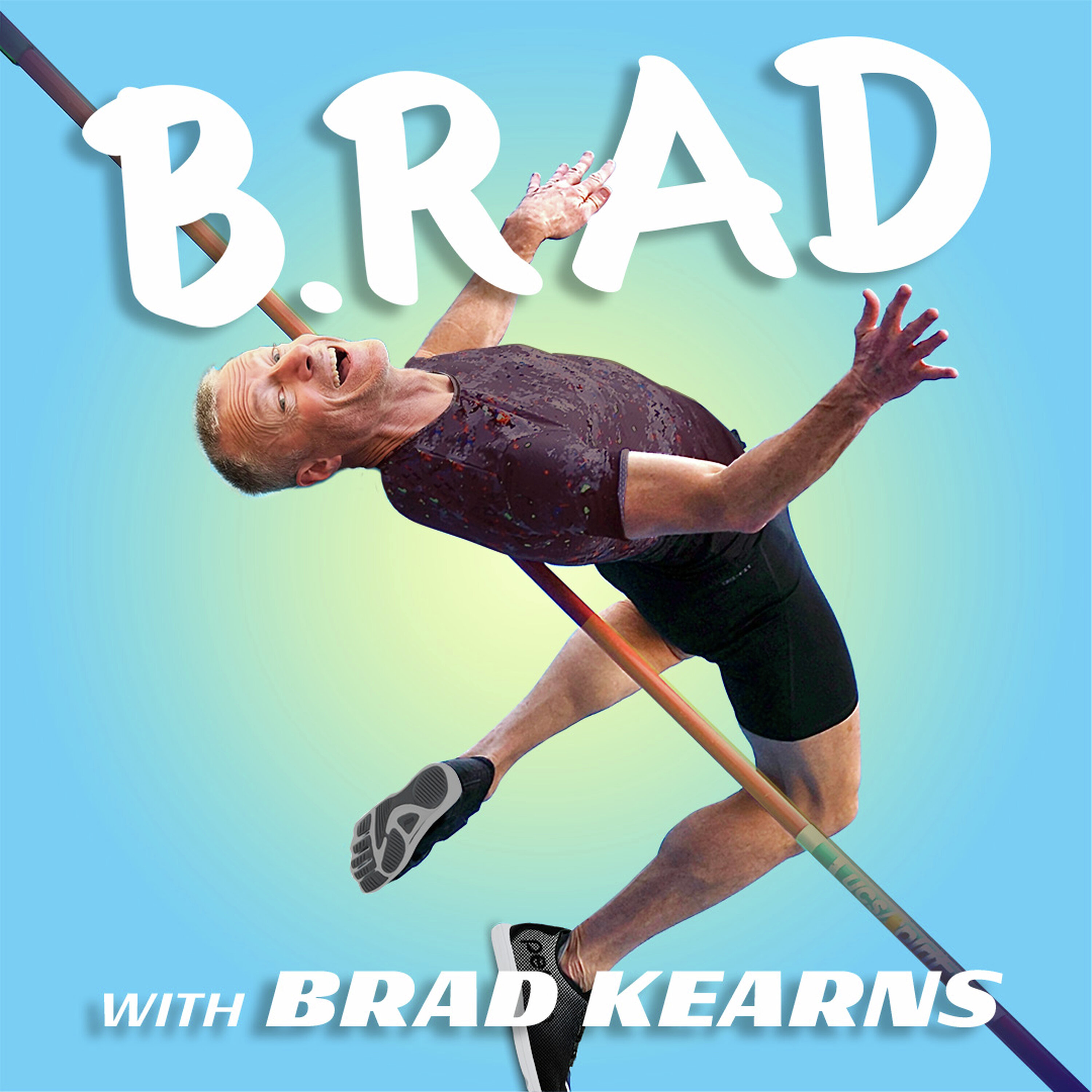
The B.rad Podcast
Brad Kearns
Join Brad Kearns, New York Times bestselling author, world #1 ranked masters 60+ high jumper, Speedgolf world record holder, and former world #3 ranked pro triathlete, in pursuing peak performance with passion throughout life. Brad delivers an engaging mix of step-by-step education on important health topics like staying fit, strong and powerful as you age; transforming diet to lose body fat and increase energy; sort through hype and misinformation to make simple, sustainable lifestyle changes; and broaden your perspective beyond a fit body to experience happy relationships, nonstop personal growth, and ultimately sail to 100 with a happy, healthy, long life. Let’s explore beyond shortcuts, hacks, and crushing competition to laugh, have fun, appreciate the journey, and not take ourselves too seriously. It’s time to B.rad!
Episodes
Mentioned books

Jan 31, 2020 • 35min
Slowing Down, Redefining Success, And Pursuing A Long, Happy, Healthy Life (Breather Episode with Brad)
(Breather) This show is inspired by a great article by Andrew Merle titled, “What Is Success Anyway?”. The author offers 7 insights that I cover with my added colorful commentary. Hopefully this show will get you thinking: Can money buy happiness? (research says only to a certain, seemingly low, point), and what is success anyway? According to Merle, success feels something like this: doing work that you love and living a long, happy, and healthy life. And yeah, that money can’t buy you happiness stuff is totally true - the fact is, once you’ve been able to cover all your basic needs (food, shelter, etc), money can’t produce the same kind of feeling of happiness in you - you plateau, basically. This is because consumerism locks you in a never-ending cycle of wanting more, more, and more...and you’re never satisfied. Small choices, like opting to make coffee at home instead of going out to your local Starbucks, will seriously add up in savings over time. Not only that, but look at what it’s doing to our planet! Simply appreciate what you already have, instead of constantly trying to collect more stuff. Remember - it’s just stuff. We live in a world where the new model of something is always just around the corner. There are always updates and upgrades, always something to buy - and there’s always a company out there trying to get you to spend your money. No wonder these things cannot give you sustainable happiness - the only joy they bring is fleeting. Real happiness comes from the substantive things in life - like making connections, engaging in or building community, service for others, living with passion and purpose... This is precisely why overworking yourself and overpacking your schedule absolutely destroys productivity and messes with your personal happiness. Research actually shows that once you’ve exceeded 50 hours of work per week, your productivity is seriously challenged. Push it to 55 hours, and your productivity basically drops off a cliff. Why? Because there’s no balance when you’re working without socialization. Social relationships are the #1 driver of happiness, so we have to work on creating, and maintaining that work-life balance. Otherwise, you’ll find your work suffers - when you’re overworked, your energy is low, your concentration is sluggish, your abilities are decreased. Who wants to work in a state where you’re barely functioning? No one can produce good work under those conditions, but unfortunately, it’s very common in our consumerist and capitalist-driven culture. No wonder the countries that rate the highest on the “happiest people” scale have an average workweek of 37 hours! And check this out: Europeans tend to vacation way more than Americans, who average only 11 days of vacation time a year. Compare that to studies that have shown 6 weeks of vacation time a year is optimal for happiness...clearly, we’ve got some catching up to do. One radical takeaway from this piece was the statement that happiness causes success, not the other way around. First, you gotta get happy, because 1) duh, it feels good and 2) because that’s what leads to success. Yes, we’ve had the formula backwards for years, and now we know: success does not bring happiness. Success follows happiness. That’s why we have to be super mindful about balance - because no one wants to have any regrets on their deathbed about how they balanced (or didn’t!) their personal life with their career. So why not start incorporating 5 habits into your day that Merle claims will boost your happiness? These habits will effortlessly get you into a positive and happy mindset, which is the key to happiness and success because having a negative and discouraged attitude will only get in the way of you manifesting your dreams. Start doing these 5 things daily, for 21 days, and see how your life changes: Write down 3 things you are grateful for. Journal about a recent positive experience for 2 minutes every single day. Engage in (not strenuous) cardio, like brisk walking or jogging. Meditate, even if it’s just for a few minutes each day. Start your day by emailing/writing a 2-minute note of gratitude/thanks to a friend or colleague, or compliment someone you admire. The most important lesson I garnered from Merle’s writing was this: your true nature and highest calling is to promote happiness. When you think about life from that perspective, things seem simpler and easier. Is it really that simple? Nothing ever is, but the bottom line is: everyone wants to live a happy and healthy life. If your true nature and highest calling is to promote happiness, then how fun is that? Enjoy this show, and don’t forget: stay positive, remember to widen your perspective on any situation (meaning, just get over yourself), and promote happiness among your friends, family, even the people you pass on the street. A little kindness truly goes a long way, whether it’s to yourself or to others, it does matter. Every action has an impact, so why not slow down, and stop and smell the roses? TIMESTAMPS: What does success really mean? [03:00] Can money buy happiness? [04:05] It depends on the person. If you are in a position of doing for others rather than just gathering material goods, you would probably feel quite satisfied. [07:08] Even people with lots of money experience FOMO (fear of missing out). [09:55] How much money would you have today, had you begun saving $5 per day at age 20? [ 12:42] Working long hours does not equal productivity or happiness. [15:17] Vacation time is critical. [17:49] Social relationships are the best predictor of overall health and happiness. [20:09] Happiness causes success. Not the other way around. [25:39] Make sure you are not looking back in regret at the end of your life. [27:42] Slow down and savor life. [30:48} Have the courage to be true to yourself no matter what other people want you to be. [33:30]Support this podcast at — https://redcircle.com/the-get-over-yourself-podcast/donationsAdvertising Inquiries: https://redcircle.com/brandsSee omnystudio.com/listener for privacy information.See omnystudio.com/listener for privacy information.

Jan 28, 2020 • 1h 13min
Andrew MacNaughton #2: Health vs. Fitness, Challenging Fixed Beliefs, Diet Experimentation, and How Sacrifices For Healthy Living Aren’t Really Sacrifices
I catch up with my old-time triathlon compatriot Andrew MacNaughton, who retired from the pro circuit a year before I did, which made him that much smarter back in 1993-1994. This show is a wild ride covering a huge array of health, diet, and peak performance topics. Most of the insights have application to all health enthusiasts, but we get a little technical here and there talking about sophisticated training matters, such as Heart Rate Variability (don’t worry, my BradBeat HRV App at the ios store is simple and user-friendly, as is this GOY Podcast episode about HRV.) Andrew kicks us off with the sensible but minimally respected premise that “Health and Fitness don’t really intersect much” and off we go. Andrew talks about his precise experimentations with different kinds of diets, and how your eating patterns might line up with your body type. We discuss the dangers of holding on tightly to rigid beliefs and the benefits of thinking critically and remaining open-minded. This is especially relevant when reflecting on “scientific studies” being the end-all. As we’ve seen so many times, a study can be devised to achieve just about any conclusion, especially when there are special interests involved! We talk about the pleasures of racing shorter distances where you can go faster and feel like an athlete instead of just “endure.” At the end of the show, we get a little revv’d up with some emphatic admonitions to make healthy choices, reject the horrible cultural influences toward laziness and indiscriminate dietary standards. Andrew proposes that making “sacrifices” such as getting up for an early workout, or cutting pizza and beer out of your diet, don’t really need to be seen as sacrifices, and are best viewed as choices. Conversely, when you fail to achieve the bare minimum respectable standard for food choices or exercise output, you are making the ultimate sacrifice of your health, because you are most certainly headed on a journey of pain, suffering, and accelerated demise. This show will get you thinking and hopefully get you focused to make some changes in your basic diet and exercise habits for healthy living. TIMESTAMPS: Health and Fitness don’t intersect very well. [04:38] In general, health is diet and sleep, while fitness is fitness. You can choose one or the other. [09:26] Age is not really a factor when you are in your 20s but as you age…… Andrew felt he didn’t rest enough. [13:20] There shouldn’t be a need to urinate in the middle of the night. [18:28] Diet success is dependent on body type. [20:21] Some vegetarians are carboholics and could probably make healthier choices. [26:55] In trying new diets, it often seems they are good for a while, and then they are not as great as you thought. [28:52] There are seasonal variations. [30:04] We have to continue to be on this quest. The information is constantly changing. [34:45] How does the training differ in preparing for a race for six weeks or 24 months? [38:01] Going fast is more fun and harder than going long and slow all day. [41:20] The 60-year-old body just cannot do what the 20-year-old body can. [45:16] If you can hit this very low baseline of two and a half hours a week of very moderately paced cardiovascular exercise, you have an A+ in cardiovascular health. [49:23] Jump up and down 20 times a day and you preserve your bone density and decrease your risk of breakdown. [53:45] Andrew’s daily routine is effortless. He changed from “have to” to “want to”. He does nothing that isn’t fun. [57:50] Dehydration gives you a bad attitude. When it’s hot and humid, you have to go a little bit slower. [01:01:35] What are you sacrificing by not being as healthy? What foods that you believe are too great of a sacrifice to give up? [01:07:10]Support this podcast at — https://redcircle.com/the-get-over-yourself-podcast/donationsAdvertising Inquiries: https://redcircle.com/brandsSee omnystudio.com/listener for privacy information.See omnystudio.com/listener for privacy information.

Jan 24, 2020 • 37min
Surprising Parenting Tips, Part 2 (The Importance of Perseverance Through Struggle) (Breather Episode with Brad)
(Breather) This show will help you understand the importance of perseverance (aka grit) and illuminate how easily youth are getting off track today due to the addictive nature of dopamine triggers (reference my breather show about Dr. Lustig’s new book, The Hacking Of The American Mind, for details). Some great parenting and personal reflections come through in this episode, one being just how important it is to let your kid get angry, frustrated and so forth, but never discouraged. I share the story of a life-changing conversation I had with my son when he was in 7th grade and feeling completely burnt out from basketball. After he abruptly quit the team, he felt terrible and just totally down on himself. Even though I didn’t have all the parenting tips I have now, then, I knew that it was crucial that I communicate one lesson to him: do not be discouraged. We have to let our kids feel out all their feelings, but we cannot let them spiral into a web of self-doubt, which is easy when you’re feeling emotional. But that’s what you’re there for - to help them see what works and what doesn’t, and to show them where to draw the line with certain behaviors. Since dopamine overdose downregulates serotonin, constant praise actually creates a terrible cycle for your children. According to studies, people who are on the receiving end of way too much praise are the types who “quit when the going gets tough.” This is a problem because it causes one to miss out on the intermittent reinforcement that comes with failure - that is what teaches the brain that frustrating spells can be worked through. But children who are complimented too much don’t develop persistence - no wonder, since they’re told how fabulous they are all the time, they have nothing to work towards! In fact, in college-aged kids, esteem-building praise has been linked with a noticeable drop in their grades! So watch what you say to your kids, and when you do praise them, make a point to praise the effort, not the result. Consider cooling off a bit and placing less importance on your kid’s everyday doings and struggles. Perhaps tone down efforts to boost your kid’s self esteem and let it happen naturally. Maybe do the same for yourself, getting over yourself and being mindful to deliver maximum effort and be a good person. Land the helicopter, praise the effort, don’t comment on everything, and place the emphasis on being a good person and other important character attributes. Yes, it’s a bit different from old-school ideas about effective parenting, but guess what? That’s why it works! This episode will alter your communication with your children for the better, open your mind to alternative methods of parenting, and change the way you look at praise. Maybe your kids are all grown up now, but remember that it is never too late to change your methods. Or maybe you’re not a parent yet, but these lessons are still applicable to your own feelings about yourself and your childhood. Ask yourself, what generation of parenting was I raised in? Research what kind of parenting was thought to be “superior” back then, and try to identify how that has affected you. Maybe there are some things so deeply programmed in your psyche from your childhood that you don’t even know how far those roots reach. You might also find my show with Anat Peri, who hosts personal transformation retreats, very helpful, as she focuses on healing patients by going as deep as possible into their flawed childhood programming. Just remember: no one is perfect, and no one is a perfect parent or child. But we can all work on the ways we approach failure and success, and a huge part of that is simply getting over yourself. TIMESTAMPS: You must never get discouraged and get down on yourself. [03:54] It’s okay to quit. [06:31] Research suggests overpraised kids’ primary concern becomes their image. [07:21] We become dopamine addicts and can learn to respond to failure with grit. [08:59] Young people, especially males, become addicted to porn and video games. [13:54] Parents do not need to make the kid’s life their life! Parents can be supportive and caring without giving up their own lives. [15:27] The wise parent can learn to redirect, not fix, the child after a disappointment. [18:01] High self-esteem is not necessarily the winning ticket that we think it is. [20:11] Athletes who are doing well struggle with getting over yourself concept. [24:37] Offering praise has become a sort of panacea for the anxieties of modern parenting. [28:34] We want the kids to call the shots. {30:23] The most important thing in life is to be a good person. [33:23]Support this podcast at — https://redcircle.com/the-get-over-yourself-podcast/donationsAdvertising Inquiries: https://redcircle.com/brandsSee omnystudio.com/listener for privacy information.See omnystudio.com/listener for privacy information.

Jan 21, 2020 • 1h 10min
The Keto Diet: Everything You Need to Know and Succeed, and Not Screw Up!
Keto is Krazy, man! Everywhere you look there's a new book, video or Internet article about the amazing ketogenic diet and the magical results you get if you just ditch carbs! Can keto live up to the hype? Well, yes it can, but you have to do it the right way, otherwise, you’ll just be in for a stress hormone binge followed by a crash and burn. Regardless of your level of awareness about keto, this show is a great resource. I start from the beginning and describe why keto is so beneficial to health and longevity, including disease protection, improved cognitive function, , reduced inflammation and oxidative stress (these represent the essence of disease and accelerated aging), and the rapid and efficient removal of excess body fat. Next, I walk you through the comprehensive, multi-stage process as detailed in our New York Times bestseller, The Keto Reset Diet and Keto Reset Mastery Course. First, a 21-Day Metabolism Reset where you escape carbohydrate dependency and progress toward fat- and keto-adaptation. The Keto Reset approach is lauded because it encompasses other lifestyle factors such as movement and physical fitness, sleep, and stress management. If you are exercising in chronic patterns, deficient in sleep, or living a hectic, hyperconnected lifestyle, these behaviors will push you back into sugar burning mode. After the 21-Day Reset, I describe the fine-tuning period where you track your ability to fast and feel comfortable. If you can eat your last meal at 8 pm and last until 12 noon without calories, maintaining peak cognitive function, mood, and energy levels, you are ready to try keto. The next step is a focused, six-week period of nutritional ketosis. When you complete the Keto Reset journey as described, you avail a lifetime of benefits from becoming metabolically flexible - being able to burn a variety of energy sources, especially ketones made in the liver and stored body fat. It sounds great, but we need to sort through the hype and misinformation about certain keto strategies and macronutrient ratios, and how to avoid common pitfalls and backslides. For example, the trend toward heavy and deliberate fat consumption in the name of keto misses the essential point that keto is a genetically programmed survival mechanism designed to fuel the ravenous brain when you are starving or extremely restricted in dietary carbohydrates. Keto is a way to avail the long scientifically validated benefits of fasting without having to starve yourself, and the best benefits of keto come from fasting and caloric efficiency – not fat bombs. I detail how to optimize your sodium and electrolyte intake, which can leave you feeling generally crappy and blaming it on macros instead of micros (micronutrients.) I also talk about the importance of toning down your overall exercise energy output when you start keto to prevent muscles and brain from getting into a tug-of-war for the same precious energy source of ketones when they are suddenly without their lifelong primary fuel source of glucose (from dietary carbs.) This show is deeply informative and illuminating, but always in plain talk so you can grasp the concepts with needing heavy prior knowledge. If you are thinking about keto, this show will give you the essential tools to succeed without the nonsense of the keto flu that some people describe as inevitable. It’s totally not true, and if you are struggling and suffering in your path to keto, you need to change things up, perhaps take a few steps backward and get healthy and metabolically efficient before worrying about aggressive macro guidelines. When you finish listening to this show, you will breathe a sigh of relief, realizing that keto is not complicated, not brutal, and incredible health and metabolic benefits are within your reach. TIMESTAMPS: Ditching carb dependency is the starting point. [03:58] Ketones are a much cleaner burning fuel source than glucose. [07:23] Brad uses the analogy of a campfire to show what happens at the cellular level when you’re eating junk food. [10:38] It is our default human factory setting that we are fat-burning beasts. [13:06] There is a step-by-step approach to follow to do this right. [14:01] One of the worst things in our modern American diet is high polyunsaturated vegetable oil. [16:14] What about rice and lentils? [18:23] You have to get the insulin production down. [20:36] You have to make this transition gradually and understand what you are doing. [23:46] We advocate for a comprehensive lifestyle approach because other elements of life are relevant to your ability to transition. [25:47] When thinking about exercise, realize that the miles on the road or trips to the gym, though important, first think about just moving every day. [27:20] Don’t overdo it when you workout. Workouts do not need to be more than 30 minutes. [29:20] Strength training needs to be brief, intense, and explosive. [35:59] Integrate sprinting into your game. [36:59] If you have a deficiency in optimal sleep, it throws off your appetite hormones. [38:57] The number one emergency thing to do is minimize artificial light and digital stimulation after dark. [41:17] Stress management includes many healthy practices that you can train yourself to do. [43:32] Before you get started on this Keto thing, you want to see how well you’re doing without the input of a regular meal. [45:09] You want to limit your gross carb intake to 50 grams per day. [47:43] Just eat the fat you need to feel satisfied and don’t go over-consuming fat in the name of Keto. [52:57] Make it simple and functional at the onset. [54:58] If you are experiencing the Keto flu, just take a step backward and spend more time in 21-day reset mode. [56:59] You’ll feel like crap if you don’t get your sodium balance right. [01:00:44] What you are doing is you’re reclaiming your genetic ability and your genetic preference to burn fat as your primary energy source. [01:03:31]Support this podcast at — https://redcircle.com/the-get-over-yourself-podcast/donationsAdvertising Inquiries: https://redcircle.com/brandsSee omnystudio.com/listener for privacy information.See omnystudio.com/listener for privacy information.

Jan 17, 2020 • 37min
Surprising Parenting Tips, Part 1 (Inverse Power of Praise) (Breather Episode with Brad)
The Get Over Yourself podcast is branching out into the topic of parenting tips, whoopee! In 2007, I read a landmark article in New York magazine called, "The Inverse Power of Praise—How Not To Talk To Your Kids." It forever changed my perspective about parenting and I referenced the insights on a daily basis for years after. You might be surprised to learn that you actually have less of an influence on your kid’s success than you think, considering there are so many other influences, like their peers, along with their own innate qualities, that factor in much more than you do! Some of these suggestions will be shocking and deeply thought-provoking. Your mind may be blown to realize that lavishing effusive praise might do your kid more harm than good; that innocent comments like, “You’re a great athlete,” or, “You’re so smart,” can make your kid become averse to challenge and progress. It sounds crazy, but when you try too hard to set your child up for success, you’re kind of doing the opposite, and instead setting them up for failure. Of course, we all want our kids to know that we see their best qualities, but acknowledging those things too much and focusing only on what it is that is “remarkable” about them will never do them any favors. Instead of praising the end result, praise the effort that went into the process - your child will respond and react to that kind of positive reinforcement in a way that’s much more productive for their growth. This episode will give you some great tools and tips to improve your parenting skills and emphasize the research-proven effective strategies like praising effort that leads to improvement over end results. Also, check out my previous show with New York Times bestselling author Ashley Merryman for related details. TIMESTAMPS: You have less influence on your kid’s success than you realize. [03:00] Sometimes we don’t realize the damage our good intentions cause. [04:44] Should every kid get a trophy? [08:30] The kids often attach their self-esteem to a compliment you’ve given. [09:33] Kids are smart. They learn early on what attributes they have. [12:18] Allow your kids to fail and encourage them to keep trying. [15:53] When so say, “I’m proud of you” to your kid, you are taking the accomplishment away from him or her and turning it on to yourself. [16:37] Make your praise specific and sincere because general praise often has the opposite of the intended effect. [18:30] Sometimes it’s best to be silent until the kid wants to talk. [23:00] Comparing one kid to another is probably the worst thing you can do. [26:15] Overpraised elementary school kids who equate success with innate ability instead of effort, struggle. [28:31] Experiencing failure is a good learning experience because it builds resilience. [34:41]Support this podcast at — https://redcircle.com/the-get-over-yourself-podcast/donationsAdvertising Inquiries: https://redcircle.com/brandsSee omnystudio.com/listener for privacy information.See omnystudio.com/listener for privacy information.

Jan 14, 2020 • 54min
Tawnee Prazak Part 2: Tales From Van Life, Cold/Hot Water Therapy, And Why Moderation Isn’t Enough
In part 2 of my conversation with Tawnee, we start off with a discussion about cold therapy and heat therapy. As many of you know, cold plunges have been an integral part of my daily routine for some time now, so I share a few choice tips, as well as some of the many benefits that I’ve been getting out of my daily practice. People have been doing this in Finland for many, many years, so clearly there’s something to it, but how do you do it exactly? Is there a right way and a wrong way? Is cryotherapy worth all the hype? Is it really an instant cure for anxiety? The answers to those questions are no, and yes, and soon, you’ll get way more information about the subject as I’m actually currently working on a book all about this ancient healing modality - there is still so much to learn about the benefits of cold therapy, as well as the best methods to use for maximum effectiveness. This segues into a discussion about heat therapy, and I tell Tawnee about the home sauna I’ve recently invested in, which I have been using frequently and really enjoying lately - so simple, and the perfect companion to a cold plunge. Speaking of cold water, Tawnee entertains us with some great stories about life on the road aka VAN LIFE! Can you imagine taking a cold shower when you’re in a van while it’s 40 degrees outside? Yikes! But as Tawnee explains, the main thing that got her through the icy shower was knowing that, since cold water is a hormetic stressor, the cold shower was actually good for her. You know what else is good for you? Not being tied down to having to eat regular meals as your main source of energy. We also talk about how I was actually advised by my doctor to “eat more healthy food” and why I advocate for being extremely strict, dedicated, and committed to the purity and quality of your diet, instead of just trying to discipline yourself through the use of “moderation.” I see “moderation” as a pretty ineffective method when you think about the fact that we are the fattest nation by far. As William Davis explains in his book Wheat Belly, the gliadin protein in gluten actually stimulates your appetite and causes you to eat more...and he’s not talking about eating a tiny snack here and there, he’s talking 300 calories per day more! My thoughts on moderation are, when these things like sugar and gluten are so powerfully addictive, how can you even really indulge in them moderately? It’s such a slippery slope... There’s a reason why Dr. Robert Lustig says a little bit of sugar leads to a lot of sugar, because after the inevitable blood sugar crash, you find that you’re instantly craving more. So, my view on moderation is, when it’s so tough to be moderate with these things anyways, why try and struggle so much, just to satisfy that craving to have “only a little bit?” I also think if you don’t place the highest priority onto your health and your diet, that in itself is a habit that is seriously worth trying to turn around ASAP. Some things might seem extreme, like automatically reading the labels on everything you buy. But since you can never really be sure that someone else’s health standards are up to par with yours, you’ve got to cultivate healthy habits, such as reading labels automatically, and make sure it sets in, so it no longer feels like this thing you’re doing that might be too extreme or make you too picky of an eater, but it’s just a normal part of your routine. This applies to bad oils too. Unfortunately, it can be quite challenging to avoid these since they’re hidden practically everywhere, so you do have to be proactive and assertive and just ask restaurants if they can cook your food in butter. Is it possible to be too strict on the bad oils stance? Is it ok to occasionally indulge? Unfortunately...no, not really. The reason why you cannot let this one slide is because the effects it has on your health are super serious: as Dr. Cate explained on the show, bad oils are so toxic that just one serving of French fries can harden your arteries and make blood flow less difficult for up to 24 hours. It’s actually worse for you than smoking! OK, so we pretty much know what to do now, right? Just eat clean, whole foods, don’t smoke, don’t let bad oils sneak into your diet, and you’re all good, right? Well...not always. It’s just not that simple…. the reality is, so many people have autoimmune diseases and food allergies, which can complicate things. Avocados, almonds, and beets might be staple foods for one person, but will cause severe allergic reactions for someone else. As Tawnee points out, so many people think they’re doing the right thing for their health by eating a variety of fresh fruits and vegetables, and they don’t even realize that they’re inadvertently causing harm to their digestive system, because they don’t even know that some of the “clean food” they’re eating doesn’t work their particular body! And how do you know that you’re eating food that your body is sensitive to? Do you get bloated after eating? Do you burp or hiccup after meals? If you are experiencing these symptoms, then you know that internally, something could be way off. Tawnee also urges us not to forget the importance of testing - you can get blood tests done, you can take a stool test, and Tawnee also recommends doing a GI test, so you can get a feel for what is happening internally on a real, scientific level. Tests are not usually inexpensive, but they are undoubtedly worth it, considering the amount of information you will learn about your body, and what you can do with that information - which is know how to heal yourself by lowering inflammation and giving your body the proper fuel, so you can thrive, and not merely survive. Tawnee has helped countless clients with her knowledge about nutrition, so sit back, relax, and take advantage of this opportunity to learn from a true health and wellness expert.Support this podcast at — https://redcircle.com/the-get-over-yourself-podcast/donationsAdvertising Inquiries: https://redcircle.com/brandsSee omnystudio.com/listener for privacy information.See omnystudio.com/listener for privacy information.

Jan 10, 2020 • 36min
Listener Q&A - Blue Light, Negative Ions, And How Protein/Carb Ratios Affect Keto (Breather Episode with Brad)
Welcome to the very first dedicated Q&A show for the Get Over Yourself podcast! It’s been a pleasure to review all the email commentary and feedback. Hopefully this show will increase the sense of community and also give you some practical tips and insights relevant to your own health goals. You will notice very quickly that I have a tendency to provide lengthy answers in the interest of making one person’s specific question relevant to a broad audience. In this show, I cover topics like blue light blocking eyewear (check out my preferred brand, RA Optics, a cool operation started by Matt Maruca, who’s only 20 years old!) and the energizing effects of a negative ion generating air filter. Did you know that there’s a reason why you feel so energized right after you finish up with a shower? It’s actually because the cascading water generates negative ions. I also cover questions regarding optimal protein intake and the concerns about under-consuming or over-consuming protein (including some overblown warnings we’ve been hearing). Yes, protein consumption, like carbohydrates, stimulates insulin production in the body, but, as I detail in my explanation, it does so in an entirely different way. I then share the story behind the great work of South African exercise physiologist Dr. Timothy Noakes, who essentially refuted much of his life’s work when he discovered the ancestral/low-carb/keto eating pattern that helped him quickly drop excess body fat and escape type-2 diabetes risks. Enjoy this fast-moving show and feel free to email questions, comments, feedback to getoveryourselfpodcast@gmail.com! TIMESTAMPS: Brad gives recommendations for blue-light blocking glasses and air filters [2:45]. The history and science behind how negative ions impact the body [7:50]. Dr. Timothy Noakes changed his life when he changed his diet to a keto diet [11:50]. How protein stimulates insulin in a different way than carbohydrates[15:25]. Brad shares some basic ketogenic guidelines [19:40]. Are the “keto-approved” snacks in grocery stores really keto? [22:00]. Why it’s easy to meet protein needs on a keto (or any) diet [28:25].Support this podcast at — https://redcircle.com/the-get-over-yourself-podcast/donationsAdvertising Inquiries: https://redcircle.com/brandsSee omnystudio.com/listener for privacy information.See omnystudio.com/listener for privacy information.

Jan 8, 2020 • 1h 10min
Tawnee Prazak and Brad: Reflections on Healing From Tragedy Blended With Tips For Athletic Peak Performance, Diet, Recovery, And Testosterone
Tawnee is the popular host of the long-running Endurance Planet podcast, accomplished amateur triathlete, and respected coach. She is one of the queens of the endurance scene, and her programming extends from endurance training principles to healthy eating and mindful living. She walks her talk with great devotion to not just racing fast, but doing it in a healthy manner. Our visit at her beautiful home overlooking the Pacific in Laguna Beach, CA was quite significant and impactful, for Tawnee has only recently returned to the public eye after a long period of mourning the loss of her baby Whitney after a full-term pregnancy and childbirth. Tawnee has been incredibly vulnerable and open about the entire experience, processing the extreme grief, and soul searching how to move forward and continue living life. Visit her Instagram @tawneegibson and her blog, Life After Whitney for some powerful reflections about grief and healing. It was a pleasure to reconnect with this smiling, vibrant, very pregnant woman in January of 2019 and we recorded a pretty great show. It turned out to be a hybrid broadcast of our original intent to record two separate shows: Tawnee interviewing me for the Endurance Planet audience about matters of interest like hormones, diet, and evolved training methods and competitive mindset; and me interviewing Tawnee for the Get Over Yourself show to discuss her journey of healing and returning to the groove of daily life and returning to Endurance Planet broadcasts. So we smoothly interchanged the roles of host and guest, and talked long enough to support two full episodes. You will be inspired by Tawnee’s strength and courage to not only tell her story in a raw and unfiltered manner, but also her commitment to healing and pursuing all manner of self-improvement, including a meditation retreat. On my side, I deliver choice plugs for my morning chest freezer cold therapy, maintaining my competitive intensity with Speedgolf competition, and my (soon to be) viral blog article about how I doubled my testosterone level in seven months going from what would be clinically a hypo diagnosis (below the bottom of the normal range) to the 95th percentile for males even in the younger age groups. We talk about a more sensible approach to diet than the warring factions and dogma of the various fad diets like keto and vegan. Yes, it’s a blending of different themes, in the spirit of the evolved medium of podcasting. Enjoy this hopefully interesting and thought-provoking conversation! TIMESTAMPS: Brad talks about the life lessons that come from competitive outlets like Speedgolf [10:30]. Don’t let your quest for physical fitness overshadow the importance of mental wellness and personal relationships in your life [15:25]. The experience of putting yourself out there and getting out of your comfort zone is more important than the actual end result [20:00]. There is a price to pay when you use positivity as a coping mechanism and ignore your true feelings and needs [23:00]. Tawnee shares how meditation and doing inner work was key to her survival after experiencing tragic loss [28:25]. Be mindful to not think in black and white terms when it comes to peak performance goals, as this causes most people to challenge themselves too hard, too frequently [36:15]. Tawnee and Brad talk about why minimally stressful exercise, like walking, is so key [45:00]. How to minimize the general decline that comes with aging [51:40]. Do you approach exercise strategically, or are you just burning off excess energy with ill-advised workouts? [54:50]. Brad shares details about the effectiveness of cold exposure and sauna use [57:20].Support this podcast at — https://redcircle.com/the-get-over-yourself-podcast/donationsAdvertising Inquiries: https://redcircle.com/brandsSee omnystudio.com/listener for privacy information.See omnystudio.com/listener for privacy information.

Jan 3, 2020 • 49min
10 Reasons why I'm Better, Stronger, & Faster in 2019 (And Need to Improve Some Areas Too), Part 2 (Breather Episode with Brad)
Welcome to part two of the 2019 wrap up show covering 10 disparate healthy lifestyle practices that are really working for me currently. Please listen to part one where I covered items 1-5 on the list (relationships, finances, sprinting, micro-workouts, and morning flexibility/mobility routine). In part 2, I’ll cover items 6-10 as follows: Cold plunge and hot sauna therapies: Tons of scientific evidence that temperature therapy delivers a variety or hormonal, metabolic and cognitive benefits. Carnivore: Eating in a more nose-to-tail carnivore style pattern has helped with fat reduction and enhanced dietary nutrient density. Carbs: Intuitive carb intake eases the stress of regimented eating and might help with hormone balance and workout recovery. Avoiding chronic cardio: It’s easy to drift past that line and destroy your hormones and immune function. Disciplined use of heart rate monitor is key. Mindfulness: Choosing out of today’s hectic, fast-paced modern life filled with FOMO and consumerism and appreciating the present. I have identified three needs to improve areas as follows: Hyperconnectivity/distractibility: This health challenge concerns me more than anything today. We must be highly disciplined with our use of technology! Evening artificial light and digital stimulation: I score 93% here, but I want to get to 99%, like Brian Liver King Johnson. Chronic cardio: Mirroring #9 on the good list, since I’m doing better, but still make training mistakes that dig me into a hole, needing rest and recovery. One last note, it is never too late to make changes - don’t feel bad if it’s January 2nd, 3rd, or 4th...whatever day you start incorporating the things that you know work for you and help you accomplish your goals, is fine because the only really important thing is that you just do it. Get over any lingering negative feelings you have about what you should have done in 2019 - now that that year is gone and in the past, it’s time to focus on the present. There are a lot of corny “This is going to be MY year!” memes and messages on social media about 2020, but don’t let all the enthusiasm and excitement that accompanies a new year get you down, let it inspire you. For all of us, there is always going to be some space, large or small, between where we currently are and where we hope to eventually be. The key is letting the space/distance between your present self and your goals/dreams inspire you, not scare you. What is there to be scared of anyways? Failing? Failure isn’t scary when you realize it’s a necessary step in the path towards success. So, get over yourself, and just get moving! TIMESTAMPS: The first five tips from the previous show covered family and relationships, health, finances and wealth, changing workouts, continuing the morning flexibility workouts. [03:48] Doing the cold plunge is beneficial in so many positive ways. [04:21] Following up with the sauna, the benefits continue. [08:54] Think nose to tail when you are thinking about eating meat. [10:56] Many different opinions on the best diet can be very confusing. [15:38] You don’t need to be rigid. Maximize your healthy by eating nutritious food. [20:27] Eating and jet travel don’t mix well. [27:05] If you are not hungry, don’t eat. [29:04] Avoid chronic cardio exercise. [29:20] Deal with this stressful life by learning to let go of the hyper-connectivity. [31:13] Your thoughts are the source of all your pain. [35:41] Think about the artificial light you are surrounded by and realize that it is going against what is natural for your body. [38:28] Use logic and intuition regarding your chronic cardio exercise. [40:15] Feeling sore after a workout isn’t necessarily a good thing. [42:07] Brad summarizes his ten tips. [42:59]Support this podcast at — https://redcircle.com/the-get-over-yourself-podcast/donationsAdvertising Inquiries: https://redcircle.com/brandsSee omnystudio.com/listener for privacy information.See omnystudio.com/listener for privacy information.

Dec 24, 2019 • 1h 10min
Andre Obradovic: Important Reflections Being a Better Father, A Masters Athlete, And Balancing Peak Performance Ambitions With A Little “No Worries, Mate” Flavor
I am pleased to introduce you to a very colorful and insightful life coach, multisport coach, speaker, elite amateur triathlete and life philosopher, Andre Obradovic of Melbourne, Australia. I threw this guy onto my Primal Endurance Podcast show in early 2018, and he knocked it out of the park with his hilarious, fast-paced banter and Aussie-isms that honored the healthy, balanced approach to training advocated by Primal Endurance. Andre’s remarkable story of transitioning from a “little fatty carb burner, sucking up food like a pool sweep machine” back in 2011 to a lean, mean, fat-burning beast will inspire you to trust the process and be the best you can be. Andre cut processed carbs, slowed down his training pace, threw in some mobility/flexibility and power training, and started getting healthier and faster. He went from needing an energy gel to complete a 10k run, to improve his marathon time by 17 minutes despite being seven years older. Now he is so committed to the Primal Approach that he refuses to train a prospective client in his gym until they agree to transition from a SAD diet (Standard Australian Diet - yes, they throw down Weetabix Down Under) to a nutritious, primal-style diet. In this show, Andre and I depart from the obsessive talks about training to discuss real-life matters not related to workout strategies, but of critical importance to your happiness and effectiveness as a parent, partner or career person. Andre and I are both 53 as of late 2018, so we reflect on our journey as fathers of children (two each) who are now adults. We cough up some choice feedback for young dads trying to balance raising kids who also have strong athletic and career goals. Yes, this show takes a meaningful and memorable detour from the constant talk about training. You will love Andre's insightful commentary in the fresh Aussie spirit that guides him. Andre offers the profound reflection that his competitive drive and desire to be a good breadwinner for the family made him constantly busy and hyperconnected. He believes he instilled these traits into his kids today! Ouch. Yes, it's time to reflect on our priorities as parents, the values we want to impart to kids, and how to best do that without being another talking head. Tips include walking your talk, sharing personal stories and life experience instead of just lecturing, and emphasizing higher ideals like being an all-around good person. This duo contends that these strategies will help counteract the unfortunate trend of helicopter parenting, or the dated old school disciplinarian parent who wants children to suffer because that's how they came of age. This podcast is a show to reflect upon, especially for the young dads out there trying to do it all. Yes, you can find a sweet spot where you don't shelter or enable kids but also give them the advantages and support, they deserve. Andre describes a personal conduct contract he prepared for his children to sign; a unique concept that alone will be worth the price of the show and then some! The show ends with Andre asking the profound question to all father's out there: “If you die tomorrow, how will you want your kids to remember you?” TIMESTAMPS: How Andre recalibrated Brad’s whole mindset [09:10]. Staying focused on your priorities is an ongoing daily battle [17:00]. Block out time for computer/social media use on your schedule to avoid getting sucked in and wasting your time [21:15]. We can only focus intently for about 20 minutes at a time, so make sure you take breaks [29:30]. Stay accountable, not just to yourself, but to your specific goals [33:10]. You have to honor the spirit of your story [38:15]. What a lack of discipline and structure leads to [45:00]. Write down all the things you want, and identify what you can say “No” to in order to get one of those things [50:20]. There’s tremendous value in trying things that are far removed from your basic nature [55:10]. Don’t stick to structure and guidelines to the point where it’s unhealthy; orthorexia is an example of this [59:25]. The mistake Andre made that forced him to learn the value of sticking to his plans [1:05:15].Support this podcast at — https://redcircle.com/the-get-over-yourself-podcast/donationsAdvertising Inquiries: https://redcircle.com/brandsSee omnystudio.com/listener for privacy information.See omnystudio.com/listener for privacy information.

