

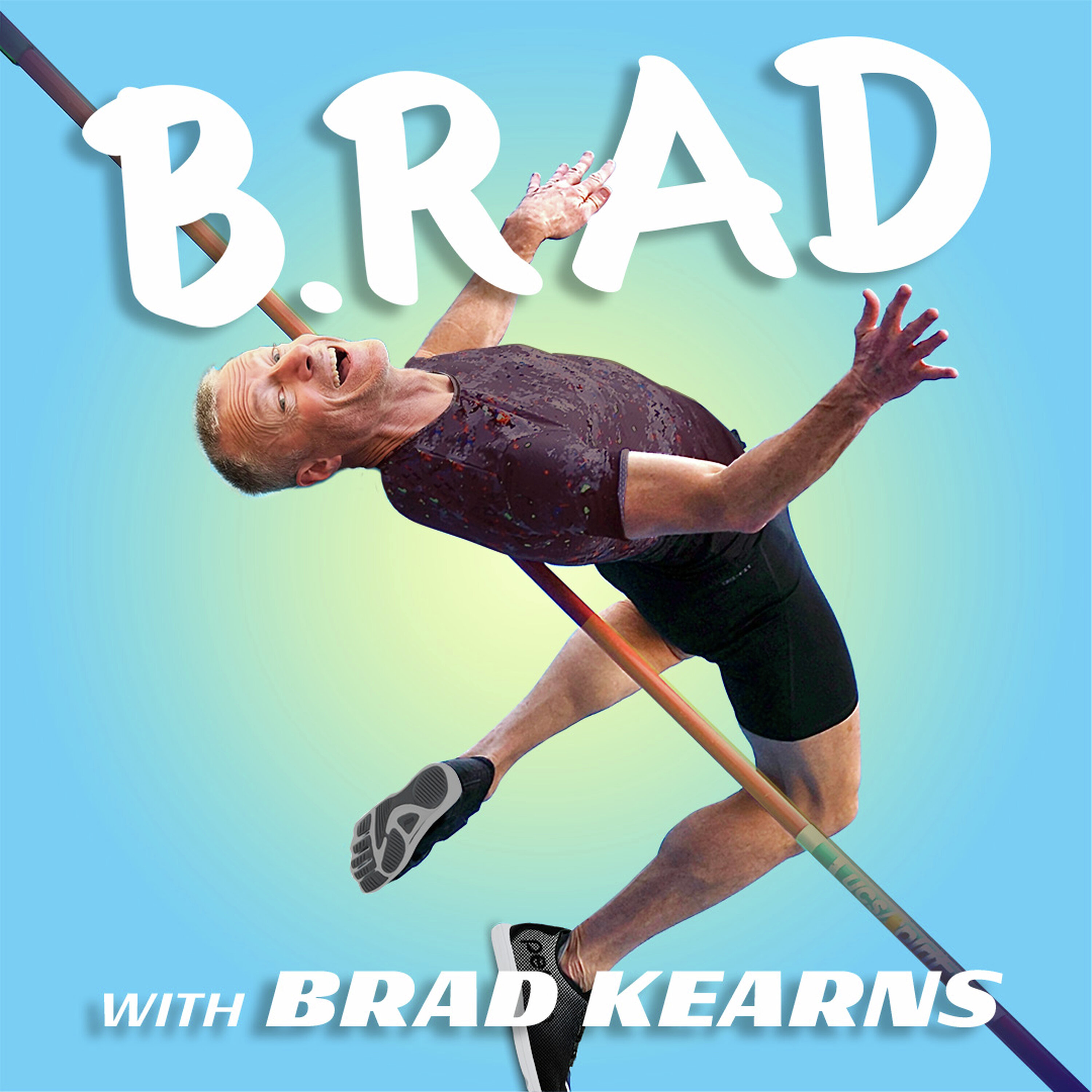
The B.rad Podcast
Brad Kearns
Join Brad Kearns, New York Times bestselling author, world #1 ranked masters 60+ high jumper, Speedgolf world record holder, and former world #3 ranked pro triathlete, in pursuing peak performance with passion throughout life. Brad delivers an engaging mix of step-by-step education on important health topics like staying fit, strong and powerful as you age; transforming diet to lose body fat and increase energy; sort through hype and misinformation to make simple, sustainable lifestyle changes; and broaden your perspective beyond a fit body to experience happy relationships, nonstop personal growth, and ultimately sail to 100 with a happy, healthy, long life. Let’s explore beyond shortcuts, hacks, and crushing competition to laugh, have fun, appreciate the journey, and not take ourselves too seriously. It’s time to B.rad!
Episodes
Mentioned books

May 19, 2020 • 1h 16min
Dr. Cate Shanahan - The Fatburn Fix
I welcome one of the most knowledgeable straight-shooting leaders in the health world, Dr. Cate Shanahan. Please enjoy her previous shows, Setting Things Straight, The Four Pillars of Health, and How To Become Cancer Proof! The occasion of her return visit is the publication of her long-awaited new book, The Fatburn Fix. In this show Cate will explain just why the nasty industrial seed oils (canola, soybean, corn, etc.), which are still very prevalent in most diets, thanks to widespread use in restaurants and in processed foods, will royally mess up the number one attribute for healthy living: Dr. Cate argues that this is your ability to burn fat. If you cannot burn fat efficiently, all bets are off when it comes to fasting, going keto, or even building fitness. Dr. Cate also breaks down the four aspects of our fat burning systems: mitochondria, hormones, body fat, and the appetite center in the brain. You’ll also learn the name of the man Dr. Cate believes is most responsible for our disastrous departure from natural saturated fats into the disease caused by excess consumption of unhealthy polyunsaturated fats. This dietary transition that occurred in the 50s and 60s, and spread across the world, has caused millions of premature deaths and health destruction...yes, primarily thanks to one “liar pants” man who Cate calls out for us. This is a fascinating discussion that will make you feel proactive about making some big changes in your lifestyle and diet, even if you already consider yourself to be a pretty healthy person, because as William Shewfelt said when he was on the show, “There’s always more you can do.” True, there is always more to learn about health, and there are always things you can try out and incorporate (or eliminate) in order to ensure you’re living as healthily as possible. If you’re someone who eats healthy food but still eats snacks throughout the course of a day, you’ll be inspired to change that habit once you hear Dr. Cate explain how snacking affects the body. If you’re someone who likes to get take out food from “healthy” restaurants, you’ll be compelled to check out what cooking oils they use, and will probably hold off from ordering from them for a while, unless you can get them to cook in avocado oil or butter! Enjoy the show, and empower yourself with the knowledge you’ll gain from some seriously fascinating insights about health and the food industry from a true expert, Dr. Cate Shanahan! TIMESTAMPS: Dr. Cate is going to talk about the four categories of the fat-burning system. [04:00] The ability to burn body fat trumps all other factors like family history, genetics, or whether you smoke, or how fit you are. [06:33] We screw up our natural ability to burn fat by eating refined industrial seed oils as a regular part of our American diet. [09:28] When the evidence is so clear, they still sell industrial seed oils everywhere. [13:49] You can make your own mayonnaise at home. [16:36] What is wrong with canola oil comparing it with the healthier oils? [18:45] If you still think saturated fat is unhealthy, you need to do some more research. [24:20] We are hungry shortly after eating if we don’t get saturated fats. [30:10] Metabolism is composed of mitochondria that produce energy, hormones that store and release energy, body fat itself and appetite regulator in the brain. [32:52] The reason we have Type 2 Diabetes is from eating too much polyunsaturated fatty acids. (PUFA), not from too much carbs. [35:23] The average person now is metabolically damaged, even children. [42:43] Once you start building a healthy breakfast and a healthy lunch, you will notice within hours that your mitochondria are functioning better. [49:34] Snacking doesn’t allow for the hunger clock to be reset properly. [51:01] The Fatburn Fix book explains why you want to focus on energy gain rather than on weight loss. [55:39] You train your dog, or you train yourself to be hungry at certain times. Some people don’t realize when they are snacking! [59:14] There is an urgent need to eliminate processed oils and reset the need to snack. [01:04:10] How much fat is too much? [01:06:11] Yo-yo dieting sets up most people for failure. [01:08:40] LINKS: Dr. Cate Shanahan Shanahan podcast about cancer The Fatburn Fix Dr. Cate YouTube channel Ancel Keys The Canola Blob Support this podcast at — https://redcircle.com/the-get-over-yourself-podcast/donationsAdvertising Inquiries: https://redcircle.com/brandsSee omnystudio.com/listener for privacy information.See omnystudio.com/listener for privacy information.

May 15, 2020 • 27min
Listener Q&A: Training For a 5K on Keto and the Life-Changing Advice That Got One Listener Off Meds - For Good! (Breather Episode with Brad)
How much should you eat? Should you increase your carb intake? And if you’re eating six eggs for breakfast, but getting hunger pains by noon, then what is that a sign of? I cover all these questions and more in today’s breather episode dedicated to answering some awesome inquiries sent in from listeners. Most of the questions I’ll cover today center around fitness, food, and fasting. First up is a question from a listener, Tim, who’s now at the half-way point of his Keto reset Mastery course (congrats!), and has found that he’s actually lost too much weight. I advise him to double his carb intake, as well as increase fat, in order to regain a few of the (many) pounds he’s lost. Up next is a question from a listener who is an active and healthy 32-year-old mother of two. She’s kept up with her running, does marathons, and eats very clean, nutrient-dense food. But she’s struggling with the fact that, after her breakfast of six eggs, she’ll still get super hungry by noon. She’s feeling frustrated by this as she would prefer to just eat in a smaller window, but there is no reason to get discouraged or frustrated. Listen to your body! When your hunger calls, go make yourself a healthy, nutritious meal. If you’re craving sweet potatoes, eat them! If you’re craving protein, go for that - just pay attention to what your body is telling you. Especially if you are breast-feeding, you will definitely need the extra calories and nutrients, not just for you, but for your growing baby! Here’s a great question: is it possible to effectively train for a 5K, while eating a keto diet? Sure, but you do need to train sensibly in order to support your ketogenic diet goals. Otherwise, it’ll be too much stress on your body. We wrap up with a wonderful, thoughtful message from Kristin, a listener who’s been tuning in to the podcast during her long commute to work. She shares the exciting news that she has been able to get off Nexium after 16 years of taking it! Turns out, acid reflux can easily be taken care of through diet, not medication. Kristin and her husband started a total lifestyle transformation after reading The Keto Reset Diet. They completely changed their diet, monitored their screen exposure, got on a great sleep schedule, and dropped 34 pounds combined! And all of this happened because Kristin’s husband just happened upon the book: “I think the moment he decided to purchase that book would be one of those explosive, random events that Art de Vany refers to...it certainly radically altered the course of our lives.” That’s huge, so congrats Kristin, and thanks so much for writing in. That’s all for today - I love reading your thought-provoking questions, so keep ‘em coming, and enjoy your life man! TIMESTAMPS: Tim, who is half-way through his Keto reset Mastery course, is asking what to do now that he has lost too much weight. Should he double his carb intake? [04:08] A 32-year old mother of two runs marathons and eats large eggs for breakfast with butter around 8:00 or 9:00 and finds herself hungry again about noon. What is she to do? [06:26] People who are athletic or have additional demands have an even greater need for a nutrient-dense diet. If you are hungry…eat (the right things, of course.). [11:18] Can you effectively train for a 5K to achieve a PR while on a ketogenic diet? [12:13] Kristin’s letter describes how hers and her husband’s life has changed drastically from following Brad’s advice. She got off Nexium after 16 years by modifying her diet. [17:55] LINKS: Brad’s Shopping page Keto Reset Mastery Online Video Course Art DeVany podcast William Shewfelt podcast Amberly Lago podcast Keto for Life Support this podcast at — https://redcircle.com/the-get-over-yourself-podcast/donationsAdvertising Inquiries: https://redcircle.com/brandsSee omnystudio.com/listener for privacy information.See omnystudio.com/listener for privacy information.

May 12, 2020 • 1h 4min
Drew Manning: Owning Your Story
Drew Manning burst onto the global fitness scene back in 2011 with his incredible “Fit to Fat to Fit” experiment, where he deliberately gained 75 pounds of fat in six months. A lifelong competitive athlete and chiseled personal trainer, Drew purposely let himself transition to obese and inactive in an effort to connect and empathize better with his clients. Listen to Drew relate some amazing insights about his experiment. Of course, his physical function declined predictably, but it was the effects on his personality that provided the most profound insights. Drew relates becoming self-conscious and insecure, spurring an awakening that the fitness industry might benefit from a transformation. Drew suggests that if we started from a place of empathy instead of rah-rah exhortations, we might have more success in transforming lives. “Fall in love with the process,” explains Drew. You will also learn why willpower is overrated, how self-awareness might be the missing element for you to achieve weight loss and fitness breakthroughs. After we work through Drew’s vision for an evolved mindset about fitness, Drew shares an incredibly thoughtful and vulnerable story of his personal journey of transformation. Drew describes how his tightly controlled life as an athlete and fitness leader unraveled to reveal a life of lies, deceptions, and self-sabotage—in part driven by a strict religious upbringing and intense athletic experience. Drew keeps it real in talking about the shame of porn addiction, the pain and suffering of divorce, and how he was compelled to awaken to a hopeful new life of authenticity and mindfulness. For anyone wishing to take the first steps toward a more honest and authentic life, Drew offers some quick and memorable tips to establish a healthy baseline of mindfulness, positivity, and gratitude each day. You will get a ton of value and inspiration from Drew during this episode, and you can connect with Drew further at Fit2Fat2Fit. TIMESTAMPS: When Drew became a personal trainer, he became curious about what it was like to be overweight., thus began his interesting journey from Fit to Fat to Fit. [05:47] Drew gained 75 pounds purposely in a very short time. He became self-conscious and insecure. [07:36] The emotional attachment to food is way more powerful than imagined. [10:23] There was a severe detox reaction when he withdrew from the processed junk foods. {13:25] Drew developed extreme empathy for people struggling with their weight. He felt judged by society. [17:37] It was easy to see how people get stuck in the desire to lose weight and the feeling of safety. [20:08] Focus on the process rather than the end result. [23:51] Changing your environment will help you learn to adapt. People struggle with willpower. [27:25] Some tips for promoting exercise are laying out exercise clothes for the morning or having a group setting for support and accountability. [32:03] The catalyst to change is self-awareness. [35:14] You can’t define yourself as someone who has been a failure. [38:08] You have to overcome mental and emotional challenges and release the self-hate. [41:12] What are some baby steps a listener could take? Meditation, Positive affirmations, journaling. [47:59] There seems to be a movement of mindfulness. [59:31] LINKS: Brad’s shopping page Complete Keto Fit2Fat2Fit Supersize Me Willpower Doesn't Work Episode 100 of Fit to Fat to Fit podcast Support this podcast at — https://redcircle.com/the-get-over-yourself-podcast/donationsAdvertising Inquiries: https://redcircle.com/brandsSee omnystudio.com/listener for privacy information.See omnystudio.com/listener for privacy information.

May 8, 2020 • 27min
Listener Q&A - Banishing Extra Body Fat + Plantar Fasciitis (For Good!), Sprinting, And Should You Stick To The MAF Method? (Breather Episode with Brad)
We are back with another Q&A show! Today I’ll be answering some more questions sent in from listeners concerning sprint workouts, the MAF method of training, and finally, I’ll share how you can banish extra body fat - once and for all. First up is a question from Sheila, who wrote in wanting to learn more about my cure for plantar fasciitis. Sheila is understandably sick of waking up every morning, unable to put any weight on her foot. Ouch! I can relate to how uncomfortable and painful this can be, as I suffered from mild to severe plantar fasciitis (on and off) for 15 years. It can be so debilitating to deal with, so check out my YouTube video if you haven’t yet to watch me demonstrate the stretches that cured my plantar fasciitis. Just a few weeks of doing these stretches made a huge difference for me, and being consistent, and holding the stretches for a long period of time, was key. You don’t want to overdo it, but stay committed and try to hold them as long as you can - right up to the point where it starts to get a little uncomfortable. Don’t push yourself too hard and stay consistent, and you’ll see (and feel) the results. Next is in inquiry from Paul, who wants to know how to best balance basic marathon training with the MAF method of marathon training. I suggest doing predominantly aerobic training, mixed in with brief, explosive workouts to challenge anaerobic muscle fibers. But really, if you want to perform your best in a grueling, competitive environment like a marathon, then you have to work on honing your aerobic base. Extending the duration of longer runs will also help prepare you, but keep in mind the importance of rest when you are practicing these longer runs. I then tackle a question from a listener, Jason, who has been going between the keto and paleo diets for some years and is on blood pressure medication, even though he’s only in his 30s. But, Jason has also lost 28 pounds so far! Obviously, his goal is to lose more body fat. And interestingly, he has a twin brother, who has normal blood pressure and is also 20 pounds lighter than him. I understand the frustration of wanting to lose extra body fat as soon as possible (see my past episode, “Fatty Popcorn Boy”), but the best method here is simply slowing down, having patience, and staying consistent with aerobic exercise that allows your fat burning capabilities to continuously improve. You really don’t want to stress your system out too much, and sometimes that requires a lot of restraint and patience! But it is way healthier to lose body fat at a slower, steady pace, than a fast, hurried one. And, it’s much more sustainable. To quote the Chinese philosopher Lao Tzu, “Nature does not hurry, yet everything is accomplished.” Take your time, stay committed, and you will see results that actually last. That’s all for today, and if you have a minute, I would greatly appreciate it if you could leave a quick review on iTunes, or share a clip of a show you’ve enjoyed with friends. This is super easy to do if you have the Overcast app, because you can listen to your favorite podcasts, make playlists, and also text audio snippets from specific episodes to your friends. Please continue to write in with questions - I love reading your feedback and comments! TIMESTAMPS: Sheila asks about Brad’s cure for plantar fasciitis. She continues to do exercises but fears she’ll never get better. [03:14] Paul in Minnesota asks: In keeping with the MAF method of training, how do I lay out my marathon training schedule? [07:54] Sprinting workouts are highly recommended. [17:16] Jason has yoyo dieted, has gained weight, and is on BP meds. He wants to lose the extra body fat and get off the BP meds. He is frustrated about sticking to the MAF method. [18:48] LINKS: My video on plantar fasciitis Plantar Fasciitis My Running Technique Primal Endurance Primal Endurance Mastery Course Sprinting Podcast Support this podcast at — https://redcircle.com/the-get-over-yourself-podcast/donationsAdvertising Inquiries: https://redcircle.com/brandsSee omnystudio.com/listener for privacy information.See omnystudio.com/listener for privacy information.

May 5, 2020 • 1h 7min
Mark Sisson #2: Learning to Pivot Gracefully Through Life
This show was syndicated on the Primal Blueprint podcast. The main man of primal living, the mayo king of Miami joins the podcast again for more reflections about his wild entrepreneurial journey and how to leverage the concept of Mental Flexibility to live long and live awesome. Mental Flexibility is one of the four pillars of longevity covered in our new book, Keto For Life. This book takes the conversation further than the typical boilerplate of eating the right foods, doing the right workouts, and getting enough sleep to be healthy and fit. Mental flexibility entails learning how to go with the flow in life, and have the courage to change course when it’s time to move forward and grow, instead of remaining stuck in a rut. Mark loves the term “pivoting,” particularly in the context of his career ambitions. He was able to leverage seemingly disparate pursuits into continual personal growth and pursuit of new opportunities. If you are interested in thinking outside the box, taking advantage of exciting career opportunities, and especially learning how to not get stuck in personal or professional ruts, this will be a very informative show for you. We also extend the conversation into the other elements of the Mental Flexibility, including: the dangers of rumination and FOMO and how to reject the cultural momentum that pushes you in that direction; how to tap into gratitude when things get stressful and you most deserve a fresh perspective; the incredible importance of live, interpersonal social connection (Biology of Belief author Dr. Bruce Lipton calls it a “fundamental biological imperative”) and the perils of hyperconnectivity and distractibility. Mark’s first show, The Ultimate Mark Sisson Interview, was one of the most popular downloads ever on the Get Over Yourself podcast, so please give that a listen too. We know him as the founding father of the primal/paleo diet and lifestyle movement, but this conversation will give you a fresh new dimension into some other areas where you can transform your life. If you’re into symbolism and spirituality, you are going to trip out when Mark relates his childhood in the rockbound coast of Maine where he would hop from boulder to boulder running along the beach - a parallel to his entrepreneurial journey where he learned to pivot and leverage past experience into new opportunities. Mark then shares his go-to when he’s feeling down, sad or stressed: journaling, particularly gratitude journaling. We then touch on the tech overload and discuss the alarming stats regarding loneliness in America as Mark expresses his sadness at seeing so many people constantly glued to their devices. This leads into a discussion about the health benefits of human connection and social interaction, especially touching and hugging, which is ironic now, considering current events. Mark comments, “It doesn’t make me feel great about the future, if we can’t pull back and start to understand how important human connection is on a one to one basis.” Sure, we’re going to need to hold off on the hugging and touching for some time, but how lucky are we to live in a world that makes it easy to stay connected to our loved ones? Now more than ever, it is clear that human connection plays an integral role in our health and happiness. TIMESTAMPS: Exercise and diet are the easy part. Mental flexibility is the more difficult part. [05:36] What does Mark mean by “pivoting”? If something gets in the way of your goal, pivot into a different direction. [07:30] Mark’s entrepreneurial journey went from shoveling snow, to construction, to yogurt and on and on to the guru of ancestral health. [12:05] The common thread is passion and purpose. [17:46] It’s okay to go along with your passion, but how do you pay the rent and support family? [21:59] Business is just a roller coaster. [29:33] The ability to move on after a tragedy is a form of pivoting. [33:49] If you can pursue your goal and not the ego caught up in it, it works better. [37:49] If it didn’t go according to plan, it is not a failure. [39:46] Mark has had a huge effect on people’s health. [41:42] Productivity is measurable, not so much the hours one puts in. [45:04] LINKS: Ultimate Mark Sisson Podcast Keto for Life Mark’s Daily Apple Dr. Ron Sinha Podcast QUOTES: "People today tend to put too much time on the clock and not get enough done." "Our thoughts are at the root of our well-being." "Pivoting means the ability to see a situation that’s not working for you, and to be able to, with ease and grace, move in a different direction." Support this podcast at — https://redcircle.com/the-get-over-yourself-podcast/donationsAdvertising Inquiries: https://redcircle.com/brandsSee omnystudio.com/listener for privacy information.See omnystudio.com/listener for privacy information.

May 1, 2020 • 13min
Dave Rossi: Using The Seven Habits Under Pressure (Breather Episode with Brad)
(Breather) After our awesome interview where Dave detailed the content of his new book, The Imperative Habit, I kept the mic running and captured some precious off the cuff commentary about how to stay focused on the seven habits when you need them most - when dealing with relationship conflict, facing tough interactions at work or in personal life, or experiencing anger and frustration. Dave talks about how you can use compassion and kindness to communicate your wants and needs and accomplish goals; how to live in acceptance and gratitude, but without getting taken advantage of: “You can say no with love and compassion,” Dave says. It’s a great little tidbit to close the book on the wide-ranging insights from our full-length interview. TIMESTAMPS: When dealing with conflict, observations are not defensive, and stating your goals is not defensive. [04:42] Sometimes it is the lack of awareness, not a value system that keeps you from doing something. [07:51] LINKS: The Imperative Habit QUOTES: “Our awareness is a lot more powerful than our values.” “It’s not events that make us upset or angry, it’s our belief in them that does.” Support this podcast at — https://redcircle.com/the-get-over-yourself-podcast/donationsAdvertising Inquiries: https://redcircle.com/brandsSee omnystudio.com/listener for privacy information.See omnystudio.com/listener for privacy information.

Apr 28, 2020 • 1h 5min
Ben Greenfield: Your Boundless Potential For Happiness And Longevity
I catch up with the biohacking king of the universe Ben Greenfield on the wondrous occasion of the release of his incredible new book called Boundless. This is a 670-page monstrosity that covers all aspects of healthy living, peak performance, and how to attain the ultimate goal of healthspan - living a long, happy, productive life. But don’t be intimidated by its length and the wide variety of subjects covered - have fun with it! Take advantage of the variety in the different sections, flip through the book, and start reading whatever title piques your interest the most. “Hidden Variables That Make or Break Your Mind, Body, and Spirit,” and “How To Burn Fat Fast Without Destroying Your Body,” and “Maximize Your Symmetry and Beauty” are just a few examples of the wide-ranging and fun topics Ben covers in the book. At the time of this recording, the main subject on everyone’s mind was the quarantine, so we talk a little about how Ben is making the most of this time at home. He’s pretty used to it, since he was homeschooled from kindergarten through 12th grade, and he shares the reason why his children elected to opt out of traditional school and start homeschooling, or “unschooling” as he calls it. Unschooling is a simple concept: pay attention to a child’s interests and passions, and then surround them with as many life-based experiences as possible to allow them to pursue those passions. Ben is adamant about not pushing his kids to go to college, but he still is preparing them for any and all options through fun but rigorous at home curriculum. His intention is for them to really experience the things they are interested in, and if college is one of those things, then they’ll be prepared for all the standardized tests and applications too...basically, Ben’s kids are hardcore training, unschool style! Speaking of hardcore training, Ben shares how Boundless came about: “About three years ago, I started to pivot from a real focus on performance and focus on anti-aging and lifespan.” Of course exercise is important and key to longevity, but we know by now that overdoing it will never do you any favors. Pushing your body is just that - pushing - and hitting the pause button frequently enough in your life is integral to a long and healthy life. So Ben recommends you don’t focus too much on killing it every single day when it comes to your workouts. He’s a big fan of a simple but vigorously paced walk, as walking at a pace that gets your heart rate up is one of the easiest workouts you can do, and one that won’t put too much stress on your body. Ben also describes a few other easy exercises you can do for longevity, and we get into a discussion about the limitations in aging. Ben then shares some of his thoughts on vegetables (eat them) and I bring up a podcast he did with previous guest Dr. Saladino. Ben also brings up an interesting point: “You can disable every plant defense mechanism through fermenting, soaking, sprouting, and other ancestral preparation tactics.” He also points out that plant foods in older cultures were not just considered cultural staples but medicinal staples as well - things that could provide some amount of antioxidant protection or something like digestive enzyme support. Along with relaxing the breaks on intense exercise, Ben has also been more relaxed about his diet. He’s a fan of consuming, “a wide variety of foods, preparing them properly, and also paying attention to the enjoyment derived from gathering this wide variety of food as well.” I bring up Dr. Bruce Lipton’s work and Ben agrees that since your perspective has a powerful effect on your body, it’s incredibly important to not use up “excess time” with activities that are ultimately, not worth it. Ben asks: “What good is it to live until you’re 100 if 30 years of that life is spent in hyperbaric oxygen chambers and with laser lights in your office, taking all sorts of supplements? All this time spent trying to live a long time is time spent away from the family. At a certain point, you have to make sure you’re using your time responsibly.” Enjoy this (walking) podcast episode with Ben Greenfield and be sure to check out his book, Boundless. TIMESTAMPS: Boundless is Ben’s new book with many interesting chapters such as dig deeper about sleep, how to fix jet lag, and how to burn fat fast without destroying your body, and many more. [04:34] Social ties to the community are very important. This experience of staying home has been a drastic change. [09:09] Things may change for the better. [14:30] Brad and Ben discuss the need to restructure the educational process. [16:58] Kids are individuals. They have different interests to which their education should be directed. [18:58] It’s still important to satisfy the core curriculum, however. [23:46] There are five core skills you should be attaining: reading well, expressing thoughts in writing, persuasion, math and arithmetic, and finally logic. [27:01] Ben’s book was originally looking at anti-aging and has evolved into a worldwide study of how people are living a healthy life. [30:06] Is there a tradeoff between maximizing your health span and trying to perform great things in athletics and other aspects of life? [36:37] Walking is always one of the best life-enriching exercises. Ben talks about other important exercises for longevity. [40:06] Be aware and learn about what exercises are beneficial but don’t overdo. [45:35] It’s good to have goals for maintaining fitness. [48:10] What are the limitations of aging? Are there concessions we make? [49:51] The carnivore diet is okay, but we still need vegetables, according to Ben. [52:32] What is a special Greenfield family dinner like? [57:46] It feels really good to eat healthy rather than putting junk into your body. [59:09] Seeking a balance of all this information takes a lot of work. You can think yourself into sickness. [01:00:03] LINKS: Brad’s Shopping Boundless Kion Range Sirtuins Tabata Set for Bicycle Boundless Book.com Ben Greenfield Fitness Support this podcast at — https://redcircle.com/the-get-over-yourself-podcast/donationsAdvertising Inquiries: https://redcircle.com/brandsSee omnystudio.com/listener for privacy information.See omnystudio.com/listener for privacy information.

Apr 24, 2020 • 25min
Listener Q&A: Debunking Myths About Fat, Becoming Fat Adapted, And Are Whole Grains Really That Bad? (Breather Episode with Brad)
There are a lot of myths about fat reduction and becoming fat adapted that we’ll be clearing up in this episode as I answer some more great questions from listeners. We start off with a listener who shares a crazy tidbit from his personal history: “At age 35, the doctor said I could drop dead at any moment.” Yikes! Scary statements like these can often lead people to follow ill-advised approaches to weight loss that unfortunately, will usually result in them struggling, feeling like they’re failing, and then giving up on their prescribed diet regimen. And people who struggle to stick to diets and weight loss programs sadly tend to blame themselves, feeling like it’s their fault: they’re not disciplined enough, or just lazy. But weight loss and metabolism are complicated subjects that we’re still learning more about to this day. People aren’t failures or undisciplined, or just flat out lazy if they’re struggling to get (and keep) weight off - they’ve just probably not been given the correct tools, or the right advice from the most informed people. I’ve actually been listening to a great book by Dr. Jason Fung, The Obesity Code, that absolutely shatters the myth that “calories in, calories out” is the way to fat loss. This has been scientifically proven to be incorrect, yet the myth is still being perpetuated, and so many people continue to adhere to it, thinking it will lead to fat reduction. Wrong! Fat reduction is ultimately all about lowering insulin. How do you lower insulin? Fasting is a great way to start - simply eating less frequently will help, and so will restricting (or eliminating) your consumption of refined carbohydrates, as these are all known to raise insulin. Dr. Cate Shanahan, author of the new book, The Fatburn Fix, recommends total elimination of refined industrial seed oils. This is a MUST: these oils cause dysfunctional fat metabolism….and if you can’t burn fat, then it’s going to be hard to cut carbs out of your diet - after all, what fuel can you burn if you already have dysfunctional fat metabolism? Back to our first listener, who lost 45 pounds originally through a plant-based approach. He stopped eating processed foods and stuck to greens and high-starch vegetables and carbs. And he was ok...for a bit. A few years in, his weight started to go back up, which is not surprising considering how difficult it is to sustain a low fat, high carb diet. If you listened to my show with Dr. Saladino, you know that focusing on nutrient density (via animal foods) is what will give you long-term results, allowing you to lose weight and keep it off - for good. I also talk about the importance of integrating the revised MAF formula into workouts, as it allows you to calculate the heart rate at which you burn the most fat. And keep in mind: you don’t actually have to do all your workouts at maximum aerobic heart rate - you can do the majority of your workouts at 20, 30, even 40 beats below your heart rate, because it’s simply not necessary to push it to the max each time you exercise. Remember that a comfortably paced workout can be both energizing and restorative, and that it’s very difficult for your body to kick back into fat-burning mode once you’ve tapped into glucose burning metabolism. Your body can’t easily switch back and forth between the two, so if you really want the maximum training effect, you have to stay aerobic for the entire duration of your workout. When Dr. Ronesh Sinha was on the show, he shared how he has been able to demonstrate, through his work with his patients, that it is possible to reverse heart disease risk factors through diet. He’s even given presentations to other doctors and cardiologists about it, and explained how a low sugar, high-fat diet will allow triglyceride levels to drop to the “safe zone.” While 150 is considered to be a pretty standard level, Dr. Ron instead advises that people get their total triglyceride level under 100, as the 150 figure accounts for how sick and unhealthy most of the population is. And what about testosterone? A normal range for serum testosterone in males is 200 - 1,000, so if you find your numbers fall on the low side of the scale, check out my MOFO (Male Optimization Formula with Organs) supplement to get into the healthy range. Next up is a question about plant-based eating: is it possible to become fat-adapted if you give up sugar, processed foods, and grains, forgo meat, and just eat plants? And are all grains bad, or is it really just processed grain products that do the most damage? Are whole grains still ok? Well, it depends on what your health objectives are….and your definition of ‘ok.’ The main issue with whole grains is that they raise insulin, in return for little nutritional benefits….Think about it this way: between a bowl of Skittles and a bowl of brown rice, there really is little to no difference, in the context of insulin production, in how they will impact your blood sugar. At the end of the day, it’s up to you….however, if you’re serious about reducing excessive insulin production in your diet, then why not make it a lot easier for yourself, and just stick to nutrient-dense, nose-to-tail animal foods? If you’re curious to read more about this topic in-depth, check out The Keto Reset Diet or The Primal Blueprint to get familiar with the foundation of the ancestral health movement and listen to my show with Dr. Paul Saladino. As he explains, what makes the carnivore diet so healing and energizing is its nutrient density, which is unparalleled in comparison to other foods, and is also frankly, a bit of a joke when compared to grains. The carnivore diet may seem ultra extreme to someone who’s been a plant-based eater for a while, but it always pays to keep an open mind so you can explore other options and really find what works for you. That’s all for today - have a good weekend, keep away from grains, and keep the questions coming! TIMESTAMPS: The myth that calories in and calories out has not been proven to lead to fat reduction, but rather the lowering of insulin. [04:02] The listener’s question is: In the newly revised MAF formula, does one add five beats, because of age, to aerobic heart rate every time? [07:41] The rider doing the hundred-mile event is asking about training using the MAF approach. The event is 99.9% aerobic so you need the proper training. [13:03] The measurement of cholesterol is not as important as the triglycerides. [15:39] Can you become fat adapted by just eating plants and giving up sugar? Grains? [18:08] Whole grains have a higher level of anti-nutrients that cause so much trouble for so many people. [20:26] LINKS: Brad’s shopping page Dr. Phil Maffetone The Obesity Code Fatburn Fix Brad Kearns MOFO Dr. Ron Sinha Dr. Cate Shanahan The Primal Blueprint Podcast with Dr. Saladino Support this podcast at — https://redcircle.com/the-get-over-yourself-podcast/donationsAdvertising Inquiries: https://redcircle.com/brandsSee omnystudio.com/listener for privacy information.See omnystudio.com/listener for privacy information.

Apr 21, 2020 • 1h 22min
“Bee-ing” The Wellness With Vanessa and Adam Lambert
Bee The Wellness founders Vanessa and Adam Lambert are here to talk about all things related to health and wellness today, with a focus on relationships. This power couple truly knows their stuff, as Bee The Wellness is a health and wellness consulting company that specializes primarily in retreats held around the world. People experience full-on lifestyle transformations during these programs and Vanessa and Adam’s warm energy and enthusiastic personalities bring a really special sense of camaraderie to the whole experience. Vanessa and Adam also host a “Bee The Wellness” podcast that allows them to further connect with their audience and also bring in some fun guests. You’re probably thinking now that that’s a lot of time for two people to spend together - collaborating daily for their company and their retreats, weekly for their podcast, and also just being in a committed partnership! Vanessa shares that, “One of the biggest things for us as we’ve grown in our relationship is actually to have permission to argue...to actually make space for that.” This was quite a discovery for Vanessa, as she grew up hearing her mother, who was divorced, press upon the importance of never arguing with your partner. However, Vanessa realized that if you’re always living in fear of not “getting along” with your spouse, that will do you both a great disservice. And as their relationship grew with time, she realized that she and Adam were able to communicate in a much healthier manner when they were getting stuff off their chests and expressing what was on their mind to each other. “You can’t just shove it away in a corner. It’s actually been awesome for us to learn how to fight!” Vanessa comments, laughing. Adam quickly clarifies that their fights are not “screaming and yelling sessions” but rather a way for them to simply have a rational conversation about information that just has to be let out into the open. And as they both explain, not taking things personally makes a huge difference, which is why they’re both so committed to letting the small stuff go. They understand that the other person might say something without thinking, or be running on little sleep, and something insensitive or unnecessary slips out...it happens, we’re all human. And not being nit-picky or overly sensitive to those very real, human moments, to simple mistakes, makes a huge difference in the dynamic of their relationship. Vanessa notes that often, a lot of people will “latch onto” one bad moment in their relationship and “become a victim of that moment,” but that kind of behavior will never help you move forward. Clearly, getting over yourself goes a long way, especially when you find yourself in a petty argument with your spouse and can’t even remember how you got there! Vanessa reminds us that no one will be perfect “every second of the day” and to just remember this when you find yourself in a challenging moment. “80/20 it!” Adam suggests. Yes, you can totally apply the 80/20 healthy eating rule to your behavior within your relationship - strive for your best most of the time, but don’t beat yourself up when a small mistake slips in. Recognize what happened, acknowledge the mistake and the part you played, learn from it, and move on. Next! More than anything, taking personal responsibility for the way you are in all areas of life is one of the major lessons people learn to integrate from Adam and Vanessa. They compare its importance to managing money to illustrate how much care people will pour into one area of their lives if they think it’s important. Well, if you don’t put the same kind of thought and responsibility into managing your emotions, then how can you be surprised when you realize you have no control over them? One big question Adam pushes people to ask themself is: “Where do I suffer more if I’m not the person I need to be?” Almost always, the answer to this question is work, as that’s where your income and reputation come from, not to mention how often it involves your ego. One of the best takeaways from this show is how deeply beneficial it is to work on your relationship because working on your relationships forces you to work deeply on yourself. This is because the simple act of being in a committed partnership will make anyone expand internally in a way that they wouldn’t have been prompted to, had that other person not been there for you to react to. As Vanessa notes, working through issues in a relationship is often the catalyst for you to say, “Wait, why do I react like that?” which allows you to really go deep and examine why you react to things in a specific way. Discovering where certain deep-rooted behavior comes from - “sifting through your files together” as Vanessa has coined it - is the “magic” that keeps them together - through doing the deep work. Adam and Vanessa have been together a long time (since they were “kids,” Adam notes) and fortunately, they’ve been able to grow together, and not grow away from each other. A huge part of that growth is thanks to their Bee The Wellness coaching program. One of the reasons why their retreats are so life changing is because Vanessa and Adam are constantly taking it to the next level and asking themselves the right (and sometimes hard) questions in order to deepen their emotional intelligence. One thing they point out is how everyone is always so focused on being healthy, but for what? “You’re not going to get a blue ribbon for being healthy….The real prize is in how you use it,” Vanessa says. She makes a great point - if simply being healthy, fit, and capable is the prize, then what do you really want to use it for? These retreats are often centered around physically challenging exercises, like hiking Machu Picchu and white water rafting in Costa Rica, but as Vanessa and Adam explain, the physical fitness aspect is merely a conduit that leads people to develop a deeper and clearer understanding of what they’d like to devote their time to, and how to best utilize their strengths, both physical and mental. And more than anything, the camaraderie that develops between the other retreat members is truly invaluable: “It makes these once in a lifetime experiences even more special because you’re sharing them with people who are your friends, but who feel like family.” That’s all for today, but stay tuned for an upcoming show where we’ll discuss plant medicine and the role ayahuasca plays in their life-changing retreats. TIMESTAMPS: Adam and Vanessa balance the yin and the yang on their podcasts. [06:32] Their solid marriage is based on the ability to converse in an adult manner and not take things personally. [12:02] Adam points out the difficult adjustment people in powerful jobs have to go through when they get home. [17:27] Surveys show a surprising difference in what women and men really want from a partner. [23:37] You have to take creativity and understand how to create structure around your life. [30:25] How does it work with Vanessa and Adam to spend every waking hour together? [36:15] When the couple spends a great deal of time apart, there tends to be a lack of intimacy. [41:24] If your partner doesn’t not want to hear about your day, you will withdraw from them. [44:39] Vanessa and Adam began in the primal paleo scene many years ago in Chico, CA. [47:13] The community aspect of their training fosters their wellness program. [50:56] It’s much easier to eat primally when you are out of the States. [55:58] The battle to be healthy here in the U.S. is not a joke. There is constant infiltration of crap. [58:37] You have to take a lot of personal responsibility to try psychedelics. One needs to be very cautious. [01:00:29] LINKS: Brad’s Shopping page BEE The Wellness Rythmia Center Ayahuasca Retreats MAPS QUOTES: "There has to be structure and commitment around the way you do your day." "Create your life in a way so you have things you’re committed to, that you follow through with." "It’s much easier to eat primally when you are out of the States."Support this podcast at — https://redcircle.com/the-get-over-yourself-podcast/donationsAdvertising Inquiries: https://redcircle.com/brandsSee omnystudio.com/listener for privacy information.See omnystudio.com/listener for privacy information.

Apr 17, 2020 • 30min
Listener Q&A - How To Make Good Bone Broth, Curing Plantar Fasciitis, Aerobic vs Anaerobic Exercise, and Craving Sugar (Breather Episode with Brad)
(Breather) Covering some great questions from listeners in today’s breather show. Thanks to everyone who wrote in for asking about a variety of topics - from fasting to aerobic vs anaerobic workouts, sugar cravings, how to make good bone broth, and more! We start off on a high note with a message from a listener named Jim who is now happily plantar fasciitis free, thanks to my video showing how to do two stretches that are major game changers for those suffering from plantar fasciitis. Next is a question about the best cooking methods for homemade bone broth. I personally like to put it on simmer for 48 hours and take the extra step of adding in a few tablespoons of white vinegar, which helps draw out nutrients from the bones. And as discussed during my show with Sharon Brown, a high-quality broth should be gelatinous when refrigerated, because that’s where the good stuff is - in the fat! I’ve also recently been taking 30 grams of collagen powder a day as per Mark Sisson’s advice - why not get a little extra collagen in there? We know that meat on the bone is one of the Four Pillars of the Human Diet, and collagen itself is a very interesting molecule because it has heliotropic benefits, meaning it travels to the areas in your body that need it most! We move onto a discussion of anaerobic vs. aerobic exercise, and a listener shares how maf has improved their tennis game so much that they are now dominating the very people who used to crush them in the game! They credit their success to taking a 3-month hiatus from tennis and doing nothing but “strict maf” runs using the 180 minus age formula (and incorporating plenty of recovery), which allowed them to strengthen their body’s fat-burning capabilities and nurture immune and metabolic function, without pushing themselves so hard that they crashed and experienced burnout. Knowing (or not knowing) when to take it easy can really make or break the success of your fitness program. In fact, this listener reveals that there is a lot of burnout among tennis players! Regardless of which sport you play, remember that all athletes should be careful not to push their bodies too hard. Ultimately, it’s about strengthening your aerobic base, so whatever workouts you do, you’ll be able to launch from a higher fitness platform. Next up is a question from a listener who’s been experiencing cravings for sugar (and more calories in general) in the evening - what’s that all about? Well, since the question comes from someone who 1) has a pretty extreme training regimen, 2) sticks to a strict intermittent fasting schedule, and 3) hasn’t been sleeping enough, then this could be a sign that they’re not getting adequate calories during their eating window. It’s also simply too much stress on the body. Someone with low body fat, who has done 14 Ironman competitions, and is clearly super fit could actually really benefit from consuming more calories, upping carbohydrate intake, and not sticking so diligently to a compressed eating window. Craving sugar in the evening is also usually an indication of being overstressed. When you’re overstressed, your body goes into fight or flight mode because of the overstimulation of your parasympathetic nervous system. Not having a healthy balance of stress and rest patterns throughout your day is what puts you right into sugar craving mode, that those cravings show up at night, when your body is dying for a quick source of energy. Adding more healthy carbohydrates and taking it a little easier should help any listeners who have been experiencing similar symptoms of overstress. Of course, some people are highly fat-adapted and can skip a meal or two with no problems, but it’s really important to be careful, and also realistic about what your capabilities and limits are, especially if you don’t have much experience with fasting. Thanks to everyone who wrote in with inquiries - I appreciate the support, and I look forward to the next batch questions and insightful comments! TIMESTAMPS: A listener shares how he was able to cure his Plantar Fasciitis after viewing Brad’s stretches. [05:24] A listener asks about making good bone broth. [07:05] Adhering to Maffetone’s maximum aerobic function theory helps this tennis player’s game. Take 180 minus your age and do your workouts at or below that heart rate. [09:33] Tennis and basketball players need to learn the difference between aerobic workout and an anaerobic session. [12:40] When a person practices intermediate fasting and is extremely vigorous in their workouts, and there is a problem with craving sugar in the evening, that’s a sign of probably not eating enough calories during that eating window. [15:29] Skipping meals should not be done until you are highly fat adapted and feel great. [24:00] LINKS: Brad Kearns Plantar Faciitis Brad podcast about bone broth The Fatburn Fix Podcast with Dude Spellings Luis Villasenor Zach Bitter Support this podcast at — https://redcircle.com/the-get-over-yourself-podcast/donationsAdvertising Inquiries: https://redcircle.com/brandsSee omnystudio.com/listener for privacy information.See omnystudio.com/listener for privacy information.

