

Secure Talk Podcast
Justin Beals
Secure Talk reviews the latest threats, tips, and trends on security, innovation, and compliance.
Host Justin Beals interviews leading privacy, security and technology executives to discuss best practices related to IT security, data protection and compliance. Based in Seattle, he previously served as the CTO of NextStep and Koru, which won the 2018 Most Impactful Startup award from Wharton People Analytics. He is the creator of the patented Training, Tracking & Placement System and the author of “Aligning curriculum and evidencing learning effectiveness using semantic mapping of learning assets,” published in the International Journal of Emerging Technologies in Learning (iJet). Justin earned a BA from Fort Lewis College.
Host Justin Beals interviews leading privacy, security and technology executives to discuss best practices related to IT security, data protection and compliance. Based in Seattle, he previously served as the CTO of NextStep and Koru, which won the 2018 Most Impactful Startup award from Wharton People Analytics. He is the creator of the patented Training, Tracking & Placement System and the author of “Aligning curriculum and evidencing learning effectiveness using semantic mapping of learning assets,” published in the International Journal of Emerging Technologies in Learning (iJet). Justin earned a BA from Fort Lewis College.
Episodes
Mentioned books

Mar 24, 2026 • 49min
The DOGE data breach at the Social Security Administration with Whistleblower Chuck Borges
Every American has a Social Security number. Most assume it's protected. Chuck Borges was the person responsible for that protection at the SSA — and what he discovered from the inside is something every American deserves to know.Chuck is a combat veteran, MIT graduate, and the Social Security Administration's first dedicated Chief Data Officer. He arrived two weeks before the 2025 administration change, watched data governance requests get denied and sensitive work get siloed away from the officials responsible for protecting it, and when the risk became too great to ignore, he spoke up. It cost him his job.In this episode of SecureTalk, Chuck and host Justin Beals cover:- Why NUMIDENT data breach goes far beyond a typical data breach- How shadow IT and unchecked access created a governance nightmare inside the SSA- The national security implications of 550 million identity records at risk- What it actually takes to blow the whistle when the stakes are this highThis is one of the most important cybersecurity conversations of 2025, not because of the technology involved, but because of what it reveals about the systems we trust to protect us.Chapters00:00 From Dreams to Data: A Unique Journey02:47 Navigating the Data Landscape: Challenges and Innovations05:41 The Role of Governance in Data Management08:20 Civil Service and the Mission Mindset11:16 Chaos and Change: The Impact of Administration Shifts13:52 Empathy in Leadership: The Human Element16:51 Life Experience and Effective Governance21:16 Siloing and Data Manipulation in Government23:30 The Risks of Shadow IT and Data Security27:39 The Dangers of Numident Data30:08 The Nightmare of Data Exfiltration31:52 The Courage to Blow the Whistle36:19 Transitioning to Political Service38:24 Challenges of Running for Office41:36 Building Community Through Problem Solving43:05 Introduction to Data Sensitivity and Governance44:33 The Risks of Data Exposure45:55 Chuck Borges: A Profile in Data Leadership46:46 Introduction to SecureTalk and Data Security47:37 The Role of the Social Security Administration48:35 Chuck Borges: A Journey Through Data Governance50:28 The Impact of Administration Changes on Governance56:14 Challenges in Data Management and Governance01:00:58 The Risks of Data Exposure and Mismanagement01:05:37 Whistleblowing and Ethical Responsibilities01:14:56 Running for Office: A New Chapter in Public ServiceResources: Chuck Borges Website - https://chuck4md.comTwitter - https://twitter.com/Chuck4MD🔔 Subscribe to SecureTalk for weekly conversations on cybersecurity, leadership, and the technology shaping our world.#SocialSecurity #DataGovernance #Cybersecurity #DataBreach #NationalSecurity #Whistleblower #FederalCybersecurity #IdentityTheft #SecureTalk #CDO

Mar 10, 2026 • 41min
From 9/11 to Salt Typhoon: Why Backdoors Always Betray Us | Secure Talk with John Ackerly
On the morning of September 11th, 2001, John Ackerly was briefing White House officials on federal privacy legislation. Hours later, everything changed — and those two realities, data that wasn't shared when it should have been, and data that was exposed when it shouldn't have been, became the founding idea behind Virtru.In this episode of SecureTalk, host Justin Beals sits down with John Ackerly, CEO and co-founder of Virtru and former White House technology policy adviser, to explore why perimeter security alone is broken — and what data-centric, cryptographic control means for the future of cybersecurity.They cover:00:00 Introduction to SecureTalk and Data Security02:28 John Ackerly's Experience and Insights on Privacy Legislation05:05 The Dichotomy of Privacy and Security09:12 Public-Private Partnerships in National Security12:24 Navigating Compliance and Security in Business15:26 The Role of Technology in Security Solutions18:40 Family Ties and Military Background in Cybersecurity20:41 Insider Threats and Data Security Innovations23:29 The Importance of Data Management and Audits26:12 Cultural Impact on Security Practices29:19 Future Challenges: Quantum Computing and Security32:52 The Evolution of AI and Data Science in SecurityWhether you work in cybersecurity, government, or technology policy, this conversation connects the policy decisions of the past 25 years to the architectural challenges we face today.🔒 Learn more about Virtru: https://www.virtru.com 🎙️ Subscribe to SecureTalk for weekly conversations at the intersection of technology, security, and society.

Feb 24, 2026 • 47min
A Con Artist Expert Explains Why Smart People Still Get Scammed | Secure Talk with Robert Siciliano
Robert Siciliano, private investigator and CEO of ProtectNowLLC with decades protecting consumers from fraud. He explores why smart people fall for scams, how loneliness and fake relationships are weaponized, the rising risk from AI and deepfakes, and why personal, kitchen-table conversations beat checkbox training for real protection.

Feb 10, 2026 • 45min
When Federal Agents Ignore Court Orders: What Happens to Democracy? | Secure Talk with Claire Finkelstein
What happens when federal law enforcement refuses to follow court orders? In Minneapolis, ICE agents denied state investigators access to crime scenes despite court-issued warrants—a breakdown that national security experts had been warning about for months.Dr. Claire Finkelstein, Professor of Law at University of Pennsylvania and Director of the Center for Ethics and the Rule of Law, saw this coming. In October 2024, she ran a tabletop exercise with over 30 retired military leaders simulating exactly this scenario: federal forces confronting state National Guard during civil unrest. The simulation escalated to violence faster than anyone expected, with few off-ramps once momentum built.Now that simulation is playing out in real time.Dr. Finkelstein has been on the legal front lines, representing 155 members of Congress before the Supreme Court. When the Court ruled the administration couldn't use National Guard troops as they intended, ICE agents surged instead—creating the confrontation we're seeing today.The questions are urgent: Can states prosecute federal agents who commit crimes in their jurisdiction? What happens when federal authorities claim immunity? How do soldiers follow orders when they can't trust those orders are lawful? The Supreme Court's immunity decision has made these questions harder to answer.This conversation explores what happens when rule of law meets political will, and what remains when the institutions designed to protect democracy face their greatest test.#CyberSecurity #NationalSecurity #Democracy #RuleOfLaw #Minnesota #MinneapolisResources: Finkelstein, Claire. (2026, January 21). We ran high-level US civil war simulations. Minessota is exactly how they start. The Guardian. https://www.theguardian.com/commentisfree/2026/jan/21/ice-minnesota-trump
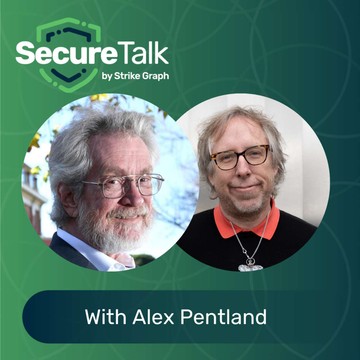
Jan 27, 2026 • 56min
Shared Wisdom: Why AI Should Enhance Human Judgment, Not Replace It | Secure Talk with Alex Pentland
Alex "Sandy" Pentland, MIT Toshiba Professor and Stanford HAI Fellow known for work on digital authentication and data-driven policy, explains why AI should enhance human judgment, not replace it. He explores how info networks shape culture, how platforms can rebuild trust, and why local, loyal AI agents and interoperable governance matter for safer decision-making.
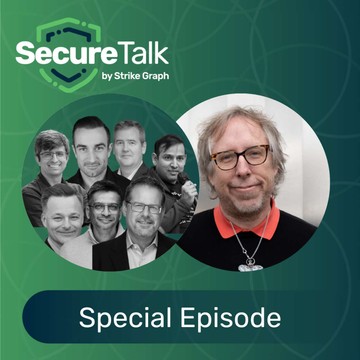
Jan 13, 2026 • 46min
The 2026 Planning Episode: 5 key security imperatives.
While most organizations treat security as a cost center, a select group is using it to win enterprise deals, open new markets, and outpace competitors. The difference? They've stopped asking "how much does security cost?" and started asking "how much value does security create?"This strategic edition synthesizes lessons from security leaders at Walmart, PayPal, Postman, and the defense industrial base to reveal the playbook for 2026: treating security as a business function that enables velocity, builds trust, and creates competitive moats.Five Strategic Imperatives for 2026:1. Architect for the AI Identity Explosion When AI agents access your CRM, email, and databases on behalf of humans, who's accountable? Walmart's 10,000+ developers faced this at scale. Learn how to govern probabilistic, non-deterministic systems before deployment breaks.2. Turn Supply Chain Security Into Competitive AdvantageCMMC enforcement is here—Raytheon paid $8.4M, Penn State $1.25M. But smart contractors are leading with certification to win contracts. See how quantitative security standards are reshaping business relationships between primes and subs.3. Extract Intelligence From Your Own Logs One organization prevented $3M in fraud using internal threat intelligence. Learn why focused AI models that analyze your specific environment outperform generic vendor feeds.4. Make Security Your Primary Differentiator When SOC 2 Type II certification wins you three enterprise customers worth $2M ARR, security spending looks very different to the CFO. Discover how to position security as the reason customers choose you.5. Build Culture, Not Tool Stacks The oil & gas industry made safety everyone's responsibility through culture, not technology. Apply the same principles to solve cybersecurity's 65% turnover crisis.Expert Insights From:Rishi Bhargava (Descope) | Tobias Yergin (Walmart) | Bob Kolasky (Exiger) | Chris Wysopal (Veracode) | Bill Anderson (Mattermost) | Satyam Patel (Kandji) | Sam Chehab (Postman) | Brian Wagner | Dimitry Shvartsman (PayPal)The Meta-Pattern: Organizations winning in 2026 measure security in business terms—revenue enabled, customers won, time to market reduced. They're not the "department of no" blocking progress—they're the team enabling fast, safe movement.🎙️ SecureTalk: Strategic conversations with security leaders, hosted by Justin Beals🔔 Subscribe for insights on AI security, CMMC, threat intelligence & security ROI
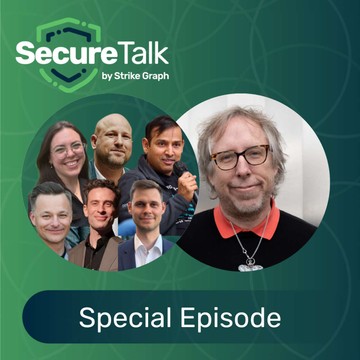
Dec 30, 2025 • 31min
Secure Talk Special Episode: "Building Secure Societies in the Age of Division: The Seven Lessons for Humanity Heading Into 2026"
"In 20 years, we transformed food allergy awareness from nonexistent to universal—no law required. What if we could do the same for data security and AI governance?"This special episode reveals how grassroots cultural shifts create lasting change, and why 2026 might be the year cybersecurity professionals become architects of something bigger than defenses.We've distilled 2025's conversations with experts from Harvard, MIT, NYU, Brown, and the AI development frontlines into seven actionable lessons that reframe security from technical problem to human opportunity. From understanding the 800 billion AI agents already in our systems, to recognizing why your most valuable threat intelligence is already in your logs, to building the communities that make external defenses less necessary.Here's what successful security leaders are realizing: The organizations thriving in 2026 aren't just protecting systems—they're creating conditions where humans and AI can flourish together.THE SEVEN LESSONS: • Social division is our greatest vulnerability (and connection is our strength) • Technology won't save us from ourselves (but we can) • Real change happens through grassroots cultural shifts • AI demands fundamentally different thinking (here's how) • Our values can blind us (when to trust them, when not to) • The weakest links are often invisible (where to look) • Context matters more than technology (your advantage is closer than you think)FEATURING INSIGHTS FROM: Dr. Claire Robertson (NYU) | Greg Epstein (Harvard/MIT) | Dr. De Kai | Rishi Bhargava (Descope) | Tobias Yergin (Walmart AI) | Prof. Steven Sloman (Brown) | Lars Kruse | Brian Wagner | Dr. Aram Sinnreich | Jesse GilbertPERFECT FOR: Security leaders building resilient organizations | Professionals navigating AI transformation | Anyone ready to move beyond purely technical solutions🔗 StrikeGraph: https://strikegraph.comWhich lesson will change how you approach security in 2026? #Cybersecurity #AIGovernance #SecurityLeadership #CyberResilience #AIEthics #CISO #ThreatIntelligence #FutureOfWork
Dec 16, 2025 • 56min
Building a Thriving Future: AI Ethics & Security in Virtual Worlds | Dr. Paola Cecchi - Dimeglio
The mistakes we made building the internet don't have to be repeated in the metaverse—if we act now.Join SecureTalk host Justin Beals for an essential conversation with Dr. Paola Cecchi-Dimeglio about building secure, ethical virtual worlds. Dr. Cecchi-Dimeglio brings 25 years of experience advising governments, Fortune 500 companies, and global institutions on AI ethics and technology governance.Her new book "Building a Thriving Future: Metaverse and Multiverse" (MIT Press, 2025) provides frameworks for building virtual spaces that serve humanity rather than exploit it.CORE THEMES: • Security by design vs. security bolted on after problems emerge • How biases get encoded into AI systems—and prevention strategies • The critical role of "human in the loop" for AI oversight • Why good regulation creates business stability • Digital identity systems for global inclusion • Authentication and verification in virtual spaces • Cross-border legal frameworks for technology governanceREAL-WORLD IMPACT: Over 1 billion people globally lack legal identification—virtual worlds could solve this through blockchain-based digital identity, or create new exclusions if built poorly. The standards we set now for authentication, verification, and identity control will determine whether these spaces become tools for human flourishing or mechanisms for surveillance.WHY THIS MATTERS NOW:Virtual worlds already exist—gaming platforms host billions of usersAI is accelerating everything, including security vulnerabilitiesDeepfake technology is improving faster than detection methodsThe decisions made today will shape digital society for decadesSURPRISING INSIGHTS: → Children currently detect deepfakes better than adults (but not for long) → Major consulting firms have sold governments expensive reports full of AI errors → Voice recognition systems historically failed on non-Western accents due to training data bias→ Email autocorrect defaults "Paola" to "Paolo" because datasets contained more men than womenABOUT THE GUEST: Dr. Paola Cecchi-Dimeglio is a globally recognized expert in AI, big data, and behavioral science. She holds dual appointments at Harvard Law School and Kennedy School of Government, co-chairs the UN ITU Global Initiative on AI and Virtual Worlds, and has authored 70+ peer-reviewed publications. Her work advises the World Bank, European Commission, and Fortune 500 executives on ethical AI implementation.THE OPTIMISTIC VISION: Virtual worlds can tap talent anywhere, breaking geographic barriers. They can connect separated families, provide legal identity to excluded populations, and create opportunities we can't yet imagine—but only if we build them with security, ethics, and human values as foundational requirements.ABOUT SECURETALK: SecureTalk ranks in the top 2.5% of podcasts globally, making cybersecurity and compliance topics accessible to business leaders. Hosted by Justin Beals, CEO of Strike Graph and former network security engineer.Perfect for: Security professionals, technology leaders, business executives, policy makers, anyone concerned about building ethical AI systems and secure virtual worlds.📚 "Building a Thriving Future: Metaverse and Multiverse" by Dr. Paola Cecchi-Dimeglio (MIT Press, 2025)#AIEthics #Cybersecurity #VirtualWorlds #TechnologyGovernance #MetaverseSecurity #DigitalEthics #AIRegulation #SecureByDesign
Dec 2, 2025 • 56min
Why Security Leaders Struggle With Security Culture | Steven Sloman on Secure Talk
Cognitive scientist Steven Sloman, a Brown University professor and author, dives into the complex interplay between sacred values and decision-making. He examines how outrage and simplified thinking dominate social discourse, making it challenging for leaders to navigate cultural divisions. Sloman discusses the power of humor to disrupt absolutist views and the importance of recognizing our own biases. He also unpacks why insular communities become radicalized and the critical differences that set human deliberation apart from AI associations.
Nov 18, 2025 • 51min
From Punk Rock Anarchist to Bank Security Leader: An Unlikely Journey in Threat Intelligence | SecureTalk with Joe Rossi
Most threat intelligence programs can't prove their value. Joe Rossi's team at Zions Bank did the opposite—preventing $3 million in fraud annually while actually attracting new customers to the bank.In this episode, former punk rock kid turned threat intelligence leader Joe Rossi reveals why your most valuable security intelligence isn't from expensive vendor feeds—it's sitting in your own logs right now. He shares the hard lessons learned building CTI programs from scratch, why most organizations focus on the wrong threats, and how to make security a competitive advantage instead of just a cost center.Key insights:• Why your firewall logs are more valuable than threat intelligence feeds• The cultural mindset required before you invest in CTI• How to quantify security program ROI in terms leadership actually cares about• Dark web monitoring: reality vs. Hollywood expectations• When your organization is actually ready for threat intelligenceWhether you're a CISO considering a CTI program or a security professional trying to prove value, this conversation offers practical frameworks for building security capabilities that directly impact the bottom line.

