


80,000 Hours Podcast
The 80,000 Hours team
The most important conversations about artificial intelligence you won’t hear anywhere else.
Subscribe by searching for '80000 Hours' wherever you get podcasts.
Hosted by Rob Wiblin, Luisa Rodriguez, and Zershaaneh Qureshi.
Subscribe by searching for '80000 Hours' wherever you get podcasts.
Hosted by Rob Wiblin, Luisa Rodriguez, and Zershaaneh Qureshi.
Episodes
Mentioned books

7 snips
Aug 15, 2022 • 2h 55min
#136 – Will MacAskill on what we owe the future
Join Will MacAskill, an Oxford philosopher and co-founder of the effective altruism movement, as he explores the importance of our ethical responsibilities towards future generations. He argues that longtermism—a focus on the far future—is vital for addressing existential risks like pandemics and AI. MacAskill dives into how our decisions today can have immense impacts on tomorrow's humanity, urging listeners to engage in long-term thinking about climate change, energy transition, and the moral implications of advanced technology.

Aug 8, 2022 • 55min
#135 – Samuel Charap on key lessons from five months of war in Ukraine
Samuel Charap, a senior political scientist at the RAND Corporation and co-author of a book on the Ukraine crisis, shares key insights on the ongoing conflict in Ukraine. He discusses Russia's territorial control and military strategies amid difficulties, while Ukraine prepares for a counteroffensive. Charap also reflects on evolving perceptions of Putin's motivations, the impact of Western sanctions on Russia, and the complexities of peace negotiations. This engaging conversation sheds light on the war's global ramifications and the urgent need for diplomatic solutions.

31 snips
Jul 22, 2022 • 3h 41min
#134 – Ian Morris on what big-picture history teaches us
In a thought-provoking discussion, Ian Morris, a best-selling historian and Willard Professor of Classics at Stanford, delves into how human values have changed over thousands of years. He argues that societal organization evolves toward energy efficiency, shaping everything from gender roles to governance. Morris also explores the impact of geography on historical narratives, the relationship between war and development, and the tight bonds between energy extraction and moral frameworks. This captivating journey through macrohistory reveals how past trends inform our future.

38 snips
Jul 1, 2022 • 2h 58min
#133 – Max Tegmark on how a 'put-up-or-shut-up' resolution led him to work on AI and algorithmic news selection
Max Tegmark, a physicist at MIT and president of the Future of Life Institute, discusses his pivotal journey into AI research after a transformative New Year's resolution. He highlights the dual nature of AI—its potential to improve lives versus the ethical risks it poses, including misinformation and societal division. Tegmark emphasizes the urgent need for responsible AI governance, echoing historical lessons from industries like tobacco. Additionally, he advocates for empowering individuals through informed decision-making amid today's complex technological landscape.

51 snips
Jun 14, 2022 • 2h 42min
#132 – Nova DasSarma on why information security may be critical to the safe development of AI systems
In this discussion, Nova DasSarma, a lead systems architect at Anthropic, delves into the pressing need for information security in AI development. She outlines the challenges AI companies face in protecting their intellectual property, especially against cyber threats like corporate espionage and data breaches. Nova emphasizes the balance between usability and security while revealing insights from the recent NVIDIA breach. Her thoughts on the evolving landscape of cybersecurity and the necessity of robust protective measures provide a captivating perspective for anyone interested in AI and tech security.

Jun 3, 2022 • 1h 6min
#131 – Lewis Dartnell on getting humanity to bounce back faster in a post-apocalyptic world
Lewis Dartnell, a science communicator and author of 'The Knowledge', discusses strategies for humanity to recover in a post-apocalyptic world. He emphasizes starting small and utilizing appropriate technologies for survival, urging focus on simpler, sustainable solutions. Dartnell also explores the importance of preserving essential knowledge for future generations and the role of older technologies in rebuilding civilization. With insights from astrobiology, he suggests innovative survival strategies and the economic principles vital for recovery in catastrophic scenarios.

17 snips
May 23, 2022 • 2h 17min
#130 – Will MacAskill on balancing frugality with ambition, whether you need longtermism, & mental health under pressure
Join Will MacAskill, a philosopher from the University of Oxford and a key figure in effective altruism, as he shares insights from his upcoming book, 'What We Owe The Future.' He navigates the delicate balance between frugality and ambition in nonprofit work, especially when funding surges. Will discusses the mental health challenges and risks of burnout amidst increased responsibilities. The conversation highlights the importance of recognizing unsung heroes in activism and the need for moral considerations in philanthropy and long-term thinking.

May 9, 2022 • 3h 20min
#129 – James Tibenderana on the state of the art in malaria control and elimination
Joining the discussion is James Tibenderana, a doctor and the Global Technical Director at Malaria Consortium, who spearheads innovative strategies in malaria control. He explains the alarming rebound in malaria cases, despite advancements in prevention like vaccines and mosquito control. The talk delves into the unique transmission dynamics of malaria, the urgent need for community involvement, and the critical funding shortfall in combating the disease in sub-Saharan Africa. James emphasizes collaborative global efforts to shift from mere control to actual eradication.
16 snips
Apr 28, 2022 • 2h 47min
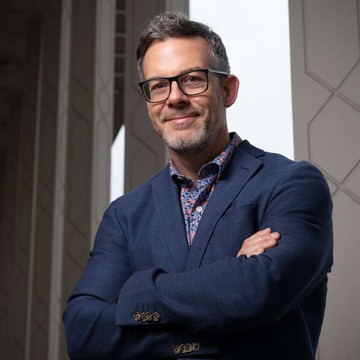
#128 – Chris Blattman on the five reasons wars happen
In this engaging discussion, economist Chris Blattman, Ramali Pearson Professor of Global Conflict Studies at the University of Chicago, explores the roots of war and the complexities of peace. He delves into why, despite the catastrophic costs of conflict, wars still occur. Blattman argues that understanding non-conflicts is key to revealing what a healthy society looks like. He also examines the intricate relationship between personal interests of leaders and warfare, emphasizing alternative strategies for peacebuilding that go beyond mere economic solutions.
26 snips
Apr 14, 2022 • 3h 20min
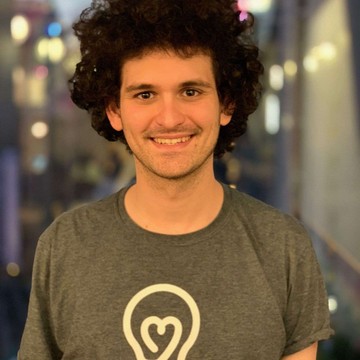
#127 – Sam Bankman-Fried on taking a high-risk approach to crypto and doing good
Sam Bankman-Fried, founder of FTX and a vocal advocate for effective altruism, discusses his risky yet impactful approach to cryptocurrency and philanthropy. He explores the evolving landscape of crypto regulations, emphasizing the importance of accountability and relational dynamics in fostering potential for social good. Delving into high-stakes philanthropy, he contrasts personal gain with altruistic ambitions, highlighting his commitment to innovative solutions for global challenges, including pandemic preparedness and nuclear security funding.

