

The Wes Cecil Podcast
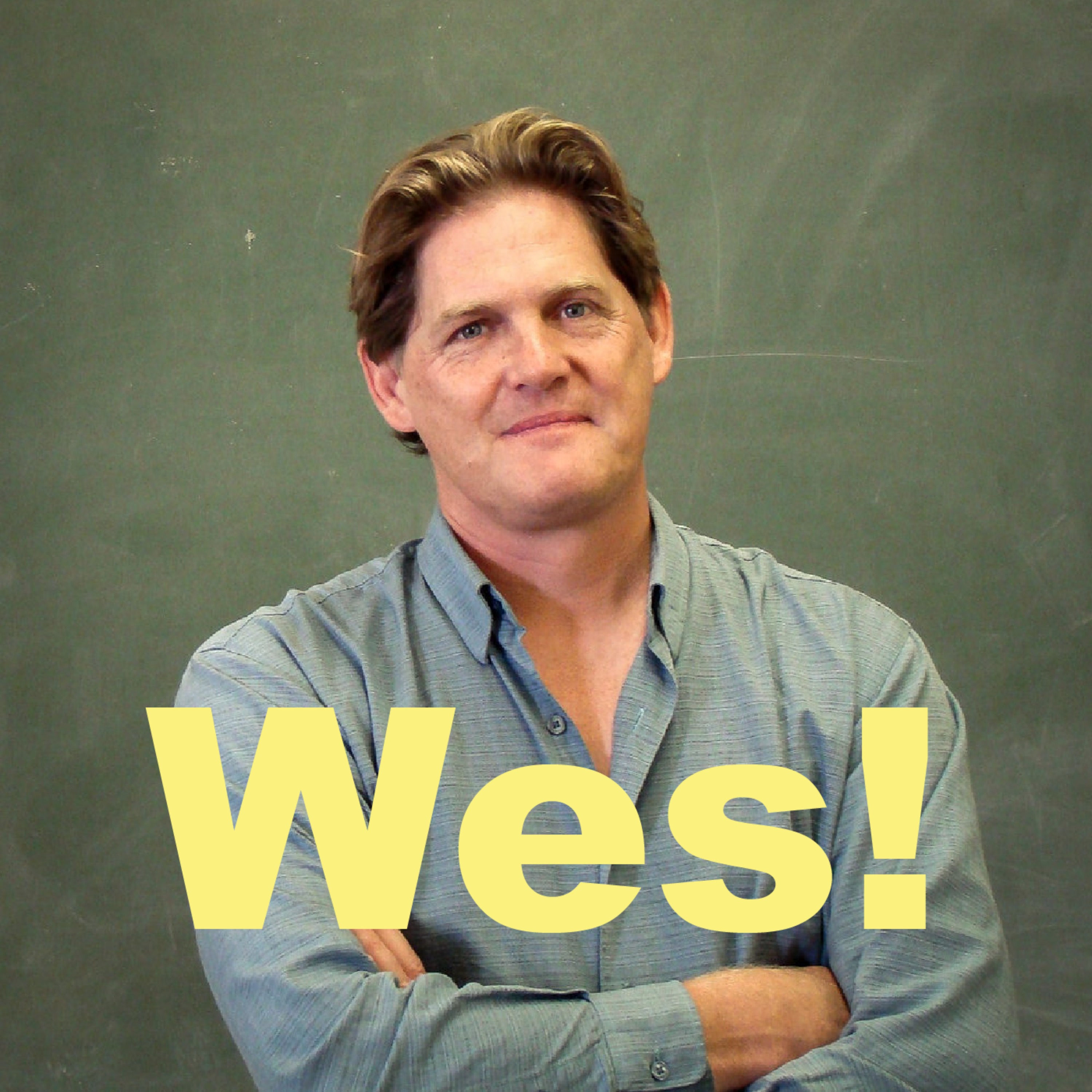
Wes Cecil
My lectures are dedicated to making Philosophy in particular and the world of ideas in general available to everyone. My exploration of topics and thinkers is designed to provide a foundation for listeners to engage in further reading and thought and develop their own conceptions of the topics I introduce. I have PhD in Literature and Philosophy and was a college professor for over 20 years. I am working to remove the barriers that prevent many from experiencing and understanding the lives and thoughts of some of the world's greatest thinkers. Hosted on Acast. See acast.com/privacy for more information.
Episodes
Mentioned books

Dec 5, 2025 • 26min
Reading Nietzsche's "Beyond Good and Evil" - Ep. 3
Having attacked most western philosophy, Nietzsche presents one of his core arguments - that all these claims to universal truth and discovery are simply a self-serving pose on the part of philosophers. Understanding his argument fundamentally alters the way we think not just about philosophy, but the construction of our understanding of the world itself. Sign-up for Wes’s PATREON to get your questions answered by Wes!Plus, gain access to course materials, reading lists, peer discussions, bonus lectures, and Wes’s weekly diaries from France. Only $2 / month. Hosted on Acast. See acast.com/privacy for more information.

Dec 1, 2025 • 1h 8min
Late Capitalism: A Survival Guide, Ep. 3 - The "Logic" of Financialization
Explore the bizarre logic of financialization and how it shapes late capitalism. Wes highlights personal experiences, like opaque cell phone billing, as examples of exploitation tactics. Discover how companies turn customer attention into revenue streams and the predatory nature of buy-now-pay-later models. The episode unveils how platforms treat users as commodities and discusses the implications of disorienting design. Finally, Wes emphasizes the importance of local markets and understanding these systems for better mental health.

Nov 28, 2025 • 39min
Reading Nietzsche's "Beyond Good and Evil" - Ep. 2
Wow, Nietzsche rolls out all the rhetorical cannons to open Beyond Good and Evil. He attempts to undercut both the history and focus of Western philosophy and introduce a new basis of thinking based on a different approach to understanding the human. Sign-up for Wes’s PATREON to get your questions answered by Wes!Plus, gain access to course materials, reading lists, peer discussions, bonus lectures, and Wes’s weekly diaries from France. Only $2 / month. Hosted on Acast. See acast.com/privacy for more information.

Nov 26, 2025 • 57min
The History of Philosophy in 16 Questions - Q17: The Planet?
The History of Philosophy in 16 Questions - Q17: The Planet?“I am not a destroyer of companies. I am a liberator of them. The point is, ladies and gentlemen, that greed, for lack of a better word, is good. Greed is right. Greed works. Greed clarifies, cuts through and captures the essence of the evolutionary spirit. Greed, in all of its forms – greed for life, for money, for love, knowledge – has marked the upward surge of mankind and greed, you mark my words, will not only save Teldar Paper but that other malfunctioning corporation called the USA. Thank you.” WallStreetPoverty, ignorance, illness and other problems of that kind are not metaphysical emergencies. By the metaphysical nature of man and of existence, man has to maintain his life by his own effort; the values he needs—such as wealth or knowledge—are not given to him automatically, as a gift of nature, but have to be discovered and achieved by his own thinking and work. Rand Virtue of SelfishnessGrazing offers a bounty of benefitsIncreased diversity of plant and animal species. Control of invasive plant species, such as yellow starthistle. Habitat restoration for threatened and endangered species.Controlling erosion from water runoff for improved water quality. Improving vegetation along stream banks and watershed health. Reducing wildfire threat from rangeland fires. Offering visually attractive vistas. Preventing fragmentation of habitat from housing and commercial development and maintaining connected wildlife corridors.Preserving open space in a rapidly growing state. Providing food for consumers. If we really want to reduce the human impact on the environment, the simplest and cheapest thing anyone can do is to eat less meat. Behind most of the joints of beef or chicken on our plates is a phenomenally wasteful, land- and energy-hungry system of farming that devastates forests, pollutes oceans, rivers, seas and air, depends on oil and coal, and is significantly responsible for climate change. The way we breed animals is now recognised by the UN, scientists, economists and politicians as giving rise to many interlinked human and ecological problems, but with 1 billion people already not having enough to eat and 3 billion more mouths to feed within 50 years, the urgency to rethink our relationship with animals is extreme.Sign-up for Wes’s PATREON to get your questions answered by Wes!Plus, gain access to course materials, reading lists, peer discussions, bonus lectures, and Wes’s weekly diaries from France. Only $2 / month. Hosted on Acast. See acast.com/privacy for more information.

Nov 24, 2025 • 51min
Late Capitalism: A Survival Guide, Ep. 2 - Financialization
In this discussion, financialization is revealed as a profound force shaping daily life. A call to live on cash for a week exposes how deep its reach is. The contrast between conventional commerce and the invasive nature of global financial actors highlights a dystopian reality. Topics like the surge in credit card debt, hidden costs of transactions, and the impact of tech-driven economies emphasize users turning into products. Philosophical responses offer ways to resist this pervasive financial control.

Nov 21, 2025 • 15min
Reading Nietzsche's "Beyond Good and Evil" - Ep. 1
This read along series presents one of Nietzsche’s most important and confusing works. Written after Thus Spake Zarathustra, it continues to develop some of his central themes and attempts to reground Ethics in a completely new fashion. Sign-up for Wes’s PATREON to get your questions answered by Wes!Plus, gain access to course materials, reading lists, peer discussions, bonus lectures, and Wes’s weekly diaries from France. Only $2 / month. Hosted on Acast. See acast.com/privacy for more information.

Nov 19, 2025 • 45min
The History of Philosophy in 16 Questions - Q16: Nihilism?
A tour of nihilism’s rise after modern upheavals and how war and science eroded old values. Structuralism, existentialism, and Marxism are sketched as rival ways to restore meaning. The episode traces totalizing ideologies filling spiritual voids and explores cultural plurality, value confusion, and how measured doubt can open space for new practices.

Nov 17, 2025 • 1h 7min
Late Capitalism: A Survival Guide - Ep. 1
Dive into the unsettling shifts brought by late capitalism, where societal change feels like an invisible revolution. Explore how financialization has seeped into everyday life, altering education and culture into mere transactions. Discover the impact on historical consciousness and why imagining alternatives feels nearly impossible. Wes dissects the superficiality and fragmentation of cultural experiences, ultimately framing homelessness as a symptom of deeper systemic failures. Brace yourself for a thought-provoking look at modern existence and its bewildering complexities.

Nov 14, 2025 • 27min
Reading vs. TV
A reflection on the relative nature of Reading vs TV and the peculiarities of both mediums. Indeed, given how much time we spend engaged in watching various kinds of media, I think it is a bit shocking how little time we spend reflecting on the nature of the media and how it impacts us. Sign-up for Wes’s PATREON to get your questions answered by Wes!Plus, gain access to course materials, reading lists, peer discussions, bonus lectures, and Wes’s weekly diaries from France. Only $2 / month. Hosted on Acast. See acast.com/privacy for more information.

Nov 12, 2025 • 43min
The History of Philosophy in 16 Questions - Q15: Truth?
A lively tour of how Western confidence in absolute truth crumbled after the Enlightenment. Math, Gödel, and Wittgenstein’s language limits enter the quest for certainty. Global classics and the 1893 religious congress broadened perspectives. Thoreau, Dostoevsky, and modern syncretism show personal and cultural blends of belief. The episode ends by asking whether this pluralism leads to nihilism.

