

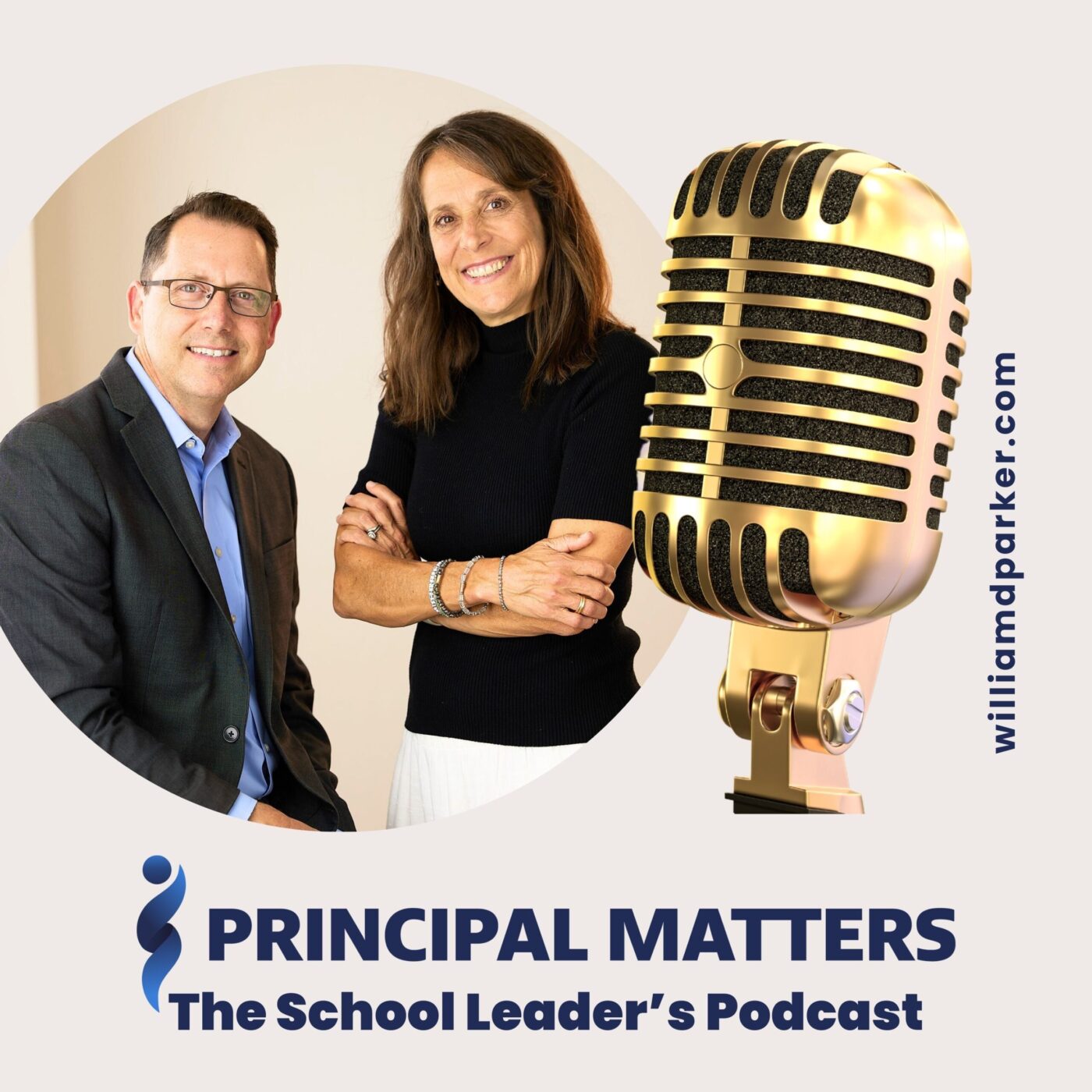
Principal Matters: The School Leader's Podcast with William D. Parker
Principal Matters: The School Leader's Podcast with William D. Parker
With William D. Parker and Friends
Episodes
Mentioned books

Sep 23, 2020 • 20min
PMP212: Strategies for Helping Gen Z Students with Dr. Tim Elmore
When this pandemic began, many of us were asking what lessons we may learn from something none of us ever experienced before.
Dr. Tim Elmore began asking similar questions to survivors of the Great Depression and other crises experiences. The result? He has just published his latest book, The Pandemic Population: Eight Strategies to Help Generation Z After Coronavirus.
Dr. Tim Elmore
Dr. Tim Elmore, CEO and Founder of Growing Leaders, is a best-selling author and international speaker. A world-renowned expert on Millennial and Gen-Z trends, Dr. Elmore uses his knowledge to equip educators, coaches, leaders, parents, and other adults to impart practical life and leadership skills to young adults that will help them navigate through life.
How Can We Help Students During Times Like These?
Listen to this week’s podcast for the full interview. But here are some takeaways from this week’s podcast episode with Dr. Tim Elmore:
WDP: Hi, Tim. Fill in the gap on that intro, and tell listeners something they may be surprised to know about you.
Dr. Elmore: I love popcorn. If you’re ever in Atlanta, stop by the office to enjoy my favorite snack with me!
WDP: Let’s talk about your new book: The Pandemic Population: Eight Strategies to Help Generation Z After Coronavirus. You have published other books analyzing generational trends. What prompted you to begin sharing lessons educators should keep in mind during a pandemic?
Dr. Elmore: The Pandemic Population is a timely treatment on how to lead youth in a crisis. Students today are being influenced by a 24/7 news cycle covering a pandemic, protests, and panic attacks that will either make them wither or will make them stronger than ever. Generation Z is graduating into a VUCA world: Volatile, Uncertain, Complex, and Ambiguous. They’re already the most anxious generation in modern history and now they live in a most anxious time. This book provides best practices for leading in a crisis as well as creative ideas to sustain morale and collaboration among students. It’s designed for educators, parents, and coaches who want lead kids during this specific time in history.
WDP: Could you unpack a few strategies that people have used in previous pandemics and crises?
Dr. Elmore: Yes, we must help people see the silver lining in the dark clouds. As I’ve talked to survivors of past difficulties, here are some takeaways: First, make a pro and con list. Ask what have been the good and bad outcomes that have happened in the past and are happening right now? Issac Newton came up with calculus during his own time of pandemic. We might not have calculus or the law gravity without his contributions. The same lessons apply now. Millions of children may experience PTSD because of this pandemic. But crises are also accompanied by PTG (Post Traumatic Growth). Students need a caring adult to walk them through the hard times, process the situation, and find lessons to apply to their lives. The trauma does not bring on growth; it’s what you DO with the situation that can provide opportunities for growth. This means educators must provide safe spaces and facilitate truth walks so they can apply these lessons.
WDP: How are you balancing the cons and lists in your own life and work?
Dr. Elmore: Just like so many other organizations, Growing Leaders has had to dig deep on innovative ways to flex during the pandemic. But we’ve also been exploring ways to analyze our memories. Let me explain: How can we as educators not only have an accurate memory of what is happening but a positive perspective? This involves saying, “Yes, this is true. But what can we do about it?” Instead of ‘canceling 2020,’ what if it was the wake-up-call we all needed to take our schools and careers to new levels?
WDP: One of the pieces of advice you gave early on was to take advantage of this moment in history. For me, that meant recording new music and publishing another book, Pause. Breathe. Flourish. For educators, I’ve also seen them embracing new learning, technologies and strategies they’ve never used before. The need for fundamentals in helping others has also not changed. We still need the ‘timely’ and the ‘timeless’. Explain why you so often use that term.
Dr. Elmore: We must help our young people find hope during this time of pandemic, protests and anxiety. The CDC released numbers that 1 in 4 young adults has contemplated suicide during the last few months. We must be timely in responding to the current situation we are in. At the same time, there are timeless lessons like discipline, character, and social emotional learning we must still be teaching at all times. Here’s one other strategy to think about: Have your students practice psychological distancing. In other words, coach students to think about what they would do when helping a friend process their anxiety and stress. Then ask them to apply that same strategy to their own process when confronting difficulties.
WDP: Where can listeners find your book and how can they stay connected with you?
Dr. Elmore: You can find The Pandemic Population: Eight Strategies to Help Generation Z After Coronavirus at our website, GrowingLeaders.com, where we have lots of resources for educators who care about influencing the next generation.
The post PMP212: Strategies for Helping Gen Z Students with Dr. Tim Elmore appeared first on Principal Matters.
Sep 17, 2020 • 33min
PMP211: Reflections on Reopening Schools, Part 2, with Jen Schwanke
As you are re-engaging with your school community, what lessons are you learning as you walk through this new journey with your staff, students, parents and community?
Photo by Julian Wan – Creative Commons No known copyright restrictions https://unsplash.com/@julianwan?utm_source=haikudeck&utm_medium=referral&utm_campaign=api-credit
This week, Jen Schwanke joins me again to share what she’s been learning during re-opening school. Jen is the Principal of Indian Run Elementary in Dublin, Ohio. She’s also the author of You’re the Principal, Now What? and The Principal Re-Boot: 8 Ways to Revitalize Your School Leadership. Listen to this week’s episode for valuable takeaways. Here is a summary of some of our conversation:
10 Lessons for Principals to Remember:
1. This hasn’t been done before.
When things are new, they feel unstable. This is all brand new for all of us. Reassure yourselves with this knowledge and comfort yourself that it’s new for everyone else too!
2. This has revealed how much we depend on schools.
I’m not sure we realized how emotionally healthy our communities are because of our schools. Now that parents are unable to be as dependent on schools with COVID precautions, the instability makes everyone question if what they are doing this right. We need to give each other a lot of grace during these days.
3. As people re-connect, principals are rediscovering their purpose.
National surveys showed an increased number of principals considering leaving the profession. I’m curious if that sentiment has changed now that principals are reengaging with teachers, students and parents. When we are not connecting with those whom we are serving, we lose our purpose. Now we’re re-connecting.
4. It’s all about keeping your students safe while providing them the opportunity to learn.
At the end of the day, the question is not what do I prefer. The question is how can I still reconnect with the purpose of my leadership: serving students.
5. Principals need to be the ones bringing others back to calm and rationality – poking holes in the outrage around us.
We are living in an age of outrage before rationality and empathy. When others have a knee-jerk reaction to become angry, it should remind principals that others do not need to hear our ranting. Leaders have a different purpose: bring people back to compassion and calm and civility. At the end of the day, outrage is not productive. Just because we do not agree does not mean someone is always right and someone is always wrong.
6. Do not forget the promises we made about race relations and equity.
These are still important conversations where students need safe places to learn how to talk with civility. Also, think about how you will lead during a time when teachers may be introducing topics that were front and center during the pandemic. For instance, in race relations, as teachers may be introducing content or books that raise these issues, go back to your board policies and previous practices that guide the curriculum or books teachers use in classrooms. Principals do what you always do in these challenges: focus on instruction, standards and intent of lessons.
7. Communication is more important than ever.
It is exhausting but it pays big dividends on the back end. Everyone needs to know what you know when it comes to processes and protocols. Even as you are overwhelmed with the various tools for communication, keep evolving as you find a new groove for this time. Ultimately, keep putting yourself in the shoes of your parents and community. As Jen’s son once taught her, “Just because you said it doesn’t mean I understood it.”Ask yourself, “What are the facts?” Then communication that. You’ll save yourself a lot of unnecessary words when sending school communications.
8. Know what you can control and cannot control.
Make a t-chart. Put what you control on one end and what you cannot control on the other. There can be a great deal of peace acknowledging what you cannot control. Anger and frustration cannot be what drives you. These emotions can take over and trip you up. Have the mental discipline to say, “No, I’m not going to get hung up about this.” Jen tells a great story about dealing with these emotions with competing CDC guidelines on children and playground equipment. People watch you. If you are demonstrating outrage, others will follow your lead.
9. Don’t get hung up on what you perceive as another person’s incompetence.
Principals are seeing a lot of emotions of grief with their staff, including denial and anger. But acceptance is the best posture to keep as you keep moving forward. Whatever you do, you have to stay connected to something else than this crisis. How you handle this pandemic situation cannot be what defines you.
10. Have faith in the students you are serving.
The reason this is so hard is because we (schools) are so depended upon. In reality, that is a good thing. But students are amazingly resilient. Trust them to do their best just as you are attempting to do your best.
Now It’s Your Turn
As you manage your own re-opening, keep in mind the lessons you are learning. Remember you are not in this alone. How can you continue giving others the grace and patience you’re wanting them to show you during managing difficulties? Thanks again for doing what matters! You can also stay connected with Jen Schwanke’s work at her new website: http://jenschwanke.com.
The post PMP211: Reflections on Reopening Schools, Part 2, with Jen Schwanke appeared first on Principal Matters.
Sep 10, 2020 • 33min
PMP210: Re-opening Reflections with Jen Schwanke
This week I reconnected with Principal Jen Schwanke, Principal of Indian Run Elementary, author and education consultant, for reflections on what re-opening has looked like for her school in Dublin, Ohio.
Photo by sudama – Creative Commons Attribution-NonCommercial License https://www.flickr.com/photos/35468150609@N01
Together we explored some lessons she’s already learning that may be helpful for your leadership. Listen to the entire podcast episode for even more valuable takeaways in Jen’s own words. Here’s a condensed summary of our talk together:
Lessons Learned in Re-Opening School with Jen Schwanke
Jen Schwanke has been an educator for 23 years, teaching or leading at all levels. She is the author of two books: You’re the Principal! Now What? Strategies and Solutions for New School Leaders, and The Principal ReBoot.: 8 Ways to Revitalize Your School Leadership. She has written for Choice Literacy, Education Week Teacher, Principal, and Principal Navigator. Follow her on Twitter @jenschwanke.
WDP: What are some lessons you’ve been learning while leading in a pandemic?
Jen: Be careful with the comparison game. It’s easy to look at others and ask if you should be doing what they are doing. Stay focused on your community and what you can control, not what you cannot control. Remember the essentials that work in the conditions you have managed before. Teachers are struggling, not only with teaching, but if they are parents, they are also managing the learning of their own children.
As my school started all remote, some families have opted to stay remote through the end of first semester. This meant reassigning some staff to support these fully remote learning options. Reassignments have been a challenging but important time. Soon students will return for in-person instruction with only a percentage of the population returning on certain days. As numbers change across the state, guidance also changes.
Sometimes this has created a lot of stress for schools as they adjust to different messages coming from health officials. Thankfully, students are resilient. When students return, teachers will be focusing first on new processes and procedures.
WDP: Even with careful planning, I’m sure you’ve had to manage resistance. How have you managed resistance in these new expectations?
Jen: First, our district leadership has been modeling well for us. By creating a hybrid model that is slow, deliberate and careful, all parents are getting a little of what they want. When resistance comes, there is an answer (including talking points) for how to navigate the questions. The majority of people do have a lot of patience and grace. But it has been helpful to create a website where parents can go to see plans and samples.
Also, we provided sample student schedules for how they can manage learning at home. With sample schedules in hand, teachers were able to build their lessons to support and match those expectations. I’ve also had to learn how to push back on the overwhelming number of vendors trying to sell digital and curriculum tools to teachers. As these came into the school, we provided a list of approved providers so that teachers were not purchasing or subscribing to unvetted resources.
WDP: How would you describe how students are coping?
Jen: Every student is different. Some love distance learning while others loath it. Some have parent support. Others have less support. If I had to choose, I would say students are feeling OK. They are coping just like the rest of us with something they cannot control. I am overcome with pride for them, however. They are resilient and figuring out how to move forward.
WDP: What other ways are you supporting parents?
Jen: The challenge has been to help students to gain more and more independence so that their parents can feel supported. Slowly, teachers are finding ways to help even the youngest students find ways to log-in, learn and find ways to learn.
WDP: How has leading in a pandemic influenced you personally and professionally?
Jen: I keep reminding myself that I’m not paid to have an opinion. I’m paid to take care of student safety and learning, and I’m expected to communicate and empower my teachers to help them reach those goals. If I remember what I’m paid to do, I remember I’m not paid to be upset about pandemic conditions or buses running late.
Also, for administrators who are parents, you must keep those roles separate. When you talk to parents, be the principal, not the mom or dad. Take care of your own children when you have on your “parent” hat. But keep that separate when communicating with parents. They need to know how you’ll support THEIR kids.
Let’s also keep our sense of humor. You do not need to lose your soul while managing difficult times. Keep embedding fun and laughter into your school culture, no matter what.
WDP: What are your hopes and fears for the new school year?
Jen: Kids are often less prone to outrage than adults. And they are incredibly resilient. That gives me hope. Also, we have an opportunity to envision what school can be after this pandemic. Our communities need our schools more than ever. Schools, however, can use hybrid approaches to rethink some of the traditional models we’ve used for so many years before. My fear? How do we address the vast inequities that this pandemic has amplified even more?
Let’s Wrap This Up
As you think about your experience in re-opening, you may relate to some of Jen’s lessons. What is one step you can take today to keep your focus on what you can control, not just want you cannot control? Also, give yourself permission to look for joyful moments even in the new expectations, and remind your team members of how amazing they really are for doing what matters.
Check out Jen’s new website!
As Jen leads her school, she is also generating content and resources for school leaders. You can check out her updated website at jenschwanke.com to find out more about her books and education consulting options!
The post PMP210: Re-opening Reflections with Jen Schwanke appeared first on Principal Matters.
Sep 3, 2020 • 30min
PMP209: Supporting Students from Immigrant Families in a Pandemic
Last week I talked a high school principal who told me she has already referred more students than normal to therapists and counselors for social emotional supports for this time of year.
I imagine you are more aware than ever the anxiety surrounding the start of school for so many families. In addition, you have the added stress of trying reach families who may not be reaching back to you or who may be struggling with protocols or distance learning because of unknown barriers. For instance, how are you reaching out to families whose language or cultural situations may create additional barriers to doing school during a pandemic?
This week, I want to share a conversation with one of three authors who recently published the brief, Supports for Students in Immigrant Families.
Together we talk about the factors influencing education opportunities for children in immigrant families, what schools should be doing to serve them, and what practices school leaders should be avoiding.
Meet Carolyn Sattin-Bajaj
Carolyn Sattin-Bajaj is an Associate Professor in the Gevirtz Graduate School of Education at the University of California, Santa Barbara. Her research focuses on issues of educational access and equity for immigrant-origin students. Her work includes studies of school choice policies, the educational impacts of immigration enforcement, and school leaders’ responses to xenophobia and racism in schools.
Carolyn is author of Unaccompanied Minors: Immigrant Youth, School Choice, and the Pursuit of Equity, Matching Students to Opportunity: Expanding College Choice, Access and Quality (co-editor), Blueprint for School System Transformation: A Vision for Comprehensive Reform in Milwaukee and Beyond (co-editor) and Educating the Whole Child for the Whole World: The Ross School Model and Education for the Global Era (co-editor). She earned a Ph.D. and M.A. in international education from New York University. Prior to earning her doctorate, Carolyn worked on secondary school reform at the New York City Department of Education.
Supporting Students from Immigrant Families:
You can listen to the entire podcast episode for more helpful explanations and additional content. Below is a short summary of our conversation:
WDP: Welcome to Principal Matters. Fill in the gaps on that intro and tell us something else that may surprise listeners to know about you.
Carolyn: I’m originally from Connecticut, now living in California. In 2018-2019, I lived in Sydney and interviewed school leaders in New South Wales about ways they are dealing with racism.
WDP: What prompted you and other researchers to publish Supports for Students in Immigrant Families?
Carolyn: This brief is part of a series of briefs being released by the Annenberg Institute at Brown University, partnering with Results for America as part of a larger initiative called EdResearch for Recovery. It started by reaching out to educators to find out what they were thinking about and asking where they needed help when planning for the re-opening of schools. Supports for immigrant students was one of the buckets of concerns that came up, so I was invited to work on a brief for supports for students in immigrant families along with Veronica Boix-Mansilla and Adam Strom. We came together to break down the issue and bring together research-based strategies for working with immigrant families (and those that districts should avoid).
WDP: As school leaders are reopening schools in a variety of ways during a pandemic, what are some key insights they should keep in mind?
Carolyn: Children in immigrant families include both first or second generation immigrants. First generation refers to children who themselves are immigrants, while second generation means U.S.-born children of immigrants. In total, 14% of the U.S. population are immigrants and 25% of school-aged children in the U.S. are immigrant-origin, but only around 10% of these students are immigrants themselves (first generation). Communication is front and center of supporting children in immigrant families. If students cannot access information, they cannot engage. Schools cannot rely on just one mode of communication. Use various modes, and when possible, in the languages of the people whom you are trying to reach. Religious and social organizations are potential partners for schools seeking to reach immigrant families as well.
Also, consider your policies on distance learning. What if seven people are living in a one bedroom apartment? A child may not want to have his or her video on during distance learning if they or their family members don’t feel their privacy is protected. The more you can create advisory groups of people you are serving, you may be aware of some unintended consequences of distance learning policies and practices.
Schools should also consider the implications of expecting a major role for parents in supervising and helping children with school work at home. If a parent is not familiar with the types of assignments or is unable for any number of reasons (language barrier, education level, work demands) to help, school may want to readjust the kinds of work you are assigning or ensure that after-school and tutoring supports are offered. Also, keep in mind the kinds of trauma and anxiety immigrant students are facing. The pandemic has compounded many of the issues, including fear of deportation, that many families were facing before the pandemic. How can we make sure they have the emotional supports they need?
WDP: I believe your last book focuses on the mixed results of school choice options in New York City. With more states moving toward school choice options, what takeaways have you seen for diverse populations and state policies?
Carolyn: A common thread between my former work and what is happening now is the assumption that creating an opportunity means that everyone has equal access to that opportunity. As a school choice researcher, I explore how to make opportunities more equitable. Applying that to the pandemic, consider what happens when a school provides a student with an iPad. Giving kids an iPad doesn’t mean you’ve solved all the problems. What if they do not have access to Wifi? We must understand the implications of the decisions we are making, and the obstacles are not evenly distributed.
In terms of best reaching students and families and meeting their needs, so much of this is relationship driven. By relying on trusted figures within your school community, you may be able to leverage those relationships as well to make sure you are reaching all students.
WDP: Thank you so much for sharing these takeaways with Principal Matters listeners. Where can listeners find more information or connect with your work?
Carolyn: The best way to stay connected is through the UC Santa Barbara, the Gervitz School faculty website. Look for Dr. Carolyn Sattin-Bajaj.
Let’s Wrap This Up
As you are beginning your new school year (in whatever way that looks for you), I am sure your teachers and staff are excited to reconnect with students. Schools across the U.S. are experiencing the joys and anxieties of serving during a pandemic. One question I’m sure you are also asking is: Who is not here?
Now It’s Your Turn
If you have students from immigrant families, how can you reach out to those family members in ways they may better understand? Who are trusted persons from within the community who may be a strong liaisons from your school? What other supports than just technology may families need in order to make learning work during a pandemic? Thanks again for serving your school communities and doing what matters!
The post PMP209: Supporting Students from Immigrant Families in a Pandemic appeared first on Principal Matters.
Aug 27, 2020 • 13min
PMP208: New School Year Celebrations and Challenges
This is the time of year when the green stalks of corn begin to brown and yellow, and the once moist kernels begin to harden into dry grain.
Photo by Arne Hendriks – Creative Commons Attribution License https://www.flickr.com/photos/31774856@N00
If you’ve ever shucked corn, you may know the difference between the sweet smell of corn-on-the-cob versus the drier, dusty smell of corn harvested in the fall. When I was a boy, my granddaddy would pull an ear of corn from a nearby stalk and peel down the feathery husks. Then he’d hand it to me and say, “Take a bite. When it’s young like this, it’s kind of sweet.” I’d take a bite and be surprised by the little bursts of flavor even in kernels that had not yet been cooked.
Later in the fall, I’d climb into the cab of his John Deere combine tractor, and watch as the rows of stalk and corn were combed into the bowels of what I thought was a magic machine. With rumblings and racketing sounds, the combine would cut and thresh the grain, shooting clean piles of golden corn into an awaiting tank.
Seasons help us keep time. And this time of the year, I not only miss memories of watching my grandad at work, but I’m also missing the normal rhythms of school. During normal times, buses run in lines down community streets. Family vehicles line up in front of schools to drop off children. Boys and girls wrangle thick backpacks, band instruments or sacks of lunches while weaving and stumbling their ways into buildings.
During normal times, principals stand out front to wave at parents and say hello as they deposit these motley crews of treasured love and labor at the school house doors. Teachers stand proudly outside their classroom doors to greet them with high-fives or fist-bumps. Crossing guards move them across busy sidewalks, and cafeteria workers usher them through long lunch lines.
Remember those times? When life seemed so normal with the rhythms of schools, work, business and activiites all intertwined into what we used to know as life in general? And during those past seasons, you saw lots of faces without masks or shields.
Changes Rhythms
But this year, our rhythms are not all the same. Some schools have opened for in-person instruction with a variety of protocols involving masks or disinfectants. Others are providing remote learning options. Some families have their children in full time virtual learning. Even schools that have started back in person are doing so with various levels of success and challenges. But whatever choices they have made, they cannot stop the arrival of the start of school – in whatever form they are experiencing.
Some schools are cancelling band programs while others are moving forward with specialized bags over instruments that can be sanitized between classes. Many schools have set up lanes in hallways so traffic only moves one way. Others are concerned about safety protocols for outside activities. As more teachers want students in outside places, school officials wrestle with how to ensure adequate supervision. Some districts are cancelling extra-curricular activities all together while others are still on schedule for after school events.
I’ve talked to high school principals whose lunchtimes mean students are staggering times so fewer kids eat together. Others in middle and elementary years have students eating in rooms with teachers and assigned classmates. Some schools are extending advisory periods so that the incremental time increases allow longer times for students to begin their days with just one teacher.
Keeping the Enthusiasm
In whatever ways schools are beginning, some changes cannot alter the enthusiasm of welcoming back teachers to a new year. Welcome-back signs and chalk drawn sidewalks are still boasting “We love you” messages to educators re-entering their schools for professional training or for first-time returns to their classrooms. Students are waking up early again, some logging into Zoom meetings while others are showing up on campuses to re-engage with old friends.
I bet it is safe to say that no matter what hybrid or in-person approaches you have chosen, no one has been able to suppress the energy or enthusiasm that comes with the return of school. Even kids with at-home lessons have been busy organizing school supplies. Others are writing out schedules to tape to walls or refrigerator doors. Students are nervously logging in and texting quick messages to friends about which teachers they’ve been assigned.
The school season is here — even if the crop looks different this year than any other we’ve ever witnessed before.
Welcoming Back Teachers
And how are principals facing both the celebrations and challenges of this new season? Just like in “normal” years, principals are staying creative. At a recent virtual Mastermind meeting with principals from across the nation, I asked them how they are welcoming back teachers. They shared several ways they are keeping spirits high with their own staff.
Here are a few ideas they shared:
Buying T-shirts, and handing out 1, 5, 10, 20 year recognitions, pins, hats, mugs, and sweatshirtsDividing staff among the admin team and making phone calls to every person on staffCreating a Padlet so that staff can drop in ideas, questions on any topicUsing digital chats before school starts – voluntary meetings that rebuild communityBeing a liaison to new teachers, creating welcoming moments by inviting them to ask questions and providing time to give them answersWriting personal notes to staff to welcome them backUsing humor – like wearing goggles or funny costumes in virtual meeting or in-person meetings!Thinking ahead – using social media campaigns to introduce teachers to their community with photos or “five things to know” sections in newsletters about each teacherSetting up a chocolate station for teachers who are back in-person by making a bowl of chocolates available anytime they want to stop by!
What about teachers afraid to return? Principals have told me: First, follow protocols for human resources or mental health support if needed. Second, just listen. Support and validate their thoughts, feelings, and let them know you are in this together.
Celebrations and Challenges
Just today I reached out to several principals who are already back in school or whose students have begun remote learning. They have experienced both celebrations and challenges in their first days. Here are responses from principals in different opening scenarios here in my home state of Oklahoma:
Middle School In-Person with At-Home Option Instruction:
“Our middle school has had 0 positive cases reported at school. We only have 6 out for exposure, but these were away from school. Adding an extra lunch has reduced the time in cafeteria and number of students within 6 ft. of one another. Our teachers have done a fantastic job presenting instruction on Canvas. At minimum, we have two direct instruction lessons for our online learners (Zoom, Canvas, YouTube, iPad). Significant improvements! Challenges: We struggled earlier with how to code absences, how to handle a report of exposure, how to legally tell teachers that kids would not be gone due to exposure, contract tracing. We have addressed those concerns, and we are now in a good spot!” — Kyle Hilterbran, Clinton Middle School
High School, Beginning with Remote-Learning Instruction:
“Hey Will. Overall, lots have been accomplished and I’m proud of our staff, students and community. Since we’re in distance learning, our biggest challenges have been communications (always difficult to reach everyone regardless of how many methods you use), overwhelming parents with emails and schedules from multiple teachers for the same student, SPED placements and accommodations, and EL needs where distance learning isn’t appropriate. HOWEVER, I’m super proud of how our teachers have been leveraging Canvas, Loom, Google Meets, and other online applications. It’s been impressive.” — David Beiler, Jenks High School
High School – Hybrid (In-Person and At-Home Options)
“It’s great. Celebration is definitely having kids back in the building. I think they are as glad to be here as we are. The mandatory mask has been a non-issue for kids. Challenge is supporting overwhelmed teachers who are teaching virtual as well as in person classes. They are accustomed to being great at what they do and it’s frustrating for them to have so many new processes and unknowns. I’m also grateful to work in a district with amazing leadership and community support. Thanks for checking in!” — LaDonna Chancellor, Bartlesville High School
Let’s Wrap This Up
As a boy, I really enjoyed when the combine tractor pulled up beside the grain truck to empty its tank into the open bed of the truck through an extended pipe. The grain would shoot out in streams – a golden blur that bounced off the metal floor, the sound of ricocheting corn-bullets, ting, tinging until slowly changing into a softer muffle of growing piles of yellow. When the tank was finally emptied, if I was lucky, my granddad would let me climb the ladder up the side of the grain truck and slide my feet into the awaiting mass. To him that grain meant money. To me it was a treasure hoard for climbing and digging.
As you think about the start of school, I bet you feel both the excitement of the challenges and celebrations that are ahead. Perhaps you’ve already begun classes. Or perhaps you are days away from launching. Either way, my guess is that no matter what happens, no amount of protocols or hybrid approaches can muffle the excitement in store for you – the treasure store of students and teachers, the relationships that make school meaningful. When you reconnect with your school community, you rediscover the joy and the reason you worked so hard this summer.
Now It’s Your Turn
I’d love to hear feedback from how you and your school community is managing the start of school. What ways can you share out those positive moments with your school community even while managing the difficult ones? I would be honored to hear how the start of school is going for you. Could you email me a quick heads message of the celebrations and challenges you are experiencing? Thanks again for doing what matters!
Free Video Gift
An encouraging message for education leaders starting a new school year!
Several days ago, a contact at Ohio’s State Department of Education reached out to see if I’d be able to share a welcome-back video with principals. Since I provided it complimentary, I wanted to make it available for Principal Matters friends as well. It’s called Why Your Leadership Still Matters. You may recognize several of the stories and examples from previous podcast episodes. If you find it helpful, please share it with other school leaders!
The post PMP208: New School Year Celebrations and Challenges appeared first on Principal Matters.
Aug 20, 2020 • 18min
PMP207: Equity in Education During a Pandemic
Last week I was in a conversation with a principal from South Carolina, a member of a Mastermind for Reopening Schools that I have been leading.
Photo by Volodymyr Hryshchenko – Creative Commons No known copyright restrictions https://unsplash.com/@lunarts?utm_source=haikudeck&utm_medium=referral&utm_campaign=api-credit
Each week more than a dozen principals join me from across the U.S. to discuss the specific scenarios unique to their own school communities while beginning the new semester during a pandemic.
The principal from South Carolina shared some data from his school with the rest of the group. His school has offered students the option of returning to in-person instruction or receiving their instruction virtually from home. When he looked at the percentages of students staying home, his numbers matched what I had heard from many others, representing around 30% of his total population.
Surprising Demographic Data
When he broke down his numbers by demographics; however, he saw something surprising. 48% of his black students are planning to stay home while 52% are planning to return in-person. The same trend was present in his Hispanic student population. But when he looked at his white student population, 20% were staying home while 80% had elected to return to school.
When I asked him to reflect on these percentages, he told me some feedback he had been observing:
First, many of his minority families depend on buses for transportation. Whereas white families were more apt to drive their students to school during a pandemic, some of his minority students did not have that option.
Second, many children in the minority families live with grandparents, aunts, uncles, or in families with mixed generation members. Their concerns of infecting older family members seemed more pronounced.
Third, many of his minority families have less access to high quality health care. The possibility of infection or hospitalization are leading some of them to difficult decisions in finding care or the fear of facing financial hardship if they do so.
Possible National Trends
As I have thought about these numbers, I came across a recent article from August 7, 2020 in the Hechinger Report, Why Black Families are Choosing to Keep Their Kids Remote When Schools Open, by Bracey Harris.
In this article Harris explains the similar trends school leaders are seeing in Oxford, Mississippi. She has found data suggesting this may be a trend across the nation. “Almost 70 percent of Black households with school-aged children said they support or strongly support keeping all instruction online, according to a recent poll. Only 32 percent of white parents indicated the same,” Harris reports.
As more schools begin to open nationwide, we may find these trends are more pronounced than school leaders realized.
These numbers have caused me to think about some of the other statements I have heard about why schools must re-open. Many leaders have reminded us that re-opening schools is the best way to serve our most disenfranchised or marginalized community members. While it is true that our schools are often the best options for providing equity to communities, the emerging numbers may suggest that these same students are the ones most concerned about returning during a pandemic.
If this is this case, then school leaders have another question to keep in mind during this new semester: how we do take extra measures to contact and to support those families who choose not to return, even when we are able to re-open schools?
This may look different from community to community. But here are a few ideas to keep in mind:
Begin calling trees to touch base with families who have chosen not to return. Make home visits to check on students and families to make sure they have supports and resources needed. Partner with area churches or youth organizations to provide an extra layer of contact and follow-up with families.
Whatever the scenario you face in your own community, as you work hard to provide service during a pandemic, keep in mind the mission that drives you during “normal” times is still the same now: Reaching all students.
Lessons from History
A few weeks ago, I finished a summer reading project: Open Wide the Freedom Gates, A Memoir by Dorothy Height. I was humbled and convicted that I was unfamiliar with the story of this brave American hero. A civil rights leader through several decades, Dorthy Height worked closely with Mary McLeod Bethune. She collaborated with Eleanor Roosevelt, met Martin Luther King, Jr., when he was 14 years old, and became a powerful influencer, advisor to several presidents, and an advocate for minorities and women’s rights around the world.
Reading her book reminded me that the calls for equity in our communities and schools has been happening long before the current national conversation. I was also reminded that the systems and institutions that exist in our school communities have histories that existed long before we ever arrived at our schools.
These systems are also at play during a pandemic, and it is the responsibility of the school leader to keep them in sight even while moving forward into uncharted territory.
Let’s Wrap This Up
In the days and weeks ahead, you will be leading in ways you’ve never had to lead before. Until this school year, no one has ever opened a school during a modern pandemic. Some leaders are already experiencing successful school openings with masks and safety protocols in place. Others have begun in-person but had to pivot home after several new outbreaks of COVID-19. Many schools are beginning with all students at home while waiting for community spread to decrease.
Now It’s Your Turn
From my conversations with school leaders, I know you are moving forward with courage and compassion. I know you are listening to your community members. And I know you are keeping students’ best interest as the center of your decision making. But as you move forward in the days ahead, take time to also look at the broader trends within your own school community.
If you are seeing certain students or families who may be less engaged in the days ahead, what measures or strategies will you employ to reach out and communicate with them? Let’s ensure that the widening gaps of learning that existed before the pandemic are not widened even more. Let’s keep our eyes on equity in education even during a pandemic.
The post PMP207: Equity in Education During a Pandemic appeared first on Principal Matters.
Aug 13, 2020 • 38min
PMP206: Growing Through a Mastermind with Anthony Fisher
Especially during difficult times, leaders need support from other leaders.
Photo by Clay Banks – Creative Commons No known copyright restrictions https://unsplash.com/@claybanks?utm_source=haikudeck&utm_medium=referral&utm_campaign=api-credit
Each week this past year, I have been hosting virtual one-hour conversations with select groups of school leaders through Principal Matters Masterminds. Together we have studied books, provided times for self-reflection, and allowed leaders to take turns in “hot-seat” opportunities. The result? I have built new friendships and found new ideas for my own leadership practices. Others tell me that they have a newfound inspiration for their own practices. Together we have a shared sense of unity and collaboration in serving others.
Have you ever thought about placing yourself into a setting where others consistently challenge you to grow, encourage you to reach goals, and provide you a confidential setting for feedback and problem solving?
Maybe you are already a part of a professional learning community like this. Or perhaps you are already serving on a team that provides this context. If not, a Mastermind may be a possibility to consider as a way to intentionally commit to this kind of personal and professional development.
Meet Anthony Fisher
Anthony Fisher, M.Ed. is the Principal and Chief Academic Officer of Dayton Business Technology High School, a high school dedicated to helping older secondary students with credit recovery, leadership skills, lifelong learning and community stewardship – all within the context of curriculum focused on the business and technology aspects of careers.
In this week’s conversation, Anthony talks about lessons he has learned in leading a school for challenged youth who require both meaningful relationships and resilience to meet their goals. He also talks about the power of being in a Principal Matters Mastermind – how it has has played a role in his own leadership and expanded his capacity to more effectively serve his school community.
Here are some takeaways from the conversation:
WDP: First, can you tell us more about your school and its mission?
Anthony: We are a credit-recovery program for youth 16-21 years of age. As a community school, in downtown Dayton, our location places our students into a unique surrounding – they see both the benefits and consequences of life right outside the doors of our school. In a partnership with St. Clair Community College, Montgomery County Career Services, and others, our teachers help students discover how to solve problems and tie all content to five pillars: food, shelter, clothing, health and finance. Our goal of the school is equip students with the ability to manage each of these areas of life with knowledge, skill and community partnership. Then learn how to apply these lessons to the business and technologies of whatever careers they are interested in pursuing.
WDP: What prompted you to join a Mastermind?
Anthony: A Mastermind is like a panoramic view to leadership. Think what it is like to march in a parade. It’s easy to get caught up in the moment. Most leaders are marching along in the middle of a “school parade” without really knowing what it looks like from the outside. A Mastermind allows you to identify your work from the outside and find tools for improving your ability on the inside. It is an opportunity to let your hair down, connect with people who are of a like mind, and it gives you a safe place to communicate your concerns. A Mastermind gives you more tools as well as a community of people who care about a focus on learning, celebrating the positive and identifying places where you can improve.
WDP: What lessons from the Mastermind have helped you grow?
Anthony: We have read several books: Blink by Malcolm Gladwell, Transforming School Cultures by Anthony Muhammad, and 5-Voices by Jeremy Kubicek. Blink helped me understand hidden biases. 5 Voices helped me better understand my team. Each book has provided new perspective, but Tranforming School Cultures by Anthony Muhammad has really helped. I has literally been like a Bible of information I could take and immediately apply to my school – like having a whole new toolbelt as a leader.
WDP: How has self-reflection helped you each week?
Anthony: Self-reflection keeps you honest! A wise person once told me, ‘Responsibility is simply your ability to respond,’ and each week our Mastermind requires you to respond. Each week you reflect on your connections to students, your healthy choices, your self-growth and your care for loved ones. After several months of this, you begin to change.
WDP: What have been the benefits of ‘hot-seat’ moments?
Anthony: What we talk about is confidential. In a Mastermind, we work with each other, not for each other. As a result, you realize you’re not the only one experiencing a specific hardship. Those moments help us stay relevant. Through qualifying questions and clarifications, you explore language to help you see your team members better. In environments that are highly political and stressful, a Mastermind gives you safe place where you can get real.
WDP: What kind of people woud you encourage to join a Mastermind?
Anthony: Believers are required. In other words, a group of people like this works with individuals who can relate to the experiences of one another, share each other’s experiences, and not judge one another as you strive to become the best administrator while not becoming jaded. It takes you higher. This is not a traditional training because it requires a commitment. You always get more out of it than the hour you put in.
WDP: What story helps you remember why your work matters?
Anthony: Years ago, I told my students ‘You are the future leaders of America whether you want to be or not.’ One of these days, I’m going to be old, and I’ll be at the grocery store and see a student. Will he turn away from me or toward me? How you invest in students, their neighborhood, and their knowledge – this will determine if you have earned their respect. And someday you’re going to be depending on these students to be your future leaders. Will your investment in them make that possible? The future of this country is the youth of this country. That’s why school leadership matters to me.
Let’s Wrap This Up
What ways are you intentionally growing in leadership development? Have you ever considered being a part of a Mastermind? Whether you do that through a long-term commitment like the one Anthony discovered in a Principal Matters Mastermind, or discover a similar experience through another PLN, make it a commitment to keep learning even as you manage the difficulties of school leadership this year. Learn more about openings in Principal Matters Mastermind groups this fall. Or reach out at will@williamdparker.com for more information.
Now It’s Your Turn
At the end of this week’s podcast episode, Anthony and I add some bonus minutes talking about serving students during a pandemic. Listen to the entire episode for more takeaways! A big thanks to Mr. Anthony Fisher for sharing his inspiring leadership stories and reminding us that what you do matters! If you’d like to contact Anthony, he can be reached at afisher@datyontech.org or at his school’s website: https://www.daytontech.org.
The post PMP206: Growing Through a Mastermind with Anthony Fisher appeared first on Principal Matters.
Aug 6, 2020 • 26min
PMP205: Preparing the Start-of-School Year in a Pandemic
Jenny is a returning student at her high school. She has a part-time job which keeps her up late most nights.
Photo by JESHOOTS.COM – Creative Commons No known copyright restrictions https://unsplash.com/@jeshoots?utm_source=haikudeck&utm_medium=referral&utm_campaign=api-credit
When her school opens this fall, she knows remote-learning is the option until her building opens again. She calls the school but gets a busy signal. Then she uses her iPhone to log into the school’s website. It’s confusing, but she finds a link for her counselor’s email and sends a short message asking for help. A few days later, she misses a call. The voicemail is her school counselor telling her she has a schedule for her and needs to check her email.
Jenny checks her email. She sees she has been assigned six virtual classes. But she has more questions than answers. When should she login each day? How much time should she spend on each subject? Who will monitor her classes and follow-up with her? Will these be her same teachers once her school reopens?
She is still working her part-time job, so she puts off figuring it out till the first day of school is scheduled. That morning, she wakes up late and logs in. She checks her email and sees she has several emails from teachers with a variety of messages and instructions. She feels overwhelmed. So she logs back into her virtual schedule and clicks on her first class, Algebra II, with Mr. Samuels. She doesn’t recognize the name. Maybe he’s one of the new teachers.
She sees the class has both online lessons and links to live virtual sessions with Mr. Samuels. She has already missed his first live session. She’s flush with frustration. How is she supposed to figure out how to wade through the different classes, assignments and virtual meetings?
By this time, she has texted several friends. They are as confused as she is. One of them tells her she received a sample daily schedule from another teacher and will share a screen shot with her. Jenny is frustrated and hoping the rest of her first day of school is not this confusing.
Keeping students front-and-center
As impossible as this year may seem with the choices involved in distant learning, it is important to keep in mind who is at the end of all the preparation: students. You have students returning to school from all kinds of backgrounds and experiences. Some of them will have supportive guardians. Others won’t. Of course, as principals you also serve teachers, staff and parents with more questions and concerns than you may have answers for at present. How can you be ready for all of them?
Questions every student is asking on the first day
How you prepare for students on their first day of school can either help or hurt their experiences for the rest of the school year. Since many schools are attempting hybrid learning approaches for the first time, give yourself grace in knowing you won’t do it perfectly. But keep some enduring lessons in mind. Harry Wong, author of The First Days of School: How to Be an Effective Teacher, reminds us of seven questions every student asks about his or her teachers:
1. Am I in the right room?
2. Where am I supposed to sit?
3. Who is the teacher as a person?
4. Will the teacher treat me as a human being?
5. What are the rules in this classroom?
6. What will I be doing this year?
7. How will I be graded?
Now let’s apply those to the current situation of schools re-opening. Some of those questions may need to rephrased, but as you work out your plans for communicating with students and families, keep those simple questions front-and-center.
Perhaps you will do this in a helpful FAQ handout that can be posted on your website and mailed to every family. Maybe you can divide students into lists and call each one until you’ve talked to him/her or a family member to go over these questions. Perhaps you can host orientation meetings with small groups by alphabet with everyone in masks and socially distanced.
Whatever strategy you use, make it a goal to put students at ease with answers to the most basic questions about their school day.
Questions every teacher and staff person asks on the first day
But students aren’t the only ones who need clarity. Your teachers and staff also want to know some questions that only school leaders can answer. And their questions will be even more specific. Think about Harry Wong’s questions from the perspective of your teachers and staff who will be asking:
1. What is my schedule, class roster, and when will I receive it?
2. What extra duties, assignments or activities might I expect and what new safety guidelines should I expect?
3. Who is my administrator as a person and how can I communicate with him/her even if we are not physically in school?
4. Will my school leader help me and treat me as a human being?
5. What are the new expectations, protocols, procedures, and policies in our school?
6. What am I expected to accomplish this year in the classroom and other duties?
7. How will I be observed, evaluated, mentored, graded or coached?
Tips for school leaders preparing for school – even in a pandemic
In addition to these basic questions, teachers will want a platform to ask pressing questions on ‘what-if’ scenarios. How will you accomplish this? Just as you keep students in mind, think about how you will prepare teachers. Create an FAQ for teachers (just like you do for students). This may be helpful to email or mail them ahead of time. Place this on your website for staff or share via Google Docs. The same information is helpful for guardians and family members. Here is an example of the back-to-school web-page for the district where my own children attend.
6 tips for returning to school (in-person or distance learning).
Whatever situation you may be facing this semester, here are six other ideas to keep in mind:
1. Build and re-build relationships.
As teachers, staff or parents returning to work, how are you reconnecting with them? If possible, call your teachers before school begins to reconnect and remind them that you may not have all the answers, but you are in this together and will find solutions together. Don’t just focus on work. Whether it’s hearing about summer trips, family updates, or meaningful moments in their lives, these conversations are important for building trust. They also open questions your teammates may have that are important for you to answer before school begins.
2. Utilize technology and social media.
Some teachers may want to connect via Zoom or Google Hangouts with you. Stay active in posting helpful reminders on your social media feeds. Whether you are using your school website, school-wide communication apps, or social media — share out important announcements and reminders various times before school begins to set expectations for the new school year.
3. Organize and manage accordingly – Plan ahead!
Obviously, no system will be perfect, but as you move into a school year, it is important to keep a list of to-do’s for your team and yourself. One way to do this is to look at the list of to-do’s from your past start the year. How can you modify it for the changes going into this one? Go through last year’s calendar to see if you’re missing anything. What events do you already anticipate will be cancelled or can be reschedule? Rely on a team (secretaries, assistants, lead teachers) who can help you stay on track as well.
4. Clearly define responsibilities.
Even as you work on expectations for teachers, don’t forget about non-instrucational staff. Reach out to each staff member to discuss well-defined key responsiblity areas for them as well. If you use Key Responsiblity lists, consider re-doing them for the unique expectations. Ask what responsibilities can be removed or replaced. With teachers and staff, don’t be afraid to say what is expected and providing it in writing.
5. Manage high anxiety – including your own.
Everyone is anxious (in good or bad ways) about the start of school, and this year the stress levels will be higher than ever. For better or worse, your community will be looking to the principal to set the tone. So manage the high anxiety by demonstrating a sense of calm and reassurance. One way to do this is by including celebration in your welcome-back – even if this is done virtually. Send a card or gift to welcome back your staff. Communicate positivity, and reassure them again and again that it can still be a great year and you are in this together. While you are at it, keep practicing your own healthy habits so you have energy and focus in the days ahead.
6. Host virtual or in-perons orientation meetings.
New teachers, old teachers, new students, returning students, new parents — you will have several groups who need to be welcomed in orientation meetings. Some principals are setting these up in small, socially distanced events. Each school will have different needs, and each new person or group entering your school will have different needs, but the goals are the same: communication clear expectations, be positive, and be available to answer questions.
Mastermind Takeaways
Let’s reimagine our first day with our student, Jen. As you think about how to anticipate her needs, what would a great day look like for her instead? In this week’s podcast episode, I include a few minutes from a one-hour conversation with principals participating in the Principal Matters ReOpening Mastermind. Listen-in for more great ideas and takeaways. Below are some more ideas generated from those conversations:
Additional Checklists for the School Leader’s First-Days of School
Here are some additional questions to ask as you start the school year:
· Have you posted “Welcome Back” signage at school or online?
· Have you included maps of your school for new students or FAQ’s for remote options?
· For in-person or schedule/device pick-up days: is signage clear and visible throughout the building?
· Have you shared master schedules in advance with teachers?
· What are your established arriving/departing protocols and routines?
· Did you update and plan for consistently implemented policies and procedures?
· Have parents and students been invited to an orientation or open-house before school (in-person or virtually)?
· Is your school website updated with current calendars and a welcome back message for parents and key information they should know?
· Have you updated and shared duty-rosters, activities and/or game calendars for teachers if applicable?
· Does your own work calendar include dates for state reports, observations, evaluations, and team-meetings?
Let’s Wrap This Up
As you think through your school-wide processes from the fresh perspective of a student, parent or teacher, it is easy to feel overwhelmed. But decide what steps to take moving forward so that everyone in your school or organization has clarity on what to expect. Make a list, and begin to work through these to-do’s one at a time. And ask your staff and teachers for input and help. Of course, also remember that creating the best “first days” for students and staff is also realizing your school members need many of these questions answered every day.
Now It’s Your Turn
Take time to reflect on the above questions, tips, and checklist. What are some steps you can be taking right now to prepare for a great school year? How can you keep the perspective of your students, teachers, staff, and parents in mind in each part of your preparation? Don’t do this alone. Who can you include on your team in accomplishing these goals?
*Reference: Wong, Harry and Rosemary T. Wong, THE First Days of School: How to Be an Effective Teacher, 2018.
The post PMP205: Preparing the Start-of-School Year in a Pandemic appeared first on Principal Matters.
Jul 30, 2020 • 20min
PMP204: We are all Pioneers and Tweeners this school year!
This week I did my first in-person meeting with a group of fellow-school leaders as they plan for the beginning of a new school year.
Photo by Brad Barmore – Creative Commons No known copyright restrictions https://unsplash.com/@bradbarmore?utm_source=haikudeck&utm_medium=referral&utm_campaign=api-credit
The team of administrators sat in a room with tables at appropriate distances, and we wore masks. Whenever I wear a mask, my glasses become foggy. So I held my glasses in one hand while we talked through topics on school culture, planning for the upcoming year, supporting teachers in the “new norms” ahead. As we took turns sharing ideas and reflecting together, I noticed how different interactions can be wearing masks.
We couldn’t see mouths or full facial expressions. We had to talk talk louder than normal and really enunciate words. But as the session continued, everyone seemed to become less mask-distracted and more focused on discussions and problem solving.
In the weeks and months ahead, I don’t know what is in store for you. You may be alternating days students come to school. Or perhaps your district is beginning with all students in remote learning. Maybe you are in a location where in-person is beginning with blended or virtual options together.
As I’ve connected with leaders in my own state and across the U.S., I am hearing so many different plans. But all of them have one thing in common: No one has ever done school like this before.
We are all Tweeners. In Dr. Anthony Muhammad’s excellent book, Transforming School Culture: How to Overcome Staff Division (Leading the Four Types of Teachers and Creating a Positive School Culture), he identifies four types of educators who make up the culture of any school. He calls them Believers, Tweeners, Survivors, and Fundamentalists.
Check out PMP202 if you want to hear Dr. Muhammad explain each category in our interview together. But for the sake of this post, I want to remind you that a Tweener is someone new to the profession, impressionable, and looking for feedback. A Tweener is also most susceptible to the healthy or toxic cultures he or she encounters.
In other words, Tweener educators most need mentors who are optimistic and encouraging because they are desperately searching for their own identity in their new surroundings. A good fellow-educator can be a lifeline for a Tweener who needs strong role-modeling and encouragement in his or her first year.
Educators have a unique challenge this year, however. Even though some are more experienced than others or have weathered crises in the past, no one has weathered a global pandemic of this proportion in our lifetime.
Let me be clear. Optimism and hope are essential if we are going to lead forward during the days ahead. It doesn’t mean you cannot be transparent or admit your disappointment or frustrations. But it does require a commitment.
The ability for you to lead forward with hope will often be the catalyst that drives your school culture. Don’t get me wrong. You are not responsible for the attitude of others. But your attitude does affect others, like it or not.
So ask yourself some important questions: Is my attitude one of hope or resignation? Do I believe we have the capacity to serve children in the days ahead, no matter what? Am I willing to look for the next solution even if that means shifting plans that no longer work?
This will not be easy. But easy does not require leadership. Overcoming difficulty does.
Mountain Climbing
A few weeks ago, my family and I drove west for a few days in the national parks near Moab, Utah. It was a great time to social distance, walk the long trails in red canyons, and take a break from computer screens and the stress of current events.
Just above Moab are the La Sal Mountain range. My 14-year old son Jack, and I love mountain hiking, and we planned one morning to see if we could summit a nearby peak.
The morning of our climb, we arrived at the trail head shortly after sun-up. The day before, the weather had been in the 90’s, fahrenheit, as we visited the canyons near Moab. But when we sumitted the hills of the La Sal Mountain range, the temperature kept dropping with the elevation.
When we stepped out of our car, it was 32 degrees Fahrenheit, and the forest floor was covered in a light coating of snow. “You sure you want to make this climb?” I asked him. We had packed water for 8-10 hours, but we were wearing shorts, thin shirts, hoodies and ball caps. We hadn’t packed gloves or windbreakers.
“We can do this,” he said. So with backpacks filled with water bladders and snacks, we headed into the trail. Our goal was Mann’s Peak, a little more than 11,000 feet at the top, and the trail head began about 2.5 miles from the ascent. This meant with elevation changes, switchbacks and navigating through snow, we’d reach the top in about 4 hours.
If you’ve climbed in elevation before, you know that the beginning is usually the easy part. But as oxygen becomes thinner, the climb progressively becomes harder. We were mesmerized by the beauty of pines, rambling creeks, and occasional deer. Later the trees changed to Aspen and large swaths were fallen or broken from avalanches that had occurred during winter months.
Thankfully, the weather warmed as we hiked. When we hit the switchbacks, however, our climbing slowed. We could see the tree lines above us, and as we climbed, I began using a walking stick to support me. Jack climbed like a young deer, his fourteen year old legs carrying him carelessly along. But my 51-year-old legs, although used to my normal running schedule, could not keep up. Mostly it was the breathing that stopped me.
At one point in our climb, I was struggling to breathe. So Jack waited for me to catch up.
“See that bush just ahead?” he asked. “Let’s make it there and we’ll stop again.”
That became our pattern. Jack would march ahead. I would take one heavy step after another, leaning on my walking stick like and plod along until I could catch up.
Finally, we made it above the tree lines. Looking back below us, you could see the winding trails running through valleys, trees, and into the green miles below us. We could see several peaks along hills that formed the saddleback above the treeline. But just then the winds picked up. Without the cover of trees, we were exposed to a bitter wind that blew so hard we had to hold our hats onto our heads so they didn’t blow away.
And the temperatures were colder above the treeline. I could feel my fingers going numb. Jack and I looked at each other.
“Listen,” I said, “The way forward will be pretty painful. Are you up for this?”
We looked at the ridge of peaks, and Jack pointed to the closest one.
“Let’s just make it to the top of the closest one,” he said, “Then we’ll move back down into the treeline. It’s too cold to stay up here long.”
“Let’s do it,” I said.
Jack took off like a deer again. Up the rocks he began to climb. The first peak soon turned completely into a stone ascent of small boulders, each still covered in white from snow. He climbed ahead, and I followed. The biggest challenge was not being able to stand upright. In order to move ahead, we had to bear crawl, using our hands and our feet to move up the rocks. I could feel my fingers growing colder. I grabbed my hat and held it in my right hand as a glove while I crawled.
Before long Jack had lengthened the distance between us. I looked up to see him standing near the top of the peak. He had turned to look at me. Just then the sun over his shoulder to the east pierced through the clouds. As Jack stood there silhouetted against the rocky, snowy face of those rocks, I noticed he was wearing a mask. Because of COVID alerts, we had placed surgical masks in our pockets in case we ran into other hikers. I grabbed mine from my pocket and put it on as well.
Suddenly, Jack was standing beside me. He had come back down from the hill. “Dad, it’s too cold,” he said. “I don’t think we’ll make it to the top.”
With the gusting winds and masks, we were yelling to hear one another.
“You’re so close,” I said. “Keep going. If I don’t make it, it’s okay. I want you to reach the goal.”
He turned, and darted up the rocks. I plodded on. Rock after rock. Cold fingers turning red and numb. Feet slipping in the crevices of small boulders. And suddenly I was there. Jack was standing on the peak looking back at me. Once we were there, we spotted a line of rocks with a small decline into an open green area of grass. We slid behind this natural windbreak.
After catching our breath, we took off our masks and looked around. If you’ve ever climbed the summit of a mountain, you know what that moment is like when you are on the top of the world. The valleys and other mountain ranges lay before – a panorama of trees, rocks, valleys, clouds and sunlight. We sat down, unpacked our lunches and soaked it in while we rested.
“We made it,” I said.
“I’ve never been so tired in my life,” Jack replied.
“Was it worth it?” I asked.
“Yes.”
This past week, Jack and I were looking through the photos from that climb. “Dad,” he told me. “I think that will be one of the best memories of my life. I can’t remember ever doing anything so hard.”
As I wrapped up my visit with the team of school leaders this week, I shared the climbing story with them. I explained that as I’ve thought about our climb and Jack’s words this week, I couldn’t help but think of the mountain educators are preparing to climb in the days and months ahead. Whether your district has decided to begin classes remotely or in-person, no scenario will be easy. You’ll be navigating paths none of us has ever climbed before.
What to expect in a hard climb
Hard climbs require courage and determination.
They require planning for the knowns and expecting quick decisions when you face unknowns.
The climb is easier with strong teamwork and encouragement from one another.
Hard climbs with teams require selfless moments and looking out for others.
But something else surprised me in my climbing story. In our most difficult moment, the one item I never expected to help was a mask. Who would have ever thought those masks would provide us just enough protection from the elements and cold to keep us moving forward to reach our goals?
Let’s Wrap This Up
If you are like me, you are not looking forward to a school year of protocols and personal protective equipment. You’re not looking forward to blended options, virtual meetings, or social distancing. And it’s okay to admit that.
But it’s also important to realize you are not climbing the mountains ahead by yourself.
As educators, we are all in this together.
No one has more experience than anyone else in mitigating the factors of school leadership during a global pandemic.
No one understands the best outcomes yet for combining remote learning with entire cities or communities of school children.
No one knows when the numbers will finally decline to levels where we return to life before COVID-19.
But we do know this: We always face obstacles better when we move forward together with hope…when we commit with determination…when we rely on teamwork.
And who knows, someday we may even look back at all the masks and see how in the end, they helped us reach new summits together.
Now It’s Your Turn
How would you describe your own emotions going into the new semester? Be honest. Then ask yourself, how can you support those on your teams with how they are feeling moving forward. Be the one who commits to hope, and reach out to at least one other educator to remind them that you are pioneering in this together.
The post PMP204: We are all Pioneers and Tweeners this school year! appeared first on Principal Matters.
Jul 23, 2020 • 42min
PMP203: Cultivating PLAY in Leadership with Jeff Springer
One of the biggest challenges for the a new school year is deciding how to mitigate concerns for safety while ensuring ways to still actively engage, support, and reach students.
Photo by Kelly Sikkema – Creative Commons No known copyright restrictions https://unsplash.com/@kellysikkema?utm_source=haikudeck&utm_medium=referral&utm_campaign=api-credit
In this week’s podcast episode, Dr. Jeff Springer shares takeaways from his research on the power of P.L.A.Y. in schools and offers suggestions for school leaders to keep in mind as you serve either in-person or from a distance.
Meet Dr. Jeff Springer
Dr. Jeff Springer is a former Texas High School Head Football Coach and eleven-year veteran of the classroom. He is also formerly the Principal at Magnolia High School (2002-2016), in Magnolia, Texas. In 2013, he was selected as the State of Texas TASSP State Principal of the year.
An educator for 34 years, Dr. Jeff Springer is now the founder of Spring Strategies LLC and the G.O.A.L. TEAM (Getting Others to Achieve Higher Levels), created for helping high school students and young adults to maximize their personal leadership potential.
Jeff resides in Montgomery, Texas with his wife of 38 years. They have two children, and two grandchildren.
Conversations on P.LA.Y.
As a part of his dissertation work, Dr. Springer researched the power of play, especially at the secondary level. In this podcast episode, we explore how he turned those findings into an acronym for leadership takeaways:
WDP: Let’s talk about your work with educators on understanding the power of play. What are the four tenets you teach using the acronym P.L.A.Y.?
Dr. Springer: First is People. Everyone needs to feel connected. We all need others in our lives. Typically in life and in the workplace the greatest accomplishments have been obtained when a group of people all connected together achieves a common goal.
Next is Love: Impressive empathy should be evident in the leader’s relationships. Even in the specific plans to consider team members deficiencies. Every individual should be able to establish their own plan of action with the coaching of the other team members and facilitators as well. “Impressive empathy should be evident in a leader’s relationship.” – as Michael Fullan says.
Then Acknowledge: Great leaders find ways to acknowledge success in others and show transparency in their own failures. Transformative cultures thrive on acknowledgment of their most important resources – each other.
Finally, Yearn: “Positive deviance” should be an aspect of the leader’s ability to see things differently. Throughout the process, each individual must have opportunities to express their concerns and need for support in the goal areas.
WDP: How would you connect these tenets to the principal or school leader who is thinking about engaging his or her students, teachers or community members?
Dr. Springer: During my dissertation, I interviewed 12 different secondary principals (assistant and principals) in the greater Houston area. 36 face-to-face interviews about their perspectives and experiences with the elements of P.L.A.Y. The assumption is that at the secondary level, we don’t always emphasis play. There is also a gap in the research of play in secondary levels. The number one barrier was their leadership style. The challenge for leaders is to give yourself permission to “play”, use your strengths, and operate through engagement.
Your ultimate goal should be to move from excellence to eminence. Look through that lens at every program in your school. Students should be reminded every day: “You are valuable, complete and loved!“
WDP: A lot of leaders are struggling right now as they think about an upcoming school year during a pandemic as well as leading communities with concerns over inequities. What thoughts do you have for other leaders moving forward?
Dr. Springer: Stewart Brown said, “Where there is peril, there is no play.” Not playfulness, but opportunities for connecting, imagining, problem solving, collaborating and innovating. Behind food and shelter, play is the third (and often most neglected) essential all humans need. Even though safety is paramount, we must still find ways to embed this third element for students, or we will not really meet their needs.
WDP: Any other books, content or resources you’d recommend to school leaders as they want to keep growing through the summer? And any parting words of advice for school leaders?
Dr. Springer: I’d recommend Shine: Using Brain Science to Get the Best from Your People by Edward M. Hallowell. Also, the 2014 article Elements of Play, by Scott Eberley.
My parting words of advice are: Don’t underestimate the power of the principalship. Ask yourself, “Am I really making a difference?” The answer is yes! School leadership is calling. You are saving lives, and you set the tone. But you must PLAY.
How can listeners stay connected with me? Find me on Twitter @cultivatingplay. Or my website: Cutlivatingplay.org. Or reach out by email: Jeff@cultivatingplay.org.
Now It’s Your Turn
Listen to the entire episode for my takeaways and bonus conversation. This week ask yourself: What are ways I can keep people, love, acknowledgement, and yearning as tenets that inform the way I lead and serve?
Even as you take every step to ensure safety as you move forward in uncertain times, do not underestimate the power of the connections and relationships that create the learning foundations and safety-nets for your school community.
The post PMP203: Cultivating PLAY in Leadership with Jeff Springer appeared first on Principal Matters.

