

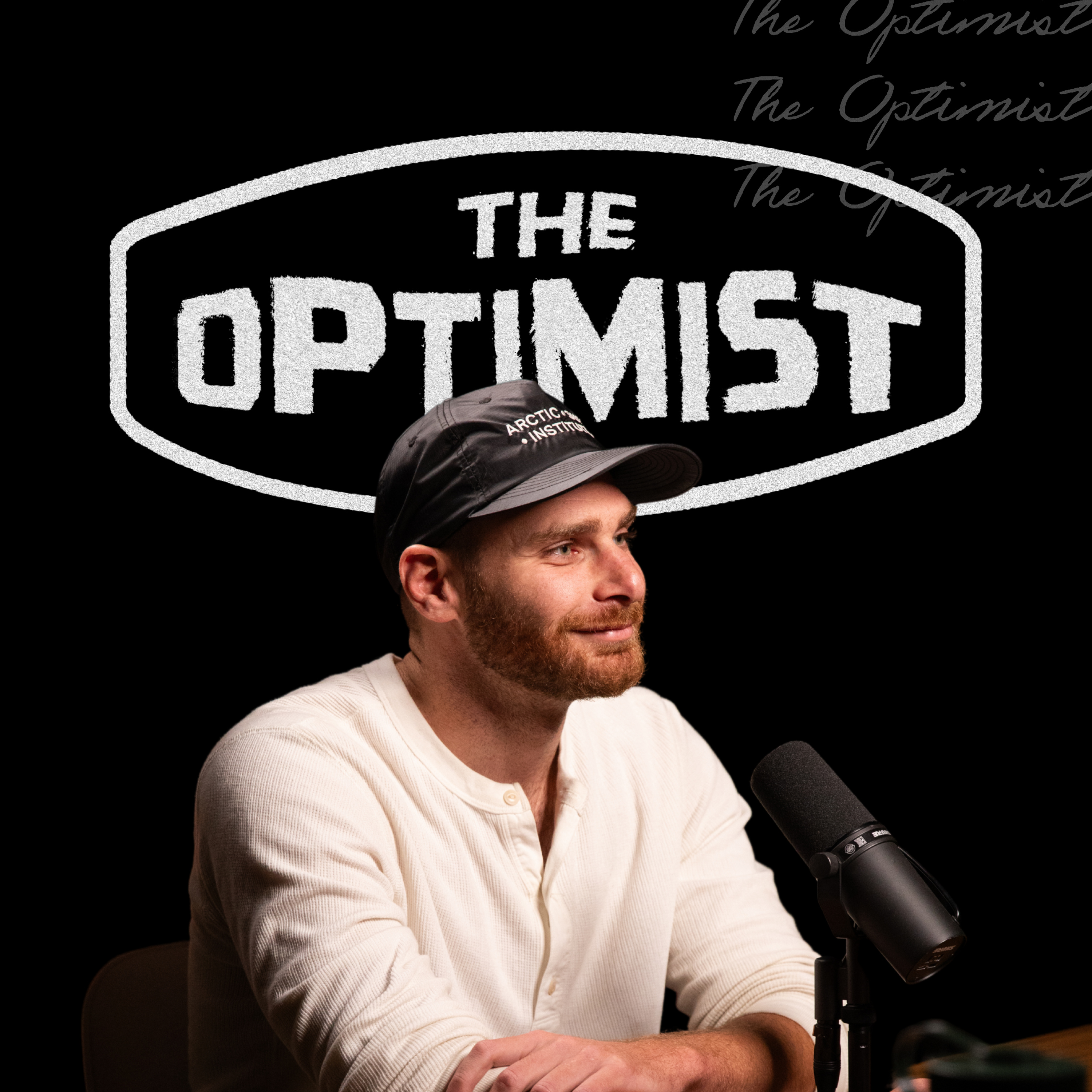
The Optimist
Jake Hurwitz
Men's mental health sucks, and we're here to fix that.
In an era of unprecedented success and isolation, The Optimist tackles the silent crisis facing ambitious men. Each week, we explore raw, honest truths about identity, connection, and what it truly means to thrive. Whether you're a founder, veteran, or someone seeking deeper meaning beyond achievement, join us in forging a new path that embraces both strength and vulnerability. Welcome to the future of modern masculinity.
In an era of unprecedented success and isolation, The Optimist tackles the silent crisis facing ambitious men. Each week, we explore raw, honest truths about identity, connection, and what it truly means to thrive. Whether you're a founder, veteran, or someone seeking deeper meaning beyond achievement, join us in forging a new path that embraces both strength and vulnerability. Welcome to the future of modern masculinity.
Episodes
Mentioned books

Mar 18, 2026 • 1h 52min
“I Got Sober, Married A Supermodel, And Built Everything From Nothing” with Michael Chernow
Michael Chernow spent most of his life searching for a father's love, and it nearly killed him. From childhood abuse and molestation to an 11-year battle with addiction that ended with a heroin overdose and a flatline at 24, Michael's story is one of the most raw and redemptive conversations we've ever had on this show.Today, Michael is a serial entrepreneur, CEO of Kreatures of Habit, a pro bodybuilder, and - the title he's most proud of - a father of two boys. In this episode, he shares everything: how training saved his life, the love story with his wife Donna, the "13 Things" he tells his sons every night, why kids can no longer safely experiment with drugs, and what he believes it truly means to be a man.This one hits different.TIMESTAMPS00:00 — Preview00:26 — Michael's childhood in Manhattan and his father's abuse02:17 — Searching for a father's love and falling into the hands of a predator02:36 — What fatherhood means to him now03:45 — What makes his wife Donna such a phenomenal mother05:04 — The love story: how Michael met Donna at the restaurant09:02 — She ghosted him — then came back10:23 — Moving in together and falling in love in early sobriety11:20 — Why his sober mentor told him not to fall in love12:28 — The truth about sober sex14:13 — Calling his grandfather for permission to marry her15:22 — Why commitment breeds confidence and courage16:49 — What men do when they feel threatened in relationships17:56 — The power of fighting through discomfort in marriage19:27 — The proposal: Mount Etna erupts in Sicily22:21 — None of this is possible without sobriety22:36 — The abuse at home and slitting his wrists at 1224:00 — Turning to drugs as an escape route24:36 — Being molested by his sports coach and Cub Scout leader26:24 — His grandmother's mantra: "Bless you, change me"29:02 — His 10-year-old son breaks down about being short30:34 — The only thing you have to do perfectly in life: get back up31:20 — Courage: being afraid and doing it anyway32:27 — The 13 Things he tells his sons every night35:06 — What he'd say to a 10-year-old boy who's struggling36:02 — Jake reflects on coming down hard on his younger brother38:02 — How consistency in messaging shapes a child's brain39:06 — Why he never yells at his kids40:15 — Why structure and routine are everything for raising kids43:43 — Screen time, technology, and keeping kids off social media45:15 — Fortnite, Roblox, and online predators46:44 — Where to raise kids: city vs. woods vs. beach48:42 — The only thing that really matters in life51:05 — Why he chose upstate New York53:52 — What do you do when you find drugs in your kid's room?57:34 — The fentanyl crisis: why kids can't experiment anymore58:40 — A student at his sons' school dies from fentanyl01:02:32 — Being strict doesn't work — but being soft doesn't either01:04:52 — Talk to your kids like men, not like little kids01:05:30 — The elevator story: "You never walk in front of a woman"01:06:29 — Chivalry at the dinner table01:07:10 — The backlash he gets for teaching chivalry01:10:05 — Where did chivalry go?01:11:31 — The Dana Cowin moment that changed his perspective01:15:48 — Restaurant etiquette: who walks to the table first?01:19:14 — The LA dating scene and why guys need to step up01:20:01 — What "protection" really means as a man01:22:16 — The value of training and learning to take a punch01:28:02 — Jake's hockey drill: learn to get hit before you throw one01:30:29 — Should you force your kids to train?01:31:51 — Leading by example: training at 5:15 every morning01:34:09 — Why training is the foundation for everything01:36:16 — The morning hours are sacred: pour the concrete01:38:52 — You get to choose the lifestyle you lead01:43:22 — What does it mean to be a man nowadays?01:45:33 — "I'm a walker, not a talker"01:48:01 — The Meatball Shop and the best advice he ever got: "Shut your mouth"01:50:03 — The power is in the pause
Mar 10, 2026 • 1h 8min
Your Brain Is Literally Wired To Be Pessimistic. Here's How To Fight Back, with Dr. Deepika Chopra
Your brain isn't broken. It's just doing exactly what it was designed to do: keep you alive, not make you happy.Dr. Deepika Chopra is a behavioural scientist, optimism researcher, and author of The Power of Real Optimism. In this episode, she breaks down the actual science of why most of us default to negativity, what real optimism looks like (hint: it's nothing like toxic positivity), and the practical tools she uses with her clients to rewire how they think. This one is packed.Whether you're someone who struggles to stay positive, wakes up in a bad mood every day, or just wants to understand why your brain works against you, this episode will change how you see yourself.TIMESTAMPS01:03 – Optimism is born through struggle, not blissful days02:16 – How men vs. women talk to themselves at the gym (the TikTok that started it all)05:12 – What an 8-year-old boy worrying about six packs tells us about modern masculinity07:32 – Why it's never been harder to be a man09:04 – How men bond vs. how women bond — the hunter-gatherer theory11:51 – The loneliness epidemic: why making new friends as an adult is so hard14:24 – How a mahjong group of 4 turned into 70 people (and what it teaches us about male connection)18:32 – Why Deepika dedicated her life to studying optimism — and she's not even the most optimistic person she knows23:48 – The brain is a future-oriented organ: what that means for your mental health27:23 – Happiness vs. optimism: are they the same thing?28:20 – "Happiness was manufactured in the 70s by ad agencies" — Jake's mind-bending theory30:14 – Your brain prioritizes safety over happiness — here's why that matters31:23 – What real optimism actually looks like (it's not what you think)34:21 – The Joy List: the simple tool Deepika gives all her clients36:12 – Why you can't solve problems when you're deep in a negative emotion37:02 – Does money buy happiness? The honest answer39:15 – "Life is happening for me, not to me" — how a random movie line changed Jake's life40:44 – How optimism is trained, not a trait — the three ways to build it42:24 – Why most people operate from a pessimistic place (and what to do about it)45:05 – Optimists live longer, get sick less, and are more successful — the research46:05 – Why optimism is actually attractive47:23 – The genetic component of optimism is smaller than you think50:09 – Happiness is contagious by three degrees of separation50:33 – Jake's girlfriend wakes up happy every morning — what's actually going on in the brain54:19 – What Deepika learned from resenting her husband's morning routine56:00 – Why a man who can't be knocked off his frame is more attractive01:01:16 – Going through dark times as a couple and what it reveals about your partner01:02:09 – What does it mean to be a man in 2026?01:04:54 – Why the most successful men tend to have sisters01:05:23 – Why this is actually an optimistic and exciting time to be a man01:06:34 – About Deepika's book: The Power of Real Optimism
Feb 24, 2026 • 1h 56min
The Most Wild Conversation You'll Hear All Week | A Part 2 With Adam Greenfeld
Nothing was off limits in this one.Adam Greenfeld, the entrepreneur behind nootropics brand Thesis and one of the most vocal voices on modern masculinity, sat down with us for the second time on one of the most wide-ranging conversations we've ever had on The Optimist. We went from Kabbalah to aliens, from how to raise boys who respect women to why wanting things might actually be a feminine energy, and somehow it all made sense.If you've ever felt like something is deeply wrong with the world but couldn't put your finger on it, this episode is for you.🕐 TIMESTAMPS00:00 – Making women feel safe: Adam's ultimate Northstar01:55 – What is Kabbalah? And why it hit different than religion07:11 – How Jake found his community in LA through Kabbalah Club10:36 – The masculine/feminine experiment Jake ran on himself16:30 – "Pause. What a pleasure." — the mantra that changes everything21:22 – Is vulnerability a muscle? How to train it25:32 – Loneliness behind the scenes: what happens after everyone leaves30:46 – What inspires and disgusts Adam about modern society31:34 – Simulation theory, the double slit experiment & reality isn't real40:51 – The broken food system: why the same people making you sick are selling you the cure43:00 – Aliens, extraterrestrial life & the unexplained hockey stick of human evolution47:21 – What does it actually mean to be a man in 2026?50:04 – How do we hold our guy friends accountable when they mistreat women?54:05 – How to talk to an 18-year-old about respecting women before college01:01:08 – Creating a culture of safety so kids come to you, not away from you01:05:57 – Why removing taboo from sex, drugs & alcohol might be the answer01:11:51 – Scott Galloway's parenting advice & letting kids figure shit out01:15:43 – Why guys are arseholes to women — and what's really going on underneath01:21:14 – Attachment theory: how your first 2 years of life wired you for love01:26:08 – "Wanting things is for girls" — the concept of masculine capacity01:32:12 – Jake's spending addiction, the 7-day no-spend challenge & what freedom actually feels like01:39:17 – Facing death: fear, near-death experiences & what's on the other side01:47:30 – Reincarnation, simulation theory & why death might not exist01:51:49 – The one thing Elon Musk says has driven all of his success#MensMentalHealth #ModernMasculinity #TheOptimist #AdamGreenfeld #Kabbalah #SimulationTheory #AttachmentTheory #PersonalDevelopment #MindsetShift #Masculinity
Feb 18, 2026 • 1h 5min
How Your Attachment Style Is Quietly Running Your Life And What To Do About It, With Thais Gibson
Have you ever wondered why you keep repeating the same patterns in relationships at work, in friendships, or with a romantic partner? The answer might have been decided before you were even 3 years old.In this episode, Jake sits down with Thais Gibson, attachment style expert and founder of the Personal Development School, to break down everything you need to know about attachment theory…what it is, how it forms, and most importantly, how to rewire it. Whether you're anxiously attached, dismissive avoidant, fearful avoidant, or securely attached, this conversation will change the way you see yourself and everyone around you.Thais shares her own powerful story of growing up in a chaotic household, developing a fearful avoidant attachment style, battling addiction in her teens, and how understanding the subconscious mind became the key to turning her life around. This is one of the most practical and eye-opening conversations we've had on the show.If you've ever felt like your relationships (romantic, professional, or otherwise) aren't working the way you want them to, this episode is for you.Key Topics CoveredThe four attachment styles: secure, anxious, dismissive avoidant, and fearful avoidantHow attachment styles are formed in early childhood (ages 0–3)The Strange Situation Experiment by John Bowlby and Mary AinsworthWhy your subconscious mind runs 95–97% of your behaviorHow to identify attachment styles in dating, friendships, and the workplaceThe anxious-avoidant relationship trap and how to break the cycleWhy men are more likely to be dismissive avoidantHow to rewire your attachment style at any ageWhat healthy masculinity looks like through the lens of attachment theoryIf this episode resonated with you, please leave a review, share it with someone who needs to hear it, and subscribe so you never miss an episode.
Feb 12, 2026 • 1h 19min
Brooks Bash Ran 100 Marathons in 100 Days. Here’s What Actually Mattered.
Brooks Bash ran 100 marathons in 100 days.On paper, that sounds like discipline. Grit. Insanity. But what happens after the finish line?To kickoff Season 2, Brooks and I go way deeper than the miles. We talk about self-doubt. The quiet pressure men carry. The post-achievement crash no one warns you about. Why purpose matters more than performance. And why doing something extreme doesn’t automatically heal what’s underneath.This isn’t just about running.It’s about masculinity, identity, usefulness, and what actually builds a man.If you’ve ever chased something big hoping it would “fix” you, this one’s for you.
Jan 7, 2026 • 1h 15min
Why Comfort Is the Most Dangerous Thing in Your Life, with Tanner Waite
Why are so many men stuck…anxious, restless, and disconnected…even though their lives look “fine” on paper?In this episode of The Optimist, Jake sits down with Tanner Waite; big-wave surfer, endurance athlete, and creator, for a raw conversation about fear, comfort, anger, and the moments that actually shape a man.From nearly drowning at Nazaré to experiencing a full mental breakdown in college… from surfing as an escape to surfing as a mirror… Tanner shares how chasing comfort almost cost him his sense of purpose, and why voluntarily choosing difficulty changed everything.This episode explores:- Why comfort is more dangerous than failure- How fear, anger, and pressure shape modern men- What happens when you remove structure after college- Why most men are afraid of the wrong things- The difference between pain that breaks you and pain that builds you- How nature, endurance, and stillness rewire the mind- Why sunsets became Tanner’s most powerful mental health practiceThis isn’t motivation porn. It’s not “grind harder” advice. And it’s definitely not about becoming fearless.It’s about learning how to meet fear, sit with discomfort, and build a life that actually feels alive.If you’ve ever felt numb, restless, or stuck in a comfortable life that doesn’t fulfill you, this conversation will hit close to home.
Dec 9, 2025 • 1h 43min
Be Hard to Kill But Soft Enough to Speak - Christian De La Torre on PTSD, Brotherhood & Being a Man
Veteran & former infantry officer Christian De La Torre gets real about delayed PTSD, rockets over Bagram, and the blueprint men need now: the “King’s Council.” We break down how to ask for help without feeling weak, why every man should learn self‑defense (and change a tire), building real brotherhood, and staying level in hard seasons.What you’ll learnPTSD that shows up years later—how triggers work and what to doThe King’s Council: a practical playbook for men’s friendship & accountabilityROTC vs. enlisted: respect, leadership, and earning trustWhy trained men fight less—and why confrontation can be healthyAARs (after‑action reviews) for life, not just the militarySunday as a barometer for your life & stress protocol that actually helpsChapters00:00 Cold open02:58 ROTC vs. enlisted, earning respect as a young officer06:03 Afghanistan, Bagram & what combat looked like in his era10:13 Movies vs. reality—how the battlefield changed16:13 “Closest call” — rockets, alarms and fear management18:27 PTSD didn’t hit right away: the delayed wave20:07 Triggers: motorcycles, helicopters, fireworks23:12 “Pain is pain” — don’t compare your trauma27:12 “It ain’t weak to speak” — how to start the convo31:12 Vulnerability invites vulnerability: the car & bar stories36:41 Creating safe space with men: trust > performance40:14 What to take to your partner vs. your guys44:40 King’s Council rules: cadence, honesty, accountability50:55 AARs for civilians: debriefs, sustains, improves54:52 Where to find brothers: jiu‑jitsu, run clubs, retreats, even gaming57:11 Veterans & civilians: step‑by‑step to build your squad1:02:20 What it means to be a man today (integrity, service, vulnerability)1:05:00 Why “change a tire” still matters (competence & calm)1:12:14 Self‑defense & fitness: be capable, not reckless1:18:41 Hard seasons: mindset, journaling, small wins1:21:15 Action is vitamin A — get vertical, get moving1:36:03 Do 4 hard things a year; compound the average1:37:35 Sunday as a life barometer; make it the best day1:44:18 What’s next for Christian (content road trip, The Trace Club)1:45:57 Where to find him & wrapResources mentionedMen’s groups/retreats (e.g., Everyman), jiu‑jitsu & martial arts, run clubsAfter‑Action Review (AAR) framework for life debriefs“It ain’t weak to speak” (mental health ethos)About the showTactical conversations at the intersection of men’s mental health, performance, and modern masculinity, grounded in actions you can use today.DisclaimerThis conversation includes adult language and mentions of war. It’s for educational purposes only and is not medical advice. If you’re struggling, talk to a qualified professional or someone you trust today.If this helped you:Like 👍 • Subscribe 🔔 • Comment: Who’s in your King’s Council—and what’s your next “hard thing”?
Dec 2, 2025 • 51min
Test, Don’t Guess: Superpower’s Max Marchione on Labs, Testosterone & HRV
If your energy crashes after meals, your HRV is low, or you suspect low T, this episode is your blueprint.Max Marchione—Founder/CEO of Superpower—breaks down the health “foundations” that actually move the needle: lab testing, gut & metabolic health, endocrine disruptors, HRV, and micro‑habits you can stack into a busy life. We also get into risk, culture, and modern masculinity.What you’ll learnWhy testing beats guessing (labs, ApoB/Lp(a), vitamin D, prediabetes)How gut health and metabolism drive mood, energy, and stressHRV 101: what it is, why high performers often have high HRV, and how to raise itMicro‑habits that compound (elevator meditations, 5.5/5.5 breathing, “micro‑moments”)Testosterone & today’s environment: behavior, toxins, and practical fixesBuilding teams & culture where fun is a performance inputRisk math for founders: “price risk right” and move fasterChapters (approx.)00:00 Cold open07:05 Teenage Max: rule‑breaking, early ventures, health struggles09:43 DIY diagnostics: CGMs, gut tests, mercury, pushing doctors11:31 Stress & anxiety: fix sleep, gut, hormones first12:57 Small levers: breathing, supplements, “micro” stress management15:08 Why lab testing changes behavior16:26 Common 2025 patterns: vitamin D, ApoB/Lp(a), prediabetes18:04 Why Superpower now; consumer health turning point21:19 Focus > doing everything; killing v1 & dropping price23:46 Risk math: “I don’t take much risk—I price it better”25:57 Culture, failure, parenting & school conditioning28:39 Testosterone & modern behavior32:49 Endocrine disruptors, BPA, mold, air quality36:39 The Superpower protocol: from data to action37:51 Transformation story40:12 Social health & community43:26 Burnout: find the “why”44:08 HRV explained; why high performers often have high HRV47:16 Passive optimization: elevator meditations50:09 Micro‑moments that compound51:58 Building a healthy office; fun as a performance input54:17 Banking vs ideal culture57:07 What it means to be a man today59:45 2026 goal: do 5 years in 1
Nov 5, 2025 • 1h 40min
Being Gay Doesn’t Make You Less of a Man, with Michael C Bryan
Michael C Bryan grew up in the 70s and 80s, queer, flamboyant, and full of light, in a world that told him he was too much, too different, and not a “real man.”In this raw, emotional, and often hilarious conversation, Michael shares the truth about growing up gay in a violently homophobic time, surviving sexual trauma, reclaiming his identity after being kicked out by his family, and what it really means to be a man today.We talk about:How gay men internalize shame around masculinityThe forgotten trauma of queer boyhoodReparenting your inner childWhy rage can be a creative forceAnd how emotional freedom is spiritual freedomMichael also leads a powerful guided visualization at the end of the episode that left me almost in tears.If you’ve ever felt like you didn’t belong in the “rules of manhood” you were handed, this episode will meet you exactly where you are. Full episode is now live.
Oct 21, 2025 • 50min
Why Your Lighting May Be Destroying Your Mental Health, and A Quick Fix with Alex Elsaadi, Founder and CEO of Ozarke
Your home might be making you anxious, and you don’t even know it.In this first-ever documentary-style episode of The Optimist, filmed in partnership with Ozarke, Jake explores how something as simple as your lighting and décor can drastically affect your mental health, focus, and recovery.From cold, white fluorescent bulbs that trigger stress to warm, ambient light that helps your body relax, the way your space is designed might be quietly shaping how you think, feel, and perform every day.Featuring Alex Elsaadi, founder of Ozarke, this episode goes deep into how lighting impacts mood, productivity, sleep, and even sex, plus the design choices that can completely change your energy at home.If you’ve ever wondered why you feel drained in your own apartment or restless at work, this one’s for you.Timestamps00:00 — Intro: Why your environment matters more than you think03:00 — Alex Elsaadi: From oil & gas to lighting design06:00 — The science behind light and mood09:00 — Warm light vs. white light: what your brain prefers13:00 — Why bad lighting triggers anxiety16:00 — How lighting affects productivity and creativity20:00 — The simple home upgrades that change everything23:00 — Why your couch, coffee table, and lamp all matter26:00 — Smart lighting, circadian rhythm, and better sleep30:00 — How lighting impacts recovery and athletic performance33:00 — The psychology of lighting for sex and intimacy38:00 — Why most men underestimate their space44:00 — The small design details that completely shift your mindset48:00 — The hidden connection between home design and mental health52:00 — Final thoughts: your space is your nervous system

