

The Good Enough Mother
Dr Sophie Brock
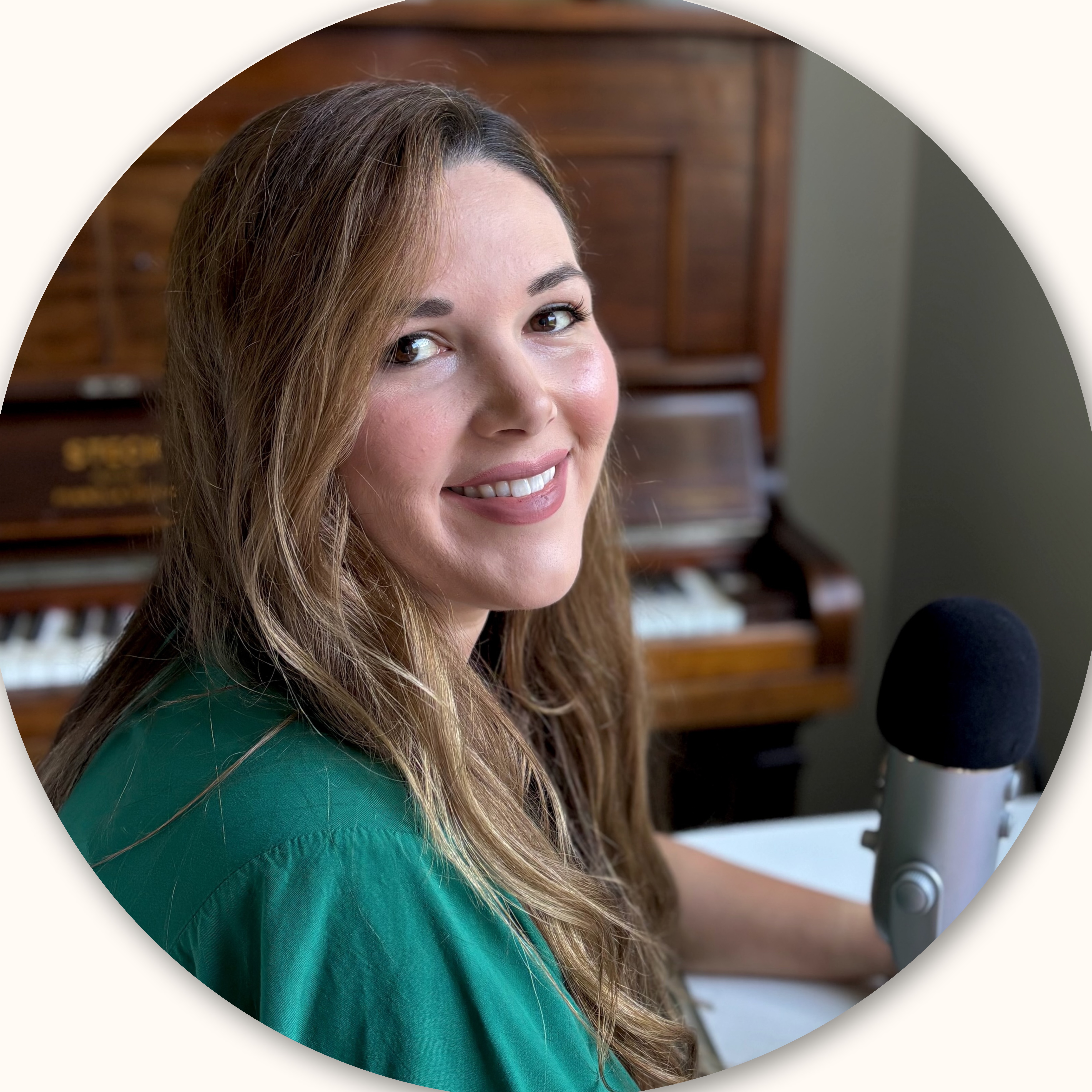
The role of being a Mother offers us the potential for incredible expansion, growth, and power, while also being one of – if not THE – most challenging, undervalued, and taken for granted roles in the world. Motherhood Studies Sociologist, researcher, and single Mother, Dr Sophie Brock hosts The Good Enough Mother (TGEM) podcast with an aim to change how Motherhood is culturally defined and individually experienced. TGEM draws its name from a theorist and pediatrician Winnicott, who highlighted the ways ‘good enough’ parenting is actually what is best for our children – not perfectionism. The podcast centres the Mother as the starting point for conversations with experts and change-makers who are passionate about seeing social, cultural, and institutional change to better support Mothers and therefore our families, and communities.
Episodes
Mentioned books

Dec 21, 2020 • 33min
48. The Festive Season as the Arena for the Perfect Mother Myth
This final episode of 2020 is a reflection on the ways perfect motherhood shapes the lives of mothers, and explains how and why the festive season and other celebrations intensify and amplify this pressure. I give voice to the often-invisible load that women carry at this time and the expectations on mothers, children, and the ‘family’ unit to ‘perform’. I reflect on the mental load, but also on some of the challenges in having the only solutions suggested as ‘stepping back’ or ‘delegating’. I pose questions to consider about the extent to which mothers are expected to sacrifice their wellbeing to facilitate the enjoyment of others, how we have been conditioned to want to ‘please’ others, but also the complex dynamics involved when it comes to wanting to ‘give’ to our children. This leads to a consideration of how our worthiness is measured, and purpose is defined. Ultimately, cultivating connection with ourselves as Mothers offers a precious gift of ‘presence’ to ourselves and our family.

Dec 7, 2020 • 37min
47. Neuroscience and the Nurture Revolution
Dr Greer Kirshenbaum is the first ever neuroscientist doula and is founder of Nurture Neuroscience. She has worked in academic neuroscience labs, studying how genetics and experience shape the brain, nervous system and body to influence lifelong physical and mental health. Greer uses her knowledge and expertise from the scientific world to offer that research and information directly to parents and educators. In this episode she shares some of this information, including how and why the early years of childhood are so important, the ways genetics and early life experiences shape the nervous system, how and why infancy is classified as 0-3 years old, the nature of emotional regulation, the history of care, the importance of epigenetics, and so much more. We also talk about mothering within this context of knowing how we may want to nurture our children, and yet facing many barriers and challenges in being able to offer this type of care. This conversation is part of us moving towards a ‘Nurture Revolution’ as Greer terms it, and recognising how this is also connected to revolutionalising how we understand and experience Motherhood. You can connect with Greer through her Instagram @nurture_neuroscience_parenting Facebook @NurtureNeuroscience and her website is https://www.nurtureneuro.com/

Nov 23, 2020 • 47min
Ep 46. Child Bereavement and Mothering with Grief
This is a conversation about grief and mothering, and the complex challenges that arise when not only grieving the death of your child, but in also supporting your children who are grieving the death of their sibling. I speak with Emma Poore, mother to 3 children, writer, illustrator, and author of ‘Where are you Lydie?’ – a picture book for young siblings and families managing the loss of a baby or young child. Emma has written and illustrated this book honouring her daughter Lydie and her family’s bereavement journey through the eyes of their young sons, George and Henry. The book is endorsed by Sands Charity and recommended by a growing number of Bereavement charities and healthcare professionals, and is a resource for us as parents to open up space for difficult conversations with our children about death. We talk about Emma’s journey into motherhood, the nature of grief, and the importance of language. You can purchase a copy of ‘Where is Lydie?’ through Emma’s website www.emmapoore.co.uk

Nov 9, 2020 • 50min
45. Conscious Parenting as Our Opportunity for Growth
What does ‘conscious parenting’ mean and how does it afford us the opportunity for growth as mothers? This conversation is with Bridget Wood, thought leader on human behaviour and mother to three young children. Bridget discusses the ways conscious parenting is ultimately about being in relationship with our children, recognising that our child is teaching us just as much as we are teaching them. We discuss the ways our perspectives on the world frame our reality, and the ways this can be both a challenge and an opportunity. We consider the ways ‘gentle parenting’ on a pedestal can sometimes feel like a cage, and the importance of giving both ourselves and our children permission to be fully human. We finish by reflecting on how sitting with discomfort can sometimes be what leads us into our power. You can connect with Bridget further through http://www.nourishingthemother.com/ and find out more about her program DISRUPT here http://www.suburbansandcastles.com/programs-and-coaching

Oct 26, 2020 • 56min
44. Infant Feeding as a Social, Cultural, and Political Issue
This conversation about breastfeeding may be unlike any you’ve heard so far. I speak with world-renowned breastfeeding expert Professor Amy Brown from Swansea University, who specialises in research exploring early experiences of parenthood with a focus on infant feeding, mental health and normal baby behaviour. We talk about the pressure mothers are under to ‘get it right’ and how this is connected to expectations of both being a ‘good mother’ and having a ‘good baby’. Amy shares insights on the changing landscape of breastfeeding research and public policy over the last 14 years, and some more recent shifts in creating space to honour women’s grief when they aren’t able to breastfeed. We discuss the complex and sometimes confusing narratives that exist around infant feeding, power, grief, anger, and how mothers are often set up to blame ourselves.

Oct 12, 2020 • 53min
43. Scary Thoughts as Part of Motherhood
*Trigger warning – talk of intrusive harm thoughts.
Perhaps surprisingly, having unwanted and intrusive thoughts as a mother is incredibly common, and in fact – almost universal. Yet, how often is this spoken about in motherhood? In this episode I interview Dr Caroline Boyd, a chartered clinical psychologist who is an expert on intrusive, unwanted harm thoughts that mothers have about their babies. We talk about the connection between harm thoughts and actually causing harm to our children, where harm thoughts come from, some reasons as to why we have them, and what we can do in response to these thoughts. Caroline warns against interpreting us having such harm thoughts as meaning we’re a ‘bad mother’. We reflect on the projection of perfectionism and mothering myths, and the ways intensive mothering contributes to the stigma, shame, guilt, and challenges that mothers face. You can reach Caroline at https://drcarolineboyd.com/ or through Instagram @_drboyd
Note – Fathers do also report experiencing these thoughts too, but to a slightly lesser degree to Mothers.
If this episode raises any concerns for you please visit your GP. You can also reach out to Caroline or Sophie, and/or contact the services below:
UK: PaNDAS - 0808 1961 776
AUS: PANDA - 1300 726 306
USA: Postpartum Support International - 1-800-944-4773(4PPD)

Sep 27, 2020 • 32min
42. Revealing the Mask of Motherhood
In this solo episode I reflect on the cultural construction of Motherhood as a ‘mask’ that we are expected to wear. We recognise, internalise and perform what it means to be a ‘good mother’ in our society. The power of this mask of Motherhood is that we are expected to wear it as our ‘natural’ state. It is supposed to come effortlessly, without complaint. We can convince ourselves while holding up the mask, that this is not only who we ‘are’ (or who we’re striving to be) but that holding up this mask is actually what is best for our children and families. We justify the pain and struggle by saying it is for them. I challenge this self-sacrificial narrative of martyrdom motherhood and talk about the process of revealing, discovering, and connecting with who we are, underneath the mask of Motherhood.

Sep 14, 2020 • 1h 8min
41. Allying the Needs of Both Mothers and their Children
Often, there can feel as though there is a conflict between the ways we would like to parent, and the social and structural forces that shape and influence our everyday lives as mothers. Amanda Donnet from Spilt Milk Psychology joins me in this conversation to discuss the ways so often, our ‘needs’ as mothers are framed as being in competition with the needs of our children. Negotiating this and finding space for our ‘selves’ is therefore connected with the idea that we need to be separated from our children – to have time away from the to ‘come up for air’. We challenge this narrative and the pressure mothers face to always centralize our children and place their needs above our own. Amanda offers us examples and tools for how we can learn to build our own ‘oxygen tank’ to ‘breathe under water’, and honour the ambivalence that is part of mothering. We talk about toxic positivity, how to teach our children how to deal with disappointment, strategies to cultivate self-compassion, and much more. Connect with Amanda at https://spiltmilkpsych.com/
Aug 31, 2020 • 39min
40. A Mother’s Matrescence
This is a conversation about the concept of ‘Matrescence’ as the transition into the identity of being a mother – a process that is unfolding and ongoing. I speak with Amy Taylor-Kabbatz who is a best-selling author, speaker, journalist, Matrescence Activist and mama of three. After more than a decade covering breaking news and current affairs for the ABC, Amy’s ‘traditional’ career took an unexpected turn when she found herself lost, overwhelmed and diagnosed with a thyroid condition after the birth of her first daughter. Amy went on a journey to learn about, explore, and then teach the concept of Matrescence as a way for women to access a language and understanding to describe the changes they go through when they enter motherhood. In our conversation we reflect on the revolution that is needed, both for mothers individually and socially, institutionally, and culturally.

Aug 17, 2020 • 54min
39. Financial Value and Self-Worth: In Motherhood and in Business
In this episode I talk with Leisa Masters from Earthside Birth Services on the subject of money and worth in motherhood and in business. We are both single mothers and business owners whose work supports mothers. It’s from this context that we explore how mothering is financially devalued, and the correlated challenges we’ve experienced in running businesses that support mothers. This episode covers research on the ‘motherhood penalty’, the ‘maternal ‘wall’ as the new ‘glass ceiling’, and the economic value of women’s care-work. There is recognition of our collective loss of community support and the commodification and hierarchy of valuing tangible ‘things’ in motherhood. We delve into a deeper discussion about the discomfort that can come up both in motherhood and specifically in mother-run businesses, around self-worth, and the socially reinforced expectation that mothers try and prove our worth through measurable, quantifiable outputs. We consider all of the ways that mothering is skilled work, how the way we see ourselves impacts how others see us too, and the potential that would open up for mothers if we were to recognise and claim our individual and collective value.

