

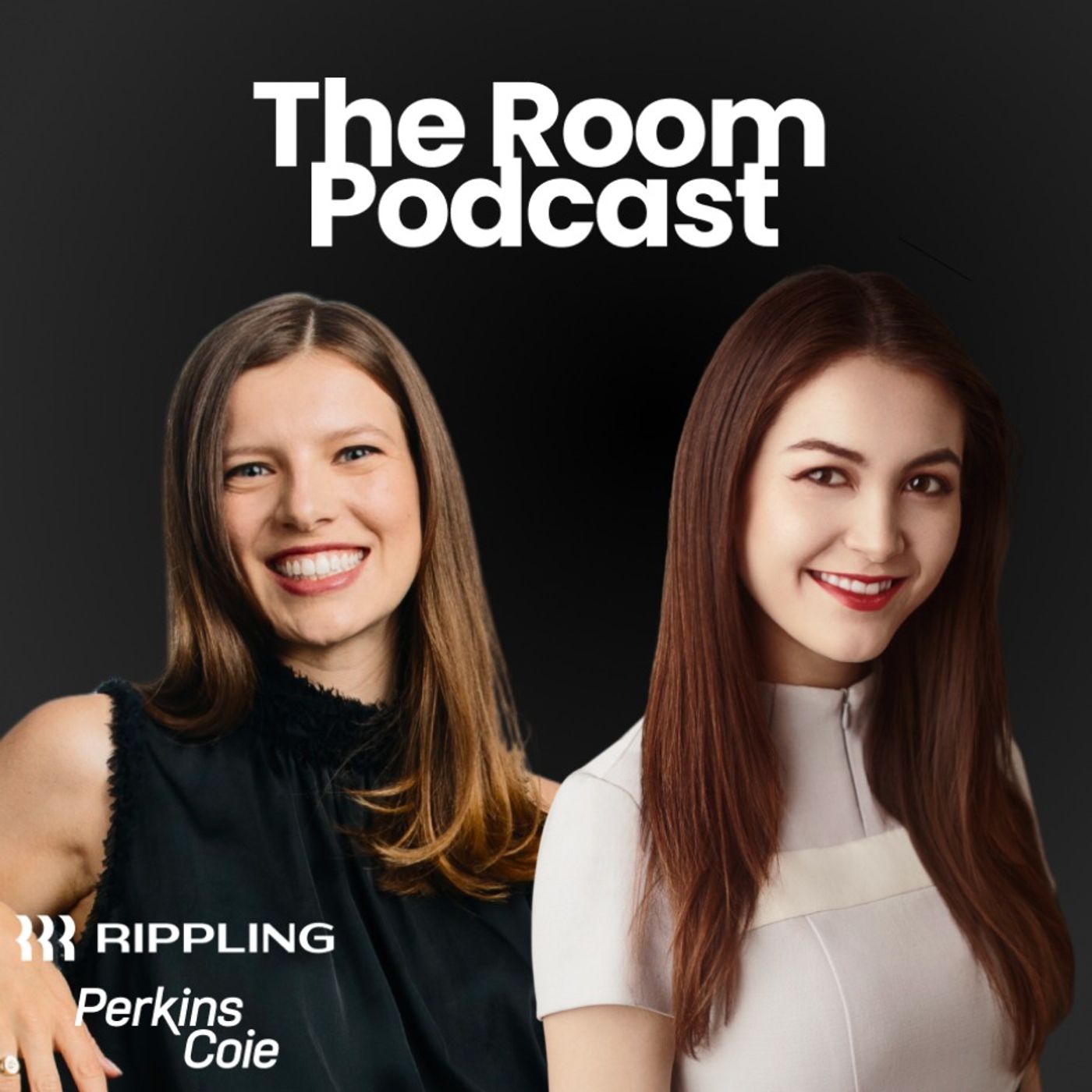
The Room Podcast
Claudia Laurie and Madison McIlwain
Welcome to the Room. A series interviewing your favorite tech founders and funders. Our guests were in the room where it happened and they’re sharing their stories.
Episodes
Mentioned books

Mar 31, 2026 • 45min
S14E3: Ryan Daniels, Founder & CEO of Crosby, on Legal Services in the Age of AI
In this episode of The Room Podcast, we speak with Ryan Daniels, Founder and CEO of Crosby, an AI-first law firm rethinking how legal work gets delivered. Crosby combines AI systems with human legal expertise to provide faster, more transparent, and more scalable legal services, moving away from traditional billable hours toward outcome-driven work.
Crosby is part of a broader shift in professional services, where AI is not just augmenting workflows but fundamentally reshaping how services are delivered. Instead of selling tools to lawyers, Crosby operates as a full-stack legal provider, meeting customers where trust already exists while embedding AI into the core of legal execution.
In this conversation, Ryan shares the core insight behind Crosby: legal work is only partially about legal expertise, and largely about understanding business context, speed, and responsiveness. AI enables a shift where repetitive work is automated, allowing lawyers to focus on high-judgment decisions that actually impact outcomes.
We also discuss:
• Why selling tools to lawyers wasn’t enough and the importance of building a full-stack service
• The broken incentives behind billable hours and how Crosby rethinks pricing
• How trust plays a central role in legal services and in adopting new technology
• The concept of “taste” in AI and maintaining high-quality outputs in critical workflows
• The future role of lawyers as AI handles more of the repetitive work
• Lessons from early customer behavior and product iteration
• The mindset required to build in a rapidly evolving AI landscape
This episode explores how AI is transforming professional services and why the next generation of legal companies will be built around integrated systems, speed, and aligned incentives rather than legacy workflows.
Learn more about Ryan on LinkedIn and Crosby at their company website.
(04:14) Crosby’s exciting news!
(06:31) Ryan’s childhood and how it shaped his worldview
(07:22) Growing up in a legal household
(08:47) Whether Ryan always saw himself becoming a founder
(10:02) Early career decisions from law into startups
(11:51) The moment Ryan decided to build Crosby full time
(12:00) The insight that selling tools to lawyers wasn’t enough
(14:53) Rethinking legal pricing beyond billable hours
(16:36) Early customer behavior and unexpected product usage
(21:12) Dividing responsibilities with his co-founder
(21:36) How Ryan’s legal background informs product development
(25:34) The first investor who backed Crosby
(31:44) Maintaining high taste in AI-driven legal work
(33:47) Pareto efficiency in AI-powered legal negotiations
(40:07) Personal growth as a founder and CEO
(41:12) A woman who had a profound impact on Ryan’s life and career
For The Room Podcast in your inbox every week, subscribe to our newsletter.Follow us on Instagram Follow us on TikTok Check out our guide to podcasting here!
Don't forget to subscribe to our channel on YouTube, Spotify, and Apple Music!
Brought to you by Rippling and Perkins Coie.
WX Productions
Mar 24, 2026 • 51min
S14E2: Alex Halliday, Founder of AirOps, on Content Engineering and the AI Marketing Stack
In this episode of The Room Podcast, we speak with Alex Halliday, founder and CEO of AirOps, a platform helping companies build AI-powered content workflows and automate complex marketing operations.
AirOps enables marketing and growth teams to orchestrate large-scale content generation using structured workflows, AI models, data integrations, and human-in-the-loop systems. The platform is part of a new category emerging in the AI ecosystem: the AI marketing stack, where companies move beyond simple prompt-based tools and instead build repeatable systems for producing high-quality content.
Before founding AirOps, Alex built viral fan websites as a teenager and later founded SocialGo, eventually becoming the youngest CEO of a publicly traded company in the UK. His career has spanned early internet startups, hypergrowth technology companies, and now the modern AI platform landscape.
In this conversation, Alex shares the core insight behind AirOps: great AI-generated content requires content engineering, meaning multi-step workflows that combine models, structured data, and human review rather than relying on a single prompt.
We also discuss:
• Alex’s early experience building viral websites and the origin of SocialGo
• Lessons from becoming one of the youngest public-company CEOs in the UK
• The importance of learning velocity as a competitive advantage for startups
• Why the gap between AI-generated text and publishable content is larger than most teams realize
• The concept of content engineering and why structured AI workflows matter
• How AirOps discovered its initial product-market fit with marketing teams
• Advice for founders raising venture capital in the AI startup environment
• Why early-stage startups should focus obsessively on a narrow user segment
• The emotional discipline required to navigate the founder journey
This episode explores how AI is reshaping marketing infrastructure and why the next generation of software companies will be built around AI workflows, automation, and operational systems, not just models.
Learn more about AirOps and how companies are building AI-powered content pipelines at scale.
(05:03) Introduction and overview of AirOps
(05:13) Alex Halliday’s childhood and early internet projects
(05:54) Did Alex always think he would become a founder?
(06:54) The viral fan website projects that led to SocialGo
(08:09) Becoming the youngest CEO of a publicly traded company in the UK
(10:15) Transitioning from SocialGo to product leadership and founding AirOps
(13:36) Lessons learned operating inside hypergrowth companies
(14:52) The original insight behind AirOps and the pivot to AI content workflows
(18:36) What “content engineering” means and why AI content requires multi-step workflows
(21:13) Interesting and unexpected use cases customers are building with AirOps
(23:00) The first investor who backed AirOps
(25:05) Fundraising advice for founders raising capital in the AI era
(27:41) A founder moment where things did not go as planned
(39:04) How AirOps thinks about integrations and building an AI agent ecosystem
(43:18) What’s next for AirOps
(44:50) Personal growth as a founder and CEO, of their fourth company
(46:10) A woman who had a profound impact on Alex’s life and career
For The Room Podcast in your inbox every week, subscribe to our newsletter.Follow us on Instagram Follow us on TikTok Check out our guide to podcasting here!
Don't forget to subscribe to our channel on YouTube, Spotify, and Apple Music!
Brought to you by Rippling and Perkins Coie.
WX Productions
Mar 17, 2026 • 1h 10min
S14E1: Nirav Tolia, Nextdoor CEO, on Building Community Platforms, Product-Market Fit, and the Future of AI in Local Networks
In this season opener of The Room Podcast, we speak with Nirav Tolia, the co-founder and CEO of Nextdoor, the neighborhood network designed to connect verified neighbors and strengthen local communities.
Nirav shares and refelcts the story behind building Nextdoor, one of the world’s largest hyperlocal social platforms, and reflects on the lessons he has learned scaling a product designed around real-world communities.
Before founding Nextdoor, Nirav was one of the first 100 employees at Yahoo, where he witnessed the rise of the early consumer internet and the power of network effects. He later co-founded Round Zero, an early startup studio that helped shape his thinking about entrepreneurship and product development.
In this conversation, Nirav discusses:
• Growing up in Odessa, Texas, as the child of Indian immigrant physicians, and how those experiences shaped his understanding of belonging and community
• Why he never planned to become a founder and how failure at Stanford University helped him find his strengths
• The early days of Yahoo and how the dot-com era influenced his entrepreneurial path
• The founding story behind Nextdoor and the challenge of building a platform designed for neighborhoods rather than global networks
• How founders can identify product-market fit, including his framework of building a “painkiller vs. vitamin” product
• The responsibility technology companies have when platforms surface bias, trust, and safety challenges
• Why Nextdoor prioritizes quality of interactions over pure scale and engagement metrics
• How Nirav thinks about the role of artificial intelligence in local communities, and why he believes AI should act as an advisor rather than a driver
This episode explores what it really takes to build technology that strengthens communities, and why designing for trust, accountability, and usefulness may define the future of social platforms.
Learn more about Nirav Tolia on LinkedIn and explore Nextdoor at nextdoor.com.
(03:51) Growing up in Odessa, Texas, and how early experiences shaped Nirav’s worldview
(07:31) Why Nirav never planned to become a startup founder
(09:51) Transitioning from pre-med to an English major at Stanford
(12:41) Lessons from failure and discovering personal strengths
(15:51) Joining Yahoo as one of its earliest employees during the dot-com era
(18:01) How the early internet shaped Nirav’s view of network effects
(20:51) Why Nirav left Yahoo at its peak to pursue entrepreneurship
(22:21) The story behind Round Zero and how it prepared him to build companies
(22:51) The founding story of Nextdoor and the opportunity in hyperlocal networks
(25:21) How founders know when to pivot versus persevere
(29:51) Identifying product-market fit and early signals of traction
(32:51) The “painkiller vs. vitamin” framework for product strategy
(34:51) Trust, safety, and moderation challenges in community platforms
(36:21) Lessons from addressing racial profiling and bias on Nextdoor
(38:51) How technology can help people become better neighbors
(47:21) Why Nextdoor prioritizes quality interactions over traditional network effects
(48:21) Nirav’s perspective on artificial intelligence and community platforms
(58:51) A woman who had a profound impact on Nirav’s life and career
For The Room Podcast in your inbox every week, subscribe to our newsletter.Follow us on Instagram Follow us on TikTok Check out our guide to podcasting here!
Don't forget to subscribe to our channel on YouTube, Spotify, and Apple Music!
Brought to you by Rippling and Perkins Coie.
WX Productions
Dec 23, 2025 • 36min
From Stitch Fix to AI Search with Daydream Founder Julie Bornstein | Inside Summit 2025 [LIVE]
Welcome back to another episode of The Room Podcast! This week, Claudia and Madison sit down with Julie Bornstein, founder and CEO of Daydream, a new AI-powered shopping platform reimagining how people discover fashion online. Julie is a two-time founder with deep roots in digital commerce, having previously helped build Stitch Fix and later founded The Yes, which was acquired by Pinterest. With decades of experience at the intersection of retail, technology, and consumer behavior, Julie has been at the forefront of how people shop as the internet — and now AI — evolves.In this episode, Julie shares why search has always been the hardest and most important problem in e-commerce, and how generative AI finally unlocks a more human way to shop. She walks through the lessons she learned building algorithmic fashion at Stitch Fix, why inventory ownership limits personalization, and how The Yes shaped her thesis around intent-driven discovery. We also dive into founding Daydream after an acquisition unwind, the challenges of hiring the right early team, navigating retailer relationships without becoming an ads business, and what the future of shopping looks like when your stylist lives in your pocket. Tune in for a masterclass on consumer AI, founder resilience, and why being early — twice — doesn’t make it easier the third time around.(00:00) Introduction(05:20) Where did Julie grow up and how did it shape her view of the world?(06:31) Did Julie always think she would become a founder?(07:42) How did Julie’s early career in retail and e-commerce shape what she’s building today?(09:59) How did Julie’s philosophy evolve from Stitch Fix to The Yes to Daydream?(11:54) Why did Julie decide to become a founder again after selling The Yes to Pinterest?(14:54) How does Daydream avoid getting squeezed between retailers and consumers?(17:58) Who is Daydream’s core customer and why did Julie choose them first?(18:45) Who was the first investor to say yes to Daydream?(19:39) What unexpected challenges did Julie face early at Daydream?(21:41) How is AI changing Daydream’s business model decisions?(22:26) Should retailers rethink site architecture in an AI-driven search world?(23:14) How can companies make products more discoverable in an LLM-first future?(23:33) Does better AI indexing by retailers threaten Daydream’s value?(25:48) How does Daydream think about LLM interoperability and model choice?(26:44) How should retailers think about cloud providers in modern e-commerce stacks?(27:57) Does Julie consider Daydream an AI-native company?(29:23) What does the future of online retail look like?(31:39) What advice does Julie have for new founders?(33:44) Who is a woman in Julie's life that has had a profound impact on her and her career?For The Room Podcast in your inbox every week, subscribe to our newsletter.Follow us on Instagram Follow us on TikTok Check out our guide to podcasting here! Don't forget to subscribe to our channel on YouTube, Spotify, and Apple Music!Brought to you by Perkins Coie and Mercury.**Mercury is a financial technology company, not a bank. Banking services provided by Choice Financial Group and Evolve Bank & Trust; Members FDIC.WX Productions
Dec 16, 2025 • 36min
Ethical AI, Iteration Velocity, and the Future of Software with Grant Lee (Gamma), Noah MacCallum (Open AI), Malte Ubl (Vercel), Chris Messina (Product Leader), Ash Kumrah (The AI Collective) | Inside Summit 2025 [LIVE]
In this special live panel episode of The Room Podcast from Inside Summit 2025, host Ash Kumra sits down with an all-star group of AI and product leaders: Noah MacCallum of OpenAI, Grant Lee of Gamma, Malte Ubl of Vercel, and Chris Messina, inventor of the hashtag and longtime product strategist. Together, they represent the cutting edge of applied AI, developer platforms, design tooling, and the social technologies that shaped how we communicate today.Throughout the conversation, the panel digs into what ethical AI actually means in practice, how founders should think about scaling from early demos to real-world robustness, and why “iteration velocity” may matter more than perfection. From Noah’s breakdown of vibes-based iteration versus formal evals, to Chris’s framing of AI as a new expressive medium rather than just a technology, this episode is packed with perspective for builders navigating the next era of software. The discussion ultimately challenges founders to focus less on hype and more on clarity of vision, taste, and long-term impact.(00:00) Introduction(04:28) Who are the panelists and what is each of them building or focused on today?(06:39) How does Noah define ethical AI, and where do the real risks show up in practice?(08:02) How should early-stage AI companies think about trust, safety, and responsibility?(11:26) What advice would the panel give founders trying to scale AI products from one to one hundred?(12:21) How do founders balance intuition, taste, and formal evals when improving AI products?(13:32) Why is long-term founder conviction more important than early AI traction?(14:33) How should founders think about AI as a medium rather than just a technology?(17:42) Which industries remain underexplored for AI, despite the current hype cycle?(20:25) Which customer segments surprised Gamma as adoption scaled beyond early users?(23:30) What unexpected user behaviors emerged during the early days of social media and AI?(27:00) What specific product, feature, or workflow is each panelist most excited about building right now?For The Room Podcast in your inbox every week, subscribe to our newsletter.Follow us on Instagram Follow us on TikTok Check out our guide to podcasting here! Don't forget to subscribe to our channel on YouTube, Spotify, and Apple Music!Brought to you by Perkins Coie and Mercury.**Mercury is a financial technology company, not a bank. Banking services provided by Choice Financial Group and Evolve Bank & Trust; Members FDIC.WX Productions
Dec 9, 2025 • 35min
Navigating the New M&A Landscape with Indy Guha (VMG), Jared Roesch (OctoAI), Dan Kang (Mercury), Michelle Edwards (Perkins Coi) | Inside Summit 2025 [LIVE]
In this special Inside Summit episode of The Room Podcast, Claudia moderates a powerhouse panel featuring Michelle Edwards, Partner at Perkins Coie, Indy Guha, GP of VMG, Dan Kang, CFO of Mercury, and Jared Roesch, a founder who recently exited to NVIDIA. When startups challenge incumbents, winning deals requires more than just a great product. This episode shares how to master founder sales by building strong relationships and leveraging insider knowledge. Learn about crafting a compelling sales strategy and how to sell effectively, even when facing executive changes. With perspectives spanning legal, investor, financial, and operator experience, the panel breaks down how deals get sourced, what drives acquirer motivation, and how macro conditions—from AI acceleration to shifting public markets—are reshaping the paths available to startups.In this conversation, the group shares tactical lessons on preparing your company years before an exit, cultivating strategic relationships, and understanding the human and emotional realities of selling a business. They explore why deals fall apart, how founders can signal readiness to buyers, and why the best outcomes often begin long before a term sheet is drafted. Whether you're raising, scaling, or fielding interest from potential acquirers, this episode offers clear, actionable insights for building toward a successful transaction.(00:00) Introduction(06:05) What has each panelist’s experience been with M&A?(08:51) How is M&A shifting in 2025 from the investor side?(10:56) What is driving more companies towards M&A?(12:25) What are some of the most common structural shifts in deals today versus the past?(14:49) When does a founder know acquisition is the right path?(17:41) What is something that most founders don’t think of when it comes to being acquired?(21:28) How does a founding team build relationships with investors?(23:28) What red flags should a buyer or seller be looking for during negotiations?(28:27) How do you manage a team that's working and building that might not know that an acquisition is happening?(29:48) What do buyers wish founders did more of to set themselves up for a successful transaction?(32:36) How should founders approach the conversation of acquisition with their investors?For The Room Podcast in your inbox every week, subscribe to our newsletter.Follow us on Instagram Follow us on TikTok Check out our guide to podcasting here! Don't forget to subscribe to our channel on YouTube, Spotify, and Apple Music!Brought to you by Perkins Coie and Mercury.**Mercury is a financial technology company, not a bank. Banking services provided by Choice Financial Group and Evolve Bank & Trust; Members FDIC.WX Productions
Dec 2, 2025 • 26min
Solving Data Fragmentation at Scale with Michel Tricot, Co-Founder & CEO of Airbyte | Inside Summit 2025 [LIVE]
Welcome back to another LIVE rendition of The Room Podcast! This week, we are back at our live conference, Inside Summit. Listen in as we sit down with Michel Tricot, Co-Founder and CEO of Airbyte — the open-source platform that’s transforming how companies move data across their modern stacks. Airbyte gives teams the ability to extract and load data from virtually any source, empowering both AI-native companies and legacy enterprises to sync their information seamlessly and securely across hundreds of tools.In this conversation, Michel shares the lessons behind scaling Airbyte from its first connector to 600+, building open source community momentum, and navigating shocks like COVID and a disrupted engineering team during the war in Ukraine. We dive into why ELT architecture matters, what separates AI-native companies from incumbents trying to adopt AI, and why founders should optimize for survival before anything else. Tune in for tactical guidance on fundraising, building at “internet scale”, breaking data silos, and how to stay grounded when the journey becomes nonlinear — because it always does.(00:00) Introduction(04:23) Where did Michel grow up and how did that shape his view of the world?(05:09) Did Michel always think he was going to become a founder?(05:35) What early career milestones led Michel to move to San Francisco?(07:56) What insights brought Michel to want to develop a better data stack?(09:25) How did Michel transition from full-time work to launching an open-source solution and building Airbyte?(11:05) Why did Michel choose to name Airbyte’s architecture as “ELT”?(12:01) How did the “ELT” architecture choice influence decisions around scaling the company?(13:15) What was Airbyte’s first connector?(13:33) What was harder — going from 1 to 50 connectors or from 50 to 600?(14:20) Who was the first person to ever say yes to investing in Michel?(14:47) What metrics convinced investors that Airbyte was a billion-dollar-plus market?(15:23) What advice does Michel have for first-time founders preparing for their first fundraise?(16:00) What is something that went wrong during the founder journey?(16:31) What does “AI data infrastructure” really mean — is it just rebranding?(17:39) Where does Airbyte fit in the evolving AI ecosystem?(18:47) How does Airbyte think about competing with giant platforms building internal integration tools?(20:08) What separates AI-native companies from larger incumbents trying to cross the AI chasm?(21:21) When data infrastructure is fully solved, what does that mean for the world?(22:26) What general career and life advice does Michel have for future founders today?(23:49) Who is a woman in Michel’s life that had a profound impact on him and his career?For The Room Podcast in your inbox every week, subscribe to our newsletter.Follow us on Instagram Follow us on TikTok Check out our guide to podcasting here! Don't forget to subscribe to our channel on YouTube, Spotify, and Apple Music!Brought to you by Perkins Coie and Mercury.**Mercury is a financial technology company, not a bank. Banking services provided by Choice Financial Group and Evolve Bank & Trust; Members FDIC.WX Productions
Nov 18, 2025 • 48min
S13E8: Designing Payroll for Small Businesses with Gusto’s Co-Founder, Tomer London
Welcome back to The Room Podcast! This week, Claudia and Madison sit down with Tomer London, Co-Founder and Chief Product Officer of Gusto, the all-in-one people platform that simplifies payroll, benefits, and HR for over 400,000 small businesses across the U.S. From humble beginnings as ZenPayroll, Gusto has become one of the most beloved products in the SMB ecosystem—known for turning one of the most stressful business tasks into a delightful experience.In this episode, Tomer shares the personal roots behind Gusto’s mission—growing up around his family’s small clothing store in Israel—and how those early lessons shaped his empathy for small business owners. He walks us through finding the right customer base, building emotional resonance into product design, and why “customer love” is the most powerful growth channel. Listeners will gain valuable insights into startup decision-making, measuring true product–market fit, and the mindset needed to scale from a scrappy YC-backed idea into a category-defining company.(00:00) Introduction(05:25) Where did Tomer grow up and how did that shape his view of the world?(05:50) Did Tomer always think he would become a founder?(10:13) What early challenges inspired Tomer to build something of his own?(11:23) What were Tomer’s first experiences like coming to the U.S. as an immigrant?(13:33) What was the “aha” moment that led to starting Gusto?(16:38) What were some early moments when things didn’t go as planned?(20:11) How did Gusto find product–market fit with small businesses?(23:51) What advice does Tomer have for founders navigating their beachhead market?(26:26) How did Gusto create emotional connection and delight through product design?(29:11) What has leading Gusto taught Tomer about building teams and company culture?(33:11) How does Gusto approach innovation while staying true to its mission?(36:04) How does Gusto assist businesses and customers during crisis moments?(38:04) How is Gusto adapting to the AI era?(44:08) Who is a woman in your life that had a profound impact on you?For The Room Podcast in your inbox every week, subscribe to our newsletter.Follow us on Instagram Follow us on TikTok Check out our guide to podcasting here! Don't forget to subscribe to our channel on YouTube, Spotify, and Apple Music!Brought to you by Perkins Coie and Mercury.**Mercury is a financial technology company, not a bank. Banking services provided by Choice Financial Group and Evolve Bank & Trust; Members FDIC.WX Productions
Nov 11, 2025 • 41min
S13E7: Reimagining Content, Provenance, and AI with Cloudflare’s VP of Product, William Allen
Welcome back to another episode of The Room Podcast! This week, Claudia and Madison sit down with William Allen, Head of Emerging Tech and AI at Cloudflare, and previously a key leader at Adobe and Behance. Will has spent his career at the intersection of creativity, technology, and infrastructure—from helping launch TED Talks and building Behance into a global hub for creatives, to leading initiatives like the Content Authenticity Initiative that aim to make the internet more trustworthy.In this episode, Will shares insights on the evolution of digital content, the challenges of building authenticity in an AI-driven world, and what it takes to create infrastructure that both empowers creators and protects their work. He discusses lessons learned from scaling startups, navigating acquisitions, and fostering innovation within large companies. Listeners will walk away with actionable takeaways on balancing speed with integrity, building products for real users, and creating a “better internet” rooted in trust and transparency.(00:00) Where did Will grow up and how did that shape his view of the world?(01:09) Did Will always think he would become a founder like he did with Chamber?(03:17) Was that first startup what led him to Adobe?(04:38) What was it like launching TED Talks for the first time?(06:35) What did Will learn from his decade at Adobe and leading Behance?(09:06) How did those experiences shape what Will wanted to do next in his career?(10:25) How did Will transition from Chamber to joining Cloudflare?(11:12) What was it like selling his startup and choosing not to join the acquiring company?(12:21) What was the idea that finally convinced him to join Cloudflare?(14:00) How is Cloudflare balancing protection and innovation in the AI era?(16:05) What advice does Will have for founders building resilient infrastructure in the age of AI?(18:18) What’s something that didn’t go as planned while building or launching a product?(21:04) How does Cloudflare communicate with creators and non-technical users?(23:00) How does Will think about policy and communicating with broader stakeholders?(24:40) What does the end-to-end C2PA workflow look like from capture to display?(27:30) In five years, what will creators’ relationship be with AI model providers?(32:45) What’s next for Will personally, and what is he excited about?(34:10) Who is a woman that has had a profound impact on Will’s life and career?For The Room Podcast in your inbox every week, subscribe to our newsletter.Follow us on Instagram Follow us on TikTok Check out our guide to podcasting here! Don't forget to subscribe to our channel on YouTube, Spotify, and Apple Music!Brought to you by Perkins Coie and Mercury.**Mercury is a financial technology company, not a bank. Banking services provided by Choice Financial Group and Evolve Bank & Trust; Members FDIC.WX Productions
Nov 4, 2025 • 32min
S13E6: How Almost Friday Media is Shaping the Next Era of Entertainment with Jack Barrett
We are back with another live rendition of The Room Podcast! This week, Madison sits down with Jack Barrett, Co-Founder and CEO of Almost Friday Media, the creative force behind the viral comedy brand Friday Beers. After starting and leaving his career in investment banking, Jack followed his storytelling instincts into media, co-founding a creator-first company that now spans comedy, live events, digital media, and even its own beer brand. Almost Friday Media has quickly become a cultural touchpoint for millennial and Gen Z audiences craving authenticity, humor, and community online.In this episode, Jack shares how moments of failure shaped his path, how comedy can connect people across generations, and what it takes to build a modern media business in the era of TikTok, YouTube, and Instagram Reels. Listeners will hear insights on evolving with algorithms, scaling creator ecosystems, and staying true to a mission that celebrates friendship, optimism, and laughter. Listen in as we take a look at how Almost Friday Media became a blueprint for the future of entertainment—where community meets creativity.(00:00) Introduction(02:00) Jack’s upbringing in Greenwich and how family and sports shaped his creative drive.(04:20) Madison on her childhood and early curiosity about tech and creativity online.(06:10) The role of siblings, humor, and community in shaping perspective.(06:50) Jack’s Dartmouth years, finding identity, rejection from Yale, and lessons on belonging.(08:45) Discovering campus culture & humor, how fraternity life and writing led toward comedy.(09:50) What Jack learned (and hated) about his first career path.(10:45) Meeting Radical Media’s John Kamen and discovering the power of storytelling.(11:10) Launching a podcast during COVID and finding purpose in connection.(13:40) Why storytelling became essential for investors and founders alike.(15:00) Birth of Friday Beers, from Instagram memes to a viral cultural brand.(16:45) Defining “Friday Beers” ethos, friendship, humor, and inclusion as the new comedy tone.(17:40) Building Almost Friday Media, from side hustle to full-scale creative network.(18:40) How The Room connects founders, investors, and community.(20:00) Digital disruption and audience ownership.(21:40) Shifts from TV to streaming to creator-led entertainment.(22:50) Adapting to algorithm changes and engagement analytics.(23:40) Indie creators vs. traditional media networks.(24:10) Expanding Almost Friday Media across content, live events, and culture.(25:30) Closing reflections, celebrating creativity, collaboration, and the next era of storytelling.For The Room Podcast in your inbox every week, subscribe to our newsletter.Follow us on InstagramFollow us on TikTokCheck out our guide to podcasting here!Don't forget to subscribe to our channel on YouTube, Spotify, and Apple Music!Brought to you by Perkins Coie and Mercury.**Mercury is a financial technology company, not a bank. Banking services provided by Choice Financial Group and Evolve Bank & Trust; Members FDIC.WX Productions

