

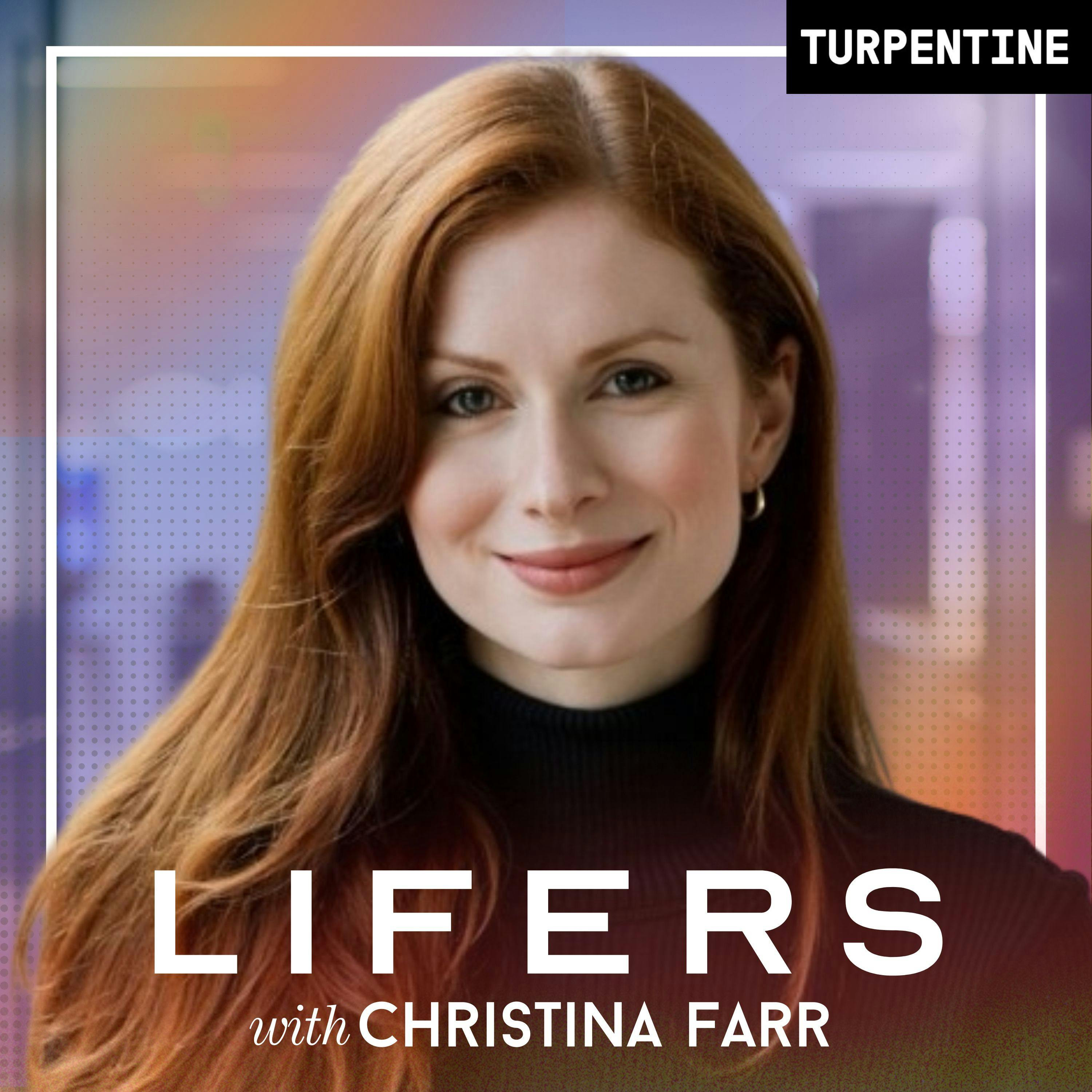
Lifers with Christina Farr
Christina Farr
Veteran journalist, investor, and Second Opinion Media founder Chrissy Farr talks with the CEOs and founders who've been in the trenches long enough to know that healthcare doesn't move at startup speed. These aren't the entrepreneurs chasing quick exits—they're the "lifers" who understand that building in healthcare requires endless pivots, regulatory navigation, and decade-long timelines.No hype, just honest conversations about what it really takes.Each episode explores healthcare innovation, startup strategy, medical technology and AI, health system transformation, and investment insights from operators who've navigated regulatory challenges, clinical trials, reimbursement complexities, and the unique dynamics of the healthcare industry.
Episodes
Mentioned books

Jan 13, 2026 • 45min
Dr. Kameron Matthews & Inlightened President Shelli Pavone on saving primary care from collapse
Dr. Kameron Matthews, Chief Health Officer at Impact Care, and Shelli Pavone, President of Inlightened, dive into the healthcare crisis, focusing on the challenges in Medicaid and primary care. They discuss how licensing chaos hampers telehealth and the importance of clinician engagement in innovation. The duo highlights growing clinician burnout and the critical need for understanding healthcare regulations to enable real change. They advocate for restoring primary care continuity and recognize the role of unsung heroes in the healthcare system.

Jan 6, 2026 • 46min
Sachin Jain, CEO of SCAN on why healthcare doesn’t need more toxic positivity
Sachin Jain, physician and CEO of SCAN Health Plan who writes on pragmatic healthcare reform, argues for 'radical common sense' and simple patient-centered fixes. He calls out toxic positivity and urges leaders to tell the truth about what is broken. The conversation covers candid culture change, practical tactics for selling to plans, trade-offs of screening, AI’s supporting role, and policy ideas for long-term insurance.

Dec 16, 2025 • 40min
How money really flows in healthcare with Claimable CEO Warris Bokhari & Anomaly CEO Mike Desjadon
Mike Desjadon, CEO of Anomaly Health — RCM innovator focused on provider-side tooling. Warris Bokhari, CEO of Claimable — patient-advocate automating insurance appeals and suing bad payer practices. They unpack denial data opacity, automated appeals versus insurer bots, the adversarial payer-provider dynamics, and how startups and venture timelines clash with entrenched healthcare interests.

Dec 9, 2025 • 39min
V Bento, Sword Health CEO: Building real clinical AI (not API wrappers), outcomes pricing, and winning from Portugal
In this episode of Lifers, Christina Farr engages in an insightful conversation with V, CEO of Sword Health. V shares his unconventional journey from Portugal to the U.S. healthcare market, emphasizing the importance of providing high-quality care to reduce overall healthcare costs.
—SPONSOR:This episode is brought to you by Arbiter. As Michelle says: "We don't need another instrument for the orchestra—we need to conduct the orchestra." Backed by one of the largest early funding rounds in health tech, Arbiter creates one real-time source of truth from fragmented healthcare systems, then routes referrals and handles prior auths so patients actually get to care. Learn more at https://www.arbiter.ai/.
—LINKS: Sword Health: https://swordhealth.com/
Chrissy Farr’s Website: https://www.chrissyfarr.com/ Subscribe to the Second Opinion Newsletter: https://secondopinion.media/ Chrissy’s Book: The Storyteller's Advantage: https://www.chrissyfarr.com/books
Lifers with Christina Farr on YouTube: https://www.youtube.com/@LiferswithChristinaFarr
—FOLLOW:V:https://www.linkedin.com/in/vbento/
Chrissy:https://www.linkedin.com/in/christinafarr/ https://x.com/chrissyfarr
—TIMESTAMPS:(00:00) Intro(01:07) Meet V Bento(01:52) Journey to the US healthcare market (03:53) Challenges in the US healthcare system (05:05) Value-based care and incentives (07:49) Digital health and technology (14:11) Sponsor: Arbiter(15:12) AI in healthcare: Opportunities and limitations (22:16) Balancing work and family (32:12) Company culture and employee success (36:32) Wrap

12 snips
Dec 2, 2025 • 46min
Michelle Carnahan, Arbiter CEO: From Eli Lilly to solving healthcare's $100B fragmentation crisis
Michelle Carnahan, a 25+ year healthcare leader who moved from Eli Lilly to startups and now runs Arbiter, talks about the GLP-1 revolution and how those drugs changed expectations. She explores shifts in insurance and three models for paying for high-cost therapies. She explains Arbiter’s AI-powered orchestration to connect fragmented systems and improve referral and prior-auth workflows.

Jul 9, 2025 • 45min
Lantern's Dickon Waterfield on rising healthcare costs and how Medicaid cuts will impact businesses
In this episode of the Second Opinion, Christina Farr interviews Dickon Waterfield, president of Lantern to discuss the intricacies of U.S. healthcare costs, particularly the disparity between Medicare and commercial prices. They cover the unsustainable burden on employers to provide healthcare, the evolving nature of digital health solutions, and the market's reaction to recent IPOs in the sector.
—📰 Be notified early when Turpentine drops new publication: https://www.turpentine.co/exclusiveaccess
—LINKS: Lantern: https://lanterncare.com/
Christina Farr's Second Opinion Newsletter: https://secondopinion.media/
—SPONSOR: 👩⚕️ Hot flashes, insomnia, brain fog? You don't have to accept these as just another part of aging. Midi Health is the virtual care clinic for women navigating midlife hormonal transition, offering FDA-approved medications, supplements and lifestyle coaching - all covered by insurance. Visit https://joinmidi.com to book your virtual visit today.—FOLLOW:https://www.linkedin.com/in/dickonwaterfield https://www.linkedin.com/in/christinafarr/—HIGHLIGHTS FROM THE EPISODE: • The company was previously under the radar despite its size because it lacked traditional digital health investors and operated in the emerging "sensitive excellence" space • Lantern works by securing lower rates from select providers in exchange for steering patient volume to them, rather than contracting with all providers like traditional insurers • Commercial insurance pays dramatically more than Medicare for the same procedures - for example, a total knee replacement costs around $45,000 commercially versus $17,000 for Medicare • About 90% of surgical costs go to the facility, with only 10% split between surgeon and anesthesia fees • The company built scale over 14 years by starting with local networks and school districts before expanding to national employers • They typically contract with only one or two providers per market, offering them incremental volume and market share gains • By waiving patient cost-sharing (like $5,000 out-of-pocket maximums), they incentivize patients to travel to preferred providers • Proposed Medicaid cuts could affect 10% of Medicaid recipients, forcing more healthcare costs onto employers • When Medicaid funding decreases, hospitals typically increase commercial rates to compensate for uninsured patients • Employers are increasingly frustrated with being responsible for 60-70% of Americans' healthcare coverage • The current system originated post-WWII as a talent competition tool and became normalized as part of total compensation packages • Only a major economic downturn with high unemployment could potentially break this cycle, as tight labor markets force employers to maintain competitive benefits • Employers will likely narrow their coverage, offering less rich benefits and more selective networks and formularies • Cell and gene therapies costing $1-5 million per treatment pose existential threats to employer-sponsored health plans • There's a reckoning coming for point solutions that don't deliver measurable ROI, with increased scrutiny on clinical evidence and cost reduction • Digital health companies are held to higher standards than pharmaceuticals, which don't face the same outcome-based payment requirements • Forward-thinking employers are moving beyond simple cost savings to evaluate programs on multiple parameters including talent retention and clinical outcomes • A new generation of digital health companies is becoming in-network providers rather than selling directly to employers • This approach eliminates long sales cycles and complex billing arrangements that characterized earlier digital health companies • Successful healthcare sales requires understanding buyers' needs and solving their problems rather than just selling solutions • Founder-led sales remains crucial in early stages because founders can listen more acutely to feedback and pivot quickly

Jun 25, 2025 • 44min
Why is the longevity sector taking off? With Lifeforce CEO Dugal Bain-Kim
In this episode of Second Opinion, Christina Farr and Lifeforce CEO Dugal Bain-Kim dive into the billion-dollar longevity economy, examining why health optimization became a status symbol and how personal data drives better health decisions than population-level advice.
—
📰 Be notified early when Turpentine drops new publication: https://www.turpentine.co/exclusiveaccess
—LINKS: Lifeforce: https://www.mylifeforce.com/
Christina Farr's Second Opinion Newsletter: https://secondopinion.media/
—FOLLOW:https://www.linkedin.com/in/dugal-bain https://www.linkedin.com/in/christinafarr/
—HIGHLIGHTS FROM THE EPISODE:• The "shadow healthcare system" refers to cash-pay healthcare alternatives where insured people seek services outside traditional insurance coverage.• This trend results from converging factors: post-COVID cultural shifts, health becoming aspirational/lifestyle status, and new technology enabling accessible longevity services.• Personalized data from wearables (like Aura rings showing sleep/alcohol impact) motivates behavior change more effectively than general medical advice.• "N of one" personalized data feels more relevant than population health guidance, though there's risk of "measuring the fun out of life."• Personal genetic risk (like Alzheimer's predisposition) transforms health behaviors from optional to urgent, particularly around sleep quality.• A paradox exists where physicians publicly skeptical of longevity medicine privately use interventions like GLP-1 microdosing and seek optimization partners.• Personal health testing reveals significant issues traditional healthcare misses, including PCOS, scoliosis, and device malfunctions.• Longevity medicine catches problems early - 26% of members are pre-diabetic, often undiagnosed despite regular annual physicals.• Continuous monitoring can discover serious conditions like pituitary brain tumors when primary care doctors aren't interested in investigating elevated biomarkers.• The equity challenge questions how expensive cash-pay services can reach populations who need them most.• Three customer types emerge: health optimizers, health-motivated people getting back on track, and people wanting complete health reinvention.• Solutions for broader access include insurance integration and AI-powered tools to reduce costs from $140 to $40 monthly.• The "dating app problem" asks whether longevity companies lose customers when they successfully improve health.• Solutions include maintenance vs. optimization modes, targeting 40-60 age demographic where significant bodily changes occur.• Despite male-focused industry branding, actual customer bases can be gender-balanced (45% female, 55% male).• Effective messaging balances performance-focused and wellness-focused approaches rather than targeting one gender.• Longevity medicine includes traditional prevention but adds quality-of-life interventions that create initial motivation and trust for broader health compliance.• The rebranding question asks whether longevity is simply primordial prevention made more engaging and actionable.• Supplement safety concerns arise from liver injuries and poor industry regulation, highlighting need for data-driven approaches.• Most people take too many unnecessary supplements; data-driven supplementation could improve both safety and efficacy.

Jun 18, 2025 • 44min
Meeting people where they are: Healthcare in America's laundromats with Fabric's Courtney Bragg
Courtney Bragg, CEO and co-founder of Fabric Health, discusses her innovative model of delivering healthcare services in laundromats. With a background in education and community organizing, she emphasizes the importance of trust and human connections in healthcare. Bragg's insights include the idea of needing 'muffins before mammograms'—building relationships before offering services. She also tackles challenges in the Medicaid system and underlines the potential of integrating healthcare and community spaces for better access.

13 snips
Jun 11, 2025 • 52min
Are we all out of a job? Examining AI’s impact in health with Towerbrook’s Eric Larsen
In this conversation, Eric Larsen, an expert in AI from Towerbrook and the Advisory Board, shares insights on AI's transformative impact on healthcare and society. He discusses the balance between AI efficiency and accuracy, questioning our reliance on technology that isn't 100% reliable. The dialogue explores AI's potential to reshape job markets and the future of work, emphasizing concerns over displacement. Larsen advocates for a blend of scientific and humanities education to better prepare future generations for an AI-driven landscape.

Jun 4, 2025 • 25min
From Hinge Health’s IPO to Regeneron buying 23andMe: Unpacking the mega deals of the week
This week on Second Opinion, Christina Farr and Luba Greenwood discuss the acquisition of 23andMe by Regeneron, the involvement of Hims and Hers in the GLP-1 market, and two significant IPOs in the digital health sector.
—
📰 Be notified early when Turpentine drops new publication: https://www.turpentine.co/exclusiveaccess
—SPONSOR:🏋🏻♀️Strengthen your cells from the inside-out with Fatty15, a pure C15 supplement proven to boost energy, improve sleep, and support metabolic, heart, and liver health – without the downsides of fish oil. Ready to restore your long-term health? Get 15% off your 90-day subscription Starter Kit at https://fatty15.com/secondopinion using code SECONDOPINION at checkout.
—LINKS: Christina Farr's Second Opinion Newsletter: https://secondopinion.media/
—FOLLOW:https://www.linkedin.com/in/christinafarr/ https://www.linkedin.com/in/lubagreenwood/
—TIMESTAMPS:(00:00) Preview(00;48) Intro(01:50) Regeneron’s acquisition of 23andMe(11:59) Sponsor: Fatty15(13:19) Hims and Hers: A billion-dollar raise(17:49) Digital health IPOs: Hinge and Omada(23:46) Wrap
—HIGHLIGHTS FROM THE EPISODE:• Regeneron acquired 23andMe for $256 million as the genetic testing company was heading toward bankruptcy.• 23andMe struggled because they tried to operate both a consumer business and expensive drug discovery R&D simultaneously without adequate synergy.• The acquisition price represents roughly $20 per person's genetic data, which is considered a good deal for Regeneron given 23andMe's 15 million user database.• Regeneron faces a "patent cliff" where their blockbuster drugs are losing exclusivity, driving the need for new drug discovery capabilities.• The genetic data will help Regeneron with early-stage drug discovery, though combining genetic data with medical records for drug discovery remains scientifically challenging.• Hims & Hers raised another billion dollars, largely boosted by their partnership with Novo Nordisk to distribute Wegovy (a GLP-1 obesity drug).• The GLP-1 market represents an outlier situation where pharma companies are seeking novel distribution channels due to intense competition and previous drug shortages.• Two major digital health IPOs are happening: Hinge Health (physical therapy) went public at under $3 billion valuation (down from $6 billion private valuation) and Omada Health (chronic disease management) filed their S-1.• Hinge Health's profitability and AI integration in virtual physical therapy positioned them well for their IPO, while Omada faces more skepticism due to lack of profitability.• Both companies primarily serve employers and face challenges expanding into Medicare and health plan markets, requiring different sales teams and strategies.• The success of these IPOs will determine whether the IPO window opens for other digital health companies with $100+ million revenue run rates.• The digital health industry desperately needs successful exits that return money to investors, as M&A activity has been slower than expected despite favorable market conditions.

