

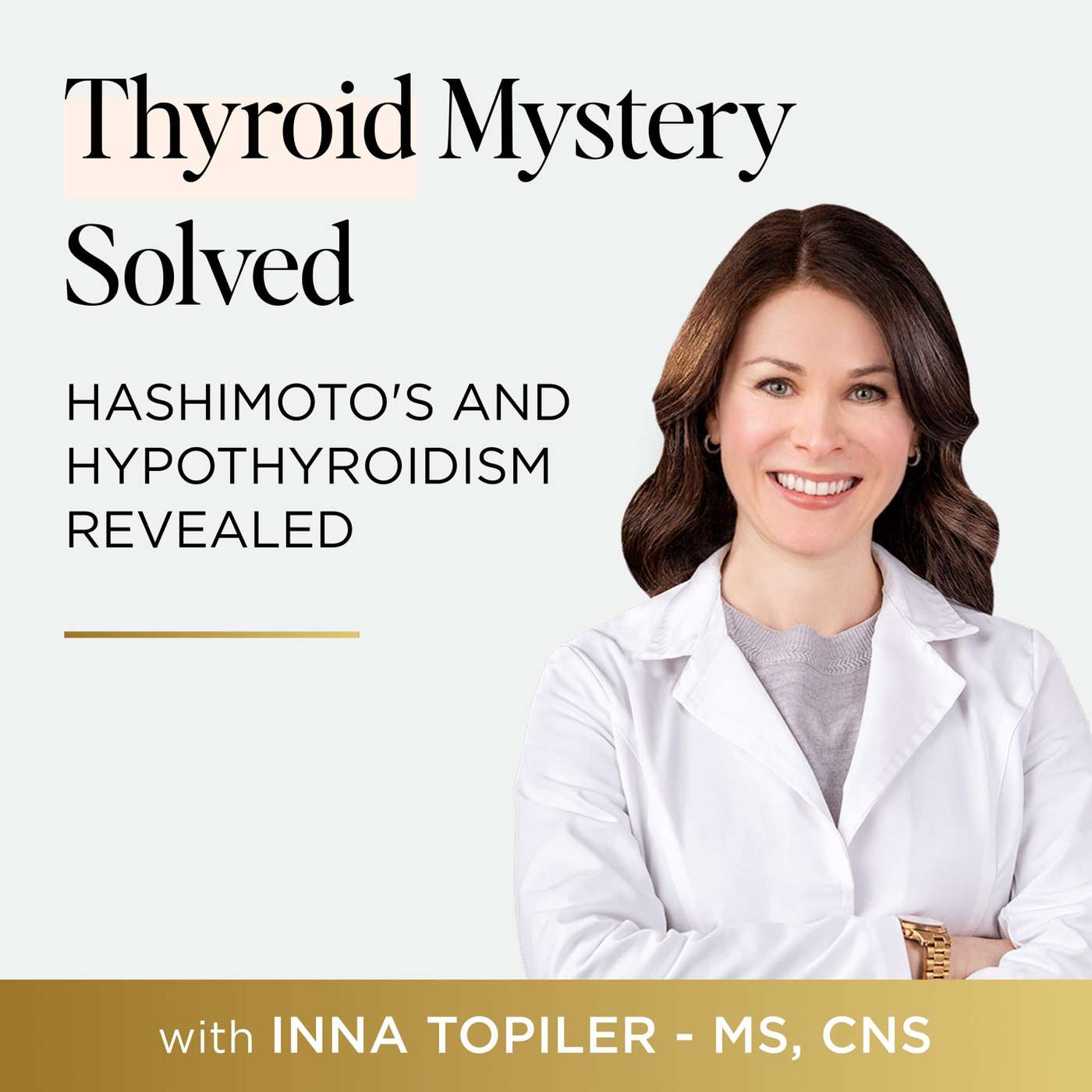
Thyroid Mystery Solved: Hashimoto's and Hypothyroidism Revealed
Inna Topiler
If you have Hashimoto’s or Hypothyroidism - YOU ARE IN THE RIGHT PLACE. You have probably seen a doctor (or two) to help you improve energy, lose weight, reduce brain fog, help hair loss and many other symptoms. You may have tried medication and maybe even diet changes and supplements.
However even with that, you may still not feel completely supported or back to your old self. Instead you are likely feeling discouraged, dismissed, and lost. Sound familiar?
When it comes to dealing with your frustrating thyroid, Hashimoto's and autoimmunity symptoms, you have to really understand where the symptoms stem from and look at them from all angles - like a detective.
That’s exactly what host, Inna Topiler does in Thyroid Mystery Solved - Hashimoto's and Hypothyroidism Revealed. As a leading Thyroid and Hashimoto’s expert and Board Certified Clinical Nutritionist with 20 years in clinical practice, she refuses to accept the unexplained and looks at thyroid in a much more detailed way.
In this podcast, she shares real cases where she reveals how she solved the thyroid issue and gives the exact protocols that she used with her patients, clients and students to help them feel like their old selves. She shares her vast knowledge and sheds so much light on thyroid and offers practical step by step guides to help you feel better too.
The answers are out there, you just have to know where to find the clues. Whether you are newly diagnosed with Hashimoto's or Hypothyroidism or have been dealing with thyroid challenges for a while, please know you are NOT alone. This is a place where you will be seen, heard and understood and will gain such valuable insights with Inna's in depth and heartfelt explanations.
It’s time for you to solve your Thyroid Mystery without having to spend hours a day researching or struggling to make sense of contradicting information. The life you deserve is closer than you think and YES you CAN lose weight, improve your energy, fight brain fog and reduce inflammation with Hashimoto's and thyroid issues.
Subscribe to Thyroid Mystery Solved - Hashimoto's and Hypothyroidism Revealed and Inna will show you as many possible answers starting right NOW!
However even with that, you may still not feel completely supported or back to your old self. Instead you are likely feeling discouraged, dismissed, and lost. Sound familiar?
When it comes to dealing with your frustrating thyroid, Hashimoto's and autoimmunity symptoms, you have to really understand where the symptoms stem from and look at them from all angles - like a detective.
That’s exactly what host, Inna Topiler does in Thyroid Mystery Solved - Hashimoto's and Hypothyroidism Revealed. As a leading Thyroid and Hashimoto’s expert and Board Certified Clinical Nutritionist with 20 years in clinical practice, she refuses to accept the unexplained and looks at thyroid in a much more detailed way.
In this podcast, she shares real cases where she reveals how she solved the thyroid issue and gives the exact protocols that she used with her patients, clients and students to help them feel like their old selves. She shares her vast knowledge and sheds so much light on thyroid and offers practical step by step guides to help you feel better too.
The answers are out there, you just have to know where to find the clues. Whether you are newly diagnosed with Hashimoto's or Hypothyroidism or have been dealing with thyroid challenges for a while, please know you are NOT alone. This is a place where you will be seen, heard and understood and will gain such valuable insights with Inna's in depth and heartfelt explanations.
It’s time for you to solve your Thyroid Mystery without having to spend hours a day researching or struggling to make sense of contradicting information. The life you deserve is closer than you think and YES you CAN lose weight, improve your energy, fight brain fog and reduce inflammation with Hashimoto's and thyroid issues.
Subscribe to Thyroid Mystery Solved - Hashimoto's and Hypothyroidism Revealed and Inna will show you as many possible answers starting right NOW!
Episodes
Mentioned books

Aug 22, 2019 • 25min
023 The Case of bloating, gas, and irregular bowel movements
The Case: Dana is 35 and has horrible digestion issues. She experienced bloating, gas, abdominal discomfort, and inconsistent bowel movements. She was diagnosed with IBS and told it would be a life-long issue. All she could do was treat the symptoms with a battery of over the counter drugs. It’s estimated that 10 - 15% of the population suffers from IBS or Irritable Bowel Syndrome. According to the International Foundation for Gastrointestinal Disorders, it’s the most common GI issue and is more prevalent in women than in men. The Investigation While Dana came to me with the IBS diagnosis in hand, we quickly determined that treating the symptoms (as is most often the recommendation from doctors) was not how she wanted to live her life. I was convinced that if we could get to the root cause of this issue, we could rid her of the vicious cycle of medications she was on. We could finally put an end to her taking Immodium one day and fiber supplements the next. What is IBS IBS stands for irritable bowel syndrome and the term is quite literal. The symptoms can range greatly from patient to patient and may include any combination of gas, bloating, stomach pain, urgency, diarrhea, constipation. However, some may experience certain symptoms one day and then wake up the next day with the opposite symptoms. IBS tends to be a ‘catch-all’ diagnosis for doctors and often doctors will diagnose IBS when they can’t find any other cause for the symptoms. Understanding the Digestive System Getting to the root cause of IBS symptoms is a matter of looking at the whole body and looking for where things are out of balance. To do that, we need to understand what’s happening in the digestive system. When we chew food, our saliva (which has enzymes in it) starts the digestive process. The food makes its way to the stomach where it should encounter hydrochloric acid which further breaks down the food and also acts as an antiseptic, killing off pathogens or bacteria that may have been tagging along on our food. The food then moves to the small intestine where it encounters enzymes created by the pancreas to further break down the food. Fats get broken down a little differently. In order for that to happen, the liver has to process bile (which is stored in the gallbladder) that when released and combined with the enzymes, emulsifies fats. The Balance of Good and Bad Gut Bacteria We have good and bad bacteria that live in our intestines which is called our microbiome. This balance can be disrupted by a number of things that reduce the good bacteria including eating sugar, exposure to stressors or environmental toxins, and antibiotics. Medications like NSAIDs (like Advil) or steroids can also destroy some of the good bacteria. It’s really common to have the microbiome out of balance because these destroyers of good bacteria are so pervasive. When the good bacteria are depleted, we can experience an overgrowth of yeast (which is a fungal overgrowth). What is Dysbiosis and How Does it Cause Leaky Gut and Food Sensitivities? When we have too much of the bad bacteria in our gut (and not enough of the good), we experience something called Dysbiosis. This is just a fancy word for our gut bacteria not living in harmony together. When we are in dysbiosis, and we don’t digest our foods completely, as this undigested food enters the intestines, it might be carrying bacteria that can ferment the food in the intestines. Dysbiosis can also trigger the immune system (which is really smart and recognizes the overgrowth of bad bacteria in the gut) to attack the bad bacteria. The bad bacteria responds by forming ‘biofilm’ in the intestines but that can harden over time and as the bad bugs try and protect themselves further from your immune system, they can dig themselves deeper and deeper into the intestinal lining and can “poke through” the very thin epithelial lining of the intestines causing what’s known as ‘leaky gut’. Food can then leave the intestines (through the holes) where it doesn’t belong. The immune system sees that the food and knows it doesn’t belong and treats it like an invader and forms an antibody against it. The next time that we eat that food, the body treats it like a foe and not a friend because of the antibodies that were produced and that is how we develop food sensitivities. IBS Symptoms and Dysbiosis Dysbiosis, ill-digested food, and leaky gut can all create the symptoms often associated with IBS. When food is not broken down properly, it can sit in the system for too long and as it gets fermented by the bacteria, it causes gas, bloating, constipation or diarrhea. Inflammation can also occur and wreak additional havoc with the digestive system. Plus, the leaky gut can cause new food sensitivities that further mimic the symptoms of IBS. Testing for IBS Conventional tests for IBS include an endoscopies and colonoscopies. These are invasive tests that can reveal serious health concerns but when it comes to an IBS diagnosis, they tend to answer the ‘what’ but not the ‘why’. It may reveal inflammation but it won’t identify the cause of that inflammation. When we look at if from a more functional approach, we can do a variety of tests that look into why things are not working the way they are supposed to. In Dana’s case, we looked at a DNA-based stool test. This helped us identify all of the different bacteria and yeasts in her intestines. This test revealed many different clues that lead us to look at the pancreas and a leaky gut. Mystery Solved The results from the stool test allow us to create a plan for restoring her digestive health. We didn’t identify any specific foods as sensitivities opting instead to remove the most common offenders including gluten, dairy, soy, corn and sugar. We also introduced a combination of antimicrobial herbs to kill off the yeast and bacteria. This herbal combination was custom created to be both antibacterial, antifungal, and antiparasitic. This option was gentle on the good bacteria and easy on the system. I also put Dana on a supplement to support her enzymatic production and bile flow back to a sufficient level. Happy Ending Dana experienced some temporary ‘die off’ symptoms but she started to notice an improvement in her digestion after 4 weeks into the new protocol and after completing the “killing off” process, the bloating subsided and she returned to regular bowel movements. To further support her recovery, we added in a probiotic to reset the microbiome. The final step was to heal the leaky gut, with an L-glutamine powder for a few months. Once everything was back to normal, we did a food sensitivity test to determine which of the suspect foods she could reintroduce. Eliminating Health Mysteries For Dana we were able to get to the root of what was causing her IBS symptoms and, much to her surprise, get her back to living a symptom-free life without medications. If you or someone you know has been diagnosed with IBS or is experiencing IBS symptoms, it’s so important to figure out where the breakdowns are happening and correct them. You don’t need to suffer through these symptoms. Links: Suggested Products: Citramesia FC Cidal Betaine HCl

Aug 15, 2019 • 40min
022 The Case of fatigue, brain fog and muscle weakness w/ Dr. Tim Jackson
The Case: Cindy is 42 years-old, loves to work out and enjoys the outdoors Lately, she’s been tired, foggy, out of breath, weak, and struggling to recover from her workouts. Her doctor ran a number of tests that revealed nothing. The Investigation One of the biggest clues for me was that this all started after a particularly stressful time in Cindy’s life. I was also suspicious of her gardening practices. Immediately I knew there was an answer to this health mystery and I was going to start my investigation on the cellular level. My sense was that it had something to do with how her cells were making (or not making in her case) energy and what was happening in her mitochondria. My guest on today’s show, Dr. Tim Jackson, is a Functional Endocrinologist, a Doctor of Physical Therapy (DPT), and an expert in nutritional biochemistry and mitochondrial health. What are Mitochondria? Mitochondria are the ‘batteries’ of your cells that make the energy for our cells. This energy is necessary for our day to day biochemical reactions such as detoxification, hormone production, and neurotransmitter production in the brain. They also have a communication role in the body, sending out signals when the body is in jeopardy. Like the nervous systems fight or flight response, the mitochondria trigger a ‘cell danger response’ that tells the cells to only produce survival levels of energy when stress is detected. Being in this state can leave you feeling “wired and tired.” Symptoms of Mitochondrial Dysfunction Mitochondria are at work in various different systems of the body, so symptoms of poorly functioning mitochondria vary depending on which system or organs are involved. The highest concentration of mitochondria are in the nervous system, brain system, and the spinal cord. For this reason, the most commonly experienced symptoms are of a low functioning brain or nervous system. This might present as brain fog, memory issues, poor concentration, mood swings, and sleep challenges. However, it can also be muscle fatigue, or even heart issues. Causes of Mitochondrial Dysfunction Extreme stress can certainly push the mitochondria into ‘cell danger response’, however minor stress along with other factors can trigger mitochondrial dysfunction. For example, environmental toxins like glyphosate (the chemical found in Roundup) can accumulate in the body and cause a mitochondrial reaction. Mitochondria damage can also be caused by other pesticides, some heavy metals, hormonal imbalances, sleep issues, mold exposure, and chronic infections. Every bit of exposure adds up. When you add stress to the equation, the damage can become too much and symptoms develop. Testing for Mitochondrial Dysfunction There are a variety of ways to determine if the mitochondria are compromised. The first is a blood test however, Dr. Jackson feels these are not specific enough to really pinpoint the issue. He prefers a more accurate test - an organic acids test that looks at the number of different metabolic byproducts. There are other tests that are used in other parts of the world, but this one reveals a lot about the state of mitochondria health. Once the organic acids test reveals the issue, there are other tests that can help determine the cause. Treating Compromised Mitochondrial Dr. Jackson recommends a three pronged approach: Addressing the cause of the mitochondria damage. This can be determined with a test followed by a detoxification of the offending chemical or trigger. And, helping the mitochondria return to optimal levels with supplements such as Co Q 10, and Carnitine. Repairing the mitochondrial membrane through a specific supplement course that both pushes the toxins out while rehabilitating the membrane. Protecting the mitochondria from damage or re-injury by taking an antioxidant enzyme. One popular way to do that is with molecular hydrogen. This is a very tiny molecule that stimulates the production of new mitochondria while quenching existing free radicals to allow damaged mitochondria to recover. Potential Side Effects Any time you increase cellular energy production there is the chance that noticeable biochemical reactions may occur. This might be improved immune function or improved detoxification which can trigger ‘die off’ reactions. Support Mitochondrial Health with Lifestyle Mitochondrial dysfunction may be avoidable and Dr. Jackson recommends a few lifestyle choices that can help, particularly as it relates to sleep as sleep has a direct impact on mitochondrial health. He encourages people to abide by the natural circadian rhythm. This helps to regulate biochemical reactions and hormonal systems that can impact mitochondrial health. This can look like getting up with the sun and going to bed with the sun. It also has to do with blue light (which we get from the sun but also artificial blue light that comes from electronics). He recommends that people wear daytime glasses that negate the blue screen of a computer, get sunlight within the first 30 minutes of waking (and another 30 minutes in the afternoon), and consider using red light or near infrared light therapy. Mystery Solved Cindy’s issues were definitely related to her mitochondrial health. I did an organic acids test and discovered that her levels were way off where mitochondria were concerned. Further tests showed that she was deficient in many B vitamins, CoQ10 and Carnitine. The cause of this imbalance could be traced back to that stressful time that she’d experienced. Also she’d been generously using Roundup in her garden recently which meant she’d been exposed to glyphosate, a known toxin. The first step in her recovery was to replace the toxic Roundup with natural weed control options. Next, we had to detoxify her body using a product called Bitter X. Cindy also revised her sleep habits to get her circadian rhythm back on track. With the causes out of the way we went to work in supporting and rebuilding her mitochondria with supplements including molecular hydrogen. Happy Ending Cindy started to feel better after just 3 weeks. While she was keen to get back to her workouts, it was important to give her mitochondria some time to rehabilitate. After 6 weeks, she did resume her workouts and reported that 3 months after starting treatment, she was feeling completely back to normal. Eliminating Health Mysteries For Cindy we were able to find that missing piece of the health puzzle and help her regain her health. Could compromised mitochondria be the missing clue for you or someone in your life? Links: Resources mentioned Thanks to my guest Dr. Tim Jackson. You can connect with him here: www.healyourbody.org Or on Facebook Suggested Products: Mitochondrial NRG Liquid Glutathione Oxicell PQQ B12 ND H2 Elite

Aug 8, 2019 • 34min
021 The Case of Body Tingling and Internal Vibrations w/ Stephanie Roman
The Case: Holly is 39 and has been experiencing strange body sensations like tingling, buzzing and internal vibrations that she can’t explain She’s seen several neurologists, had MRIs, nerve tests and a brain scan but it was all normal The only solution doctors offered was anti-anxiety medication. She knew that wasn’t her issue. Strange tingling, feeling like your body is buzzing inside, and similar symptoms could be related to various medical conditions involving the brain or central nervous system so Holly did the right thing by getting those checked out first. But, like many people who deal with unsolved health mysteries, once her doctors ruled those out, they stopped searching for an answer. In fact, they essentially said it was all in her head. Feeling undermined, ignored, and frustrated, Holly came to see me. I was ready to get to the root of the problem and I suspected it wasn’t going to be something that could be measured with MRIs and CAT scans. The Investigation I deal in science. My work is framed by functional medicine and the clinical studies that support it. So, it’s not often that I have to veer off of the physical-proof path. However, in Holly’s case, I did suspect that her symptoms might be related to energy which meant that we had to explore the possibility that the cause might not be an entirely tangible. Stephanie Roman knows these feelings very well. She spent much of her life ignoring or repressing them. But this manifestation of energy is hard to ignore and she eventually had to acknowledge and embrace it. Now it is at the core of her work as an energy healer, psychic, author, Tedx Speaker, and trainer. Beyond the Physical Body Stephanie explained that we have different bodies beyond our physical body. We might call them spiritual or energy bodies. These bodies dictate our emotions and our reactions which in turn, affects our physical body. We are All Psychic Stephanie believes that we are all psychic in varying degrees and ways. We are born psychic. Some people call this energy or they might feel like they’re getting messages from their body. In our childhood, we are much more acquainted with our psychic energy but as we grow up, and learn societal beliefs and expectations, we loosen this connection. Welling Up of Energy Some people more open to the energy and maintain their psychic or energy connection after childhood. They may be completely unaware of it. This can cause the energy to build up until suddenly it shows up as physical symptoms. This might feel like tingling under the skin, shooting sensations (like a jolt), an internal vibration, or ‘buzzing’. This is like the bucket overflowing or the shaken soda bottle popping it’s top. Stress and Fear These symptoms can cause a great deal of anxiety (as they did for Holly) because doctor’s can’t find the source and the body feels ‘off’. Unfortunately, this fear and stress can exacerbate the symptoms because it’s like a piling on of energy; the stress just adds more water to the bucket. It’s easy to be afraid of things that we don’t understand. How to Deal with Excess “Energy” When someone finally figures out that they are holding energy, it can be confusing and frightening. Even Stephanie denied her psychic abilities for years because of the stigma and disbelief. She offered some great tips (and she goes into detail about each one in the podcast) for dealing with this new reality. Find a community Grounding meditation (empty your energy bucket) Visualization - of a tree Get into nature (away from electronics) stick bare feet in grass The Gift She knows that people are scared of being open to energy. They don’t want to admit that these feelings may mean that they’re better able to tap into the world of energetics, healing and even psychic abilities. They might brush it off or use more socially-acceptable terms like being ‘intuitive’, being ‘lucky’, or having a ‘gut feeling'. Stephanie encourages everyone to embrace their abilities, nurture them and see them as a gift. Happy Ending Holly was resistant to these ideas at first but she was eager to try anything that would make her feel better and prove that this wasn’t all in her head as the doctor implied. We did some grounding meditations and guided visualizations which helped Holly understand her body more. She was able to hone in on the energy in different locations and control it more. Holly had another breakthrough when she noticed situations where she picked up extra energy. Knowing this allowed her to do some preventative work which meant that energy didn’t get bottled up again. It was a strange road for Holly but she’s feeling much more in control now and is even considering embracing her gift and doing some training in Reiki. Eliminating Health Mysteries For Holly we were able to go beyond the physical tests and find the source of her problem. Could your energy body hold the clue for you or someone in your life? Links: Grounding Meditation https://m.youtube.com/watch?v=mJvoYYWwvoc&feature=youtu.be Thanks to my guest Stephanie Roman. You can connect with her on Facebook or Instagram. Thanks for Listening If you like what you heard, please rate and review this podcast. Every piece of feedback not only helps me create better shows, it helps more people find this important information. Never miss an episode - Subscribe NOW to Health Mysteries Solved on Apple Podcasts, Spotify, Stitcher or Google Podcasts. Find out more at http://healthmysteriessolved.com PLEASE NOTE All information, content, and material on this podcast is for informational purposes only and is not intended to serve as a substitute for the consultation, diagnosis, and/or medical treatment of a qualified physician or healthcare provider. Some of the links provided are affiliate links. This means we may make a very small amount of money should you choose to buy after clicking on them. This will in no way affect the price the product but it helps us a tiny bit in covering our expenses.

Aug 1, 2019 • 44min
020 The Case of the Relentless Acid Reflux w/ Lisa Pomeroy
The Case: Candace is 39 and has been dealing with acid reflux for years. She was diagnosed with GERD and prescribed acid lowering medication but when it stopped working she switched to probiotics and digestive enzymes. These helped a little but she was still suffering and needed to find the root cause. Gastroesophageal reflux disease (GERD) and acid reflux diagnoses have been increasing dramatically for the past 20 years. So much so that it is now considered a very common disorder with an estimated 20-30% of the Western population experiencing it. However, many people who suffer from it are prescribed acid-blocking medications like Prevacid, Omiprezole and Nexium however, these options come with their own concerns and cautions. Few patients are encouraged to look for the cause of their issue, but when Candace came to see me, I knew that was exactly what we needed to do. The Investigation Candace experienced some relief by following a strict course of probiotics and digestive enzymes however it didn’t completely relieve her symptoms. I knew that there had to be something that was continuing to cause inflammation and an imbalance in the gut. Lisa Pomeroy is a naturopathic doctor and functional medicine consultant. She coaches and offers online training through the Pomeroy Institute for Functional Nutrition. She is also a clinical consultant for two of the top functional laboratories where she guides the experts in interpreting functional lab test reports and developing effective nutritional protocols. Causes of GERD and Acid Reflux The increase in occurrences of GERD and acid reflux may be attributed to the increase in gastrointestinal infections. Many of these go undetected and over time cause acid reflux. Lisa also thinks that our shifting diet (including refined processed foods and non-organic foods) is also a culprit in the increased rate of GERD diagnosis. And, our eating habits can also contribute to the development of GERD. Common GI Tract Infections There are many potential infections that can affect the stomach but the most common is Helicobacter pylori (aka H pylori). This infection of the upper digestive tract can cause symptoms of stomach pain (especially within an hour or so of eating), feelings of hunger when there shouldn’t be, and acid reflux. Food is usually digested within 90 minutes of eating so feeling like food is ‘sitting like a rock’ in the stomach 90-minutes or more after eating can also be a clue that H Pylori might be the present. An aversion to protein may also be an indicator. Symptoms of H Pylori In addition to the above mentioned gut issues, H Pylori can also manifest as sleep issues, fatigue, malnutrition (not absorbing nutrients), or skin issues such as rosacea, acne, psoriasis or eczema. Hashimoto’s and other autoimmune issues can be triggered by H Pylori. Mental health issues like anxiety or depression may also be a result, or exacerbated by H Pylori. Too Little or Too Much Stomach Acid A lot of people think that acid reflux is because there is too much acid in the stomach, however, it can also be caused by not enough acid in the stomach. Acid is required to break food down so when there is too little, it can cause an imbalance of digestive enzymes and other digestive issues. Acid is also what helps keep food in the stomach by triggering the lower esophageal sphincter or L.E.S. When there is not enough acid, this can open up and allow food and stomach bile to travel back up into the throat. Testing for H Pylori The conventional test for H Pylori is a serum antibody test however Lisa does not like to use this test because there are a lot of false negatives and there is no way to know if the infection is new or old. A breath test is also common in conventional medicine but this can also deliver a false negative. Additionally, traditional doctors will do an endoscopy and biopsy which may or may not find the infection. Lisa’s preferred method of testing for H Pylori is a stool test (and there are few versions of this type test to consider). Detecting H Pylori with PCR There is one stool test that Lisa prefers over others (and I agree with her) and it’s a DNA stool test using PCR technology. We like it because this technology not only allows us to test for the H Pylori at a DNA level but it also can identify the virulence of the infection. When we know how active the infection is, we are in a better position to effectively attack it. Treating H Pylori Conventionally Once H Pylori is diagnosed, treatment will often include antibiotics (the strength of which may be adjusted according to the virulence of the infection) as well as proton-pump inhibitor medication. This is the more conventional approach and Lisa says that it’s only effective half the time and can do a lot of damage to the body. Treating H Pylori Naturally Lisa uses a clinically-proven botanical protocol to treat her patients with H Pylori. This includes a higher-dose mastic gum in combination with DGL (deglycerized licorice root). This approach does take a couple of months but it’s effective and a lot more gentle on the digestive system. Other Contributing Infections H Pylori often attracts other infections and parasites to the gut. There are two that are commonly attracted and: dientamoeba fragilis and blastocystis hominis which are both protozoa parasites. It is not uncommon for the epstein Barr virus to join in the party. Often these infections aren’t discoverable until after the H Pylori has been dealt with. These parasites may be treatable with herbs but an anti-protozoa medication like ‘Alinia’ might be the better bet depending on how the individual responds. Avoiding H Pylori H Pylori is a communicable infection so you can catch it from saliva (even a little bit of it). This means that if you or someone you know is diagnosed with it, then anyone who you may have kissed, shared a straw or a fork with should be tested (even if they don’t have symptoms because they could be a carrier). This is especially important because even if one person gets rid of the H Pylori, they can catch again from their spouse or anyone close to them from whom they might ingest saliva. Happy Ending for Candace We did a full GI Map using the PCR technology from Diagnostic Solutions Labs which revealed that Candace did indeed have H Pylori along with a few other dysbiotic bacteria. Some of the supplements she was taking were contributing to the issue not helping. We adjusted her supplements and treated her H Pylori with Pyloricil and Mastica . We followed this with an antimicrobial protocol and introduced a strong probiotic. It took some time but soon she was symptom free and her stool tests proved that she was also H Pylori free. Eliminating Health Mysteries For Candace we were able to get to the real root of the problem so she could get off the medication and feel well again. Could H Pylori be the missing clue for you or someone in your life? Links: Resources mentioned Thanks to my guest Lisa Pomeroy. You can connect with her through her website: www.Pomeroyinstitute.com or Facebook. Suggested Products: Pyloricil GI Microb-X FC Cidal

Jul 25, 2019 • 42min
019 The Case of the Reversible Autoimmune Diagnosis w/ Dr. Keesha Ewers
The Case: Camille is 38 and has experiencing unexplained joint pain, fatigue and generally not feeling like herself. Blood tests revealed an elevated ANA but that could mean many things and doctors were unable to give her a diagnosis. Further bloodwork pointed to an issue with thyroid and inflammation. The Investigation An elevated ANA can mean a lot of things but generally it indicates that there is an autoimmune issue which could be lupus, scleroderma, Sjogren’s syndrome, rheumatoid arthritis, or a variety of other diseases. However, a positive ANA is not considered enough to diagnose any of these. In Camille’s case, I could see from the additional blood work I ran that there was more to this story; that there was perhaps more than one puzzle piece missing to complete this picture. Dr. Keesha Ewers is an integrative medicine expert, a popular speaker, and the best-selling author of Solving the Autoimmune Puzzle: The Woman’s Guide to Reclaiming Emotional Freedom and Vibrant Health. She’s board certified in functional and Ayurvedic medicine and the Founder and Medical Director of the Academy for Integrative Medicine Health Coach Certification Program. Holistic Medicine Includes the Mind When we are dealing with a physical ailment, like Camille was, we assume that the cause of the issue is entirely physical. However, as Dr. Keesha explains, we need to look at these issues from a holistic perspective. Our emotions send signals to our mind which can create a biochemical reaction. We’ve discussed in past episodes how long held beliefs can manifest into physical ailments (see episode 007) and this is certainly the case with autoimmune disease. How Emotions Affect Us Physically Dr. Keesha conducted a study in 2013 called the ‘Healing Unresolved Trauma Study” aslo known as the HURT study. In this study she found that young brains that are not fully developed (up to the age of 26) are affected by any kind of trauma (emotional and physical) that they encounter. These traumatic experiences can be as innocuous as feelings of rejection or being not good enough. Young minds try to make sense of these experiences by creating stories around them to give them meaning. These become beliefs. In turn, the young mind develops an adaptive strategy (to avoid future negative emotional experiences) which becomes hardwired into the brain and we carry that with us into adulthood. When we experience a similar emotion as adults, without knowing it, our brain references back and triggers a response. What’s Happening in the Body During Fight or Flight? We’re all familiar with the fight or flight response but Dr. Keesha explains that the brain can trigger this response even when there is no real danger as a result of these early emotional experiences. The physical response is however the same even if the trigger isn’t a tiger but something like rejection. The brain sends a message to our adrenal glands to release cortisol. This sends oxygen to our muscles, raises our blood pressure and our heart rate (all thing needed for fight or flight). At the same time it shuts down the unnecessary systems including fertility, sexual desire, and digestion. It also changes the way we take in information – it shifts our focus away from the now to the future (or from here to there – where safety is) Our hormones are not designed to be continually in that mode. Eventually, we run out of cortisol. This causes a new chain reaction (because your body is still in fight or flight) so the body starts to steal your progesterone stores from your reproductive organs. This creates a hormone imbalance. The Root of the Root Cause I talk a lot about getting to the root cause of the problem on this podcast, but often it can be tricky to see the root of the root. We might be able to trace the issue back to a hormone imbalance (and correct that) but we need to keep digging to see what caused that hormone imbalance. This can be a very challenging thing for people because we tend to not tie our physical condition to long held beliefs or emotional triggers from our youth. And, often we feel that this ‘new’ problem can’t be related because it came on ‘all of a sudden’. However, it’s more likely that the condition or symptoms were the result of a system breaking down after long-term stress. Capital T vs. Small t Trauma Many people think of trauma in the sense of what Dr. Keesha calls capital T trauma like sexual abuse, abandonment, PTSD, domestic violence, neglect, or psychological abuse. However, research shows that lower case t traumas does that exact same thing to your hormones, biochemistry and brain function. Dr. Keesha says that everyone experiences some form of lower case t trauma in their life. Is Autoimmune Your Fault? Dr. Keesha is adamant about shifting this paradigm of blaming ourselves for developing an autoimmune disease. Yes, our brains may be the cause but we were never in control of how our brains are wired as a result of our childhood experiences. That’s biological. Blaming and shaming is not going to fix the problem. Instead, she believes that we need to face these old traumas. Ayurvedic medicine says that autoimmune is undigested anger and so, we need to digest our anger, emotions, feelings, memories and experiences from our past. This often requires some professional help. Can Autoimmune Be Cured? Dr. Keesha is an example of how dealing with old emotional wiring can change your physical health. She had rheumatoid arthritis and was able to reverse it through counselling and adjusting her diet. Remember, it’s a holistic approach. It’s not just the mind but the body too. She says that dealing with autoimmune is like taking the hero’s journey. Once you acknowledge the challenge, you need to find a mentor to help you develop the skills that will help rewire your brain and response to emotional triggers. You’ll also want to work with a holistic nutritionist and or a function medicine doctor. Dr. Keesha also shares her top three tips for anyone dealing with autoimmune in the podcast. Mystery Solved This holistic approach worked for Camille. First I introduced her to technique called T.R.E. which stands for Trauma Release Exercise (more on this in an upcoming episode!). Next, I worked with her on her diet to balance her immune system and lower her inflammation. She also worked with a reputable counsellor to deal with her emotional triggers (which were not related to any big T traumas and she had no idea were the source of her physical issues). Within 6 months, her ANA results were negative and she no longer presented with autoimmune issues. Eliminating Health Mysteries For Camille we were able to find those hidden missing pieces of her health puzzle and help her turn her day to day well being around. Could past traumas be the missing clue for you or someone in your life? Links: Thanks to my guest Dr. Keesha Ewers. You can connect with her on her website here: https://www.drkeesha.com/ and through Facebook and Instagram. Dr. Keesha has is also offering you her Autoimmune Blueprint for free. Click here to grab it. Suggested Products: Immune Mod A Thanks for Listening If you like what you heard, please rate and revi...

Jul 18, 2019 • 52min
018 The Case of the Unlikely Lyme Disease w/ Dr. Darin Ingels
The Case: Kim is 37 and lives in a high-rise in New York City For about a year she felt foggy, tired, and plagued by headaches. She was also experiencing joint pain that traveled from ankle to shoulder to knee. She tried anti-inflammatories but it only masked the problems. Her doctors were unable to find the cause of her issues. It’s not uncommon for people to turn to functional medicine to deal with headaches and inflammation but there was something that made me think there was something else at play in Kim’s case. The biggest clues were that aside from the pain, she also said she didn’t feel like herself. I knew that we had to get to the source of the inflammation and the roving joint issues. The Investigation My suspicion was Lyme disease but Kim is a city girl and hadn’t been hiking in areas where she might have been exposed. I needed to investigate whether this might be the cause of her issues as it certainly seemed to explain the collection of concerns. Dr. Darin Ingels is an expert in Lyme disease and a respected thought leader in natural medicine. He’s the author of “The Lyme Solution: A 5-Part Plan to Fight the Inflammatory Autoimmune Response and Beat Lyme Disease”. His practice deals with chronic immune dysfunction and he’s been successful in using natural methods to reduce the symptoms of Lyme (including his own). What is Lyme Disease? Lyme disease (also known as Lyme Borreliosis) is a bacterial infection transmitted primarily by Deer ticks. It’s unique because it has the capacity to penetrate different parts of the body in a way that other bacteria can’t. This means, it can travel around the body and it can be difficult to treat. Lyme is also known as the great mimic because the symptoms of the disease can look like many other illnesses and traditionally, doctors have found it very hard to diagnose. Also, there are upwards of 300 different strains of Lyme disease worldwide, with about 100 strains in the U.S. Know Your Ticks There are many different types of ticks and the one that most commonly carries Lyme disease is the deer tick. If you find a tick on you, it’s helpful to know what kind of tick it is. Here are a few pictures to help you identify them. (HealthMysteriesSolved.com) If You Find a Tick If you find a tick crawling on you, brush it off. If it hasn’t bitten you, then you are unlikely to have been infected. However, you should do a full tick check since you now know you’ve been in an area where ticks are. When a tick bites you, it stays attached while it feeds. The disease is transmitted from the saliva it secretes into your bloodstream while it is drinking your blood. If you find a tick that is attached to your skin, remove it using tweezers and a magnifying glass, pinching as close to the bite as possible and pulling the tick out slowly. Avoid the instinct to squash it or scratch it away. Gentle, intentional removal will decrease the amount of the bug’s fluids that enter your system. If possible, save the tick (in a plastic bag with a moist cotton ball so it doesn’t dry out) and bring it in for testing. Not Just Ticks Lyme disease is most commonly caused by a bite by a carrier known as a deer tick but it’s not just ticks that transmit the bacteria. Some research suggests that mice, rats, and squirrels may also be carriers. Many people write off the possibility of having contracted Lyme because they haven’t been in nature or in a region that is known for having infected ticks. There is also some research being done about the possibility that Lyme disease may be transmitted by mosquitoes, horseflies, fleas, and through the exchange of human body fluids. None of these have been proven conclusively. Where in the World are Lyme-Infected Ticks? Another factor that can cause doctors to write off the possibility of Lyme is location. For a long time, Lyme was primarily found in ticks located in specific regions of the US (the Northeastern and Midwestern states) but in the past few years, infected ticks have been found in every state - including Alaska. Symptoms There are some tell-tale signs of Lyme infection, the most significant of which is the appearance of a red bulls-eye like rash around the bite area. This is called erythema migrans and is the most conclusive symptom because it only occurs with Lyme. However, not everyone who gets Lyme disease will develop this rash so doctors have to rely on a collection of other symptoms. These symptoms may include fever, chills, joint pain (that may travel from one area to another), Bell's palsy, swelling of the lymph nodes, sleep disturbances, headaches, and general flu-like symptoms. Over time, symptoms can progress into neurological symptoms like balance problems, coordination issues, fatigue, brain fog, sensitivity to light and short term memory loss potentially leading to cognitive decline. Diagnosis Diagnosis of Lyme disease is tricky because unless the patient has (and sees) the erythema migrans mark, the symptoms could be a myriad of other things. Often a patient is initially misdiagnosed and it’s not until the collection of symptoms are considered that Lyme is tested for. The CDC recommends testing for a specific antibody through a blood test to begin. If this antibody is not present, then they will determine it’s not Lyme. If it is present, then they move to additional blood tests. False Negatives and False Positives for Lyme Disease One of the issues with the traditional Lyme screening method is that the antibody test is just proof that you’ve been exposed. And, there have been issues with that test returning false negatives too because it only picks up 40 - 50% of the people who have it. The challenge with this is that for people dealing with false negative results, the traditional medical system can no longer move forward in diagnosing. Functional Medicine Approach to Diagnosis Many functional medicine practitioners skip the initial antibody test and go straight to the other blood tests. There are a variety of labs that will conduct different types of tests that can help confirm a Lyme infection. However, many of these lab tests are not covered by medical insurance. It’s important to do multiple different tests because of how many different strains of Lyme there are. See the references section below for a list of labs. Traditional Treatment Lyme disease is a bacterial infection so the traditional course of action is to treat it with antibiotics. Often the prescribed length of prescription is not enough to permanently kill off the bacteria (which can go into remission or dormant). During the time of dormancy, antibodies can continue to change. Dr. Ingels says that it’s not uncommon for Lyme disease symptoms to reappear after some time of dormancy. This is what happened to him. The traditional approach is to attack it again with more (sometimes different) antibiotics. Chronic use of antibiotics may cause severe side effects that can lead to other health issues. Natural Approach to Treatment There is no consensus on the treatment of Lyme disease and so it comes with some controversy. Dr. Ingels doesn’t say that people should not take the antibiotics, but he does believe that there are lifestyle and diet changes that can help keep symptoms at bay. He is also a proponent of the Traditional Chinese Medicine approach using herbs and acupuncture. However, he notes that everyone is different and it may not work for some. The main idea behind the natural approach is...

Jul 11, 2019 • 39min
017 The Case of the Stubborn Hashimoto’s w/ Dr. Kyrin Dunston
Dr. Kyrin (Karen) Dunstan, a board-certified OB-GYN turned functional medicine and energy-work practitioner, blends hormonal care with energetic and psycho-spiritual approaches. She explores how throat chakra blocks and childhood fear can precede thyroid disease. Short, practical tools like journaling, toning, and therapy are discussed. She also shares her personal shift from conventional medicine to integrating energy work with functional care.

Jul 4, 2019 • 35min
016 The Case of Never Ending Morning Sickness w/ Kristin Mallon
The Case: Katherine is 37years old and 20 weeks pregnant Since early in her pregnancy, she’s had stiff joints and been exhausted and extremely nauseous. Prenatal vitamins made her morning sickness worse and time wasn’t making anything better. Katherine was having trouble keeping food down and was worried about getting sufficient nutrients to the fetus. The Investigation During the first trimester of pregnancy, it’s common to experience nausea and fatigue. For most women, the body finds it’s new equilibrium by the second trimester. When Katherine came to me with continued issues, I knew we had to dig a bit deeper into her diet and look at what she’d done to prepare her body for pregnancy. Kristin Mallon is a Registered Nurse (Certified in Inpatient Obstetric) and a midwife. She’s a pregnancy expert, published author and co-founder of Vibrant Beginning Pregnaceuticals. She’s delivered thousands of healthy babies. Her focus is on helping women prepare their bodies optimally before, during and after pregnancy through high-quality nutrients. The First Trimester Kristin explains that the body experiences an influx of hormones (specifically estrogen, progesterone, and human chorionic gonadotropin or hGC) when fertilization occurs. This is why so many women experience symptoms like morning sickness, nausea, and fatigue in the first few months of pregnancy - their bodies are reacting to the change in hormones. Some women may also experience breast tenderness, low-grade headaches, gastro-intestinal upset, and change in appetite (which may be caused by an aversion to food or smells). When Things Don’t Get Better in the Second Trimester For most women, the body learns to deal with the increased hormones and the symptoms dissipate after three months of pregnancy. However, for some women the symptoms persist. This may have to do with genetics - some women are predisposed (based on how fast their body metabolized hormones) to experience a more difficult pregnancy. However, these symptoms may have nothing to do with the increased hormones, they may, in fact, have more to do with nutritional status. Metabolic vs. Nutrition It’s important for a woman to know if her persistent symptoms are related to nutritional status or a metabolic issue. If it is nutrition, than the course of action would be to adjust the diet and increase supplements to support nutritional needs. This is often the traditional approach. However, if it is a metabolic issue, this approach won’t help and may in fact be fruitless since the additional nutrients won’t be metabolized and absorbed. Preconception Nutrition Many women shift their focus to nutrition after they get pregnant. Kristin recommends starting to focus on nutrition at least twelve weeks before attempting to get pregnant. This includes focusing on nutrition and taking prenatal vitamins. However, not all prenatal vitamins are formulated optimally. Selecting a Prenatal Vitamin For most women, a single prenatal vitamin is not going to do the trick. Most prenatal vitamins are not formulated correctly and may include unnecessary elements like dyes, fillers and non-natural ingredients. Prenatal Iron Many prenatal vitamins contain iron and this is something that Kristin does NOT recommend. Iron slows down your gastrointestinal tract and can cause constipation. Your digestive system will also slow down due to pregnancy so having too much iron in your system when you become pregnant can exacerbate the nausea and vomiting common in the first trimester. In addition, iron binds with calcium which decreases the body’s ability to absorb both minerals. Only 9 - 10% of women actually need to supplement their iron during pregnancy so it should not be the default. Unclear Pregnancy Nutritional Needs The only official recommendations Americans have (from the Food Nutrition Board, Institute of Medicine, or the CDC) for nutritional needs during pregnancy is 400 - 800 micrograms of folic acid and 100 - 150 micrograms of iodine. That’s it. Kristin recommends also including at least 250 milligrams of DHA and 100 milligrams of EPA (essential fatty acids and omega 3s) which are beneficial to fetal brain development. B vitamins , specifically 100 micrograms of methylated B 12. The other B vitamins (1, 3, and 6) are also important to keep energy up during pregnancy and for neurological development for the fetus. Pregnant women should also be getting 500 mg of calcium, and look at magnesium, zinc, selenium, chromium, copper, vitamin A and D. Healthy Diet May Not Be Enough Even women with a very healthy, clean diet may need to take a second look at their actual nutrient intake. With farming practices being what they are, food doesn’t hold as much nutrients as it used to. This is why many women need supplements to get all of the nutrients they need. Eating macro (not from big farms) is another way to increase nutrient intake through food. To be sure, women can have their micronutrients test through a functional medicine doctor (or clinic) to determine if they are deficient on a cellular level. Make Sure its Methylated When considering supplements with B vitamins, look for the “methylated” form. This is the bio-available version so it makes it easier for the body to absorb and digest. Specifically, methylated folate and methylated B vitamins. Mystery Solved Conversations with Katherine revealed that her preconception of nutrition had not been ideal which meant that her body was starting the pregnancy at a deficit. In addition, her current tests showed that she was extremely low in all of her vitamins and minerals. Plus, her test were high in a few inflammatory markers (specifically High Sensitivity CRP) so it was no wonder she was dealing with joint stiffness. Getting sufficient nutrients when you have morning sickness can be a challenge. This is why choosing activated, natural and methylated vitamins is so critical because then the body can absorb them very quickly and use them more efficiently. Katherine started with the methylated prenatal vitamin Prenatal Brilliance by Vibrant Beginning. Within a week the nausea had subsided. This prenatal has a good blend of all the necessary vitamins but Katherine was so deficient we topped it up with extra B6 and Vitamin D. To further treat her inflammation, we added an EPA and DHA blend form Prenatal Brilliance which would also help the baby’s brain development. Eliminating Health Mysteries For Katherine we were able to identify the cause of her extended morning sickness and help her feel better and provide more nutrients to her baby in less than a week. She thought she was doing everything right, but she’d chosen the wrong prenatal supplement. Who would have guessed that the cure was the cause? Could this be the missing clue for you or someone in your life? Links: Thanks to my guest Kristin Mallon. Please check out her website www.integrativeobstetrics.com and connect with her (and learn more about Vibrant Beginning) on Facebook or Instagram. Suggested Products: Prenatal Brilliance ...

Jun 27, 2019 • 36min
015 The Case of Relationships in Danger w/ Alicia Munoz
The Case: The husband, wife, kids and friends of people dealing with health mysteries can feel invisible or taken advantage of.It may not be happening to them, but they are impacted. Likewise, those dealing with health issues often feel their partners can’t understand them and therefore may not support them in a way they would like. Stress, frustration, heartbreak and even new illnesses can be side effects of loving someone dealing with a health mystery. For every person dealing with an unresolved, or undiagnosed illness, there’s a group of family and friends who are also dealing with it. Whether they have to take on the task of caregiver, reframe their relationship and activities to accommodate limitations created by the illness, or struggle as they watch someone they love suffer. When I work with clients, we focus on their issues but I am always aware that they are not the only one who is impacted. Alicia Munoz is a couples therapist and the author of “No More Fighting”. She’s been helping couples transform their relationships and marriages for over 10 years. Alicia has seen the strain a health issue - especially one that is unexplained and chronic - can have on families and couples. Take Care of Yourself Individuals can sometimes sacrifice their own well being to care for others. Alicia says that taking care of yourself creates and upward spiral in a relationship. If you’re energized and healthy, you have more resources to offer to your partner and family. The converse is also true. Relationships Require Energy When you don’t have enough energy for your relationship, it’s easy to get frustrated and have a reduced tolerance. Fights can happen because without sufficient energy, we tend to blow things out of proportion and be reactive in the moment. Deficient Feeling Literacy When we are tired or worried about our health our ‘feeling literacy’ can be negatively impacted. This is when we become unable to read our own body cues or other’s cues. Our mood is hard to interpret which makes our behaviour unpredictable. All of this opens the door for disagreements, resentment, and emotional pain. This is especially true when conditions and symptoms are unexplained and we start to doubt what our body is telling us. Focus on the ‘Heart Brain’ We have three brains; the one in our head, the one we feel with (in our heart), and the one in our gut. When we are dealing with chronic illnesses or unexplained illnesses, we are less in tune with our heart brain and this can impact our relationships. Feeling Literacy Can be Developed Whether feeling literacy was lost or was never fully developed, it can be recovered. Alicia says there are many ways to do this but the most successful will be based on the individual but the key is to tune into your body. She suggests looking into different modalities like meditation, yoga, ‘Focusing’ by Eugene Gendlin, ‘Somatic Experiencing’ and other therapies that explore ways to tune into your body. A good place to start is with some tech-free quiet time. Vulnerability Can be a Trigger When people are dealing with health mysteries that they don’t have the answers to, the can feel vulnerable. They might feel helpless or fear becoming dependant and have a general sense of anger, fear or uncertainty about the future. This can leave them feeling emotionally unavailable or irritable. It can also cause them to project those emotions. All of which creates fertile ground for fights - although it might feel like the fight is about something small like dishes in the sink or laundry. Recognize the Fight Alicia says the first step in stopping a fight is to recognize it as it. That awareness is part of developing your ‘feeling literacy’. If you can do that, before it gets out of control, the opportunity to stop it presents itself. Alicia says the key steps to gaining control are recognizing it in the moment, taking some deep breaths, acknowledging your reactiveness, and step away. Create Love Rituals So often, when we are so focused on our illness or our partner’s illness we get so caught up in the struggle to feel better or find a solution. We can become hyper-focused on it and as a result, we forget to leave room for love and feelings of love. Alicia provides some great tips on how to create daily love rituals that incorporate gratitude and appreciation into your schedule. Mystery Solved The first step in solving the mystery of a relationship in danger is to acknowledge that it’s in danger. With Alicia’s tips and communication tools, it seems so simple. But, of course, they require work and commitment from all parties in the relationship. Develop your Feeling Literacy, embrace love rituals and create a container for communication. With these tools, you and your family will feel emotionally ready to take on solving the health mystery at hand. Eliminating Health Mysteries Could your relationship be in danger because of a chronic or unresolved health issue? Consider trying some of the tips Alicia shared in this week’s podcast or pick up her book for more ideas. Links & Resources: Thanks to my guest Alicia Munoz. You can connect with her via her website https://aliciamunoz.com/ or on Instagram and Facebook. And, you can find all of her books here: https://aliciamunoz.com/books-by-alicia-munoz/ Overcoming Hashimoto’s Summit Claim your free spot to this 7-day virtual summit featuring the top experts in Hashimoto’s and Hypothyroidism so that you can overcome this diagnosis and feel better. Sign up here: https://bit.ly/2KigemW Thanks for Listening If you like what you heard, please rate and review this podcast. Every piece of feedback not only helps me create better shows, it helps more people find this important information. Never miss an episode – Subscribe NOW to Health Mysteries Solved with host, Inna Topiler on Apple Podcasts, Spotify, Stitcher or Google Podcasts. Find out more at http://healthmysteriessolved.com PLEASE NOTE All information, content, and material on this podcast is for informational purposes only and is not intended to serve as a substitute for the consultation, diagnosis, and/or medical treatment of a qualified physician or healthcare provider. Some of the links provided are affiliate links. This means we may make a very small amount of money should you choose to buy after clicking on them. This will in no way affect the price the product but it helps us a tiny bit in covering our expenses.

Jun 20, 2019 • 41min
014 The Case of the IBS Relapse w/ Debi Silber
The Case: Naomi is 39 and has been dealing with IBS for years She was experiencing chronic bloating stomachs and diarrhea We solved this issue once but it came back The Investigation Naomi seemed like a typical IBS case. We did some testing and were able to identify some intestinal infections and food sensitivities. These we were able to address through natural remedies and diet changes. She felt better than she had in decades. It seemed like it her case was closed; her health mystery solved. But then, she started to experience flare-ups of her old IBS symptoms. Further testing gave us no clues - everything was clear and normal. There were no new life events or stressers either. The only clue I had was that she seemed to hold on to so much fear around her symptoms coming back that I started to wonder if perhaps her emotions might be the culprit in this mystery. I turned to the work of Debi Silber. She’s an expert (in fact she coined the term) Post Betrayal Transformation. Her work in helping women heal after betrayal has landed her on CBS, Fox, TEDx, and The Dr. Oz Show. Redefining Betrayal A lot of people think of betrayal as one person disregarding someone’s trust or loyalty. We often think of cheating spouses or self-serving business partners. Debi says that we can trust and believe in ourselves and suddenly find that we’ve betrayed ourselves or that our body has betrayed us. Betrayal has a Physical Manifestation When we experience betrayal, even if our mind is not identifying it as betrayal, we can feel the effects physically. It is similar to the way that stress (acknowledged or otherwise) can impact us in many ways. Often, betrayal can show up as a digestive issues. Think about how we describe the shock of betrayal as ‘like I was punched in the gut’ and the connection seems much clearer. Symptoms of Betrayal We can’t always pinpoint our health issues to a feeling betrayed, Debi has created a list of symptoms to look for that might indicate that you’re suffering from post betrayal syndrome. She has also created a quiz (link below) that will help you determine the impact of a betrayal. Some symptoms include low energy, difficulty falling asleep, exhaustion, sadness, anger, stress, anxiety, and a hesitation to trust anyone. Stages of Betrayal Like grief, betrayal has stages. The first is the set-up stage. The second is shock. The third is survival. Stage four is moving on. And, the final stage is healing and rebirth. Debi goes into great detail in our interview about each stage. And, we relate each stage to the body-betrayal experience that Naomi was going through. Stuck in Survival Mode Many people get stuck at stage three and stay here for years, even decades. This is where serious health issues can develop. If we think about what we know about the ‘fight or flight’ response and stress, it makes perfect sense that we would experience the same adrenal strain by staying in the survival mode of a betrayal experience. The Post Betrayal Transformation Getting through the stages to healing requires a paradigm shift. Debi says that the only way forward is to face it, feel it, heal it. She encourages women to stop letting the betrayal define them but rather to see it as a part of what shapes them. Debi encourages her patients (through her 8-week program) to find the silver lining in their betrayal and use it to write their next chapter. Mystery Solved Naomi didn’t realize that she was suffering from post betrayal syndrome until we did some work looking at how she felt about the medical system and her own body. We’d already gotten to the root of her problem and solved it but the fear lingered and manifested the symptoms of her IBS all over again. Once she realized this, she was able to work her way through the steps and regain her regained health for good. And, we also used EMDR (Eye Movement Desensitization and Reprocessing) to reprogram her thought process around her body betrayal. Eliminating Health Mysteries For Naomi we were able to find that final missing piece of the health puzzle and help her reacquaint herself with good health. Could post betrayal syndrome be the missing clue for you or someone in your life? Links: https://pbtinstitute.com/quiz/ Thanks to my guest Debi Silber. You can connect with her on her website: https://pbtinstitute.com/ Or, on Facebook or Twitter. Overcoming Hashimoto’s Summit Claim your free spot to this 7-day virtual summit featuring the top experts in Hashimoto’s and Hypothyroidism so that you can overcome this diagnosis and feel better. Sign up here: https://bit.ly/2KigemW Thanks for Listening If you like what you heard, please rate and review this podcast. Every piece of feedback not only helps me create better shows, it helps more people find this important information. Never miss an episode – Subscribe NOW to Health Mysteries Solved with host, Inna Topiler on Apple Podcasts, Spotify, Stitcher or Google Podcasts. Find out more at http://healthmysteriessolved.com PLEASE NOTE All information, content, and material on this podcast is for informational purposes only and is not intended to serve as a substitute for the consultation, diagnosis, and/or medical treatment of a qualified physician or healthcare provider.

