


Eurodollar University
Jeff Snider
Jeff Snider will guide you through the realm of monetary science. Multiple episodes uploaded each week, discussing big news and key current events, the state of markets and what they are telling you, as well as historical summaries and deep background material so that you can understand what’s really going on in this eurodollar’s world.
Episodes
Mentioned books
Dec 7, 2020 • 58min
The Weïrd Sisters
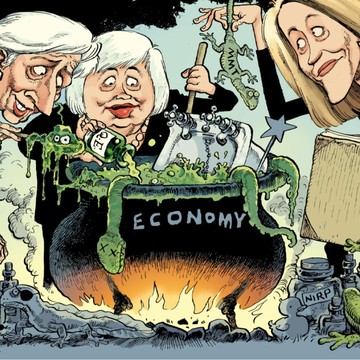
Christine Lagarde, Janet Yellen and Stephanie Kelton are among the world's best known political-economists. Lagarde, was France's Minister of Finance, Managing Director of the International Monetary Fund, and is President of the European Central Bank - all firsts for a lady. Yellen, was America's Chair of the Federal Reserve and is presumptive nominee for US Secretary of the Treasury - each a first for a lady. Kelton, was advisor to the Bernie Sanders 2016 presidential campaign, is a best-selling author, and is the most famous evangelist for modern monetary theory.And now these remarkable three are in positions of power and influence to guide the world out of socioeconomic depression. It echoes the 1999 cover of Time Magazine featuring three men -- Robert Rubin, Alan Greenspan, and Larry Summers -- with the agitated headline "The Committee to Save the World". Alas, this 38th episode of Making Sense continues the long tradition of unease found in the Western canon regarding the female triumvirate.Yes, of course The Graces -- Aglaea, Euphrosyne, and Thalia -- were lovely… but there was the rumor about them spending so much time in the underworld. No need to comment on the Harpies - a triad of vengeful, winged sisters. And who can forget The Witches of Eastwick: Susan Sarandon, Michelle Pfeiffer and Cher? They put your podcaster off cherries for the rest of the 80s. But it is Shakespeare who provides us the incomparable trio: the Weird Sisters. Better understood today as 'weyward' or 'weyard', they were the Anglo-Saxon Fates responsible for divination and predictions - what we call "economics" in modern day. Don't take this podcaster's word for it - listen to the Bard:<<Macbeth, Act 4, Scene 1:>>Round about the cauldron go;In the poison'd policies throw.Media, that report narrativeDays and nights as quantitativeSweat inflation running hotBoil thou first i' th' charmed pot.Double, double toil and trouble;Fire burn, and cauldron bubble.Soul of financial journalistIn the cauldron boil and mist;UBI of newt and bank reserves,Wool of bat and control of curves,Adder's fork and Janet's QE,Lizard's leg and Kelton's MMT,For a charm of powerful trouble,Like a hell-broth boil and bubble.Zirp, nirp toil and trouble;Economy burn, and markets bubble.----------WHY----------PART 01: What is former Federal Reserve Chair Janet Yellen all about? What can we expect from the US Treasury under her leadership? She didn't commit any MAJOR errors during her term. Was it competence, or happenstance?PART 02: Christine Lagarde, head of the European Central Bank, promises to employ trillions in euro carrots (large-scale asset purchase programs) and sticks (negative interest rates). Seems solid! But modern-day monetary policy, "is designed to... give an appearance of solidity to pure wind."PART 03: Is there any room for money in modern monetary theory? Stephanie Kelton, the best known evangelist for MMT says yes. Jeff Snider, says no. Indeed, Snider maintains that MMT is more likely to lead to deflation and disinflation than hyperinflation - just look to Japan for proof.----------WHERE----------AlhambraTube: https://bit.ly/2Xp3royApple: https://apple.co/3czMcWNDeezer: https://bit.ly/3ndoVPEiHeart: https://ihr.fm/31jq7cITuneIn: http://tun.in/pjT2ZCastro: https://bit.ly/30DMYzaGoogle: https://bit.ly/3e2Z48MSpotify: https://spoti.fi/3arP8mYPandora: https://pdora.co/2GQL3QgBreaker: https://bit.ly/2CpHAFOCastbox: https://bit.ly/3fJR5xQPodbean: https://bit.ly/2QpaDghStitcher: https://bit.ly/2C1M1GBOvercast: https://bit.ly/2YyDsLaPlayerFM: https://bit.ly/3piLtjVPocketCast: https://pca.st/encarkdtSoundCloud: https://bit.ly/3l0yFfKListenNotes: https://bit.ly/38xY7pbAmazonMusic: https://amzn.to/2UpEk2PPodcastAddict: https://bit.ly/2V39Xjr----------WHAT----------Meet the Same New Boss: https://bit.ly/39JxXAg(NY Times) Divining the Regulatory Goals of Fed Rivals: https://nyti.ms/33MtJnN(CBS News) Janet Yellen: The exit interview: https://cbsn.ws/3lHbeaB(The FT) Janet Yellen is the right woman for the times: https://on.ft.com/36FvMfeSaving Jobs Won’t Save Us From Jaws: https://bit.ly/3mUTGcc(OECD): Continued fiscal support and public health action needed to make hope of recovery a reality: https://bit.ly/36HsCYDThe Failure of the Printing Press Birthed MMT and the Printing Press: https://bit.ly/37wzozsKnapp's The State Theory of Money (1924 English translation): https://bit.ly/37z6IG0----------WHO----------Jeff Snider, Head of Global Investment Research for Alhambra Investments with Emil Kalinowski, tongue-tied by Rana Foroohar. Artwork by David "Banquo" Parkins. Podcast intro/outro is "The Mole" by Christoffer Moe Ditlevsen at Epidemic Sound.
Nov 30, 2020 • 1h 7min
The Case of the Missing Money
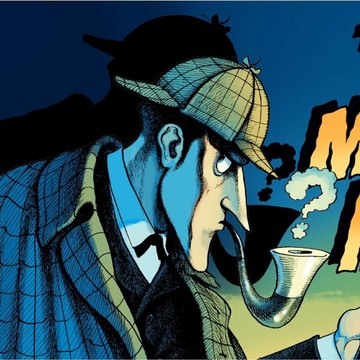
“The Case of the Missing Money” is not an Arthur Conan Doyle short-story but instead a 1976 essay by well-known economist Stephen Goldfeld who noticed that there wasn’t enough money to justify the high level of economic activity at that time. Goldfeld explained that money was traditionally a simple function of, “real gross national product, [and] the interest rates on savings and time deposits at commercial banks and on commercial paper.” But that formula was suddenly producing “whopping”, “unprecedented”, “quite unacceptable” and “conspicuous” errors that stood out “like a sore thumb”. The clue to the mystery -- which he was not able to solve at the time -- was that the formula for currency was on target BUT the one for checking accounts was unreliable. The monetary format under the auspices of public institutions -- cash and coin -- was fine. But the monetary format that was the domain of private banks -- deposit accounts -- was way short.But money WASN'T missing from the economy. Money as traditionally understood and defined by economists, THAT money was missing, but the market had broadened the definition in the 1960s and 70s by turning capital market securities into near-money, among many other evolutions. This suited the banks because, while they couldn’t print and mint official government money, they could ‘print and mint’ ledger ‘money’. Just under half a century later the roles are reversed. A modern-day Goldfeld would note that official monetary formats like bank reserves are being created at a “whopping”, “unprecedented”, “quite unacceptable” and “conspicuous” pace that stands out “like a sore thumb”. But because the vastly more valuable private bank ledger balances are way short, our global economy suffers for it. In this 37th Episode of Making Sense, Jeff Snider writes and solves three mysteries: "Japan: The Case of the Missing Inflation!", "Europe: The Case of the Missing Economy!" and "Treasury Bills! The Case of the Missing Money?----------WHY----------Part 01: How might an economy fare if there was no corona? With neither covids nor gremlins throwing sand into the gears of economic machinery, would the engine be purring or sputtering? We turn to Japan for answers.Part 02: Europe's latest PMI scores tell us the continent is falling into re-recession, perhaps not unlike Japan. Where did the momentum disappear to? The USA has better PMIs but should that give us comfort?Part 03: All debt is equal, but some debt is more equal than others. Treasury market short-term bills hold a special place in the monetary hierarchy. Does recent selling of Bills signal economic hope? Or something else more mundane?----------WHERE----------AlhambraTube: https://bit.ly/2Xp3royApple: https://apple.co/3czMcWNDeezer: https://bit.ly/3ndoVPEiHeart: https://ihr.fm/31jq7cITuneIn: http://tun.in/pjT2ZCastro: https://bit.ly/30DMYzaGoogle: https://bit.ly/3e2Z48MSpotify: https://spoti.fi/3arP8mYPandora: https://pdora.co/2GQL3QgBreaker: https://bit.ly/2CpHAFOCastbox: https://bit.ly/3fJR5xQPodbean: https://bit.ly/2QpaDghStitcher: https://bit.ly/2C1M1GBOvercast: https://bit.ly/2YyDsLaPlayerFM: https://bit.ly/3piLtjVPocketCast: https://pca.st/encarkdtSoundCloud: https://bit.ly/3l0yFfKListenNotes: https://bit.ly/38xY7pbAmazonMusic: https://amzn.to/2UpEk2PPodcastAddict: https://bit.ly/2V39Xjr----------WHAT----------QQE To The Moon, *Deflation* Returns to Japan Anyway: https://bit.ly/3q0YK0KDeflation Returns To Japan, Part 2: https://bit.ly/33qhzARA Lesson In PMIs: Relative vs. Absolute: https://bit.ly/2HHWtpUTreasury Auctions Are Anything But Sorry Because They’ve Never Been Sorry About Solly: https://bit.ly/33rsLNLJust Who Is, And Who Is Not, Selling T-Bills: https://bit.ly/2Jgw7w6----------WHO----------Jeff Snider, Head of Global Investment Research for Alhambra Investments with Emil Kalinowski, Double-Dutch auctioneer. Artwork by David Parkins. Podcast intro/outro is "The Great Ascension" by Christoffer Moe Ditlevsen at Epidemic Sound.
Nov 23, 2020 • 54min
Recession Roulette
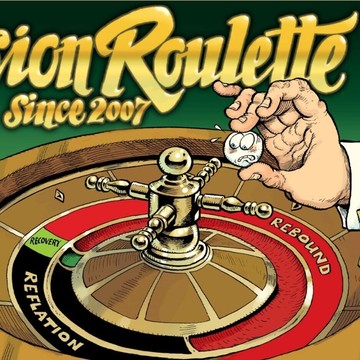
Part 01: What can the late-19th century Long Depression (1873-96) tell us about the early-21st century Silent Depression (2008-2?)? We turn to Henry George, the author of the most popular economics book of all time to learn what he got right, got wrong and how it applies to the present.Part 02: An estimated 742,000 Americans submitted initial claims for unemployment insurance in the week ending November 14. That is 'worst all-time' prior to the 2020 experience and is wholly inappropriate EIGHT MONTHS AFTER the shock. Part 03: Japanese banks are borrowing from US banks at healthy rates (reflation!). The Chinese currency is appreciating at a healthy pace (reflation!). But there are few quirks, odds, ends, bits and bobs that remain in the shadows of the eurodollar.----------WHERE----------AlhambraTube: https://bit.ly/2Xp3royApple: https://apple.co/3czMcWNDeezer: https://bit.ly/3ndoVPEiHeart: https://ihr.fm/31jq7cITuneIn: http://tun.in/pjT2ZCastro: https://bit.ly/30DMYzaGoogle: https://bit.ly/3e2Z48MSpotify: https://spoti.fi/3arP8mYPandora: https://pdora.co/2GQL3QgBreaker: https://bit.ly/2CpHAFOCastbox: https://bit.ly/3fJR5xQPodbean: https://bit.ly/2QpaDghStitcher: https://bit.ly/2C1M1GBOvercast: https://bit.ly/2YyDsLaPlayerFM: https://bit.ly/3piLtjVPocketCast: https://pca.st/encarkdtSoundCloud: https://bit.ly/3l0yFfKListenNotes: https://bit.ly/38xY7pbAmazonMusic: https://amzn.to/2UpEk2PPodcastAddict: https://bit.ly/2V39Xjr----------WHAT----------The Economic Emergency In 2020 and Beyond Won't Be Covid: https://bit.ly/332eI0RProgress and Poverty by Henry George, fifth edition (1881): https://bit.ly/390ZjBHIt Will Have To Be Our New Weekly Ritual: https://bit.ly/39aL90KMaking Sense's Review of Economic Symmetry: https://youtu.be/yGOiHqVdE_MRedistributing A Shrinking Pie Is Nothing Like A Flood; Because There Was No Flood: https://bit.ly/338Bwfg----------WHO----------Jeff Snider, Head of Global Investment Research for Alhambra Investments with Emil Kalinowski, bond villain moonlighter. Artwork by David Parkins. Podcast outro is "Things to Do" by Ballpoint at Epidemic Sound.
Nov 18, 2020 • 1h 7min
Team Disorder Wrassles the Economy
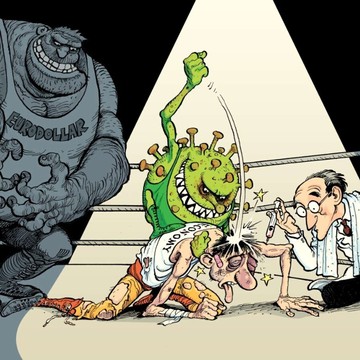
PART 01: US Treasury yields have risen on positive news, especially following the CoVo Vax news from Pfizer. Does it mean reflation has begun? Does it mean the 40-year bond bull market is dead? What do other economic accounts say?PART 02: America's unemployment rate plummeted from 14.7% to 6.9% in six short months! But it's the same 2010-15 mirage. Even the Federal Reserve doesn't believe it - that's why they edited away the idea of "full employment" in August 2020.PART 03: Communists in Beijing have a better grasp of the world economy's direction than the capitalists in Washington, London and Brussels. Beijing's 14th Five-Year Plan hints at an isolated Chinese economy, an island unto itself.----------WHERE----------AlhambraTube: https://bit.ly/2Xp3royApple: https://apple.co/3czMcWNDeezer: https://bit.ly/3ndoVPEiHeart: https://ihr.fm/31jq7cITuneIn: http://tun.in/pjT2ZCastro: https://bit.ly/30DMYzaGoogle: https://bit.ly/3e2Z48MSpotify: https://spoti.fi/3arP8mYPandora: https://pdora.co/2GQL3QgBreaker: https://bit.ly/2CpHAFOCastbox: https://bit.ly/3fJR5xQPodbean: https://bit.ly/2QpaDghStitcher: https://bit.ly/2C1M1GBOvercast: https://bit.ly/2YyDsLaPlayerFM: https://bit.ly/3piLtjVPocketCast: https://pca.st/encarkdtSoundCloud: https://bit.ly/3l0yFfKListenNotes: https://bit.ly/38xY7pbAmazonMusic: https://amzn.to/2UpEk2PPodcastAddict: https://bit.ly/2V39Xjr----------WHAT----------Vaccine-phoria: https://bit.ly/3pnufSBNo Time For Pfizer, Europe Heads Back: https://bit.ly/38GnchVWhere Is It, Chairman Powell?: https://bit.ly/3eVWiDAGood Payrolls Still Say Slowdown: https://bit.ly/32GaxaESlowdown In The Rebound; Stop Listening To Central Bankers: https://bit.ly/3psbbT1QE Didn’t JOLT (again): https://bit.ly/2UswUfwXi Jinping Is Mao, Only For His Focus to Be On Technology: https://bit.ly/35ubOnfThe Prices And Costs Of What Xi Believes He’s Got To Do: https://bit.ly/32E1SWrMoving The Bird Back Into Its (Old) Cage: https://bit.ly/35tDkB4----------WHO----------Jeff Snider, Head of Global Investment Research for Alhambra Investments with Emil Kalinowski, the slightly poorer and unsuccessful - but handsomer eurodollar podcast version of Tom Brady. Artwork by the Lance Russell of the art ring David Parkins. Podcast intro/outro is "Temple of Runha" by ELFL at Epidemic Sound.

Nov 11, 2020 • 1h 2min
Social Contract
A social contract is the agreement between government, business, wealthy and ordinary households in how to apportion the costs and benefits of society. The recently concluded (?) American election comes to mind, as a potential first step towards a new (green?) deal. In this, the 34th episode of Making Sense, Jeff Snider identifies another, less obvious freshly fashioned contract: China and its recent 14th Five-Year plan. But as Snider explains, question marks are not unique to democratic republics -- communist 'republics' have them too.The most successful, contemporary social contract your podcaster is aware of are the early-2000s Hartz Reforms in Germany. Listeners may be surprised to learn that before them today's "economic engine of Europe" was the "sick man of Europe". The decade-long assimilation of East Germany had taken a heavy toll and unemployment levels would breach more than 10% -- in 2004! The new social contract ensured employment in return for low-wage growth that favored business. So, success doesn't mean cost-free. But we've always known that; remember the story of one of humanity's original contracts?As we learn in Exodus, Moses had to introduce The Commandments twice; the stone tablets were angrily shattered in the first attempt! And by the time the second draft was presented the scene was rather tense. Firstly, God was annoyed as all get-out to see Moses again -- what, he doesn't have anything else to do other than hew stone tablets? Secondly, Moses was ill-tempered that he couldn't leave the chosen people alone for a few days before they started chugging flagons like Frank the Tank. Lastly, the people, like the teenager unable to thread the needle in a way that explained bongs and brassieres strewn across the yard to her parents, were anxiously awaiting judgement. When Moses returned for the second time the apprehensive throng gathered before him. Moses announced, "I have good news and bad news. The good news is, I got him down to ten." And a great cheer of relief issued forth. "The bad news is... adultery stays." ----------WHY----------PART 01: Does Xi Jinping, General Secretary of the Chinese Communist Party, have a BETTER understanding of the global economy than capitalists? China's newest Five-Year Plan is sending the following signals: (A) Globalization is dead. (B) The world's monetary order has broken. (C) Bye. PART 02: Central bankers in Frankfurt and London are very active lately. They want, "to help the economy", "to boost lending" and give banks "confidence" all so as to achieve their inflation targets. So far? Bubkis. Would MMT be different?PART 03: The LIBOR price-fixing scandal was called "crime of the century". Central bankers saw the crime as an opportunity to shunt aside LIBOR - a global rate that shouldn't exist for a supply of dollars that shouldn't exist. But does.----------WHERE----------AlhambraTube: https://bit.ly/2Xp3royApple: https://apple.co/3czMcWNiHeart: https://ihr.fm/31jq7cICastro: https://bit.ly/30DMYzaTuneIn: http://tun.in/pjT2ZGoogle: https://bit.ly/3e2Z48MSpotify: https://spoti.fi/3arP8mYBreaker: https://bit.ly/2CpHAFOCastbox: https://bit.ly/3fJR5xQPodbean: https://bit.ly/2QpaDghStitcher: https://bit.ly/2C1M1GBOvercast: https://bit.ly/2YyDsLaPocketCast: https://pca.st/encarkdtSoundCloud: https://bit.ly/3l0yFfKPodcastAddict: https://bit.ly/2V39Xjr----------WHAT----------China’s 1st 15-year Xi-athon: https://bit.ly/3p4vo11E$U M.S. Ep. #17 - From Bond Yields to Communism, Don’t Call It A Comeback: https://bit.ly/32kijagWashington looms large over drafting of China’s next five-year plan: https://on.ft.com/2U0T1JFIn 2020, Central Bankers Everywhere Are Being Exposed: https://bit.ly/3k8DQZmCOT B-und?: https://bit.ly/38iQaUCThere Is A Hard Truth To This Soft SOFR Arrogance: https://bit.ly/38mPBJMIMF Global Markets Monitor (03-Nov-2020): https://bit.ly/2GD911j----------WHO----------Jeff Snider, Head of Global Investment Research for Alhambra Investments with Emil Kalinowski, social-media beast of burden. Artwork by David "Mr. Universe" Parkins. Podcast intro/outro is "All Emotions" by ELFL at Epidemic Sound.
Nov 2, 2020 • 55min
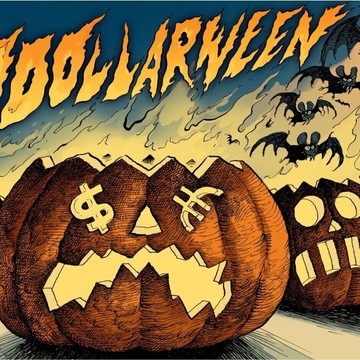
Eurodollarween
Broadcasting from the kingdom of NYE, I'm Art Bell and this is Coast to Coast AM from the great beyond. Tonight we'll talk to General Johnson Jameson from his bunker complex beneath the Saskatchewan crust, as to whether Y2K can still happen. Then... 'Do you want to believe?!' The government doesn't want you to. Chris Carter, creator of the X-Files, will tell us exactly which episodes the government didn't want you to see. Also, Rod Sterling will join me live in studio... well in a manner of speaking. Was the Twilight Zone a documentary that had to be presented to the public as fiction...?Our time on Earth is indeed, very short. No matter how old or young you are, you are a tiny slice of the cosmos' plan. You're here for a very, very short time. We all are. And the big question of course is, what happens after we end this physical life... or it is ended, however you have it. It's a big question. And October, of course, is a great time to explore that question because one of the main things you look for is some - any evidence of life beyond the physical. The supernatural, the apparition, the unexplained, the Kachina doll that seems to move around the house by itself...There's no place more spooky and unexplained than central banking and the monetary order. Let us then enter another dimension. A monetary realm. Let us turn to the wildcard line. Jeff, Emil... can you hear me? This is Art Bell. ----------WHERE----------AlhambraTube: https://bit.ly/2Xp3royApple: https://apple.co/3czMcWNiHeart: https://ihr.fm/31jq7cICastro: https://bit.ly/30DMYzaTuneIn: http://tun.in/pjT2ZGoogle: https://bit.ly/3e2Z48MSpotify: https://spoti.fi/3arP8mYBreaker: https://bit.ly/2CpHAFOCastbox: https://bit.ly/3fJR5xQPodbean: https://bit.ly/2QpaDghStitcher: https://bit.ly/2C1M1GBOvercast: https://bit.ly/2YyDsLaPocketCast: https://pca.st/encarkdtSoundCloud: https://bit.ly/3l0yFfKPodcastAddict: https://bit.ly/2V39Xjr----------WHAT----------A True Horror Tale: https://bit.ly/2TGjGvbFOMC Meeting Minutes Transcript, June 27-28, 2000: https://bit.ly/3kKDysOInnovation in the International Financial Markets by G. Dufey and I. Giddy: https://bit.ly/2HDEpNDQuarrel With Quarles Over Too Little, Not Too Many: https://bit.ly/35MshlyThe Authority Fallacy, Or The Quarles Quandary: https://bit.ly/3mDro5HVice Chair for Supervision Randal K. Quarles Remarks at the Hoover Institution: https://bit.ly/2HSETQfThe Dollar Disease Well Predates the Coronavirus: https://bit.ly/3kLVaodBIS "US dollar funding - an international perspective": https://bit.ly/31Yurxi----------WHO----------Jeff Snider, Head of Global Investment Research for Alhambra Investments with Emil Kalinowski, redrum redrum REDRUM! Artwork by the modern day Gustave Doré, David Parkins. Podcast intro/outro is "Fugent" by Lupus Nocte at Epidemic Sound.

Oct 26, 2020 • 55min
The Unit Root
The bread of this podcast hotdog features Jeff Snider putting into context how far behind the times monetary authorities are, and that all may not be as it seems with the appreciating Chinese currency. But the middle, the wiener if you will, is about the unit root. But please! Before you throw your device across the room in disgust rather than listen to yet another podcast about monomial equations and non-stationary processes realize that it's all about econometricians assuming economies do not suffer permanent shocks. The assumption that an economy must experience a recession AND a recovery.A 1993 paper by Milton Friedman averred the data showed this is how economies operated, and indeed they did -- in the post-WW2 experience. Friedman referenced an earlier work of his, from 1964, with data that stretched over a longer period that ALSO showed this. And indeed, the 1879 to 1961 period does, as long as you exclude the war cycles and 1945 to 1949 because, as Friedman put it "of their special characteristics." So, if your podcaster understands this correctly, if you exclude permanent shocks and data discontinuity then one is welcome to assume no permanent shocks.Now, your podcaster is admittedly missing something here. For one, he's missing econometricians' razor-sharp intelligence. Second, he hasn't won a Nobel in economics - not yet at least. The cost of this lacuna is that shoelaces give him trouble - all his trainers and loafers have Velcro. Simultaneous gum chewing and walking results in emergency trips to the dentist. And hot dogs are eaten with the bun in one hand and dog in the other. But the benefit of not having a towering intelligence is not falling prey to hubris. In believing intricate mathematics model out permanent shocks. In believing that it can go back to the way it was. The year 2008 was a permanent break. Like 1914. Like 1929. Like 1945. ----------WHY----------PART 01: How many years behind are regulators, from the leading edge of money? Consider, seven years AFTER the crisis, Europe introduced legislation (2014) to track securities lending. Not until 2020 did data collection begin. Besides, this, and other, money activity was brought to our attention in 1981!PART 02: The world is complex. Too complex to model. Assumptions must be made. Is the exclusion of permanent shocks to the economy a reasonable one? Rational? Plausible? Yet econometricians -- with their hands on the wheel -- say it is. That iceberg dead ahead? Not in the model.PART 03: The Chinese currency is gaining against the dollar. That SHOULD be an 'all-clear' signal that reflation, global trade, and positive momentum are in place. But we DO NOT see corroborating evidence on the People's Bank of China balance sheet. Maybe the move is an engineered feint?----------WHERE----------AlhambraTube: https://bit.ly/2Xp3royApple: https://apple.co/3czMcWNiHeart: https://ihr.fm/31jq7cICastro: https://bit.ly/30DMYzaTuneIn: http://tun.in/pjT2ZGoogle: https://bit.ly/3e2Z48MSpotify: https://spoti.fi/3arP8mYBreaker: https://bit.ly/2CpHAFOCastbox: https://bit.ly/3fJR5xQPodbean: https://bit.ly/2QpaDghStitcher: https://bit.ly/2C1M1GBOvercast: https://bit.ly/2YyDsLaPocketCast: https://pca.st/encarkdtSoundCloud: https://bit.ly/3l0yFfKPodcastAddict: https://bit.ly/2V39Xjr----------WHAT----------Central Banks Trying to Create Inflation Is An Old Laugh Line: https://bit.ly/35uS5CrInnovation in the International Financial Markets by G. Dufey and I. Giddy: https://bit.ly/2HDEpNDThe Unit Root of the Missing Monetary Monomial: https://bit.ly/37zvVBVMilton Friedman's 1964 The Monetary Studies of the National Bureau: https://bit.ly/3dQquQ2Milton Friedman's 1993 "The Plucking Model of Business Fluctuations Revisited": https://bit.ly/3dQ1OY3CNY + TIC = October 2020, or 2017?: https://bit.ly/2FTp2Qk----------WHO----------Jeff Snider, Head of Global Investment Research for Alhambra Investments with Emil Kalinowski, an innuendo. Artwork by the unit root, David Parkins. Podcast intro/outro is "Siren Screen" by Ooyy at Epidemic Sound.

Oct 19, 2020 • 1h 6min
Bank of Japan, the Monetary Recon Team
American economist and New York Times columnist, Paul Krugman entered the economics profession to follow in the footsteps of Hari Seldon, a psychohistorian living on Trantor, approximately 10,000 years into the future. Seldon, psychohistory and Trantor are all from Isaac Assimov's Foundation series published between 1951 to '53. Seldon used, "the mathematics of human behaviour to save civilisation," as Krugman put it. Admittedly, "economics is a pretty poor substitute", muses Krugman, "[b]ut I tried," he says. Many would say he's done so very successfully having been awarded the Nobel Memorial Prize in Economic Sciences for his contributions to New Trade Theory and New Economic Geography.Is he the best psychohistorian alive? Your podcaster does not think so - they hand out those Nobels like candy. No, the best is Hungarian-American George Friedman, the geopolitical strategist. As proof this podcaster offers his 2009 book titled: "The Next 100 Years". Sure, Seldon forecasted the next 1,000 for the galaxy, but still, who on Earth is offering an outlook for the next century?In Friedman's book, Japan plays a very prominent role, second only to the United States. In macroeconomics and monetary policy Japan plays a central role too. It is the scout. Recon as the Americans call it; recee to the Commonwealth. The Bank of Japan is about seven years ahead of the main central banking force. And it's waving back at everyone to, 'Stay back! Don't come this way!' Is the warning lost in translation? Is it ignored? Spanish essayist George Santayana famously noted, "Those who cannot remember the past are condemned to repeat it." But your podcaster prefers Friedman's quip that, "Studying history has little practical utility in averting past outcomes. We are doomed to repeat history whether we know it or not."----------WHY----------PART 01: Central banks regulate money supply - the Federal Reserve does not. The Fed does not control US dollars. Consider what came of Fed research Marvin Goodfriend's writings in the 1980s and 90s the eurodollar system and its enormous, ocean of offshore dollars? Nothing.PART 02: Real central banks manage money supply. Fake central banks manage inflation expectations. Central bankers cannot define, identify, quantify or convey money supply. Thus, they are reduced to observing a monetary output: inflation expectations.PART 03: The Bank of Japan has implemented radical, unorthodox policies for over two decades. The bank is seven years out in front of everyone. As scout, it has repeatedly warned the main central banking force (i.e. Britain, Europe and North America) not to follow in its path. But it's been ignored.----------WHERE----------AlhambraTube: https://bit.ly/2Xp3royApple: https://apple.co/3czMcWNiHeart: https://ihr.fm/31jq7cICastro: https://bit.ly/30DMYzaTuneIn: http://tun.in/pjT2ZGoogle: https://bit.ly/3e2Z48MSpotify: https://spoti.fi/3arP8mYBreaker: https://bit.ly/2CpHAFOCastbox: https://bit.ly/3fJR5xQPodbean: https://bit.ly/2QpaDghStitcher: https://bit.ly/2C1M1GBOvercast: https://bit.ly/2YyDsLaPocketCast: https://pca.st/encarkdtSoundCloud: https://bit.ly/3l0yFfKPodcastAddict: https://bit.ly/2V39Xjr----------WHAT----------Bond Yields Are Really Quite Easy to Understand: https://bit.ly/2T3rQNTMarvin Goodfriend's 1981 "Eurodollars" article : https://bit.ly/2HgoRyLJ. Alfred Broaddus Jr.'s 1993 'Good Luck' article: https://bit.ly/2SYebHMRandal K. Quarles' 2020 'All Clear' speech: https://bit.ly/319RuVFInflation (Expectations) Is Anything But Confusing: https://bit.ly/3j6CYE0Decoding Gauges of Inflation Expectations Is Fed’s Next Big Task: https://bloom.bg/2T3qmDmYou Need To Understand What’s Really Behind This New ‘V’, And Once Again Japan Is More Than Helpful: https://bit.ly/358weAzRaising the Inflation Target: Lessons from Japan: https://bit.ly/31f85YiWhy Did the BOJ Not Achieve the 2 Percent Inflation Target with a Time Horizon of About Two Years?: https://bit.ly/359eS6T----------WHO----------Jeff Snider, Head of Global Investment Research for Alhambra Investments with Emil Kalinowski, falling out of balance, splitting his differential and tipping the f— over. Artwork by David Parkins, the Edmund Blackadder of the lampoon trenches. Podcast intro/outro is "Tiger's Nest" by Ooyy and Smartface at Epidemic Sound.

Oct 12, 2020 • 56min
QE2 Syndrome: Making Economics Errata
As your podcaster put the finishing touches on Episode 30 word came down from up-on-high: 'We need to do errata!'Yes! Finally! This podcaster's long-time goal would be a reality: to make economics erotic again. To tell the world that economists can stimulate. To inform that offshore bankers do it in the shadows. To broadcast that technical analysis has the best curves with those plunging chart necklines. The undulating data and heaving economic activity. Going long Treasuries. Wanting yield. Oh yeah, pile that yield on... yeah, high and deep... yeah, yeah...Alas, when the new intro copy was handed in for proofreading this podcaster's confusion was laid... bare. Errata? It's all about copy-editing. And mistakes. The ancient Latin word is plural for erratum, "a correction of a published text." And indeed, in part three of this episode, the article under discussion was originally printed as, "Inflation Targeting: You Can Me Al". Wha? It should have been "Inflation Targeting: You Can Call Me Al".And that's not all. Closely related to errata is corrigenda, a plural Latin word, "for a thing to be corrected, typically an error in a printed book." Whereas an erratum is, as a general rule, issued for a production error, a corrigendum is a mistake by the author. And, in part three, Jeff Snider and I introduce Al Broaddus, the former Federal Reserve Bank of Richmond president. And when we segue to a quote about inflation targeting by Fed Governor Edward M. Gramlich, instead of attributing it to Gramlich, we continue to refer to Broaddus! We hope you forgive the erratum and the corrigendum and how we piled them high and deep in this episode... ooh, yeah.----------WHY----------PART 01: $1,200 direct cash payments is not stimulus, it is "relief aid"; these are "alms" given to the poor, needy and those harmed by both the virus and the government-mandated shutdowns of the economy. We review the state of the American labor market, European furlough programs, and conclude very difficult days are still ahead.PART 02: The SECOND round of stimulus checks is like the second round of quantitative easing. Instead of celebrating it as signaling something positive it should serve as a warning: if the first version was so good why do we need another round? Maybe the people in charge don't know what they're doing and are out of ideas? PART 03: The Federal Reserve has been fighting the last war: 1970s inflation. ----------WHERE----------AlhambraTube: https://bit.ly/2Xp3royApple: https://apple.co/3czMcWNiHeart: https://ihr.fm/31jq7cICastro: https://bit.ly/30DMYzaTuneIn: http://tun.in/pjT2ZGoogle: https://bit.ly/3e2Z48MSpotify: https://spoti.fi/3arP8mYBreaker: https://bit.ly/2CpHAFOCastbox: https://bit.ly/3fJR5xQPodbean: https://bit.ly/2QpaDghStitcher: https://bit.ly/2C1M1GBOvercast: https://bit.ly/2YyDsLaPocketCast: https://pca.st/encarkdtSoundCloud: https://bit.ly/3l0yFfKPodcastAddict: https://bit.ly/2V39Xjr----------WHAT----------What’s Job (cuts) Got To Do With It (everything): https://bit.ly/2SEKCuzWho’s Negative? The Marginal American Worker: https://bit.ly/2GGYuSSCOT Blue: OMG the 30s!!!!: https://bit.ly/2GKN0h0Inflation Targeting: You Can [Call] Me Al: https://bit.ly/2GKKqYpSpeech by Governor Edward M. Gramlich: https://bit.ly/3jT34M8----------WHO----------Jeff Snider, Head of Global Investment Research for Alhambra Investments with Emil Kalinowski, prodigious producer of errata and corrigenda. Artwork by David Parkins, the Dorothea Lange of the Silent Depression. Podcast intro/outro is "A Most Violent Man" by Lofive at Epidemic Sound.

Oct 4, 2020 • 56min
Carrying the Yen Carry Trade into the Light
Advanced-economy money centers make the world go round. In the early 1800s London and Paris funded globalization cycles. Berlin and Vienna joined the exclusive club as the century waned; New York at the start of the next. Today, East Asia's cities are members, including Singapore and Hong Kong. But the 800-pound sumo wrestler of the Pacific basin is, and has been, Tokyo. Some speculate it was there at the beginning of the eurodollar, putting overseas dollars, held by WW2 service members, to work. The subsequent, multi-decade growth miracle established Tokyo's financial prowess. The 1980s brought disturbance early - the LDC Crisis - and euphoria later - the baburu keiki. When the bubble burst Japan's dollar borrowings from US banks dropped by more than three-quarters by the end of the 1990s.Then, in 1999, the Bank of Japan implemented the first modern zero interest rate policy. In 2001, the first quantitative easing. From it's 1999 low Japan's dollar borrowings from US banks doubled by 2004. Then doubled again by 2009. Then doubled again by 2011. In part three of this, the 29th episode of Making Sense, Jeff Snider explains Tokyo's role in the rise of a synthetic dollar empire and how disturbances within it, in early-2014 and late-2017, set off the third and fourth eurodollar crises. But first, thoughts about the rising appeal of socialism and words about the modern-day monetary tension between the ideas of 18th-century Scottish philosopher David Hume and 19th-century American financier Jay Cooke.----------WHY----------PART 01: Dick Costollo said, "Me-first capitalists who think you can separate society from business are going to be the first people lined up against the wall and shot in the revolution. I'll happily provide video commentary." Jeff Snider explains the historical context of Marxist agitation against Capitalism.PART 02: Over the ages legendary philosophers have offered their thoughts on the nature money. This episode focuses on two - David Hume and Jay Locke - whose ideas, though diametrically opposed, are both true. Also, Antonio Gramsci, Milton Friedman, Nicholas Copernicus and Ice Cube weigh in.PART 03: The Wall Street Journal recently wrote, "The Japanese government bond market is rarely considered interesting. But beneath the placid surface... a thriving world of dollar funding, which offers hints about developments in China’s banking system too." Jeff Snider tells us what it means.----------WHERE----------AlhambraTube: https://bit.ly/2Xp3royApple: https://apple.co/3czMcWNiHeart: https://ihr.fm/31jq7cICastro: https://bit.ly/30DMYzaTuneIn: http://tun.in/pjT2ZGoogle: https://bit.ly/3e2Z48MSpotify: https://spoti.fi/3arP8mYBreaker: https://bit.ly/2CpHAFOCastbox: https://bit.ly/3fJR5xQPodbean: https://bit.ly/2QpaDghStitcher: https://bit.ly/2C1M1GBOvercast: https://bit.ly/2YyDsLaPocketCast: https://pca.st/encarkdtSoundCloud: https://bit.ly/3l0yFfKPodcastAddict: https://bit.ly/2V39Xjr----------WHAT----------There Have Long Been Too Many 'Have Nots' In the U.S.: https://bit.ly/3l4GX5FThe context behind Dick Costollo's Tweet: https://on.ft.com/3lddCpLWho was Antonio Gramsci: https://bit.ly/36vWcArBefore Hume, Before Carnegie: https://bit.ly/3iqcg99Ice Cube Tweet: https://bit.ly/2Gd9JCtSmall But Real Progress Carrying The Yen Carry Trade Into the Light: https://bit.ly/3nc0J0JHow the World’s Dullest Market Quietly Created a Synthetic Dollar Empire: https://on.wsj.com/3l9FV8p----------WHO----------Jeff Snider, Head of Global Investment Research for Alhambra Investments with Emil Kalinowski, owner of many red (hardcover) books. Artwork by stylograph sammurai, David Parkins. Podcast intro/outro is "STHLM-Tokyo" by Ooyy and Smartface at Epidemic Sound.

