

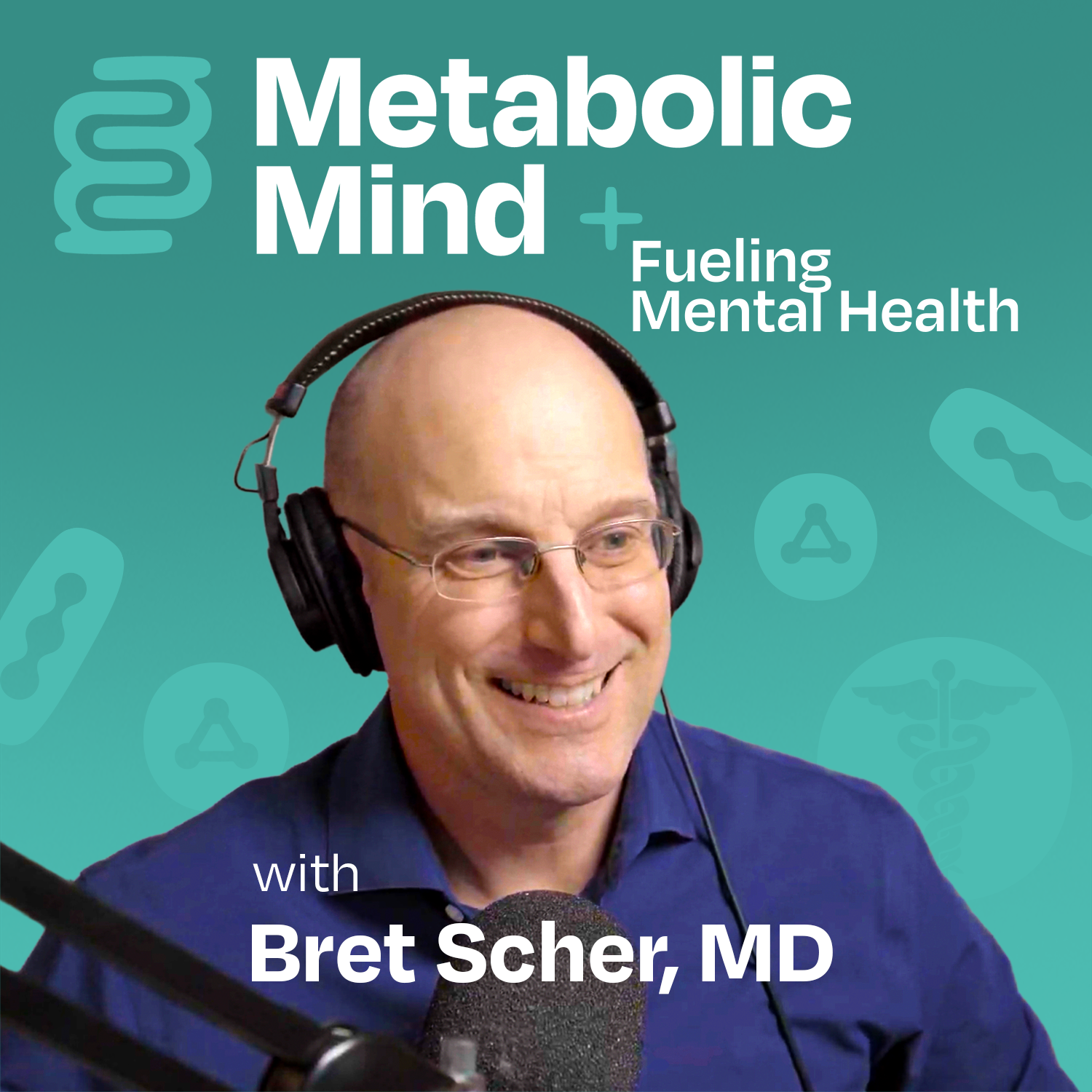
Metabolic Mind
Bret Scher
Metabolic Mind is working to transform the study and treatment of mental disorders by exploring the connection between metabolism and brain health. Metabolic interventions like ketogenic therapy are being used to treat serious mental illnesses like Bipolar Disorder, Schizophrenia, and Major Depressive Disorder. We explore topics that can help you understand how Metabolic Psychiatry might help you or a loved one treat mental disorders
Watch our videos at https://www.youtube.com/@metabolicmind
Our channel is for information only. Consult your physician before changing your lifestyle or medications.
Watch our videos at https://www.youtube.com/@metabolicmind
Our channel is for information only. Consult your physician before changing your lifestyle or medications.
Episodes
Mentioned books

Sep 22, 2025 • 52min
The 5 Lifestyle Habits That Make or Break College Mental Health
Dr. Ryan Patel, senior staff psychiatrist at The Ohio State University, shares a practical, evidence-based roadmap for helping young adults thrive during the most turbulent years of brain and behavior development.Across this deep dive, Dr. Patel explains why 18–24-year-olds are a distinct clinical population and how day-to-day habits can make or break academic performance, quality of life, and long-term health. He also discusses his work on the KIND Trial (Ketogenic Intervention in Depression) and how those results can help to inform care.In this conversation, Dr. Patel shares:Why college students require a different clinical lensAn overview of his five high-impact interventions: sleep, nutrient-dense nutrition, physical activity, mindful tech use, and stress managementHow lifestyle factors drive anxiety, depression, and dropout risk (and how to reverse course)Practical ways campuses and clinicians can scale preventionInsights from the KIND Trial: feasibility of ketosis in students and notable mood improvementsWhen and how to consider ketogenic therapy alongside standard care for depression👍 To learn more about metabolic health and mental well-being, subscribe to Metabolic Mind for more research, stories, and emerging evidence.👉For more information on the KIND study, checkout our blog: https://www.metabolicmind.org/resources/news-views/blog/perspectives-in-metabolic-psychiatry/kind-osu-keto-depression-study/👉Check out the Youth Mental Health Hub for even more information and resources: https://www.metabolicmind.org/resources/topics/youth-mental-health/Expert Featured:Dr. Ryan PatelBlog: https://u.osu.edu/emotionalfitness/Resources Mentioned:https://doi.org/10.1038/s41398-025-03544-8Free CME Clinician Trainings:Are you a clinician who would like to learn more about the science behind these therapies and how to implement them in practice? Earn CME with our growing library of courses from some of the top experts in the field including Dr. Chris Palmer, Dr. Georgia Ede, Dr. Matthew Bernstein and Dr. Bret Scher with more coming soon.Our courses have been made FREE by grants from Baszucki Group, so we can spread these powerful therapies as widely as possible. Earn CME/CNE credits:https://www.metabolicmind.org/for-clinicians/trainings-courses/?utm_medium=organic-social&utm_source=youtube&utm_campaign=cme-ytFollow our channel for more information and education from Bret Scher, MD, FACC, including interviews with leading experts in Metabolic Psychiatry.Learn more about metabolic psychiatry and find helpful resources at https://metabolicmind.org/About us:Metabolic Mind is a non-profit initiative of Baszucki Group working to transform the study and treatment of mental disorders by exploring the connection between metabolism and brain health. We leverage the science of metabolic psychiatry and personal stories to offer education, community, and hope to people struggling with mental health challenges and those who care for them.Our channel is for informational purposes only. We are not providing individual or group medical or healthcare advice nor establishing a provider-patient relationship. Many of the interventions we discuss can have dramatic or potentially dangerous effects if done without proper supervision. Consult your healthcare provider before changing your lifestyle or medications.
Sep 15, 2025 • 38min
College Mental Health Crisis: How Students Can Combat Depression & Anxiety
Are there new treatment options for college students living with depression?Mental health challenges are rising at an alarming rate among young people—and college campuses are feeling the impact. Nearly half of students report depressive symptoms, and conventional treatments aren’t enough for many of them.But what if just changing what you eat could offer new hope?A recent pilot study out of The Ohio State University found that a ketogenic diet led to rapid and clinically significant improvements in depression symptoms among college students—with a 37% average reduction in depression scores in just two weeks, increasing to a 71% increase at 12 weeks.In this conversation, lead study investigator Drew Decker sits down with Drs. Georgia Ede and Bret Scher to discuss how his group was able to help 100% of completing participants experience clinically significant improvements in depression and the real-world feasibility of implementing ketogenic therapy in student populations.In this episode you’ll hear about:The current state of mental health on college campusesThe factors contributing to the decline in youth mental healthThe potential of ketogenic therapy for major depressive disorderHow OSU students were able to stay in ketosis 73% of the timeWhat colleges can do to better support mental wellness through nutritionStudents are searching for better options and they deserve more than just symptom management. They deserve access to therapies that could improve their quality of life and transform their futures.To learn more about the KIND study, check out our other content:Mini-Documentary: https://youtu.be/RZYjV9bo0SIDr. Volek & Decker Interview: https://youtu.be/kN0kHPVM3lwBlog Post: https://www.metabolicmind.org/resources/news-views/blog/perspectives-in-metabolic-psychiatry/new-research-a-ketogenic-diet-improved-depression-in-college-students/Experts Featured:Drew Decker, OSU researcherInstagram: https://www.instagram.com/drew_d_decker/Dr. Georgia Ede, MDWebsite: https://www.diagnosisdiet.com/Book: https://www.diagnosisdiet.com/change-your-diet-change-your-mindYouTube: @GeorgiaEdeMDX: https://x.com/GeorgiaEdeMDIG: https://www.instagram.com/georgiaedemd/Resources Mentionedhttps://doi.org/10.1038/s41398-025-03544-8Free CME Clinician Trainings:Are you a clinician who would like to learn more about the science behind these therapies and how to implement them in practice? Earn CME with our growing library of courses from some of the top experts in the field including Dr. Chris Palmer, Dr. Georgia Ede, Dr. Matthew Bernstein and Dr. Bret Scher with more coming soon.Our courses have been made FREE by grants from Baszucki Group, so we can spread these powerful therapies as widely as possible. Earn CME/CNE credits:https://www.metabolicmind.org/for-clinicians/trainings-courses/?utm_medium=organic-social&utm_source=youtube&utm_campaign=cme-ytFollow our channel for more information and education from Bret Scher, MD, FACC, including interviews with leading experts in Metabolic Psychiatry.Learn more about metabolic psychiatry and find helpful resources at https://metabolicmind.org/About us:Metabolic Mind is a non-profit initiative of Baszucki Group working to transform the study and treatment of mental disorders by exploring the connection between metabolism and brain health. We leverage the science of metabolic psychiatry and personal stories to offer education, community, and hope to people struggling with mental health challenges and those who care for them.Our channel is for informational purposes only. We are not providing individual or group medical or healthcare advice nor establishing a provider-patient relationship. Many of the interventions we discuss can have dramatic or potentially dangerous effects if done without proper supervision. Consult your healthcare provider before changing your lifestyle or medications.
9 snips
Sep 11, 2025 • 34min
Keto for Depression: ~70% Improvement for College Students in New Study
Drew Decker, a research assistant at The Ohio State University, and Dr. Jeff Volek, a seasoned expert in ketogenic therapy, share exciting new findings on how a ketogenic diet dramatically improves major depression symptoms in college students. They reveal astonishing results with 100% participant response rates and a 69-71% reduction in depression scores, all while enhancing cognitive performance and metabolic health. The duo discusses the promising feasibility of these dietary interventions and their implications for mental health treatment among youth.
Sep 9, 2025 • 54min
The Ultra-Processed Food Debate: Science, Bias, & Truth
In this thought-provoking discussion, Dr. David Ludwig, a Harvard endocrinologist focused on low-carb nutrition, and investigative journalist Gary Taubes dissect the complexities surrounding ultra-processed foods. They debate the challenges of defining these foods and the biases present in nutrition research. The conversation highlights how misinterpretations of studies can skew public understanding and policy. With sharp disagreements and actionable insights, they emphasize the need for clearer scientific frameworks and a nuanced approach to food and health.
Sep 8, 2025 • 32min
Can Keto Put Schizophrenia in Remission? A Case That Shocks Experts
Moira Newiss, a Registered nutritional therapist and health coach from the UK, shares an inspiring case of using a carnivore-based ketogenic diet to help an individual battling schizophrenia. They discuss the remarkable journey from homelessness to mental stability, navigating hospital visits and medication challenges. Moira highlights the simplicity and affordability of the diet, the barriers faced, and the potential implications for mental health treatment. This transformative story challenges traditional views on nutrition's role in serious mental illness.
8 snips
Sep 2, 2025 • 45min
This Fat is Increasing Your Risk of Chronic Disease
Dr. Sean O’Mara, a physician with a diverse background from undercover narcotics to army ER doctor, dives deep into the hidden dangers of visceral fat. He explains why this type of fat is more dangerous than cholesterol, acting as an inflammatory organ that raises the risk for chronic diseases. O’Mara shares practical tips for detection and how simple lifestyle changes can significantly shrink visceral fat. He emphasizes the urgent need for awareness and proactive health measures to combat this overlooked health threat.
Aug 25, 2025 • 29min
The Truth About Treatment Resistant Depression: Part Three (Nutrition and Lifestyle)
Despite decades of therapy and pharmaceutical use, most patients with major depressive disorder fail to achieve full relief.In part three of our series, Harvard-trained psychiatrist and nutrition specialist Dr. Georgia Ede shares why lifestyle interventions are actually some of the most powerful tools we have for fighting treatment resistant depression.Drawing on years of clinical practice and pioneering work in metabolic psychiatry, Dr. Ede explains how metabolic health, sleep, exercise, circadian rhythm, and nutrition directly influence brain energy. She also breaks down why nutrition (especially carbohydrate restriction and ketogenic diets) hold unique promise for restoring brain function, even in people who haven’t responded to conventional treatments like medication and therapy.This conversation covers:How treatment-resistant depression is tied to brain metabolismThe role of exercise intensity in improving symptomsHow sleep and circadian rhythm shape brain healthHow nutrition is the #1 lever for changeClinicians, researchers, and individuals navigating depression: this conversation is a powerful reminder that patients have more power than they’ve been led to believe and deserve to know the full spectrum of tools available to them. Lifestyle interventions shouldn’t be “secondary”—they’re foundational. Check out Metabolic Mind's model for metabolic psychiatry to learn more.📌 In case you missed episode 1 and 2 of our 3-part Treatment Resistant Depression series:Episode 1: Breaking the Myth: https://youtu.be/q7jg6wlD6gYEpisode 2: TMS & Psychedelics: https://youtu.be/ay4RjudumHwExpert Featured:Dr. Georgia EdeWebsite: https://www.diagnosisdiet.com/Book: https://www.diagnosisdiet.com/change-your-diet-change-your-mindYouTube: @GeorgiaEdeMDX: https://x.com/GeorgiaEdeMDIG: https://www.instagram.com/georgiaedemd/CMEs Mentioned:Managing Major Mental Illness with Dietary Change: The New Science of Hopehttps://www.mycme.com/courses/managing-major-mental-illness-with-dietary-change-9616Brain Energy: The Metabolic Theory of Mental Illnesshttps://www.mycme.com/courses/brain-energy-the-metabolic-theory-of-mental-illness-9615Follow our channel for more information and education from Bret Scher, MD, FACC, including interviews with leading experts in Metabolic Psychiatry.Learn more about metabolic psychiatry and find helpful resources at https://metabolicmind.org/About us:Metabolic Mind is a non-profit initiative of Baszucki Group working to transform the study and treatment of mental disorders by exploring the connection between metabolism and brain health. We leverage the science of metabolic psychiatry and personal stories to offer education, community, and hope to people struggling with mental health challenges and those who care for them.Our channel is for informational purposes only. We are not providing individual or group medical or healthcare advice nor establishing a provider-patient relationship. Many of the interventions we discuss can have dramatic or potentially dangerous effects if done without proper supervision. Consult your healthcare provider before changing your lifestyle or medications.
Aug 20, 2025 • 27min
The Truth About Treatment-Resistant Depression: Part Two (TMS and Psychedelics)
Treatment-resistant depression can feel like the end of the road, but there are more options than most people realize. Beyond traditional antidepressants, a range of innovative treatments exist, including:Electroconvulsive therapy (ECT)Repetitive Transcranial magnetic stimulation (rTMS)Vagus nerve stimulationRapid-acting compounds like ketamine, esketamine, and psilocybinThese treatments are offering new hope for patients who haven’t found relief in the current standard of care.In this second part of our three-part series, Dr. Georgia Ede and Dr. Bret Scher dive deep into the science, effectiveness, and practical considerations of these approaches. You’ll learn how these treatments work, the evidence behind them, and what to expect in terms of accessibility, cost, and side effects.From the rapid results of ketamine (sometimes within a single day) to the growing public awareness of rTMS, this discussion explores both cutting-edge and underutilized options, plus the barriers that still keep many from accessing them.Watch now to discover why “treatment-resistant” doesn’t mean “hopeless,” and be on the lookout for Part 3, where we’ll explore powerful (and accessible) lifestyle and metabolic interventions that can complement or even replace medical treatments.Expert Featured:Dr. Georgia EdeWebsite: https://www.diagnosisdiet.com/Book: https://www.diagnosisdiet.com/change-your-diet-change-your-mindYouTube: @GeorgiaEdeMDX: https://x.com/GeorgiaEdeMDIG: https://www.instagram.com/georgiaedemd/Follow our channel for more information and education from Bret Scher, MD, FACC, including interviews with leading experts in Metabolic Psychiatry.Learn more about metabolic psychiatry and find helpful resources at https://metabolicmind.org/About us:Metabolic Mind is a non-profit initiative of Baszucki Group working to transform the study and treatment of mental disorders by exploring the connection between metabolism and brain health. We leverage the science of metabolic psychiatry and personal stories to offer education, community, and hope to people struggling with mental health challenges and those who care for them.Our channel is for informational purposes only. We are not providing individual or group medical or healthcare advice nor establishing a provider-patient relationship. Many of the interventions we discuss can have dramatic or potentially dangerous effects if done without proper supervision. Consult your healthcare provider before changing your lifestyle or medications.
Aug 19, 2025 • 44min
What Doctors Really Think About the ‘Miracle’ Weight Loss Drugs
GLP-1 medications like Ozempic, Wegovy, and Mounjaro have become household names, celebrated as breakthrough treatments for weight loss and obesity. But while headlines showcase dramatic before-and-after photos and promises of rapid transformation, when we step beyond the marketing, a more nuanced reality comes to light.In this candid conversation, Dr. Mark Cucuzzella, a family medicine physician, and Dr. Tro Kalayjian, board-certified in internal and obesity medicine, draw on decades of clinical experience to examine where GLP-1s truly shine, where they fall short, and why the foundation for lasting health can’t come from a prescription alone.They make the case for integrating GLP-1s into a comprehensive care plan, one that addresses nutrition, movement, sleep, and stress. Without these pillars, patients face higher risks of side effects, reduced long-term benefits, and the all-too-common rebound weight gain.In this interview, you’ll learn:Which patients benefit most from GLP-1 therapy (and which may not)How “medication stewardship” ensures safe, responsible useWhy starting at the lowest effective dose and tapering mattersHow lifestyle-first programs can match or exceed drug results at a fraction of the costDrs. Cucuzzella and Kalayjian remind us that true success lies in restoring metabolic health and building habits that last long after the injection ends. GLP-1 medications can be powerful allies, but they’re not a silver bullet. Without a foundation of nutrition, movement, sleep, and stress management, they risk becoming just another short-term fix.Expert Featured:Dr. Mark CucuzzellaWebsite: https://www.drmarksdesk.com/Dr. Tro KalayjianWebsite: https://toward.health/IG: https://www.instagram.com/doctortro/X: https://x.com/DoctorTroResources Mentioned:TOWARD: a metabolic intervention that improves addiction and binge eating symptomshttps://doi.org/10.3389/fpsyt.2025.1612551CMEs Mentioned:Managing Major Mental Illness with Dietary Change: The New Science of Hopehttps://www.mycme.com/courses/managing-major-mental-illness-with-dietary-change-9616Brain Energy: The Metabolic Theory of Mental Illnesshttps://www.mycme.com/courses/brain-energy-the-metabolic-theory-of-mental-illness-9615Follow our channel for more information and education from Bret Scher, MD, FACC, including interviews with leading experts in Metabolic Psychiatry.Learn more about metabolic psychiatry and find helpful resources at https://metabolicmind.org/About us:Metabolic Mind is a non-profit initiative of Baszucki Group working to transform the study and treatment of mental disorders by exploring the connection between metabolism and brain health. We leverage the science of metabolic psychiatry and personal stories to offer education, community, and hope to people struggling with mental health challenges and those who care for them.Our channel is for informational purposes only. We are not providing individual or group medical or healthcare advice nor establishing a provider-patient relationship. Many of the interventions we discuss can have dramatic or potentially dangerous effects if done without proper supervision. Consult your healthcare provider before changing your lifestyle or medications.
Aug 13, 2025 • 25min
The Truth About Treatment Resistant Depression: Part One (Breaking the Myth)
What is treatment resistant depression and perhaps more importantly, what does it say about the ineffective care many receive?Treatment-resistant depression (TRD) is defined as major depressive disorder (MDD) that fails to respond to at least 2 anti-depressant medications.Nearly 10% of the adult population in the U.S. experience a major depressive episode each year. The numbers in our youth are even more alarming with some studies suggesting that between 40-50% of college-aged students are living with depression.While anti-depressant medications tend to be the first-line treatment for MDD, as Dr. Georgia Ede highlights, “it’s more common not to respond to standard antidepressants than it is to respond to them.”This makes TRD the “norm”, but the name itself is misleading.It doesn’t mean your brain is broken or that you’ve run out of options. In fact, it says more about the limits of our current standard of treatments than about you.In this first episode of a three-part series, cardiologist Dr. Bret Scher sits down with Harvard-trained psychiatrist @GeorgiaEdeMD to unpack what treatment-resistant depression really means, why it’s more common than most people think, and why the term can be so harmful.In this episode, you’ll learn:How depression is diagnosedThe surprising prevalence of TRDWhy antidepressants often fail to deliver lasting reliefThe biological factors (from inflammation to metabolic dysfunction) that may be driving MDDThe importance of broadening the treatment toolbox beyond medicationIf you or someone you love has been labeled with “treatment-resistant” depression, this conversation is an important reminder: there are other options to explore, and more importantly, there is hope.Be on the lookout for episode 2 of this 3-part TRD series, where Dr. Scher and Dr. Ede cover alternative treatments and cutting-edge therapies including neurostimulation, psychedelic-assisted therapy, and metabolic interventions that could offer new hope.Expert Featured:Dr. Georgia EdeWebsite: https://www.diagnosisdiet.com/Book: https://www.diagnosisdiet.com/change-your-diet-change-your-mindYouTube: @GeorgiaEdeMDX: https://x.com/GeorgiaEdeMDIG: https://www.instagram.com/georgiaedemd/Follow our channel for more information and education from Bret Scher, MD, FACC, including interviews with leading experts in Metabolic Psychiatry.Learn more about metabolic psychiatry and find helpful resources at https://metabolicmind.org/About us:Metabolic Mind is a non-profit initiative of Baszucki Group working to transform the study and treatment of mental disorders by exploring the connection between metabolism and brain health. We leverage the science of metabolic psychiatry and personal stories to offer education, community, and hope to people struggling with mental health challenges and those who care for them.Our channel is for informational purposes only. We are not providing individual or group medical or healthcare advice nor establishing a provider-patient relationship. Many of the interventions we discuss can have dramatic or potentially dangerous effects if done without proper supervision. Consult your healthcare provider before changing your lifestyle or medications.

