

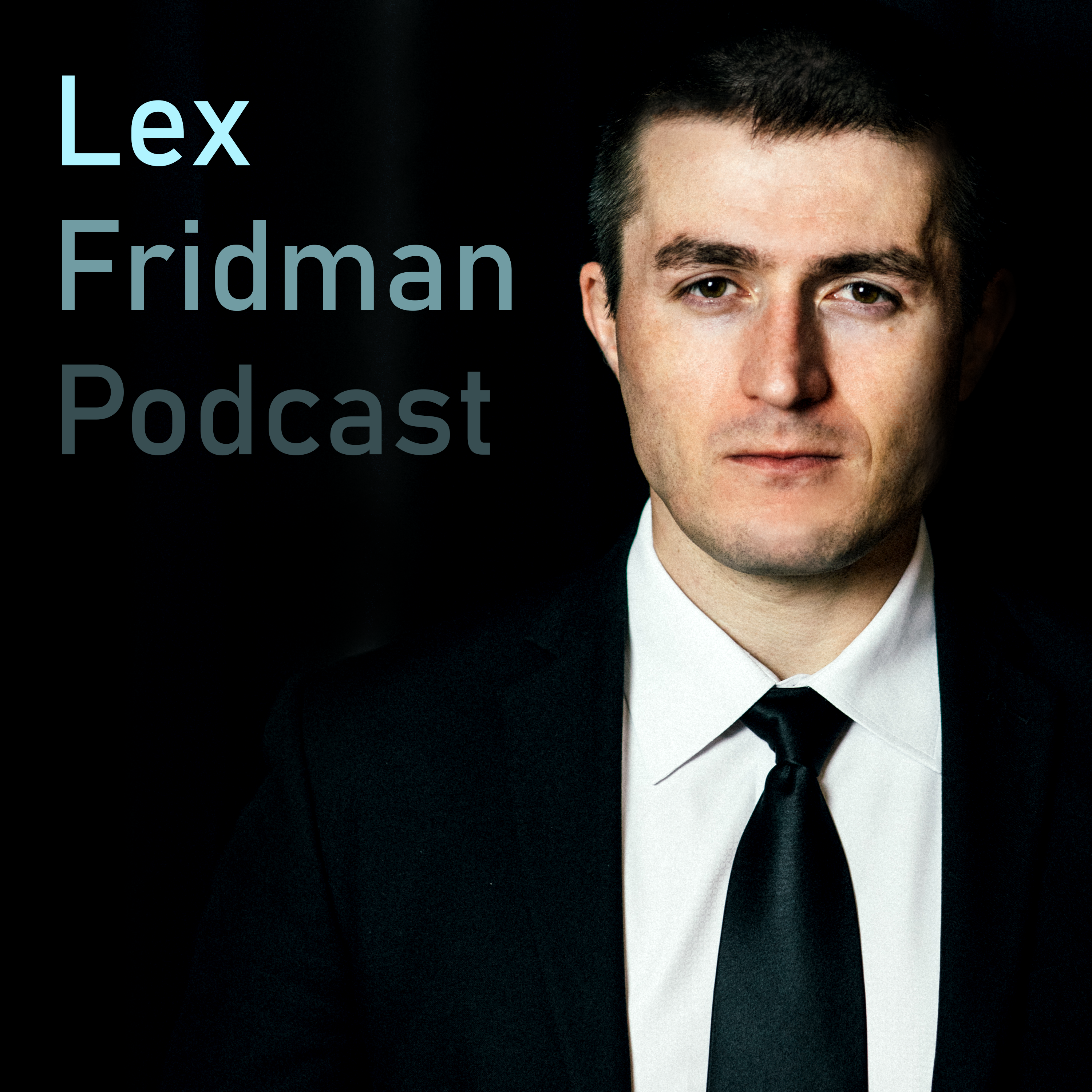
Lex Fridman Podcast
Lex Fridman
Conversations that explore technology, history, philosophy, physics, mathematics, biology, chemistry, engineering, AI, robotics, programming, music, film, art, sports, psychology, neuroscience, geopolitics, business, economics, religion, astronomy, and the human condition with people from all walks of life.
Episodes
Mentioned books

85 snips
Aug 29, 2021 • 2h 58min
#215 – Wojciech Zaremba: OpenAI Codex, GPT-3, Robotics, and the Future of AI
Wojciech Zaremba, co-founder of OpenAI, dives deep into the future of AI innovations like GPT-3 and Codex. He discusses the transformative impact of these technologies on human understanding and creativity. Zaremba tackles the Fermi paradox and our unique role in the universe, and the intersection of empathy and AI in mental health. He also sheds light on the moral responsibilities that come with AI advancements, emphasizing the importance of genuine human connection amidst technological progress.
31 snips
Aug 27, 2021 • 1h 58min
#214 – Jed Buchwald: Isaac Newton and the Philosophy of Science
Jed Buchwald, a historian and philosopher of science at Caltech, explores the intricate world of Isaac Newton and the philosophy of scientific progress. He discusses the collaborative nature of scientific breakthroughs, challenging the notion of singular heroes in science. The captivating conversation delves into Newton's experiments with light, his contentious relationships with contemporaries, and his transformative ideas during times of isolation. Buchwald weaves together historical context and modern implications, revealing the enduring legacy of Newton's genius.
33 snips
Aug 23, 2021 • 2h 30min
#213 – Barry Barish: Gravitational Waves and the Most Precise Device Ever Built
Barry Barish, a Nobel Prize-winning physicist from Caltech, shares insights on the groundbreaking LIGO detector, which measures gravitational waves, transforming our understanding of the universe. He discusses the intricacies of engineering precision and the collaborative efforts behind these significant scientific advancements. The conversation also delves into the mysteries of black holes and the implications of gravitational waves for future cosmic exploration, weaving in themes of curiosity, human achievement, and the ethical dimensions of scientific progress.
320 snips
Aug 21, 2021 • 3h 19min
#212 – Joscha Bach: Nature of Reality, Dreams, and Consciousness
Joscha Bach, a cognitive scientist and AI researcher, dives into the depths of consciousness and reality. He explores the nature of free will and how our minds shape our perception of reality through narratives. The discussion delves into dreams and their connection to awareness, suggesting that both dreams and waking life are informed by predictive models. Bach also examines the philosophical implications of consciousness in AI, questioning the distinctions between self-awareness and computational understanding, inviting listeners to ponder their own existence and agency.
75 snips
Aug 15, 2021 • 0sec
#211 – Brian Muraresku: The Secret History of Psychedelics
Brian Muraresku, author of 'The Immortality Key,' delves into the profound history of psychedelics and their impact on human consciousness. He explores how these substances shaped ancient religions and rituals, including the Eleusinian Mysteries of Greece. The conversation touches on the transformative power of psychedelics in enhancing spirituality and their therapeutic potential for mental health. Muraresku also discusses Nietzsche's views on spirituality in a modern context, questioning the essence of divinity and our quest for meaning.
151 snips
Aug 11, 2021 • 0sec
#210 – Matt Walker: Sleep
Matt Walker, a renowned sleep scientist from Berkeley and author of 'Why We Sleep,' dives into the mysteries of slumber. He discusses the evolutionary significance of sleep, its impact on creativity and memory, and the delicate balance between ambition and rest. Walker shares insights on overcoming insomnia through strategies like cognitive behavioral therapy and the role of dreams in emotional healing. He emphasizes the interconnectedness of sleep and well-being, urging listeners to prioritize quality rest for overall health.
80 snips
Aug 9, 2021 • 3h 3min
#209 – Luís and João Batalha: Fermat’s Library and the Art of Studying Papers
Luís and João Batalha, co-founders of Fermat's Library, are on a mission to improve access to scientific papers through innovative annotations. They discuss the challenges of paywalls in academic publishing and advocate for open access to foster research collaboration. The conversation delves into the importance of storytelling in science, unexpected origins of breakthroughs, and the need for reform in academic communication. They highlight how collaborative platforms can reshape knowledge sharing and emphasize the human element in the scientific process.
47 snips
Aug 8, 2021 • 2h 26min
#208 – Jeff Hawkins: The Thousand Brains Theory of Intelligence
Join Jeff Hawkins, a leading neuroscientist and co-founder of Numenta, as he unveils the fascinating 'Thousand Brains Theory of Intelligence.' He discusses how our brains operate multiple modeling systems simultaneously, shaping our understanding of the world. Hawkins emphasizes the power of prediction in cognition and explores the complex relationship between human intelligence and machine learning. Additionally, he reflects on the philosophical implications of AI, love, and compassion, and what our legacy might mean for future civilizations.
8 snips
Aug 3, 2021 • 2h 49min
#207 – Chris Duffin: The Mad Scientist of Strength
Chris Duffin, known as the Mad Scientist of Strength, is a world-record-holding strength athlete and engineer who founded Kabuki Strength. In this engaging discussion, he shares insights on achieving extraordinary lifts, the mental preparation required, and the emotional complexities of personal milestones. Duffin also emphasizes the importance of meditation and nutrition in performance, and challenges common beliefs about footwear's impact on body mechanics. His journey through struggle and transformation highlights resilience, personal growth, and redefining success in the fitness world.
30 snips
Jul 31, 2021 • 0sec
#206 – Ishan Misra: Self-Supervised Deep Learning in Computer Vision
Ishan Misra, a research scientist at FAIR, specializes in self-supervised visual learning. He explores the mechanics of computer vision and how AI can learn from data with minimal human input. The conversation dives into the limitations of traditional supervised learning and emphasizes the innovative potential of self-supervised methods. Misra also discusses the relationship between neural networks and human cognition, the significance of data augmentation, and the philosophical implications of AI consciousness, making for an enlightening dialogue on the future of machine learning.

