

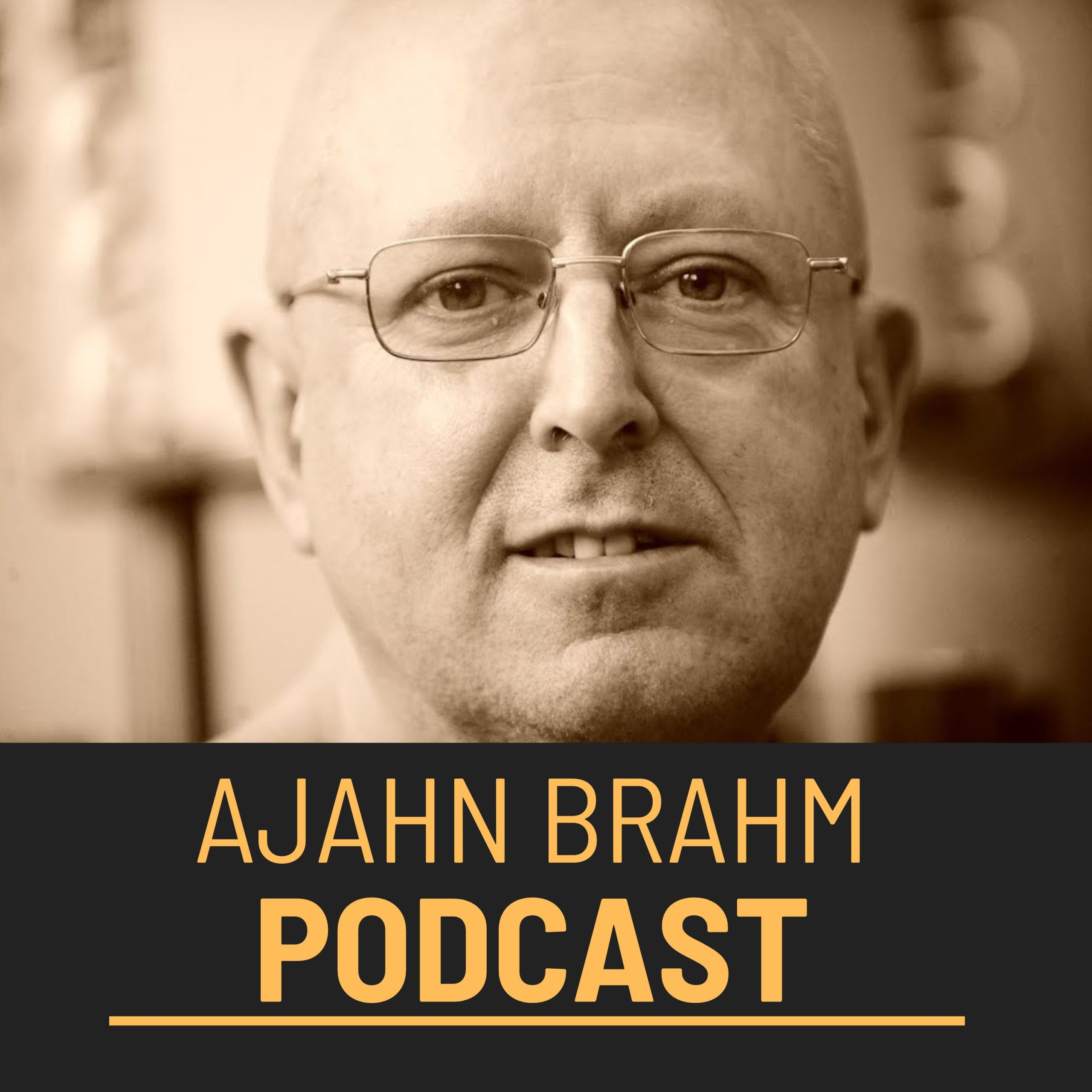
Ajahn Brahm Podcast
Everyday Dhamma Network
Remastered classic teachings of the greatest meditation master in the modern Western world - Ajahn Brahm!
Episodes
Mentioned books

Feb 15, 2026 • 1h 15min
Guided Meditation
This guided meditation by Ajahn Brahm was originally recorded in 20th January 2007. It includes a talk about some aspect of meditation followed by a 45 minute guided meditation.
This guided meditation has been remastered and published by the Everyday Dhamma Network, and will be of interest to people who have started meditation but are seeking guidance to take it deeper.
These talks by Ajahn Brahm have been recorded and made available for free distribution by the Buddhist Society of Western Australia under the Creative Commons licence. You can support the Buddhist Society of Western Australia by pledging your support via their Ko-fi page.
Feb 15, 2026 • 1h 2min
3 Aspects of Freedom
Ajahn Brahm talks about religious freedom and how it should be defined and protected. Many people use the term religious freedom to justify their control and indoctrination of others, but true religious freedom is the ability to make choices without fear or pressure. Governments need to enact laws that protect religious freedom in the same way that other rights are protected, and allow for open debate and inquiry without fear of violence or repercussions. We should not force our religions on others or restrict their freedom to choose their own beliefs Freedom is a fundamental concept in Buddhism, which values the freedom of inquiry and the freedom from emotional burdens such as fear and guilt. It is important to be able to question and argue without fear of rejection in the pursuit of truth. Forgiveness is also emphasized as a way to free oneself from the prison of the past and let go of emotional baggage. The freedom from fear and anxiety about the future is also valued in Buddhism. Ajahn Brahm talks about the concept of freedom in Buddhism, which is not defined by physical or political limitations, but rather by the freedom from inner burdens such as fear, anxiety, guilt, and anger.
—
This dhamma talk was originally recorded in 8th February 2008. It has now been remastered and published by the Everyday Dhamma Network, and will be of interest to his many fans.
These talks by Ajahn Brahm have been recorded and made available for free distribution by the Buddhist Society of Western Australia under the Creative Commons licence. You can support the Buddhist Society of Western Australia by pledging your support via their Ko-fi page.
17 snips
Feb 8, 2026 • 1h 5min
The End of 'Evil'
Thoughtful reflections on redefining 'evil' as ignorance and changing how we perceive harm. Stories like The Falling Leaves and The Emperor's Ring illustrate impermanence and why loss need not be feared. Practical advice on marriage, forgiveness, and choosing to remember the good. Tips on living fully now to shape a peaceful death and create more joy.
7 snips
Feb 1, 2026 • 1h 2min
The Real Life Teachings of Ajahn Chah
Stories about living with a master in Thai monasteries make Buddhist teachings practical and alive. Tales of illness, aging, and funerals show how to accept mortality without fear. Lessons on simplicity, equality, and letting go replace status and craving. Humorous, direct examples illustrate practical compassion, honesty, patience, and the freedom that comes from releasing attachment.
Jan 25, 2026 • 1h 1min
A Take On Fundamentalism
Ajahn Brahm discusses the Buddhist perspective on fundamentalism and its negative effects on religion and society. The Buddha's teaching states that true religion and spirituality will lead to peace and harmony, not create more problems. Ultimately, the goal is to promote harmony and peace. The problem with fundamentalism in our world is that it is based on faulty reasoning and limited experience, and it often creates an "us vs. them" mentality. One way to combat fundamentalism is to share truths and show kindness to those who hold different beliefs, as this can be disarming and can present a different perspective. Buddhists, in particular, should focus onactively helping others and publicizing their good deeds to counter the misconception that they are only concerned with their own enlightenment.
—
This dhamma talk was originally recorded using a low quality MP3 to save on file size on 7th December 2007. It has now been remastered and published by the Everyday Dhamma Network, and will be of interest to his many fans.
These talks by Ajahn Brahm have been recorded and made available for free distribution by the Buddhist Society of Western Australia under the Creative Commons licence. You can support the Buddhist Society of Western Australia by pledging your support via their Ko-fi page.
Jan 17, 2026 • 1h
Conflict!
In this talk, Ajahn Brahm discusses the topic of conflict and suggests that people should have compassion and understanding towards their enemies. He emphasizes that people should focus on criticizing the action rather than the person, as attacking the person will only lead to more conflict. The speaker also suggests seeing the good qualities in others, even if they are obnoxious, in order to create a bridge between enemies and promote reconciliation. He ends by mentioning the importance of this approach during the holiday season, when people come together with family. In conflicts, we only see the negative behaviors of the other person. If we can look deeper and find something to respect and value in them, we can create a bridge and have a better understanding. This can lead to forgiveness and letting go of the past.
---
—
This dhamma talk was originally recorded using a low quality MP3 to save on file size on 7th December 2007. It has now been remastered and published by the Everyday Dhamma Network, and will be of interest to his many fans.
These talks by Ajahn Brahm have been recorded and made available for free distribution by the Buddhist Society of Western Australia under the Creative Commons licence. You can support the Buddhist Society of Western Australia by pledging your support via their Ko-fi page.
Jan 11, 2026 • 1h
Much Ado About Nothing
Buddhism is often seen as a religion, way of life, philosophy, or practice. However, Ajahn Brahm believes that it is ultimately a practice that brings positive results in this life. The main goal of a Buddhist's spiritual life should be to cultivate kindness, patience, peace, and stopping. These qualities require effort and training, as they may not come naturally to us.
—
This dhamma talk was originally recorded using a low quality MP3 to save on file size on 7th December 2007. It has now been remastered and published by the Everyday Dhamma Network, and will be of interest to his many fans.
These talks by Ajahn Brahm have been recorded and made available for free distribution by the Buddhist Society of Western Australia under the Creative Commons licence. You can support the Buddhist Society of Western Australia by pledging your support via their Ko-fi page.
Jan 3, 2026 • 54min
The Secret
This talk explores the concept of craving and desire in Buddhist teachings, specifically how it relates to modern lifestyles. While the Buddhist teachings state that craving is the source of suffering, it is difficult to reconcile this in a world where material possessions and success are highly valued. Ajahn Brahm discusses the harm that excessive craving has caused to our planet and society, and asserts that the key to being happy is not accumulating more wealth and possessions, but rather learning to be content with what we have. He cites studies that talksabout how most people's desires for wealth and fame often lead to suffering and that these desires are often based on societal norms rather than wisdom. He gives examples of how people who live in big houses often have to work hard to maintain them and don't have time for relationships, and how being famous is actually not as great as people may think. He also shares a story about an abbot who kindly gives a burglar food and questions when he last ate. Buddhist teachings emphasize the importance of craving for the right things in life. Craving for wealth and material possessions can lead to suffering, while craving for qualities like kindness and compassion can bring true happiness.
—
This dhamma talk was originally recorded using a low quality MP3 to save on file size on 30th November 2007. It has now been remastered and published by the Everyday Dhamma Network, and will be of interest to his many fans.
These talks by Ajahn Brahm have been recorded and made available for free distribution by the Buddhist Society of Western Australia under the Creative Commons licence. You can support the Buddhist Society of Western Australia by pledging your support via their Ko-fi page.
Dec 27, 2025 • 1h
Power
This talk explores the topic of power, and the two different types of power – the power to control and the power of kindness. It delves into the dangers of becoming too focused on control and having a big ego, as well as the dysfunctional nature of exerting power over others. The Buddhist perspective is that true power comes from understanding and being kind to oneself and others, rather than trying to control and dominate.
—
This dhamma talk was originally recorded using a low quality MP3 to save on file size on 16th November 2007. It has now been remastered and published by the Everyday Dhamma Network, and will be of interest to his many fans.
These talks by Ajahn Brahm have been recorded and made available for free distribution by the Buddhist Society of Western Australia under the Creative Commons licence. You can support the Buddhist Society of Western Australia by pledging your support via their Ko-fi page.
Dec 21, 2025 • 57min
The Power of Mindfulness and Compassion
Mindfulness is a natural state of mind that we can grow by being still and gentle. In our Western culture, we have an unhealthy obsession with working hard and achieving things. But in meditation, we need to learn how to rest our minds and bodies, to be able to slow down and see what is happening in the present moment. The faster we go, the less we are able to see. This talk is about how mindfulness and kindness can help us let go of the negative thoughts and emotions that clutter our minds. By being aware and compassionate towards ourselves and others, we can break negative habits and respond to situations in a more positive and effective way.
—
This dhamma talk was originally recorded using a low quality MP3 to save on file size on 9th November 2007. It has now been remastered and published by the Everyday Dhamma Network, and will be of interest to his many fans.
These talks by Ajahn Brahm have been recorded and made available for free distribution by the Buddhist Society of Western Australia under the Creative Commons licence. You can support the Buddhist Society of Western Australia by pledging your support via their Ko-fi page.

