

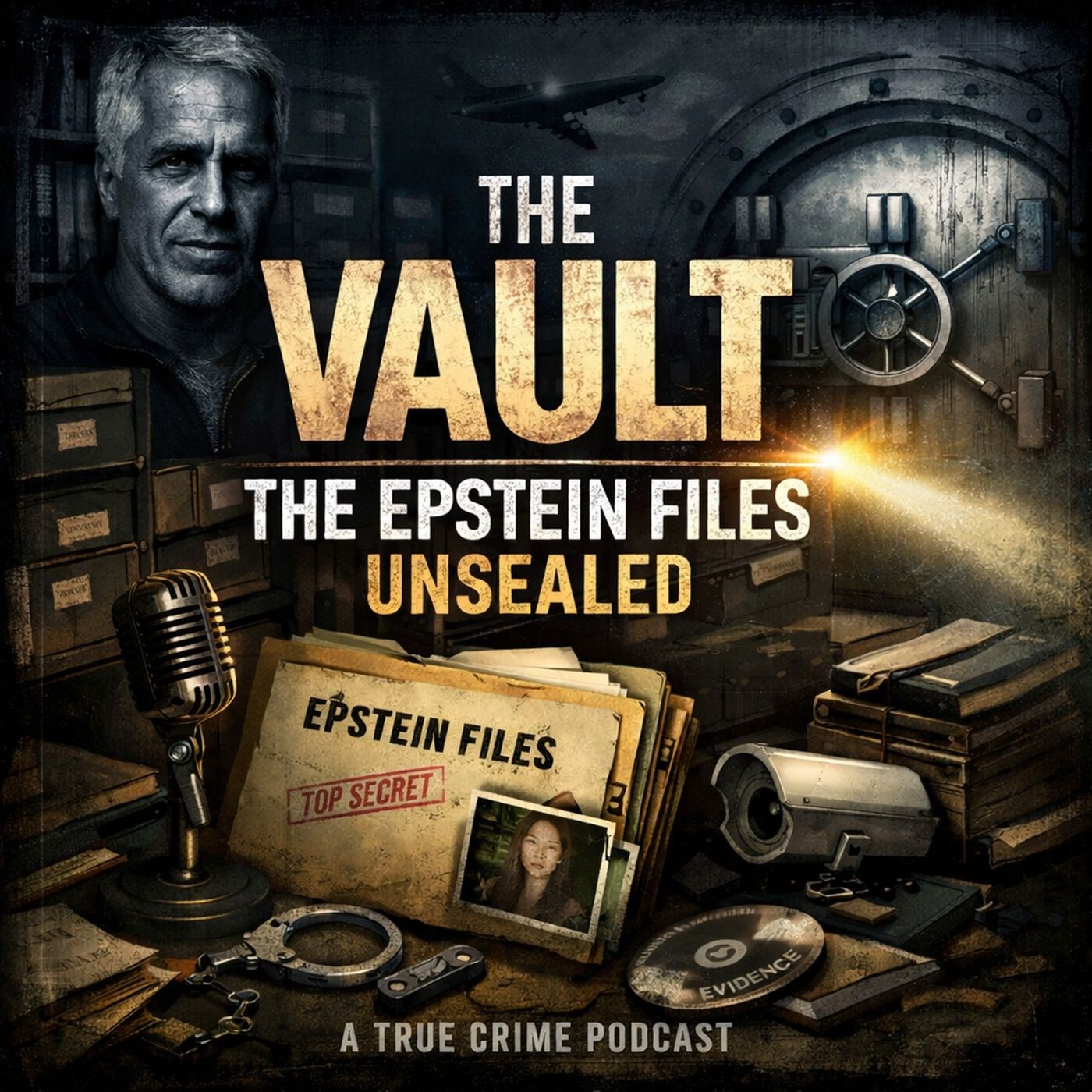
The Vault: The Epstein Files
Bobby Capucci
The Vault: The Epstein Files Unsealed is a deep-dive investigative podcast that pulls back the curtain on one of the most protected criminal networks in modern history. This series is built from the ground up on the actual paper trail—unsealed court records, depositions, exhibits, emails, and filings that were never meant to be read by the public. No pundit panels. No spin. Just the documents themselves, examined line by line, name by name, connection by connection—paired with precise, document-driven analysis that explains what the record truly shows.Each episode opens the vault on newly unsealed or long-buried Epstein files and walks listeners through what they actually reveal about power, money, influence, and the systems that failed survivors at every turn. Alongside the filings themselves, informed commentary breaks down the legal strategy, the institutional behavior, the contradictions, and the implications hiding between the lines. From judges’ orders and sealed exhibits to sworn testimony and back-channel communications, the show connects the dots the media often won’t—or can’t. Patterns emerge. Timelines collapse. Excuses fall apart.The Vault is a working archive in audio form, a living record of the Epstein case as told by the courts themselves—supplemented by rigorous analysis that provides context, challenges official narratives, and exposes where the record has been distorted, sanitized, or deliberately ignored. Every claim is grounded in filings. Every episode is anchored to the record. Listeners aren’t told what to think—they are shown what exists, what was said under oath, and what the commentary reveals about how those facts were buried, softened, or misrepresented.If you want to understand how Jeffrey Epstein was protected, who circled him, how institutions closed ranks, and why accountability keeps slipping through the cracks, The Vault: The Epstein Files Unsealed is where the record finally speaks for itself—and where the commentary ensures the documents do what no press release ever will.
Episodes
Mentioned books

Mar 20, 2026 • 12min
Police Expand Investigation Into Andrew’s Alleged Role in Epstein’s Trafficking Network (3/20/26)
The developments center on renewed police scrutiny of sexual misconduct allegations connected to Prince Andrew and Jeffrey Epstein, with authorities reviewing both historical claims and newly surfaced material. Investigators are reassessing evidence linked to Epstein’s trafficking network, including accounts from multiple women who allege inappropriate conduct during encounters tied to Epstein’s properties and social circle. These claims are being examined alongside previously known accusations, such as those brought by Virginia Giuffre, which were settled civilly without any admission of guilt.At the same time, the investigation appears to be widening in scope, with police not only revisiting sexual allegations but also examining broader questions about Andrew’s conduct and associations during his relationship with Epstein. This includes whether individuals in his orbit, including security personnel or others connected to his movements, may have witnessed or overlooked potential wrongdoing. While no new charges have been confirmed and Andrew continues to deny all allegations, the ongoing inquiry reflects increasing pressure on authorities to fully explore both past accusations and any new evidence emerging from recently released Epstein-related files.to contact me:bobbycapucci@protonmail.comsource:Met Police is probing 'whole range of sexual allegations' against Andrew, chief confirms - and says Peter Mandelson is being investigated over €500billion bailout email he sent Jeffrey Epstein | Daily Mail Online
Mar 20, 2026 • 12min
Jeffrey Epstein And The Worlds Creepiest Chess Set (3/20/26)
The chess set—reported to be custom-carved so the pieces resembled Epstein and those in his orbit—wasn't a quirky conversation piece; it was theatrical signaling. A chessboard is a compact metaphor for control, hierarchy, and calculated sacrifice; to populate it with likenesses of yourself and your closest aides weaponizes that metaphor into an assertion: you stage the board, assign the roles, and you decide who moves and who gets sacrificed. The grotesque intimacy of turning people into game pieces collapses bodies and agency into objects of play, and that deliberate objectification is itself an accusation—an unsettling admission that the house was designed as a theatre of power, not a warm home.Worse, the set functioned as social shorthand for everyone who tolerated it. Sitting across from those carved pawns, Epstein’s guests were offered a choice: read the scene or pretend not to. That so many wealthy, powerful people treated such staging as “eccentric décor” rather than a glaring red flag reveals the moral rot behind the glamour. Either they were willfully blind, or they understood perfectly and accepted their place in the performance. Either way, the chess set stands as a tiny, obscene manifesto of an ecosystem built on predation and polished denial—taste turned into cover, symbolism into complicity.to contact me:bobbycapucci@protonmail.comsource:Epstein and his young female pawns: Billionaire paedophile had chess set made that featured him as the king… and had models pose to be turned into hand-crafted pieces | Daily Mail Online
Mar 20, 2026 • 18min
Darren Indyke’s Testimony: Denials, Contradictions, and the Expanding Epstein Investigation (3/20/26)
Darren Indyke, Jeffrey Epstein’s longtime personal attorney and co-executor of his estate, testified before the House Oversight Committee that he had “no knowledge whatsoever” of Epstein’s sexual abuse or trafficking activities during the decades he worked for him. He described his role as limited to legal and business matters—handling corporate, transactional, and general legal services—and insisted he neither witnessed misconduct nor was ever informed of it. Indyke also claimed he did not socialize with Epstein and said that if he had known about the abuse, he would have immediately cut ties.During the testimony, Indyke acknowledged continuing to work with Epstein even after his 2008 conviction, saying Epstein appeared remorseful and assured him the behavior would not happen again—an explanation he now says he regrets believing. Lawmakers, particularly Democrats, reacted with skepticism, criticizing his answers as defensive and raising concerns that he and others may have helped shield Epstein’s activities. The deposition is part of a broader, increasingly contentious congressional investigation into Epstein’s network, with ongoing demands for more documents, including potential evidence such as hard drives tied to Epstein’s operations.to contact me:bobbycapucci@protonmail.comsource:Darren Indyke, Epstein attorney, denies knowledge of financier’s sexual abuse | CNN Politics
Mar 20, 2026 • 15min
The Epstein Guards’ Story vs. The Evidence: Where the Narrative Falls Apart (3/20/26)
The circumstances surrounding Jeffrey Epstein’s death raise serious questions that go far beyond simple negligence, particularly when examining the OIG interviews with correctional officers Tova Noel and Michael Thomas. Their repeated evasiveness, selective memory, and claims of ignorance about basic prison protocols are difficult to reconcile with their roles and responsibilities. These were not inexperienced employees, yet they struggled to provide clear answers about routine procedures like inmate checks and documentation. The falsification of records, combined with their failure to perform required rounds, suggests more than just carelessness—it points toward a deliberate effort to obscure what actually happened. When viewed alongside the removal of Epstein from suicide watch and the absence of a cellmate, the official explanation begins to look increasingly inadequate.Compounding these concerns are additional anomalies, including reported unexplained financial deposits linked to Noel and gaps in surveillance footage during critical periods. Each issue on its own might be dismissed, but together they form a pattern that undermines confidence in the government’s narrative. The convergence of so many failures—sleeping guards, missing footage, falsified logs, and inconsistent testimony—creates the impression of coordinated breakdown rather than coincidence. While definitive proof of complicity remains elusive, the totality of these red flags strongly suggests that the prison staff may know more than they have disclosed. At a minimum, the available evidence points to a deeply flawed account of events, leaving open the possibility that what occurred that night has not been fully or truthfully explained.to contact me:bobbycapucci@protonmail.com
Mar 20, 2026 • 12min
Justice Department Under Fire for Blocking Access to Epstein-Related DEA Case File (3/20/26)
Senator Ron Wyden has alleged that the Justice Department actively blocked the release of a confidential file tied to a federal investigation into Jeffrey Epstein’s potential involvement in drug trafficking. According to Wyden, the file is connected to a DEA probe that explored whether Epstein used drugs as part of his broader pattern of abuse, including the possibility that victims were drugged to facilitate exploitation. The senator has made clear that this was not a minor or peripheral line of inquiry, but one that federal authorities had enough information to pursue more aggressively. Instead, he argues, the material has been withheld, raising serious concerns about what investigators knew and why that information has not been made public.This development intensifies scrutiny over how Epstein was handled across multiple federal agencies, particularly whether key avenues of investigation were ignored or deliberately suppressed. Wyden’s push for access suggests that the blocked file could contain significant details about Epstein’s methods and the extent of federal awareness long before his final arrest. The refusal to release the material feeds directly into broader concerns about transparency, reinforcing the perception that critical aspects of Epstein’s criminal network—and the government’s response to it—remain concealed.to contact me:bobbycapucci@protonmail.comsource:Justice Department blocked release of secret Epstein drug probe file, Sen. Ron Wyden says - CBS News
Mar 20, 2026 • 45min
Mega Edition: Day Number 3 Of The Ghislaine Maxwell Trial (3/20/26)
The Ghislaine Maxwell trial, held in late 2021 in federal court in New York, centered on her alleged role as Jeffrey Epstein’s co-conspirator in a sex trafficking ring that preyed on underage girls for over a decade. Prosecutors accused Maxwell of grooming minors, gaining their trust, and then facilitating or participating in their abuse at the hands of Epstein between 1994 and 2004. The government’s case included testimony from four women, some of whom described in painful detail how Maxwell recruited them as teenagers under the guise of mentorship or financial assistance, only to manipulate them into sexual encounters with Epstein. Flight logs, photographs, and household staff testimony were used to place Maxwell at various Epstein properties and show her long-standing involvement in his lifestyle and operations.Maxwell’s defense team attempted to cast her as a scapegoat, arguing that she was being punished for Epstein’s crimes following his 2019 death in federal custody. They challenged the credibility of the accusers, questioned their motives, and pointed to the time gaps between the alleged crimes and the trial. Ultimately, the jury found Maxwell guilty on five of six federal charges, including sex trafficking of a minor, and not guilty on one count of enticing a minor to travel for illegal sex acts. The conviction marked a rare moment of accountability in a case that had long been plagued by cover-ups, prosecutorial failures, and elite protection. It also opened the door to further scrutiny of Epstein’s network, although many key figures remain untouched.to contact me:bobbycapucci@protonmail.com
Mar 20, 2026 • 45min
Mega Edition: Day Number 2 Of The Ghislaine Maxwell Trial (3/20/26)
The Ghislaine Maxwell trial, held in late 2021 in federal court in New York, centered on her alleged role as Jeffrey Epstein’s co-conspirator in a sex trafficking ring that preyed on underage girls for over a decade. Prosecutors accused Maxwell of grooming minors, gaining their trust, and then facilitating or participating in their abuse at the hands of Epstein between 1994 and 2004. The government’s case included testimony from four women, some of whom described in painful detail how Maxwell recruited them as teenagers under the guise of mentorship or financial assistance, only to manipulate them into sexual encounters with Epstein. Flight logs, photographs, and household staff testimony were used to place Maxwell at various Epstein properties and show her long-standing involvement in his lifestyle and operations.Maxwell’s defense team attempted to cast her as a scapegoat, arguing that she was being punished for Epstein’s crimes following his 2019 death in federal custody. They challenged the credibility of the accusers, questioned their motives, and pointed to the time gaps between the alleged crimes and the trial. Ultimately, the jury found Maxwell guilty on five of six federal charges, including sex trafficking of a minor, and not guilty on one count of enticing a minor to travel for illegal sex acts. The conviction marked a rare moment of accountability in a case that had long been plagued by cover-ups, prosecutorial failures, and elite protection. It also opened the door to further scrutiny of Epstein’s network, although many key figures remain untouched.to contact me:bobbycapucci@protonmail.com
Mar 20, 2026 • 27min
Mega Edition: Day Number 1 Of The Ghislaine Maxwell Trial (3/19/26)
The Ghislaine Maxwell trial, held in late 2021 in federal court in New York, centered on her alleged role as Jeffrey Epstein’s co-conspirator in a sex trafficking ring that preyed on underage girls for over a decade. Prosecutors accused Maxwell of grooming minors, gaining their trust, and then facilitating or participating in their abuse at the hands of Epstein between 1994 and 2004. The government’s case included testimony from four women, some of whom described in painful detail how Maxwell recruited them as teenagers under the guise of mentorship or financial assistance, only to manipulate them into sexual encounters with Epstein. Flight logs, photographs, and household staff testimony were used to place Maxwell at various Epstein properties and show her long-standing involvement in his lifestyle and operations.Maxwell’s defense team attempted to cast her as a scapegoat, arguing that she was being punished for Epstein’s crimes following his 2019 death in federal custody. They challenged the credibility of the accusers, questioned their motives, and pointed to the time gaps between the alleged crimes and the trial. Ultimately, the jury found Maxwell guilty on five of six federal charges, including sex trafficking of a minor, and not guilty on one count of enticing a minor to travel for illegal sex acts. The conviction marked a rare moment of accountability in a case that had long been plagued by cover-ups, prosecutorial failures, and elite protection. It also opened the door to further scrutiny of Epstein’s network, although many key figures remain untouched.to contact me:bobbycapucci@protonmail.com
Mar 20, 2026 • 12min
Epstein Survivors And Congress Call for a Forensic Audit of The Epstein Files (3/19/26)
Congressional pressure to ensure the integrity of the government’s compiled Jeffrey Epstein files has grown alongside efforts to release those records publicly. Survivors of Epstein’s sex-trafficking crimes and several Democratic lawmakers have formally asked the Justice Department’s inspector general to audit the chain of custody for the Epstein case files, seeking to confirm that none of the records have been tampered with, altered, or withheld before they are disclosed to the public. Advocates including survivors have specifically raised concerns that materials might have been “scrubbed, softened, or quietly removed” prior to their scheduled release, heightening demands for a third-party review to protect transparency and trust in the process.The push comes as part of broader congressional and judicial developments around the release of Epstein-related documents. Recently passed legislation — the Epstein Files Transparency Act — is compelling the Department of Justice to make unclassified grand jury records and investigative materials publicly accessible by mid-December, and federal judges have begun ordering the unsealing of transcripts from both Epstein’s 2019 case and related investigations, including those involving Ghislaine Maxwell. These moves reflect bipartisan political focus on exposing the full scope of Epstein’s operations and addressing past secrecy, while also fueling debates in Congress and the public about ensuring that the files released are complete, authentic, and untouched.to contact me:bobbycapucci@protonmail.comsource:Epstein survivors and Senate Democrats ask for audit to determine if Epstein files have been "tampered with" - CBS News
Mar 20, 2026 • 15min
The DOJ’s Surveillance of Julie K. Brown Exposed By The Epstein Files (3/19/26)
The newly unsealed Epstein files reveal a disturbing inversion of priorities: while Julie K. Brown was digging into the crimes and institutional failures surrounding Jeffrey Epstein, federal authorities were quietly tracking the reporter instead of aggressively pursuing the predator and his enablers. The documents indicate that Brown’s reporting triggered scrutiny from law enforcement, not as a protected exercise of the press, but as something to be monitored. That reality undercuts years of official messaging that the government was committed to transparency and accountability; it suggests a reflex to contain reputational damage and control narrative flow rather than confront the substance of the allegations she was exposing.This episode casts the U.S. Department of Justice in an especially harsh light. At a moment when the public interest demanded urgency—subpoenas, indictments, and a full accounting of Epstein’s network—the DOJ appears to have treated a journalist doing the work of accountability as a potential problem to manage. Watching the messenger while the crime scene sat largely untouched is not a mistake; it’s a choice. And it reinforces the perception that, when elite interests are threatened, federal power too often pivots toward surveillance and suppression instead of justice—leaving victims without answers and the public with yet another reason to doubt the department’s stated commitment to the truthto contact me:bobbycapucci@protonmail.com

