

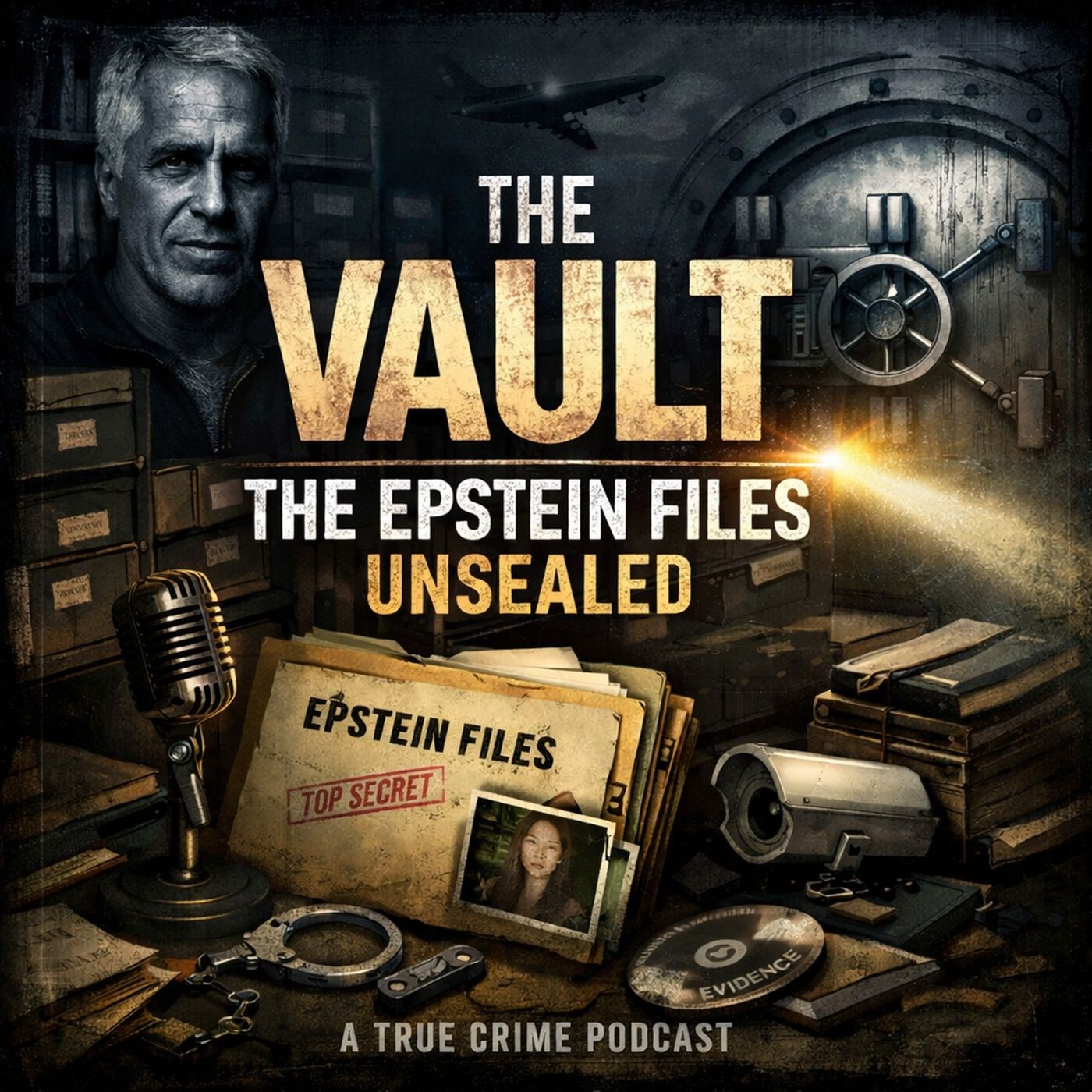
The Vault: The Epstein Files
Bobby Capucci
The Vault: The Epstein Files Unsealed is a deep-dive investigative podcast that pulls back the curtain on one of the most protected criminal networks in modern history. This series is built from the ground up on the actual paper trail—unsealed court records, depositions, exhibits, emails, and filings that were never meant to be read by the public. No pundit panels. No spin. Just the documents themselves, examined line by line, name by name, connection by connection—paired with precise, document-driven analysis that explains what the record truly shows.Each episode opens the vault on newly unsealed or long-buried Epstein files and walks listeners through what they actually reveal about power, money, influence, and the systems that failed survivors at every turn. Alongside the filings themselves, informed commentary breaks down the legal strategy, the institutional behavior, the contradictions, and the implications hiding between the lines. From judges’ orders and sealed exhibits to sworn testimony and back-channel communications, the show connects the dots the media often won’t—or can’t. Patterns emerge. Timelines collapse. Excuses fall apart.The Vault is a working archive in audio form, a living record of the Epstein case as told by the courts themselves—supplemented by rigorous analysis that provides context, challenges official narratives, and exposes where the record has been distorted, sanitized, or deliberately ignored. Every claim is grounded in filings. Every episode is anchored to the record. Listeners aren’t told what to think—they are shown what exists, what was said under oath, and what the commentary reveals about how those facts were buried, softened, or misrepresented.If you want to understand how Jeffrey Epstein was protected, who circled him, how institutions closed ranks, and why accountability keeps slipping through the cracks, The Vault: The Epstein Files Unsealed is where the record finally speaks for itself—and where the commentary ensures the documents do what no press release ever will.
Episodes
Mentioned books

Apr 1, 2026 • 22min
Mega Edition: Danielle Bensky And The Lawsuit Filed Against Indyke And Kahn (Part 5-6) (4/1/26)
Danielle Bensky, along with other Jeffrey Epstein survivors, filed a lawsuit targeting Epstein’s estate and its co-executors, Darren Indyke and Richard Kahn, accusing them of failing in their fiduciary duties while overseeing the estate. The suit alleges that Indyke and Kahn—both longtime Epstein confidants—were not neutral administrators but individuals deeply tied to Epstein’s financial and personal operations, raising serious concerns about conflicts of interest. According to the claims, the estate was structured and managed in a way that prioritized protecting Epstein’s wealth and shielding key information, rather than fully compensating victims or facilitating transparency. Survivors argue that the executors had knowledge of Epstein’s activities or, at minimum, were willfully blind, and yet continued to control assets derived from those same abuses.The lawsuit further contends that the handling of claims through the estate’s compensation program was fundamentally flawed, with survivors alleging delays, limitations, and mechanisms that reduced payouts while insulating the estate from deeper scrutiny. Bensky and others argue that this process allowed Indyke and Kahn to maintain control over critical records and financial pathways that could expose the broader network surrounding Epstein. At its core, the case challenges whether justice can be achieved when the very individuals tasked with administering restitution are themselves alleged to be embedded in the system that enabled the abuse, turning what should have been a vehicle for accountability into another layer of protection for Epstein’s legacy.to contact me:bobbycapucci@protonmail.com
Apr 1, 2026 • 22min
Mega Edition: Danielle Bensky And The Lawsuit Filed Against Indyke And Kahn (Part 3-4) (4/1/26)
Danielle Bensky, along with other Jeffrey Epstein survivors, filed a lawsuit targeting Epstein’s estate and its co-executors, Darren Indyke and Richard Kahn, accusing them of failing in their fiduciary duties while overseeing the estate. The suit alleges that Indyke and Kahn—both longtime Epstein confidants—were not neutral administrators but individuals deeply tied to Epstein’s financial and personal operations, raising serious concerns about conflicts of interest. According to the claims, the estate was structured and managed in a way that prioritized protecting Epstein’s wealth and shielding key information, rather than fully compensating victims or facilitating transparency. Survivors argue that the executors had knowledge of Epstein’s activities or, at minimum, were willfully blind, and yet continued to control assets derived from those same abuses.The lawsuit further contends that the handling of claims through the estate’s compensation program was fundamentally flawed, with survivors alleging delays, limitations, and mechanisms that reduced payouts while insulating the estate from deeper scrutiny. Bensky and others argue that this process allowed Indyke and Kahn to maintain control over critical records and financial pathways that could expose the broader network surrounding Epstein. At its core, the case challenges whether justice can be achieved when the very individuals tasked with administering restitution are themselves alleged to be embedded in the system that enabled the abuse, turning what should have been a vehicle for accountability into another layer of protection for Epstein’s legacy.to contact me:bobbycapucci@protonmail.com
Apr 1, 2026 • 23min
Mega Edition: Danielle Bensky And The Lawsuit Filed Against Indyke And Kahn (Part 1-2) (3/31/26)
Danielle Bensky, along with other Jeffrey Epstein survivors, filed a lawsuit targeting Epstein’s estate and its co-executors, Darren Indyke and Richard Kahn, accusing them of failing in their fiduciary duties while overseeing the estate. The suit alleges that Indyke and Kahn—both longtime Epstein confidants—were not neutral administrators but individuals deeply tied to Epstein’s financial and personal operations, raising serious concerns about conflicts of interest. According to the claims, the estate was structured and managed in a way that prioritized protecting Epstein’s wealth and shielding key information, rather than fully compensating victims or facilitating transparency. Survivors argue that the executors had knowledge of Epstein’s activities or, at minimum, were willfully blind, and yet continued to control assets derived from those same abuses.The lawsuit further contends that the handling of claims through the estate’s compensation program was fundamentally flawed, with survivors alleging delays, limitations, and mechanisms that reduced payouts while insulating the estate from deeper scrutiny. Bensky and others argue that this process allowed Indyke and Kahn to maintain control over critical records and financial pathways that could expose the broader network surrounding Epstein. At its core, the case challenges whether justice can be achieved when the very individuals tasked with administering restitution are themselves alleged to be embedded in the system that enabled the abuse, turning what should have been a vehicle for accountability into another layer of protection for Epstein’s legacy.to contact me:bobbycapucci@protonmail.com
Apr 1, 2026 • 12min
The United States And It's Response Brief To Maxwell's Motion For Appeal (Part 4) (3/31/26)
When the government files a brief in response to a defendant's appeal, its function is to present arguments and legal reasoning supporting the lower court's decision and opposing the defendant's arguments for overturning that decision. This brief serves to defend the conviction or ruling made against the defendant in the lower court.Typically, the government's brief will address the legal issues raised by the defendant on appeal, analyze relevant case law, statutes, and constitutional principles, and argue why the lower court's decision should be upheld. It may also address any procedural or evidentiary issues raised by the defendant.In essence, the government's brief is a key component of the appellate process, where both sides present their arguments to the appellate court, which will ultimately decide whether to affirm, reverse, or modify the lower court's decision.In this episode, we begin our look at the United States Governments brief in response to Ghislaine Maxwell's attempt at appealing her sentence.to contact me:bobbycapucci@protonmail.comsource:gov.uscourts.ca2.57831.79.0_1.pdf (courtlistener.com)
Apr 1, 2026 • 16min
The United States And It's Response Brief To Maxwell's Motion For Appeal (Part 3) (3/31/26)
When the government files a brief in response to a defendant's appeal, its function is to present arguments and legal reasoning supporting the lower court's decision and opposing the defendant's arguments for overturning that decision. This brief serves to defend the conviction or ruling made against the defendant in the lower court.Typically, the government's brief will address the legal issues raised by the defendant on appeal, analyze relevant case law, statutes, and constitutional principles, and argue why the lower court's decision should be upheld. It may also address any procedural or evidentiary issues raised by the defendant.In essence, the government's brief is a key component of the appellate process, where both sides present their arguments to the appellate court, which will ultimately decide whether to affirm, reverse, or modify the lower court's decision.In this episode, we begin our look at the United States Governments brief in response to Ghislaine Maxwell's attempt at appealing her sentence.to contact me:bobbycapucci@protonmail.comsource:gov.uscourts.ca2.57831.79.0_1.pdf (courtlistener.com)
Apr 1, 2026 • 12min
The United States And It's Response Brief To Maxwell's Motion For Appeal (Part 2) (3/31/26)
When the government files a brief in response to a defendant's appeal, its function is to present arguments and legal reasoning supporting the lower court's decision and opposing the defendant's arguments for overturning that decision. This brief serves to defend the conviction or ruling made against the defendant in the lower court.Typically, the government's brief will address the legal issues raised by the defendant on appeal, analyze relevant case law, statutes, and constitutional principles, and argue why the lower court's decision should be upheld. It may also address any procedural or evidentiary issues raised by the defendant.In essence, the government's brief is a key component of the appellate process, where both sides present their arguments to the appellate court, which will ultimately decide whether to affirm, reverse, or modify the lower court's decision.In this episode, we begin our look at the United States Governments brief in response to Ghislaine Maxwell's attempt at appealing her sentence.to contact me:bobbycapucci@protonmail.comsource:gov.uscourts.ca2.57831.79.0_1.pdf (courtlistener.com)
Mar 31, 2026 • 12min
The United States And It's Response Brief To Maxwell's Motion For Appeal (Part 1) (3/31/26)
When the government files a brief in response to a defendant's appeal, its function is to present arguments and legal reasoning supporting the lower court's decision and opposing the defendant's arguments for overturning that decision. This brief serves to defend the conviction or ruling made against the defendant in the lower court.Typically, the government's brief will address the legal issues raised by the defendant on appeal, analyze relevant case law, statutes, and constitutional principles, and argue why the lower court's decision should be upheld. It may also address any procedural or evidentiary issues raised by the defendant.In essence, the government's brief is a key component of the appellate process, where both sides present their arguments to the appellate court, which will ultimately decide whether to affirm, reverse, or modify the lower court's decision.In this episode, we begin our look at the United States Governments brief in response to Ghislaine Maxwell's attempt at appealing her sentence.to contact me:bobbycapucci@protonmail.comsource:gov.uscourts.ca2.57831.79.0_1.pdf (courtlistener.com)
Mar 31, 2026 • 12min
Collaboration or Capitulation: The DOJ’s Colloquy With Epstein’s Lawyers Exposed (Part 2) (3/31/26)
The back-and-forth between prosecutors in the Southern District of Florida and Jeffrey Epstein’s legal team during the negotiation of the non-prosecution agreement reads less like an adversarial process and more like a prolonged, collaborative dialogue aimed at reaching terms acceptable to Epstein himself. His attorneys were not simply responding to charges—they were actively shaping the framework of the deal, pushing for concessions on scope, immunity, and exposure not just for Epstein, but for potential co-conspirators. Instead of drawing hard lines, federal prosecutors engaged in a sustained colloquy that entertained defense proposals, adjusted positions, and ultimately bent toward a resolution that prioritized closure over accountability. The result was an agreement that allowed Epstein to plead to minor state charges while securing sweeping federal immunity, effectively shutting down a far broader investigation before it could fully develop.What makes this even more damning is how the Department of Justice appeared willing—if not eager—to accommodate Epstein’s demands at nearly every turn. Rather than treating him as the central figure in a sprawling abuse network, prosecutors treated him like a negotiating partner whose preferences needed to be satisfied. Victims were sidelined, key investigative avenues were abandoned, and the final agreement was structured in a way that insulated not only Epstein but others in his orbit from federal scrutiny. This was not a failure of resources or a lack of evidence—it was a conscious decision to resolve the case on terms dictated by the defense. The DOJ’s handling of this process reflects a systemic breakdown in prosecutorial duty, where the pursuit of justice was subordinated to expediency and deference to power, leaving behind one of the most glaring examples of institutional failure in modern federal criminal practice.to contact me:bobbycapucci@protonmail.comsource:EFTA00226107.pdf
Mar 31, 2026 • 12min
Collaboration or Capitulation: The DOJ’s Colloquy With Epstein’s Lawyers Exposed (Part 1) (3/31/26)
The back-and-forth between prosecutors in the Southern District of Florida and Jeffrey Epstein’s legal team during the negotiation of the non-prosecution agreement reads less like an adversarial process and more like a prolonged, collaborative dialogue aimed at reaching terms acceptable to Epstein himself. His attorneys were not simply responding to charges—they were actively shaping the framework of the deal, pushing for concessions on scope, immunity, and exposure not just for Epstein, but for potential co-conspirators. Instead of drawing hard lines, federal prosecutors engaged in a sustained colloquy that entertained defense proposals, adjusted positions, and ultimately bent toward a resolution that prioritized closure over accountability. The result was an agreement that allowed Epstein to plead to minor state charges while securing sweeping federal immunity, effectively shutting down a far broader investigation before it could fully develop.What makes this even more damning is how the Department of Justice appeared willing—if not eager—to accommodate Epstein’s demands at nearly every turn. Rather than treating him as the central figure in a sprawling abuse network, prosecutors treated him like a negotiating partner whose preferences needed to be satisfied. Victims were sidelined, key investigative avenues were abandoned, and the final agreement was structured in a way that insulated not only Epstein but others in his orbit from federal scrutiny. This was not a failure of resources or a lack of evidence—it was a conscious decision to resolve the case on terms dictated by the defense. The DOJ’s handling of this process reflects a systemic breakdown in prosecutorial duty, where the pursuit of justice was subordinated to expediency and deference to power, leaving behind one of the most glaring examples of institutional failure in modern federal criminal practice.to contact me:bobbycapucci@protonmail.comsource:EFTA00226107.pdf
Mar 31, 2026 • 20min
UBS, Epstein, and Maxwell: How a Global Bank Helped Finance a Fugitive Hideout (3/31/26)
Justice Department records reveal that UBS facilitated a series of financial transactions that enabled Ghislaine Maxwell to purchase a secluded New Hampshire property where she later hid before her arrest in 2020. Even after receiving a grand jury subpoena tied to a federal sex trafficking investigation, the bank processed a transfer of nearly $8 million from a trust connected to Maxwell. That money was then routed through multiple accounts before being used to acquire the estate known as “Tucked Away.” The timing of these transactions—occurring while Maxwell was under increasing scrutiny—raises serious concerns about how closely the bank monitored or responded to obvious risk factors.The broader financial trail shows that UBS had managed significant assets for Maxwell over an extended period, continuing to facilitate transactions even after Epstein’s arrest and as investigations intensified. The property purchase was later flagged by authorities as potentially involving proceeds linked to trafficking activity, underscoring the scale and complexity of the financial network surrounding Epstein and Maxwell. Altogether, the situation highlights how major institutions continued servicing high-risk clients despite mounting red flags, allowing critical financial movements to proceed unchecked during a pivotal moment in the investigation.to contact me:bobbycapucci@protonmail.comsource:Exclusive: How UBS helped Epstein accomplice Maxwell buy her hideout, 'Tucked Away' | Reuters

