

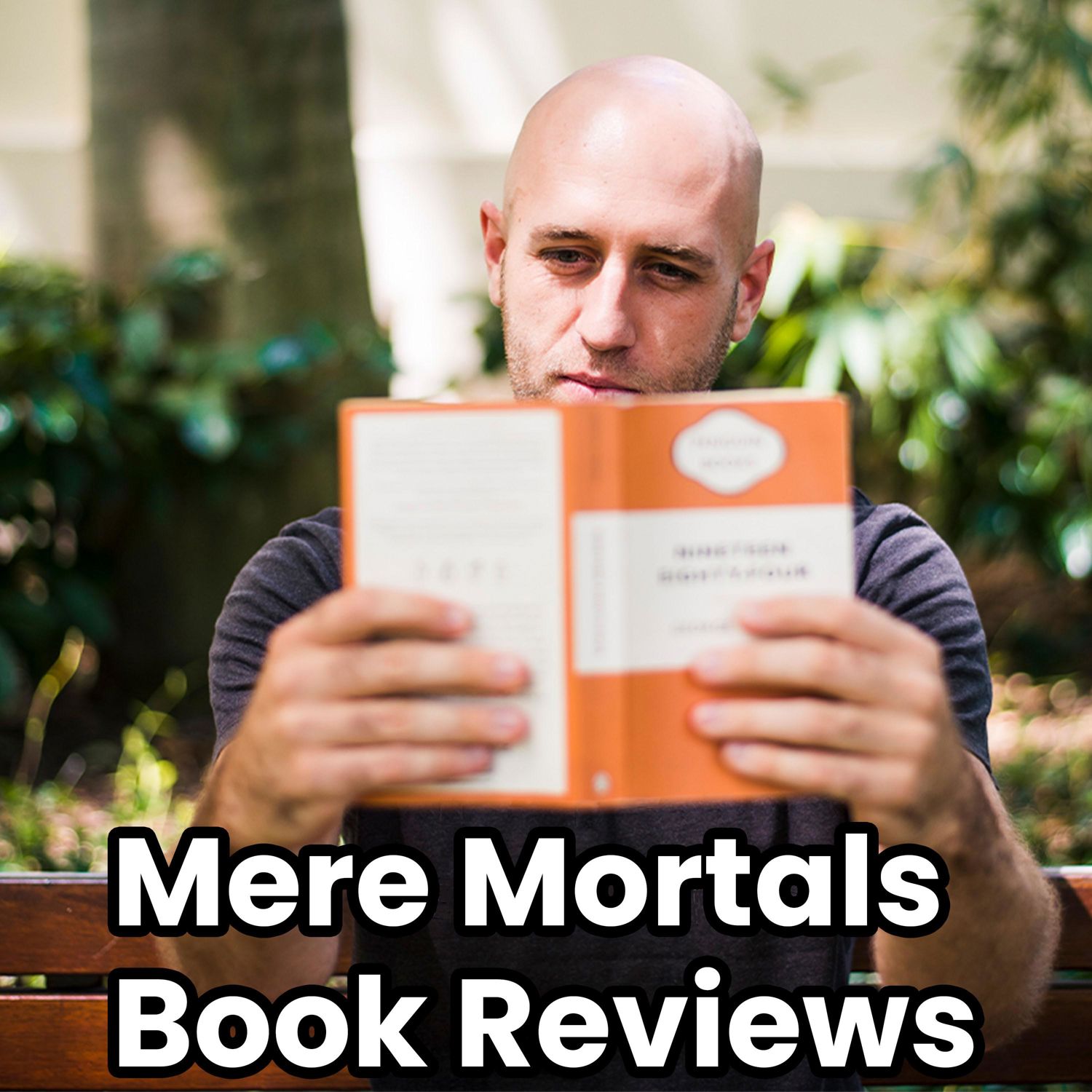
Mere Mortals Book Reviews
Kyrin Down & Juan Granados
Hey we are the Mere Mortals and we review books of all genres/styles but with an emphasis on those that have stood the test of time (the 'classics' if you will). Join us on Weekly live episode on Thurs 11am AEST (Thurs 1am UTC+0) plus bonus episodes from my cohost Juan.
Episodes
Mentioned books

Feb 13, 2021 • 12min
Sort Your Sh!t Out (Gary Waldon) - Book Review
Have you got your shit sorted? 'Sort Your Sh!t Out' by Gary Waldon is a guide to confronting your own mind and the self-talk that goes within. The book is a mix of mini-activities, deeply personal stories and an introduction to Bob (the negative persona inside your own head). The book is split into 4 sections: knowing, owning, dealing and maintaining your shit. Gary essentially induces the reader to take responsibility for their own problems and their own life.I summarised the book as follows. "This is a self-help book that will have you questioning whether your shit is actually sorted. I believe it would be useful for those unused to self-reflection/introspection and who need some help along that journey. I personally had come to many of the same conclusions as Gary has through my own experiences so didn't find it as engaging as I would have whilst younger. Nevertheless it is a solid book and Gary is a top notch bloke, as seen by the discussion I had with him on a Mere Mortals Conversation #36."As always, we hope you enjoy, Mere Mortals out!Timeline:(0:00) - Synopsis(2:25) - Layout(5:03) - What Sets It Apart: The onus is on you!(7:42) - Personal Observations(9:51) - Summary(11:13) - Pragmatic Takeaway: Use the bibliographyConnect with Mere Mortals:Instagram: https://www.instagram.com/meremortalspodcast/Support the show
Feb 13, 2021 • 16min
Superbugs (Matt McCarthy) - Book Review
Did you know that the world is running out of antibiotics? 'Superbugs' by Matt McCarthy explains how antimicrobial resistance is rising against our current batch of antibiotics, thus creating superbugs. The book is a mix of the author's clinical trial of Dalbavancin, the history of antibiotics (think Alexander Fleming), the relationship he has with his mentor Tom Walsh, the science of antibiotics and exactly how these superbugs are developing.I summarised the book as follows. "The book follows a smooth narrative that will scare you shitless of germs and hospitals. It contains heart-rending stories from dying patients and the personal trials of Matt as their doctor. Questions are raised about the incentives of the healthcare industry and showcases the real world ethics that doctors face. Personally the book didn't leave a lasting impression on me as I found it a bit to abstract from my everyday life."As always, we hope you enjoy, Mere Mortals out!Timeline:(0:00) - Synopsis(2:03) - Healthcare Incentives(7:24) - Real World Ethics(11:40) - Personal Observations(14:09) - Summary(15:15) - Pragmatic Takeaway: Stop Shaking HandsConnect with Mere Mortals:Instagram: https://www.instagram.com/meremortalspodcast/Support the show
Feb 13, 2021 • 14min
The Wim Hof Method (Wim Hof) - Book Review
Deep in, deep out. Breathe Mother Fuckers!!!!! 'The Wim Hof Method' is the layman's guide to the daily practice created by Wim Hof. The book teaches you the direct instructions but also contains a biography of the Iceman, testimonials of advocates and ends with his spiritual philosophy. The book explains how he came about his 3 Pillars (Breath/Mind/Cold) and the benefits to your health and performance that can be gained.I summarised the book as follows. "It's an overview of Wim Hof's method that translates his message in a purely textual format. It starts on firm scientific ground but gets shakier towards the end as he introduces his own spiritual beliefs. Personally I find the use of testimonials unconvincing and the message doesn't come across as strongly without the charismatic personality of Wim in person. That being said the WHM is probably something to at least try for those people with health problems that conventional science has not been able to alleviate."I hope you're having a fantastic day wherever you are in the world, Kyrin out!Timeline:(0:00) - Synopsis(1:12) - The 3 Pillars: Breath, Mind & Cold(4:34) - Benefits: Health, Performance & Beyond(6:55) - Personal Observations(9:56) - Summary(12:27) - Pragmatic Takeaway: I'm stopping the breathingConnect with Mere Mortals:Website: https://www.meremortalspodcast.com/Instagram: https://www.instagram.com/meremortalspodcast/Support the show
Feb 13, 2021 • 15min
Born To Run (Christopher McDougall) - Book Review
Have you ever tried running barefoot? In Christopher McDougall's best-selling book titled 'Born To Run' we dive into the world of ultramarathon running with a race that combines the modern with the old. The book is a mixture of biography, history, science and adventure; all wrapped up in a story of an ultramarathon held deep in the Mexican Copper Canyon. The principal themes of the book explore the lost art of endurance running and why a barefoot/minimalist shoe style might actually be beneficial to prevent running injuries.I had this to say after not being able to put down the book. "It's a very engaging tale of people pushing their limits that will make you want to run! It's engaging probably because it is a little bit exaggerated but as long as you keep that in mind it's a fascinating book about ultramarathoners, running long distances and crazy people in general."I hope you have a fantastic day wherever you are in the world. Kyrin out!Timeline:(0:00) - Synopsis(1:14) - The lost art of endurance running(6:40) - Foot health and running injuries(9:12) - Personal observations(12:29) - Summary: an engaging tale of people pushing their limits(13:12) - Pragmatic takeaway: running barefoot and without pressureConnect with Mere Mortals:Website: https://www.meremortalspodcast.com/Instagram: https://www.instagram.com/meremortalspodcast/Support the show
Feb 13, 2021 • 31min
Philosophising From 'Nineteen Eighty-Four' - George Orwell
"In the face of pain there are no heroes." This is a small quote from the book 1984 (usually fully spelt out but I'm lazy today) by George Orwell. In this bonus episode I philosophise about some of the intriguing concepts raised by the book, which include: the structural and grammatical components of Newspeak and how the language was aimed to diminish consciousness, why living in the present was discouraged and how negative emotions were used as an energy outlet, the psychological burden of torture/meaninglessness/pain, doublethink and why it is a useful concept to use in real life and the genius of the book as a whole.As always, we hope you enjoy, Mere Mortals out!Timeline:(0:00) - Introduction(0:50) - Language modification and newspeak(6:05) - The past, present and future(10:41) - The need for an emotional pressure valve(12:40) - Psychological hell: knowing the how but not the why(18:54) - The value of consciousness(22:25) - Cultural mainstays: doublethink, control and sanity(28:41) - Why 1984 is so good!Connect with Mere Mortals:Instagram: https://www.instagram.com/meremortalspodcast/Support the show
Feb 13, 2021 • 14min
Nineteen Eighty-Four (George Orwell) - Book Review
Will the censorship enabled through technology be our downfall? 'Nineteen Eighty-Four' is an already classic fiction book published in 1949 by the author Eric Blair (under the pseudonym of George Orwell). We are treated to a small snippet from the life of Winston Smith as he battles a futile fight against a totalitarian regime. The core themes of the book revolve around control through censorship and the addiction of pure, raw power.Kyrin had this say about the book. "A book that keeps on giving. Nineteen Eighty-Four contains a memorable yet harrowing world that we have attempted to create in real life (the USSR and gulag camp system for example). The book is a true classic and has introduced cultural mainstays such as: Big Brother, doublethink, thoughtcrime and newspeak. It has powerful insights and sublime writing that is unique to George Orwell, truly one of the best books ever!"As always, we hope you enjoy, Mere Mortals out!Timeline:(0:00) - Synopsis(2:30) - Control through censorship(6:06) - Totalitarianism & power(8:49) - Personal observations(9:41) - Summary(12:10) - Pragmatic takeaway: use more colourful language!Connect with Mere Mortals:Instagram: https://www.instagram.com/meremortalspodcast/Support the show
Feb 13, 2021 • 8min
Learnings From 'The Hero With A Thousand Faces' - Joseph Campbell
In this little bonus episode Juan goes over some of his learnings from Joseph Campbell's 'The Hero With A Thousand Faces'. His previous review of the book goes over the general themes of the book so this is more of an exploration into certain ideas and quotes that stood out to him. These include: being conscious of your own emotions while making decisions, getting too stuck in particular details of the story, asking if the ego can put itself to death, not mistaking something for what it really is and the use of beautiful language pieces from Napoleon and other figures from history.As always, we hope you enjoy, Mere Mortals out!Timeline:(0:00) - Introduction(0:45) - Emotions control your decisions(1:45) - Symbols are only the vehicles of communication(3:28) - Ego(5:20) - Mythology is psychology(6:27) - Beautiful language(7:02) - Sum up & outroConnect with Mere Mortals:Instagram: https://www.instagram.com/meremortalspodcast/Support the show
Feb 13, 2021 • 8min
The Hero With A Thousand Faces (Joseph Campbell) - Book Review
Are you looking for a hard to read book with a vocabulary that will leave you uncertain of your English abilities? 'The Hero With A Thousand Faces' is one of the most famous works by Joseph Campbell, detailing the archetype of the hero and comparing myths/legends from across the world. It is a highly influential work with its impact reaching out from the era of Star Wars up to modern day philosophers such as Jordan Peterson.Juan had this to say about the book. "It was enjoyable in pieces and I was sharing this with a couple of people that probably 10% of it I wanted to keep on reading and really enjoyed. But it almost shot itself in the foot as you got onto the next chapter, as the next chapter just became overly ballooned with words and I just thought you could have dialled this back and really told this message you were trying to get through."As always, we hope you enjoy, Mere Mortals out!Timeline:(0:00) - Introduction(0:53) - A hard book to read(3:01) - Breakdown of the book(5:20) - A humbling vocabulary(6:02) - Psychology & myth(7:24) - Final thoughtsKyrin's previous review of the book:https://www.youtube.com/watch?v=9iG32M6MF6oConnect with Mere Mortals:Instagram: https://www.instagram.com/meremortalspodcast/Support the show
Feb 13, 2021 • 15min
Why Buddhism Is True (Robert Wright) - Book Review
What are the secular parts of Buddhism that align with evolutionary biology/psychology? In the somewhat provocatively titled 'Why Buddhism Is True', Robert Wright explains the insights that can be gained from mindfulness meditation and juxtaposes these with observations from hard science, natural selection and Darwinian thinking. The central themes revolve around Dukkha, Anatta and Sunyata, all of which weave together to create an explanation for why humans experience suffering and what we can do to resolve it.I summarised the book as follows. "Robert does a fantastic job of combining the subjective experiences that arise from mindfulness meditation with the solid base of scientific knowledge gained from evolutionary biology/psychology. There is no mention of the unverifiable claims of Buddhism (such as reincarnation) and the book contains some great insights and doesn't become too philosophical. I appreciated the engaging mini-stories from his own retreat but did get lost a couple of times when the terminology became difficult to understand. An interesting introduction for someone who wants to know more about the secular parts of Buddhist meditation."I hope you have a fantastic day wherever you are in the world. Kyrin out!Timeline:(0:00) - Synopsis(1:13) - Dukkha: suffering or unsatisfactoriness(4:24) - Anatta: not-self and the self is an illusion(7:08) - Sunyata/Sunnatta: formless or emptiness(9:42) - Personal Observations: mini-stories and lost in terminology(11:41) - Summary: insightful and unexaggerated(13:23) - Pragmatic Takeaway: listen to a podcast with the authorConnect with Mere Mortals:Website: https://www.meremortalspodcast.com/Instagram: https://www.instagram.com/meremortalspodcast/Support the show
Feb 13, 2021 • 22min
Doing Good Better (William MacAskill) - Book Review
How can we use our resources to help others the most? William MacAskill, one of the cofounders of the Effective Altruism movement tries to answer this question in his book 'Doing Good Better'. Effective altruism essentially tries to provide guidelines for what an individual can do to have the maximum impact of 'good' in their lifetime. The book is roughly split into two sections; the theory and the implementation. The theoretical side addresses questions related to measurement of charities and ways to ensure that good intentions have good outcomes. The practical implementation addresses whether it is better to donate directly, vote with your product choices, work in a profession to directly help others and social activist causes that could benefit humanity as a whole.I had this to say after reading the book. "William has a no nonsense approach to the age old problem of good intentions not necessarily leading to good outcomes. He does this by analytically determining what charities do the most good and giving a good list of practical steps that an individual can take to be effective in their choices. He has solid rational arguments with my only gripe being that the book can come across as too dispassionate and not taking into account my individual emotions/feelings to certain causes close to my heart. I found this book addressed a lot of my own arguments against donating and was well thought out and researched."As always, we hope you enjoy, Mere Mortals out!Timeline:(0:00) - Synopsis(2:26) - Theory: 5 Key Questions(8:57) - Practice: What should you do right now?(17:37) - Personal observations: moral issues and assumptions(18:41) - Summary: solid arguments but overly rational(19:31) - Pragmatic Takeaway: starting to donateConnect with Mere Mortals:Instagram: https://www.instagram.com/meremortalspodcast/Support the show

