

Nullius in Verba
Smriti Mehta and Daniël Lakens
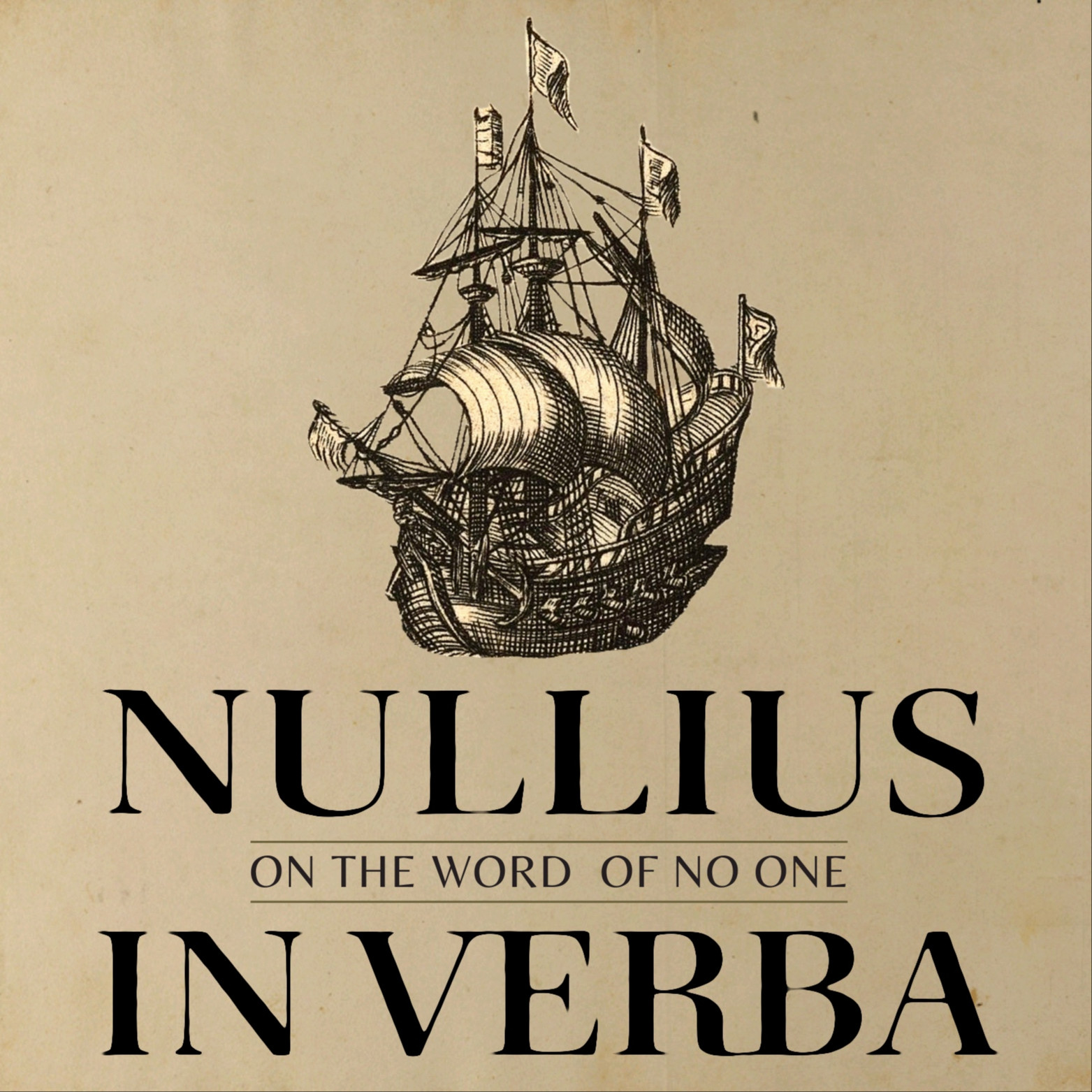
Nullius in Verba is a podcast about science—what it is and what it could be. It is hosted by Smriti Mehta from UC Berkeley and Daniël Lakens from Eindhoven University of Technology. Our logo is an homage to the title page of Novum Organum, which depicts a galleon passing between the mythical Pillars of Hercules on either side of the Strait of Gibraltar. The title of the podcast comes from the motto of the Royal Society, set in typeface Kepler by Robert Slimbach. Our theme song is Newton’s Cradle by Grandbrothers.
Episodes
Mentioned books

10 snips
Mar 13, 2026 • 1h 11min
Episode 77: Miscitatio
In this episode, we discuss the problem of miscitation. How often are citations to the scientific literature outright misleading? Do we really need to spell out that people are supposed to read what they cite? What can we learn from other fields? Or should we just live with the fact that a decent percentage of citations in the literature are wrong? Enjoy.
Careless citations don't just spread scientific myths – they can make them stronger (Nature)
Cobb, C. L., Crumly, B., Montero-Zamora, P., Schwartz, S. J., & Martínez Jr, C. R. (2024). The problem of miscitation in psychological science: Righting the ship. American Psychologist, 79(2), 299–311.
Simmering, M. J., Fuller, C. M., Leonard, S. R., & Simmering, V. R. (2025). Cognitive biases and research miscitations. Applied Psychology, 74(1), e12589.
Qinyue Liu, Amira Barhoumi, Cyril Labbé. (2024). Miscitations in scientific papers: Dataset and detection. International Workshop on Bibliometric-enhanced Information Retrieval. Glasgow, United Kingdom.
Lazonder, A. W., & Janssen, N. (2022). Quotation accuracy in educational research articles. Educational Research Review, 35(1), https://doi.org/10.1016/j.edurev.2021.100430
James, W. (1914). The energies of men. New York : Moffat, Yard and Company. http://archive.org/details/energiesofmen00jameuoft
Beyerstein, B.L. (1999) Whence cometh the myth that we only use ten percent of our brains? In, S. Della Sala (Ed.), Mind Myths: Exploring Everyday Mysteries
Jergas, H., & Baethge, C. (2015). Quotation accuracy in medical journal articles—A systematic review and meta-analysis. PeerJ, 3, e1364. https://doi.org/10.7717/peerj.1364
Bruton, S. V., Macchione, A. L., Brown, M., & Hosseini, M. (2025). Citation Ethics: An Exploratory Survey of Norms and Behaviors. Journal of Academic Ethics, 23(2), 329–346. https://doi.org/10.1007/s10805-024-09539-2
Simkin, M., & Roychowdhury, V. (2006). Do You Sincerely Want to Be Cited? Or: Read Before You Cite. Significance, 3(4), 179–181. https://doi.org/10.1111/j.1740-9713.2006.00202.x
Simmering, M. J., Fuller, C. M., Leonard, S. R., & Simmering, V. R. (2025). Cognitive biases and research miscitations. Applied Psychology, 74(1), e12589. https://doi.org/10.1111/apps.12589
Bluebook: https://www.legalbluebook.com
Feb 27, 2026 • 44min
Episode 76: Incitamenta - II
In this two-part episode, we discuss incentives in science and academia. We discuss the various incentives in science, including recognition, citations, money, and the kick in the discovery.
Shownotes
Cole, S., & Cole, J. R. (1967). Scientific output and recognition: a study in the operation of the reward system in science. American Sociological Review, 377–390.
Crane, D. (1965). Scientists at major and minor universities: A study of productivity and recognition. American Sociological Review, 699–714.
Merton, R. K. (1963). Resistance to the systematic study of multiple discoveries in science. European Journal of Sociology/Archives Européennes de Sociologie, 4(2), 237–282.
Stephan, P. (2015). How economics shapes science. Harvard University Press.
Tal Yarkoni - No, it’s not The Incentives—it’s you
Tom Leher - Lobachevsky (1953)
Feb 15, 2026 • 52min
Episode 75: Incitamenta - I
In this two-part episode, we discuss incentives in science and academia. We discuss the various incentives in science, including recognition, citations, money, and the kick in the discovery.
Shownotes
Cole, S., & Cole, J. R. (1967). Scientific output and recognition: a study in the operation of the reward system in science. American Sociological Review, 377–390.
Crane, D. (1965). Scientists at major and minor universities: A study of productivity and recognition. American Sociological Review, 699–714.
Merton, R. K. (1963). Resistance to the systematic study of multiple discoveries in science. European Journal of Sociology/Archives Européennes de Sociologie, 4(2), 237–282.
Stephan, P. (2015). How economics shapes science. Harvard University Press.
6 snips
Jan 30, 2026 • 1h 7min
Episode 74: Notiones Vague
They dig into problems caused by vague concepts in psychological science, including the jingle‑jangle fallacy and conceptual stretching. They debate umbrella constructs, whether to build centralized repositories of definitions, and how academic incentives favor catchy but fuzzy labels. Philosophical analysis, experimental tests, and proposals for a PsyCore repository get discussed as ways to sharpen concepts.
10 snips
Jan 16, 2026 • 56min
Episode 73: Scientismus - II
The discussion dives into the complexities of scientism with six critical issues raised by Susan Haack. The hosts debate the cultural reverence for science and when it tips into excessive deference. They explore the blurred lines between scientific methodology and philosophical inquiry, questioning if science can answer moral dilemmas. There's a critique of 'cargo-cult science,' where style outweighs substance. The conversation also touches on biases surrounding scientific knowledge versus the humanities, reflecting on a shared sympathy for scientism itself.
20 snips
Jan 2, 2026 • 48min
Episode 72: Scientismus - I
The discussion tackles scientism, exploring whether it's too much to claim science as the sole way of knowing. They delve into the historical evolution of the term and its varying interpretations. Key debates include the ability of science to answer moral questions and the distinction between disciplines in producing knowledge. The duo also critiques reliance on quantification in social research, favoring literary insights for deep understanding. Ultimately, they weigh the roles of empirical science versus philosophical inquiry in grasping complex human experiences.
14 snips
Nov 29, 2025 • 54min
Episode 71: Commentarius Scientificus: Fraus?
The discussion explores the controversial notion that scientific papers might misrepresent reality. Medawar's ideas on starting with a discussion rather than hypotheses spark a debate. The hosts tackle the origins of ideas, weighing hunches against derived theories. They delve into the nature of hypotheses and predictions, using Newton and Einstein as examples. Everyday inspirations, like Marie Kondo, raise questions on transparency in reporting research origins, while the implications of inductive versus deductive reasoning challenge conventional thinking.
4 snips
Nov 21, 2025 • 16min
Prologus 71: Is the Scientific Paper A Fraud (P. Medawar)
Medawar, P. (1999). Is the scientific paper a fraud? Communicating Science: Professional Contexts, 27–31.
7 snips
Nov 14, 2025 • 1h 16min
Episode 70: Scientia Tacita
Dive into the intriguing world of tacit knowledge as the hosts unravel its hidden layers in science. From how we internalize skills like riding a bike to the unseen impacts on experiment replication, they explore why this concept has lingered in obscurity. Hear about concealed methods, relational knowledge, and the influence of technology in bridging gaps. The discussion also touches on sociological aspects within academia, mentorship dynamics, and the role of unspoken rules in fostering success. A thought-provoking journey into what we know but struggle to express!
10 snips
Oct 31, 2025 • 46min
Episode 69: Fraus P-Valoris - II
Dive into the intriguing world of p-hacking! Discover how naming this practice raised awareness about replication failures in research. The conversation explores whether public accusations have driven positive changes in research norms. Challenges of interpreting p-value distributions and biases affecting publication incentives are dissected. The hosts suggest that transparency and pre-registration could combat p-hacking. They also discuss the role of compelling storytelling in shaping research outcomes, emphasizing the need for integrity in scientific pursuits.

