

Queer Theology
Queer Theology / Brian G. Murphy & Shannon T.L. Kearns
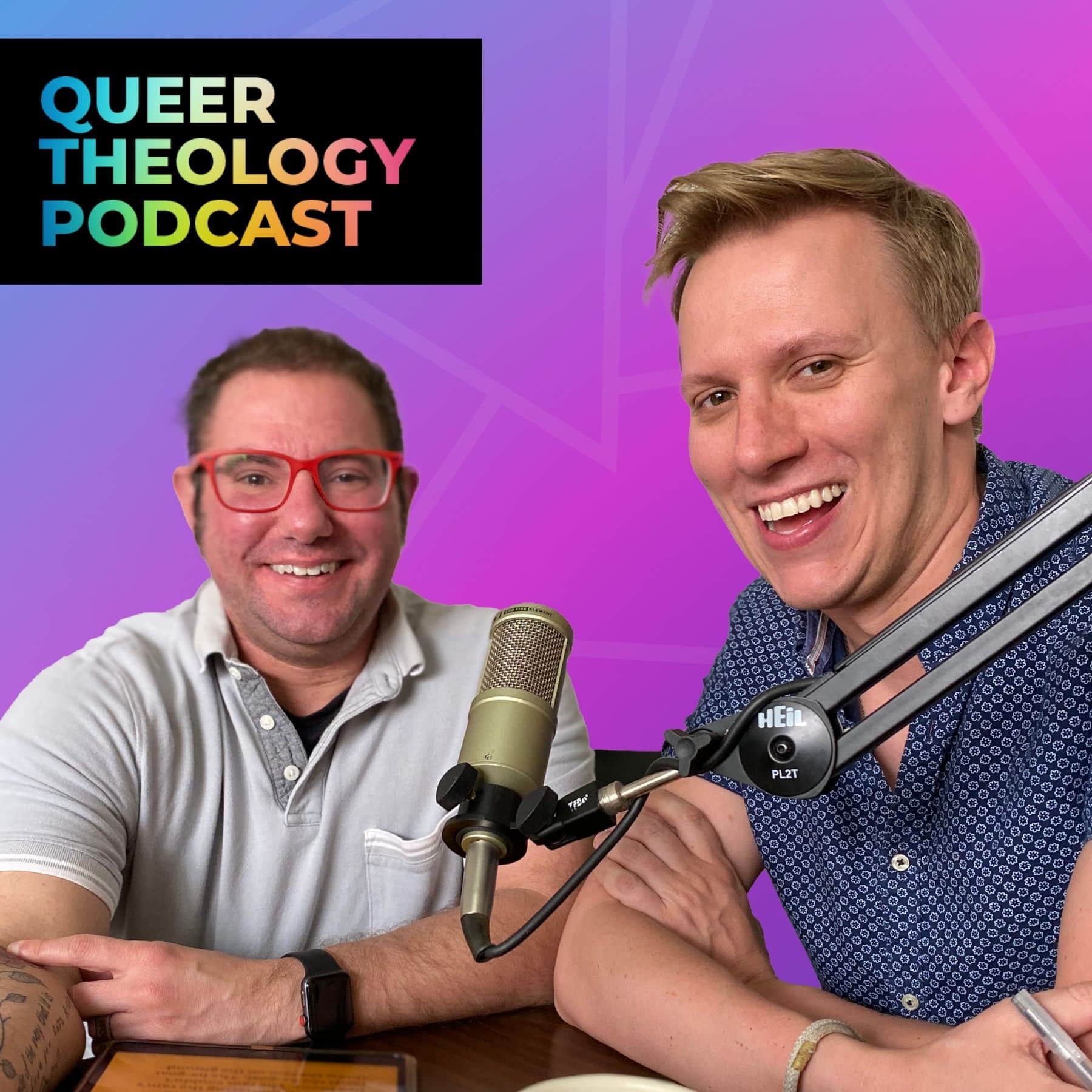
The longest running podcast for and by LGBTQ Christians and other queer people of faith and spiritual seeker. Hosted by Fr. Shannon TL Kearns, a transgender Christian priest and Brian G. Murphy, a bisexual polyamorous Jew. and now in its 10th year, the Queer Theology Podcast shares deep insights and practical tools for building a thriving spiritual life on your own terms. Explore the archives for a queer perspective on hundreds of Bible passages as well as dozens of interviews with respected LGBTQ leaders (and a few cis, straight folks too). Join tens of thousands of listeners from around the world for the Bible, every week, queered.
Episodes
Mentioned books

May 26, 2024 • 28min
The 5 Minutes a Day That Will Change Your Life
It’s no secret that we’re really big fans of spiritual practice. Especially one that really makes you feel connected to your queer spirituality! In this episode, we discuss the difference between spiritual practices and habits. We explore how spiritual practices can connect us to ourselves, something bigger than us, and other people. We share personal stories and examples of how spiritual practices have enriched our own lives. It is so important to have intentionality and repetition in spiritual practices, so we offer suggestions for infusing queerness into existing practices. And if you are ready to go even deeper, join our Queerness Everyday Challenge!
Takeaways
Spiritual practices connect us to ourselves, something bigger than us, and other people.
Habits and routines are different from spiritual practices because they may not serve the same purposes.
Spiritual practices can be infused with queerness and can be personalized to fit our individual needs and experiences.
Repetition and intentionality are key in developing meaningful and transformative spiritual practices.
The Queerness Every Day Challenge is a great opportunity to explore and deepen our spiritual practices.
Chapters
(0:25) Difference Between Spiritual Practices and Habits
(8:18) The Power of Repetition and Intentionality
(12:45) Personal Stories of Meaningful Spiritual Practices
(26:16) Join the Queerness Every Day Challenge
Resources:
Join the Queerness Everyday Challenge at queertheology.com/challenge
Join the Sanctuary Collective Community
If you want to support the Patreon and help keep the podcast up and running, you can learn more and pledge your support at patreon.com/queertheology.
EPISODE TRANSCRIPT
The post The 5 Minutes a Day That Will Change Your Life appeared first on Queer Theology.

May 19, 2024 • 33min
How to Feel More Connected to Queerness Every Day
We discuss the connection between queerness and spirituality in this episode… Yes- that is what we’re ALWAYS trying to get at! Here we share our personal experiences of feeling disconnected from queerness and spirituality in the past. Finding ways to integrate them into our everyday lives has been a journey and we’ve got some ways you can start to feel more connected to your queerness.
Takeaways
Queerness and spirituality can be integrated and connected in meaningful ways.
Taking intentional, embodied, communal, small and sustainable, and regular actions can deepen the connection between queerness and spirituality.
The Queerness Every Day Challenge offers simple actions to help participants integrate queerness and spirituality.
The challenge provides a supportive community and resources to explore the intersections of queerness and spirituality.
Chapters
(00:00) Feeling Disconnected from Queerness
(05:43) Integration of Queerness and Spirituality
(11:33) Taking Action to Connect Queerness and Spirituality
(19:16) Building Community and Taking Small, Sustainable, and Regular Actions
Resources:
Join the Queerness Everyday Challenge at queertheology.com/challenge
Join the Sanctuary Collective Community
If you want to support the Patreon and help keep the podcast up and running, you can learn more and pledge your support at patreon.com/queertheology.
EPISODE TRANSCRIPT
The post How to Feel More Connected to Queerness Every Day appeared first on Queer Theology.

May 12, 2024 • 36min
We’re Here Interview with Latrice Royale
We are so excited to bring you a special interview on the pod this week! Not only did we get to preview the new season of “We’re Here,” but we got to interview one of the stars of the show, Latrice Royale. Latrice discusses the importance of the show and how it is shedding light on the struggles of the queer community as well as dispelling misinformation about drag. She also shares her journey of finding her purpose through drag and how it has allowed her to impact others’ lives. Our conversation explores the tension and pushback faced by the drag queens in Oklahoma and the importance of standing up for the community. Latrice emphasizes the need for people to step out of their bubbles, learn from one another, and be allies by voting for change.
Takeaways
‘We’re Here’ sheds light on the struggles of the queer community and dispels misinformation about drag.
Drag can be a sacred calling and a ministry that impacts and improves lives.
Religious teachings on homosexuality can create conflicts for queer individuals.
Inclusive churches provide a welcoming and affirming space for queer people.
Drag queens can inspire and motivate change in communities.
Allies need to step up and support the queer community by voting for change.
Chapters
(1:39) Introducing our wonderful guest, Latrice Royale
(3:01) Conversation on queerness, spirituality, and rural America
(15:16) Latrice discusses drag as a sacred calling
(19:39) Exploration of religious experiences in “We’re Here” and their religious background
(22:23) Discussion on rediscovering faith during challenging times
(25:43) Latrice reflects on their experiences in an inclusive church
Resources:
The new season of “We’re Here” is out on
Join the course From Affirmation to Liberation at queertheology.com/class
Join the Sanctuary Collective Community
If you want to support the Patreon and help keep the podcast up and running, you can learn more and pledge your support at patreon.com/queertheology.
EPISODE TRANSCRIPT
The post We’re Here Interview with Latrice Royale appeared first on Queer Theology.

May 5, 2024 • 38min
13 Alternatives to Prayer
In this conversation we explore the topic of prayer from our different perspectives as an atheist and an ordained Catholic priest. We discuss what prayer is and why people pray, as well as the need for alternatives to prayer. We also got 13 alternatives to prayer that you can put into your spiritual practice today (hint- you might already be doing some of them!). The important thing here is the intentionality. And sometimes experimentation in finding a prayer practice that works for each individual can be a really rewarding way to deepen your faith and prayer practice.
Takeaways
Prayer is a way to connect with something bigger than ourselves and can take many forms.
There are various reasons why someone might need or want alternatives to prayer, such as feeling disconnected from a previous prayer tradition or feeling like their current prayer practice has become stale.
Experimenting with different prayer alternatives can help individuals find a practice that resonates with them and brings them a sense of connection and peace.
Intentionality and consistency are key in developing a prayer practice, and it’s important to give new practices time to develop and evolve.
Changing up prayer practices can lead to new insights and experiences, and it’s beneficial to try different approaches to prayer, even if you already have a prayer practice that works for you.
Chapters
(09:54) Reasons for Seeking Alternatives to Prayer
(35:38) Experimenting with Prayer Practices
Resources:
Rituals for Resistance & Resilience on demand workshop
Join Spiritual Study Hall to get access to all QueerTheology resources
Join the Sanctuary Collective Community
If you want to support the Patreon and help keep the podcast up and running, you can learn more and pledge your support at patreon.com/queertheology.
EPISODE TRANSCRIPT
The post 13 Alternatives to Prayer appeared first on Queer Theology.

Apr 28, 2024 • 54min
7 Questions to Deepen Your Faith
Y’all know we love asking questions. So in this episode we’re gonna to get into the importance of asking questions to deepen one’s faith. That might seem counterintuitive to what we’ve been taught because so much of conservative religious upbringing is to NOT ask questions. We explain how asking questions is crucial because it helps individuals clarify what is important to them and what they want to achieve. We also talk about one of our favorite practices (journaling!) and we have 7 questions you can ask yourself right now to start deepening your faith.
Takeaways
Asking questions is an important part of deepening one’s faith and clarifying what is important to them.
Writing down or speaking out loud one’s thoughts and beliefs can help in gaining clarity and making commitments.
Journaling is a powerful tool for self-reflection and tracking personal growth.
The seven questions discussed in the episode can be used to deepen one’s faith and explore different aspects of spirituality.Feeling close to God or the sacred is a personal and unique experience, and it’s important to reflect on specific moments, details, and emotions associated with those experiences.
Understanding what closeness means to you and what aspects of those experiences were meaningful can help guide your spiritual journey and bring depth to your faith life.
Curiosity plays a crucial role in deepening your religious tradition. Being curious about theological tenets, practices, or learning more about specific aspects can keep you engaged and open to growth.
Identifying what you want more of in your faith life requires specificity and clarity. Breaking down your desires into actionable steps and defining when and how you will engage in those practices is essential.
Recognizing and addressing barriers that have kept you from deepening your faith is crucial. This may involve external factors, such as lack of access or community, as well as internal obstacles, such as fear or uncertainty.
Taking one specific action step at a time can move you closer to your spiritual goals. Scheduling and planning these steps, even in the face of resistance or uncertainty, increases the likelihood of follow-through.
Being part of a supportive community and seeking accountability can provide encouragement and guidance in your spiritual journe
Chapters
(04:21) The Power of Journaling for Self-Reflection
(08:50) Question: When Have You Felt Closest to God?
(15:13) Question: Moments of Wanting to Deepen Your Faith
(20:51) Question: Continuing the Journey of Deepening Your Faith
(25:24) Reflecting on Moments of Closeness to God
(32:05) Cultivating Curiosity in Religious Traditions
(35:06) Identifying Desires for a Deeper Faith Life
(37:49) The Value of Community and Accountability in Spiritual Growth
Resources:
Join Spiritual Study Hall to get access to all QueerTheology resources
Join the Sanctuary Collective Community
If you want to support the Patreon and help keep the podcast up and running, you can learn more and pledge your support at patreon.com/queertheology.
EPISODE TRANSCRIPT
The post 7 Questions to Deepen Your Faith appeared first on Queer Theology.

Apr 21, 2024 • 48min
The Good, The Bad, The Ugly of The Bible
In this episode, we get into our ever evolving relationship with the Bible. We reflect on our early experiences with the Bible as children, including the simplified and often traumatizing stories we were taught. As we grew older, both of us felt pressure to read the Bible regularly and experienced a ton of guilt when we didn’t meet those expectations. Brian shares how his discovery of his queerness led him to search for inclusion in the Bible, while Shannon explores his journey of reading the Bible academically and finding new meaning through artistic interpretation. We also discuss the importance of understanding the historical and cultural context of the Bible and the importance of knowing history to help make sense of faith.
Takeaways
Early experiences with the Bible can be simplified and traumatizing, leading to a need for reevaluation and reinterpretation.
Feeling guilty for not reading the Bible regularly is common, but it’s important to find a personal approach that feels authentic.
Exploring the Bible academically and artistically can provide new perspectives and meaning.
Understanding the historical and cultural context of the Bible is crucial for interpretation and avoiding misinterpretation. Having a grounding library of foundational documents provides a point of reference and a source of inspiration.
Knowing our history helps us understand how people have made sense of faith and navigate big questions.
Living with tensions and making decisions can be challenging, but community support and communal discernment can provide guidance.
Engaging in discussions and learning from diverse perspectives can expand our minds and lead to personal growth.
Chapters
(00:27) Early relationship with the Bible
(04:07) Searching for inclusion
(05:32) Viewing the Bible as a creative story
(06:02) Source material for creative works
(06:30) Reading the Bible from a Jewish perspective
(07:00) Different interpretations of the Bible
(09:21) Navigating Christian and Jewish perspectives
(10:48) Transitioning and reimagining the Bible
(13:23) Memorizing Bible verses and devotionals
(14:49) Engaging with the Bible academically
(16:14) Finding new meaning through artistic interpretation
(24:27) The power of texts and foundational documents
(30:07) Knowing history and making sense of faith
(34:20) Living with tensions and making decisions
(44:10) The importance of community and communal discernment
Resources:
Learn more and sign up for the workshop, From Affirmation to Liberation at queertheology.com/class
Join the Sanctuary Collective Community
If you want to support the Patreon and help keep the podcast up and running, you can learn more and pledge your support at patreon.com/queertheology.
EPISODE TRANSCRIPT
The post The Good, The Bad, The Ugly of The Bible appeared first on Queer Theology.

Apr 14, 2024 • 32min
We Come From Fighters
Sometimes, it’s really empowering to look back on where we came from. With Fr. Shay’s upcoming lecture on the history of Queer theology, we wanted to dive into this a bit for this episode. It is so important for us to know our queer history, and we share our personal experiences with learning about it. How it shaped us then and how it continues to shape us now! We really want to highlight the significance of understanding the legacy and movements that queer people have been a part of throughout history. Because you are part of that, you will continue with what has been started.
Takeaways
Knowing queer history helps situate individuals within a larger community and movement.
Learning about queer history provides a sense of belonging and inspiration.
Understanding the co-opting of queer stories by straight and cis individuals is important in recognizing the erasure and distortion of queer experiences.
Drawing from past activism and movements can inform current efforts for LGBTQ+ rights and inclusion.
Chapters
(00:31) The Importance of Knowing Queer History
(06:48) Personal Experiences with Queer History
(13:54) Learning from Queer Movements and Organizations
(23:52) Learning from Past Activism
(28:30) The Queer Theology Movement
(31:01) Upcoming Course on Queer Theology
Resources:
Learn more and sign up for the workshop, From Affirmation to Liberation at queertheology.com/class
Join the Sanctuary Collective Community
If you want to support the Patreon and help keep the podcast up and running, you can learn more and pledge your support at patreon.com/queertheology.
EPISODE TRANSCRIPT
The post We Come From Fighters appeared first on Queer Theology.

Apr 7, 2024 • 31min
What’s an LGBTQ-Affirming Bible translation?
If there is one question we get alot it’s: where to find an LGBTQ+ Affirming translation of the Bible? Like, we get this question ALOT alot. So we’re going to get into it on this week’s episode! If you are deconstructing or seeking a more expansive view of God, it can lead you to question the Bible translation you are using. And that is actually really great! What we want to emphasize is that the problem lies not in the Bible itself, but in the lens through which it is read. We encourage readers to unlearn and RELEARN how to approach the Bible. And to do that you have to go deep. But we’ve got some great resources for you to help you do that!
Takeaways
The problem is not the Bible itself, but the lens through which it is read.
Readers must unlearn and relearn how to approach the Bible in order to understand its message.
Specific translations, such as the Common English Bible and the New Revised Standard Version, can be helpful in reading the Bible from a more inclusive and expansive perspective.
Books about the Bible, such as Rob Bell’s ‘What Is the Bible?’ and works by Marcus Borg and John Dominic Crossan, can provide valuable insights and help readers engage with the text in new ways.
Engaging with the Bible is an ongoing process that allows readers to make it their own and find resonance with their own experiences.
Chapters
(01:11) The Assumptions Behind the Question
(07:40) The Responsibility of Readers
(09:08) The Work of Reading the Bible
(10:17) The Bible as a Complicated Collection of Books
(13:04) Unlearning and Relearning
(15:37) The Joy of Foundations
(19:21) The Challenge of Finding Progressive Resources
(20:50) Specific Bible Recommendations
(22:48) Books About the Bible
(26:32) Making the Bible Your Own
(29:50) Additional Resources and Courses
Resources:
Learn more and sign up for the workshop, From Affirmation to Liberation at queertheology.com/class
Join the Sanctuary Collective Community
“What is the Bible” by Rob Bell
Any of the books Marcus Borg and John Dominic Crossan have written together.
Our Bible App
Bible recommendations
Common English Bible
New Revised Standard Version
Oxford Standard Bible for an academic version
If you want to support the Patreon and help keep the podcast up and running, you can learn more and pledge your support at patreon.com/queertheology.
EPISODE TRANSCRIPT
The post What’s an LGBTQ-Affirming Bible translation? appeared first on Queer Theology.

Mar 31, 2024 • 0sec
Do You Have To Believe In Miracles?
It’s Easter Sunday and we’re discussing the concept of Easter and how it relates to the struggles and questions faced by those in progressive faith communities. We explore the role of miracles and The Resurrection story in Christianity, and the tension between belief and skepticism. We really want to highlight the power of storytelling and metaphor as a way to convey deeper truths. We also get into the distinction between history and myth, and the importance of grappling with the complexities of faith traditions. Ultimately, we feel the message of Easter is seen as an invitation to participate in creating a new world of justice and liberation.
Takeaways
The Easter story raises questions about miracles and the resurrection, and how they are understood in progressive faith communities.
Storytelling and metaphor are powerful tools for conveying deeper truths and connecting with our human nature.
The distinction between history and myth is a modern concept, and both can contain elements of truth and meaning.
Grappling with the complexities of faith traditions is an important part of personal growth and understanding.
Chapters:
(00:55) Struggling with Miracles and the Resurrection
(04:29) The Truth of Miracles
(06:07) History vs Myth
(08:24) The Call to Action
(11:45) The Resurrection as a Radical Political Message
(14:51) The Persistence of Christianity
(19:09) The Mystery of Easter
(20:06) Living in the New World
(23:41) Upcoming Class and Community
Resources:
Join the waitlist for the workshop From Affirmation to Liberation at queertheology.com/class
Join the Sanctuary Collective Community
Queering Easter past podcast episodes:
Easter 2017
Palm Sunday and Holy Week
If you want to support the Patreon and help keep the podcast up and running, you can learn more and pledge your support at patreon.com/queertheology.
EPISODE TRANSCRIPT
The post Do You Have To Believe In Miracles? appeared first on Queer Theology.

Mar 24, 2024 • 28min
Fear & Faith On Palm Sunday
It’s Holy Week for many Christians, so we’re kicking it off with an episode on Palm Sunday. Palm Sunday is one of those things that we come back to. Like, a lot. The messy and powerful nature of Palm Sunday just lends itself to the parallels we see in the struggles of queer folk during the AIDS crisis and continuing today. On this Palm Sunday, we encourage you to stand up and confront oppressive theologies and injustices, even in the face of fear! We also want to encourage you to lean into your communities and networks during challenging times. But also to keep your joy, hope, and vision of liberation as we move forward.
Takeaways
Palm Sunday is a significant holiday that holds meaning for both Christians and those who have left the faith.
Queer theology can deepen one’s understanding and practice of faith, connecting it to activism and social justice.
Palm Sunday is a powerful example of marginalized communities challenging oppressive systems and theologies.
Fear is a natural part of activism, but it should not deter us from standing up for justice and confronting injustice.
Chapters:
(01:16) Palm Sunday and Queer Theology
(04:31) The Messiness of Palm Sunday
(05:25) Palm Sunday as a Mockery of Rome
(07:16) Palm Sunday and the Holiness of Activism
(08:20) The Misunderstanding of Palm Sunday
(09:48) The Context of Palm Sunday
(10:17) The Conflict Embodied in the Processions
(11:17) Confronting Theologies of Death
(13:00) Fear and Courage in Activism
(17:48) The Importance of Community and Networks
(19:13) Discernment and Making Decisions
(25:01) Hope and Vision in Activism
Resources:
Join the waitlist for the workshop From Affirmation to Liberation at queertheology.com/class
Join the Sanctuary Collective Community
If you want to support the Patreon and help keep the podcast up and running, you can learn more and pledge your support at patreon.com/queertheology.
EPISODE TRANSCRIPT
The post Fear & Faith On Palm Sunday appeared first on Queer Theology.

